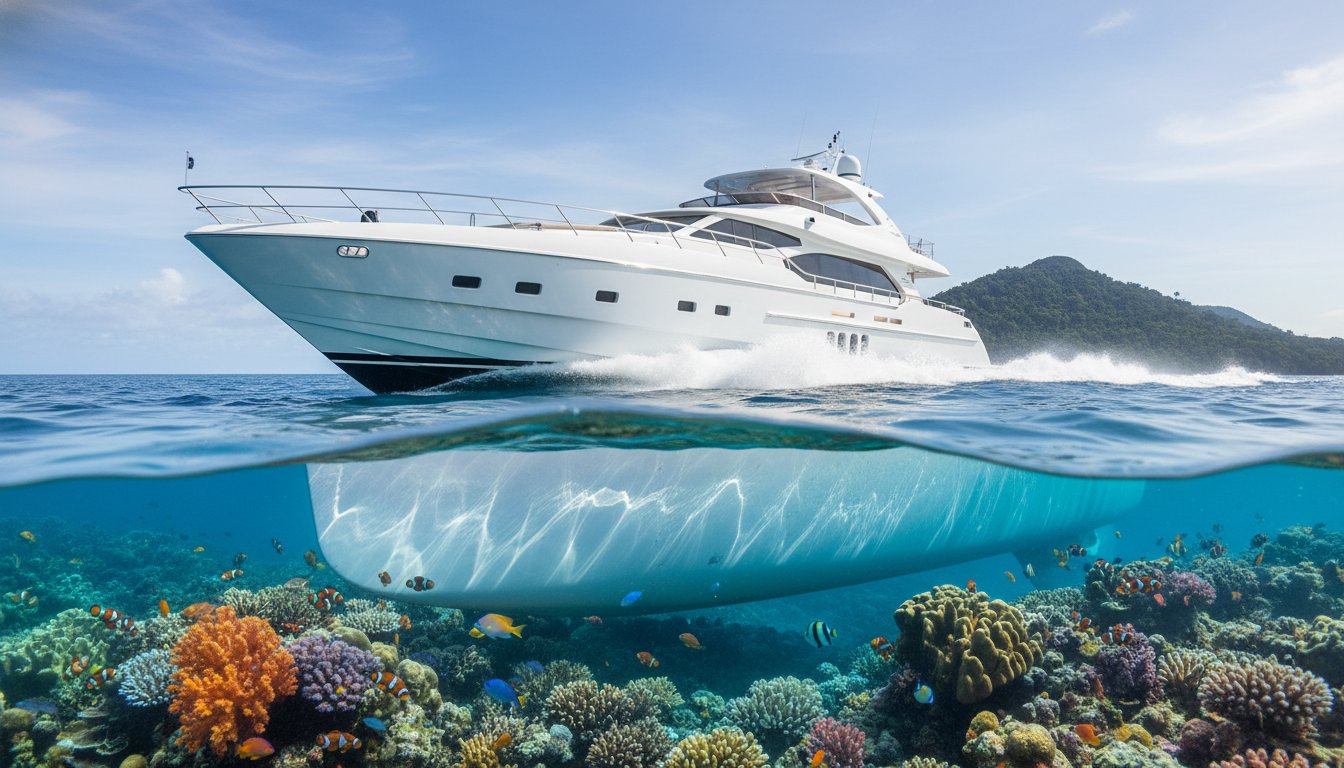
In the high-temperature, high-fouling environments of the Coral Sea and the Indian Ocean, traditional ablative paints are no longer a maintenance staple; they’re a strategic liability that compromises both your vessel’s performance and the marine ecosystems they inhabit. Relying on biocidal leaching to manage aggressive barnacle and tube worm growth often leads to a cycle of diminishing returns and frequent, expensive haul-outs. Selecting the most effective yacht bottom paint Australia requires a shift from temporary chemical barriers toward permanent, scientifically engineered foul release systems that withstand the unique pressures of our local waters.
You recognize that maintaining a clean hull is essential for efficiency, yet the increasing environmental restrictions in the Great Barrier Reef and Western Australia make traditional toxic options increasingly problematic. This guide details how advanced non-toxic technology, such as Sea-Speed V 10 X Ultra, provides a hard, silane-siloxane surface that can extend service life to 10 years while noticeably increasing knots and fuel economy. We’ll examine how these biocide-free coatings ensure compliance with the Biosecurity Act 2015 and provide a superior return on investment through reduced hydrodynamic drag and long-term durability.
Key Takeaways
- Understand how silane-siloxane technology creates a molecularly smooth surface that prevents bio-attachment without the use of toxic biocides.
- Learn why the high UV indices and rapid growth cycles of the East Australian Current necessitate a shift toward durable yacht bottom paint Australia solutions.
- Evaluate the long-term economic benefits of a 10-year service life and the significant fuel savings achieved through a 10% reduction in hull drag.
- Identify the critical environmental parameters and surface preparation requirements needed to ensure optimal bonding of high-performance coatings in the Australian climate.
- Discover how Sea-Speed V 10 X Ultra aligns with the latest marine discharge standards to protect sensitive ecosystems while maintaining peak vessel performance.
The Australian Biofouling Challenge: Why Standard Paint Fails
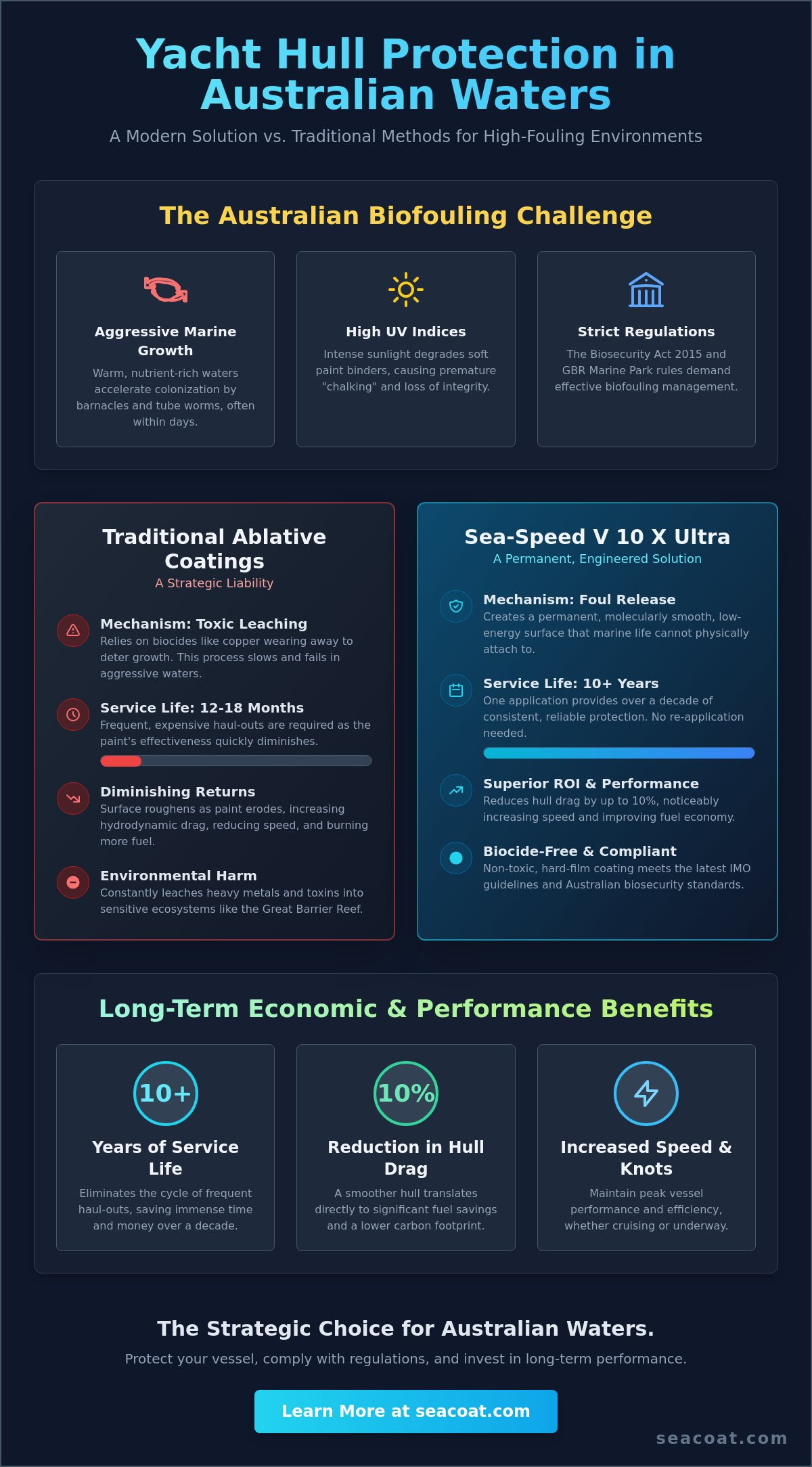
Australia’s marine environment is among the most aggressive in the world for hull maintenance. The East Australian Current (EAC) serves as a biological conveyor belt, transporting warm, nutrient-rich water southward and creating a high-energy incubator for encrusting organisms. In these conditions, the metabolic rates of biofoulers accelerate significantly. Common species such as the acorn barnacle and various calcareous tube worms can colonize a submerged surface within days. Standard yacht bottom paint Australia products often struggle because they rely on a controlled depletion of biocides that cannot always match the rapid growth cycles found in these tropical and subtropical corridors. High UV indices further exacerbate the problem by degrading the resin binders in soft paints, leading to premature “chalking” and a loss of structural integrity.
Regional Variations: From Sydney Harbour to the Whitsundays
Latitudinal temperature gradients dictate the severity of fouling and the necessary coating response. While Sydney Harbour experiences seasonal fluctuations, the Whitsundays present a year-round challenge where water temperatures frequently exceed 28 degrees Celsius. For yachts that remain stationary in marinas, the lack of hydrodynamic flow often prevents traditional paints from functioning as intended. This becomes a critical issue for vessels entering the Great Barrier Reef Marine Park. Under the Biosecurity Act 2015, operators must manage biofouling risks strictly, and failing to meet these standards can result in denied entry to sensitive marine zones. It’s no longer just about aesthetics; it’s a matter of regulatory compliance.
The Failure of Traditional Ablative Coatings in AU Waters
Traditional ablative coatings operate on a sacrificial mechanism, designed to wear away and release fresh biocides over time. In high-fouling Australian waters, this process is often too slow to prevent attachment, leading owners to perform frequent manual scrubbing. This mechanical cleaning inadvertently strips the coating, shortening its effective lifespan and increasing the frequency of expensive haul-outs. The science of antifouling paint has historically been centered on heavy metals like copper, but the environmental impact of leaching in enclosed bays is driving a shift in maritime policy. The hidden costs associated with a 12-18 month haul-out cycle, coupled with the fuel penalties caused by a deteriorating surface, make legacy paints a poor choice for the long-term management of high-value assets. Transitioning to a high-durability foul release system is the only logical path for owners who prioritize both performance and ecological stewardship.
The Science of Silane-Siloxane: A New Era for Yacht Hulls
Silane-siloxane technology represents a fundamental shift in material science applied to marine environments. Unlike traditional coatings that rely on the steady depletion of active ingredients, these systems create a cross-linked, hard-film barrier through a sophisticated chemical bond with the substrate. This molecular structure results in an exceptionally low-energy surface that makes it physically difficult for marine life to secure a permanent foothold. When evaluating yacht bottom paint Australia, understanding this mechanical advantage is essential for moving beyond the inherent limitations of chemical leaching and toxic deterrents.
Foul Release vs. Biocidal Antifouling
The primary distinction between these two categories lies in their method of action. Biocidal systems function through toxic leaching; they eventually leave behind a porous, high-drag surface as their active agents exhaust themselves. In contrast, foul release technology utilizes a non-stick physical mechanism. These hard-film systems maintain consistent performance levels for 5 to 10 years because they don’t rely on a sacrificial layer that wears away. This modern approach aligns with the latest International Maritime Organization (IMO) guidelines regarding biosecurity and the mitigation of invasive species. For a deeper technical analysis of these differences, you can consult The Definitive Guide to Antifouling Boat Paint and Foul Release Systems in 2026.
Hydrodynamics and Frictional Drag Reduction
A hull treated with silane-siloxane is significantly smoother at a microscopic level than one coated with standard ablative paint. This superior finish promotes laminar flow, which reduces the turbulent wake that typically saps energy from a vessel’s propulsion system. Owners frequently observe a measurable increase in knots at the same RPM settings after transitioning to this technology. By lowering the surface energy of the hull, the coating prevents the initial adhesion of proteins and carbohydrates that form the foundation of the marine food chain. Optimizing yacht bottom paint Australia for speed requires a finish that actively sheds water rather than just resisting growth.
This durability extends into the vessel’s maintenance cycle. Hard-film coatings like silane-siloxanes resist mechanical damage and can withstand high-pressure cleaning without losing thickness or efficacy. This resilience ensures that the hull remains optimized for speed throughout its entire service life. If you’re looking to upgrade your vessel’s efficiency, exploring advanced silane-siloxane coatings is a strategic step toward long-term asset protection and reduced operational costs.
Analyzing ROI: Fuel Efficiency and Maintenance in Australia
Evaluating the financial performance of a vessel’s coating requires a shift from viewing paint as a recurring expense to treating it as a strategic asset. For most owners, the initial cost of application is often eclipsed by the cumulative expenses of fuel consumption and frequent dry-docking. When calculating the total cost of ownership over a 10-year yacht lifecycle, high-performance yacht bottom paint Australia systems like Sea-Speed V 10 X Ultra demonstrate a clear economic advantage. While traditional ablative paints mandate a haul-out every 12 to 18 months, advanced silane-siloxane coatings are engineered for a service life that can reach a decade. This extended window eliminates several costly shipyard cycles, directly improving the asset’s long-term bottom line.
The Fuel-Speed Equation for Australian Yachting
Fuel efficiency is inextricably linked to the hydrodynamic profile of the hull. A 10% reduction in frictional drag can lead to substantial savings, particularly as marine diesel prices in Australia remain subject to global volatility. Real-world data supports these efficiency gains; for example, a 15-meter Wally Tender reported a 2.7% increase in speed following the application of Sea-Speed. Because the engine doesn’t have to work as hard to overcome resistance, owners often see a corresponding decrease in fuel burn at cruising speeds. You can find a more detailed breakdown of these metrics in The Definitive Guide to Boat Hull Paint: Performance, Science, and ROI. Beyond fuel, a clean hull ensures that engine cooling systems and intakes operate at peak efficiency, preventing the thermal stress that leads to premature mechanical failure.
In-Water Maintenance: The Hard-Film Advantage
Maintenance requirements differ vastly between soft ablative paints and hard-film foul release systems. Traditional paints are often difficult to clean in-water because the soft surface “clouds” when scrubbed, releasing biocides and potentially damaging the coating’s integrity. Conversely, the “wipe-clean” nature of silane-siloxane surfaces allows divers to remove light slime with minimal effort and without stripping the material. This characteristic is particularly beneficial for managing the risk of invasive species translocation between Australian ports. By maintaining a molecularly smooth surface, these coatings prevent the heavy encrustation of barnacles and tube worms, making yacht bottom paint Australia a primary tool for both operational speed and biosecurity compliance. Divers consistently prefer working with these durable surfaces, as they provide a stable substrate that doesn’t compromise water clarity during the cleaning process.
Application and Preparation for the Australian Climate
Success with yacht bottom paint Australia depends heavily on environmental control during the curing phase. In regions like Queensland or the Northern Territory, high ambient humidity can interfere with the cross-linking process of advanced polymers. Ideally, application should occur when the relative humidity is below 85% and the substrate temperature is at least 3 degrees Celsius above the dew point. Failing to monitor these variables can compromise the molecular bond, leading to delamination or reduced service life. In the southern states, cooler temperatures may extend cure times, requiring a different strategic window to ensure the coating reaches its full mechanical hardness before immersion.
Surface preparation is the most critical phase of the transition to foul release systems. Unlike ablative paints that can sometimes be applied over existing layers, silane-siloxane coatings require a clean, stable substrate. All traces of old biocidal residues must be removed via abrasive blasting or thorough sanding to ensure the new coating achieves its intended 10-year service life. For fiberglass hulls, this often involves the application of a high-build epoxy primer like Seapoxy 73 to create a uniform, non-porous foundation. This step is non-negotiable; the performance of the topcoat is only as reliable as the preparation of the surface beneath it.
The Sea-Speed Application Protocol
Applying Sea-Speed V 10 X Ultra requires a methodical approach and specialized equipment. High-volume, low-pressure (HVLP) or airless spray systems are typically used to achieve the ultra-smooth, high-gloss finish necessary for maximum drag reduction. In tropical Australian conditions, managing pot life is essential. The chemical reaction accelerates in heat, which reduces the workable window for the applicator. While some experienced owners may attempt a DIY application, the precision required for a long-term bond often favors professional oversight. To ensure your vessel is equipped with the most durable technology available, you can explore our full range of silane-siloxane coatings to find the right fit for your specific hull type.
Coating Aluminum Hulls in Australia
Aluminum vessels face unique risks in high-salinity waters, particularly regarding galvanic corrosion. Traditional copper-based paints are a significant danger to aluminum yacht structures because the dissimilar metals create an electrochemical reaction that aggressively degrades the metal. Non-metallic foul release systems provide a safe, insulating barrier that prevents this damage while offering superior protection against biofouling. For a comprehensive look at protecting these specific vessels, refer to this guide on the Best Boat Paint for Aluminum Boats: A Guide to Performance & Corrosion Protection. Choosing a system like Armor-Sil R/G ensures that your aluminum asset remains structurally sound without sacrificing speed or efficiency.
Sea-Speed V 10 X Ultra: The Strategic Choice for 2026
Sea-Speed V 10 X Ultra stands as the benchmark for high-performance hull coatings in the current maritime sector. Its formulation represents the pinnacle of silane-siloxane engineering, providing a non-toxic alternative that addresses the specific biosecurity and operational needs of the region. As a leading choice for yacht bottom paint Australia, it eliminates the environmental trade-offs typically associated with heavy-duty protection. By creating a molecularly smooth, hard-film surface, this technology ensures that vessels maintain peak performance without the need for periodic chemical leaching. The result is a strategic asset that enhances vessel value while meeting the rigorous demands of modern maritime operations.
Longevity is perhaps the most compelling metric for fleet managers and private owners alike. While traditional paints degrade and require replacement every 18 months, a single application of Sea-Speed V 10 X Ultra is engineered to last 10 years or more. This durability means one application outlasts at least three cycles of traditional ablative paint. Beyond the obvious reduction in haul-out costs, this extended service life minimizes the cumulative environmental impact of shipyard waste and paint removal. When combined with documented speed increases and a 10% to 20% potential reduction in fuel consumption, the technology provides a measurable return on investment that standard coatings cannot match.
A Commitment to Australian Marine Ecosystems
Protecting the delicate biodiversity of the Great Barrier Reef and other sensitive marine parks requires a transition away from heavy metal contaminants. Sea-Speed’s zero-leach technology ensures that no harmful biocides or volatile organic compounds enter the water column, supporting the broader shift toward sustainable hull performance in the Asia-Pacific region. This commitment to reef health is a core component of the “Green Yachting” movement, where operational efficiency and ecological stewardship are treated as synergistic goals. You can explore the broader implications of this industry transition in Environmental Marine Coatings: The 2026 Shift Toward Sustainable Hull Performance.
Next Steps for Yacht Owners and Fleet Managers
Transitioning from a legacy toxic system to a high-performance Sea-Speed system requires a structured approach to surface preparation and material selection. Owners should prioritize the complete removal of old biocidal layers to ensure the silane-siloxane bond reaches its maximum potential. For those managing complex assets or large fleets, consulting with Seacoat SCT, LLC can provide custom vessel performance profiles that quantify expected fuel savings and speed gains. Finding authorized distributors across the continent is the first step toward securing a 10-year protection window. To begin your transition to a more efficient and compliant hull, consider the following steps:
- Review your current haul-out frequency and cumulative maintenance costs.
- Assess the specific environmental regulations of your primary cruising or docking locations.
- Contact Seacoat Australasia for technical specifications and local availability of Sea-Speed V 10 X Ultra and Armor-Sil R/G.
- Schedule a consultation to determine the optimal primer and coating thickness for your hull material.
Adopting yacht bottom paint Australia solutions that prioritize hard-film durability over chemical depletion is the most effective way to future-proof your vessel. By choosing a system that balances fluid dynamics with environmental responsibility, you ensure that your vessel remains a high-performing, compliant participant in the Australian maritime landscape.
Future-Proofing Your Vessel for Australian Waters
Transitioning to advanced hull coatings is a strategic move that aligns operational efficiency with environmental stewardship. The aggressive marine growth driven by the East Australian Current demands more than just sacrificial biocides. By adopting silane-siloxane technology, you secure a molecularly smooth surface that maintains its integrity for a decade. This shift ensures compliance with Australia’s strict biosecurity standards while delivering a measurable return on investment through reduced hydrodynamic drag.
With over 20 years of proven commercial and military use, Sea-Speed V 10 X Ultra provides a zero-toxic, zero-leach solution that delivers documented fuel savings of up to 12%. It’s the most reliable path for those seeking the highest standard in yacht bottom paint Australia. Embracing these material science innovations allows you to navigate sensitive ecosystems with confidence while maximizing the long-term performance of your maritime assets. Optimize Your Yacht Performance with Sea-Speed V 10 X Ultra and experience the benefits of a truly sustainable, high-speed hull.
Frequently Asked Questions
Is foul release technology more effective than traditional antifouling in warm Australian waters?
Foul release coatings are often more effective in high-temperature environments because they don’t rely on the chemical leaching rates that warm water can prematurely exhaust. Traditional paints often deplete their biocides too quickly in tropical conditions, leaving the hull vulnerable. A silane-siloxane system maintains a permanent, physically slick surface that remains effective regardless of water temperature fluctuations or salinity levels.
How much fuel can I realistically save by switching to a low-friction bottom paint?
Vessel operators can realistically achieve fuel savings between 10% and 20% depending on the yacht’s operational profile and hull condition. For example, documented speed increases of 2.7% have been recorded on specific vessels after transitioning to Sea-Speed technology. By reducing hydrodynamic drag, the engine meets less resistance, which directly lowers fuel consumption at consistent cruising speeds.
Can I apply Sea-Speed V 10 X Ultra over my existing bottom paint?
No, you cannot apply this high-performance coating over existing traditional paint layers. To ensure a multi-year bond and the intended 10-year service life, the hull must be stripped to the original substrate or a stable epoxy primer like Seapoxy 73. This rigorous preparation is essential for the silane-siloxane molecules to cross-link effectively with the surface of the vessel.
Is Sea-Speed compliant with Great Barrier Reef Marine Park regulations?
Sea-Speed V 10 X Ultra is fully compliant with the most stringent environmental standards, including those governing the Great Barrier Reef. Because it’s a zero-toxic, zero-leach coating, it doesn’t release heavy metals or harmful biocides into sensitive marine ecosystems. This makes it an ideal yacht bottom paint Australia choice for owners who frequent protected marine parks and biosecurity zones.
How often does a yacht with Sea-Speed need to be hauled out for maintenance?
Yachts utilizing these advanced systems can often extend their haul-out intervals significantly, moving away from the traditional 18-month cycle. While periodic in-water inspections are recommended to check for mechanical damage, the coating itself is designed for a service life of a decade. This durability reduces the total number of shipyard visits required over the life of the vessel.
What is the lifespan of a silane-siloxane coating compared to ablative paint?
The lifespan of a silane-siloxane coating is typically 10 years or more, which is a vast improvement over the 12 to 24 months expected from ablative paints. Traditional paints are sacrificial and wear away over time, requiring frequent reapplication. In contrast, hard-film foul release systems are permanent installations that maintain their thickness and performance characteristics throughout their entire service life.
Does a non-toxic coating really prevent barnacle growth as well as copper paint?
Non-toxic foul release coatings prevent barnacle attachment by utilizing low surface energy rather than chemical toxicity. The molecularly smooth finish makes it difficult for marine organisms to secure a permanent bond to the hull. While some light slime may accumulate during stationary periods, it’s easily removed through vessel movement or simple in-water wiping without damaging the coating.
Are there specific applicators in Australia trained in Sea-Speed technology?
Seacoat Australasia is the primary supplier and can provide guidance on finding experienced applicators familiar with silane-siloxane protocols. Because these coatings require specific equipment and environmental controls, it’s important to work with professionals who understand the nuances of high-performance polymer application. You should contact the regional distributor to verify the best options for your specific location and vessel type.