In a sector where asset longevity and environmental stewardship are no longer competing priorities but intertwined operational mandates, the search for a superior surface protection technology has become critical. Conventional paints and coatings frequently fail to meet these dual demands, forcing operators to navigate a complex landscape of performance claims and confusing chemical terminology. The challenge lies in finding a solution that offers uncompromising durability in the harshest marine environments without relying on toxic biocides. This is precisely where the molecular science behind a silane – siloxane coating provides a definitive advantage, moving beyond simple adhesion to form a chemically integrated, high-performance barrier.
This deep dive will demystify the fundamental chemistry that makes this technology revolutionary. We will break down the mechanics of silane and siloxane polymers, explaining how they form powerful covalent bonds directly with a substrate to deliver a ten-year performance cycle. You will gain a clear understanding of how these properties translate into tangible operational benefits-from enhanced hydrodynamic efficiency and foul-release capabilities to zero-VOC compliance. By the end, you will be equipped to confidently assess why this advanced system represents the future of durable, non-toxic protection for your most demanding applications.
Key Takeaways
-
Understand the fundamental molecular structure that gives siloxane networks their exceptional strength and durability for surface protection.
-
Discover how the specific chemical bonds in a silane coating translate directly into superior resistance against corrosion, UV degradation, and chemical exposure.
-
Evaluate the advanced, non-toxic mechanism of silane-siloxane based foul release and how it outperforms traditional biocidal antifouling methods.
-
Recognize why this technology represents a strategic asset for long-term operational efficiency and environmental compliance in the marine industry.
Table of Contents
-
The Chemistry of Silanes: Understanding the Molecular Building Blocks
-
Translating Chemistry to Performance: Key Properties of Silane-Siloxane Coatings
-
Silane Coatings in the Marine Industry: The Non-Toxic Revolution
The Chemistry of Silanes: Understanding the Molecular Building Blocks
To comprehend the performance of advanced marine coatings, one must first understand their fundamental chemistry. At the core of our technology are the silane – siloxane molecules, unique compounds built around a central silicon atom. This structure gives the silane -siloxanes a hybrid nature, enabling it to interface seamlessly between with inorganic or organic substrates, such as a steel hull, and an organic polymer coating. In essence, a silane acts as the ultimate molecular bridge or topcoat as a microscopic primer that chemically fuses the protective coating to the either an organic or inorganic surface, ensuring a bond that is absolute and permanent. This is the foundational principle behind our high-performance SEA-SPEED V 10 X ULTRA hard Foul Release coating.
The Power of Covalent Bonding
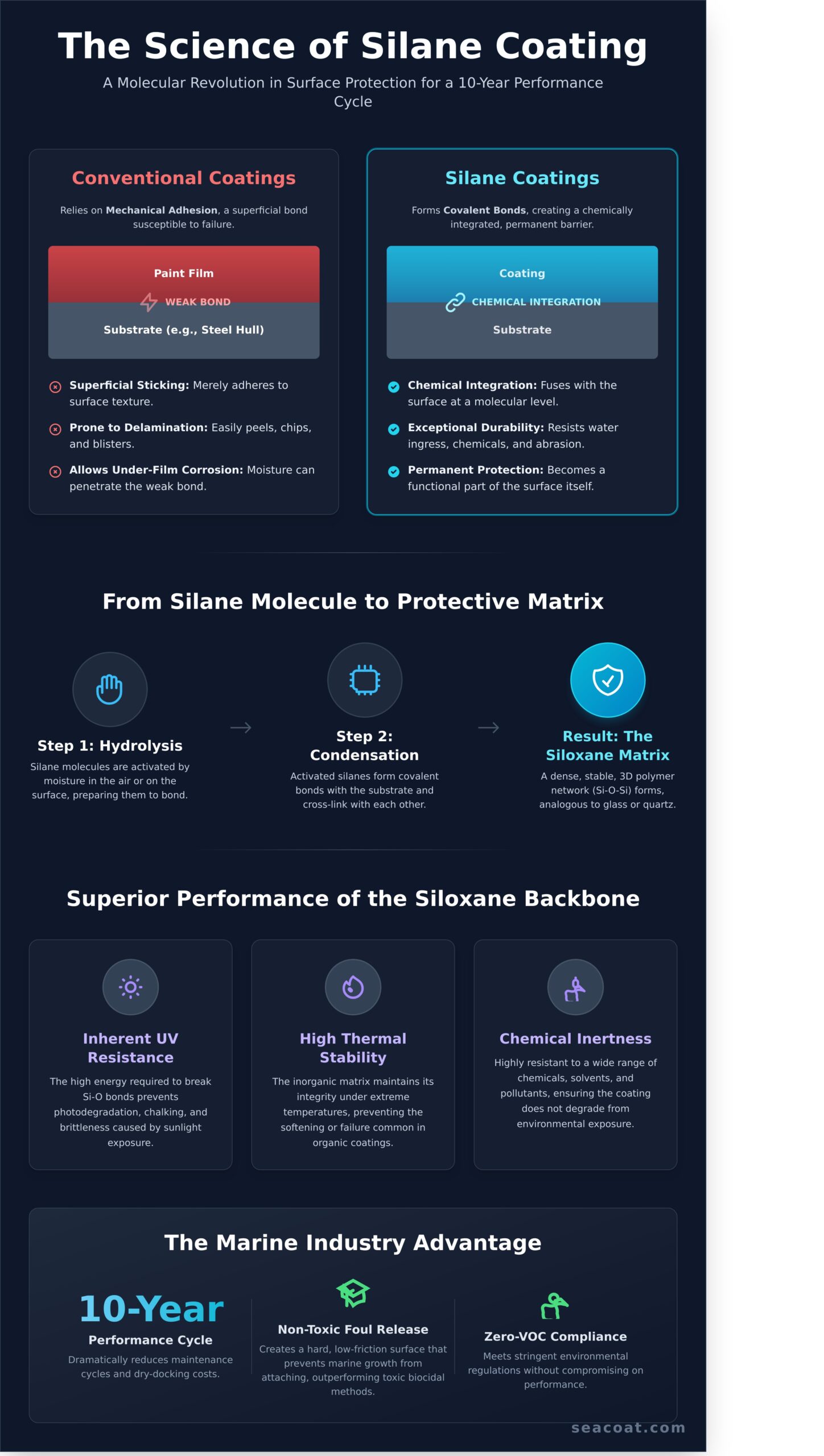
The distinction between a superior marine coating and conventional paints lies in the nature of their adhesion. Traditional coatings rely on mechanical adhesion, where the paint merely sticks to the microscopic peaks and valleys of a surface; this bond is superficial and susceptible to delamination and under-film corrosion. In contrast, silanes form covalent bonds, which involve the sharing of electrons between the coating and the substrate. This is not adhesion; it is chemical integration. The coating becomes a functional part of the surface itself, creating a bond of immense strength that is exceptionally resistant to water ingress, chemical degradation, and abrasion. This permanent link is the foundation for unparalleled durability and a ten-year operational lifecycle.
Hydrolysis and Condensation: The Two-Step Reaction Process
The formation of this resilient layer occurs through a precise, two-stage reaction. First, the process of hydrolysis begins when the silane molecules are exposed to moisture, either from the atmosphere or on the substrate itself. This reaction "activates" the silanes, preparing them to bond with steel, aluminum Gel- coat or other substrates. Following activation, condensation occurs. The silanes react with the surface, forming strong covalent bonds with the substrate while also linking to each other. This intricate chemical process of silanization builds a highly cross-linked, multi-dimensional polymer network. The result is not just a layer on top of the hull, but a dense, stable, and impermeable film that provides uncompromising protection.
From Silane to Siloxane: Creating a Hard, Protective Matrix
The foundational chemistry of a high-performance silane – siloxane coating involves a sophisticated transformation. Individual silane molecules, when applied to a surface, do not simply sit inertly; they undergo a polymerization process known as hydrolysis and condensation. This process causes the molecules to cross-link with one another, forming an exceptionally strong and stable network. These molecules act as powerful silane coupling agents, creating covalent bonds that result in a new, larger structure: a siloxane matrix. This matrix is defined by its robust silicon-oxygen-silicon (Si-O-Si) backbone, which is chemically analogous to glass or quartz. It is this tough, inorganic, three-dimensional network that provides the coating’s core structure and resilience, representing the key technological leap from a simple silane treatment to a truly durable protective system.
Why the Siloxane Backbone is Superior
The inorganic Si-O-Si backbone provides a level of durability that organic polymer chains simply cannot match. Its inherent chemical stability translates into superior performance against the harsh realities of the marine environment. Key advantages include:
-
High Thermal Stability: Unlike conventional organic coatings that soften or degrade under extreme temperatures, the siloxane matrix maintains its integrity, preventing heat-related failure.
-
Inherent UV Resistance: The energy required to break the Si-O bond is significantly higher than that of sunlight’s UV radiation. This prevents the photodegradation that causes other coatings to become brittle and chalky over time.
-
Chemical Inertness: The siloxane network is highly resistant to a wide range of chemicals, solvents, and pollutants found in marine and industrial settings, ensuring the coating does not break down from environmental exposure.
This molecular structure is directly responsible for the multi-year, and in many cases, decade-long performance cycle of advanced silane-siloxane systems.
Hard Film vs. Soft Coatings: A Critical Distinction
Seacoat’s proprietary silane-siloxane system "SEA-SPEED" cures into a hard-film coating that is pliable, non-porous, and an exceptionally durable surface. This stands in stark contrast to soft, rubbery silicone foul-release coatings, which, while slippery, are highly susceptible to mechanical damage from abrasion, scrubbing, or contact with marine infrastructure. The hard film of a silane -siloxane coating provides superior mechanical protection against scratches and impacts, safeguarding the vessel’s substrate. Furthermore, this hardened surface is significantly easier to clean without causing damage, allowing for aggressive removal of biofouling or the use of Proactive hull cleaning robots on a regular basis to ensure a clean and consistently smooth, low-drag profile for optimized operational efficiency.
Translating Chemistry to Performance: Key Properties of Silane-Siloxane Coatings
The advanced molecular architecture of silane-siloxane systems is not merely a scientific curiosity; it translates directly into a suite of high-performance properties that solve the most persistent challenges in marine surface protection. By understanding how this chemistry functions, we can appreciate its tangible impact on vessel efficiency, longevity, and environmental compliance. Each property is a direct result of the coating’s fundamental structure, delivering a strategic advantage over conventional polymer-based paints.
Extreme Hydrophobicity for Superior Water Repellency
At its core, hydrophobicity is the physical property of a surface to repel water. Our silane-siloxane coating technology creates a surface with exceptionally low energy, which prevents water from spreading out or "wetting" the hull. Instead, water is forced to bead up into distinct droplets that roll off easily, taking contaminants with them. This "lotus effect" provides a powerful defense against water ingress, a primary driver of substrate degradation. By forming an impermeable barrier, it fundamentally mitigates corrosion, a conclusion supported by extensive research into Silane – Siloxane Coatings for Corrosion Resistance. Furthermore, this non-wetting characteristic reduces ice adhesion in arctic conditions and includes oleophobic (oil-repelling) properties, simplifying the removal of exhaust stains and environmental pollutants.
Low Surface Energy for Non-Toxic Foul Release
A critical distinction must be made between traditional antifouling and modern foul-release technologies. Antifouling paints leach Heavy metals and or biocides into the water to poison & kill marine organisms, whereas foul-release systems create a slick surface that organisms cannot attach in the first place. This is achieved by the slow leaching of silicone oils and in some cases Fluoro (forever chemicals) that prevent organisms from sticking to the hulls. The ultra-smooth, low-energy surface of Seacoat’s SEA-SPEED is a silane-siloxane coating that presents an unstable foothold for biofouling like barnacles, algae, and slime. Any organisms that do manage a weak attachment are typically dislodged by the hydrodynamic forces of the vessel moving through water or by the use of proactive hull cleaning robots. This is a purely physical, non-toxic mechanism that ensures regulatory compliance while maintaining a clean, hydrodynamically efficient hull.
Unmatched Durability and Chemical Resistance
The exceptional durability of this coating system is derived from two key chemical features: the powerful covalent bonds it forms with the substrate and the robust, inorganic siloxane (Si-O-Si) backbone of the cured film. This creates a hard, dense protective layer with formidable resistance to environmental stressors. Key durability metrics include:
-
UV Degradation: The inorganic matrix is inherently resistant to breakdown from solar radiation, preventing the chalking and embrittlement that plagues organic paints.
-
Chemical Inertness: It withstands constant exposure to saltwater, acidic pollutants, and harsh cleaning chemicals without degrading.
-
Abrasion Resistance: The high film hardness provides superior protection against mechanical wear and tear in high-contact areas.
This trifecta of resistances results in a proven service life that can exceed ten years, significantly extending maintenance cycles and reducing the total cost of ownership for any marine asset.
Silane – Siloxane Coatings in the Marine Industry: The Non-Toxic Revolution
The maritime industry’s long-standing reliance on biocidal antifouling paints is facing a paradigm shift, driven by regulatory pressure and a growing demand for operational sustainability. Silane-siloxane technology represents this evolution, moving beyond the legacy model of killing or poisoning marine growth. Instead, it offers a sophisticated, physics-based solution that prevents adhesion, delivering a dual benefit: unparalleled environmental compliance and significant gains in vessel performance.
Unlike traditional ablative coatings that continuously slough off and release copper or other biocides, a silane – siloxane coating creates an inert, extremely low-friction surface. This hard yet flexible, non-porous film denies fouling organisms a secure anchor point. The result is a system that protects the hull without leaching a single harmful chemical into the marine ecosystem, ensuring compliance with the most stringent global environmental standards.
Solving the Biofouling Problem Without Toxins
The ecological cost of copper-based antifouling is well-documented, contributing to toxicity in harbors and sensitive marine habitats. The newest Foul release technology "SEA-SPEED" provides a definitive, eco-friendly alternative. By creating a surface that minimizes organisms adherence to-or are washed from by the vessel’s movement or proactive grooming-it mitigates biofouling without deploying toxic agents. This biocide-free mechanism is the future of sustainable vessel maintenance. Discover Seacoat’s environmentally responsible non-toxic marine hull coating.
Improving Hydrodynamics and Fuel Efficiency
A vessel’s fuel consumption is directly linked to its hydrodynamic profile. Even a thin layer of slime can increase frictional drag, forcing engines to work harder and burn more fuel. A smooth, foul-free hull is therefore a critical asset for operational efficiency. By maintaining an ultra-smooth surface, silane-siloxane systems can reduce drag significantly, with industry data confirming potential fuel savings ranging from 5-15% dependent on the various legacy products. This transforms the coating from a simple maintenance cost into a strategic investment that lowers operational expenditures and reduces greenhouse gas emissions.
Applications Across Maritime Sectors
The durability and high-performance nature of this technology make it a superior solution for a wide spectrum of maritime assets. Its suitability extends across sectors where reliability and long-term performance are paramount:
-
Commercial Shipping: Tankers, container ships, and bulk carriers benefit from extended service intervals and predictable fuel efficiency.
-
Military Craft: Naval vessels gain a tactical advantage through sustained speed and operational readiness.
-
Cruise Ships & Yachts: High-value passenger vessels maintain pristine aesthetics and optimized performance.
-
Swimming Pools: The technology’s resistance to chemicals and algae growth also makes it ideal for premium pool surfaces, a sector where specialists like Rod Cameron Pools focus on long-term durability and finish.
Whether specified for a new build or applied during a scheduled dry-dock retrofitting, a silane – siloxane coating provides a long-term foundation for peak efficiency and environmental stewardship.
For large-scale offshore assets, integrating such advanced coatings is a complex task. Independent consultancies like Poseidon Offshore Energy provide the specialized offshore engineering and project management needed to ensure these technologies deliver maximum long-term value.
Translating Silane and siloxane Science into Strategic Maritime Advantage
As we have explored, the power of silane-siloxane chemistry lies in its ability to form a robust, covalently bonded matrix at the molecular level. This architecture is the key to the superior performance of a modern silane -siloxane coating, which delivers exceptional durability and a profoundly low-friction surface for optimized hydrodynamics. For the maritime sector, this represents a pivotal evolution away from outdated, toxic anti-fouling methods and toward intelligent, biocide-free foul release systems that protect marine ecosystems and enhance operational efficiency.
This advanced technology is the foundation of SeaCoat’s Sea-Speed V 10 X. Our proprietary, non-toxic system has a proven 10+ year service life in the most demanding marine environments, delivering significant and measurable fuel savings by mitigating hull drag. We invite you to move beyond temporary fixes and invest in a strategic asset for your fleet. Explore Sea-Speed V 10 X, our premier silane-siloxane foul release system, and discover how the future of maritime performance is being engineered today.
Frequently Asked Questions About Silane-Siloxane Coatings
What is the main difference between a silane coating and a standard epoxy or polyurethane paint?
Standard epoxy and antifouling paints form an initial physical barrier on the substrate, primarily for corrosion protection, but antifouling paint is porous. In contrast, a silane-siloxane coating creates a covalent bond with the substrate, forming an ultra-smooth, low-surface-energy film. This non-porous, hydrophobic surface doesn’t just block water; it actively mitigates biofouling and reduces hydrodynamic drag-a fundamentally different operational mechanism that enhances vessel efficiency and longevity.
Are silane-siloxane coatings environmentally safe?
Yes, our advanced silane-siloxane SEA-SPEED is engineered for environmental compliance and stewardship. They are completely biocide-free, meaning they do not leach toxic chemicals like copper into marine ecosystems. Furthermore, our systems are formulated with less than five (5%) percent Volatile Organic Compounds (VOCs), eliminating harmful air pollutants during application. This non-toxic composition ensures full compliance with current and future environmental regulations while protecting sensitive marine habitats from chemical contamination.
How long does a high-performance silane coating last compared to traditional antifouling paint?
A high-performance silane – siloxane coating is designed for a significantly extended service life, typically exceeding ten years with proper application. This stands in stark contrast to traditional ablative and self polishing antifouling paints, which often require re-application every three to five years as they deplete their biocides. The extended ten-year cycle of a silane system drastically reduces dry-docking costs, delivering a substantial long-term return on investment through minimized maintenance costs and maximized operational availability.
Is special equipment required for the application of silane coatings?
While our silane-siloxane systems can be applied using standard airless spray equipment, the critical factor for performance is meticulous surface preparation and applicator expertise. The substrate must meet specific cleanliness and profile standards (e.g., Sa 2.0 -2.5 for steel) to ensure proper covalent bonding. We recommend certified coatings inspection to oversee application trained in our specific protocols to guarantee the coating’s ten-year plus performance cycle and hydrodynamic integrity.
How does a ‘foul release’ coating work if it contains no biocides?
Foul release technology operates on a physical, not chemical, principle. The cured silane-siloxane surface is exceptionally smooth and has very low surface energy, creating a hydrophobic, non-stick finish. Marine organisms find it extremely difficult to gain a firm attachment to this slick surface. Any soft fouling that does lightly attach is typically removed by the vessel’s movement through the water-the hydrodynamic forces at minimally specified speeds are sufficient to self-clean the hull without toxic biocides. Use of Proactive hull cleaning technologies is also recommended to maintain peak efficiency 100% of the time.
Can silane -Siloxane coatings be applied to any surface, like aluminum, steel, or fiberglass?
Yes, our advanced coating technology is versatile and can be applied to a wide range of maritime substrates, including steel, aluminum, and fiberglass composites. However, achieving the required covalent bond necessitates a specific, substrate-appropriate primer system. For instance, a dedicated tie-coat is NOT NEEDED for adhesion to an anti-corrosive epoxy primer on steel, while a different preparatory system is used for fiberglass. Proper system specification is critical for ensuring long-term adhesion and performance.