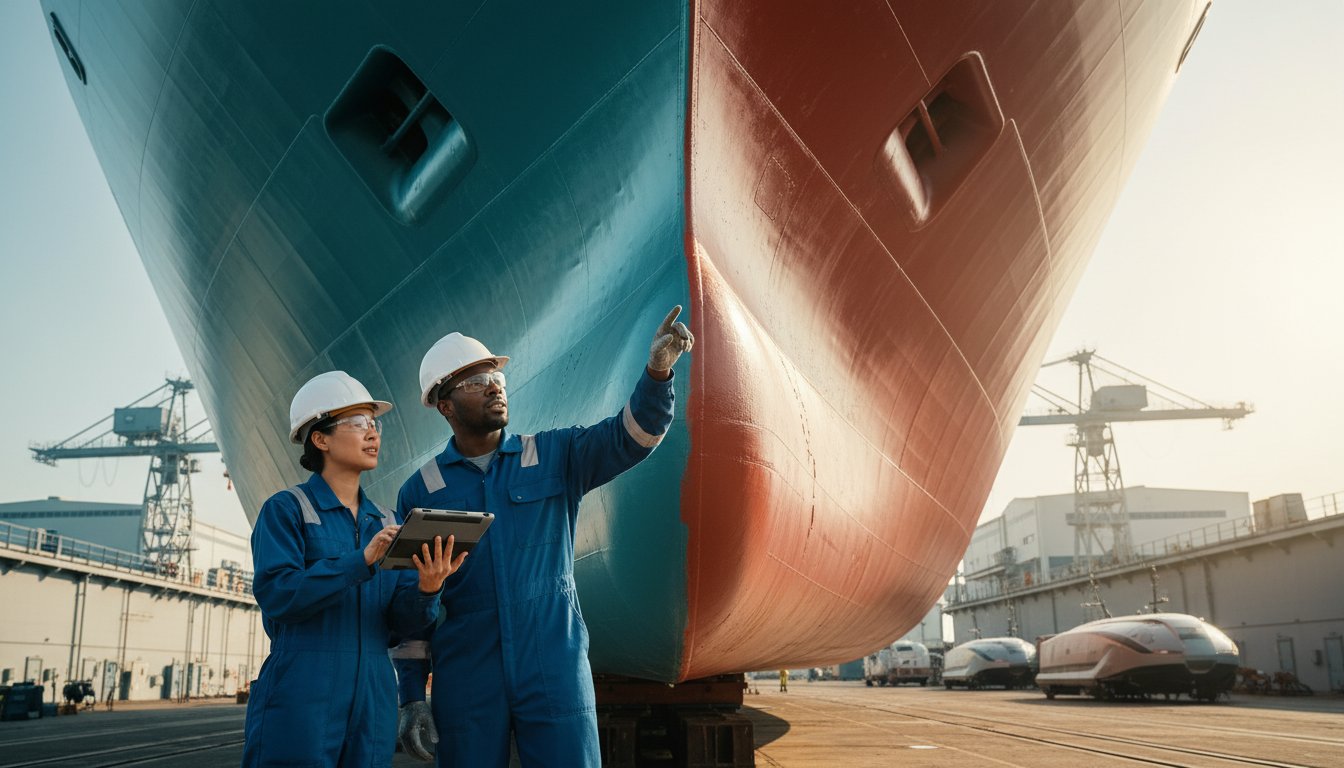
As of January 1, 2026, the maritime industry reached a regulatory tipping point where traditional antifouling paints, some leaching up to 22 micrograms of copper per square centimeter daily, became legally obsolete under new EPA mandates. You’re likely grappling with the reality that meeting strict IMO carbon intensity regulations requires more than incremental changes; it demands a fundamental shift in how we treat the hull surface. The future of marine coating technology has moved beyond toxic mitigation toward permanent, hydrodynamic optimization that views the vessel as a high-performance asset rather than a maintenance burden.
In this analysis, you’ll discover how next-generation silane-siloxane technologies and biocide-free foul release systems are redefining maritime efficiency by offering 10 year coating lifecycles and significant reductions in frictional drag. We’ll detail the transition to non-toxic, hard-film solutions that can lower a vessel’s Carbon Intensity Indicator by as much as 22% while ensuring full compliance with the latest global standards. From the February 2026 enforcement of Brazil’s NORMAM-401 to the operational ROI of 20% fuel savings, we provide the data-backed roadmap for navigating this new era of biocide-free performance.
Key Takeaways
- Analyze the industry transition from toxic biocidal leaching to surface energy management as global environmental regulations reach a terminal phase for traditional paints.
- Examine the future of marine coating technology through the lens of silane-siloxane chemistry and its critical role in preventing initial biofilm adhesion.
- Contrast the durability of hard-film foul release systems against soft silicone alternatives to mitigate operational risks from mechanical damage and dock strikes.
- Leverage hull surface optimization as a strategic asset for securing favorable CII ratings and meeting mandatory EEXI efficiency standards.
- Discover how Sea-Speed V 10 X Ultra provides a zero-VOC, biocide-free solution engineered for 10-year maintenance intervals and optimized fuel ROI.
The Regulatory Horizon: Why Traditional Antifouling is a Legacy Technology
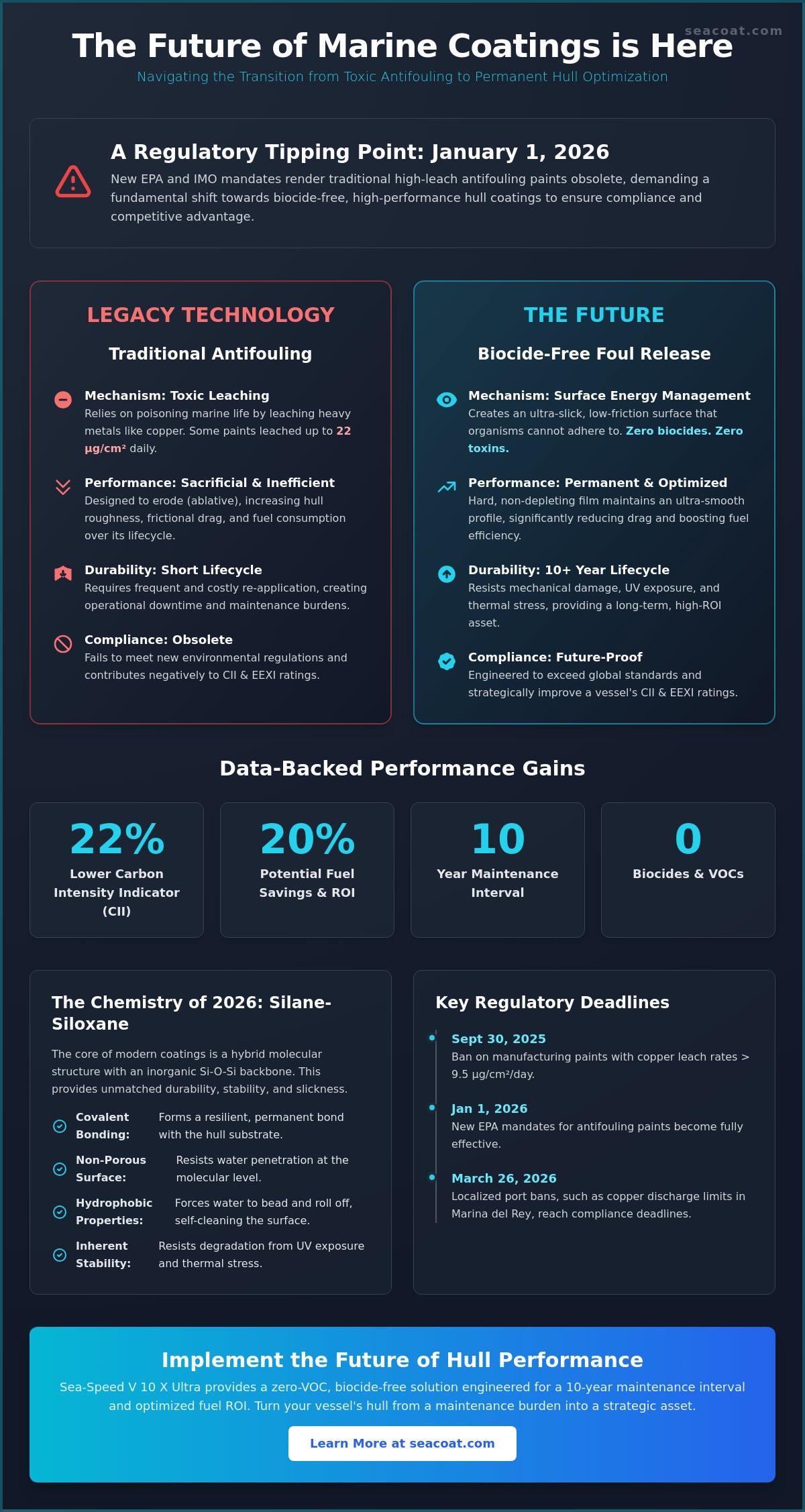
The maritime industry is moving through the final stages of a technology cycle that has persisted for decades. Traditional biocidal coatings, which rely on the toxic leaching of heavy metals to deter biofouling, no longer satisfy the rigorous environmental protocols of 2026. This isn’t a minor adjustment in maintenance schedules. It’s a structural transformation defining the future of marine coating technology. As of September 30, 2025, manufacturers were prohibited from producing paints with a copper leach rate exceeding 9.5 micrograms per square centimeter per day. This mandate effectively sunsets the era of high-toxin hulls.
The Impact of IMO 2023 and 2026 Mandates
Regulatory pressure intensified on January 1, 2026, forcing fleet managers to re-evaluate the long-term viability of traditional antifouling products. Beyond the global ban on Cybutryne, the focus has shifted to the Carbon Intensity Indicator (CII). This metric now directly influences vessel valuation and charter potential. High-performance coatings are no longer optional extras; they’re strategic tools that can reduce a vessel’s CII by 20% to 22% compared to average antifouling coatings. Foul release technology is a biocide-free alternative that utilizes low surface tension to prevent organisms from adhering, rather than attempting to poison them.
The Failure of the Sacrificial Coating Model
The sacrificial or ablative coating model is hydrodynamically inefficient by design. These coatings are engineered to erode, which naturally increases surface roughness and frictional drag over the course of a maintenance cycle. This degradation leads to measurable spikes in fuel consumption and carbon emissions. Additionally, the environmental costs of heavy metal accumulation in port sediments have triggered localized bans. For instance, the compliance deadline for copper discharge limits in Marina del Rey Harbor was reached on March 26, 2026. This highlights the growing legal and ecological risks associated with depleting systems.
Transitioning toward permanent, non-depleting systems is the only logical path for modern operations. Sticking with legacy paints creates a compounded economic risk. Owners face the double burden of rising fuel costs and the likelihood of regulatory penalties. The shift to biocide-free efficiency is a move toward long-term asset optimization. It prioritizes the preservation of marine ecosystems while simultaneously protecting the bottom line through superior hull performance.
Silane-Siloxane and Bio-Inspired Surfaces: The Chemistry of 2026
The shift toward biocide-free operations is underpinned by a transition from sacrificial chemistry to surface energy management. At the center of the future of marine coating technology lies the silane-siloxane molecule, a hybrid structure that provides a level of durability and slickness previously unattainable with traditional epoxy or soft silicone systems. Unlike organic carbon-based chains that degrade under UV exposure and thermal stress, the inorganic Si-O-Si backbone of siloxane is inherently stable. This molecular architecture ensures that the coating maintains its physical properties throughout a 10 year lifecycle, resisting the oxidative processes that typically cause traditional paints to chalk or peel.
The Molecular Advantage of Silane-Siloxane
The efficacy of this technology starts with silane coupling agents. These molecules act as a bridge, forming a covalent bond with the hull substrate that’s far more resilient than the mechanical adhesion found in legacy paints. This bond creates a hard, non-porous surface that resists water penetration at the molecular level. Because siloxane is naturally hydrophobic, it forces water to bead and roll off, carrying away loose debris. Modern formulations achieve this with zero VOCs, a stark contrast to the high solvent content required for traditional coatings.
Bio-Inspired Topography and Hydrodynamics
Engineering the hull at a microscopic level allows for the disruption of laminar flow, mimicking the hydrodynamic efficiency of bio-inspired surfaces like shark skin. By maintaining an ultra-smooth surface profile, often measured in low micron levels of roughness, these coatings prevent the initial “anchor points” that marine larvae need to settle. This is the science of preventing macro-fouling through micro-smoothness. When organisms can’t gain a foothold, they’re simply washed away by the vessel’s movement through the water, maintaining the hull’s hydrodynamic profile over time.
Developing Hard-Film Foul Release Systems represents a move toward high-performance surface optimization. These systems don’t just protect the steel; they optimize the vessel’s interaction with the water. The result is a significant reduction in drag, which translates directly into fuel savings and lower emissions. For operators looking to optimize their fleet’s efficiency, understanding these chemical advancements is the first step toward long-term compliance and profitability. By treating the hull as a strategic asset, owners can achieve a permanent solution to biofouling without the recurring costs of toxic leaching systems.
Durability vs. Performance: The Rise of Hard-Film Foul Release Systems
While soft silicone “easy-release” coatings provided an early alternative to biocides, their inherent physical fragility often negates their hydrodynamic benefits in high-traffic commercial environments. The future of marine coating technology is defined by the transition to hard-film foul release systems that don’t sacrifice durability for slickness. These systems, such as Sea-Speed V 10 X Ultra, provide a robust surface that withstands the mechanical stresses of the maritime industry while maintaining ultra-low surface energy. This shift represents a move away from fragile, short-term fixes toward permanent hull optimization.
Mechanical Resistance and Operational Longevity
Commercial vessels frequently encounter physical impacts from fenders, tugs, and ice, which can easily tear or delaminate soft silicone skins. Once a soft coating is compromised, its foul-release properties vanish, leading to localized fouling and increased drag. Hard-film systems utilize a high-density molecular structure to resist these abrasions, enabling a “one-and-done” application strategy. This approach targets a 10 year service life, significantly reducing the total cost of ownership by extending dry-dock intervals and minimizing surface repairs. For a detailed breakdown of these selection criteria, consult our Guide to Advanced Marine Hull Coatings. The industry’s pivot toward advanced fluoropolymer fouling-release coating technology and similar hard-film variants reflects a demand for permanent surface optimization over temporary sacrificial layers.
Robotic Cleaning: The Maintenance Future
The rise of automated hull cleaning robots has created a new performance benchmark for marine coatings. Soft coatings are generally incompatible with high-pressure robotic grooming; the mechanical action of brushes or water jets can cause irreparable surface damage. Hard-film silane-siloxane systems, however, are engineered to work in synergy with these technologies. This allows for proactive grooming, the removal of microfilm before it matures into macro-fouling, rather than reactive scrubbing. By integrating durable coatings with robotic maintenance, operators can maintain a “clean hull” status indefinitely. This predictive maintenance model relies on the coating’s ability to withstand repeated cleaning cycles without losing its hydrodynamic properties. It transforms the hull from a deteriorating asset into a consistently optimized surface that supports long-term fleet profitability.
Strategic Fleet Management: Achieving EEXI and CII Compliance Through Coatings
The 2026 regulatory landscape has transformed hull maintenance from a routine shipyard task into a critical lever for strategic fleet management. As the International Maritime Organization (IMO) intensifies its focus on decarbonization, shipowners must view the future of marine coating technology as a primary tool for achieving compliance. High-performance, biocide-free coatings serve as a “drop-in” solution for the Energy Efficiency Existing Ship Index (EEXI). Unlike complex mechanical retrofits or alternative fuel conversions that require extensive downtime, a silane-siloxane coating optimizes the vessel’s hydrodynamic profile immediately upon application, providing a measurable boost to technical efficiency without altering the engine’s physical configuration.
There is a direct, linear correlation between hull roughness and Carbon Intensity Indicator (CII) ratings. A vessel’s operational efficiency is graded from A through E, and a hull fouled by legacy ablative paints can quickly slip into a Category D or E rating. These lower tiers often trigger mandatory corrective action plans and can lead to operational bans in specific jurisdictions. By maintaining a micro-smooth surface, a vessel can reduce its carbon intensity by 20% to 22%, effectively safeguarding its market value and ensuring it remains a preferred asset in the competitive 2026 charter market.
Frictional Drag and Fuel Optimization
Quantifying the impact of frictional drag is essential for calculating a true ROI. High-performance foul release systems typically deliver between 6% and 12% in fuel savings across a standard fleet, though large-scale assets like capesize bulkers can see savings as high as 20%. This reduction in drag allows for lower engine loads to maintain target speeds, which extends machinery service life and reduces maintenance overhead. For specific calculation metrics on how these factors influence the bottom line, refer to our resource on Boosting Vessel Efficiency with Hull Coatings.
Compliance as a Competitive Advantage
In a high-fuel-cost environment, a “Green” vessel carries a significant premium. Charterers are increasingly prioritizing vessels that can demonstrate a clear path toward the IMO’s “Net Zero” maritime goals for 2050. Utilizing biocide-free, low-friction coatings provides a verifiable data point for sustainability reporting. Real-world case studies have shown that vessels transitioning to hard-film systems experience immediate speed gains at equivalent power outputs, directly translating into lower emissions per ton-mile. Consult with our technical team to evaluate your fleet’s compliance roadmap and secure your position in the sustainable shipping economy.
Implementing the Future: Sea-Speed V 10 X Ultra as a Strategic Vessel Asset
Sea-Speed V 10 X Ultra represents the practical realization of the future of marine coating technology, providing a non-toxic, silane-siloxane platform that eliminates the need for biocidal leaching. By establishing a hard, glass-like surface at the molecular level, this system bypasses the traditional 30 to 60 month dry-docking trap that has long burdened the maritime sector. It doesn’t rely on the depletion of active ingredients; instead, it utilizes a permanent surface energy profile to maintain hydrodynamic efficiency for over a decade. This longevity transforms the coating from a recurring maintenance expense into a strategic vessel asset that pays dividends through sustained fuel savings and reduced environmental impact.
The versatility of this technology allows it to perform across diverse sectors, including:
- Military and law enforcement craft requiring high-speed durability.
- Commercial shipping fleets targeting EEXI and CII compliance.
- Deep-sea exploration vessels operating in sensitive marine ecosystems.
- Pleasure boats and yachts seeking a permanent, “one-and-done” hull solution.
Hard-Film Performance in Real-World Conditions
The “Armor-Sil” difference lies in the coating’s enhanced impact and abrasion resistance, which far exceeds the capabilities of standard epoxy or soft silicone alternatives. This resilience is critical for vessels operating in high-fouling tropical waters or navigating the abrasive conditions of arctic routes. Because the film doesn’t chalk or erode, it retains its micro-smooth topography regardless of the geographic environment. For a deeper dive into the molecular mechanics behind these results, explore The Science of Silane-Siloxane Marine Coatings Explained. This data-backed approach ensures that your vessel maintains its design speed with minimal frictional resistance over the entire 10 year life cycle.
Transitioning Your Fleet to Sea-Speed
Modernizing a fleet’s hull protection doesn’t require a complete overhaul of shipyard procedures. Sea-Speed V 10 X Ultra is engineered for compatibility with high-performance primers like Seapoxy 73, ensuring a robust bond to the hull substrate. The application protocols are designed for maximum shipyard efficiency, reducing the time a vessel spends in dry-dock while providing a surface that won’t require recoating for a decade. This streamlined transition allows operators to move away from legacy toxins without sacrificing operational speed or reliability. It’s an investment in both mechanical durability and environmental stewardship.
The future of marine coating technology is no longer a theoretical goal; it’s a present-day reality for forward-thinking fleet managers. By adopting a biocide-free, hard-film strategy, you’re investing in the long-term viability of your maritime operations. Contact SeaCoat today for a comprehensive fleet-wide technical evaluation and begin your transition toward a more efficient, compliant, and sustainable future.
Securing Decades of Performance in a Post-Biocide Era
The transition to biocide-free operations is no longer a voluntary choice but a regulatory necessity driven by 2026 EPA and IMO mandates. We’ve established that the future of marine coating technology lies in managing surface energy through silane-siloxane chemistry rather than sacrificial leaching. This shift ensures that vessels maintain high CII ratings while avoiding the mechanical fragility of traditional soft silicones. Compliance is the new baseline. By adopting hard-film systems, you secure a hydrodynamic profile that remains optimized throughout years of service.
Since 2001, SeaCoat has provided proprietary technology that delivers a verified 10 year service life with zero VOCs and biocide-free certifications. Treating the hull as a strategic hydrodynamic asset allows operators to achieve permanent efficiency gains and long-term regulatory compliance. It’s time to move beyond temporary maintenance cycles and invest in a solution that protects both your fleet’s ROI and the marine environment. Consult with SeaCoat Experts on Future-Proofing Your Fleet to stabilize your operational costs for the next decade.
Frequently Asked Questions
What is the most significant trend in marine coating technology for 2026?
The most significant trend is the transition from biocidal antifouling to permanent, biocide-free surface optimization. As of January 1, 2026, new EPA mandates restrict copper leaching to 9.5 micrograms per square centimeter daily, forcing a move toward foul release systems. This shift prioritizes hydrodynamic efficiency and long-term asset management over traditional sacrificial paint models that require frequent maintenance cycles.
How do biocide-free foul release coatings differ from traditional antifouling?
Biocide-free foul release coatings utilize low surface energy to prevent marine organisms from adhering, whereas traditional antifouling relies on the controlled release of toxins like copper or zinc. While legacy paints attempt to poison growth, foul release systems simply release it through the vessel’s movement. This creates a non-depleting surface that maintains its hydrodynamic profile throughout its entire service life without toxic leaching.
Can advanced coatings really help with EEXI and CII compliance?
Yes, high-performance coatings are a critical strategy for meeting IMO efficiency standards. Advanced foul release systems can reduce a vessel’s Carbon Intensity Indicator (CII) by as much as 22% compared to standard coatings. By minimizing frictional drag, these technologies serve as an immediate drop-in solution to improve EEXI ratings without requiring expensive mechanical retrofits or alterations to the engine configuration.
What is Silane-Siloxane technology in marine paints?
Silane-Siloxane technology involves a hybrid molecular structure that combines an inorganic Si-O-Si backbone with silane coupling agents to form a covalent bond with the hull. This architecture creates a hard, hydrophobic film that’s more durable than organic carbon-based coatings. It represents the future of marine coating technology by offering a stable, non-porous surface that resists UV degradation and chemical oxidation over a 10 year period.
How long do next-generation marine coatings last compared to ablative paint?
Next-generation hard-film coatings are engineered for a 10 year service life, whereas traditional ablative paints typically require recoating every 30 to 60 months. Because these advanced systems don’t erode or deplete active ingredients, they remain effective for much longer. This longevity reduces the total cost of ownership by extending dry-dock intervals and significantly minimizing the surface preparation requirements during maintenance stops.
Are non-toxic marine coatings as effective as traditional copper-based paints?
Non-toxic coatings are often more effective than copper-based paints because they provide superior hydrodynamic performance and sustained drag reduction. While traditional paints lose efficacy as they age and roughen, biocide-free systems maintain a micro-smooth surface profile. Data from 2026 indicates that vessels using these systems achieve fuel savings of up to 20% while maintaining higher speeds at lower power outputs.
Can hard-film coatings be cleaned underwater without damaging the surface?
Hard-film coatings are specifically designed to withstand frequent underwater cleaning and robotic grooming without sustaining surface damage. Unlike soft silicone coatings that can tear or delaminate under pressure, hard-film systems maintain their integrity during proactive cleaning cycles. This allows for the removal of microfilm and slime before they evolve into macro-fouling, ensuring the hull’s performance remains consistent between dry-dockings.
What are the environmental benefits of zero-VOC marine coatings?
Zero-VOC marine coatings eliminate the release of volatile organic compounds into the atmosphere during application and prevent toxic leaching into the water column during operation. By removing biocides like copper and zinc, these systems protect marine ecosystems from heavy metal accumulation in port sediments. These benefits support the industry’s progression toward “Net Zero” maritime goals while ensuring compliance with the latest global environmental protocols.