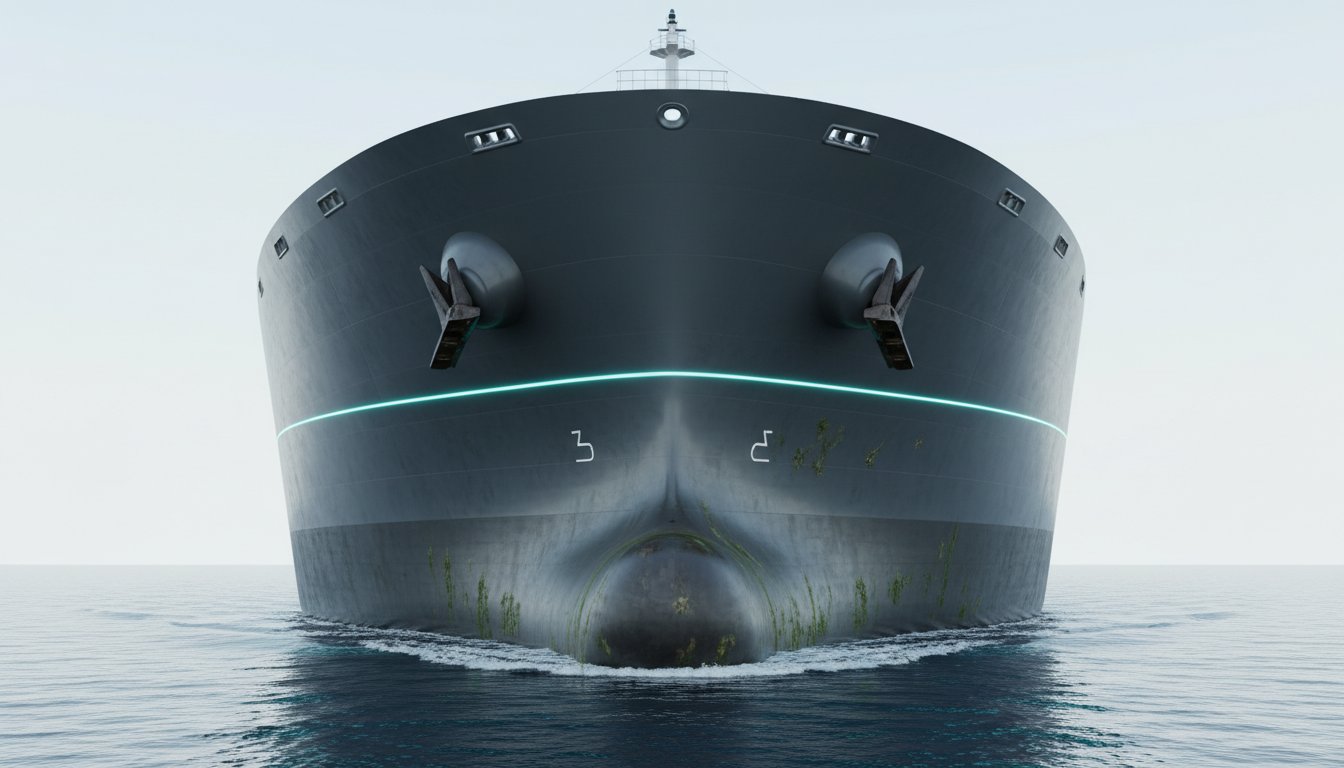
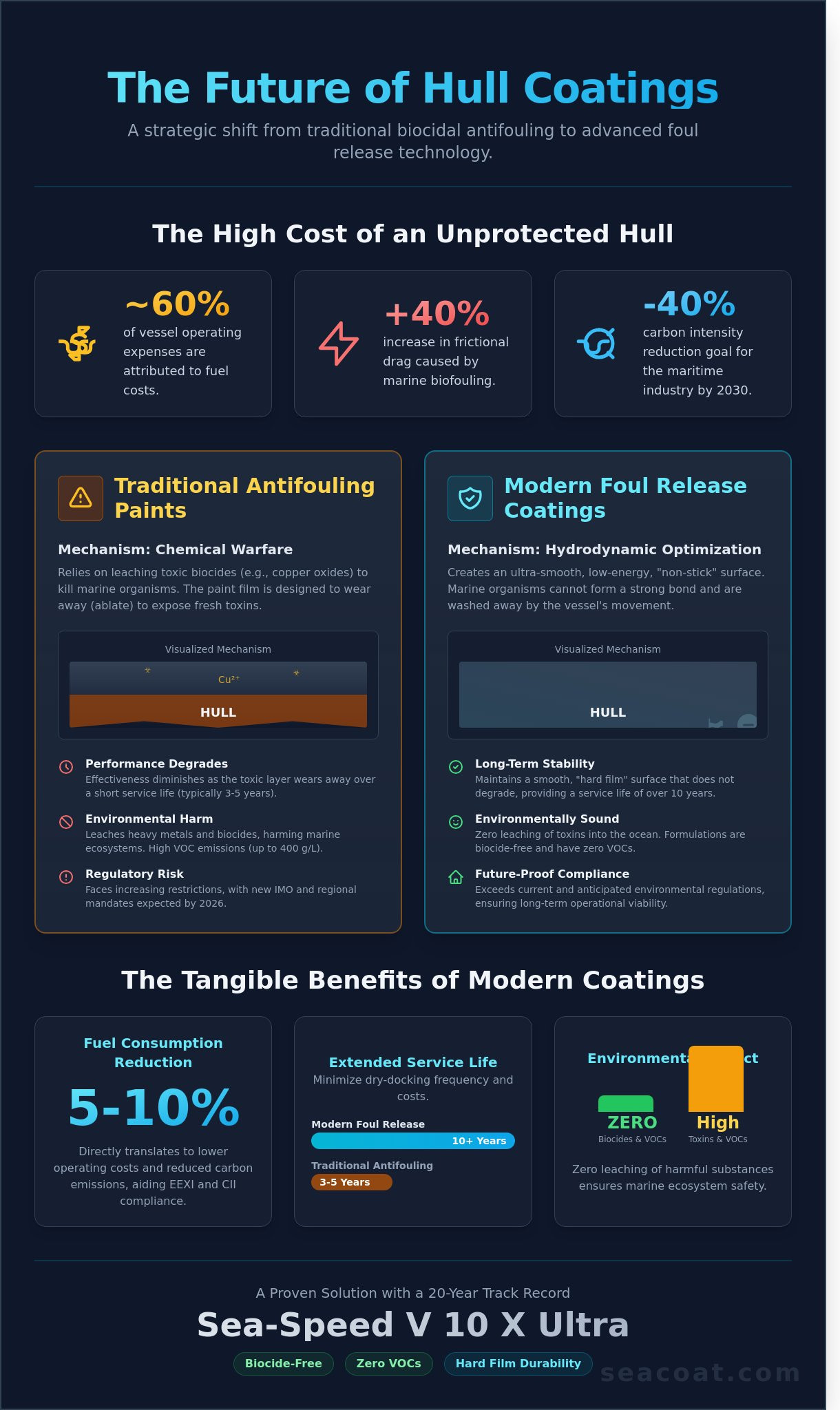
While the maritime industry targets a 40% reduction in carbon intensity by 2030, many fleet managers remain tethered to coating technologies that haven’t fundamentally changed in decades. You’re likely feeling the mounting pressure of EEXI and CII regulations while grappling with fuel costs that account for nearly 60% of your total vessel operating expenses. It’s a frustrating cycle of high hull drag and frequent, expensive dry-docking intervals that drain your bottom line. Traditional anti fouling paints rely on the leaching of toxic biocides; a process that inevitably degrades over time and compromises both the environment and your vessel’s performance.
This article explores how a shift to advanced, non-toxic foul release technologies can deliver a 5% to 10% reduction in fuel consumption and extend your coating’s service life to over 10 years. We’ll examine the chemical transition from sacrificial biocide layers to siloxane-based hydrodynamic optimization. You’ll discover how these permanent, sophisticated solutions move beyond temporary fixes to provide a strategic asset for modern fleet management.
Key Takeaways
- Understand the fundamental shift from traditional biocide-based anti fouling paints to advanced, non-toxic foul release systems that prioritize long-term hull integrity and environmental stewardship.
- Explore the molecular advantages of Silane-Siloxane hybrid technology and how “hard film” durability outperforms traditional soft silicone coatings in rigorous marine environments.
- Learn to calculate the direct correlation between surface roughness and fuel consumption to meet EEXI and CII regulatory requirements while maximizing your vessel’s ROI.
- Discover how to select the optimal coating based on specific vessel profiles, ensuring mission readiness for military craft and peak operational efficiency for commercial fleets.
- Examine the 20-year performance track record of Sea-Speed V 10 X Ultra as a biocide-free, zero-VOC strategic asset for sustainable and high-performance fleet management.
Beyond Traditional Anti Fouling Paints: The Shift to Foul Release
The primary objective of any hull coating is the mitigation of biofouling to preserve hydrodynamic efficiency. When marine organisms attach to a vessel’s wetted surface, they increase frictional drag by as much as 40%. This physical resistance forces engines to work harder, directly escalating fuel consumption and carbon emissions. To understand the current shift in technology, one must examine the history and development of anti-fouling paint, which has evolved from 18th-century copper sheathing to the complex chemical formulations of the modern era. Expert operators no longer view coatings as simple maintenance chores. Instead, they treat them as strategic assets that dictate the long-term ROI and operational readiness of a fleet. This perspective shift is driving the transition toward sophisticated, non-toxic solutions that prioritize surface smoothness and environmental stewardship over chemical warfare.
The Problem with Biocidal Antifouling
Biocidal formulations, specifically traditional anti fouling paints, rely on the controlled release of toxins like copper oxides to kill settling larvae. While effective in the short term, these heavy metals leach into the water column and accumulate in seabed sediments, disrupting local biodiversity. Ablative paints present a specific technical failure; they function by “wearing away” to expose fresh biocide. This means the coating’s effectiveness diminishes over its lifecycle as the film thickness reduces. By 2026, IMO guidelines and regional mandates in the EU and North America will further restrict these substances, following the precedent set by the 2008 global ban on Tributyltin (TBT). Maintaining compliance requires a move away from these depleting chemical barriers toward permanent, stable surface technologies.
Foul Release vs. Antifouling: A Critical Distinction
Choosing between these two technologies requires an understanding of their underlying physics. While anti fouling paints use toxicity to prevent growth, foul release systems utilize advanced material science to create a surface with extremely low surface energy. This “non-stick” property makes it impossible for barnacles and tubeworms to establish a permanent bond. On a siloxane-based coating, the biological “glue” produced by marine organisms cannot penetrate the surface. Consequently, fouling is either prevented entirely or easily shed once the vessel reaches speeds of 10 knots or higher. This shift represents a transition from reactive toxicity to proactive hydrodynamic optimization. It’s a cleaner, more durable approach that ensures the hull remains smooth for up to ten years without the need for frequent re-application or toxic shedding into the ocean.
- Regulatory Compliance: Avoids the 2026 restrictions on specific biocidal compounds.
- Operational Longevity: Provides a stable surface that doesn’t wear away or lose efficacy over time.
- Environmental Safety: Zero leaching of heavy metals or VOCs into sensitive marine ecosystems.
The maritime industry is moving toward a future where performance and sustainability are no longer at odds. By adopting foul release technology, vessel owners secure a strategic advantage that reduces drag, lowers fuel costs, and protects the global ocean environment for future generations.
The Science of Silane-Siloxane: How Modern Coatings Work
Understanding the efficacy of modern anti fouling paints requires a look at the molecular level. Silane-Siloxane hybrid technology represents a departure from traditional sacrificial coatings. It functions through a high-density cross-linking process where silane molecules create a permanent chemical bond with the hull substrate. Simultaneously, the siloxane components migrate to the surface to create a low-energy barrier. This dual-action chemistry ensures the coating doesn’t just sit on the surface; it becomes an integral part of the vessel’s exterior.
The environmental profile of these systems is defined by their zero-VOC (Volatile Organic Compound) formulations. Traditional marine paints often release up to 400 grams of solvents per liter during application. Silane-Siloxane systems eliminate these emissions entirely, ensuring shipyard workers aren’t exposed to hazardous fumes. Compliance with international regulations on harmful anti-fouling systems is built into the chemistry, rather than achieved through the addition of restricted biocides. This shift from chemical toxicity to physical resistance marks a pivotal moment in naval engineering.
Hard Film Durability and Impact Resistance
Conventional foul-release systems often rely on soft silicone oils that lack mechanical integrity. These soft coatings frequently fail in high-traffic commercial or military environments because they peel when subjected to fender rub or debris impact. In contrast, Silane-Siloxane technology produces a Hard Film finish. This surface achieves a Shore D hardness rating that rivals epoxy primers while maintaining the flexibility needed for thermal expansion. It’s a robust solution for assets that cannot afford frequent downtime.
Vessels equipped with these hard-film systems can expect a 10-year service life without the need for full removal and recoating. This longevity stems from the coating’s ability to resist the mechanical stresses of dry-docking and ice navigation. By maintaining surface profile integrity over a decade, ship owners avoid the recurring costs and environmental footprint associated with frequent hull stripping. You can explore these long-term durability metrics to see how they impact fleet ROI and operational readiness.
Biofouling Prevention Without Toxins
The primary mechanism of biofouling control in Silane-Siloxane systems is physical rather than chemical. By creating an ultra-smooth, hydrophobic surface with a surface energy below 20 mN/m, the coating prevents the biological glue of barnacles and tube worms from forming a permanent bond. Instead of killing organisms with leached toxins, the technology makes the hull too slippery for attachment. This approach preserves local biodiversity while keeping the hull clean.
- Self-Cleaning Threshold: Most vessels achieve a clean hull through hydrodynamic shear at speeds as low as 7 knots.
- Idle Efficiency: Even in statuesque conditions where a ship is moored for 30 days, the lack of chemical bonding allows for easy cleaning via simple water pressure.
- Drag Reduction: The microscopic smoothness leads to a 4% to 6% reduction in frictional resistance compared to traditional biocidal anti fouling paints.
This hydrodynamic optimization translates directly into fuel savings and a measurable reduction in carbon emissions. The surface chemistry remains active for the duration of the coating’s life; it doesn’t rely on the depletion of active ingredients to remain effective. Because the surface doesn’t become rougher over time, the vessel maintains its peak performance profile from the first day of the docking cycle to the last.
Performance Metrics: Calculating ROI and Fuel Efficiency
The transition from traditional biocidal coatings to advanced foul release systems represents a shift from reactive maintenance to strategic asset management. For decades, the industry accepted a steady decline in vessel performance as an unavoidable operational reality. However, data from over 5,000 vessel applications shows that hull condition accounts for up to 80% of a ship’s total resistance. When anti fouling paints fail to maintain a smooth profile, the resulting skin friction forces the propulsion system to work harder, directly increasing both fuel burn and greenhouse gas emissions. Technical benchmarks indicate that every 10 microns of additional hull roughness correlates to a 1% increase in fuel consumption. By maintaining a surface profile below 100 microns over several years, operators can secure a competitive advantage in a market defined by tight margins and strict carbon accounting.
Operational efficiency is now a regulatory mandate. The International Maritime Organization’s Energy Efficiency Existing Ship Index (EEXI) and Carbon Intensity Indicator (CII) require vessels to demonstrate continuous improvement in their carbon footprint. High-performance coatings serve as a primary lever for compliance. As the maritime industry adapts to updated regulations governing anti-fouling systems, the focus has shifted toward technologies that offer permanent hydrodynamic benefits. Commercial fleet data documents that switching to non-toxic, low-friction coatings results in 5-12% fuel savings. This reduction isn’t just a theoretical projection; it’s a documented outcome of optimized fluid dynamics that helps vessels maintain favorable CII ratings and avoid the operational penalties associated with poor efficiency grades.
Drag Reduction and Vessel Speed
Skin friction is the dominant force opposing a vessel’s movement through water. Traditional anti fouling paints rely on a leaching mechanism that naturally increases surface turbulence as the biocide depletes. In contrast, Silane-Siloxane technology utilizes a non-polar, low-energy surface that prevents marine organisms from establishing a permanent bond. This chemical structure maintains a lower average hull roughness (AHR) throughout the entire service life of the coating. A smoother hull surface significantly reduces the torque required to maintain cruising speed, effectively lowering the engine load. This optimization allows vessels to achieve higher speeds at lower RPMs, directly translating to reduced CO2 output per nautical mile.
Long-Term Maintenance and Lifecycle Costs
The financial logic of hull coatings is often obscured by the “cheap to buy” lure of conventional products. Traditional biocidal systems may have lower upfront material costs, but they’re expensive to own due to short 24 to 36-month service intervals. Transitioning to a hard-film, foul release system extends dry-dock intervals from the standard two years to as long as 10 years. This longevity eliminates the need for aggressive full-scale sandblasting at every docking, which preserves the integrity of the steel and reduces hazardous waste disposal fees.
- Elimination of Re-Coating Cycles: A 10-year lifecycle removes four intermediate painting events, saving hundreds of thousands in labor and material costs.
- In-Water Cleaning Compatibility: Hard-film coatings withstand mechanical grooming without releasing toxic plumes, allowing for proactive maintenance between dockings.
- Zero VOC and Biocide Compliance: Avoiding future regulatory fines and environmental remediation costs by adopting non-toxic chemistry today.
Investing in a premium non-toxic coating turns the hull into a high-performance asset rather than a recurring liability. While the initial capital expenditure is higher, the total cost of ownership over a decade is significantly lower. The combination of sustained fuel savings, reduced dry-docking frequency, and seamless regulatory compliance creates a compelling return on investment for forward-thinking fleet managers. Efficiency isn’t just about the engine; it’s about the interface where the ship meets the sea.
Selecting the Right Coating for Your Vessel Profile
Selecting a hull coating is a technical decision that dictates a vessel’s operational efficiency for a decade. Commercial operators prioritize a clear return on investment, focusing on fuel consumption metrics and IMO regulatory compliance. Data from the International Maritime Organization suggests that hull fouling can increase fuel consumption by up to 40 percent. By utilizing siloxane-based anti fouling paints, fleet managers can secure a 9 to 12 percent reduction in fuel costs compared to traditional ablative coatings. This performance isn’t just about efficiency; it’s about meeting 2024 environmental standards without sacrificing speed or increasing carbon intensity indicators.
Military and government craft demand mission readiness above all else. These vessels require coatings that withstand extreme hydrodynamic pressures at speeds exceeding 35 knots. For pleasure craft and yachts, the focus shifts toward a balance of high-gloss aesthetics and simplified maintenance. A non-toxic, hard-film coating allows yacht owners to remove biofilm with a simple wipe, avoiding the aggressive scrubbing that depletes traditional paints. Transitioning to advanced anti fouling paints ensures that the hull remains pristine without the release of heavy metals into sensitive marinas. Substrate compatibility is equally vital. Aluminum hulls face immediate risk from copper-based products, which trigger rapid galvanic corrosion and 100 percent coating failure. Siloxane coatings are chemically inert, making them safe for aluminum, steel, and fiberglass without the risk of electrolysis.
Operational Profile Assessment
Your vessel’s activity level determines the coating’s effectiveness. High-activity vessels that spend 80 percent of their time at sea benefit from foul-release properties that utilize water flow to shed organisms. Conversely, low-activity vessels in high-fouling tropical zones, where water temperatures exceed 25 degrees Celsius, require a coating with a high surface energy barrier. You should choose a system that achieves “self-cleaning” at your specific cruising velocity, whether that’s 10 knots for a bulk carrier or 25 knots for a motor yacht. Understanding these geographic and speed factors prevents the accumulation of hard growth during stationary periods.
Application Considerations
Professional application is the only way to guarantee a 10-year service life. Surface preparation must meet SSPC-SP10 near-white metal standards to ensure proper adhesion. Our systems are fully compatible with high-performance primers like Seapoxy 73, which provides the necessary tie-coat for long-term bonding. Environmental conditions during the cure are critical; ambient humidity must remain below 85 percent to prevent moisture entrapment. These technical requirements ensure the coating maintains its 0 VOC profile and hydrodynamic smoothness over the long term. Proper curing at 20 degrees Celsius ensures the siloxane matrix reaches its full structural integrity, providing a durable shield against abrasive harbor environments.
Ready to optimize your fleet’s performance with a customized coating strategy? Consult with our naval engineers at Seacoat SCT, LLC to find the perfect match for your vessel’s profile.
The Seacoat Advantage: Sea-Speed V 10 X Ultra
Sea-Speed V 10 X Ultra represents the apex of hard-film foul release technology. It’s a departure from the industry’s historical reliance on depleting toxins. While traditional anti fouling paints function through the controlled release of biocides, Sea-Speed utilizes a sophisticated Silane-Siloxane chemistry that creates a permanent, non-migratory surface. This technology has a 20-year track record of success in the most demanding marine environments. It isn’t just a coating; it’s a long-term strategic asset that addresses both operational costs and environmental mandates. By providing a surface that organisms simply can’t adhere to, we’ve eliminated the need for chemical warfare against marine life.
Sea-Speed V 10 X Ultra: Technical Specifications
The formulation is strictly zero-VOC and 100% free of heavy metals, making it one of the safest coatings on the global market. Unlike ablative paints that wear away and release microplastics into the water column, Sea-Speed’s hard-film structure remains intact for a 10-year life cycle. For performance-critical applications, the “Ultra Clear” option provides a surface roughness of less than 10 microns. This is a massive improvement over the 100 to 150 microns typical of standard anti fouling paints. This extreme smoothness directly translates to reduced hydrodynamic drag and lower fuel consumption. When compared to competitors, Seacoat’s durability stands out. It doesn’t require the frequent, costly reapplication cycles that plague traditional maritime operations.
Documented success stories from military and commercial sectors confirm these performance gains. In a recent analysis of a container fleet, the transition to Sea-Speed resulted in a 12% reduction in fuel consumption over a 24-month period. Military vessels have reported a 90% reduction in hull cleaning time during dry-docking. Because the film is so hard, marine growth is easily removed with high-pressure water tools. You won’t find the need for aggressive mechanical scraping that damages the hull substrate. This preservation of the vessel’s physical integrity is a primary reason why high-stakes operators choose Seacoat for their most valuable assets.
Global logistics and technical support are handled through our primary hubs in Tomball, Texas; Singapore; and Taipei. This network ensures that whether a vessel is in a North American shipyard or a major Asian port, the technical expertise required for a precision application is available. We’ve optimized our supply chain to support global fleets with consistent product quality and on-site supervision. This geographical reach allows us to maintain strict quality control standards, ensuring that every application meets our rigorous performance metrics for durability and drag reduction.
Next Steps for Fleet Optimization
Strategic fleet management requires moving beyond short-term fixes toward permanent solutions. We recommend starting with a comprehensive hull performance audit. This process uses your current fuel data and maintenance schedules to calculate a precise ROI for the Sea-Speed system. Most operators find that the coating pays for itself through fuel savings alone within the first 18 to 24 months of operation. You can find authorized distributors and certified application centers through our global network to ensure your transition is seamless. To begin your transition toward a more efficient and sustainable operation, Consult with Seacoat specialists for a custom coating strategy.
Future-Proofing Maritime Operations through Advanced Surface Science
The maritime industry’s reliance on traditional anti fouling paints is shifting toward high-performance foul release systems. This transition isn’t just a trend; it’s a data-driven evolution in naval engineering. By utilizing proprietary Silane-Siloxane technology, Sea-Speed V 10 X Ultra creates a low-energy, non-toxic surface that effectively minimizes hydrodynamic drag. This chemical advancement allows operators to move beyond standard 36-month maintenance intervals toward a documented 10-year life cycle. You’ll realize significant fuel savings and reduced carbon emissions because the hard-film coating remains smooth and intact over thousands of nautical miles. These formulations are entirely biocide-free and contain zero VOCs, ensuring your fleet exceeds global environmental standards. Investing in advanced surface science provides a strategic asset that stabilizes long-term ROI while protecting fragile marine ecosystems. It’s time to replace temporary fixes with permanent, scientifically-proven solutions for your entire fleet.
Optimize your fleet performance with Seacoat SCT today
Your transition to sustainable, high-efficiency operations starts with the right coating choice.
Frequently Asked Questions
What is the difference between anti fouling paint and foul release coatings?
Traditional anti fouling paints utilize biocides like cuprous oxide to chemically repel marine growth by leaching toxins into the water. In contrast, foul release coatings like Sea-Speed utilize a siloxane based chemistry to create a low-surface-tension, hydrophobic barrier. This ultra-smooth surface reduces the mechanical bond between organisms and the hull. While biocidal paints deplete over 24 months, siloxane coatings remain intact for over 10 years.
Is copper-free anti fouling paint as effective as traditional versions?
Copper-free technology matches the efficacy of traditional coatings while eliminating the discharge of heavy metals into marine ecosystems. Modern non-toxic hard films provide a permanent barrier that doesn’t wear away like ablative paints. Independent testing shows these coatings can maintain a surface roughness of less than 100 microns. This precision ensures long-term protection without the environmental degradation associated with the 30,000 tons of copper leached annually by the global fleet.
How long does a high-performance foul release coating like Sea-Speed last?
High-performance foul release coatings like Sea-Speed provide a 10-year life cycle, which is five times longer than standard 2-year ablative cycles. This longevity stems from a non-depleting siloxane structure that doesn’t require frequent reapplication. Because it’s a hard film, it doesn’t lose thickness over time. Owners reduce their total cost of ownership by 40% over a decade by eliminating biennial haul-outs and repainting costs.
Can I apply a non-toxic hard film coating over my old ablative paint?
You can’t apply a non-toxic hard film directly over old ablative paint because the soft, self-polishing layers don’t provide a stable foundation. Successful application requires removing existing anti fouling paints to reach the original substrate or a stable epoxy primer. We recommend a mechanical profile of 2 to 3 mils achieved through abrasive blasting. This preparation ensures the siloxane bond remains permanent for its 10-year lifespan.
Do non-toxic marine coatings require special cleaning procedures?
Non-toxic coatings require gentle, non-abrasive cleaning methods to maintain their low-friction properties. Because the surface tension is so low, you can remove light slime or barnacles using soft sponges or water pressure under 2,000 PSI. You’ll avoid the heavy scraping required for traditional paints. This process preserves the coating’s 75-gloss finish and prevents the release of microplastics or chemical residue into the harbor.
How much fuel can a ship save by switching to a low-friction hull coating?
Vessel operators report fuel consumption decreases of 12% when transitioning from rough ablatives to smooth siloxane coatings. This efficiency gain occurs because the coating reduces hydrodynamic drag by 8% to 10%. On a typical bulk carrier, this translates to a reduction of 15 metric tons of CO2 emissions per day. These metrics provide a clear ROI, often recouping the initial coating investment within 18 months of operation.
Are there specific regulations banning toxic anti fouling paints in 2026?
Regulatory pressure is intensifying, with the IMO AFS Convention already banning organotin and Cybutryne as of 2023. Regional bodies like the Port of San Diego have implemented copper leach rate limits of 9.5 micrograms per square centimeter per day. By 2026, we anticipate 15% more coastal jurisdictions will adopt zero-discharge mandates. Switching to non-toxic alternatives now ensures 100% compliance with future environmental standards before they become mandatory.
Can foul release coatings be used on aluminum boat hulls?
Siloxane foul release coatings are perfectly suited for aluminum hulls because they don’t contain metallic copper. Traditional copper-based paints trigger galvanic corrosion, which can degrade an aluminum hull by 2 millimeters per year. Since Sea-Speed is chemically inert and biocide-free, it acts as a protective dielectric barrier. This eliminates the risk of electrolysis while providing superior hydrodynamic performance for high-speed aluminum ferries and workboats.