The annual haul-out has become a familiar, if unwelcome, ritual for vessel owners-a costly and labor-intensive cycle of scraping, sanding, and repainting. This recurring operational expense is a direct consequence of conventional antifouling paints, whose limited efficacy leads to increased hull fouling, significant hydrodynamic drag, and a measurable impact on fuel consumption. The search for a truly long lasting boat hull paint is no longer about incremental improvements to outdated, biocide-leaching formulas; it’s about a fundamental shift in surface engineering and long-term asset management.
This definitive 2026 guide moves beyond the traditional debate of ablative versus hard paints to provide a comprehensive analysis of next-generation hull coatings. We will dissect the advanced chemistry behind modern foul-release and siloxane-based hard film technologies, offering a clear framework for evaluating their performance, durability, and environmental compliance. Prepare to understand the true 10-year operational cost of your hull protection, enabling you to break the annual repainting cycle, optimize vessel performance, and make a strategic investment in both your asset and marine ecosystem preservation.
Key Takeaways
- Understand the operational and environmental limitations of traditional antifouling paints to see why a different approach to biofouling is necessary for long-term performance.
- Learn to calculate the true 10-year Total Cost of Ownership (TCO), moving beyond the initial gallon price to evaluate labor, haul-out fees, and fuel efficiency gains.
- Identify the critical criteria for selecting a modern, long lasting boat hull paint system that matches your vessel’s specific operational profile and environmental compliance needs.
- Explore how advanced, non-toxic foul release technologies create an ultra-low friction surface that prevents marine growth attachment and improves hydrodynamic performance for a decade or more.
Defining ‘Long Lasting’: The Limits of Traditional Antifouling Paints
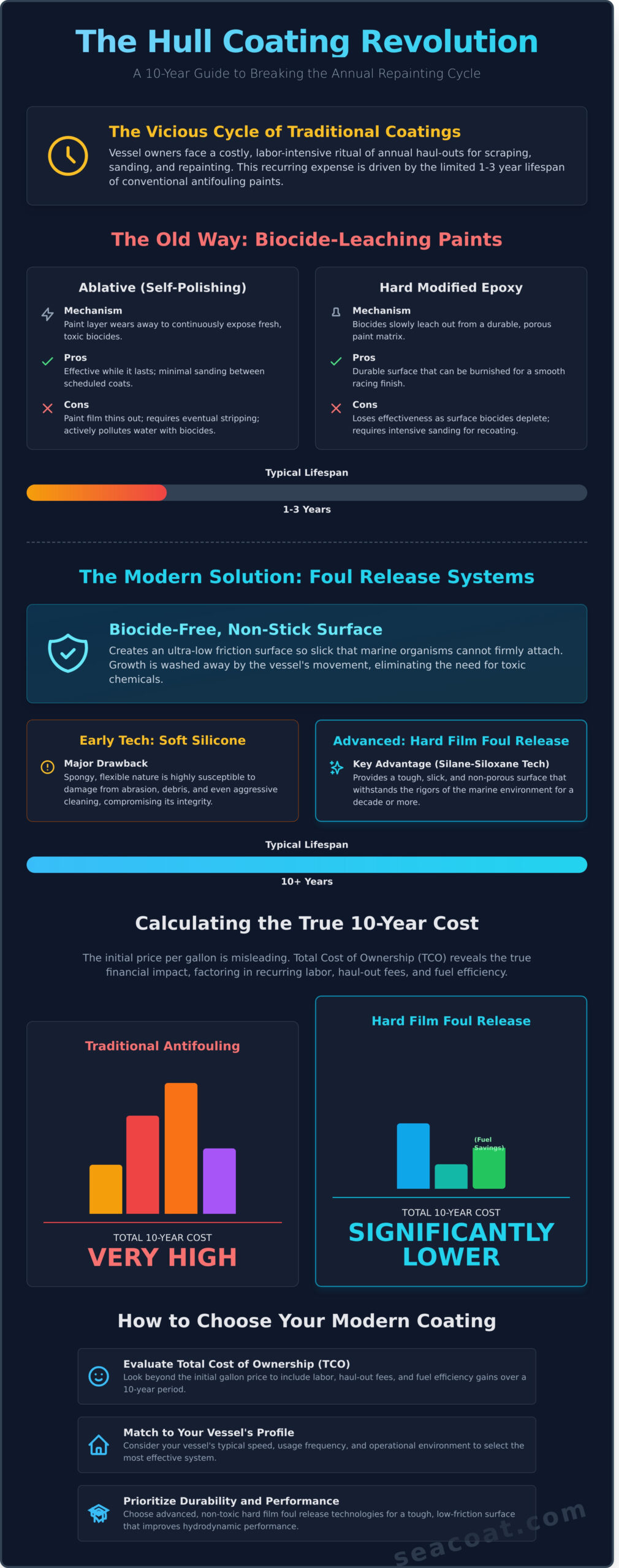
For vessel owners and fleet managers, the operational calendar is often dictated by the costly, labor-intensive cycle of haul-out, scraping, and repainting. This recurring maintenance is a direct consequence of the inherent limitations in what the maritime industry has traditionally accepted as high-performance coatings. The search for a genuinely long lasting boat hull paint has historically ended in a compromise, where a service life of one to three years is considered the standard of excellence. This limited durability is intrinsically linked to the chemical mechanisms of the two dominant categories of traditional antifouling paints: ablative and hard modified epoxy.
Both systems rely on the controlled release of biocides, primarily copper compounds, to poison marine organisms and deter growth. However, this reliance creates a finite lifespan and raises significant environmental and regulatory concerns, as these toxins inevitably leach into marine ecosystems.
Ablative (Self-Polishing) Paints
Ablative coatings are engineered to wear away, or “polish,” at a controlled rate as the vessel moves through water. This process of controlled erosion continuously exposes fresh layers of biocide-rich paint, providing consistent antifouling protection as long as a sufficient film thickness remains.
- Pros: Highly effective in areas with significant fouling pressure, provided the vessel is used regularly. Eliminates the need for heavy sanding between coats if reapplied on schedule.
- Cons: The paint layer thins over its service life, requiring complete removal and re-priming after several applications to prevent excessive build-up. Critically, this mechanism functions by releasing biocides directly into the water column.
Hard Modified Epoxy Paints
In contrast, hard modified epoxy paints cure to a rigid, non-eroding surface. The biocidal agents are suspended within this durable paint matrix and slowly leach out over time. This creates a porous, hard finish that can withstand regular cleaning and scrubbing without significant paint loss.
- Pros: The hard surface is durable enough for burnishing to a smooth, racing finish, which can reduce hydrodynamic drag. It is resilient to abrasion and contact.
- Cons: Antifouling efficacy diminishes as the biocides at the surface are depleted. The remaining hard film becomes inert, requiring intensive sanding to create a profile for the next coat to adhere to.
The Modern Solution: Foul Release Systems for 10+ Year Performance
While traditional antifouling paints rely on a continuous release of biocides to poison marine organisms, foul release systems represent a fundamental and environmentally responsible shift in strategy. This advanced approach does not kill marine life; instead, it prevents it from ever gaining a permanent foothold. The core principle is elegantly simple yet scientifically sophisticated. A foul release coating creates a non-stick, low-friction surface so slick that marine organisms cannot firmly attach and are washed off as the vessel moves. This biocide-free mechanism offers a sustainable path to a clean hull, mitigating the ecological damage caused by leachable copper and other toxins.
The primary operational advantage of this technology is an unparalleled service life, frequently exceeding ten years with only minimal in-water cleaning. This longevity dramatically reduces the cycle of costly haul-outs, surface preparation, and repainting. For vessel operators, this translates directly into optimized operational availability and a significant reduction in long-term maintenance expenditures, defining a new standard for a truly long lasting boat hull paint.
Soft Silicone vs. Hard Film Foul Release
Early foul release systems often utilized soft silicone coatings. While effective at creating a slick surface, their spongy, flexible nature proved to be a significant liability. These soft coatings are highly susceptible to damage from abrasion, contact with debris, and even aggressive cleaning methods, compromising their integrity and lifespan. In contrast, modern hard film foul release coatings, based on silane-siloxane chemistry, provide a tough, slick, and non-porous surface that withstands the rigors of the marine environment without sacrificing performance.
The Science of Silane-Siloxane Technology
The efficacy of hard film technology is rooted in its advanced silane-siloxane chemistry, which creates an extremely low-energy, hydrophobic surface to which fouling organisms have difficulty adhering. The focus on developing such durable, environmentally benign technologies is a priority evident in initiatives like the U.S. Navy’s advanced marine coatings research, which seeks to optimize fleet readiness while minimizing ecological impact. This chemistry yields a coating with extreme durability, exceptionally low friction, and chemical inertness. Crucially, this technology forms a permanent, covalent bond with the hull, becoming an integral part of the vessel’s structure rather than a temporary, ablative layer designed to wear away.
Calculating the 10-Year Cost: Why Gallon Price Is Misleading
When evaluating a long lasting boat hull paint, focusing solely on the price per gallon overlooks the most significant operational expenses. A true assessment requires calculating the Total Cost of Ownership (TCO) over a ten-year operational cycle. This strategic approach shifts the perspective from a simple maintenance purchase to a long-term investment in vessel efficiency and asset protection, revealing that the least expensive can is often the most costly solution.
The True Cost of Traditional Antifouling
Conventional biocide-based paints create a cycle of recurring expenses. While some scientific studies on paint longevity analyze their effective lifespan, the practical reality for most vessel operators is a complete reapplication every 18-24 months. This repetitive process inflates the true cost far beyond the initial materials. Key factors include:
- Paint Materials: The cost of new paint for 5 to 7 full applications over a decade.
- Yard & Haul-Out Fees: Repeated costs for lifting, blocking, and lay days.
- Labor Costs: Significant man-hours for stripping, sanding, and repainting.
- Fuel Penalty: Hydrodynamic efficiency degrades as the paint surface roughens and leaches, increasing fuel burn throughout its short service life.
The Investment Case for Foul Release
In contrast, a durable, biocide-free foul release coating represents a one-time capital expenditure that delivers returns over a decade. The higher initial material and professional application costs are decisively offset by the near-total elimination of the repainting cycle. The economic advantages are clear:
- One-Time Application: A single, professionally applied coating engineered to last 10+ years.
- Minimal Maintenance: Requires only occasional in-water wiping, eliminating haul-out costs for recoating.
- Sustained Fuel Savings: An exceptionally smooth, low-friction surface consistently reduces hydrodynamic drag, delivering documented fuel savings of 5-10% year after year. This becomes the primary driver of ROI.
The financial model clearly demonstrates that the most effective long lasting boat hull paint is one that optimizes long-term operational costs, not just the initial purchase price.
How to Choose a Modern, Long-Lasting Hull Coating System
Selecting a hull coating is a critical long-term investment in your vessel’s operational efficiency and structural integrity. The performance of even the most advanced topcoat is fundamentally dependent on two non-negotiable factors: meticulous surface preparation and the selection of a complete, synergistic coating system. A truly long lasting boat hull paint is not a single product but an integrated system comprising a specialized primer and a high-performance topcoat. The primer provides the critical adhesion and anti-corrosive barrier for the substrate, creating the foundation upon which the foul-release topcoat can perform for a decade or more.
Assessing Your Vessel’s Needs
An effective coating system must be precisely matched to the vessel’s material, function, and environment. A one-size-fits-all approach inevitably leads to premature failure and increased operational costs. Key assessment criteria include:
- Hull Material: The substrate dictates the required primer chemistry. Aluminum hulls, for example, require specific epoxy primers engineered to prevent galvanic corrosion, whereas fiberglass (GRP) and steel hulls have their own unique adhesion and protection requirements.
- Vessel Usage: The operational profile determines the necessary mechanical properties. A high-speed commercial vessel demands superior hardness and abrasion resistance to withstand constant hydrodynamic forces, while a recreational sailboat may prioritize static foul-release performance.
- Operating Environment: Geographic and water conditions are paramount. Vessels in warm, high-salinity waters with significant bio-fouling pressure require a more potent foul-release technology than those operating in colder, less biologically active climates.
Evaluating Durability and Maintenance
The true value of a coating is measured over its entire service life. Evaluating a system’s resilience and maintenance protocol is essential for calculating the total cost of ownership and ensuring a positive return on investment. Consider the following performance metrics:
- Hardness and Abrasion Resistance: Can the coating withstand mechanical damage from minor groundings, debris, or frequent docking? A hard, durable film like a siloxane-based coating minimizes the need for costly unscheduled repairs.
- Cleaning Requirements: What are the prescribed in-water cleaning methods? Advanced foul-release coatings are designed for non-abrasive techniques that preserve the coating’s integrity and hydrodynamic profile.
- Repairability: How is localized damage addressed? The most efficient systems allow for scratches to be repaired in-situ without requiring a full haul-out, drastically mitigating vessel downtime.
A diligent evaluation of these criteria ensures the selection of a coating system that not only protects the vessel but also enhances its performance. See our technical data sheets to match a high-performance system to your specific vessel profile.
Sea-Speed V 10 X Ultra: The Pinnacle of Hard Film Foul Release
Throughout this guide, we have explored the critical factors defining a superior hull coating: durability, environmental compliance, and operational efficiency. The logical conclusion of this search leads to a technology that transcends traditional paints-a permanent, hard film foul release system. Sea-Speed V 10 X Ultra represents this evolution, delivering over ten years of proven, in-service performance. Its advanced, biocide-free composition provides a non-toxic, exceptionally durable surface that fundamentally changes how a hull interacts with the water. The result is a significant reduction in hydrodynamic drag, directly translating to improved fuel efficiency and a lower carbon footprint for any vessel.
This is not merely a coating; it is a strategic investment in long-term vessel performance. Suitable for a diverse range of applications, from private yachts and superyachts to the most demanding commercial and military fleets, Sea-Speed V 10 X Ultra provides a reliable and permanent solution to biofouling.
Key Performance Differentiators
The performance of Sea-Speed V 10 X Ultra is rooted in verifiable science and engineering, setting it apart from conventional anti-fouling products. Key advantages include:
- Proprietary Silane-Siloxane Technology: This innovative chemistry creates an inorganic, glass-like surface with unparalleled durability and low surface energy. Unlike ablative or soft foul release coatings, it does not leach chemicals, polish away, or degrade over time, ensuring consistent performance for a decade or more.
- Zero VOCs & Environmental Responsibility: As a 100% solid, solvent-free coating, it contains zero Volatile Organic Compounds (VOCs). This ensures full compliance with the most stringent global environmental regulations and safeguards marine ecosystems by eliminating the release of harmful biocides.
- Proven Fuel & Emissions Reduction: The ultra-smooth, low-friction finish has been documented in extensive case studies to deliver fuel savings between 8-12%. This operational efficiency directly mitigates greenhouse gas (GHG) emissions, offering a clear return on investment and supporting sustainability goals.
The Sea-Speed System Advantage
Achieving a 10-year service life requires more than just a topcoat; it demands an integrated system engineered for permanence. We provide a complete solution, including specialized primers like Seapoxy 73, which creates a permanent, monolithic bond with the hull substrate. This systematic approach is why Sea-Speed is trusted by discerning commercial, military, and recreational operators worldwide who require the most reliable, long lasting boat hull paint available. Backed by decades of scientific expertise and extensive long-term performance data, the Sea-Speed system is the definitive choice for asset protection and operational excellence.
To explore detailed case studies and technical specifications for your specific vessel, we invite you to visit seacoat.com.
Beyond Maintenance: Investing in a Decade of Peak Performance
The maritime industry’s operational calculus has fundamentally changed. As this guide has detailed, the short-term perspective focused on per-gallon paint costs is being replaced by a more sophisticated, long-term ROI analysis. Traditional antifouling paints, with their limited service lives and environmental liabilities, no longer represent a sound investment. The new standard is defined by advanced, hard film foul release systems engineered for decadal performance, significantly reducing both operational expenditures and ecological impact over the life of a vessel.
The future demands a truly long lasting boat hull paint that aligns economic performance with environmental stewardship. The Sea-Speed V 10 X Ultra stands as the pinnacle of this modern technology, delivering a 10+ year expected service life that eliminates the cycle of frequent re-coating. Its proven ability to reduce hydrodynamic drag yields sustained 5-10% fuel savings, while its non-toxic, Zero VOC, and IMO-compliant formulation ensures your fleet meets the most stringent global regulations. This is not just a coating; it is a strategic upgrade for your asset.
Calculate the long-term financial and environmental benefits for your fleet. Request a specification and quote for your vessel and take the definitive step toward a more efficient and sustainable maritime future.
Frequently Asked Questions About Long Lasting Boat Hull Paint
How long does a high-quality boat hull paint actually last?
While traditional ablative antifouling paints require reapplication every 1-3 years, advanced biocide-free systems represent the pinnacle of long lasting boat hull paint, engineered for extended service intervals. A professionally applied, high-performance hard coating based on siloxane-polyurethane technology can maintain its foul-resistant and hydrodynamic properties for a full decade. This durability represents a significant long-term investment in vessel operational efficiency by eliminating frequent and costly dry-docking cycles for repainting.
Is foul release coating better than traditional antifouling paint?
From a performance and environmental standpoint, foul release coatings offer a superior solution. Unlike biocide-leaching antifouling paints that release toxins into the marine ecosystem, foul release systems create an ultra-low-friction surface to which marine organisms cannot adhere. This biocide-free mechanism not only prevents marine growth but also enhances hydrodynamic efficiency and fuel economy. The extended service life and environmental compliance make it a more strategic asset for modern vessel management.
What is the real cost of painting a boat bottom over 10 years?
The 10-year cost extends far beyond the initial price of the coating. A traditional antifouling system may require 3-5 reapplications within a decade, accumulating costs for haul-outs, surface preparation, labor, and materials. A single application of a durable foul release coating eliminates these recurring operational expenses. Furthermore, the sustained smoothness of the hull reduces drag, leading to significant fuel savings that offset the initial investment and result in a lower total cost of ownership.
Can you apply a long-lasting foul release coating yourself?
Due to the precise technical requirements for achieving a 10-year service life, professional application is mandatory for advanced foul release coatings. The process involves meticulous surface preparation, controlled atmospheric conditions, and specific film thickness tolerances that are critical for the coating’s chemical bond and hydrodynamic finish. Attempting a DIY application risks compromising the coating’s integrity and longevity, negating its performance benefits and voiding any warranty. Always engage a certified applicator for optimal results.
How do you clean a hull with a hard foul release coating?
Cleaning a hard foul release coating is fundamentally different from scrubbing traditional paints. The non-stick surface is designed to self-clean through the vessel’s movement in water. For any in-water maintenance of slime or light growth, only non-abrasive methods such as soft cloths, sponges, or low-pressure water jets should be used. Abrasive brushes or aggressive scraping must be avoided, as they will damage the ultra-smooth surface and compromise its foul release and hydrodynamic properties.
Are non-toxic hull paints effective in heavy fouling areas?
Yes, advanced non-toxic foul release coatings are highly effective, even in aggressive marine environments. Their efficacy is not based on chemical deterrence but on physical properties-an extremely low-friction, low-energy surface. Organisms like barnacles and algae are unable to form a strong mechanical bond to this slick surface. The hydrodynamic forces generated by the vessel moving through water are typically sufficient to dislodge any loosely attached organisms, maintaining a clean hull in all conditions.
Does a smoother hull paint really save fuel?
Absolutely. Hydrodynamic drag is a primary factor in a vessel’s fuel consumption, and hull roughness is a major contributor to that drag. A foul release finish creates an exceptionally smooth surface, minimizing frictional resistance as the vessel moves through the water. Data from extensive case studies demonstrate that mitigating this drag can result in fuel efficiency gains of 5-15%, delivering a substantial and measurable return on investment over the coating’s extended service life.