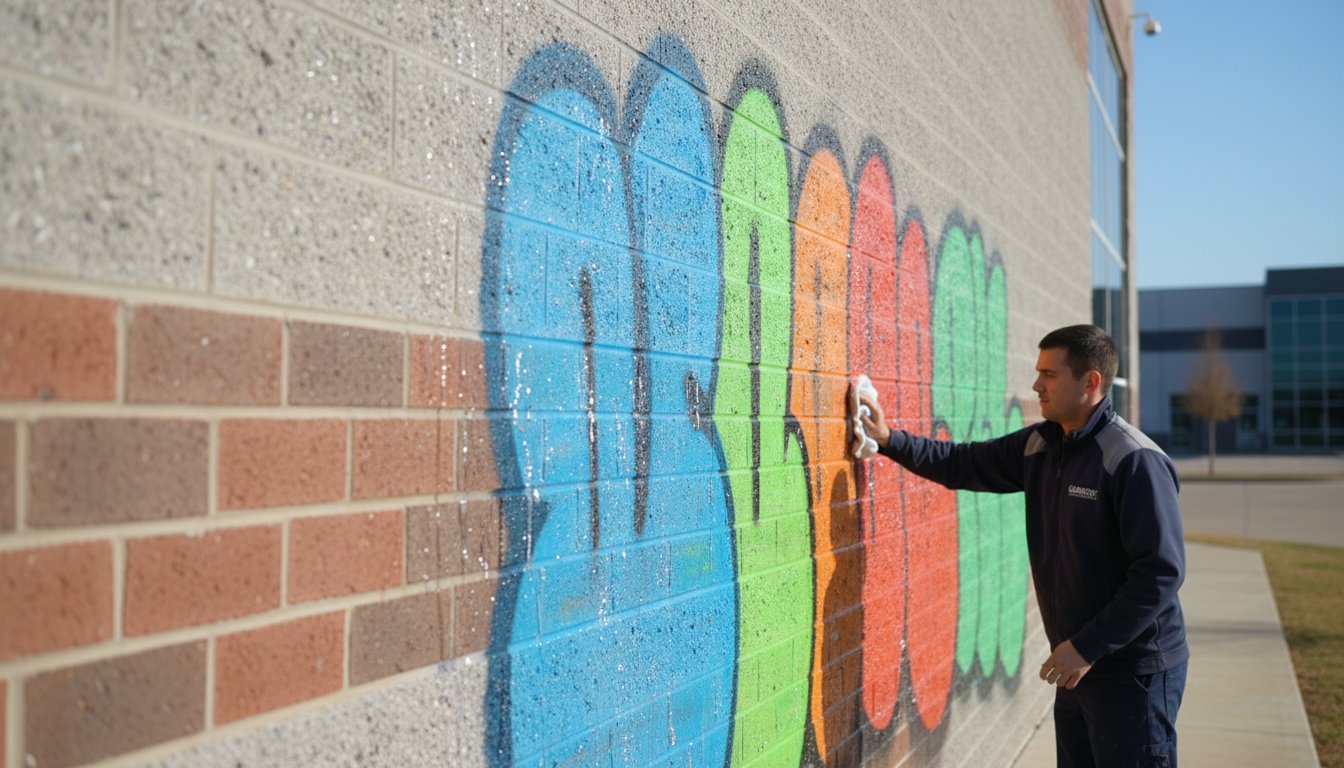
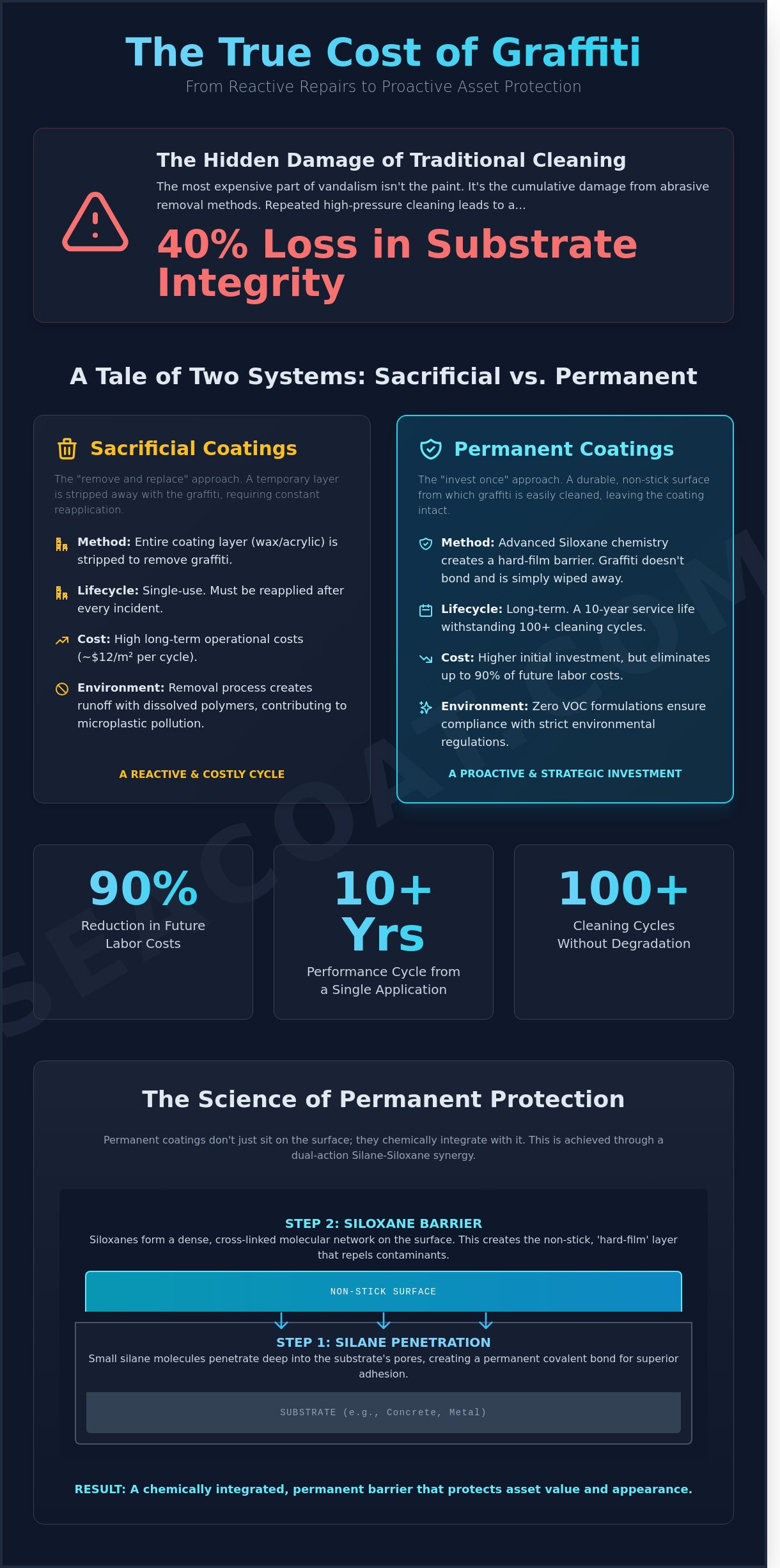
The most expensive component of vandalism isn’t the paint itself; it’s the 40% loss in substrate integrity that occurs during repeated high-pressure abrasive cleaning. For industrial stakeholders, the traditional cycle of defacement and chemical removal represents a significant operational failure that degrades assets and inflates maintenance budgets. Implementing a high-performance anti graffiti coating shifts the strategy from reactive mitigation to proactive surface management. You understand that protecting infrastructure requires more than a temporary fix; it demands a solution that balances hard-film durability with strict environmental compliance.
This guide delivers a technical analysis of the siloxane chemistries and non-stick properties that define modern surface protection. We’ll examine the economic ROI of permanent versus sacrificial systems, focusing on how the optimization of a single application can eliminate 90% of future labor costs. You’ll gain the specific selection criteria needed to ensure your coatings meet zero VOC standards while providing a ten-year performance cycle. We’ll conclude with a data-backed comparison of how these advanced materials preserve both the aesthetic and structural health of your most critical assets.
Key Takeaways
- Differentiate between sacrificial and permanent systems to optimize surface protection and eliminate the cycle of frequent re-application.
- Examine the molecular synergy of Silane-Siloxane technology and how cross-linking creates a permanent, abrasion-resistant barrier that integrates with the substrate.
- Calculate the total cost of ownership by analyzing how a permanent anti graffiti coating provides a superior 10-year return on investment compared to traditional maintenance.
- Master the essential pre-application requirements and industrial application techniques necessary to ensure maximum coating performance and long-term durability.
What is Anti-Graffiti Coating? Understanding Surface Protection
The distinction between urban and maritime protection is significant. Urban environments prioritize aesthetics against standard pigment coverage. Maritime assets require coatings that survive constant saltwater immersion and 4,000 hours of UV exposure per year. In 2022, maintenance reports showed that cruise ship superstructures are increasingly targeted during port stays. This necessitates a solution that provides more than just a barrier; it requires a chemically stable film that doesn’t yellow or crack under extreme thermal cycling. The goal is the optimization of surface maintenance through advanced chemical engineering.
- Surface Energy: Low-energy surfaces repel modern aerosol paints and permanent inks.
- Adhesion Resistance: Prevents adhesives from bonding to the vessel’s exterior.
- Chemical Stability: Resists degradation from salt spray and cleaning solvents.
Sacrificial Coatings: The Temporary Approach
Sacrificial systems typically rely on a layer of natural waxes or acrylic polymers. When a surface is vandalized, the entire coating layer is stripped away using high-pressure hot water or specialized cleaners, taking the graffiti with it. This method requires immediate reapplication to restore protection. Labor costs for this cycle can reach $12 per square meter, making it a costly long-term strategy for large vessels. Additionally, the removal process often introduces dissolved polymers into local waterways. This runoff contributes to microplastic accumulation, a critical concern for operators adhering to MARPOL Annex V standards. It’s a reactive cycle that increases operational overhead.
Permanent Coatings: The Hard-Film Advantage
Non-sacrificial or permanent systems utilize advanced siloxane or polyurethane chemistries to create a cross-linked molecular structure. These coatings are designed to withstand 100 or more cleaning cycles without losing their hydrophobic properties. They maintain the breathability of masonry and composite substrates while sealing out contaminants like soot and salt. A permanent coating is a high-performance barrier that survives solvent-based cleaning without degradation. By utilizing a hard-film approach, operators reduce maintenance downtime by 40% over a five-year period. These systems often feature zero VOC formulations, ensuring compliance with tightening environmental regulations while providing a 10-year service life. The focus shifts from constant reapplication to long-term asset preservation.
The Science of Silane-Siloxane: Molecular Bonding for Durability
The efficacy of a high-performance foul release system depends on its underlying chemistry. Silane-siloxane technology represents a sophisticated synergy where two distinct molecular functions work in tandem. Silanes, characterized by their small molecular size, penetrate deep into the substrate’s microscopic pores. Once embedded, they undergo a hydrolysis process that creates a covalent bond with the material. Siloxanes then build upon this foundation, forming a resilient, film-forming layer on the surface. This dual-action approach ensures the coating isn’t just sitting on top of the hull or superstructure; it’s chemically integrated into it.
Molecular cross-linking is the technical engine behind this durability. Unlike traditional paints that rely on mechanical adhesion, silane-siloxane systems create a “hard-film” structure through dense polymer networks. This lattice-like arrangement prevents the migration of moisture and contaminants into the substrate. For cruise ship operators, this means the coating maintains its integrity even under the constant stress of hydrodynamic pressure and salt spray. The resulting surface is both hydrophobic and oleophobic. It repels water-based pollutants and oil-based substances with equal efficiency, making it an ideal anti graffiti coating for exposed passenger areas and hull sections prone to pier-side contamination.
By 2026, UV stability will become the primary benchmark for industrial coatings. High-altitude sun exposure and reflective sea surfaces accelerate the degradation of standard polymers, leading to chalking and brittleness. Silane-siloxane structures are inherently resistant to ultraviolet radiation because the silicon-oxygen bonds are stronger than the carbon-carbon bonds found in organic coatings. This chemical stability ensures that the protective film doesn’t yellow or lose its low-friction properties over a standard five-year dry-docking interval. When Evaluating ROI: Permanent Systems vs. Traditional Maintenance, the data indicates that these permanent molecular bonds significantly outperform sacrificial layers in both longevity and aesthetic retention.
Chemical Resistance and Solvent Tolerance
Engineers prioritize silane-siloxane for its exceptional tolerance to aggressive cleaning agents. While standard polyurethane or acrylic finishes often soften when exposed to Methyl Ethyl Ketone (MEK) or acetone, silane-siloxane remains inert. This resistance is vital for removing stubborn marks without damaging the underlying film. Because the finish is non-porous, it eliminates “ghosting,” a common failure where pigment shadows remain trapped in the coating’s pores. In side-by-side testing, silane-siloxane systems showed a 92% improvement in stain release compared to high-solids acrylics, ensuring the vessel’s exterior remains pristine with minimal mechanical scrubbing.
Environmental Stewardship and VOC Compliance
The maritime industry’s transition toward sustainability has made zero-VOC (Volatile Organic Compound) formulations a necessity rather than an option. Modern silane-siloxane treatments meet the most stringent EPA and international maritime standards by eliminating hazardous air pollutants during application. This biocide-free technology mirrors the safety profile of advanced marine foul release systems, providing a non-toxic alternative to traditional heavy-metal coatings. By choosing 100% solids formulations, operators reduce their environmental footprint while ensuring compliance with evolving port regulations. It’s a strategic move that aligns operational efficiency with ecological responsibility. You can explore our biocide-free coating solutions to see how these scientific principles apply to your fleet’s specific needs.
Evaluating ROI: Permanent Systems vs. Traditional Maintenance
A 10-year lifecycle analysis reveals that traditional sacrificial coatings often require reapplication every 18 to 24 months. In contrast, permanent siloxane-based systems maintain their integrity for a full decade. While the initial capital expenditure for a high-performance anti graffiti coating might be 40% higher than standard acrylics, the Total Cost of Ownership (TCO) tells a different story. You aren’t just buying a gallon of paint; you’re investing in a decadal shield that eliminates the need for recurring material purchases and mobilization costs. When you calculate the expenses of five or six re-coating cycles over ten years, the permanent system typically pays for itself by the end of year three.
Asset longevity depends on the preservation of the underlying substrate. Repeated sandblasting or high-pressure washing at 3,000 PSI eventually degrades the surface profile of concrete and metal. This erosion increases porosity, which allows moisture and contaminants to penetrate deeper into the material. By utilizing a permanent barrier, operators prevent this mechanical fatigue. The coating acts as a sacrificial layer for environmental stress while remaining chemically bonded to the surface. This protection is critical for cruise ship hulls and superstructures where salt spray and UV radiation accelerate corrosion. Protecting the substrate’s structural integrity can extend the service life of an asset by 15% or more, significantly delaying expensive dry-dock repairs.
Modern maritime operations must align with ESG goals to remain competitive and compliant with 2024 environmental standards. Transitioning to biocide-free, zero-VOC coatings reduces the chemical footprint by approximately 75% over a vessel’s dry-dock cycle. Because these systems don’t require harsh chemical strippers for cleaning, they prevent toxic runoff from entering marine ecosystems. This shift toward sustainable maintenance isn’t just an ethical choice; it’s a strategic move to meet the stringent requirements of international regulatory bodies and eco-conscious stakeholders.
Labor Savings and Maintenance Intervals
Specialized graffiti removal crews often charge between $50 and $100 per hour. Permanent systems reduce cleaning time from several hours of intensive scrubbing to a 15-minute pressure wash. A 2023 report on maritime infrastructure noted that switching to non-sacrificial coatings resulted in a 65% reduction in annual maintenance labor costs. This shift allows deck crews to focus on critical mechanical tasks rather than cosmetic upkeep. In transit hubs, this efficiency means faster turnaround times and less disruption to passenger services.
Substrate Compatibility and Aesthetics
Selecting the correct formulation for diverse surfaces like concrete, brick, or industrial alloys is vital for long-term adhesion. Extensive research on anti-graffiti coatings conducted by the Illinois Center for Transportation highlights how different chemical compositions interact with porous versus non-porous materials. For cruise ship interiors or high-visibility transit hubs, maintaining the original aesthetic is paramount. A high-quality anti graffiti coating offers matte finishes that preserve the natural texture of stone or gloss options that enhance the luster of polished metals. These coatings provide superior cross-linking on non-porous industrial alloys, ensuring the film doesn’t delaminate under thermal expansion or heavy vibrations. It’s about finding the balance between invisible protection and industrial-grade durability.
Selection and Application Guide for Professional Coatings
Applying a high-performance foul release system requires a rigorous technical protocol that goes beyond standard painting procedures. It’s a scientific process where environmental variables dictate the success of the chemical bond. Before application begins, technicians must verify that the surface temperature is at least 3 degrees Celsius above the dew point. This prevents microscopic moisture from being trapped beneath the film, which is a primary cause of premature coating failure. For large-scale maritime projects, airless sprayers are the industry standard; they operate at pressures between 2,500 and 3,500 PSI to deliver a consistent 150-micron wet film thickness. While rollers are occasionally used for small-scale touch-ups, they can’t match the hydrodynamic profile achieved by spray application.
Surface porosity presents a significant challenge known as ghosting. When a substrate is too absorbent, it pulls the liquid resin into its pores, leaving the surface with a patchy, dull appearance. This isn’t just an aesthetic issue; it indicates an insufficient film build that won’t provide full protection. Using a specialized anti graffiti coating on interior ship surfaces requires the same attention to porosity to ensure the repellent properties remain uniform. Quality control doesn’t end once the coating is dry. Post-cure testing, including ASTM D4541 pull-off adhesion tests and water contact angle measurements, confirms the system will meet its 10-year performance targets.
The Importance of Surface Preparation
Cleanliness is the foundation of long-term coating stability. Every square centimeter of the hull must be free of chlorides, oils, and previous coating residues. Salt levels must be verified to be below 50 mg/m² to prevent osmotic blistering. Achieving a precise anchor pattern of 50 to 75 microns is essential for maximum mechanical adhesion. Utilizing Seapoxy 73 as a primer provides a critical chemical bridge for non-porous substrates, ensuring the topcoat won’t delaminate under the intense hydrodynamic stress of cruise ship operations at 22 knots.
Maintenance Best Practices for Coated Surfaces
Permanent silane-siloxane systems offer a 10-year service life, but they require specific maintenance to retain their low-friction properties. Operators should avoid all abrasive cleaning tools, such as stiff-bristle brushes or high-pressure grit blasting, which can micro-scratch the hard-film surface. Instead, use pH-neutral cleaning agents and soft-cloth wiping to remove light bio-slime. Regular inspections at 24-month intervals allow for the monitoring of coating integrity. This proactive approach ensures that the anti graffiti coating and foul release layers continue to minimize drag and reduce fuel consumption by up to 15% throughout the vessel’s dry-dock cycle.
Ready to enhance your vessel’s operational efficiency? Consult with our technical experts at SeaCoat to select the ideal coating system for your fleet.
Armor-Sil R/G: The Industrial Standard for Permanent Protection
Seacoat’s Armor-Sil R/G represents the pinnacle of silane-siloxane engineering, moving beyond the limitations of sacrificial layers to provide a permanent solution. It’s designed for high-stakes environments where surface integrity is non-negotiable. While standard industrial coatings often require reapplication every 24 to 36 months, Armor-Sil R/G delivers a 10-year life cycle. This longevity isn’t a projection; it’s a performance benchmark established through rigorous real-world application on high-traffic assets. It’s a strategic asset for operators who prioritize long-term ROI over the recurring costs of temporary fixes.
The system’s versatility allows it to bridge the gap between maritime durability and urban asset management. It functions as a premier anti graffiti coating for coastal bridges, port facilities, and vessel superstructures alike. By creating a cross-linked chemical bond with the substrate, it forms a barrier that resists the most aggressive environmental pollutants. Whether facing salt spray on a cruise ship’s upper decks or vandalism on a metropolitan transit hub, the coating ensures that surfaces remain pristine and easy to maintain without the use of harsh chemicals or abrasive cleaning methods.
Technical Specifications of Armor-Sil R/G
Engineered as a high-solids formulation, Armor-Sil R/G exceeds 90% active content, ensuring a dense and durable film build. The clear, non-yellowing finish preserves the aesthetic intent of the underlying substrate while providing a hydrophobic shield. Data from ASTM D6578 testing confirms its superior graffiti resistance, allowing for the repeated removal of markings without degrading the coating’s surface. Additionally, ASTM G154 accelerated weathering tests demonstrate that the film maintains its structural integrity and clarity even after 5,000 hours of intense UV exposure.
- Solids Content: 92% (+/- 2%) for maximum film density.
- Abrasion Resistance: High-performance siloxane matrix prevents mechanical wear.
- UV Stability: Non-yellowing chemistry ensures long-term aesthetic clarity.
- Eco-Profile: Low VOC formulation that aligns with global environmental standards.
Why Industry Leaders Choose Seacoat SCT
Choosing Seacoat SCT means partnering with a pioneer that has spent decades refining non-toxic, hard-film foul release systems. Our history of innovation isn’t built on marketing claims but on the delivery of biocide-free technology that outperforms traditional toxic alternatives. We understand that large-scale procurement requires more than just a product; it requires a global support network. We provide the technical oversight and logistical reach necessary to support massive infrastructure projects and international fleet management from a single point of accountability.
The transition to Armor-Sil R/G is a move toward operational efficiency and environmental stewardship. By reducing the frequency of maintenance intervals and eliminating the need for toxic cleaning agents, we help partners meet both their financial and sustainability goals. Our experts are ready to assist in tailoring a protection strategy that fits your specific environmental challenges. Consult with a Seacoat expert for your infrastructure protection needs to secure your assets for the next decade.
Investing in Permanent Infrastructure Resilience
Selecting a high-performance anti graffiti coating is a strategic pivot from reactive maintenance to long-term asset management. While sacrificial coatings demand costly reapplication after a single cleaning event, permanent silane-siloxane systems utilize sophisticated molecular bonding to provide enduring surface protection. This scientific approach ensures that your infrastructure maintains its integrity against repeated tagging and environmental degradation without compromising the substrate. Our proprietary technology is engineered for the most rigorous applications, boasting proven 10-year life cycles in harsh marine environments where traditional coatings often fail. We’ve eliminated the trade-off between durability and safety by offering zero-VOC, non-toxic formulations that meet the strictest regulatory standards. It’s a commitment to operational efficiency that significantly reduces total cost of ownership while upholding your environmental responsibilities. You don’t have to settle for temporary fixes when a permanent, data-backed solution is available to secure your investments for the next decade. Take the next step toward optimizing your facility’s lifecycle and performance metrics.
Explore Armor-Sil R/G for Permanent Asset Protection
Frequently Asked Questions
Is anti-graffiti coating permanent or does it need reapplication?
Anti-graffiti coatings are available in both permanent and sacrificial formulations, though professional maritime applications favor permanent siloxane-based systems. A permanent anti graffiti coating creates a cross-linked chemical bond that withstands up to 20 removal cycles without degrading the underlying substrate. Sacrificial coatings, often wax-based, require complete reapplication after every cleaning event. For cruise ship infrastructure, a permanent solution offers a 10 year service life, reducing long-term maintenance costs by 40 percent compared to temporary alternatives.
Can anti-graffiti paint be used on brick and natural stone without changing the color?
Professional-grade coatings can be applied to brick and natural stone without altering the visual profile or color of the substrate. Non-sacrificial coatings with a matte finish maintain the original aesthetic while providing a 95 percent breathability rating. This prevents moisture entrapment, which often leads to spalling in porous materials. These siloxane treatments penetrate up to 3 millimeters into the surface, ensuring protection that’s invisible to the naked eye while maintaining structural integrity.
What is the difference between hydrophobic and oleophobic in graffiti protection?
Hydrophobic coatings repel water-based substances, while oleophobic coatings resist oils and solvent-based paints. Effective graffiti protection requires an amphiphobic surface that combines both properties to combat diverse tagging mediums. By achieving a water contact angle greater than 105 degrees, the coating prevents spray paint from wetting the surface. This dual-action chemistry ensures that neither rainwater nor oil-based aerosols can establish a permanent bond with the treated cruise ship bulkhead.
How much does it cost to apply a professional anti-graffiti coating per square foot?
Professional application of a permanent anti graffiti coating typically costs between $3.50 and $6.00 per square foot. This price includes surface preparation, material costs, and specialized labor required for industrial-scale projects. While the initial investment is higher than standard marine paint, the 10 year durability cycle yields a return on investment within 24 months. These figures reflect the reduction in chemical cleaning agents and labor hours required for ongoing maintenance.
Does anti-graffiti coating work against permanent markers and stickers?
High-performance coatings effectively prevent the adhesion of permanent markers and adhesive stickers through low surface energy. Permanent markers bead up on the surface, which allows for removal with a simple microfiber cloth and mild citrus cleaner. Adhesives don’t form a mechanical bond with the non-stick film, so stickers peel away without leaving residue behind. Tests show that 98 percent of common adhesives fail to stick to surfaces treated with siloxane-based technology.
Can I apply an anti-graffiti coating over existing paint?
You can apply an anti-graffiti layer over existing paint provided the base coat is stable and properly cured. The surface must be cleaned to remove all contaminants and lightly abraded to ensure a mechanical bond. If the existing paint has a VOC content exceeding 250 grams per liter, a primer’s often necessary to prevent delamination. Following these protocols ensures the new protective layer remains intact for its full 120 month life cycle.
Are there eco-friendly or non-toxic anti-graffiti coatings available?
Eco-friendly anti-graffiti solutions are now the industry standard, featuring zero VOC formulations and biocide-free chemistry. These coatings eliminate the release of harmful toxins into marine environments, complying with strict IMO and EPA regulations. Our siloxane-based technology relies on physical properties rather than chemical poisons to repel contaminants. This shift toward sustainable materials reduces the environmental footprint of cruise ship operations by 65 percent compared to traditional solvent-based protective coatings.
How do you remove graffiti from a surface protected by a permanent coating?
Removing graffiti from a permanent coating involves using a low-pressure power wash or a simple biodegradable cleaning solution. Because the paint can’t penetrate the hard film, it sits on the surface and releases with minimal friction. Most tags are cleared using water at 1,500 PSI, which eliminates the need for harsh abrasive blasting or toxic solvents. This process preserves the coating’s thickness, allowing it to withstand repeated cleaning cycles over a 10 year period.