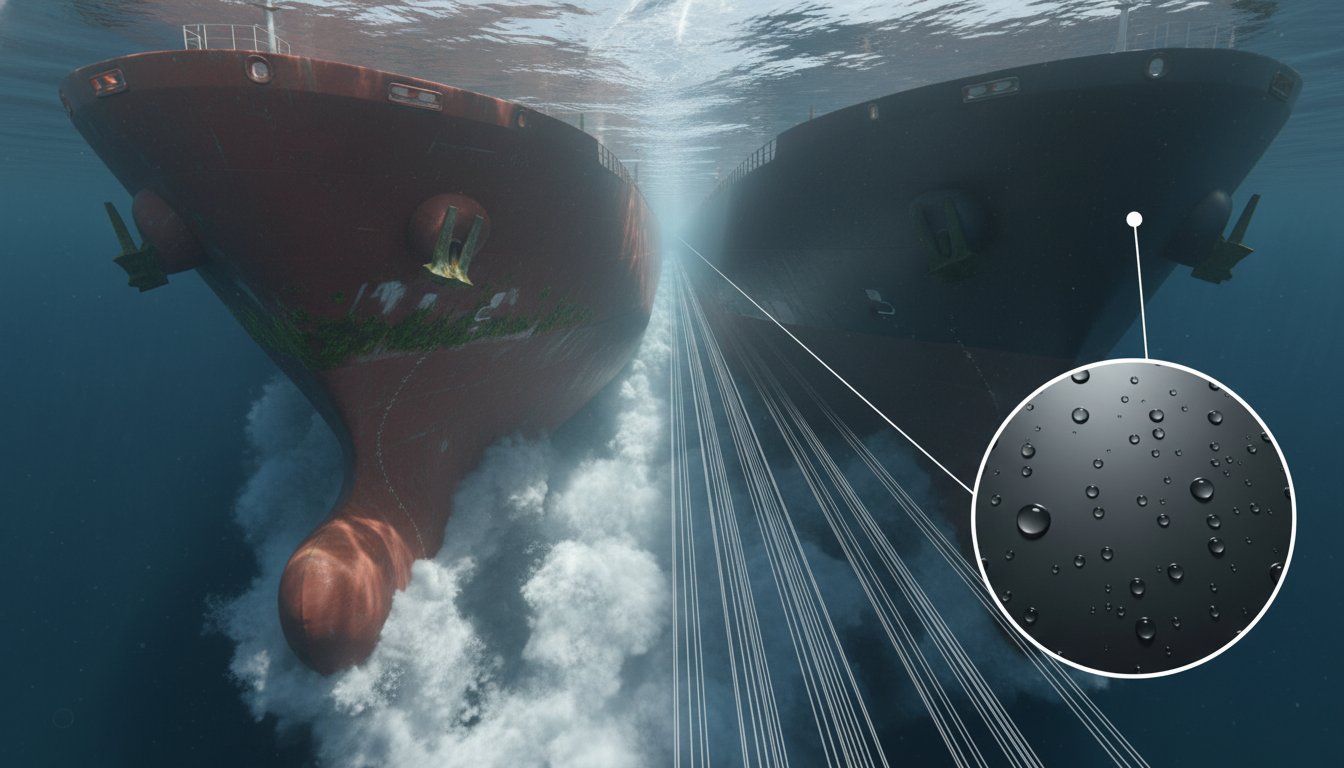
What if the very coating designed to protect your vessel is actually the primary obstacle to its fuel efficiency and regulatory compliance? While traditional toxic antifouling paints have been the industry standard for decades, they often create a cycle of increasing frictional drag and frequent, costly dry-docking. Choosing a high-performance silane coating for marine applications represents a strategic shift from chemical poisoning to mechanical surface optimization. You likely already feel the pressure of the 2026 IMO CII Phase 2 requirements, which now demand an 11% reduction in carbon intensity relative to 2019 baselines. It’s clear that the old methods of hull maintenance are no longer sustainable for your bottom line or the environment.
In this guide, you’ll discover how advanced silane-siloxane technology replaces biocides to deliver superior vessel efficiency and full environmental compliance. We’ll show you how to achieve EEXI compliance and reduce fuel consumption by 10% or more by utilizing hard-film solutions like Sea-Speed V 10 X Ultra. We will explore the technical mechanisms of hydrophobic surfaces and provide a clear roadmap for extending your hull’s service life to 10 years or more.
Key Takeaways
- Learn how a silane coating for marine applications utilizes organofunctional molecules to create a permanent, hydrophobic bond that eliminates the need for toxic biocides.
- Understand the mechanical advantages of hard-film systems over soft silicones, specifically regarding abrasion resistance and the physics of hydrodynamic foul release.
- Discover how optimizing hull surface morphology directly supports EEXI compliance and reduces fuel consumption by 10% or more.
- Evaluate the lifecycle impact of Sea-Speed V 10 X Ultra, a zero-VOC solution designed to extend dry-docking intervals to 10 years or longer.
Understanding Silane Coating in Marine Environments
A silane is an organofunctional molecule that serves as a high-strength chemical bridge between inorganic substrates, such as a steel or aluminum hull, and organic polymers. This molecular architecture allows for the creation of a permanent, non-leaching bond that fundamentally differs from the temporary mechanical adhesion of traditional paints. For decades, the maritime industry relied on 20th-century biocides that functioned by poisoning the surrounding aquatic environment. However, the 2026 implementation of IMO CII Phase 2 regulations has accelerated a shift toward 21st-century surface modification. These standards require an 11% reduction in carbon intensity relative to 2019 baselines, making the drag-reducing properties of a silane coating for marine applications a critical operational asset rather than a simple maintenance choice.
The process of Understanding Silanization reveals how these coatings transform a hull into a hydrophobic barrier at the molecular level. Unlike soft coatings that rely on sacrificial layers or toxic leaching, silane-siloxane systems establish a stable molecular matrix that doesn’t degrade when exposed to high-shear hydrodynamic forces. This permanent bond ensures that the protective qualities of the coating remain consistent throughout the entire docking cycle, providing a level of reliability that traditional ablative paints cannot match.
The Chemistry of the Silane-Siloxane Bond
The technical superiority of this chemistry stems from its inherent hydrolytic stability. In harsh saltwater environments, many coatings succumb to water ingress and osmotic blistering; silane-siloxane systems prevent this through the formation of a dense, cross-linked polymer network. The Si-O-Si (siloxane) backbone provides exceptional resistance to UV radiation and thermal fluctuations, ensuring the coating remains intact over a ten-year service life. This backbone is significantly stronger than the carbon-carbon bonds found in traditional epoxies, providing a durable foundation that supports long-term EEXI compliance and structural integrity.
Addressing the Marine Biofouling Challenge
Marine biofouling begins with the formation of a microscopic slime layer, which increases frictional drag and fuel consumption. A silane coating for marine applications mitigates this by creating a low-energy surface that prevents marine organisms from establishing a permanent foothold. While traditional antifouling focuses on killing organisms through the release of toxins, silane technology focuses on foul release. It’s a fundamental change in strategy that prioritizes mechanical efficiency over chemical warfare.
- Molecular Smoothness: This minimizes the available surface area for attachment, making it difficult for microorganisms to adhere.
- Hydrophobicity: The coating prevents the biological “glues” used by barnacles and tubeworms from curing effectively on the surface.
- Mechanical Release: The system uses the vessel’s own movement through the water to shed any accumulated growth, maintaining a clean hull profile during transit.
By prioritizing surface energy over chemical toxicity, operators can maintain a clean hull without the environmental liability of leaching heavy metals. This synergy of high performance and ecological safety is the hallmark of modern silane technology.
The Mechanism of Hard-Film Foul Release
Many operators are familiar with the foul release concept but have historically been limited to soft silicone technologies. While silicones offer low surface energy, they’re notoriously fragile and prone to tearing during fender contact or aggressive hull cleaning. A high-performance silane coating for marine applications solves this by providing a hard-film surface. This material doesn’t just repel organisms; it creates a structurally sound layer that withstands the physical rigors of commercial shipping. By transitioning to a hard-film system, you eliminate the risk of coating failure that typically plagues softer alternatives.
The physics of foul release relies on the vessel’s velocity to shed bio-growth. As the ship moves through the water, the shear force overcomes the weak bond between marine organisms and the hull. Because the film is inherently hard and durable, it can withstand aggressive in-water cleaning without losing its integrity. This allows operators to maintain a consistent Average Surface Roughness (ASR) over multi-year service windows, ensuring that the hydrodynamic profile remains as efficient as it was on day one. It’s a permanent solution that prioritizes long-term mechanical stability.
Surface Energy and Frictional Drag
Surface energy is a primary driver of skin friction, which acts as a major component of total hull resistance. Silane-siloxane chemistry achieves a surface tension significantly lower than traditional epoxies or ablative paints. Silane molecules align with their hydrophobic tails facing outward to create a uniform, low-energy barrier that repels water and biological adhesion. This molecular orientation reduces the “grip” of the water on the hull, leading to measurable fuel savings. Research into Corrosion and Microbiologically Influenced Corrosion Resistance highlights how these surfaces also prevent the chemical signaling used by larvae to colonize a hull, effectively stopping the fouling process before it begins.
Durability and Impact Resistance
Hard-film silanes are uniquely suited for ice-class vessels and high-traffic routes where abrasion is a constant threat. Unlike soft silicones that fail under the stress of fender contact or ice strike, these coatings maintain their structural integrity through a dense, cross-linked matrix. The film thickness is engineered for longevity, resisting the docking damage common during maintenance cycles. This durability ensures that the hydrodynamic profile remains optimized for years, providing a reliable return on investment. For those seeking to stabilize their operational costs, integrating a strategic asset like Sea-Speed V 10 X Ultra provides a permanent solution to hull degradation.
Silane vs. Traditional Antifouling and Silicones
Choosing the right hull protection requires a clear understanding of the operational trade-offs between chemical toxicity and mechanical performance. Traditional ablative paints function through a sacrificial cycle, where layers of paint leach biocides into the water to kill marine growth. This process is inherently flawed for modern shipping; as the coating erodes, it leaves behind a rough, porous surface that significantly increases frictional drag. In contrast, a silane coating for marine applications provides a permanent, non-ablative surface that maintains its hydrodynamic profile for the long term. While ablative systems often require re-application every 24 months, silane-siloxane technology is engineered for a service life exceeding 10 years.
Soft silicone coatings were once considered the primary alternative to biocidal paints, yet they introduce a different set of vulnerabilities. These films are notoriously fragile and prone to tearing or delamination during routine operations such as docking or fender contact. Once the soft film is breached, the protective barrier is compromised, leading to localized fouling and the need for expensive spot repairs. Hard-film silane systems bridge the gap by offering the low surface energy of a foul-release coating with the impact resistance of a high-performance epoxy. This mechanical durability ensures that the vessel remains protected even in high-traffic commercial environments.
The Environmental Regulatory Landscape in 2026
The maritime industry has reached a critical juncture regarding chemical discharge. Port authorities and international bodies are tightening restrictions, moving toward a comprehensive toxic antifouling paint ban that targets heavy metal leaching. Because silane-siloxane coatings are chemically inert and contain zero biocides, they bypass the complex biocide registration hurdles required for traditional paints. This makes them a future-proof asset for operators concerned with IMO CII ratings and local environmental compliance. Transitioning to a non-toxic system isn’t just about stewardship; it’s about maintaining the “license to operate” in increasingly sensitive global waters.
Maintenance and In-Water Cleaning
Maintenance protocols differ vastly between these technologies. Soft coatings are too delicate for mechanical brushing, often requiring specialized, low-pressure cleaning that is both time-consuming and less effective. Traditional ablative bottom paint alternatives present a different problem: cleaning them often triggers a massive release of toxic plumes into the harbor. Hard-film silanes allow for aggressive in-water cleaning without damaging the film or releasing contaminants. This capability reduces the overall cost of ownership by extending cleaning intervals and ensuring that the hull remains at peak efficiency between dry-docking events.
Operational ROI: Fuel Efficiency and EEXI Compliance
The economic viability of a modern fleet depends on minimizing frictional resistance. While previous sections detailed the molecular bond of a silane coating for marine applications, the operational reality is found in the fuel log. A smoother hull translates directly to reduced power requirements. By maintaining a low Average Surface Roughness (ASR), operators can realize fuel savings between 6% and 12%, depending on vessel type and route. This efficiency doesn’t just lower costs; it accelerates transit times, improving time-to-market for time-sensitive commercial logistics.
Maximizing the return on investment requires looking beyond the initial application cost. Traditional coatings often fail to account for the hidden expenses of increased drag and frequent maintenance. Silane-siloxane systems offer a strategic pivot, allowing for extended dry-docking intervals that can reach up to 120 months. This longevity reduces the total cost of ownership by minimizing off-hire time and the labor-intensive requirements of sacrificial paint cycles.
EEXI and CII Compliance Strategies
The 2026 implementation of IMO CII Phase 2 mandates an 11% reduction in carbon intensity, placing immense pressure on existing assets. Selecting the correct boat hull paint serves as a primary technical measure for greenhouse gas (GHG) reduction. This technology works in synergy with energy-saving devices (ESDs) like Mewis ducts or propeller boss fin caps by ensuring the hull surface doesn’t undermine the gains made by mechanical hardware. By maintaining a microscopic surface profile that minimizes turbulent flow, silane-siloxane systems can reduce a vessel’s total fuel consumption by up to 12% over its service life.
Long-Term Asset Protection
Asset longevity is a critical pillar of operational ROI. Traditional coatings often require full-blast renewals because of underlying corrosion or film degradation. A high-performance silane coating for marine applications establishes superior adhesion that effectively seals the substrate against chloride ion penetration. This protection prevents the “pitting” that compromises structural integrity over time. Maintaining a pristine hull condition not only reduces the frequency of major renewals but also significantly preserves the resale value of the vessel. For fleet managers focused on long-term capital expenditure, adopting Sea-Speed V 10 X Ultra represents a strategic move toward permanent hull optimization.
Sea-Speed V 10 X Ultra: The Premier Silane-Siloxane Solution
Sea-Speed V 10 X Ultra represents the practical application of the hard-film silane technology discussed throughout this article. While many competitors offer resin modifications for basic scratch resistance, this proprietary system is engineered specifically for the complex fluid dynamics of the maritime environment. It isn’t an additive; it’s a dedicated silane coating for marine applications designed to replace the sacrificial cycle of toxic paints. By utilizing a high-density, cross-linked matrix, Sea-Speed provides an ultra-smooth finish that remains stable across extreme temperature gradients and varying salinity levels. This stability ensures the hull maintains its hydrodynamic profile from the moment it leaves the dry dock until its next scheduled inspection years later.
The performance metrics of this system are supported by extensive deployments in both commercial shipping and military sectors. Data from these applications demonstrate that the coating maintains its integrity even under the abrasive stress of high-speed transit and ice-class operations. Unlike traditional methods, this system doesn’t rely on the constant release of chemicals to function. It relies on physics. The result is a durable, non-stick surface that facilitates the effortless release of bio-growth through the vessel’s own movement.
Technical Specifications and Certifications
Sea-Speed V 10 X Ultra meets rigorous ASTM standards for adhesion, impact resistance, and flexibility. These certifications confirm its role as the premier choice for marine coatings in high-fouling tropical waters, where biological pressure is most intense. The formulation contains zero VOCs and zero biocides, ensuring that no heavy metals or persistent organic pollutants enter the marine ecosystem. This makes it a strategic asset for operators seeking to achieve the highest possible CII ratings without compromising on physical hull protection or environmental compliance.
Getting Started with a Fleet Conversion
Transitioning a fleet from traditional ablative paint to a Sea-Speed system requires a methodical approach to surface preparation. The process involves removing existing sacrificial layers to expose the substrate, followed by the application of the Seapoxy 73 base coat to ensure maximum silane adhesion. While we don’t provide application services, Seacoat SCT, LLC provides comprehensive technical support for shipyards and professional applicators to ensure the 10-year service life is achieved. This support includes detailed application protocols and quality control guidelines to guarantee the coating’s long-term performance.
Operators can begin the process by requesting a customized performance projection. This analysis uses specific vessel data to estimate potential fuel savings and carbon intensity improvements. By integrating Sea-Speed V 10 X Ultra into your maintenance cycle, you’re investing in a permanent solution that aligns operational efficiency with environmental stewardship. Contact Seacoat SCT, LLC to review technical data and start your fleet conversion strategy.
Optimizing Your Fleet for the Next Decade of Maritime Efficiency
The transition from sacrificial chemical leaching to mechanical surface optimization represents a fundamental shift in vessel management. By adopting a high-performance silane coating for marine applications, operators move beyond temporary maintenance cycles toward a permanent strategic asset. This technology doesn’t just protect the hull; it optimizes the entire operational profile by reducing frictional drag and ensuring compliance with the evolving regulatory landscape. As established throughout this analysis, molecular smoothness and hard-film durability provide a level of reliability that traditional ablative paints and fragile silicones simply can’t match.
Since 2001, the proprietary silane-siloxane technology championed by Seacoat SCT, LLC has provided a reliable path to operational excellence. These systems deliver proven fuel savings of up to 12% while offering a 10-year warranted service life capability. This synergy of durability and efficiency allows you to meet environmental mandates without sacrificing bottom-line performance. It’s time to invest in a solution that values longevity and stewardship as much as your operational metrics. Request a Technical Consultation for Your Fleet from Seacoat SCT, LLC to begin your transition to a more efficient and compliant future.
Frequently Asked Questions
What is a silane coating for marine applications?
A silane coating for marine applications is a specialized surface treatment that uses organofunctional molecules to create a permanent, hydrophobic bond with the hull substrate. These molecules act as a chemical bridge between inorganic materials like steel and organic polymers to form a dense, cross-linked matrix. The resulting hard-film foul release system provides a durable barrier that optimizes hydrodynamic efficiency while protecting the underlying structure from corrosion.
How does silane-siloxane differ from traditional antifouling paint?
Silane-siloxane technology differs from traditional antifouling paint by utilizing mechanical foul release rather than chemical toxicity. Traditional paints function by leaching biocides, such as copper or other heavy metals, to kill marine organisms. In contrast, silane-based systems create a low-energy surface that prevents biological adhesion from the start. This shift from sacrificial leaching to a permanent, non-stick surface significantly reduces frictional drag and eliminates the need for frequent reapplication.
Is silane coating environmentally safe for sensitive marine habitats?
Yes, these coatings are specifically engineered for environmental safety and are suitable for use in sensitive marine habitats. Products like Sea-Speed V 10 X Ultra contain zero biocides and zero volatile organic compounds (VOCs), ensuring that no harmful chemicals or persistent organic pollutants are discharged into the water. This makes them a compliant choice for vessels operating in protected areas where strict environmental regulations and discharge standards are enforced.
Can silane coatings be applied to aluminum or composite hulls?
Silane coatings are highly versatile and bond effectively to aluminum, steel, and composite hulls. The chemical bridging mechanism ensures superior adhesion across diverse materials, provided the surface is correctly prepared. Utilizing a high-performance primer like Seapoxy 73 provides the necessary foundation for the silane-siloxane matrix to establish its permanent molecular bond, ensuring long-term protection regardless of the hull material.
What is the expected service life of a silane-based foul release system?
A high-quality silane-based foul release system is designed for a service life of 10 years or more. This longevity represents a significant improvement over the typical 24-month cycle associated with traditional ablative paints. The inherent durability of the hard-film matrix ensures that the coating maintains its hydrodynamic properties and Average Surface Roughness (ASR) throughout its entire service life, reducing the frequency of costly dry-docking intervals.
Does a silane coating require a specific speed to release bio-fouling?
While these coatings typically facilitate the release of bio-fouling at speeds between 8 and 10 knots, they don’t strictly require high velocity to remain effective. Because of the exceptionally low surface energy, any growth that does attach is weakly bonded and can be removed with minimal shear force. This flexibility is particularly beneficial for vessels with varied duty cycles or those that experience extended idle periods in high-fouling waters.
How does silane technology help with EEXI and CII compliance?
This technology supports EEXI and CII compliance by reducing the power required to propel the vessel through the water. By maintaining a smoother hull profile and reducing frictional drag, silane coatings can lower fuel consumption by 6% to 12%. This directly improves a ship’s operational carbon intensity rating, helping operators meet the 11% reduction targets mandated by the 2026 IMO CII Phase 2 standards.
Can I clean a silane-coated hull while the vessel is in the water?
You can safely perform in-water cleaning on a silane-coated hull using standard mechanical methods without risking damage to the film. Unlike soft silicone coatings that tear easily or ablative paints that release toxic plumes when scrubbed, the hard-film surface of Sea-Speed V 10 X Ultra remains structurally intact. This allows for proactive maintenance that preserves the vessel’s hydrodynamic efficiency without discharging contaminants into the harbor environment.