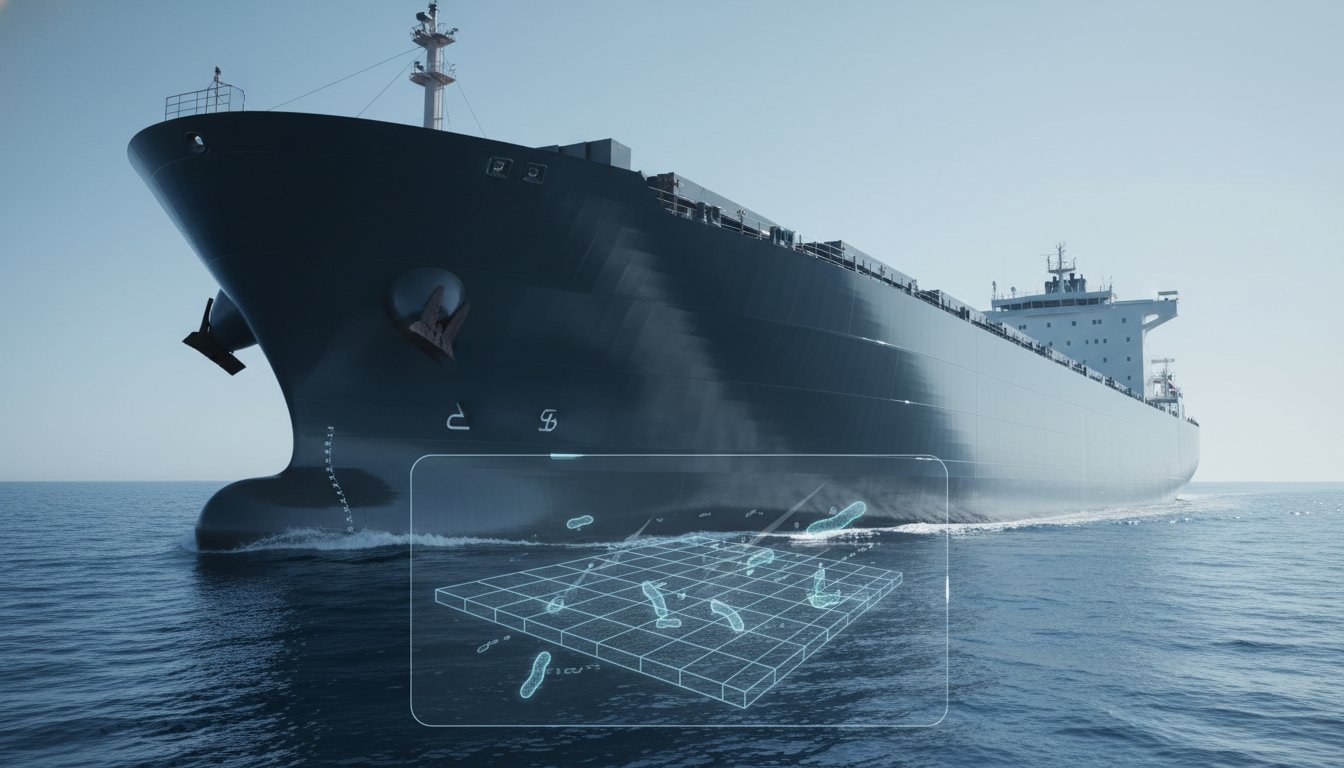
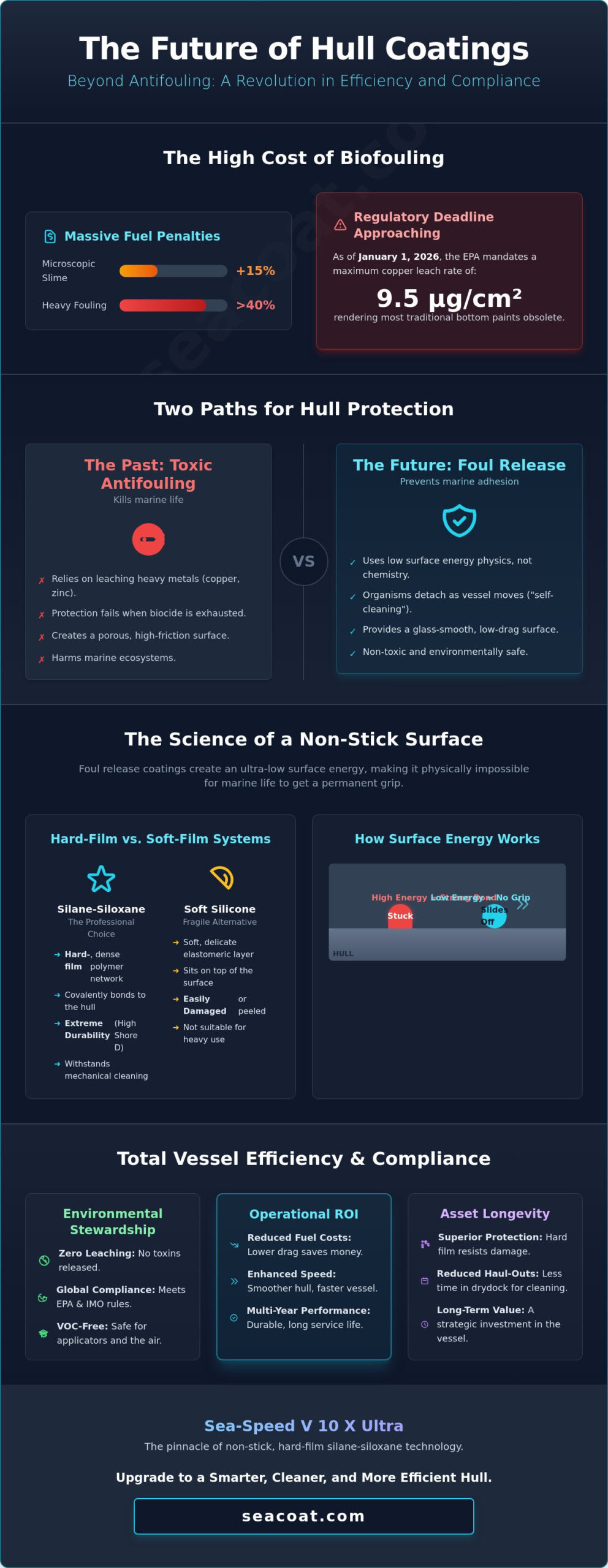
Did you know that even a microscopic layer of slime on your hull can increase fuel consumption by over 15%, while heavy fouling often leads to performance penalties exceeding 40%? As of January 1, 2026, the maritime industry faces a critical regulatory shift; the EPA now mandates a maximum copper leach rate of 9.5 micrograms per square centimeter, effectively rendering many traditional bottom paints obsolete. You likely recognize the mounting pressure to balance operational efficiency with these strict environmental standards, especially when frequent hauling for cleaning erodes your bottom line. This article demonstrates how a non-stick hull coating for boats utilizing advanced silane-siloxane technology, such as Sea-Speed V 10 X Ultra, eliminates marine growth and reduces fuel costs without the toxic chemical load of legacy systems. We’ll examine the material science of low-surface-energy coatings, the measurable impact of reduced hydrodynamic drag on vessel speed, and why hard-film foul-release systems are the superior strategic choice for long-term regulatory compliance and asset longevity.
Key Takeaways
- Identify the technical transition from toxic biocide-release mechanisms to advanced foul-release systems that utilize low surface energy to prevent permanent marine adhesion.
- Compare the structural integrity of hard-film silane-siloxane systems against soft silicone alternatives to determine which provides the necessary durability for heavy industrial use.
- Examine the direct correlation between hull roughness and fuel efficiency, highlighting how a non-stick hull coating for boats sustains a smooth surface profile for multi-year performance.
- Explore the environmental and operational benefits of VOC-free, non-toxic formulations like Sea-Speed V 10 X Ultra that ensure global regulatory compliance without sacrificing asset protection.
- Gain technical insight into the Shore D hardness of modern coatings to ensure your vessel’s surface can withstand mechanical cleaning without peeling or compromising hydrodynamic efficiency.
Beyond Antifouling: What is a Non-Stick Hull Coating for Boats?
The maritime industry is moving away from the era of chemical deterrence. For decades, “bottom paint” meant antifouling; a system designed to poison marine life to keep hulls clean. Today, a non-stick hull coating for boats represents a sophisticated departure from this model. These systems are classified as “foul release” rather than “antifouling.” This distinction is technical and significant. While antifouling kills, foul release prevents. It utilizes the principles of material science to create a surface energy so low that organisms simply cannot achieve a permanent bond. This low-surface-energy environment acts as a mechanical barrier. When a vessel reaches cruising speed, the shear stress of the water flow is sufficient to detach colonizing organisms. This self-cleaning property is the hallmark of a true foul-release system.
Foul Release vs. Traditional Antifouling
Traditional antifouling paints generally fall into two categories: hard biocidal and ablative. Both rely on leaching heavy metals, such as copper or zinc, into the surrounding water. This process is inherently temporary; once the biocide is exhausted, the protection fails. This leaching process also creates a porous, high-friction surface that degrades over time. A non-stick hull coating for boats, specifically those based on silane-siloxane technology like Sea-Speed V 10 X Ultra, provides a hard-film alternative. These coatings offer several functional advantages:
- Zero Leaching: They don’t release toxins into the water column.
- Surface Smoothness: They provide a glass-smooth finish that enhances hydrodynamic efficiency.
- Longevity: The protection is physical, not chemical, extending the service life of the coating.
This smoothness reduces the energy required to move through the water. It turns the hull into a performance asset rather than a maintenance burden.
The Environmental Imperative
Regulatory pressure is the primary driver of the 2026 market shift. With the EPA’s 9.5 microgram copper leach rate limit now in full effect, many legacy products are legally non-compliant. This has accelerated the adoption of environmental marine coatings that offer zero-VOC profiles. Biofouling is a complex biological process, but modern chemistry allows us to manage it without ecological collateral damage. By choosing non-stick systems, operators eliminate the release of organotins and heavy metals into sensitive marine ecosystems. It’s about stewardship as much as it’s about compliance. A clean hull achieved through physics rather than toxicity ensures that water quality remains uncompromised in harbors and marinas alike. In 2026, the focus has shifted from mere protection to total vessel efficiency. The IMO’s Carbon Intensity Indicator requirements mean that every percentage point of drag matters. Non-stick coatings are no longer a luxury; they are a strategic necessity for any operator looking to meet stringent carbon reduction targets.
The Science of Slick: Silane-Siloxane vs. PTFE and Silicone
Surface energy dictates how a non-stick hull coating for boats interacts with the marine environment. At a molecular level, high surface energy materials allow for strong chemical or mechanical bonding; this is exactly what barnacles and tube worms require to anchor themselves. Conversely, materials like silane-siloxane possess exceptionally low surface energy. This property creates a “non-wetting” surface where water molecules and biological adhesives cannot easily spread or grip. Hydrophobicity plays a crucial role here. By repelling water at the boundary layer, the coating minimizes turbulent flow and reduces frictional drag, allowing the vessel to move through the water column with significantly less resistance.
Why Silane-Siloxane is the Professional Choice
Silane-siloxane technology stands apart due to its covalent bonding process. Unlike soft silicone coatings that sit as a delicate, elastomeric layer on the hull, silane-siloxane creates a dense, cross-linked polymer network. This results in a hard-film finish that balances high-slip characteristics with extreme physical durability. Soft silicones are notorious for their fragility. A simple encounter with a dock fender or a minor grounding can tear the film, leading to localized fouling and potential corrosion. Silane-siloxane coatings provide robust chemical resistance against fuels, oils, and harsh solvents while maintaining structural stability under intense UV exposure. This ensures the coating doesn’t chalk or degrade during extended multi-year service windows. If you’re looking to optimize your vessel’s performance profile, you can explore technical specifications for professional-grade foul release options.
Limitations of PTFE and Generic Slick Paints
PTFE-based coatings are often marketed for their high slip coefficients, yet they frequently fail in high-stakes marine applications. The primary issue is the “attachment problem.” While PTFE is inherently slick, it struggles to form a permanent, reliable bond with fiberglass or metal hulls, which often leads to premature delamination. Marine growth can eventually bypass these low-grade surfaces by finding microscopic anchor points where the coating has worn thin or detached. Silane-siloxane is a cross-linked polymer that provides both low friction and high impact resistance. This combination ensures that the non-stick properties remain functional for years rather than months. While PTFE and soft silicones focus solely on the “slick” factor, professional silane-siloxane systems prioritize the mechanical hardness necessary to survive the rigors of the open sea. This hardness allows the surface to be cleaned without the risk of damaging the integrity of the protective film.
Operational ROI: Frictional Drag and Fuel Efficiency
The economic viability of vessel operations is inextricably linked to the hydrodynamic profile of the hull. Every micron of surface roughness introduces parasitic drag, which forces the propulsion system to work harder to maintain speed. In the current regulatory climate, where the International Maritime Organization (IMO) mandates an 11% reduction in carbon intensity compared to 2019 baselines, managing this drag is no longer optional. Adopting a high-performance non-stick hull coating for boats provides a measurable path toward meeting Energy Efficiency Existing Ship Index (EEXI) and Carbon Intensity Indicator (CII) targets. By sustaining a smooth surface, these systems mitigate the 15% fuel penalty caused by initial slime layers and the 40% penalty associated with heavy biofouling.
Calculating Fuel Savings from Reduced Drag
The relationship between surface energy and fuel consumption is linear and significant. Research indicates that silane-siloxane technology can reduce fuel consumption by 6% to 12% by decreasing hull drag. When a 10% reduction in drag is achieved, the resulting annual fuel savings often represent the single largest operational cost reduction available to fleet managers. This efficiency extends to the propulsion system itself; a cleaner hull allows for optimized propeller efficiency and a lower engine load, which reduces wear and extends service intervals. For a detailed breakdown of these performance metrics, you should consult the definitive guide to boat hull paint, which outlines the multi-year ROI of transitioning to foul-release technology.
Long-Term Durability and Maintenance Savings
The financial benefits of a non-stick hull coating for boats are most evident when analyzing the lifecycle of the asset. Traditional ablative paints operate on a two-year cycle, requiring frequent hauling, scraping, and reapplication. In contrast, Sea-Speed systems are engineered for a 10-year service life. This longevity eliminates the recurring costs of dry-docking and the labor-intensive process of removing paint build-up, which can add significant weight and roughness to a hull over time. In-water cleaning also becomes more cost-effective. Because organisms cannot form a permanent bond with the silane-siloxane film, they are easily removed with soft brushes or high-pressure water. This prevents the mechanical damage often caused by aggressive scrubbing on traditional coatings. The result is a permanent, sophisticated solution that treats the hull as a strategic asset rather than a recurring maintenance liability.
Evaluating Durability: Hard-Film Systems vs. Soft Alternatives
A common skepticism among vessel operators is whether a surface engineered for extreme slickness can withstand the mechanical rigors of active service. The concern is valid; early iterations of foul-release technology relied on soft silicone elastomers that were notoriously prone to tearing, peeling, and abrasion. However, the evolution of silane-siloxane chemistry has introduced a “hard-film” paradigm that resolves these vulnerabilities. Unlike soft silicone systems, which often possess the consistency of a delicate elastomer, a silane-siloxane non-stick hull coating for boats is characterized by its high Shore D hardness. This technical metric measures the resistance of a material to indentation. While soft silicones are easily damaged by dock fenders or minor debris, hard-film systems provide a robust, glass-like shield that maintains its integrity under significant physical stress.
Mechanical Resistance in High-Stakes Environments
Military and commercial stakeholders prioritize hard-film foul release because asset uptime is critical. In these high-stakes sectors, a coating must do more than just shed biofouling; it must survive the daily realities of maritime operations. This includes high-pressure in-water cleaning, contact with floating debris, and the friction of tugboat maneuvers. The science of “toughness” in these coatings involves a precise balance between structural hardness and the flexibility required to accommodate the natural expansion and contraction of the hull. Because silane-siloxane is a cross-linked polymer, it doesn’t just sit on the surface; it forms a resilient matrix that resists impact and prevents the propagation of scratches. This ensures that even if a vessel experience a minor grounding, the protective film remains intact and functional. For operators seeking this level of industrial-grade protection, you can view our full range of hard-film coating systems to find the right fit for your vessel.
Application and Primer Strategy
The success of any non-stick system is fundamentally dependent on the quality of the bond between the substrate and the topcoat. Achieving maximum adhesion requires a strategic approach to hull preparation and the use of a high-performance primer. We recommend a high-build epoxy primer like Seapoxy 73 to create a stable, non-porous foundation. This primer acts as a tie-coat, ensuring the silane-siloxane layer achieves a permanent covalent bond with the hull. Common pitfalls in application often stem from environmental factors or inadequate surface preparation. Specifically, applying coatings in high-humidity conditions or failing to remove all traces of previous ablative paints can lead to localized delamination. A non-stick hull coating for boats is a precision-engineered asset; following a strict application protocol is the only way to guarantee the 10-year service life and hydrodynamic benefits these systems are designed to deliver.
Sea-Speed V 10 X Ultra: The Pinnacle of Non-Stick Technology
The culmination of advanced silane-siloxane research is realized in Sea-Speed V 10 X Ultra. As the maritime sector moves toward a post-biocide era, this system has emerged as the industry-leading hard-film foul release solution. It’s engineered specifically for stakeholders who refuse to compromise between operational high-performance and environmental stewardship. Unlike traditional coatings that degrade through chemical leaching, this non-stick hull coating for boats provides a stable, non-toxic barrier that remains functional for up to a decade. The formulation is entirely VOC-free and contains no biocides, ensuring that your vessel remains in full compliance with global environmental mandates while protecting the integrity of local marine ecosystems.
For vessel owners focused on aesthetic excellence or competitive racing, the Sea-Speed V 10 X Ultra Clear option provides the same technical advantages without altering the hull’s visual profile. Transitioning from toxic antifouling paints to this sophisticated system involves a methodical process. It begins with the complete removal of existing biocidal layers to expose the substrate. Once the hull is prepared, we utilize Seapoxy 73 as a high-build primer to establish a permanent covalent bond. This transition effectively ends the cycle of biennial hull stripping and re-painting, replacing it with a long-term asset management strategy.
Product Highlights and Specifications
Sea-Speed V 10 X Ultra is designed for a broad spectrum of applications, ranging from heavy commercial fleets to high-performance recreational vessels. The core value proposition lies in its “permanent” nature. While ablative paints require constant replenishment, a single application of Sea-Speed is designed to last 10 years. This longevity is a direct result of the coating’s high cross-link density and resistance to UV degradation. Application is streamlined for professional yards, yet the material’s stability also makes it accessible for experienced DIY owners who demand professional-grade results. It’s a robust solution that simplifies maintenance while maximizing the service life of the hull coating.
Case Studies and Real-World Performance
Evidence from military and commercial fleet deployments confirms the significant performance gains offered by this technology. Data consistently shows that vessels protected by Sea-Speed maintain their design speed with lower engine RPMs, directly translating to the fuel savings discussed in previous sections. A critical feature of this system is the “self-cleaning” effect. At speeds exceeding 10 knots, the hydrodynamic shear force becomes greater than the adhesive strength of colonizing organisms. This means that incidental growth acquired during stationary periods is naturally shed once the vessel is underway. This mechanical shedding keeps the hull in an optimized state without the need for aggressive scrubbing. To optimize your vessel’s efficiency and ensure multi-year protection, you can learn more about Sea-Speed V 10 X Ultra and our comprehensive foul-release systems.
Advancing Vessel Performance with Sustainable Science
The transition to a high-performance non-stick hull coating for boats is a strategic response to the evolving technical and environmental demands of the 2026 maritime industry. By prioritizing low-surface-energy physics over chemical toxicity, operators achieve a synergistic balance between ecological compliance and operational efficiency. We’ve explored how silane-siloxane technology provides the mechanical hardness necessary for heavy industry while delivering measurable fuel savings through reduced hydrodynamic drag. This isn’t a speculative solution; this technology has been in rigorous commercial and military use since 2001.
Adopting a VOC-free, non-toxic system like Sea-Speed V 10 X Ultra ensures your assets remain protected for up to 10 years without the recurring costs of paint removal or biocide replenishment. It’s time to move beyond temporary maintenance and invest in a permanent, performance-enhancing asset. Upgrade your vessel with Sea-Speed V 10 X Ultra today to secure long-term durability and efficiency. Your commitment to sustainable innovation starts with the science beneath the waterline.
Frequently Asked Questions
Is a non-stick hull coating better than traditional antifouling paint?
A non-stick hull coating for boats is superior to traditional antifouling paint because it utilizes low surface energy physics rather than toxic biocides to prevent marine growth. This technology eliminates the leaching of heavy metals into the water while significantly reducing hydrodynamic drag. Unlike ablative paints that require frequent reapplication, foul-release systems offer a durable, hard-film finish that sustains performance for multiple years and meets 2026 regulatory standards.
How long does a silane-siloxane coating like Sea-Speed last?
Sea-Speed V 10 X Ultra is engineered to provide a service life of up to 10 years in both commercial and recreational environments. This longevity is achieved through a dense, cross-linked silane-siloxane polymer network that resists UV degradation and chemical exposure. By eliminating the biennial cycle of stripping and repainting, vessel owners can achieve a much higher return on investment while maintaining a smooth, efficient hull profile throughout the coating’s life.
Can I apply a non-stick coating over my existing bottom paint?
You shouldn’t apply a non-stick coating over existing antifouling paint because the new system requires a clean substrate for proper covalent bonding. For the silane-siloxane layer to achieve maximum adhesion, the hull must be completely stripped of old biocidal layers. We recommend using Seapoxy 73 as a high-build primer on the prepared surface to ensure a stable foundation that prevents delamination and supports the non-stick topcoat effectively.
Do non-stick coatings work on aluminum boats?
Non-stick coatings are exceptionally effective for aluminum hulls and are often the preferred choice for professional marine engineers. Because products like Sea-Speed V 10 X Ultra are non-conductive and contain no heavy metals, they eliminate the risk of galvanic corrosion. This makes them a safer and more reliable choice for aluminum vessels compared to copper-based antifouling paints, which can cause catastrophic metal degradation through electrolysis in saltwater environments.
What happens if a hard-film foul release coating gets scratched?
Hard-film foul release coatings are designed with high Shore D hardness to resist scratching from fenders, docks, or floating debris. If a scratch does occur, the cross-linked polymer structure prevents the damage from spreading or peeling away from the hull. Minor abrasions don’t compromise the entire system; they can often be spot-repaired quickly, maintaining the integrity of the hydrodynamic surface without the need for a full haul-out.
How fast does a boat need to go for a foul release coating to ‘self-clean’?
Most foul-release systems begin to exhibit their self-cleaning properties at speeds above 10 knots. At this velocity, the shear force of the water flow overcomes the weak adhesive bond of marine organisms on the low-surface-energy film. For vessels that operate at lower speeds, incidental growth remains easy to remove. You can simply use a soft brush or high-pressure water to clear the hull without releasing any toxins into the marina.
Are non-stick hull coatings environmentally friendly?
Non-stick hull coatings are the most environmentally responsible choice for modern maritime operations because they contain no biocides or volatile organic compounds. These formulations are VOC-free and non-toxic, ensuring full compliance with the 2026 EPA copper leach rate limits. By choosing a biocide-free system, you prevent the release of harmful contaminants into sensitive marine ecosystems while meeting global sustainability mandates and IMO carbon reduction targets.
Will a non-stick coating really improve my boat’s top speed?
A non-stick hull coating for boats can measurably increase your vessel’s top speed by minimizing frictional drag at the boundary layer. By creating a glass-smooth surface that repels water, the propulsion system can maintain higher velocities with significantly less resistance. Many operators report speed increases alongside a 6% to 12% reduction in fuel consumption, making the coating a performance asset rather than just a maintenance requirement.