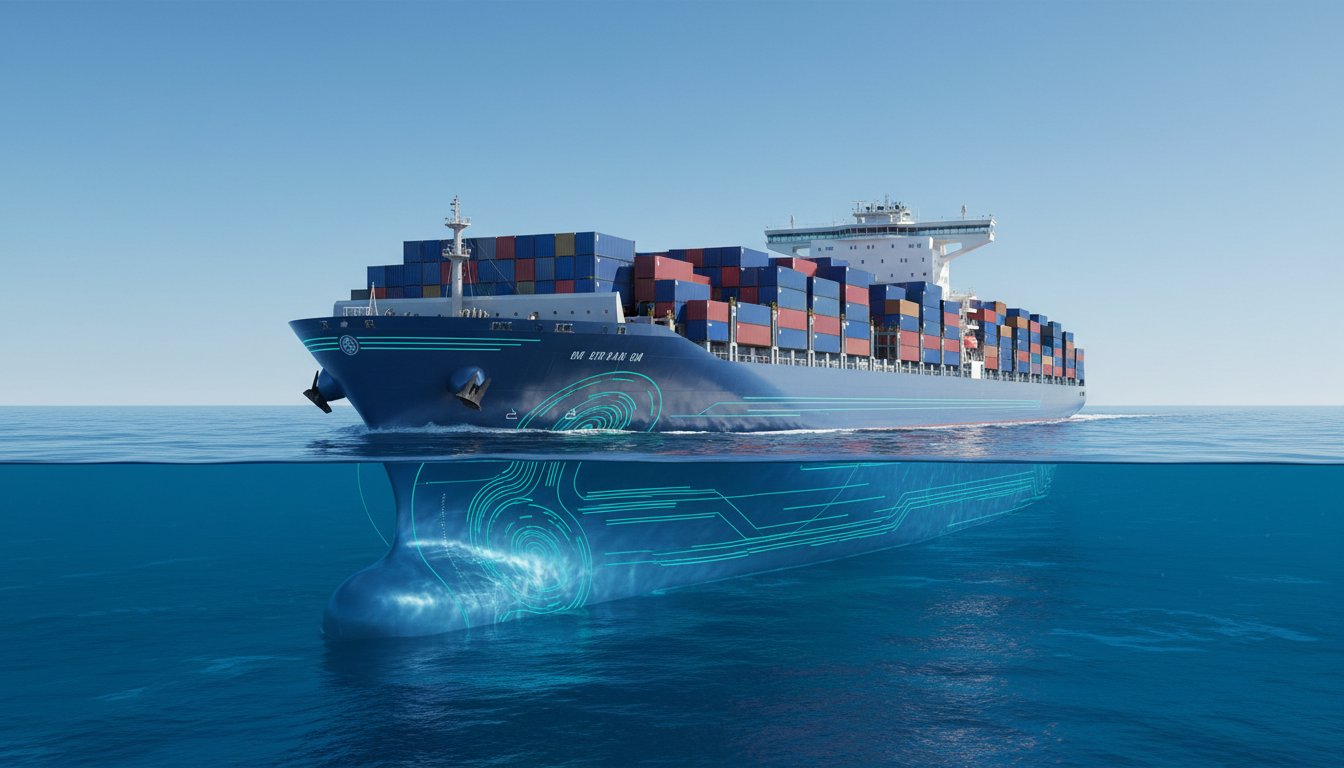
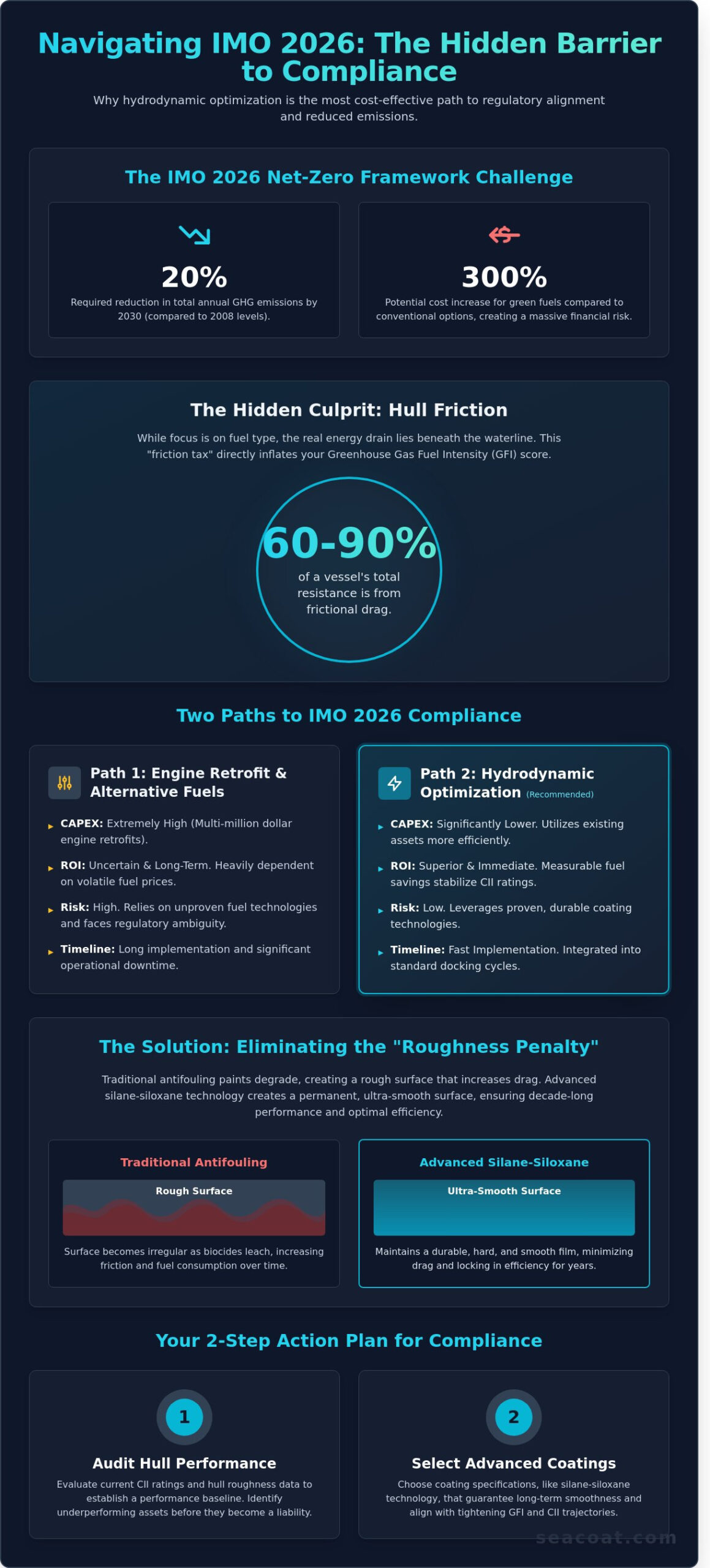
While the maritime industry prioritizes multi-million dollar engine retrofits, the most significant barrier to IMO 2026 GHG regulations compliance isn’t the fuel type; it’s the friction beneath the waterline. You likely recognize that the 2023 IMO Greenhouse Gas Strategy, which demands a 20% reduction in emissions by 2030, creates a precarious financial environment when green fuels can cost 300% more than conventional options. It’s a high-stakes transition where regulatory uncertainty often leads to operational paralysis. You don’t need to wait for unproven fuel technologies to begin de-risking your assets.
This article details how the IMO 2026 Net-Zero Framework impacts your fleet’s long-term viability and why hydrodynamic optimization is the most cost-effective path to regulatory alignment. You’ll gain a clear roadmap for reducing Greenhouse Gas Fuel Intensity (GFI) through advanced surface engineering. We’ll examine how minimizing hull roughness provides a measurable ROI by stabilizing CII ratings and cutting fuel consumption without the massive capital expenditure required for alternative propulsion systems.
Key Takeaways
- Analyze the mandatory shift toward MARPOL Annex VI Chapter 5 requirements and how the 2023 Net-Zero Framework redefines operational standards for global fleets.
- Discover why Greenhouse Gas Fuel Intensity (GFI) scores are compromised by hull friction and how optimizing your energy baseline reduces unnecessary carbon output.
- Compare the high CAPEX of alternative fuel retrofitting against the superior ROI of hydrodynamic optimization as a primary strategy for IMO 2026 GHG regulations compliance.
- Implement a rigorous two-step action plan to audit hull performance and select coating specifications that align with tightening CII and GFI regulatory trajectories.
- Examine the technical advantages of silane-siloxane technology in eliminating the “roughness penalty” to ensure decade-long durability and environmental stewardship.
The IMO 2026 Net-Zero Framework: Understanding the Mandate
The 2023 IMO GHG Strategy represents a seismic shift in maritime law, moving the industry from aspirational targets to a rigorous, legally binding framework. While the IMO’s Initial GHG Strategy laid the groundwork in 2018, the outcomes of the MEPC 83 session in April 2025 have codified the transition into mandatory MARPOL Annex VI Chapter 5 requirements. This update transforms voluntary efficiency goals into strict technical benchmarks. Fleet owners must now target a 20% to 30% reduction in total annual GHG emissions by 2030, compared to 2008 levels. Achieving IMO 2026 GHG regulations compliance isn’t just about administrative filing; it requires a fundamental recalibration of vessel performance and energy management. 2026 serves as the critical preparatory window before these mid-term measures enter into force in 2027. Owners who fail to optimize their hydrodynamic efficiency during this period risk operating stranded assets when the 2027 mandates take full effect.
Key Pillars: Fuel Standards and GHG Pricing
The regulatory architecture rests on two primary mechanisms: the Goal-based Marine Fuel Standard (GFS) and a global GHG pricing element. The GFS mandates a phased reduction in the GHG intensity of marine fuels, forcing a shift toward low-carbon and zero-carbon alternatives. Crucially, the IMO has adopted a Well-to-Wake (WtW) approach. This metric accounts for emissions from production through combustion, preventing carbon leakage in the energy supply chain. Simultaneously, the GHG pricing mechanism introduces an economic penalty for high-carbon intensity operations. It’s a strategic lever designed to bridge the price gap between traditional heavy fuel oils and sustainable alternatives. High-performance hull coatings play a vital role here; by maximizing drag reduction, vessels lower their overall energy demand, which directly mitigates the financial impact of carbon levies.
Applicability: Is Your Fleet in Scope?
The scope of these regulations is precise. The mandate applies to all ships of 5,000 gross tonnage (GT) and above engaged in international trade. These vessels represent approximately 85% of the total CO2 emissions from the global shipping sector. While existing frameworks like the Energy Efficiency Existing Ship Index (EEXI) and Carbon Intensity Indicator (CII) remain relevant, the 2026 framework adds a layer of GHG intensity metrics that are significantly more stringent. Data collection cycles are already tightening. The first mandatory reporting under the new intensity standards will begin shortly after the 2027 entry-into-force. Fleet managers must evaluate their current CII ratings today. A vessel performing at a “C” rating under current standards may quickly fall into “D” or “E” categories as the GHG intensity thresholds tighten toward the 2030 checkpoint. Proactive optimization of the hull’s hard film durability and surface roughness is no longer optional; it’s a requirement for continued operational viability.
The Hidden Cost of Friction: GFI and Energy Baseline Optimization
Greenhouse Gas Fuel Intensity (GFI) serves as the critical metric for IMO 2026 GHG regulations compliance. It’s calculated by dividing the total greenhouse gas emissions by the energy consumed, typically expressed in grams of CO2 equivalent per megajoule (gCO2e/MJ). While many operators focus exclusively on fuel chemistry, the hydrodynamic efficiency of the hull determines the total energy required to perform transport work. Frictional drag accounts for 60% to 90% of a vessel’s total resistance. When hull surfaces degrade, the engine must compensate with higher power output, which increases fuel consumption and directly inflates the GFI score. This technical reality is central to the IMO’s work on cutting GHG emissions, as operational efficiency is now as vital as the fuel source itself.
Traditional antifouling paints often hinder compliance because they rely on a leaching mechanism. As biocides exit the paint film, the coating’s surface texture becomes increasingly irregular. This physical degradation creates a “friction tax” that compounds over the docking cycle. To maintain a competitive GFI, fleet owners must transition from temporary sacrificial coatings to permanent, high-performance surfaces that maintain their integrity under operational stress.
Surface Roughness and the 10-Year Lifecycle
The long-term hydrodynamic performance of a vessel is often compromised by the “peel” effect of self-polishing copolymers. These coatings are engineered to erode, but this erosion is rarely uniform, leading to a steady increase in Average Hull Roughness (AHR). This increase negatively impacts the Energy Efficiency Existing Ship Index (EEXI) and the Carbon Intensity Indicator (CII) ratings. A 10-micron reduction in average hull roughness correlates to a 1% decrease in fuel consumption. By utilizing non-leaching siloxane technologies, operators can prevent the 20 to 30-micron annual roughness increase common with biocidal paints. This stability ensures that the energy baseline established during sea trials remains consistent across a 10-year lifecycle.
Well-to-Wake Efficiency: Beyond the Engine Room
Achieving IMO 2026 GHG regulations compliance requires a Well-to-Wake (WtW) perspective, which evaluates the entire energy chain from production to combustion. Optimizing the “Wake” portion of this equation involves maximizing hull smoothness to reduce the total energy demand. When the hull is ultra-smooth, the vessel requires less energy per ton-mile, allowing it to stay comfortably below GFI limits even when using conventional fuels.
- Energy Saving Devices (ESDs): Advanced coatings work in synergy with hardware like Mewis ducts or propeller boss fin caps.
- Drag Mitigation: Reducing skin friction prevents the 3% to 5% efficiency loss that often occurs when ESDs are paired with rough hulls.
- Transport Work: Lower resistance means more transport work can be completed per unit of carbon emitted.
The integration of permanent foul release technology provides a strategic advantage by ensuring that hydrodynamic gains aren’t lost to biofouling or coating depletion. This scientific approach to surface management transforms the hull into a performance-enhancing tool rather than a maintenance liability.
Fuel Switching vs. Hydrodynamic Optimization: A Comparison
Fleet owners face a stark choice between high-cost engine conversions and immediate hydrodynamic upgrades. Retrofitting a large container vessel for ammonia or methanol propulsion involves CAPEX often exceeding $10 million per hull. This doesn’t account for the OPEX volatility inherent in the current energy market. Green methanol currently trades at a premium of 200% to 300% over conventional VLSFO. Relying solely on fuel switching to maintain IMO 2026 GHG regulations compliance ignores the most accessible lever: reducing the energy demand of the vessel itself.
Achieving IMO 2026 GHG regulations compliance through passive efficiency offers the highest ROI in the compliance toolkit. Utilizing environmental marine coatings provides a multi-decade asset protection strategy that engine modifications can’t replicate. By optimizing the hull’s hydrodynamic profile, owners reduce the total fuel burn regardless of the fuel type used.
ROI Analysis of Advanced Foul Release Systems
Calculations for a 10-year dry-dock cycle demonstrate that silane-siloxane foul release systems outperform traditional biocidal coatings by a significant margin. While the initial application cost is higher, the lack of required mid-term full blasts and the consistent fuel savings create a rapid payback period. Typical speed/power improvements with silane-siloxane technology show a drag reduction of up to 10%, which translates to an annual fuel saving of 6% to 8% for most deep-sea vessels.
Case study data from long-haul tankers indicates that these systems maintain a smooth surface profile with less than 1% speed loss over five years. This technical precision provides a competitive edge in chartering. Charterers now prioritize vessels with proven low-friction hulls to minimize their own Scope 3 emissions and fuel expenditures.
The Limits of Traditional Antifouling
Traditional ablative paints rely on the continuous sloughing of layers to release biocides like copper or zinc. These coatings struggle with 2026 standards because their surface roughness increases as they age. This creates a feedback loop of rising fuel consumption and deteriorating CII ratings. Beyond the chemical impact, biocide leaching is a growing environmental risk that faces increasing restrictions in regulated ports such as Vancouver and various European coastal zones.
Hard-film durability is the primary differentiator between advanced foul release systems and soft silicone alternatives. Soft silicones are notoriously fragile and prone to mechanical damage during fender contact or cleaning. In contrast, silane-siloxane systems create a robust, non-toxic barrier that resists abrasion while preventing the attachment of marine organisms through surface tension rather than chemical toxicity.
Operationalizing Compliance: A 2026 Action Plan for Shipowners
- Step 1: Conduct a comprehensive hull performance audit. Analyze 36 months of high-frequency sensor data against baseline speed-power curves. This identifies assets with the highest hydrodynamic degradation and prioritizes them for technical upgrades.
- Step 2: Evaluate coating specifications against projected CII and GFI trajectories. A standard self-polishing copolymer likely won’t provide the 5% to 8% efficiency gain required to maintain a “C” rating through 2030. Evaluate foul-release systems that offer lower average hull roughness (AHR).
- Step 3: Align dry-dock schedules with the January 1, 2027, entry-into-force date. This ensures vessels receive performance-enhancing upgrades before the first reporting period under the new GHG Fuel Standard (GFS), preventing immediate regulatory penalties.
- Step 4: Implement data-driven monitoring for in-service performance. Move beyond manual noon reports to automated systems that track real-time hull friction. Utilizing ISO 19030 standards allows for precise measurement of how coating degradation impacts fuel intensity.
Preparing for Dry-Dock: Specification Matters
Procurement teams must pivot from “lowest bid” paint to “highest performance” coating systems. While advanced siloxane-based technologies require higher initial investment, the ROI is found in 10-year service lives and zero biocide leaching. Surface preparation is critical; an SA 2.5 blast standard ensures the 400-micron profile necessary for permanent adhesion. Integrating cleaning protocols with hard-film coatings prevents the mechanical damage common with soft-paint scrubbing, maintaining a smooth surface for the entire docking cycle.
Monitoring and Reporting for IMO Audits
Compliance requires a robust data trail. Fleet managers need software to track emissions pricing exposure under the EU ETS and upcoming IMO economic measures. Documenting coating performance is vital for CII and EEXI compliance. Owners should update the Ship Energy Efficiency Management Plan (SEEMP) Part III to reflect specific hull friction reduction targets. This transparency proves the vessel is actively mitigating its environmental footprint. Optimize your fleet’s hydrodynamic profile with SeaCoat’s biocide-free solutions.
SeaCoat Solutions: Future-Proofing Hulls for 2026 and Beyond
Achieving IMO 2026 GHG regulations compliance requires more than engine modifications; it demands a fundamental shift in how fleet owners manage hull friction. Sea-Speed V 10 X Ultra represents this shift through advanced silane-siloxane chemistry. Unlike traditional ablative or self-polishing antifoulings that rely on the controlled depletion of biocides, Sea-Speed creates a permanent, non-migratory hard film. This technology eliminates the “roughness penalty” associated with traditional paints, which typically experience a 2% to 3% increase in drag annually as the coating surface degrades. By maintaining a consistent, ultra-smooth profile, Sea-Speed ensures that fuel consumption and carbon intensity indicators (CII) remain optimized throughout the entire service interval.
Sustainability is no longer a peripheral concern for the maritime sector. With the industry facing stricter scrutiny over chemical leaching, SeaCoat’s biocide-free approach provides a definitive hedge against future environmental bans. The chemistry is entirely non-toxic and contains zero VOCs. This ensures that vessels remain compliant even as global standards move toward the total prohibition of harmful additives. Most importantly, the 10-year lifecycle of Sea-Speed V 10 X Ultra transforms the hull coating from a recurring maintenance expense into a strategic asset. It significantly reduces dry-dock frequency and lowers the total cost of ownership by eliminating the need for full re-blasts every five years.
The Science of Silane-Siloxane Hydrodynamics
The efficacy of Sea-Speed lies in its low-energy surface. This molecular structure creates a physical barrier that prevents marine organisms from establishing a permanent bond. It’s the preferred non-toxic marine hull coating for commercial fleets because it prioritizes hydrodynamic efficiency over chemical toxicity. While traditional coatings are fragile, SeaCoat’s hard-film technology is exceptionally durable. It resists mechanical damage from debris and withstands rigorous underwater cleaning protocols without losing its integrity. In fact, periodic grooming actually enhances the surface’s performance, maintaining the vessel’s speed-power curve at peak levels.
Strategic Partnership for Fleet Optimization
Securing Operational Longevity in a Net-Zero Era
Navigating IMO 2026 GHG regulations compliance requires a shift from reactive maintenance to proactive hydrodynamic management. Success depends on lowering the vessel’s energy baseline by reducing hull friction, which directly mitigates the impact of rising fuel costs and stricter carbon intensity mandates. While alternative fuels are part of the transition, optimizing hull efficiency remains the most reliable method for maintaining fleet profitability.
SeaCoat’s proprietary Silane-Siloxane technology has provided this technical edge since 2001. It’s a solution that’s delivered documented fuel savings of 10-12% in rigorous commercial trials. By utilizing a zero VOC and biocide-free formula, shipowners secure unrestricted port access while significantly extending the performance lifecycle of their assets. This isn’t just a coating; it’s a strategic asset for the modern fleet manager who values scientific precision over temporary fixes.
Optimize your fleet’s compliance strategy with Sea-Speed V 10 X Ultra and build a resilient foundation for the decade ahead. The transition to sustainable shipping is well within reach for those who lead with proven technology.
Frequently Asked Questions
What are the primary IMO GHG regulations taking effect in 2026-2027?
The primary regulations include the implementation of a Global Fuel Standard (GFS) and a goal-based maritime GHG emissions pricing mechanism. These mid-term measures, adopted during MEPC 80 in July 2023, aim to reduce total annual emissions by at least 20% by 2030. Fleet owners must prepare for these technical and economic shifts to ensure IMO 2026 GHG regulations compliance. The framework establishes a clear trajectory toward net-zero emissions by 2050.
How does the Global Fuel Standard (GFS) affect existing commercial vessels?
The Global Fuel Standard mandates a phased reduction in the greenhouse gas intensity of energy used on board vessels. Starting in 2027, the standard applies to all ships above 5,000 gross tonnage. It forces operators to transition from heavy fuel oil to low-carbon alternatives like green methanol or ammonia. Operators who fail to meet the 2030 intensity reduction target of 20% will face significant operational restrictions and potential financial penalties.
Can hull coatings really improve a ship’s CII rating?
High-performance hull coatings improve a ship’s Carbon Intensity Indicator (CII) rating by minimizing hydrodynamic drag and reducing fuel demand. Data from industry trials shows that transitioning from a traditional biocidal coating to a silane-siloxane system can lower fuel consumption by 8% to 12%. Because CII is a measure of CO2 emitted per cargo capacity and distance, any reduction in fuel burn directly translates to a more favorable rating for the vessel.
What is the difference between a foul release coating and traditional antifouling?
Foul release coatings use a non-stick, low surface energy approach to prevent biofouling, while traditional antifouling uses biocides like cuprous oxide to kill organisms. SeaCoat’s siloxane technology creates a smooth, hydrophobic surface that sheds organisms through hydrodynamic shear as the vessel moves. This biocide-free method eliminates the release of heavy metals into marine ecosystems. It also provides a 10-year service life, outlasting the 60-month cycle typical of conventional paints.
How is the IMO planning to price greenhouse gas emissions?
The IMO is currently designing a universal GHG pricing mechanism that will likely take the form of a mandatory levy on emissions. This economic measure, scheduled for approval in 2025, intends to bridge the price gap between fossil fuels and sustainable alternatives. Revenue collected from the levy will support the transition in developing states and reward high-efficiency vessels. Current proposals suggest a specific price per tonne of CO2 equivalent to incentivize rapid decarbonization.
Is there a penalty for non-compliance with the 2026 GHG mandates?
Non-compliance with the 2026 mandates results in mandatory corrective actions and potential commercial devaluing of the asset. Ships receiving a ‘D’ rating for three years or an ‘E’ rating for one year must update their Ship Energy Efficiency Management Plan (SEEMP) with a verified improvement strategy. Failure to demonstrate progress can lead to the loss of a Statement of Compliance. This makes the vessel less attractive to charterers who prioritize IMO 2026 GHG regulations compliance.
How do silane-siloxane coatings contribute to EEXI compliance?
Silane-siloxane coatings contribute to EEXI compliance by reducing the total power required to reach a specific reference speed. By maintaining a surface roughness below 50 micrometers over a 10-year period, these coatings prevent the drag increase that usually occurs as traditional paints degrade. This efficiency gain allows older vessels to meet their attained EEXI without relying solely on permanent engine power limitations. It’s a strategic way to preserve operational flexibility and performance.
What is the ‘Well-to-Wake’ approach in maritime emissions?
The ‘Well-to-Wake’ approach accounts for the entire lifecycle of a fuel, including its extraction, production, and final combustion. This methodology prevents shifting emissions from the sea to land-based production facilities. Under the LCA guidelines adopted at MEPC 80, the IMO ensures that fuels like hydrogen or ammonia are only considered green if their production process is carbon-neutral. It’s a holistic metric that defines the true environmental footprint of maritime operations.