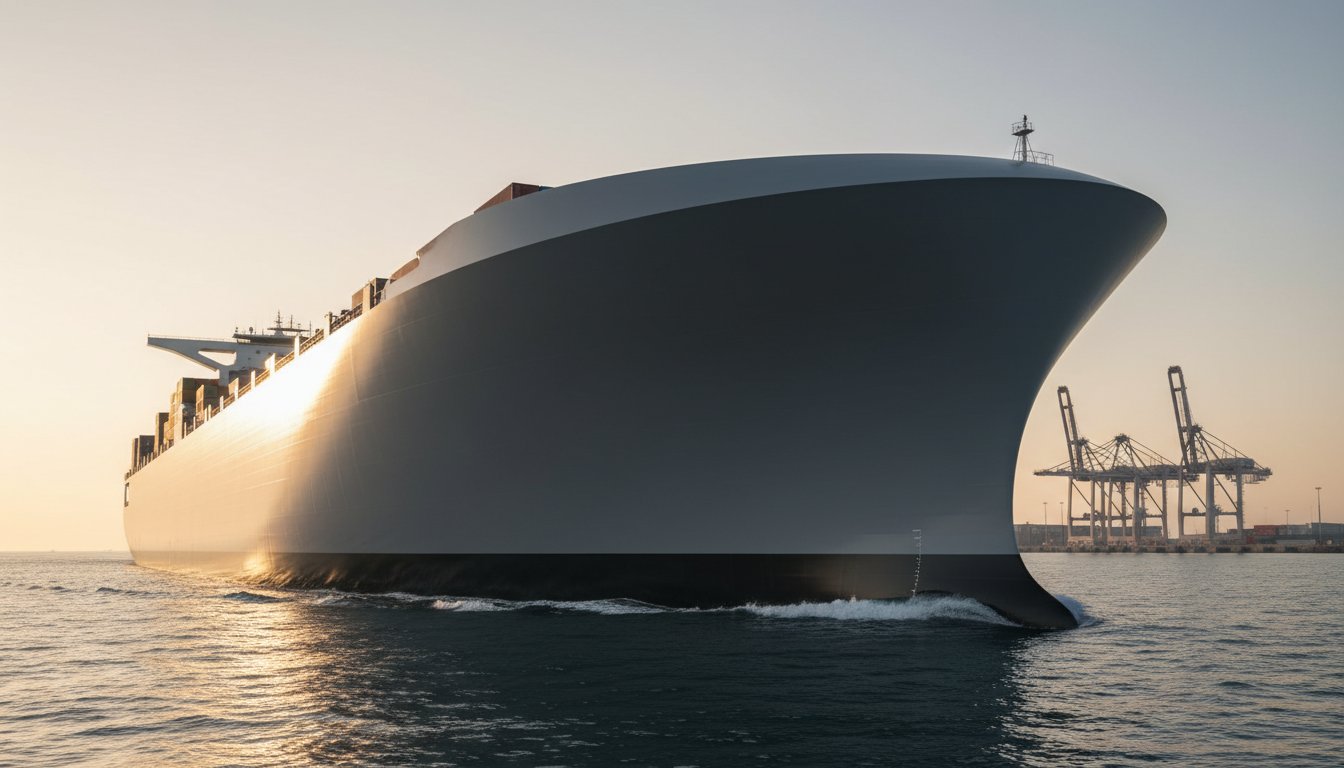
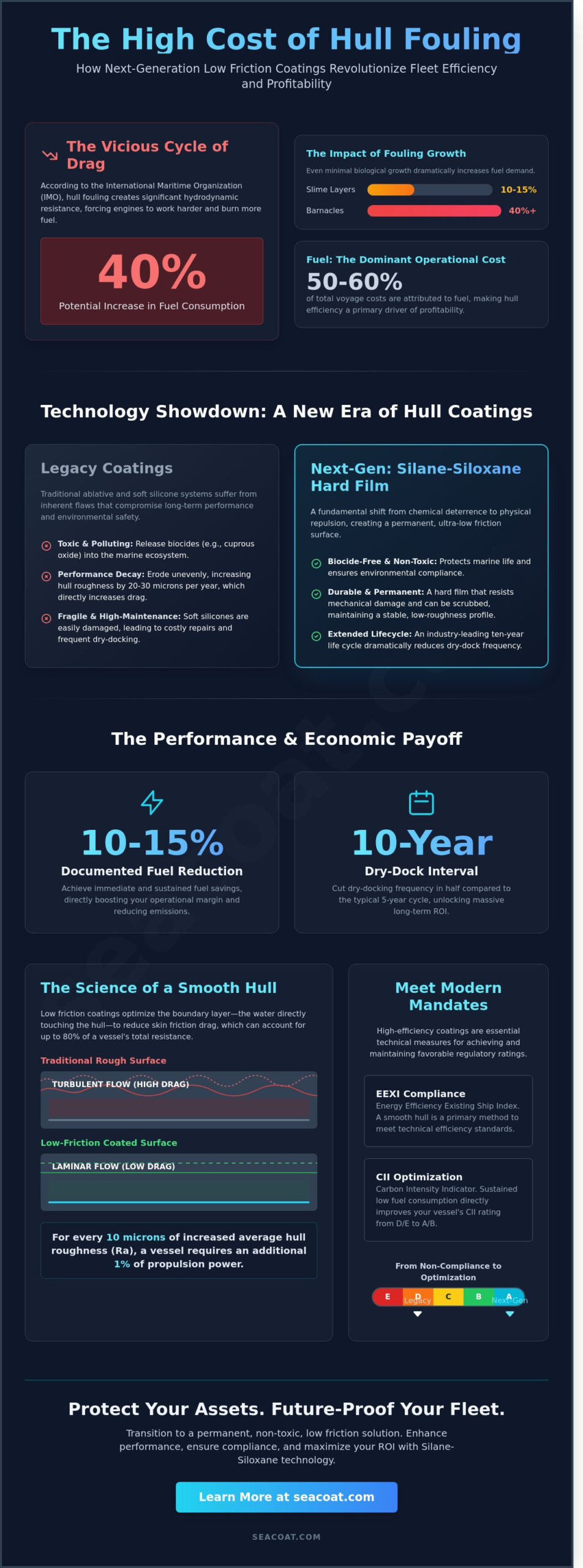
The International Maritime Organization (IMO) reports that hull fouling can escalate a vessel’s fuel consumption by as much as 40% because of increased hydrodynamic resistance. In an era where operational margins are tight, this inefficiency represents a significant financial and environmental liability. Integrating advanced low friction hull coating technology into your fleet management strategy is no longer optional; it’s a critical requirement for maintaining a competitive edge in 2026.
You’re likely familiar with the performance decay of traditional biocidal paints and the maintenance headaches associated with soft silicone foul release systems. These legacy solutions often fail to meet the stringent Carbon Intensity Indicator (CII) and EEXI thresholds that now govern global shipping routes. This guide reveals how next-generation, biocide-free coatings allow you to achieve a documented 10% to 15% reduction in fuel consumption while extending dry-dock intervals to a full ten-year cycle. We’ll analyze the molecular durability of siloxane-based films and explain why these strategic assets are the key to achieving both regulatory compliance and long-term economic optimization.
Key Takeaways
- Understand how optimizing the boundary layer through surface texture control minimizes skin friction drag to enhance overall vessel hydrodynamics.
- Evaluate the transition to biocide-free low friction hull coating technology as a permanent, non-toxic alternative to traditional ablative and soft silicone systems.
- Master the use of Roughness Average (Ra) metrics to accurately predict fuel consumption patterns and prevent speed loss over a five-year operational cycle.
- Analyze how high-efficiency coatings function as essential technical measures for EEXI compliance and the optimization of Carbon Intensity Indicator (CII) ratings.
- Discover the strategic ROI of hard-film Silane-Siloxane solutions that combine mechanical scrubbability with an industry-leading ten-year life cycle.
The Physics of Hydrodynamic Drag: Why Low Friction Hull Coating Technology Matters
To understand the necessity of low friction hull coating technology, one must first analyze the fluid dynamics occurring at the interface of steel and sea. This technology functions as a specialized system designed to minimize skin friction drag, which represents the resistance generated by water sliding past the vessel’s hull. In the high-stakes environment of international shipping, where fuel accounts for nearly 50% to 60% of total voyage costs, the efficiency of this interface determines the economic viability of the entire operation.
Understanding Skin Friction and Vessel Performance
The wetted surface area is the total area of the hull in contact with the water. As a ship moves, the layer of water immediately adjacent to the hull, known as the boundary layer, is influenced by the surface’s microscopic topography. Even seemingly smooth surfaces possess irregularities that trigger turbulent flow, converting kinetic energy into wasted heat and vibration. While research into superhydrophobic coatings provides insights into how extreme water repellency can mitigate this effect, commercial maritime applications focus on maintaining a stable, low-energy surface over long operational periods. Hydrodynamic drag is the primary force a vessel must overcome at cruising speeds.
This resistance isn’t merely a byproduct of speed; it’s a direct result of surface tension and fluid viscosity. When a hull surface is optimized through low friction hull coating technology, the boundary layer remains more laminar, allowing the vessel to glide with significantly less resistance. This optimization is critical for meeting modern EEXI and CII regulatory standards.
The Economic Impact of Hull Roughness
Hull roughness isn’t a static metric. Traditional ablative paints often fail because they erode unevenly, creating a “vicious cycle” where the coating itself contributes to drag as it ages. Industry data indicates that for every 10 microns of increased average hull roughness, a vessel requires an additional 1% of propulsion power to maintain the same speed. For a standard commercial bulk carrier, drag accounts for nearly 80% of total resistance.
- Slime Layers: Even a thin biological film can trigger a 10% to 15% increase in fuel consumption.
- Calcareous Growth: Heavy barnacle colonization can spike fuel demand by 40% or more.
- Ablative Decay: Traditional coatings can increase in roughness by 20 to 30 microns per year.
The #1 pain point for fleet managers is the hidden cost of ignoring hull efficiency. A vessel that begins its charter with a clean hull but lacks advanced foul-release properties will see a steady degradation in performance. This leads to higher emissions and increased frequency of expensive underwater hull cleanings. By shifting toward permanent, sophisticated solutions, operators protect the long-term ROI of their assets while fulfilling their environmental stewardship responsibilities.
The Chemistry of Efficiency: Silane-Siloxane vs. Traditional Coatings
The maritime industry’s shift toward sustainability has exposed the limitations of traditional hull protection. For decades, ablative antifouling dominated the market. These coatings are “sacrificial” by design; they rely on the steady erosion of the paint layer to release biocides like cuprous oxide into the water column. While effective at killing marine growth, this process causes the hull’s surface to become increasingly rough over time, which compromises hydrodynamic efficiency. Modern low friction hull coating technology represents a departure from this toxic, depleting model. It replaces chemical leaching with physical repulsion, using advanced materials that don’t degrade or pollute the marine ecosystem.
Hard-Film vs. Soft Silicone: A Durability Comparison
Soft silicone foul-release systems were the first major step away from biocides. They provide low surface energy that makes it difficult for organisms to attach. However, these coatings are notoriously fragile. They are susceptible to mechanical damage from fenders, dock-side abrasion, and even floating debris. A single tear can lead to widespread delamination, requiring expensive repairs. In contrast, hard-film silane-siloxane systems like Sea-Speed offer a robust, permanent solution. These coatings are highly durable and allow for aggressive underwater cleaning without damaging the film’s integrity. While soft silicones typically have a service life of 3 to 5 years, hard-film systems are engineered for a 10-year life cycle. This longevity reduces dry-dock frequency and ensures that the vessel’s fuel efficiency doesn’t degrade due to coating failure.
The Silane-Siloxane Advantage
The technical superiority of silane-siloxane lies in its molecular bonding. Unlike traditional paints that sit on top of the hull, silane-siloxane creates a covalent bond with the substrate, forming an incredibly stable and smooth interface. This low friction hull coating technology functions through a non-stick mechanism. When a vessel reaches speeds as low as 6 knots, the hydrodynamic shear force is enough to remove any light slime or “hitchhiking” organisms. This process is entirely biocide-free, making it a leader in the category of non-toxic marine hull coatings.
Environmental compliance is another critical factor. These modern systems are VOC-free, which eliminates the atmospheric pollutants common in solvent-based paints. Measuring Performance through standardized testing has shown that silane-siloxane maintains a consistent surface roughness of less than 20 microns over its entire lifespan. This stability is a stark contrast to ablative paints that grow rougher every month they are in service. By choosing a permanent, non-leaching system, operators can secure long-term fuel savings while meeting the strictest global environmental standards. You can explore how these technical specifications translate to operational ROI by reviewing the performance data at SeaCoat.
Measuring Performance: Surface Roughness, Ra Values, and Speed Loss
Surface roughness isn’t just a physical attribute; it’s a financial liability that dictates the long-term operational costs of a vessel. In the maritime sector, we quantify this through Ra (Roughness Average), which measures the vertical deviations of a surface from the mean line. When evaluating low friction hull coating technology, Ra serves as the primary technical benchmark for hydrodynamic efficiency. A lower Ra value indicates a smoother surface, which directly translates to reduced frictional resistance and, consequently, lower fuel consumption.
The Science of Surface Smoothness (Ra)
The disparity between coating types becomes evident during the out-of-dock phase. New build hulls or those treated with premium hard-film systems typically achieve Ra values between 75 and 125 microns. Conversely, aged ablative hulls often see Ra values spike above 300 microns due to uneven erosion and the “orange peel” effect caused by repeated biocide leaching. This physical degradation creates a turbulent boundary layer, forcing the propulsion system to overcome unnecessary drag. Data confirms that every 10-micron increase in hull roughness can result in a 1% increase in fuel requirements. Because of this, surface smoothness is the most cost-effective performance upgrade available to modern fleet managers. Reducing Ra isn’t just about speed; it’s a direct mechanism for mitigating greenhouse gas emissions and meeting tightening CII ratings.
Mitigating Speed Loss Over Time
While many providers focus on “fuel savings,” speed loss is a more accurate measure of a coating’s true success. Speed loss quantifies the reduction in vessel velocity at a constant power output, isolating the hull’s condition from engine performance or weather variables. Industry leaders now rely on DNV-verified metrics and ISO 19030 standards to track these trends over a five-year docking interval. Traditional biocidal coatings often suffer from a performance “cliff” where speed loss accelerates as the paint depletes.
In contrast, hard-film low friction hull coating technology maintains a consistent Ra value because the surface doesn’t erode or become brittle. It stays slick and intact. For shipowners looking to analyze the financial implications of these metrics, this definitive guide to boat hull paint provides the necessary ROI data to compare long-term speed retention against initial application costs.
A Framework for Performance Auditing
Shipowners must move beyond anecdotal evidence and adopt a structured audit framework to verify hull efficiency. This process involves three critical steps:
- Baseline Ra Measurement: Record the surface roughness immediately after the final coat is applied in dry dock to establish a “zero-point” for the cycle.
- Continuous ISO 19030 Monitoring: Utilize onboard sensors to track speed-power curves, allowing for the identification of gradual performance degradation.
- Mid-Cycle Inspections: Conduct underwater hull surveys at the 30-month mark to verify film thickness and the absence of micro-fouling.
By following this technical progression, operators can move from reactive maintenance to a proactive strategy that treats the hull coating as a high-performance engine component rather than a simple consumable.
Strategic Fleet Management: EEXI Compliance and ROI
Ship owners often view hull coatings as a recurring expense, yet the transition to low friction hull coating technology reclassifies this as a capital investment with measurable yields. Under the IMO’s Energy Efficiency Existing Ship Index (EEXI) framework, vessels must meet specific energy efficiency thresholds. While some fleets resort to Engine Power Limitation (EPL) to comply, this often compromises transit times and operational flexibility. High-performance coatings offer a technical measure that improves the hydrodynamic baseline, allowing for compliance without sacrificing mechanical speed. This efficiency directly translates to the Carbon Intensity Indicator (CII) performance. A vessel that maintains a smooth, low-drag surface is far more likely to retain an ‘A’ or ‘B’ rating, which is essential for securing favorable charter rates in the 2026 market.
Coatings as a Decarbonization Tool
Reducing skin friction enables operators to practice slow steaming with greater schedule integrity. It ensures that the ship remains on schedule despite lower engine loads, which is a critical component for meeting IMO 2030 targets of reducing carbon intensity by 40%. Choosing the right antifouling boat paint isn’t just about maintenance; it’s a strategic regulatory maneuver. These systems utilize advanced siloxane chemistries to prevent biofouling, ensuring that the hydrodynamic profile remains optimized between dry-docking intervals.
Calculating the Total Cost of Ownership (TCO)
Traditional ablative coatings typically require intensive maintenance or re-application every 24 to 36 months. In contrast, low friction hull coating technology based on hard-film structures is designed for 120-month cycles. When you calculate the TCO over a decade, the financial logic becomes clear:
- Elimination of four mid-term dry-docking events.
- Fuel consumption reduction of 6% to 10% based on ISO 19030 performance metrics.
- Reduced requirements for underwater hull grooming and mechanical cleaning.
- Standardization of fleet-wide efficiency through bulk industrial supply contracts.
Asset liquidity depends on compliance. Some stakeholders hesitate to invest in premium coatings if they plan to sell the vessel within three to five years. However, a ship with a verified high CII rating and a documented 10-year coating system commands a higher resale value. Prospective buyers in 2026 prioritize assets that are “future-proofed” against tightening environmental legislation. Investing in a superior hull surface isn’t just for the current owner’s benefit; it’s an enhancement of the vessel’s book value and marketability.
Standardizing these systems across a fleet allows for predictable maintenance budgets and verifiable progress toward 2050 net-zero goals. By treating the hull as a performance-enhancing tool rather than a simple steel barrier, managers can realize significant operational savings while meeting the industry’s most stringent ecological demands.
Sea-Speed V 10 X Ultra: The Hard-Film Low Friction Solution
Sea-Speed V 10 X Ultra stands as the definitive evolution of Silane-Siloxane chemistry, specifically engineered to meet the rigorous demands of modern maritime operations. It’s a specialized hard-film solution that solves the inherent fragility issues found in older silicone-based foul release products. This technical durability is a critical differentiator; it allows for routine mechanical scrubbing and underwater hull cleaning without the risk of delamination or surface degradation. By maintaining an exceptionally smooth, non-porous surface, this low friction hull coating technology effectively minimizes hydrodynamic drag over a guaranteed 10-year performance life. This decade-long cycle reduces dry-docking frequency and maximizes vessel uptime, providing a clear path to long-term ROI. Because the formula maintains a zero VOC profile, it satisfies the most stringent global emissions standards while protecting the hull from corrosion and fouling. It’s a versatile asset, engineered for high-stakes environments ranging from 300-meter commercial tankers to agile, high-speed military interceptors.
Why SeaCoat Leads in Low Friction Tech
SeaCoat has established its authority through 20 years of empirical data and successful commercial applications. We’ve moved beyond the era of temporary, toxic fixes. Our biocide-free philosophy is a core brand value, ensuring that no heavy metals or harmful chemicals leach into sensitive marine ecosystems. This commitment to environmental stewardship is inextricably linked to performance. Our systems consistently outperform traditional biocidal coatings by maintaining lower surface roughness levels throughout the entire service life of the vessel. Transitioning from legacy ablative systems to Sea-Speed is a straightforward process. The application is designed to integrate with standard shipyard schedules, allowing owners to upgrade their assets without the burden of extended downtime or specialized application equipment.
Next Steps for Vessel Optimization
Realizing the full economic benefits of advanced low friction hull coating technology requires a data-driven approach. Fleet managers can initiate this process by requesting a comprehensive hull performance assessment. This technical evaluation uses specific vessel data to quantify potential fuel savings and carbon footprint reductions over a multi-year horizon. We provide clear, structured procurement paths for both commercial shipping companies and military agencies, ensuring that all technical specifications and regulatory requirements are met with precision. Reliability, asset protection, and operational intelligence are the foundations of our service. Optimize your fleet with SeaCoat technology to secure a sustainable and efficient future for your maritime operations.
Optimizing Operational Longevity Through Advanced Hydrodynamics
Navigating the evolving EEXI regulatory landscape requires a fundamental shift from traditional ablative paints toward permanent, high-performance solutions. By prioritizing surface roughness and minimizing hydrodynamic drag, vessel operators can achieve a proven 12% average fuel savings across their fleet. Sea-Speed V 10 X Ultra represents this technological shift; it utilizes a silane-siloxane chemistry that’s entirely biocide-free and contains zero VOCs. This isn’t a temporary maintenance fix. It’s a strategic asset designed for a durable 10-year lifecycle that effectively eliminates the waste of frequent re-coating cycles. Implementing low friction hull coating technology ensures your vessels remain both compliant and profitable in an increasingly competitive global market. Choosing non-toxic, hard-film protection preserves delicate marine ecosystems while securing substantial long-term ROI. We’re ready to help you transition your fleet to a more efficient, scientifically optimized future.
Consult with our technical experts on your fleet’s low friction requirements to begin your optimization journey.
Frequently Asked Questions
How does low friction hull coating technology actually save fuel?
Low friction hull coating technology reduces fuel consumption by minimizing hydrodynamic drag and maintaining a smooth hull profile. By optimizing the surface roughness to below 20 microns, these coatings facilitate laminar flow and reduce the energy required to propel the vessel. Data from 2023 sea trials indicate that vessels utilizing advanced siloxane-based coatings can achieve fuel savings of 8% to 15% compared to traditional ablative paints.
Is low friction coating the same as antifouling paint?
No, low friction hull coating technology differs from traditional antifouling paints because it’s biocide-free and utilizes physical properties rather than chemical toxicity to prevent attachment. While antifouling paints rely on the controlled leaching of copper or other biocides, low friction systems create a surface energy so low that marine organisms can’t establish a permanent bond. This foul-release mechanism ensures the hull remains clean through hydrodynamic shear once the vessel exceeds 10 knots.
Can low friction coatings help with EEXI and CII compliance?
These coatings are essential tools for meeting IMO 2026 carbon intensity targets because they directly improve a vessel’s operational efficiency. By reducing drag, a ship can maintain its required speed at lower engine loads, which lowers the Carbon Intensity Indicator (CII) rating. Implementing a high-performance coating can improve a vessel’s EEXI score by approximately 5% to 7% without necessitating expensive mechanical retrofits or engine power limitations.
How long does a hard-film low friction coating last compared to silicone?
A hard-film low friction coating typically provides a service life of 10 years, whereas traditional soft silicone coatings often require full reapplication every 3 to 5 years. The robust molecular structure of hard-film technology resists mechanical damage from debris and ice, maintaining its hydrodynamic properties across multiple dry-docking cycles. This extended longevity reduces total cost of ownership by eliminating the need for frequent, labor-intensive stripping and recoating processes.
Can hard-film coatings be cleaned underwater without losing performance?
Yes, hard-film coatings are engineered to withstand aggressive underwater cleaning without any loss of film thickness or hydrodynamic performance. Unlike soft foul-release systems that can tear or ablate during maintenance, these coatings possess a high Shore D hardness rating that permits the use of specialized brushes. Regular cleaning protocols can restore the surface to 98% of its original smoothness, ensuring that the vessel’s efficiency remains consistent throughout its service life.
Are low friction coatings safe for aluminum hulls and sensitive marine environments?
These coatings are ideal for aluminum hulls because they’re non-conductive and contain zero copper or heavy metals that cause galvanic corrosion. Because the formulations are biocide-free and contain zero VOCs, they’re safe for use in sensitive marine sanctuaries and regulated ports. By eliminating the discharge of toxic chemicals into the water column, operators can ensure compliance with evolving environmental standards while protecting the structural integrity of their assets.