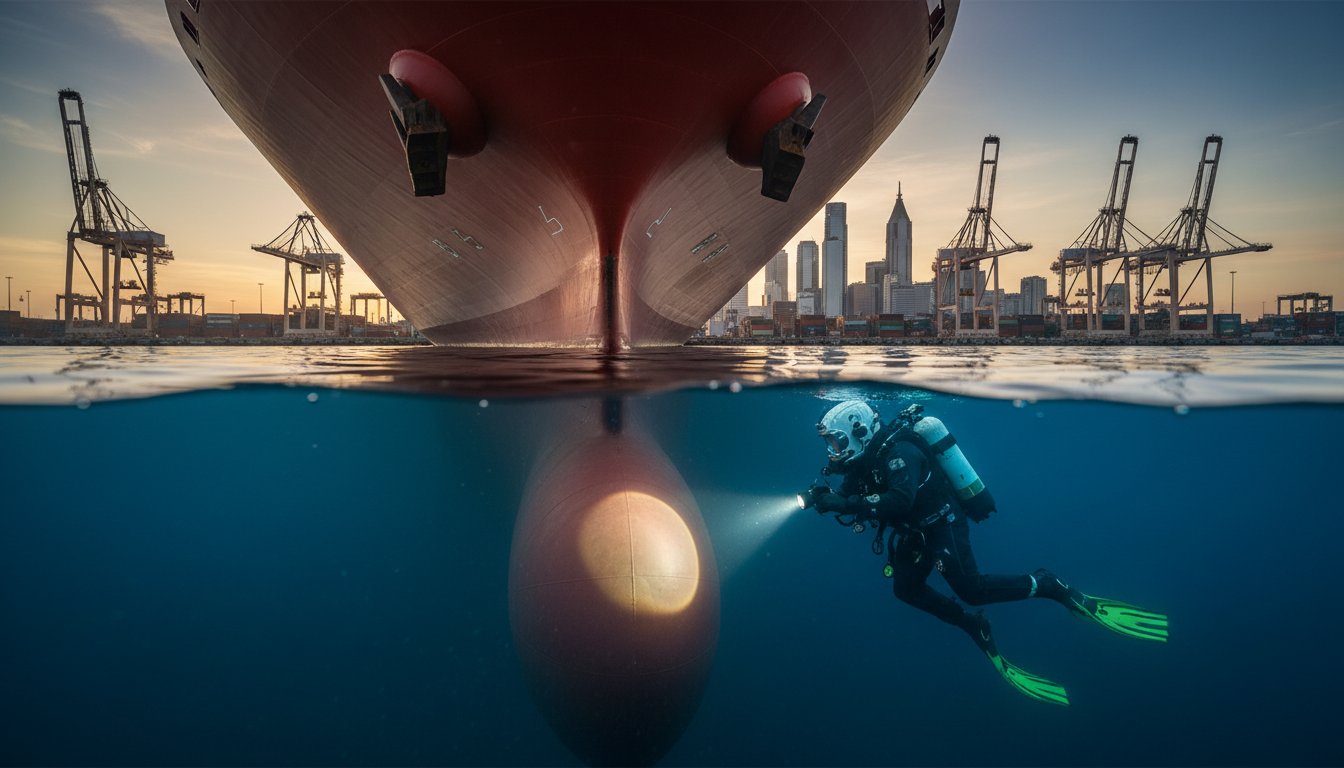
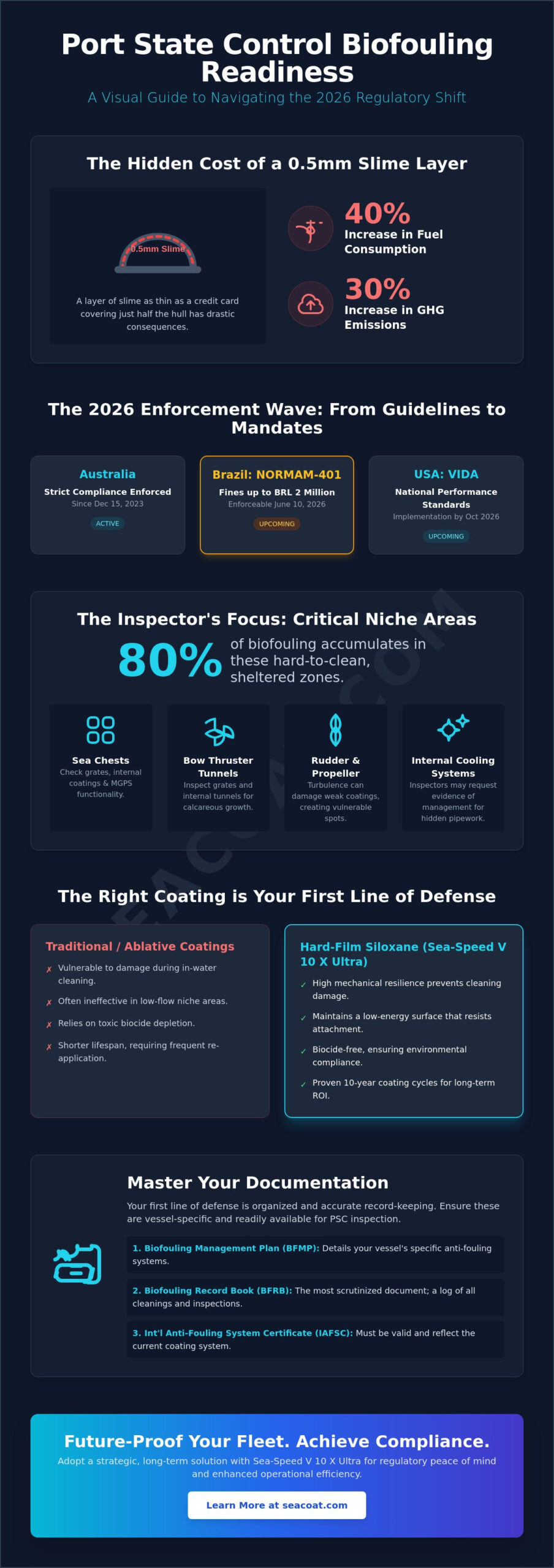
A layer of slime as thin as 0.5 mm covering half your hull can increase greenhouse gas emissions by 30% and fuel consumption by 40%. With Brazil’s NORMAM-401 entering full enforcement on June 10, 2026, non-compliance is no longer just an operational inefficiency; it’s a financial liability carrying fines up to BRL 2 million. You understand that managing these risks requires more than just reactive cleaning before a port call. Learning how to prepare for a port state control biofouling inspection is now a critical competency for maintaining global trade access and protecting your long-term asset ROI.
This article provides the technical clarity you need to master both documentation and hull condition requirements to pass PSC inspections with zero deficiencies. We’ll examine the shifting landscape of regional mandates, from Australia’s strict protocols to the upcoming October 2026 USCG enforcement under the Vessel Incidental Discharge Act. You’ll gain a repeatable checklist for readiness that prioritizes hydrodynamic optimization and regulatory peace of mind through the strategic use of advanced, biocide-free siloxane coatings like Sea-Speed V 10 X Ultra.
Key Takeaways
- Distinguish between voluntary IMO guidelines and the mandatory enforcement of NORMAM-401 and VIDA protocols taking effect in 2026.
- Implement a technical checklist for niche areas, such as sea chests and rudder pintles, where 80% of biofouling typically accumulates.
- Master how to prepare for a port state control biofouling inspection by synchronizing your digital record-keeping with physical hull conditions.
- Compare the mechanical resilience of hard-film siloxane systems against traditional coatings to prevent damage during proactive in-water cleaning.
- Quantify the long-term ROI of 10-year coating cycles through reduced surface roughness and lower fuel consumption across your fleet.
The 2026 Regulatory Landscape: IMO and Regional Biofouling Standards
The 2023 IMO Guidelines for the Control and Management of Ships’ Biofouling (MEPC.378(80)) represent the global consensus on invasive species mitigation. In 2026, these guidelines have evolved from mere recommendations into the primary technical baseline for standardized Port State Control (PSC) inspections. Understanding how to prepare for a port state control biofouling inspection requires a clear view of the intersection between biosecurity and decarbonization. Biofouling is now inextricably linked to Carbon Intensity Indicator (CII) ratings. A ship with significant slime layer accumulation can see an immediate 25% increase in greenhouse gas emissions, jeopardizing its operational efficiency under EEXI standards.
Mandatory vs. Recommended Guidelines
Port States increasingly use the “Invasive Aquatic Species” vector as legal grounds for vessel detention. Australia has enforced strict compliance since December 15, 2023, while Brazil’s NORMAM-401 becomes fully enforceable with fines up to BRL 2 million on June 10, 2026. The U.S. Coast Guard is scheduled to finalize its implementation of the Vessel Incidental Discharge Act (VIDA) by October 2026, replacing the 2013 Vessel General Permit with mandatory national performance standards. This shift toward mandatory regional enforcement means that voluntary adherence is no longer a viable risk management strategy.
Documentation Checklist for PSC Readiness
Administrative compliance is the first hurdle in any inspection. Your Biofouling Management Plan (BFMP) must be vessel-specific and describe the primary and secondary anti-fouling systems in detail. The Biofouling Record Book (BFRB) remains the most scrutinized document; it must contain chronological entries of all inspections, cleanings, and maintenance activities. Finally, verify that the International Antifouling System Certificate (IAFSC) is valid and reflects the current coating system applied during the last dry-docking. Seacoat SCT, LLC provides the technical data required to ensure these documents meet the most rigorous 2026 standards.
Physical Vessel Preparation: Niche Areas and Hull Integrity
While documentation provides the administrative foundation for compliance, the physical state of the hull is the ultimate evidence during a Port State Control (PSC) audit. Data indicates that 80% of biofouling accumulates in niche areas rather than on the vertical sides of the hull. These regions, characterized by complex geometries and sheltered water flow, provide ideal environments for biological recruitment. Understanding how to prepare for a port state control biofouling inspection requires a shift in focus from the broad hull surface to these critical micro-environments where invasive species are most likely to take hold. Inspectors in 2026 are specifically trained to look beyond the easy-to-clean surfaces, targeting areas that are often overlooked during routine maintenance.
A technical readiness checklist must prioritize the following high-risk zones:
- Bow Thruster Tunnels: Inspect grates and internal tunnels for calcareous growth that can obstruct flow and harbor organisms.
- Sea Chests: Verify the integrity of internal coatings and ensure Marine Growth Prevention Systems (MGPS), such as copper or aluminum anodes, are fully functional and documented.
- Rudder Pintles and Propeller Boss: These areas experience high turbulence which can cause traditional coatings to delaminate, leaving the substrate vulnerable to recruitment.
- Internal Seawater Cooling Systems (ISCS): Ensure that internal pipework is treated, as inspectors may request evidence of management for these “hidden” niche areas.
Managing Niche Area Risks
Applying protective systems to complex protrusions requires high-build, durable solutions that don’t rely on toxic depletion. Traditional ablative paints often fail in niche areas because they require consistent water flow to remain effective, which is absent in sea chests or thruster tunnels. This is where a hard-film siloxane system like Sea-Speed V 10 X Ultra provides a strategic advantage; its high-climb properties and mechanical resilience ensure coverage on difficult edges while maintaining a low-energy surface that resists attachment. The 2023 IMO Biofouling Guidelines emphasize that each niche area should be identified in the vessel’s Biofouling Management Plan with specific mitigation measures tailored to its hydrodynamic profile.
Pre-Arrival Hull Surveys
Conducting an underwater camera survey 48 to 72 hours before entering a high-risk jurisdiction is a prudent operational standard. This provides the Master with visual evidence of the hull’s condition and the opportunity for proactive remediation if recruitment is detected. The Level of Fouling (LoF) scale is a standardized ranking system from 0 to 5 that PSC inspectors utilize as the primary metric for determining whether a vessel requires immediate remediation or detention. By quantifying the extent of fouling before arrival, operators can ensure the vessel remains at LoF 1 or lower, which is the mandatory threshold for many 2026 regional regulations.
Choosing the Right Coating: Hard Film vs. Traditional Systems
A strategic approach to how to prepare for a port state control biofouling inspection must begin with the material science of your hull coating. While documentation and physical surveys are essential, the chemical properties of the hull surface determine the rate of biological recruitment. Traditional systems often fail to meet the rigorous 2026 standards because they weren’t designed for the extended idle periods or the intensive in-water cleaning protocols now required for compliance. Selecting a coating is no longer just a maintenance decision; it’s a regulatory risk mitigation strategy.
Soft silicone foul-release coatings present a significant vulnerability during PSC inspections. Their delicate surface is easily compromised by mechanical damage during routine operations or proactive cleaning. Once the silicone film is torn, it exposes the substrate and creates a high-energy anchor point for macro-fouling. Inspectors recognize these damaged areas as primary sites for invasive species. Similarly, traditional ablative bottom paints rely on vessel movement to “self-polish” and release biocides. When a vessel remains stationary in a high-risk port, the lack of hydrodynamic flow leads to biocide depletion at the surface, allowing rapid colonization that an inspector will quickly identify as a deficiency.
The Hard-Film Advantage for PSC
Hard-film coatings like Sea-Speed V 10 X Ultra offer a superior alternative by providing a durable, non-porous surface that resists mechanical abrasion. These siloxane-based systems create a low-energy surface that discourages the initial attachment of organisms. A critical metric here is the Mean Indicative Roughness (MIR). Lower surface roughness directly correlates to reduced biofouling attraction and improved hydrodynamic efficiency. Because these films are inherently tough, they allow for frequent, non-destructive grooming to maintain a Level of Fouling (LoF) 0 or 1 throughout the vessel’s service life. For a deeper technical analysis of these materials, consult The Definitive Guide to Antifouling Boat Paint and Foul Release Systems in 2026.
Environmental Compliance and Non-Toxic Solutions
The regulatory landscape in 2026 includes strict bans on specific biocides and toxic additives that were common in previous decades. Transitioning to a biocide-free, silane-siloxane system ensures that your fleet meets the requirements of Environmentally Sensitive Areas (ESA) without the risk of heavy metal leaching. These systems simplify port entry by eliminating the need for complex discharge permits associated with toxic leach rates. Furthermore, the Zero VOC (Volatile Organic Compound) profile of Sea-Speed V 10 X Ultra supports corporate sustainability reporting and fleet-wide ESG goals. By shifting from a standard 60-month ablative cycle to a 10-year hard-film life cycle, operators reduce their environmental footprint while securing long-term regulatory peace of mind.
In-Water Maintenance and Cleaning Protocols
Proactive maintenance is the operational bridge between a clean hull and a successful audit. When you evaluate how to prepare for a port state control biofouling inspection, the frequency of cleaning must be dictated by your ship’s “idle profile” and the ambient water temperature. High-risk ports, particularly those in equatorial regions, necessitate a ‘Clean Before You Leave’ protocol. This ensures that any biological recruitment picked up during cargo operations is mitigated before the vessel enters international waters, preventing the transboundary movement of species.
Safe Cleaning Practices for Modern Coatings
Hard-film systems from Seacoat SCT, LLC are specifically engineered to withstand rigorous mechanical cleaning. Unlike the ablative bottom paint cycle, where cleaning strips away active material and creates a toxic plume, hard siloxane films remain intact. This durability allows for the use of high-efficiency brushless systems or specialized water jets that remove micro-fouling without thinning the coating. Because these coatings are biocide-free, the debris capture and filtration required by modern port rules are significantly less complex, as there’s no risk of heavy metal contamination in the filtered effluent.
Evidence-Based Maintenance Logs
Your Biofouling Record Book (BFRB) acts as the primary evidence of your ship’s hygiene history. Each entry needs to be granular, detailing the specific niche areas addressed and the exact cleaning methodology employed. Including high-resolution before-and-after photographs provides Port State Control Officers with visual verification that supports your log entries. It’s essential that these maintenance logs align perfectly with the procedures outlined in your BFMP to demonstrate systematic compliance. To ensure your fleet’s maintenance strategy meets these high-stakes requirements, consult the technical experts at Seacoat SCT, LLC.
Future-Proofing Your Fleet with Sea-Speed V 10 X Ultra
Mastering how to prepare for a port state control biofouling inspection involves more than just passing a single audit; it’s about positioning your fleet for long-term viability in a decarbonizing industry. The 2026 regulatory environment rewards vessels that demonstrate sustained technical excellence. Seacoat SCT, LLC offers a specialized solution through its biocide-free, Silane-Siloxane chemistry. This technology doesn’t just meet the current IMO and regional mandates; it anticipates future restrictions on heavy metals and volatile organic compounds that are expected to tighten as the decade progresses. Transitioning to these systems now mitigates the risk of future regulatory obsolescence.
The economic logic of this transition is anchored in a 10-year life cycle. Traditional systems require frequent re-application every 60 months, but the hard-film durability of Sea-Speed V 10 X Ultra extends this interval significantly. This longevity halves the frequency of major hull painting projects during dry-docking. By maintaining a consistent, low-energy surface that resists the mechanical stresses of cleaning, operators protect their asset ROI while ensuring they remain within the mandatory Level 1 fouling threshold required in high-risk ports. Commercial fleet data indicates that vessels utilizing this technology maintain a Level of Fouling (LoF) 0 for extended durations, even when operating in high-risk tropical corridors.
Performance Beyond Compliance
The “Slick Hull” effect generated by Seacoat SCT, LLC technology provides a critical advantage for meeting Energy Efficiency Existing Ship Index (EEXI) targets. By minimizing frictional drag, vessels achieve higher speeds at lower RPMs, which directly reduces fuel consumption and improves CII ratings. Unlike soft silicones that are prone to tearing and mechanical failure, this hard-film system maintains its hydrodynamic profile even after multiple grooming events. For a deeper analysis of the physics involved in drag reduction and surface energy, refer to The Definitive Guide to Boat Hull Paint.
Partnering for Long-Term Asset Protection
Adopting an advanced foul-release system is a comprehensive upgrade to your vessel management strategy. Seacoat SCT, LLC provides worldwide technical support to assist fleet managers in customizing their Biofouling Management Plans. We ensure that your documentation reflects the specific maintenance requirements of our siloxane coatings, providing the evidence of due diligence that PSC officers prioritize. It’s time to move beyond temporary fixes and secure your operational future. Contact Seacoat SCT, LLC to optimize your fleet’s PSC readiness and ensure compliance through technical superiority.
Strategic Readiness for the 2026 Maritime Regulatory Shift
Success in the 2026 regulatory environment requires a move from reactive hull cleaning to a proactive, evidence-based management strategy. Your vessel’s Biofouling Management Plan and Record Book must be treated as living documents that prove procedural compliance to Port State Control Officers. By prioritizing the protection of niche areas and maintaining a Level of Fouling 1 or lower, you mitigate the risk of costly detentions and environmental penalties. Understanding how to prepare for a port state control biofouling inspection is ultimately about choosing a technical path that aligns operational efficiency with global biosecurity standards.
Secure your fleet’s compliance with Sea-Speed V 10 X Ultra. This Silane-Siloxane hard-film technology provides 10-year life cycle performance and a zero VOC, non-toxic formulation that simplifies port entry worldwide. Transitioning your fleet today ensures you remain a leader in a more sustainable, high-performance maritime industry.
Frequently Asked Questions
What are the most common biofouling deficiencies found during PSC inspections?
Inspectors most frequently identify calcareous growth in niche areas like sea chests and thruster tunnels, alongside incomplete entries in the Biofouling Record Book. Historical data indicates that 80% of biological recruitment occurs in these sheltered zones. If these areas aren’t specifically addressed in your management plan, it’s often viewed as a systemic failure in your maintenance protocol.
How has the IMO 2023 Biofouling Guideline changed inspection protocols for 2026?
The MEPC.378(80) guidelines standardized the Level of Fouling (LoF) scale, providing Port State Control Officers with a consistent 0 to 5 ranking system. By 2026, inspectors have shifted from cursory visual checks to technical audits of vessel-specific mitigation measures. They now evaluate whether your Biofouling Management Plan aligns with the actual hydrodynamic profile and operating patterns of the ship.
Can a vessel be detained solely for hull biofouling?
Yes, detention is a high risk in jurisdictions like Brazil and Australia for vessels exceeding Level 1 microfouling. Under Brazil’s NORMAM-401, which enters full enforcement on June 10, 2026, non-compliant vessels face detentions and fines up to BRL 2 million. These authorities treat invasive aquatic species as a primary biosecurity threat, granting them the legal power to refuse entry or mandate immediate offshore cleaning.
Is in-water cleaning allowed in all major ports?
In-water cleaning is strictly regulated and often prohibited unless the service provider uses a system with 100% debris capture and filtration. Many ports now require proof that the cleaning process doesn’t release heavy metals or toxic biocides into the local ecosystem. Using a biocide-free, hard-film system like Sea-Speed V 10 X Ultra simplifies these permissions because there are no toxic leachates to manage during the filtration process.
How do I update my Biofouling Management Plan for 2026 compliance?
Your updated plan must include detailed technical descriptions of the coating system and a specific risk assessment for every niche area on the hull. This documentation is a foundational requirement when you determine how to prepare for a port state control biofouling inspection. It should also include a proactive grooming schedule that accounts for extended idle periods or transitions through high-risk tropical waters.
What is the difference between foul release and antifouling for PSC purposes?
Traditional antifouling relies on the continuous depletion of toxic biocides to kill organisms, while foul release systems use low surface energy to prevent attachment. Port State Control increasingly favors biocide-free foul release systems in Environmentally Sensitive Areas because they don’t contribute to heavy metal accumulation in harbor sediments. This distinction is critical for vessels seeking to minimize their environmental footprint and regulatory scrutiny.
Does a ‘Hard Film’ coating require different documentation than traditional paint?
While the International Antifouling System Certificate (IAFSC) remains the primary document, hard-film systems require supplementary logs detailing non-destructive grooming events. Because systems like Sea-Speed V 10 X Ultra don’t polish away, your Biofouling Record Book should emphasize the maintenance of the film’s physical integrity. This data proves to inspectors that the vessel is managed through mechanical resilience rather than chemical depletion.
How does hull biofouling affect my vessel’s CII rating?
Biofouling increases hydrodynamic drag, which forces the engine to consume more fuel to maintain a constant speed. A layer of slime as thin as 0.5 mm can increase greenhouse gas emissions by 25%, while macro-fouling can increase fuel consumption by 40%. This additional fuel burn directly raises your vessel’s carbon intensity score, potentially dropping its CII rating from a compliant B to a non-compliant D within a single year.