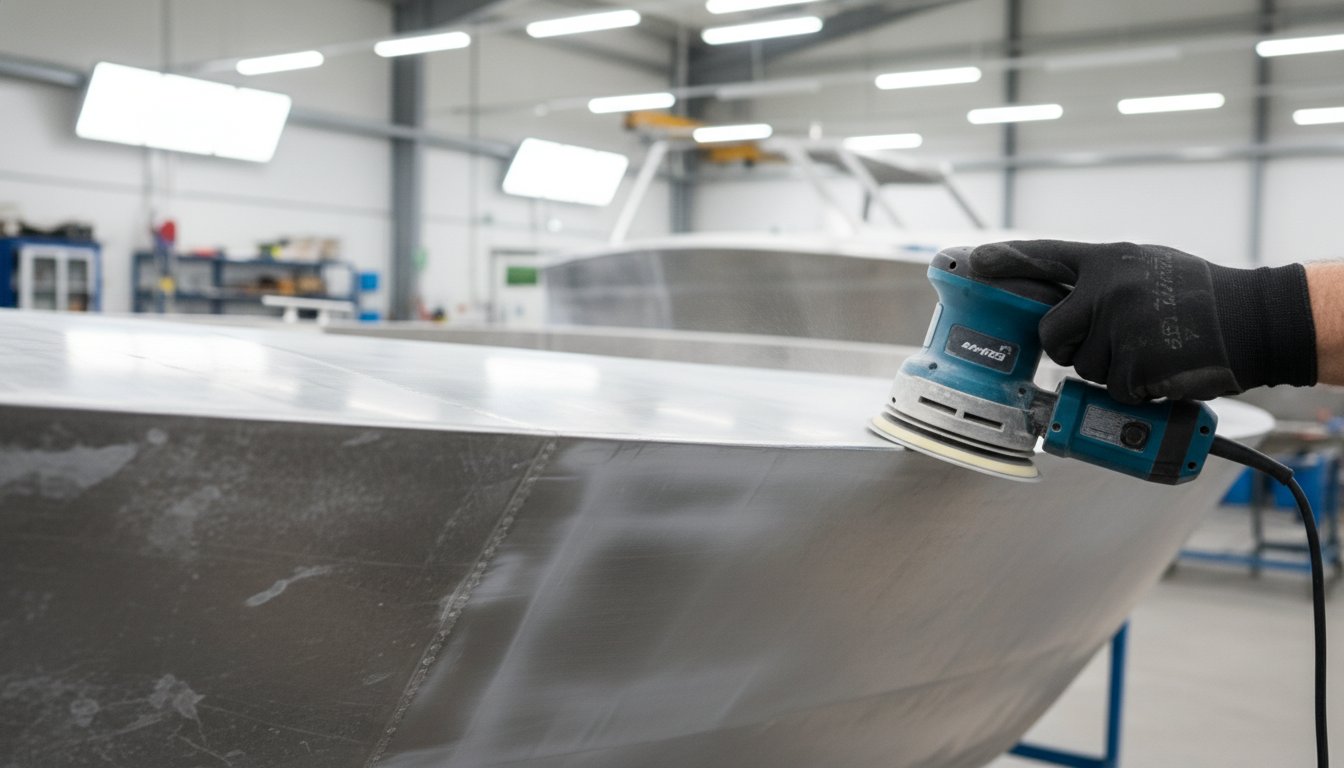
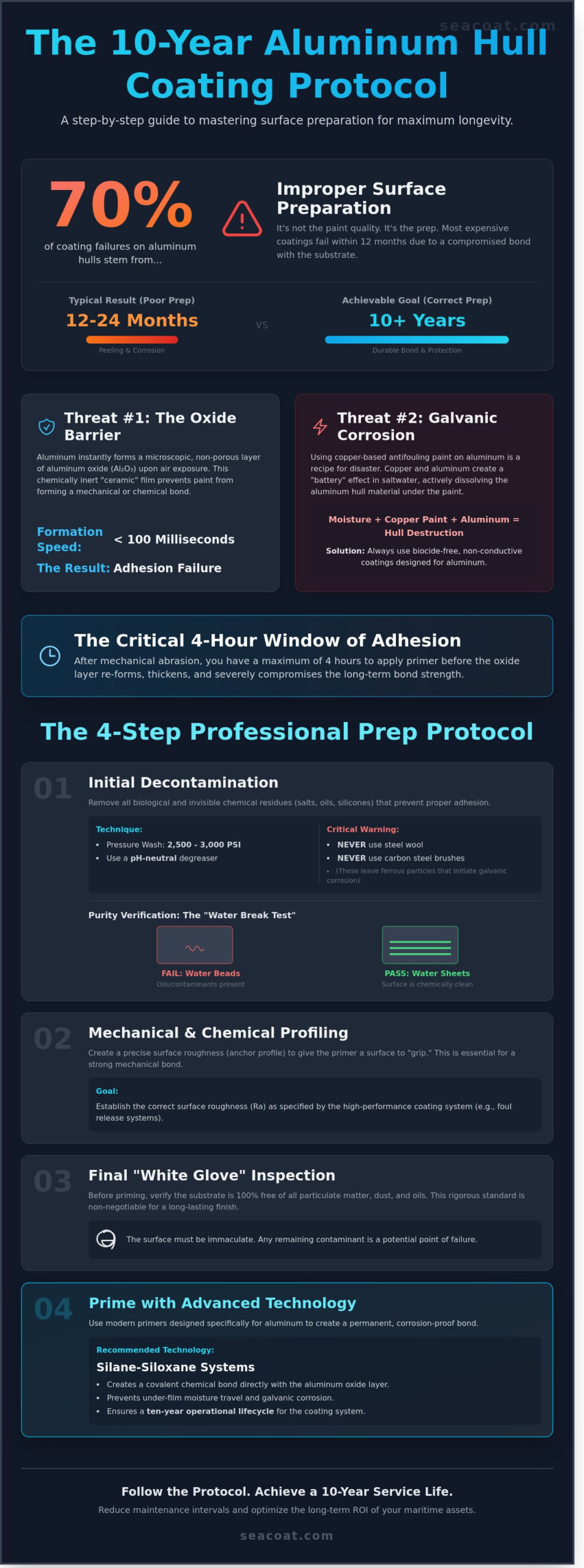
Did you know that according to data from the National Association of Corrosion Engineers (NACE), 70% of marine coating failures on aluminum substrates stem from improper surface preparation rather than the quality of the paint? It’s a frustrating reality for many vessel owners who watch expensive coatings peel away within 12 months because they didn’t fully understand how to prepare an aluminum hull for new paint. You’re likely familiar with the cycle of recurring maintenance and the persistent fear that galvanic corrosion is silently compromising your hull’s structural integrity.
We understand that you’re looking for more than a temporary fix; you need a strategic asset for your vessel management. This guide provides the technical protocols required to master surface adhesion, ensuring a durable bond that can last up to 10 years in aggressive saltwater conditions. We’ll examine the specific chemical interactions between aluminum oxides and primers, clarify the debate between mechanical sanding and chemical etching, and outline the steps to mitigate corrosion risks. By following these scientifically backed methods, you’ll reduce maintenance intervals and optimize the long-term ROI of your maritime assets.
Key Takeaways
- Identify the chemical complexities of the aluminum oxide barrier and why conventional coatings fail to bond without specific molecular intervention.
- Master the decontamination phase by employing the “Water Break Test” to eliminate microscopic salt deposits and chemical residues that compromise coating integrity.
- Learn the exact mechanical and chemical profiling protocols for how to prepare an aluminum hull for new paint to establish the precise surface roughness (Ra) required for high-performance foul release systems.
- Implement a rigorous “White Glove” inspection standard to verify a substrate free of particulate matter and oils before initiating the priming sequence.
- Understand how to leverage silane-siloxane technology to create a permanent bond that prevents galvanic corrosion and ensures a ten-year operational lifecycle.
Understanding the Aluminum Oxide Barrier: Why Surface Prep Fails
Aluminum presents a unique metallurgical challenge for marine coatings. Unlike steel, which oxidizes into porous iron oxide, aluminum forms a resilient and chemically stable passivation layer of aluminium oxide immediately upon contact with air. This microscopic film acts as a physical barrier that prevents traditional bottom paints from achieving a reliable mechanical or chemical bond. If a technician doesn’t follow a strict protocol on how to prepare an aluminum hull for new paint, the coating system will likely delaminate within 12 to 24 months, resulting in increased hydrodynamic drag and wasted maintenance capital.
Surface energy is the invisible metric that determines coating success. High-performance siloxane or foul release systems require a high-energy surface to wet out the substrate effectively. Contaminants such as rolling oils, paraffin waxes, and atmospheric chlorides lower this surface energy, creating microscopic voids where the primer cannot attach. Distinguishing between the structural aluminum alloy and these surface contaminants is the first step in ensuring a 10-year service life for the vessel’s coating system.
The Science of Instant Oxidation
Aluminum oxide (Al2O3) is a non-porous ceramic that reaches a thickness of 2 to 5 nanometers almost instantly. This layer is chemically inert, meaning it won’t react with the resins found in standard marine primers. Raw aluminum develops a continuous oxide layer within 100 milliseconds of exposure to an atmosphere containing 21% oxygen at standard humidity levels. This rapid reaction creates a narrow Window of Adhesion. If mechanical abrasion isn’t followed by chemical conversion or priming within a 4-hour window, the oxide layer thickens enough to compromise the long-term bond strength.
Galvanic Corrosion Risks in Aluminum Hulls
Improper preparation doesn’t just lead to peeling paint; it invites electrolytic destruction. When moisture becomes trapped under a poorly bonded film, it creates a micro-environment for localized pitting. This risk is significantly higher when using traditional anti-fouling paints containing cuprous oxide. Copper and aluminum sit at opposite ends of the galvanic scale, which creates a battery effect that actively dissolves the hull material. Utilizing biocide-free, non-conductive coatings is a critical requirement to mitigate these risks. Adopting a scientific approach to how to prepare an aluminum hull for new paint ensures the vessel remains structurally sound while maximizing fuel efficiency through reduced surface roughness.
Initial Decontamination: Removing Biological and Chemical Residues
Surface purity is the technical bedrock of coating longevity. Before mechanical abrasion begins, you must establish a clean baseline using the Water Break Test. This procedure involves misting the hull with deionized water; if the water sheets evenly, the surface is chemically clean. If it beads, residual oils or silicones are present. These contaminants are often invisible but will compromise the molecular bond of the new coating. Eliminating salt deposits is equally vital. Sodium chloride crystals trapped under a new film act as osmotic pumps, drawing moisture through the coating and causing blistering within 12 to 24 months.
Never use steel wool or carbon steel brushes. These tools leave behind microscopic ferrous particles that trigger localized galvanic corrosion, leading to pitting and rapid coating failure. Managing wastewater is also a regulatory necessity. Collection systems must capture 100% of the runoff to prevent heavy metals and chemical residues from entering the local watershed. Understanding how to prepare an aluminum hull for new paint begins with this commitment to chemical neutrality and environmental stewardship.
Pressure Washing and Degreasing Protocols
Use a pressure washer set between 2,500 and 3,000 PSI. This range effectively removes biofouling without marring the aluminum substrate or work-hardening the metal. Combine this with a pH-neutral degreaser. Avoiding aggressive alkaline cleaners is critical because aluminum reacts poorly to high pH levels, which can cause irregular etching and surface instability. For trailered vessels, focus on removing road film and exhaust soot. These petroleum-based residues are notorious for causing “fisheyes” in the final finish, which ruins the hydrodynamic profile of the vessel.
Evaluating Existing Coatings: To Strip or Not to Strip?
Deciding how to prepare an aluminum hull for new paint requires a clinical assessment of the current layer. If the legacy paint exhibits “chalking” or more than 15% delamination, a full strip is mandatory. We recommend chemical stripping over aggressive mechanical grinding for large-scale removal. Chemical agents dissolve the resin matrix without thinning the aluminum hull, preserving the structural integrity of the vessel. For high-performance applications, transitioning to a biocide-free siloxane system ensures long-term hydrodynamic efficiency and environmental compliance. This strategic shift reduces maintenance intervals and optimizes fuel economy over a ten-year life cycle.
Mechanical vs. Chemical Surface Profiling for Maximum Adhesion
Effective adhesion on aluminum hulls is a matter of surface energy management. The primary objective is to establish a mechanical tooth, a physical texture that allows the primer to grip the substrate. For modern foul release systems, the Roughness Average (Ra) must be precisely controlled. Excessive peak-to-valley heights increase hydrodynamic drag, which directly impacts fuel consumption. Conversely, a surface that’s too smooth results in adhesive failure. When considering how to prepare an aluminum hull for new paint, the choice of profiling method dictates the vessel’s operational efficiency for the next decade. Precision at this stage ensures the coating remains a strategic asset rather than a maintenance burden.
Abrasive Blasting and Sanding Techniques
Media blasting is the standard for large scale maritime vessels because it provides a uniform profile that manual orbital sanding cannot replicate. We recommend using garnet or crushed glass instead of traditional sand. Sand often contains free silica and can embed contaminants into the soft aluminum substrate, which leads to galvanic corrosion. Achieving a profile of 2.0 to 3.0 mils is the target for most high-build epoxy primers. This profile is verified using Testex tape or digital surface profile gauges to ensure consistency across the entire hull. When you’re determining how to prepare an aluminum hull for new paint, don’t overlook dust extraction. High-volume HEPA vacuums must be integrated into the blasting circuit. This prevents the re-settling of spent media and fine particulates, which can compromise the bond of subsequent siloxane layers.
Chemical Etching and Conversion Coatings
Mechanical profiling alone isn’t sufficient for the 2026 maritime regulatory environment. Aluminum forms a fresh oxide layer within minutes of exposure to oxygen, which creates a barrier to adhesion. Chemical etching using phosphoric acid solutions strips this layer and creates a microscopically porous surface. Following the etch, a conversion coating like Alodine is applied to stabilize the metal. This process transforms the surface into a chemically receptive state, preventing flash oxidation and enhancing corrosion resistance. It’s a critical step for maximizing the ten-year life cycle of biocide-free systems. Every chemical application requires a thorough neutralization and deionized water rinse. If residual acids remain trapped under the paint film, they’ll cause osmotic blistering. This leads to catastrophic coating failure within 24 months of service, undermining the vessel’s long-term ROI.
The Step-by-Step Aluminum Prep Protocol for 2026
The transition from mechanical abrasion to chemical stabilization requires rigorous validation. Once the hull reaches the final inspection stage, technicians must verify the surface is chemically inert and mechanically receptive. This means achieving a surface profile of 50 to 75 microns to ensure mechanical interlocking. A “White Glove” test isn’t just a metaphor; it’s a diagnostic requirement to identify microscopic particulates that impede siloxane bonding. Even a 2% presence of surface dust can reduce coating longevity by 15% over a ten-year cycle. Every square centimeter must be dry, oil-free, and properly profiled before the first drop of primer touches the metal.
Essential Tools and Safety Equipment
Precision requires specialized gear. Technicians must utilize NIOSH-approved P100 respirators to mitigate the inhalation of aluminum oxide dust, which poses long-term neurological risks. Handling the substrate requires powder-free, nitrile, or non-contaminating polyethylene gloves. Skin oils are a primary cause of delamination and must never contact the prepped surface. For verification, a digital surface profile gauge provides the empirical data needed to confirm the anchor pattern is sufficient. Understanding how to prepare an aluminum hull for new paint involves moving beyond visual estimates toward metrology-based confirmation.
The Final Solvent Wipe and Environmental Controls
The choice of solvent dictates the purity of the bond. While acetone is common, specialized low-VOC de-waxers offer superior evaporation rates without leaving the oily films often found in industrial-grade solvents. The “Two-Rag Method” is the industry standard: one cloth applies the solvent to dissolve contaminants, while the second clean cloth immediately wipes the residue away before it re-settles. Environmental conditions are equally vital. Maintain a relative humidity below 85% and ensure the substrate temperature is at least 3 degrees Celsius above the dew point. This prevents flash oxidation, a process that begins within minutes of exposure. Coordination is the final step; the priming team should be staged to begin application within a 4-hour window of the final wipe to secure maximum adhesion and validate the protocol for how to prepare an aluminum hull for new paint.
Beyond Preparation: Priming for a Ten-Year Foul Release System
Completing the mechanical and chemical etching process is only the first half of the equation. While you now understand how to prepare an aluminum hull for new paint through rigorous de-waxing and profile abrasion, the transition to the coating phase dictates the vessel’s long-term hydrodynamic profile. The primer choice is final because it establishes the molecular bridge between the raw alloy and the environment. Choosing a system that utilizes silane-siloxane technology ensures the coating integrates with the prepped surface rather than simply sitting on top of it.
This technical integration is vital for achieving a high return on investment. Poorly applied or low-grade primers lead to premature coating failure, often requiring a full strip-down within 24 to 36 months. In contrast, a scientifically backed preparation and priming sequence supports a ten-year service life. By maintaining a low surface roughness profile, operators can reduce drag and optimize fuel consumption. Industry data indicates that even minor increases in hull friction can escalate fuel costs by 6% to 15% annually. Transitioning to a non-toxic, hard-film system ensures both environmental compliance and peak operational efficiency.
- Surface Energy: High-quality prep creates a high-energy surface that maximizes the chemical bond of the primer.
- Molecular Adhesion: Silane-siloxane resins penetrate the aluminum’s oxide layer to create a permanent seal.
- Drag Reduction: A smoother finish directly correlates to lower fuel burn and higher top-end speeds.
Selecting the Right Primer: Seapoxy 73 vs. Traditional Options
Aluminum requires a high-build epoxy primer to prevent the rapid oxidation that occurs when the metal meets an electrolyte like saltwater. Seapoxy 73 is engineered specifically for this purpose, providing a robust barrier that traditional, thin-wash primers can’t match. Achieving a Dry Film Thickness (DFT) of 8 to 10 mils is essential for effective corrosion mitigation. You can learn more about the best boat paint for aluminum boats to ensure your primer and topcoat are chemically compatible for maximum adhesion.
Transitioning to Sea-Speed V 10 X Ultra for Aluminum
Once the primer is set, the final step is applying a hard-film foul release like Sea-Speed V 10 X Ultra. Unlike ablative paints that leach heavy metals and require annual sanding, this biocide-free technology creates a glass-smooth surface that organisms can’t firmly grip. It’s a zero-VOC solution that eliminates the repetitive, costly cycle of grinding and repainting every season. For a deeper look at managing these long-term assets, refer to our definitive guide to boat hull paint. This approach shifts hull maintenance from a recurring expense to a strategic performance advantage.
Secure Long-Term Performance Through Scientific Surface Engineering
Achieving a permanent bond on aluminum requires more than basic abrasion; it demands a systematic neutralization of the oxide layer and a calibrated mechanical profile. You now understand that how to prepare an aluminum hull for new paint is a process rooted in molecular science rather than simple labor. By following a rigorous decontamination and profiling protocol, you eliminate the primary causes of coating delamination. SeaCoat has refined these high-stakes applications since 2001 using our proprietary Silane-Siloxane technology. Our Sea-Speed V 10 X Ultra system is completely non-toxic, biocide-free, and contains zero VOCs, ensuring your vessel meets the strictest environmental regulations without sacrificing durability. This hard-film foul release coating doesn’t just protect; it optimizes hydrodynamics to reduce frictional drag and generate measurable fuel savings. Choosing a ten-year life cycle coating is a commitment to both operational efficiency and marine preservation.
Explore Sea-Speed V 10 X Ultra for your aluminum vessel to transform your maintenance strategy into a long-term performance advantage. Your vessel deserves the precision of an expert innovator.
Frequently Asked Questions
Can I use regular sandpaper to prepare my aluminum hull?
You shouldn’t use standard sandpaper containing iron oxide or garnet because these materials leave behind metallic particles that trigger galvanic corrosion. Instead, utilize aluminum oxide or silicon carbide abrasives to create the necessary mechanical bond. These specialized abrasives prevent cross-contamination, ensuring the 5052 or 6061 alloy substrate remains chemically stable before you apply the first coating layer.
How long can I wait after sanding before I must apply the primer?
You’ve got a window of 4 to 8 hours to apply your primer after the final sanding stage is complete. Aluminum begins to oxidize the moment it’s exposed to air, forming a thin layer that blocks chemical adhesion if left for more than 12 hours. Maintaining an environment with less than 85% humidity during this period is vital for the primer’s long-term performance.
Is it necessary to remove all the old paint before repainting aluminum?
Total removal is required if more than 15% of the existing coating shows signs of localized delamination, cracking, or osmotic blistering. If the previous layer is an epoxy system in excellent condition, you can perform a selective sand-through to the bare metal in damaged areas. However, switching to a high-performance siloxane system usually demands a 100% strip to ensure the 10-year lifecycle metrics are met.
What happens if I use a copper-based bottom paint on an aluminum boat?
Using copper-based paint on an aluminum hull creates a massive electrochemical potential difference that leads to rapid structural decay. In saltwater environments, this reaction can cause pitting depths of 2 millimeters or more within a single 6-month season. This battery effect effectively turns your hull into a sacrificial anode, which is why SeaCoat advocates for biocide-free, non-metallic foul release technologies.
How do I know if my aluminum hull has been properly etched?
A properly etched hull will pass a water break test where freshwater sheets off the surface uniformly without beading. If you see water beads on more than 5% of the surface, residual oils or contaminants are still present. Mastering how to prepare an aluminum hull for new paint requires achieving this specific surface tension to ensure the primer bites into a 1.5 to 2.5 mil profile.
Can I prepare an aluminum hull while the boat is in the water?
You can’t effectively prepare an aluminum hull while it’s submerged because the process requires a dry, controlled environment for mechanical abrasion and chemical conversion. Attempting to sand or etch underwater prevents the formation of a stable oxide layer and introduces 100% humidity to the bonding surface. Proper adhesion requires haul-out conditions where surface temperatures remain at least 5 degrees above the dew point.
What is the best way to clean an aluminum hull after sanding?
The most effective method involves a solvent wipe using denatured alcohol followed by a high-pressure freshwater rinse at 3,000 PSI. This process removes 98% of the microscopic aluminum dust that settles into the metal’s pores during the sanding phase. Don’t use shop rags that might contain silicone or industrial detergents, as these leave behind a film that reduces the coating’s peel strength by half.
Do I need a special primer for aluminum even if I prep it perfectly?
Yes, you must use a strontium chromate or high-build epoxy primer specifically formulated for non-ferrous metals to prevent oxidation. Even when you follow every step of how to prepare an aluminum hull for new paint, the metal’s low surface energy makes it difficult for standard marine paints to stick. A dedicated primer acts as a molecular bridge, providing the corrosion resistance needed for a 10-year service life.