
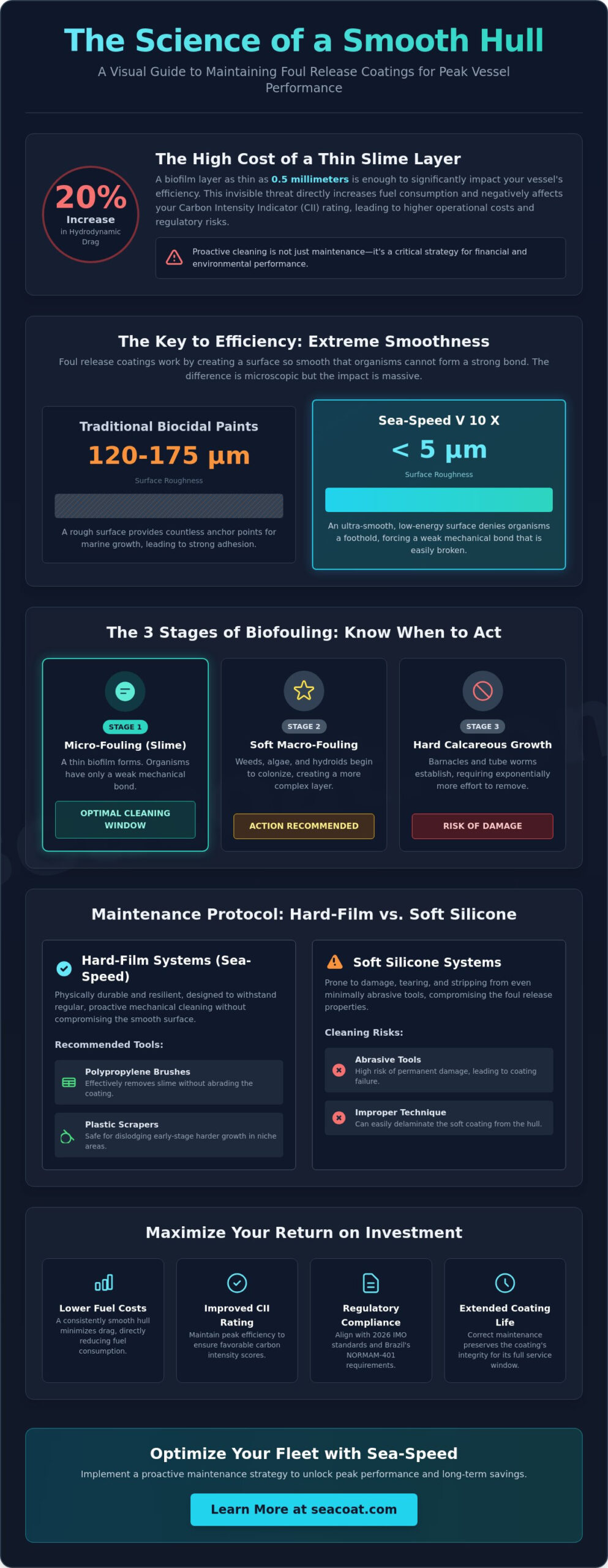
A biofilm layer as thin as 0.5 millimeters can increase hydrodynamic drag by up to 20 percent, directly impacting your vessel’s Carbon Intensity Indicator rating and total operational overhead. While the transition to advanced silane-siloxane systems like Sea-Speed V 10 X Ultra Clear represents a significant step toward environmental stewardship, the technical challenge of how to clean a foul release coating without compromising its sub-5-micron surface roughness remains a critical concern for fleet managers. You understand that maintaining a smooth hull is vital for performance, yet the fear of using abrasive tools that might strip the coating’s low-energy surface often leads to maintenance delays or regulatory non-compliance.
This authoritative guide details the precise protocols for maintaining hard-film systems to ensure peak vessel performance and extended coating longevity. We’ll examine the specific mechanical tools, such as polypropylene brushes and plastic scrapers, that safely remove slime without damaging the underlying film. You’ll also gain a clear maintenance schedule and an understanding of how proactive cleaning aligns with the 2026 IMO biofouling standards and Brazil’s NORMAM-401 requirements to maximize your long-term return on investment.
Key Takeaways
- Understand the transition from toxic biocidal leaching to physical foul release mechanisms and why surface energy is the key to vessel efficiency.
- Learn how to clean a foul release coating by accurately identifying the three stages of biofouling and selecting the least aggressive tool for the job.
- Compare the mechanical durability of hard-film systems like Sea-Speed V 10 X Ultra against soft silicones to avoid accidental surface damage.
- Implement a structured in-water maintenance protocol that leverages non-abrasive materials to maintain a smooth, low-drag hull profile.
- Optimize your long-term return on investment by aligning cleaning schedules with global regulatory standards and fuel efficiency goals.
What is a Foul Release Coating and Why Does it Need Cleaning?
Traditional hull protection has historically relied on biocidal leaching to poison marine organisms. In contrast, a foul release coating is a biocide-free system that utilizes physical properties and material science to mitigate Biofouling. These systems, such as Sea-Speed V 10 X Ultra Clear, provide a hard, molecularly smooth finish that prevents permanent attachment without releasing toxic contaminants into the water column. Understanding how to clean a foul release coating begins with a technical grasp of its underlying chemistry, as the maintenance strategy shifts from chemical replenishment to surface preservation.
The Physics of Low Surface Energy
The efficacy of silane-siloxane technology lies in its ability to create a surface that is fundamentally incompatible with biological adhesives. While traditional paints have a surface roughness ranging from 120 to 175 microns, Sea-Speed V 10 X Ultra Clear maintains a profile of less than 5 microns. This extreme smoothness disrupts the transition from settlement to adhesion; organisms may land on the hull, but they cannot establish a permanent foothold. Low surface energy is the inability of organisms to form a strong chemical bond with the hull. Because the bond is purely mechanical and exceptionally weak, even minimal force can dislodge growth. This physical barrier ensures that the coating remains a performance-enhancing tool rather than just a protective layer.
Self-Cleaning vs. Manual Maintenance
Foul release systems leverage hydrodynamic shear to maintain a clean surface. When a vessel reaches sufficient operational speeds, the force of the water moving across the hull acts as a “self-cleaning” mechanism, stripping away loosely attached organisms. However, this process is speed-dependent. If a vessel is slow-steaming or remains idle for extended periods, a biofilm or “slime” layer will inevitably accumulate. Even a thin biofilm layer of 0.5 millimeters can increase hydrodynamic drag by up to 20 percent, which significantly impacts fuel efficiency and Carbon Intensity Indicator (CII) ratings.
Manual intervention becomes necessary when hydrodynamic shear is insufficient to overcome the accumulation of slime. You don’t need to wait for hard growth like barnacles to justify a cleaning cycle. Proactive maintenance focuses on removing these microscopic layers to restore the hull’s low-drag profile. Because hard-film systems like Sea-Speed V 10 X Ultra are physically durable, they can withstand regular mechanical cleaning that would strip or damage softer silicone alternatives. This resilience allows for a more aggressive maintenance schedule, ensuring the vessel operates at peak efficiency throughout its entire service window.
Assessing Your Hull: When is it Time to Clean?
Determining the optimal maintenance window for a vessel requires a shift from traditional calendar-based scheduling to condition-based monitoring. Biofouling typically follows a predictable three-stage progression: micro-fouling (slime), soft macro-fouling (weeds and hydroids), and calcareous hard growth (barnacles and tube worms). Identifying these stages early is essential, as the mechanical effort required for removal increases exponentially once hard growth calcifies on the surface. While silane-siloxane systems like Sea-Speed V 10 X Ultra Clear are designed to shed organisms at operational speeds, vessels that spend significant time at anchor or operate at low speeds will inevitably require intervention.
Visual inspections remain the most reliable method for assessment. Utilizing divers or Remotely Operated Vehicles (ROVs) allows fleet managers to document the extent of accumulation on critical areas such as the rudder, bow, and niche areas. These inspections should be synchronized with seasonal changes; for instance, rising water temperatures in spring and summer significantly accelerate the metabolic rates of marine organisms. In tropical regions, a biofilm can establish itself in as little as 48 to 72 hours of idle time, necessitating a more rigorous inspection frequency to maintain the hull’s 5-micron surface profile.
The Biofilm Threshold
The “light slime” stage represents the optimal threshold for a soft-cleaning intervention. At this point, the organisms have only formed a weak mechanical bond with the low-energy surface of the coating. Delaying maintenance past this threshold allows secondary colonizers to gain a foothold, creating a more complex matrix that is harder to dislodge. When you are evaluating how to clean a foul release coating, the goal is always to intervene while the fouling is still in a “soft” state. This proactive approach ensures that the cleaning process remains non-abrasive, preserving the integrity of the hard-film surface and preventing the need for more aggressive mechanical force later.
Performance Monitoring for Fleet Managers
Advanced fleet management relies on real-time data to trigger maintenance. Monitoring the relationship between shaft RPM and vessel speed is a primary indicator of hull health; a measurable drop in speed at a constant RPM suggests increased frictional drag. Integrating these metrics into your broader marine coatings management strategy allows for evidence-based decision-making. Fuel flow meters often provide the first warning sign, detecting the early onset of drag before fouling is even visible from the surface. By establishing a performance baseline immediately after a fresh application of Sea-Speed V 10 X Ultra, you can accurately identify the precise moment when cleaning will yield the highest return on investment. If you are seeing a decline in efficiency, it’s likely time to consider optimizing your hull’s hydrodynamic profile through a scheduled maintenance session.
Tools and Techniques: Hard-Film vs. Soft Silicone Maintenance
Vessel owners often struggle with the inherent fragility of traditional foul release systems. Soft silicone coatings are notoriously delicate; they rely on an elastomeric, low-surface-tension top layer that is prone to tearing or delaminating during mechanical cleaning. These “soft” systems are frequently viewed as “one-and-done” surfaces because even a minor error in brush pressure or tool selection can compromise the entire film. In contrast, hard-film silane-siloxane systems like Sea-Speed V 10 X Ultra Clear provide a robust, non-elastomeric finish that withstands repeated mechanical scrubbing without loss of material or surface integrity.
Learning the technical protocols of how to clean a foul release coating requires a strategic match between tool hardness and the coating’s physical properties. While the surface of a hard-film system is exceptionally durable, traditional metal scrapers and stiff wire brushes are strictly prohibited. These aggressive tools can score the finish, creating microscopic valleys that increase surface roughness and provide anchoring points for future biofouling. The long-term return on investment for a hard-film system is realized through its ability to survive multiple intensive cleaning cycles over its 10-year service life, whereas softer alternatives often require premature and expensive re-application after physical damage occurs.
Approved Cleaning Implements
Soft-bristle nylon brushes are the gold standard for removing accumulated slime and light weed growth. They provide sufficient mechanical agitation to dislodge organisms from the low-energy surface without abrading the siloxane matrix. For smaller pleasure craft or targeted niche areas, microfiber mitts and soft sponges offer an effective manual solution. Additionally, the mechanical resilience of hard-film coatings makes them uniquely compatible with automated hull cleaning robots. These robotic systems can maintain large-scale fleet efficiency by performing regular, non-destructive cleanings that would be impossible on more sensitive silicone-based surfaces.
Pressure Washing Protocols
During scheduled haul-outs, high-pressure water washing serves as a highly effective method for restoring the hull’s hydrodynamic profile. For hard-film systems, a safe pressure range typically falls between 2,000 and 3,000 PSI. It’s vital to maintain a nozzle distance of approximately 12 inches and an application angle of 45 degrees to prevent surface scoring or edge delamination. This method is significantly more efficient than cleaning ablative bottom paint, as foul release systems don’t rely on the sacrificial loss of film thickness to remain effective. Instead, the pressure wash simply removes external contaminants, leaving the permanent coating intact and ready for immediate return to service.
Step-by-Step In-Water Cleaning Protocol for Sea-Speed V 10 X
Executing a precise maintenance workflow is essential to preserving the hydrodynamic efficiency of silane-siloxane systems. Unlike traditional coatings that require aggressive scrubbing, the methodology of how to clean a foul release coating centers on a “soft-touch” mechanical removal process. This approach leverages the coating’s low surface energy to dislodge biofouling with minimal force, ensuring the 5-micron surface profile remains intact. A systematic, five-step protocol provides the most reliable results for commercial and recreational vessels alike.
- Step 1: Pre-Cleaning Survey. Divers or ROVs should conduct a thorough visual assessment to identify high-fouling zones, specifically targeting the rudder, bow thrusters, and niche areas where water flow is restricted.
- Step 2: Tool Selection. Based on the survey, select the softest implement capable of removing the current fouling stage. Polypropylene bristle brushes or diver’s mitts are typically sufficient for biofilm and light slime.
- Step 3: Top-Down Execution. Implement a vertical, top-down cleaning motion. This prevents dislodged sediment and organic debris from re-settling on previously cleaned sections of the hull.
- Step 4: Assisted Debris Removal. Use high-volume, low-pressure water flow to flush away loosened organisms. This technique assists the mechanical action of the brushes without risking surface scoring.
- Step 5: Post-Cleaning Inspection. Conduct a final verification to ensure the complete removal of micro-fouling and to confirm that the coating’s surface integrity hasn’t been compromised by external impact.
Managing the Cleaning Environment
Regulatory scrutiny regarding in-water cleaning discharge has intensified with the upcoming 2026 IMO biofouling management standards. Because Sea-Speed V 10 X Ultra Clear is a non-toxic, biocide-free system, it significantly simplifies the process of obtaining in-water cleaning permits. There’s no risk of leaching heavy metals or hazardous chemicals during the maintenance process. Divers should still follow best practices, such as ensuring weighted belts and equipment don’t make direct contact with the hull to prevent mechanical chipping. If you are looking to upgrade your fleet’s compliance, you can explore our non-toxic coating solutions to streamline your operational logistics.
Special Attention Areas
The “wind and water” line requires specialized focus due to high UV exposure and the alternating cycles of wetting and drying, which can encourage more stubborn growth. Similarly, propellers and running gear demand careful handling to maintain their balance and thrust efficiency. When maintaining these components, it’s vital to avoid stripping the antifouling boat paint or foul release system applied to the blades. Mastering how to clean a foul release coating on complex geometries like propellers is just as important as the hull itself. Sea chests and intake grates must also be cleared of obstructions to ensure optimal cooling and engine performance. Consistent maintenance of these niche areas is the only way to guarantee the multi-year performance cycle promised by advanced siloxane technology.
Long-Term Maintenance: Maximizing Longevity and ROI
The 10-year service life of Sea-Speed V 10 X Ultra Clear represents a fundamental shift in asset management. While conventional systems require frequent recoating, the durability of silane-siloxane technology allows for a decade of continuous protection when maintained correctly. You aren’t just cleaning a surface; you’re preserving a high-performance hydrodynamic profile. By mastering how to clean a foul release coating through proactive in-water maintenance, fleet managers can significantly extend the intervals between dry-dockings. This strategy directly supports regulatory compliance, particularly the Carbon Intensity Indicator (CII) requirements for 2026, which demand an 11 percent reduction factor relative to 2019 baselines.
Maintaining a “Level 0” hull, essentially free of all micro-fouling, is the most effective way to optimize fuel consumption. Since every 20-micron increase in surface roughness can equate to a 1 percent rise in fuel use, the economic impact of a clean hull is substantial. Proactive maintenance ensures that the vessel operates at the 5-micron baseline established at application. This level of surface efficiency is a critical component of achieving EEXI targets and avoiding the need for the Corrective Action Plans required for poorly rated ships by April 30, 2026. Consistent, non-abrasive cleaning is the primary mechanism for securing these long-term gains.
Avoiding Coating Failure
Even the most resilient hard-film systems can suffer from improper maintenance. Burnishing occurs when a surface is over-cleaned with excessive pressure or frequency, leading to localized wear that can eventually compromise the film’s low-energy properties. It’s also vital to monitor the environment in which cleaning takes place. Abrasive contaminants like sand or silt suspended in the water column can act as unintended polishing agents, scoring the surface during the cleaning process. If mechanical damage does occur, silane-siloxane systems allow for localized spot-repairs using Sea-Speed V 10 X Ultra, preventing the need for a full re-coat and maintaining the integrity of the total system.
The Environmental and Economic Impact
The transition toward sustainable maritime operations requires a holistic view of boat hull paint performance. A well-maintained foul release system reduces the vessel’s carbon footprint by minimizing the energy required to overcome drag. Beyond the fuel savings, the true profit lies in extended service windows. Staying out of the yard for longer periods maximizes vessel availability and reduces the high costs associated with hauling and labor. We recommend partnering with certified divers who are specifically trained in the technical protocols of how to clean a foul release coating. Their expertise ensures that the maintenance process remains a value-adding activity rather than a risk to your strategic assets.
Securing Long-Term Vessel Performance and Regulatory Compliance
Maintaining a high-performance hull is no longer a matter of simple aesthetics; it’s a strategic necessity in an era of tightening environmental regulations and escalating fuel costs. You’ve learned that the secret to maximizing asset longevity lies in condition-based monitoring and the use of non-abrasive mechanical tools. By understanding how to clean a foul release coating specifically engineered for durability, you can maintain a sub-5-micron surface profile that traditional biocidal paints cannot match. This proactive approach ensures your fleet remains compliant with 2026 IMO standards while avoiding the physical damage common with softer silicone alternatives.
Incorporating proprietary Silane-Siloxane technology into your maintenance cycle provides a permanent solution that delivers documented fuel savings of up to 12 percent. This biocide-free approach eliminates toxic discharge, making in-water cleaning both legally compliant and ecologically sound. Optimize your fleet maintenance with Sea-Speed V 10 X Ultra to ensure your vessels operate at peak hydrodynamic efficiency for years to come. Your commitment to technical precision today will define your operational success in the high-stakes maritime sector of tomorrow.
Frequently Asked Questions
Can I use a pressure washer on a foul release coating?
Yes, pressure washing is highly effective for hard-film silane-siloxane systems like Sea-Speed V 10 X Ultra during haul-outs. You should maintain a pressure range between 2,000 and 3,000 PSI while keeping the nozzle at a 45-degree angle approximately 12 inches from the surface. This method safely removes biofouling without the risk of delamination or tearing that often occurs with softer, more delicate silicone coatings.
How often should I clean my foul release coated hull?
Cleaning frequency should be determined by condition-based monitoring rather than a fixed calendar schedule. You should monitor your vessel’s fuel flow and speed-to-RPM ratio to detect the early onset of frictional drag. In tropical environments or during extended idle periods, you may need to intervene every few weeks to remove biofilm. Identifying the optimal moment for how to clean a foul release coating prevents slime from transitioning into harder growth.
Do foul release coatings ever need to be scrubbed with abrasive pads?
No, you should never use abrasive pads, such as Scotch-Brite, on these specialized surfaces. These materials are far too aggressive and will score the molecularly smooth, 5-micron finish of the coating. Scoring increases surface roughness and provides mechanical anchoring points for future marine organisms. Stick to soft-bristle nylon brushes, diver’s mitts, or microfiber sponges to preserve the low-energy properties of the siloxane matrix.
Will cleaning my hull in the water release toxic chemicals?
Cleaning a Sea-Speed V 10 X Ultra hull in the water does not release toxic biocides, copper, or heavy metals. Because the system is fundamentally biocide-free and non-toxic, the resulting effluent consists only of organic marine growth. This significantly simplifies environmental compliance under the 2026 IMO biofouling guidelines. It allows for proactive maintenance in sensitive ecosystems without the regulatory hurdles associated with traditional leaching antifouling paints.
What happens if I use a metal scraper on Sea-Speed V 10 X Ultra?
Using a metal scraper can cause permanent mechanical scoring or chipping of the hard-film surface. While silane-siloxane systems are exceptionally durable compared to soft silicones, metal is hard enough to compromise the molecularly smooth finish. If you encounter stubborn macro-fouling, utilize a plastic paint scraper or even a piece of carpet. These tools provide enough force to dislodge growth from the low-energy surface without damaging the underlying protective layer.
Is it possible for a foul release coating to be ‘self-cleaning’ at dock?
No foul release coating is truly “self-cleaning” while a vessel is stationary at a dock. The technology relies on hydrodynamic shear, which is the force of water moving across the hull at operational speeds, to shed organisms. Biofilm will inevitably accumulate during idle periods. If your vessel doesn’t reach the required speed threshold regularly, manual cleaning is necessary to restore the hull’s peak hydrodynamic efficiency and fuel economy.
How do I know if my cleaning diver is doing a good job?
A professional cleaning job should result in a visually smooth hull with no remaining biofilm or “halos” around niche areas like sea chests. You can verify the quality by monitoring performance metrics; a successful cleaning should return the vessel to its baseline fuel efficiency. Ensure the diver avoids weighted belts that contact the hull and uses only approved, non-abrasive tools to prevent burnishing or surface wear.
Can I clean a foul release coating while the boat is on a trailer?
Yes, cleaning while the boat is on a trailer is an effective way to maintain the coating using a standard garden hose or low-pressure washer. It’s an ideal opportunity to inspect the hull for any mechanical impact damage or localized surface wear. Ensure that your cleaning tools are free of abrasive contaminants like sand or silt, which can act as unintended polishing agents and score the hard-film finish.