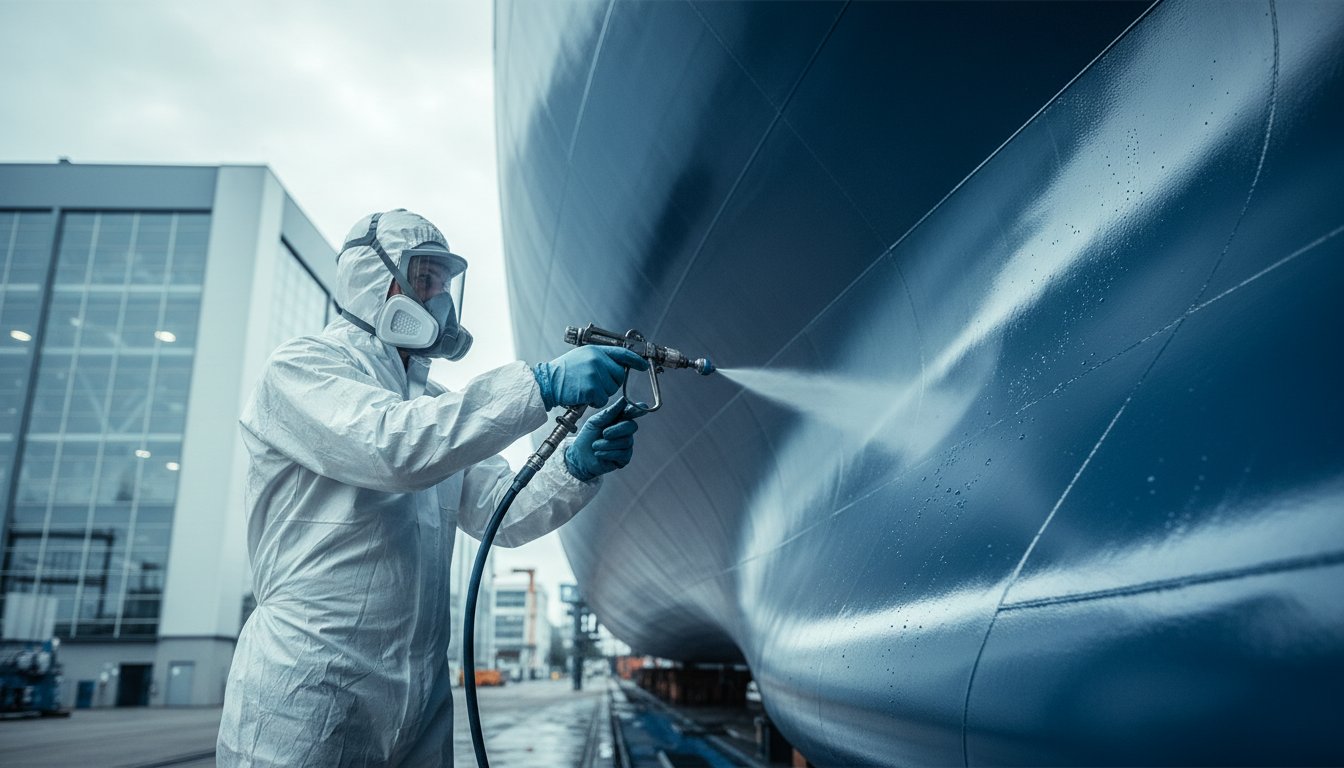
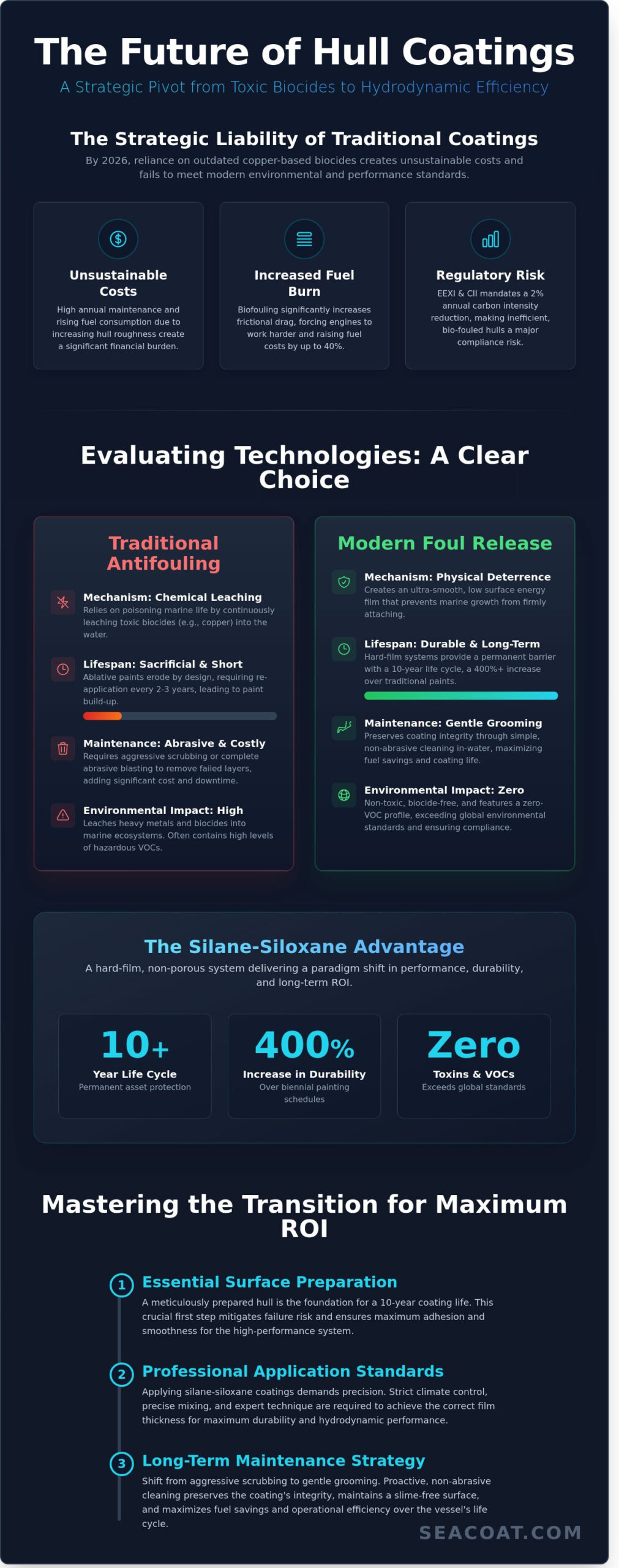
By 2026, the traditional reliance on copper-based biocides will represent a strategic liability rather than a functional solution for the modern fleet. You’ve likely recognized that high annual maintenance costs and rising fuel consumption from hull roughness aren’t sustainable, especially as EEXI and CII regulations mandate a 2% annual reduction in carbon intensity. Choosing the right paint for bottom of boat applications now requires a pivot from chemical toxicity toward hydrodynamic optimization.
We understand that reliability and long-term ROI are your primary concerns when managing maritime assets. This technical guide provides the data-backed framework to master the transition to high-performance, non-toxic foul release systems, ensuring a 10-year coating life cycle and significantly reduced frictional drag. We’ll analyze the siloxane-based chemistry and precise application protocols necessary to secure a faster, more efficient vessel that exceeds global environmental standards.
Key Takeaways
- Understand the transition from traditional biocidal leaching to advanced foul release systems that utilize low surface energy to optimize hydrodynamic efficiency.
- Identify the technical criteria for selecting the most effective paint for bottom of boat applications to ensure regulatory compliance and superior drag reduction.
- Master the essential surface preparation protocols required to mitigate the risk of coating failure and provide a stable foundation for high-performance siloxane systems.
- Learn the professional application standards for silane-siloxane coatings, focusing on climate control and precise mixing for maximum film durability.
- Develop a long-term maintenance strategy that replaces aggressive scrubbing with gentle grooming to preserve the coating’s integrity and maximize fuel savings.
Understanding the Science of Paint for the Bottom of a Boat
Choosing a paint for bottom of boat surfaces is a strategic engineering decision rather than a routine maintenance task. The primary function of a modern coating is to manage biofouling while simultaneously minimizing hydrodynamic drag. For decades, the industry viewed bottom paint as a sacrificial layer of biocides designed to kill marine growth. You can examine the history and science of antifouling paints to understand how these toxic solutions became prevalent. Today, the focus has shifted toward surface roughness and its direct correlation to fuel consumption. A rougher hull increases frictional resistance, which forces the propulsion system to consume more energy to maintain speed.
As we move toward 2026, the maritime industry is adopting non-toxic, hard-film technologies. These systems rely on physical properties rather than chemical leaching. By creating an ultra-smooth surface, these coatings mitigate the attachment of organisms and optimize the vessel’s glide through the water. It’s a move toward permanent, high-performance assets that offer long-term reliability. This transition reflects a deeper understanding of how fluid dynamics and chemical engineering must work in tandem to improve fleet performance.
What is Biofouling and Why Does It Matter?
Biofouling is a progressive biological process that begins with a microscopic slime layer. If left unchecked, this microfilm provides the foundation for macrofouling, such as barnacles and mussels. These organisms significantly alter the hull’s profile and disrupt laminar flow. Data from the International Maritime Organization indicates that hull fouling increases fuel costs by up to 40 percent, making it a primary driver of operational inefficiency. A premium coating ensures the vessel maintains its design speed without overworking the engines, protecting the ship’s mechanical integrity over time.
The Environmental Imperative
Global regulations are tightening, with the phase-out of copper-based biocides following the historical ban on TBT. Modern operators use non-toxic coatings to ensure compliance with EEXI and CII standards. These regulations track carbon intensity; a clean hull is the most effective tool for reducing emissions. Advanced coatings also feature zero VOCs, which eliminates hazardous air pollutants during application. This commitment to environmental stewardship aligns with a 10-year life cycle, providing a sustainable and economically sound alternative to traditional paint for bottom of boat options.
Evaluating Technologies: Antifouling vs. Foul Release
Selecting the correct paint for bottom of boat applications requires a technical understanding of how surfaces interact with marine environments. Traditional antifouling systems rely on the controlled leaching of biocides to poison organisms. Foul release technology, however, utilizes low surface energy and high smoothness to prevent biofouling from bonding permanently. This shift from chemical warfare to physical deterrence optimizes hydrodynamic efficiency. While antifouling requires sacrificial layers that degrade over time, foul release systems provide a permanent, hard-film barrier. This fundamental difference dictates both the environmental footprint and the long-term operational costs of the vessel.
Traditional Ablative and Hard Antifouling
Ablative paints are designed to erode, shedding layers to expose fresh toxins throughout the season. This sacrificial process inevitably leads to “paint build-up,” a condition where old, brittle layers accumulate and eventually flake off. Removing this legacy coating requires intensive abrasive blasting to reach the bare substrate, adding significant cost to the maintenance cycle. Research into non-toxic foul release coatings highlights the environmental risks associated with these heavy metals. Leached copper and organotin compounds accumulate in harbor sediments, which has prompted 100% biocide bans in several sensitive maritime regions.
The Silane-Siloxane Advantage
Sea-Speed V 10 X Ultra represents a move toward advanced silane-siloxane chemistry. Unlike soft silicone coatings that are prone to tearing and mechanical damage, this hard-film system creates a durable, non-porous surface. It delivers a 10-year life cycle for commercial and recreational hulls, which is a 400% increase over standard biennial painting schedules. This longevity is paired with a zero-VOC profile. Operators maintain performance through simple grooming rather than aggressive scrubbing, preserving the coating’s integrity while keeping the hull smooth. You can view the full technical performance data to see how these metrics translate to fuel savings.
Special Considerations for Aluminum Hulls
Aluminum vessels face unique risks when selecting a paint for bottom of boat. Applying copper-based coatings triggers galvanic corrosion, which can cause severe hull pitting in under 12 months. Non-conductive, biocide-free coatings are the only safe choice for these assets. For aluminum hulls and outdrives, achieving a 2.5-mil profile during surface preparation is essential for maximum adhesion. Choosing a chemically inert coating eliminates the electrical path required for corrosion, protecting the structural integrity of the vessel while preventing fouling. This approach ensures that the hull remains lightweight and efficient without the risk of metal loss.
Preparing the Hull: The Foundation of a Long-Lasting Coating
Performance begins long before the first gallon of siloxane is opened. Data from marine coating inspectors reveals that 90% of coating failures originate from improper surface preparation. While traditional paint for bottom of boat applications might tolerate minor surface imperfections, a high-performance foul release system is an engineered solution that demands a laboratory-clean substrate. Adhesion isn’t just a physical bond; it’s a chemical necessity for a coating designed to withstand 10 years of hydrodynamic stress.
The objective is to create a specific surface profile that allows for maximum mechanical anchoring. Fiberglass, steel, and aluminum each present unique chemical challenges. Steel requires abrasive blasting to a near-white metal standard (SSPC-SP 10) to eliminate microscopic oxidation. Aluminum must be treated with non-metallic media to avoid galvanic interference. Without this foundational integrity, the coating’s ability to optimize fuel efficiency is compromised by premature delamination.
Stripping and Cleaning the Substrate
Removing failing antifouling layers is the most labor-intensive phase of the project. Soda blasting is the preferred method for fiberglass because it’s aggressive enough to strip old copper-based paint for bottom of boat but gentle enough to leave the gelcoat intact. Chemical stripping remains an option for smaller vessels, though it requires meticulous de-waxing and degreasing to remove all residual solvents that could interfere with the siloxane bond.
- Moisture Analysis: Technicians must use a moisture meter to confirm the hull is below 3% saturation before proceeding.
- Contaminant Removal: New hulls require a three-step de-waxing protocol to eliminate all traces of mold release agents.
- Compliance: Proper containment of stripped material ensures your facility meets EPA Vessel General Permit requirements for discharge management.
Repairing and Priming
Once the hull is bare, any structural defects must be addressed. Technicians use marine-grade epoxy to fill gouges and repair osmotic blisters that have been ground out and dried. Following these repairs, we apply Seapoxy 73. This specialized primer acts as a high-build waterproof barrier, preventing water migration into the laminate or onto the metal surface. It’s the essential bridge between the rigid substrate and the flexible foul release topcoat.
The timing of the overcoat window is the most critical variable in the application sequence. If the primer cures beyond its chemical window, usually 4 to 6 hours depending on ambient temperature, the foul release topcoat won’t bond effectively. You’ve got to apply the next layer while the primer is still thumbprint tacky. This precision ensures the system functions as a single, monolithic unit for its entire 10-year service life.
Applying the Coating: A Professional How-To for Silane-Siloxane Systems
Precision during the application phase dictates the eventual hydrodynamic efficiency of the vessel. Unlike traditional biocidal paint for bottom of boat applications, silane-siloxane systems require strict adherence to environmental parameters to ensure chemical cross-linking occurs correctly. Monitoring the dew point is critical; the substrate temperature must remain at least 5°F above the dew point to prevent microscopic moisture entrapment, which can compromise the 10-year bond strength of the polymer matrix.
This level of technical precision is why professional application is paramount, not just for advanced marine coatings but for any high-value asset. Just as you would rely on expert house painters muskoka to protect a lakeside property, specialized technicians are essential for protecting a vessel’s hull.
The Application Workflow
Success begins with a controlled environment. Technicians must utilize personal protective equipment, including organic vapor respirators and nitrile gloves, before initiating the three-stage prep. When mixing the V 10 X Ultra base and activator, use a mechanical agitator at 400 to 600 RPM for exactly 3 minutes. This ensures a homogenous blend without inducing excessive air entrainment. Achieving a consistent Wet Film Thickness (WFT) of 150 to 200 microns is necessary to maintain the surface smoothness required for a 4% reduction in drag.
- Environmental Setup: Maintain ambient temperatures between 50°F and 90°F for optimal chemical reaction.
- Mixing Protocol: Follow the precise weight-based ratio to trigger the siloxane curing mechanism.
- Application Technique: Use an airless sprayer with a .015 to .019 tip for the smoothest finish, though specialized short-nap rollers work for smaller surface areas.
Curing and Launching
The transition from a liquid film to a high-modulus solid involves a complex moisture-cure process. While the surface may feel dry to the touch within 4 hours at 70°F, the system requires a minimum 24-hour window before water immersion. This period allows the silane groups to bond with the substrate, creating the permanent barrier that defines high-performance paint for bottom of boat technology. A final inspection using a high-intensity LED light helps identify ‘holidays’ or thin spots that could lead to localized fouling. If the coating thickness falls below 125 microns in any sector, it won’t provide the full 120-month protection cycle promised by the ROI analysis.
Ready to optimize your fleet’s performance? Consult with a Seacoat SCT, LLC technical specialist to schedule your professional application training.
Maximizing ROI: Maintenance and Long-Term Performance
Adopting a premium foul release system shifts the vessel management paradigm from reactive repair to proactive optimization. Traditional maintenance involves aggressive scrubbing to remove barnacles, which simultaneously strips away layers of biocidal paint. Sea-Speed replaces this destructive cycle with grooming. This methodical approach preserves the ultra-smooth surface profile, ensuring the hull’s hydrodynamic efficiency remains at peak levels for years. Owners typically observe speed gains of 1.5 to 3 knots immediately following the transition from standard paint for bottom of boat to a hard-film siloxane coating.
Monitoring performance metrics is essential for quantifying your return on investment. By tracking fuel flow meters and GPS speed-over-ground data, operators can see the immediate impact of reduced skin friction. A slicker hull doesn’t just save fuel; it reduces the load on the engine, extending the service life of critical mechanical components. This performance remains consistent because the coating doesn’t leach away or become brittle over time.
In-Water Maintenance Procedures
Grooming requires minimal mechanical force. Divers should use soft sponges or carpet-lined brushes to wipe away incipient bio-slime before it transitions into hard growth. Unlike soft silicone coatings that tear easily, Sea-Speed’s hard-film technology withstands high-pressure washing at 2,500 PSI. This durability allows for rapid cleaning during short port stays. You must avoid abrasive pads or metal scrapers; these tools are designed for inferior coatings and can create micro-scratches that invite larval settlement. Keeping the surface pristine maintains the low-friction coefficient required for maximum fuel economy.
Calculating Your Total Cost of Ownership
The financial logic of a 10-year coating cycle is undeniable when compared to the 24-month haul-out schedule required by conventional copper-based products. Over a decade, a vessel using standard paint for bottom of boat will undergo five full dry-docking cycles. Sea-Speed requires only one application for the same period. This eliminates 80% of your long-term haul-out costs and associated labor. Data from commercial fleet operations shows that a 10% reduction in fuel consumption pays for the entire coating upgrade within the first 12 months of service. Additionally, a certified 10-year hull coating history significantly boosts the vessel’s resale value, as it represents a pre-paid maintenance asset for the next owner.
Optimizing Your Maritime Assets for the Next Decade
Selecting the right paint for bottom of boat applications is a strategic decision that impacts your vessel’s entire operational profile. By shifting from traditional ablative biocides to advanced silane-siloxane technologies, you prioritize hydrodynamic efficiency over temporary chemical barriers. Proper hull preparation ensures these Zero VOC, biocide-free coatings maintain their integrity for a 10-year expected life cycle. This shift in technology directly translates to measurable gains in performance, including proven fuel savings of up to 12% through reduced surface roughness. Adopting this approach doesn’t just meet 2026 regulatory standards; it establishes a new benchmark for cost-effective stewardship. It’s time to move beyond temporary fixes. Invest in a permanent solution that protects both your bottom line and the marine ecosystem. You’re choosing a strategic asset for vessel management that delivers long-term ROI.
Ultimately, a well-maintained vessel is an asset meant to be enjoyed. For those in maritime hubs looking to host events on their newly optimized boats, services that specialize in on-board experiences can complete the picture; for instance, you can learn more about EZBBQ Singapore to see how catering can enhance the boating lifestyle.
Upgrade to Sea-Speed V 10 X Ultra: The Professional Choice for Hull Optimization
Your fleet deserves a coating that works as hard as your crew does.
Frequently Asked Questions
How often should I paint the bottom of my boat?
You should paint the bottom of your boat every 10 years when utilizing a premium foul release coating like Sea-Speed V 10 X Ultra. Traditional biocidal paints require reapplication every 12 to 24 months because their active toxins deplete quickly. Our siloxane technology maintains its hydrodynamic properties for a full decade; this eliminates the need for biennial haul-outs and reduces long-term maintenance costs by 60 percent.
Can I apply foul release coating over my old antifouling paint?
You can’t apply a high-performance foul release coating directly over existing antifouling paint. To ensure proper adhesion, you must remove all old coatings via abrasive blasting to a near-white metal or gelcoat finish. This process creates the necessary 2 to 3 mil profile for the primer to bond. Applying over old paint leads to delamination because the underlying layers are designed to slough off over time.
Is non-toxic bottom paint as effective as copper-based paint?
Non-toxic coatings like Sea-Speed are more effective than copper-based alternatives because they rely on surface energy rather than chemical leaching. While copper paints lose 50 percent of their potency within 18 months, our biocide-free siloxane remains 100 percent effective throughout its service life. Independent testing shows these coatings prevent hard growth attachment through a smooth, low-energy surface that allows organisms to wash away at speeds above 7 knots.
Do I need a special primer for an aluminum boat hull?
Aluminum hulls require a specialized non-conductive epoxy primer to prevent galvanic corrosion. You must avoid any paint for bottom of boat that contains cuprous oxide, as copper reacts with aluminum and causes hull pitting within weeks. Our system uses a high-build epoxy barrier coat that provides 4000 psi of adhesion; this creates a permanent dielectric shield between the aluminum substrate and the marine environment.
How does bottom paint affect my boat’s speed and fuel efficiency?
The right paint for bottom of boat significantly increases speed and fuel efficiency by reducing hydrodynamic drag. Sea-Speed V 10 X Ultra provides a surface roughness of less than 20 microns, which is 5 times smoother than traditional ablative paints. Vessels utilizing this technology report fuel savings of 6 to 12 percent. This reduction in skin friction allows for higher top speeds and lower engine RPMs during cruising.
Can I apply Sea-Speed V 10 X Ultra myself or do I need a pro?
Professional application is recommended to ensure the 10-year performance warranty and optimal film thickness. Applying Sea-Speed V 10 X Ultra involves specialized HVLP or airless spray equipment to achieve a uniform 8 to 10 mil dry film thickness. While DIY application is possible for experienced individuals, professional applicators guarantee the technical precision needed for the siloxane matrix to cure correctly and provide maximum ROI.
What is the difference between ablative and hard bottom paint?
Ablative paints are designed to wear away at a rate of 50 microns per year, while hard-film coatings like Sea-Speed provide a permanent, non-depleting barrier. Ablatives release toxins into the water column as they erode, which necessitates frequent repainting. In contrast, our hard siloxane coating doesn’t lose thickness over time. It provides a durable, scrubbable surface that resists mechanical damage from grounding or fenders.
Is foul release coating safe for the environment?
Foul release coatings are the safest choice for marine ecosystems because they contain zero biocides and zero VOCs. Traditional antifouling paints leach heavy metals like copper or zinc, which accumulate in harbor sediments and harm non-target species. Sea-Speed meets the strict requirements of the IMO Anti-fouling Systems Convention. By choosing a non-leaching solution, you protect water quality while complying with 100 percent of global environmental regulations.