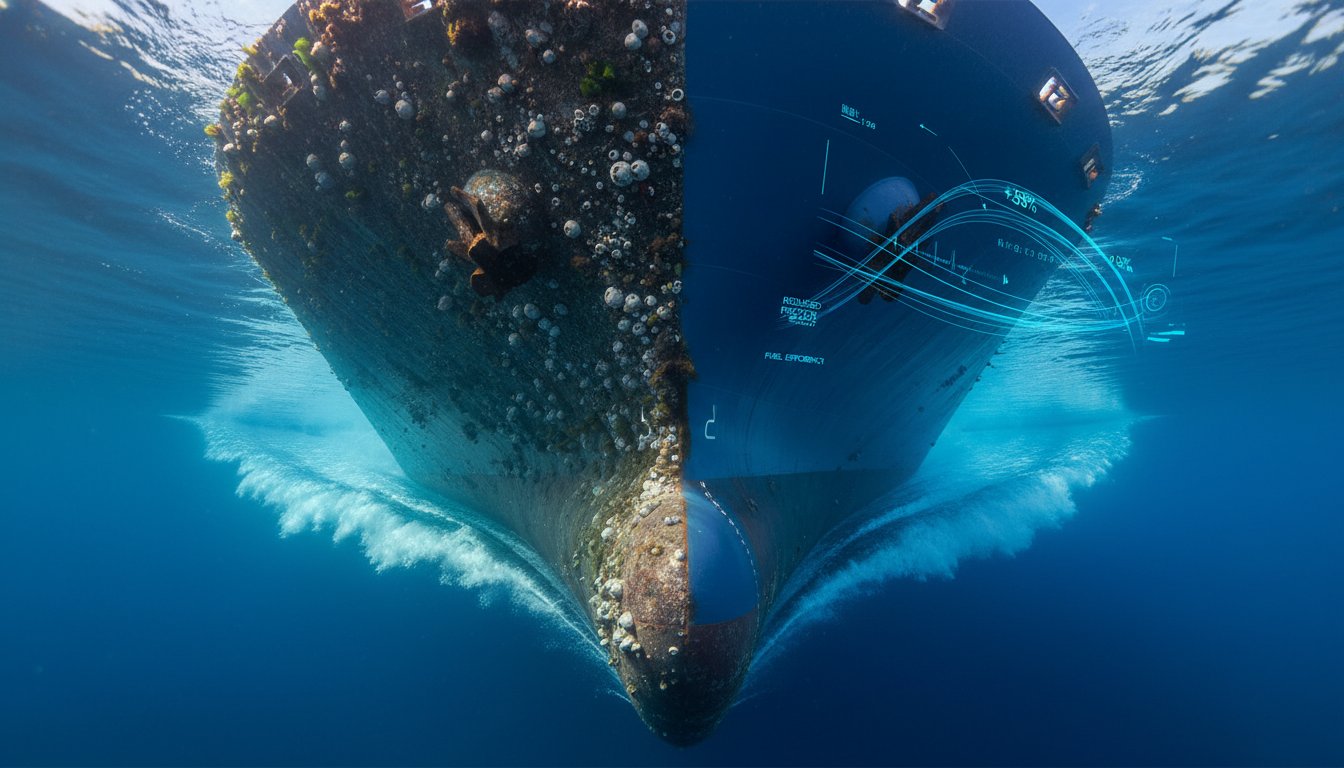
The International Maritime Organization reports that heavy biofouling can increase a ship’s fuel consumption by as much as 40 percent. For operators managing high-value assets, this isn’t just an environmental concern; it’s a direct threat to the bottom line. You already understand that maintaining a smooth hull is critical for operational speed and fuel economy. However, as international mandates move away from toxic biocides, the industry is shifting toward more sophisticated, permanent solutions. To make an informed transition for your fleet, it’s essential to ask: how does foul release coating work to provide this protection?
Discover the advanced chemical and physical mechanisms that allow these coatings to prevent biofouling and optimize vessel performance without relying on harmful toxins. We promise to peel back the technical layers of siloxane-based chemistry and surface energy to show you how these coatings optimize hydrodynamic efficiency. This article explores the transition from temporary anti-fouling paints to strategic assets that offer a ten-year life cycle and zero VOC emissions. We’ll break down the hydrodynamic science that reduces drag and ensures your fleet remains compliant with modern environmental standards while maximizing long-term ROI.
Key Takeaways
- Gain a technical understanding of how low surface energy creates a biocide-free barrier that prevents the molecular bonding of marine organisms.
- Explore the mechanics of hydrodynamic shear stress and learn exactly how does foul release coating work to facilitate self-cleaning at specific speed thresholds.
- Distinguish between traditional soft silicones and high-durability silane-siloxane systems to solve the primary longevity challenges faced by fleet managers.
- Evaluate how minimizing surface roughness translates into measurable hydrodynamic efficiency, potentially reducing fuel consumption by 10-15%.
- Master the selection process for clear or pigmented systems and understand the necessity of specialized primers for ensuring a ten-year performance cycle.
Understanding the Foul Release Mechanism: The Science of Low Surface Energy
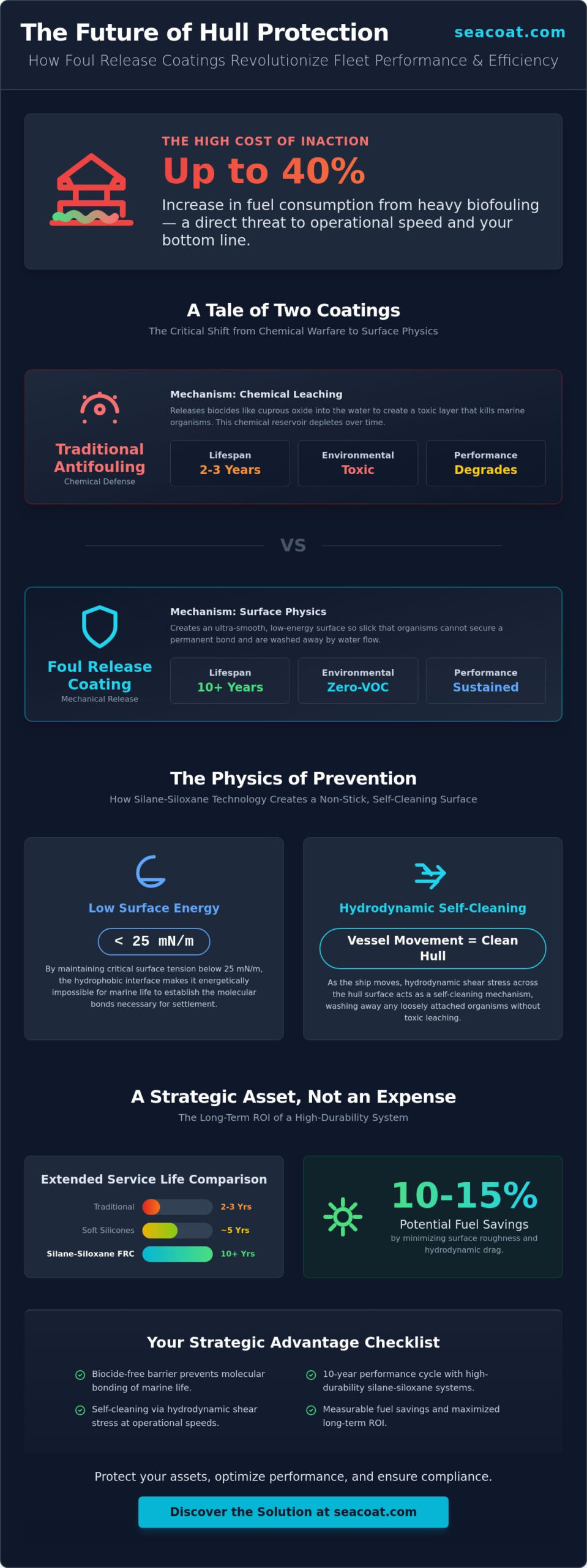
Understanding how does foul release coating work requires a fundamental shift from chemical warfare to surface physics. Unlike traditional marine paints, a foul release coating (FRC) is a biocide-free system that utilizes low surface energy to manage the accumulation of marine organisms. These coatings don’t rely on the controlled release of toxins to kill larvae. Instead, they create a surface so slick and energetically unfavorable that organisms simply cannot secure a permanent bond. It’s a strategic asset for vessel management that prioritizes 10-year life cycles and zero VOC emissions.
The efficiency of an FRC depends on its ability to minimize the physical and chemical interactions between the hull and the water. Surface smoothness plays a critical role here. By providing a microscopic physical barrier, these coatings eliminate the anchor points that marine life requires for colonization. When a vessel moves, the hydrodynamic shear stress effectively washes away any loosely attached organisms, maintaining a clean hull without the need for toxic leaching. This results in a permanent, sophisticated solution that ensures long-term operational efficiency.
The Role of Surface Energy in Biofouling
At the core of this technology is the manipulation of critical surface tension. For marine proteins to adhere to a surface, they must overcome the interface’s energy barrier. By leveraging silane-siloxane molecules, FRCs create a hydrophobic interface with surface energy levels typically below 25 mN/m. This low-energy state makes it nearly impossible for the Biofouling process to initiate effectively. Marine larvae find themselves unable to establish the molecular bonds necessary for settlement. The result is a non-stick surface that performs consistently throughout its service life.
Foul Release vs. Traditional Antifouling
Traditional antifouling methods operate through chemical leaching, where biocides like cuprous oxide are released into the water to mitigate growth. This approach is increasingly restricted by global regulations due to its impact on non-target marine ecosystems. In contrast, how does foul release coating work differently? It moves the industry from a “killing” model to a “preventing” model. This transition offers several key advantages for modern fleet operations:
- Zero-VOC Formulations: FRCs eliminate the release of volatile organic compounds, ensuring compliance with the strictest environmental standards.
- Non-Toxic Performance: Because they’re biocide-free, these coatings don’t accumulate in the food chain or damage local biodiversity.
- Reduced Drag: The extreme smoothness of the hard film reduces hydrodynamic friction, leading to fuel savings of up to 10% compared to degraded traditional coatings.
Choosing an FRC isn’t just about maintenance; it’s an investment in a vessel’s hydrodynamic performance. By focusing on surface science rather than chemical depletion, operators achieve a higher ROI through extended service intervals and lower fuel consumption. This methodology represents the future of maritime stewardship, where performance and environmental responsibility are inseparable.
Mechanical Release vs. Chemical Defense: How the Process Differs
Understanding how does foul release coating work requires a shift from chemical warfare to mechanical physics. Traditional antifouling paints operate as leaching systems. These coatings release biocides, such as cuprous oxide, into the water column to create a toxic boundary layer that kills settling larvae. This chemical reservoir eventually depletes, typically within 24 to 36 months, requiring frequent reapplication and causing heavy metal accumulation in harbor sediments. Foul release technology eliminates this chemical dependency. Instead of poisoning marine life, it utilizes an ultra-smooth, low-surface-energy profile that prevents biofouling from establishing a permanent bond with the substrate.
The Hydrodynamic Shear Effect
The primary mechanism for hull maintenance occurs through vessel movement. As a ship moves through the water, it creates hydrodynamic shear stress across the hull surface. For most commercial foul release systems, this self-cleaning threshold begins at speeds of 10 knots or higher. At these velocities, the force of the water flow exceeds the adhesion strength of the organisms. Slime, algae, and even juvenile barnacles are effectively washed away by the surrounding medium. This makes foul release an optimized choice for high-activity fleets or vessels maintaining consistent cruising speeds. By reducing surface roughness, these coatings minimize the friction that allows organisms to latch on, providing a 6% to 10% reduction in drag compared to traditional biocidal paints.
Static Fouling and Easy-Clean Properties
Vessel operators often express concern regarding periods of inactivity. It’s true that when a boat is at rest, biofouling will settle on the hull. However, the lack of a chemical bond means these organisms are merely resting on the surface rather than anchoring into the coating. Even in stagnant water, natural tidal flows or simple vessel maneuvering can dislodge significant accumulations. If manual intervention is required, the process is far less invasive than the aggressive scrubbing needed for traditional paints. A light wipe or low-pressure water wash is typically sufficient to restore the hull to its original state.
The longevity of this physical mechanism is its greatest asset. Because the coating is a non-depleting physical barrier, it maintains its integrity for 10-year life cycles. Biocidal paints, by contrast, lose effectiveness as their chemical reservoirs dry up, often leading to a total loss of protection once the vessel remains stationary for extended periods. This long-term reliability is why many managers are transitioning to biocide-free coating systems to secure both operational efficiency and environmental compliance. The result is a strategic asset that provides consistent performance without the diminishing returns of traditional chemical defenses.
The Hard-Film Advantage: Why Silane-Siloxane Redefines Durability
For commercial and military fleet managers, the primary barrier to adopting foul release technology has historically been physical vulnerability. While traditional soft silicone coatings offer excellent foul release properties, their low mechanical strength makes them susceptible to tearing and abrasion. A single encounter with a fender or a minor collision with harbor debris can compromise the hull’s integrity. This fragility often negates the fuel savings achieved through hydrodynamic efficiency, as the cost of localized repairs and premature coating failure outweighs the operational gains. Understanding how does foul release coating work in a high-traffic maritime environment requires a shift from soft elastomers to hard-film chemistry.
Overcoming the Fragility of Silicone
Traditional silicone-based foul release systems rely on a “rubbery” surface to prevent biofouling adhesion. However, this soft texture is prone to “tearing,” where the coating peels away from the substrate under mechanical stress. Sea-Speed V 10 X Ultra solves this by providing a hard, glass-like finish that mimics the durability of traditional epoxies while maintaining superior release characteristics. This impact resistance is essential for vessels operating in congested ports where fender rub is a daily reality. Because the film is significantly harder than silicone, it doesn’t degrade when subjected to high-pressure hull cleaning equipment or the friction of tugboat operations. It’s a robust solution that maintains its surface profile even under harsh conditions.
Silane-Siloxane Chemistry Explained
The technical superiority of this system is found in its molecular structure. A silane-siloxane is a hybrid molecule combining organic and inorganic properties for maximum adhesion. Through a sophisticated process of siloxane cross-linking, the coating creates a permanent, non-leaching surface that remains chemically stable for years. Unlike ablative paints that rely on the constant depletion of copper or biocides, this technology provides a static barrier that doesn’t thin over time. It’s this stability that allows the maritime industry to move away from the standard biennial dry-docking cycle.
- 10-Year Life Cycle: The coating is engineered to last a decade, drastically reducing the frequency of major maintenance intervals.
- Zero VOCs: The chemistry is entirely biocide-free and contains no volatile organic compounds, ensuring compliance with the strictest global environmental regulations.
- Mechanical Resilience: The hard film resists the “gouging” common in soft systems, preserving the vessel’s hydrodynamic profile.
By transitioning to a hard-film silane-siloxane system, operators optimize their long-term ROI through reduced maintenance costs and consistent fuel savings. This technology ensures that the vessel’s surface remains smooth and efficient without the constant threat of physical damage. For a comprehensive look at how these systems compare to traditional methods, explore the Definitive Guide to Antifouling Boat Paint and Foul Release Systems in 2026. This evolution in chemistry proves that durability and high-performance foul release are no longer mutually exclusive.
Hydrodynamic Performance: How Smooth Surfaces Translate to Fuel Savings
The relationship between a vessel’s hull surface and its fuel consumption is direct and quantifiable. As water moves across a hull, it creates a boundary layer where fluid friction occurs. When you analyze how does foul release coating work, you realize it’s less about chemical toxicity and more about engineering a surface so slick that water passes over it with minimal resistance. Advanced siloxane coatings provide a surface finish that can reduce fuel consumption by 10-15% compared to traditional biocidal systems. This efficiency isn’t just a theoretical benefit; it’s a critical component of modern maritime operations that directly impacts the bottom line.
Reducing Frictional Drag
Frictional drag accounts for nearly 80% of the total resistance on a slow-moving tanker or bulk carrier. Traditional ablative paints rely on a porous, sacrificial layer that inevitably increases in roughness over time, often exceeding 300 microns. In contrast, the hard-film technology of Sea-Speed maintains an exceptionally low profile. By optimizing the boundary layer, these coatings allow for a “speed gain” effect. This means a vessel can achieve higher knots at the same RPM, or maintain its schedule while burning significantly less fuel. You can explore the technical differences in our Pillar Guide on Marine Coatings.
Regulatory and Economic ROI
The maritime industry faces strict mandates from the International Maritime Organization (IMO) to reduce greenhouse gas emissions by 40% by 2030. Performance metrics like the Energy Efficiency Existing Ship Index (EEXI) and the Carbon Intensity Indicator (CII) now force owners to prioritize hydrodynamic efficiency. Implementing a high-performance foul release system is a strategic move to ensure compliance. The payback period for such an investment is often achieved within 18 to 24 months through fuel savings alone. Beyond fuel, the 10-year service life of a hard-film coating eliminates the need for frequent re-painting during dry-docking. This shifts the coating from a recurring maintenance cost to a long-term strategic asset. Understanding how does foul release coating work is the first step toward achieving these sustainable gains.
Selecting and Maintaining a Foul Release System
Choosing the correct foul release system requires a technical evaluation of your vessel’s operational profile and aesthetic requirements. Pigmented systems offer high visibility for divers and hull inspection teams, allowing for precise monitoring of film thickness and physical integrity over time. Clear systems maintain the original aesthetic of the substrate, which is often preferred for specific hull materials or branding requirements. Both options rely on the Seapoxy 73 primer system. This high-performance epoxy provides the necessary chemical bridge to ensure the coating remains intact under high-velocity hydrodynamic stress. Without this specialized foundation, the non-stick properties of the siloxane topcoat cannot be sustained over a multi-year drydock cycle.
Maintenance of these systems follows a “gentle” philosophy that differs significantly from traditional hull cleaning. High-pressure washing or abrasive scrubbing can destroy the low-surface-energy matrix that prevents biofouling attachment. Instead, crews should utilize soft-bristled brushes or low-pressure water (under 1,500 PSI) to remove light slime. This preserves the hydrodynamic smoothness that drives fuel savings and prevents the mechanical degradation of the hard film.
Application Best Practices
Success begins with meticulous hull preparation. All legacy antifouling layers must be removed to reach a clean substrate, as residual biocides can interfere with the chemical bonding of the new system. Professional application is the only way to secure the 10-year performance promise. This ensures the coating achieves the specific surface roughness metrics required for peak efficiency. When stakeholders ask how does foul release coating work, the answer lies as much in the application precision as it does in the siloxane chemistry. Because SeaCoat products contain zero VOCs and no heavy metals, they provide a safe environment for shipyard personnel while exceeding 2024 global maritime environmental standards.
Long-Term Asset Stewardship
Understanding how does foul release coating work involves a commitment to data-driven asset management. Monitoring hull performance is a continuous process that involves tracking fuel consumption and speed-through-water metrics. Fleets utilizing this technology frequently see a 10% to 15% reduction in fuel costs compared to traditional biocidal coatings. SeaCoat isn’t just a protective layer; it’s a strategic maritime asset that provides a permanent solution rather than a temporary fix. By prioritizing surface smoothness and biocide-free longevity, operators protect both their bottom line and the marine ecosystems they navigate. To begin your transition to a high-efficiency fleet, Consult with SeaCoat experts on your fleet optimization.
Advancing Fleet Efficiency Through Hydrodynamic Science
Mastering the physics of the hull-water interface is essential for modern maritime operations. Understanding how does foul release coating work involves moving beyond toxic biocides toward high-performance, low surface energy surfaces. By prioritizing a hard-film silane-siloxane structure, owners achieve a permanent smooth profile that reduces drag and lowers fuel consumption. This shift isn’t just about maintenance; it’s a strategic investment in long-term asset value and operational reliability.
SeaCoat’s technology is proven across global military and commercial fleets, delivering a 10-year lifecycle performance that redefines industry expectations. It’s a Zero VOC and non-toxic formulation that ensures compliance with evolving environmental mandates without sacrificing mechanical durability. Transitioning to a biocide-free system allows you to protect marine ecosystems while maximizing your bottom line through reduced maintenance intervals. It’s time to replace temporary fixes with scientifically backed, permanent solutions that stand up to the harshest maritime conditions.
Optimize your vessel performance with Sea-Speed V 10 X Ultra
Your fleet’s path to superior hydrodynamic efficiency starts with the right chemistry.
Frequently Asked Questions
How does foul release coating differ from antifouling paint?
Foul release coatings utilize physical properties rather than chemical toxicity to manage marine growth. Traditional antifouling paints rely on the controlled release of biocides like cuprous oxide to kill organisms. In contrast, understanding how does foul release coating work involves looking at its ultra-smooth, low surface energy surface. This siloxane or fluoropolymer technology prevents organisms from forming a strong bond, allowing them to be washed away by water friction.
Does a foul release coating work if the boat is not moving?
A foul release coating remains effective while stationary by providing a non-stick surface that inhibits permanent attachment. While the hydrodynamic self-cleaning effect requires motion, the coating’s low surface energy ensures that accumulated slime or barnacles lack a structural anchor. Data from 12 month static immersion tests show that incidental growth is removed with minimal force compared to the aggressive scrubbing required for traditional porous paints.
Is foul release coating safe for the marine environment?
Sea-Speed and similar foul release technologies are 100% biocide-free and contain zero Volatile Organic Compounds (VOCs). Unlike ablative paints that leach heavy metals into the water column, these coatings are chemically inert and don’t contribute to heavy metal accumulation in harbor sediments. This compliance meets IMO standards and California’s strict environmental regulations regarding hull coatings and water quality protection.
How long does a foul release coating like Sea-Speed last?
Sea-Speed is engineered for a service life exceeding 10 years when properly maintained. Traditional bottom paints typically require reapplication every 24 to 36 months due to biocide depletion and film erosion. Because foul release coatings are non-ablative, they don’t wear away. This longevity reduces dry-docking frequency by 50% over a decade, providing a strategic advantage for commercial fleet management and asset preservation.
Can I apply foul release coating over existing bottom paint?
You can’t apply a foul release coating directly over existing antifouling paint because the bond will fail. The substrate must be prepared by removing all old coatings via abrasive blasting to an SSPC-SP10 near-white metal finish or equivalent for composite hulls. Ensuring a clean, high-profile surface is critical for the 400 to 500 micron thick coating system to achieve its rated mechanical adhesion and hydrodynamic performance.
What speed is required for the self-cleaning effect to work?
Most foul release systems require a vessel speed of 10 to 12 knots to initiate the hydrodynamic shear necessary for self-cleaning. At these velocities, the water pressure overcomes the weak adhesive bond of marine organisms on the low-energy surface. For slower vessels or those with high idle times, the coating still provides value by simplifying mechanical grooming and maintaining a surface roughness below 100 microns.
Is foul release coating more expensive than traditional paint?
The initial material and application cost of foul release coatings is higher than standard biocidal paints, but the total cost of ownership is lower. A 2021 industry analysis demonstrated that the 10 year lifecycle savings from reduced fuel consumption and fewer haul-outs outweigh the initial investment. By eliminating the need for biennial repainting, vessel operators realize a return on investment through optimized operational uptime and decreased labor costs.
How do you clean a hull with a foul release coating?
You clean a hull coated with Sea-Speed using soft sponges or soft-bristled brushes rather than aggressive scrapers. Because the coating relies on a delicate surface tension to function, abrasive tools can cause micro-scratches that provide attachment points for organisms. Regular grooming with non-abrasive equipment maintains the 0.02 millimeter surface smoothness, ensuring the vessel continues to operate with minimal hydrodynamic drag and maximum fuel efficiency.