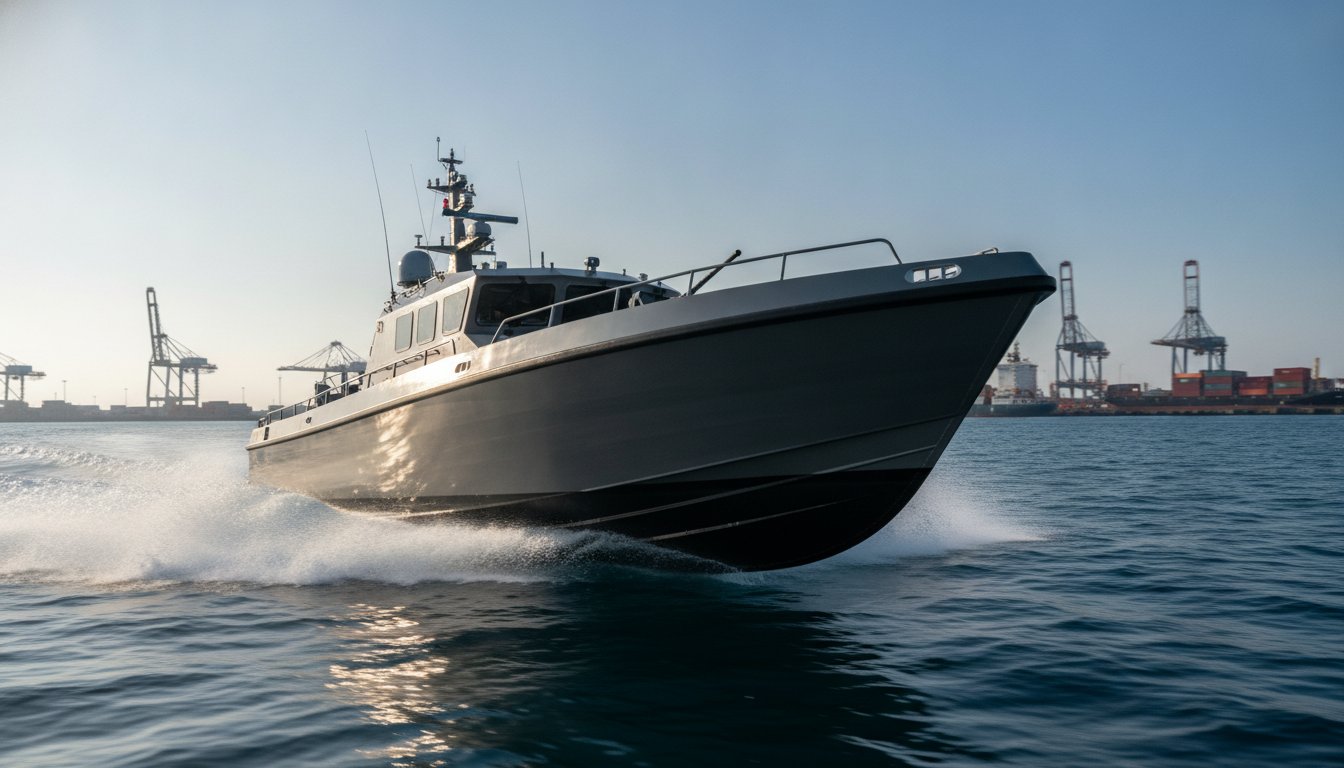
What if the very coating designed to protect your vessel is actually the primary factor slowing your response time and draining your operational budget? Most fleet managers have long accepted frequent maintenance and reduced top-end speeds as inevitable costs of maintaining high-speed aluminum hulls. You likely struggle with the constant cycle of coating failure and the frictional drag caused by traditional sacrificial paints. Finding a high-performance marine coating for patrol boats has historically felt like a compromise between physical durability and environmental compliance, particularly as regulations regarding copper leach rates become increasingly stringent in maritime hubs like California and Washington.
It’s time to move beyond temporary fixes and adopt permanent, scientifically driven assets for your fleet. This 2026 technical guide demonstrates how advanced hard-film silane-siloxane technology, such as Sea-Speed V 10 X Ultra, maximizes speed and mission readiness. We’ll examine how achieving a surface roughness of less than 5 microns can improve fuel efficiency by 12 to 20 percent while providing a surface that resists abrasion during riverine operations or trailering. You’ll learn how to extend dry-dock cycles and maintain peak performance without relying on toxic biocides, ensuring your operations remain both efficient and ecologically responsible.
Key Takeaways
- Understand how a specialized marine coating for patrol boats enables sustained speeds exceeding 40 knots by minimizing surface roughness and preventing delamination on high-performance hulls.
- Learn why hard-film silane-siloxane chemistry provides superior impact and abrasion resistance compared to soft silicone systems or traditional sacrificial coatings.
- Discover how biocide-free technology simplifies compliance with 2026 environmental standards while reducing fuel consumption by up to 20% through optimized fluid dynamics.
- Explore the economic benefits of extended service windows and reduced maintenance cycles achieved by shifting from ablative paints to permanent hull treatments.
- Gain technical insights into the integrated application process using Seapoxy 73 and Sea-Speed V 10 X Ultra to ensure maximum adhesion and long-term asset protection.
Performance Requirements for Modern Patrol Boat Marine Coatings
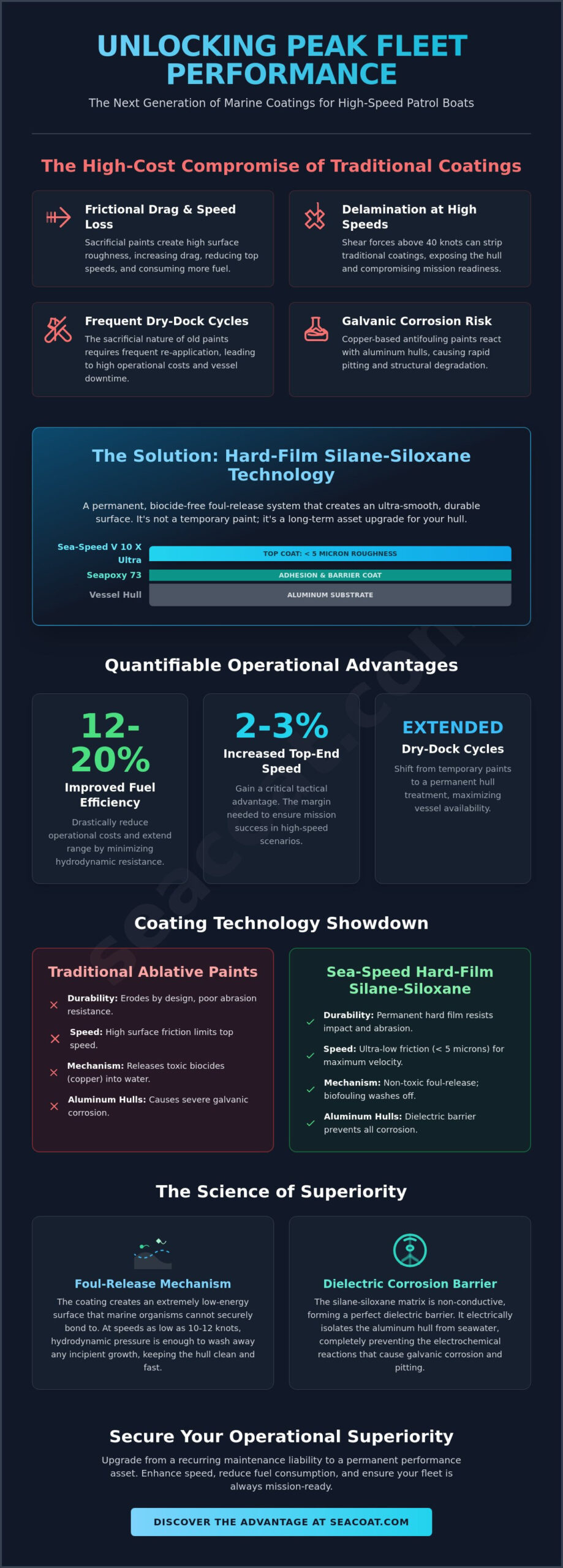
High-speed patrol operations demand more than standard maritime protection. A true “patrol-grade” marine coating for patrol boats must maintain its structural integrity under extreme hydrodynamic pressure. When a vessel exceeds 40 knots, the shear forces acting on the hull can cause traditional coatings to delaminate or strip away entirely. This physical failure doesn’t just expose the substrate; it creates uneven surface geometry that destroys the vessel’s hydrodynamic profile and compromises mission readiness.
The operational shift from traditional Anti-fouling paint to modern foul-release systems is driven by the need for consistent performance. Traditional paints rely on a sacrificial cycle, where the coating wears away to release biocides. At high speeds, this erosion happens too quickly, leading to premature coating depletion and increased hull roughness. In contrast, advanced silane-siloxane systems provide a permanent, hard-film barrier that remains intact regardless of vessel velocity, ensuring the hull stays smooth and protected through multiple mission cycles.
The Impact of Frictional Drag on Tactical Speed
Frictional drag is the primary enemy of tactical speed. Even at the micron level, surface roughness disrupts the laminar flow of water, creating turbulence in the boundary layer. For a planing hull, this turbulence translates to increased resistance, higher fuel consumption, and a reduced operational range. By achieving a surface profile with less than 5 microns of roughness, a vessel can significantly optimize its fluid dynamics. A 2-3% increase in top-end speed can fundamentally alter the outcome of a tactical interception, providing the critical margin needed to close the gap on a target or respond to an emergency.
Aluminum Hull Compatibility and Corrosion Mitigation
Aluminum hulls present a unique engineering challenge because they are highly susceptible to galvanic corrosion. Many traditional bottom paints contain cuprous oxide, which acts as a cathode to the aluminum’s anode, leading to rapid pitting and structural degradation. This is why selecting the best boat paint for aluminum boats is a matter of asset survival. Modern integrated silane-siloxane systems create a non-conductive, dielectric barrier that effectively isolates the metal from the surrounding seawater. This prevents the electrochemical reactions that cause corrosion while providing a durable surface that can withstand the high-vibration environment typical of high-speed patrol craft.
The efficacy of a modern marine coating for patrol boats rests on its molecular architecture. Silane-siloxane technology represents a departure from traditional polymer chemistry by creating a hybrid organic-inorganic matrix. This structure results in a high-density, cross-linked film that is essentially impermeable to water and ionic contaminants. Unlike traditional coatings that degrade under UV exposure and saltwater immersion, this chemistry maintains its structural integrity over long-term service cycles. Research from the Naval Research Laboratory on the Environmental Degradation of Coatings highlights how traditional systems often fail due to moisture permeation, a vulnerability that silane-siloxane effectively eliminates through its hydrophobic properties.
Hard-film technology functions through a “foul release” mechanism rather than a toxic one. While ablative systems rely on the constant physical sloughing of material to shed biofouling, silane-siloxane creates a surface with extremely low surface energy. Marine organisms cannot achieve a secure mechanical bond to the hull. At speeds as low as 10 to 12 knots, the hydrodynamic pressure of the water moving past the hull is sufficient to wash away any incipient growth. This ensures the vessel maintains its peak performance profile without the need for the sacrificial cycles that characterize older technologies.
Hard Film vs. Soft Silicone Systems
The distinction between hard-film and soft silicone systems is critical for high-speed assets. Soft silicones generally possess low Shore D hardness, making them susceptible to “hooking” and tearing when the vessel undergoes high-G maneuvers or encounters floating debris. These tears create localized turbulence and eventually lead to widespread delamination. A hard-film marine coating for patrol boats provides a resilient, impact-resistant surface that remains unaffected by the rigors of trailering, beaching, or riverine operations. It offers the durability of an epoxy with the release properties of a premium silicone.
Non-Toxic Chemistry and Regulatory Compliance
The transition toward environmental marine coatings is no longer optional for government fleets. Silane-siloxane systems like Sea-Speed V 10 X Ultra
Durability in Extreme Environments: Impact Resistance and Mission Cycles
Patrol operations often occur in environments where the water column is far from pristine. High-speed riverine missions expose hulls to floating logs, submerged debris, and suspended sediment, all of which act as abrasive agents against the vessel surface. A standard marine coating for patrol boats must provide more than just biofouling protection; it must serve as a structural safeguard. Traditional ablative bottom paint is fundamentally ill-suited for these conditions because its soft, sacrificial nature means every impact or abrasive encounter removes a layer of protection, leading to rapid thinning and eventual substrate exposure.
One of the most frequent concerns among fleet engineers involves the coating’s performance in cavitation zones and during high-G maneuvers. In these areas, the pressure differentials and shear forces are immense. While soft silicone systems may tear or “hook,” a hard-film silane-siloxane coating maintains a tenacious bond with the substrate. It is engineered to withstand the extreme turbulence found around propellers and water jets, ensuring that the protective barrier remains intact even during the most demanding tactical maneuvers.
Resistance to Mechanical Damage and Abrasion
The mechanical resilience of silane-siloxane technology is a primary differentiator. In riverine operations where sand and silt are constant factors, the hard surface of the coating resists the “sandblasting” effect that quickly wears down softer alternatives. If mechanical damage does occur from a significant impact, hard-film systems are far simpler to repair. Unlike multi-layer traditional paints that require extensive feathering and priming, these systems allow for localized spot repairs that integrate seamlessly with the existing film. This hardness also permits proactive in-water cleaning using specialized brushes; crews can remove light slime without stripping away any of the coating thickness, maintaining the hull’s hydrodynamic efficiency between dry-dockings.
Longevity and Extended Service Windows
Operational readiness is directly tied to a vessel’s time out of the water. While ablative coatings typically require a full refresh every 12 to 24 months, advanced foul release systems offer a 10-year life cycle. This longevity fundamentally shifts the Total Cost of Ownership (TCO) by eliminating multiple dry-docking intervals. Another critical advantage is dry-dock stability; unlike some coatings that lose their efficacy if exposed to air for extended periods, silane-siloxane films do not degrade when the boat is trailered or stored on land. Modern patrol boats are sophisticated assets with 10-plus year overhaul cycles, and they require a marine coating for patrol boats that can match that service life without compromise.
Operational Efficiency and Decarbonization for Government Fleets
Government maritime agencies face mounting pressure to reduce their carbon footprint while maintaining high operational tempos. For larger vessels within these fleets, compliance with the 2026 Energy Efficiency Existing Ship Index (EEXI) and Carbon Intensity Indicator (CII) is now a central pillar of asset management. Because hull and propeller performance deterioration accounts for roughly 10% of the world fleet’s fuel costs and greenhouse gas emissions, the choice of marine coating for patrol boats is no longer just a maintenance task; it’s a decarbonization strategy. High-performance marine coatings provide a “clean hull” advantage that ensures top speed and fuel efficiency are maintained throughout the entire service interval, rather than degrading shortly after application.
Fuel Savings and Increased Operational Range
The relationship between surface friction and fuel consumption is direct. High-performance, low-friction coatings can reduce a vessel’s fuel consumption by 12% to 20% compared to traditional biocidal paints. This efficiency gain isn’t merely an economic benefit. For coastal patrol and search-and-rescue (SAR) units, a significant reduction in drag translates directly into an extension of operational range. This increased reach allows for longer on-station times and reduces the strategic vulnerability associated with frequent refueling in remote or contested environments. Lowering the total drag of the hull ensures that the engine’s power is converted into tactical speed rather than overcoming the turbulence caused by surface roughness.
Meeting 2026 Environmental Standards
Regulatory landscapes are shifting rapidly as we move through 2026. In the United States, local and state-level restrictions are becoming more aggressive. For instance, the compliance deadline for reducing copper discharges in Marina del Rey Harbor is March 26, 2026. Additionally, Washington State has a conditional ban on most copper-based antifouling paints scheduled to begin January 1, 2026. Shifting to non-toxic, biocide-free foul release systems future-proofs a fleet against these evolving maritime laws. Adopting these technologies allows government agencies to meet “Green Fleet” initiatives without sacrificing the mission-critical performance required for high-speed intercepts. To optimize your fleet’s efficiency and ensure long-term compliance, explore the capabilities of Sea-Speed V 10 X Ultra.
Implementing Sea-Speed V 10 X Ultra for Patrol and Special Operations
The selection of a marine coating for patrol boats is a high-stakes decision that directly impacts vessel longevity and mission readiness. Sea-Speed V 10 X Ultra serves as a definitive solution for aluminum and composite hulls by providing a permanent, non-toxic film that does not compromise on physical durability. For agencies managing specialized assets, this technology offers a strategic advantage that traditional systems cannot match. The integration of this system into a fleet’s maintenance cycle requires a methodical approach to surface preparation and application to ensure the resulting film delivers its full performance potential.
For specialized operations where substrate visibility or specific aesthetics are required, Sea-Speed V 10 X Ultra Clear provides the same hard-film benefits without the standard pigment. This variant is often selected for racing-grade performance requirements or for vessels where the underlying composite or aluminum finish must remain visible for inspection. Regardless of the version selected, the result is a hull that remains clean, fast, and compliant with all global environmental standards throughout its service life.
The Sea-Speed Application Protocol
The Sea-Speed Application Protocol begins with the application of Seapoxy 73. This high-solids epoxy primer is engineered specifically for aluminum hulls, providing a robust dielectric barrier that prevents the galvanic corrosion discussed in earlier sections. Once the substrate is properly prepared, the application of Sea-Speed V 10 X Ultra follows. This system is designed for maximum efficiency; it requires fewer man-hours than multi-layer ablative paints and offers a rapid return-to-service time. Seacoat SCT, LLC provides comprehensive technical support for large-scale fleet applications, ensuring that every vessel meets the highest standards of surface smoothness and adhesion. This structured approach guarantees that the marine coating for patrol boats performs as a strategic asset rather than a recurring maintenance burden.
Why Seacoat SCT, LLC is the Expert Partner
Seacoat SCT, LLC has established itself as an Expert Innovator through more than 20 years of proven history with the U.S. Navy and special operations craft (SOC). This legacy of reliability in high-stakes environments proves that silane-siloxane technology is the superior choice for modern operations. We don’t just provide a product; we offer a permanent solution that balances technical precision with a deep commitment to environmental stewardship. By moving away from temporary fixes, fleet managers can achieve a long-term return on investment that aligns with the multi-year performance cycles of their most valuable assets. Contact Seacoat SCT, LLC for a technical evaluation of your patrol boat fleet.
Securing Operational Superiority through Material Innovation
Transitioning to a permanent, hard-film system is a strategic shift that aligns long-term asset management with mission-critical performance. By prioritizing surface efficiency and mechanical resilience, fleet managers can effectively mitigate the frictional drag that compromises tactical response. This approach doesn’t just reduce fuel consumption; it future-proofs operations against the tightening environmental regulations of 2026. Selecting a high-performance marine coating for patrol boats is the most direct path to achieving these synergistic goals of speed, durability, and stewardship.
Sea-Speed V 10 X Ultra provides a non-toxic, biocide-free solution that has been proven by the U.S. Navy since 2001. With its 10-year limited warranty and a surface profile that remains smooth through rigorous mission cycles, this technology represents the peak of modern hull protection. It’s time to move beyond the limitations of sacrificial paints and adopt a solution that matches the sophistication of your fleet. Upgrade your fleet with Sea-Speed V 10 X Ultra and ensure your vessels are always ready for the next mission. Elevating your operational capabilities begins with a commitment to superior material science from Seacoat SCT, LLC.
Frequently Asked Questions
Is Sea-Speed V 10 X Ultra suitable for aluminum patrol boats?
Yes, Sea-Speed V 10 X Ultra is specifically engineered for aluminum hulls when used in conjunction with the Seapoxy 73 primer system. This combination creates a non-conductive dielectric barrier that prevents the galvanic corrosion often triggered by copper-based paints. Because it contains no metallic biocides, it’s the ideal marine coating for patrol boats constructed from lightweight alloys, ensuring structural integrity while providing superior hydrodynamic performance.
How does a foul release coating differ from traditional antifouling paint?
Traditional antifouling paints rely on a sacrificial cycle where biocides leach into the water to kill organisms. In contrast, a foul release coating uses a low-energy surface to prevent organisms from achieving a mechanical bond. This non-toxic approach means the coating doesn’t wear away or pollute the ecosystem. It relies on water flow during transit to wash away incipient growth, maintaining a clean hull without chemical depletion.
Can this coating withstand speeds above 45 knots without peeling?
Yes, this technology is designed to withstand speeds exceeding 45 knots without delamination or peeling. Unlike soft silicone systems that may tear under high shear forces, silane-siloxane creates a high-density, hard-film matrix. This molecular structure provides the necessary resistance to the extreme hydrodynamic pressures and cavitation found on high-performance patrol craft, ensuring the protective barrier remains intact during rapid tactical maneuvers.
What is the expected service life of a hard-film silane-siloxane coating?
A properly applied hard-film silane-siloxane coating has an expected service life of up to 10 years. This longevity far exceeds the 12 to 24-month cycle typical of ablative systems. By shifting to a permanent coating, fleet managers can significantly extend dry-dock intervals and reduce the total cost of ownership over the vessel’s operational life, matching the overhaul schedules of modern government assets.
Does Sea-Speed V 10 X Ultra require special equipment for application?
Sea-Speed V 10 X Ultra can be applied using standard professional airless spray equipment. While the application hardware is conventional, the process requires meticulous surface preparation to ensure a profile that supports maximum adhesion. Specialized technical support is available to guide shipyard teams through the specific mixing and application protocols required to achieve the optimal surface roughness of less than 5 microns.
Is the coating affected by being kept on a trailer for long periods?
The coating is not negatively affected by long periods of trailer storage or being kept out of the water. This “dry-dock stability” is a significant advantage over traditional paints that may oxidize, crack, or lose their biocide potency when dry. Whether the vessel is stored on a trailer, kept in a boat house, or deployed in a riverine environment, the silane-siloxane film remains chemically inert and ready for immediate service.
How does the coating contribute to fuel savings and EEXI compliance?
The coating reduces fuel consumption by up to 20% by minimizing the frictional drag caused by hull roughness. By maintaining a surface profile below 5 microns, it helps larger government vessels meet 2026 EEXI and CII requirements for carbon intensity. Improved fluid dynamics ensure that engine power is used for propulsion rather than overcoming turbulence, which directly correlates to a lower carbon footprint and extended mission range.
Can Sea-Speed be applied over existing bottom paint?
No, Sea-Speed cannot be applied directly over existing antifouling paint. To ensure the chemical bond and performance metrics are achieved, the hull must be stripped to the substrate or a compatible primer like Seapoxy 73. This ensures a stable foundation for the marine coating for patrol boats, preventing the failures that occur when high-performance films are applied over degrading, unstable sacrificial layers.