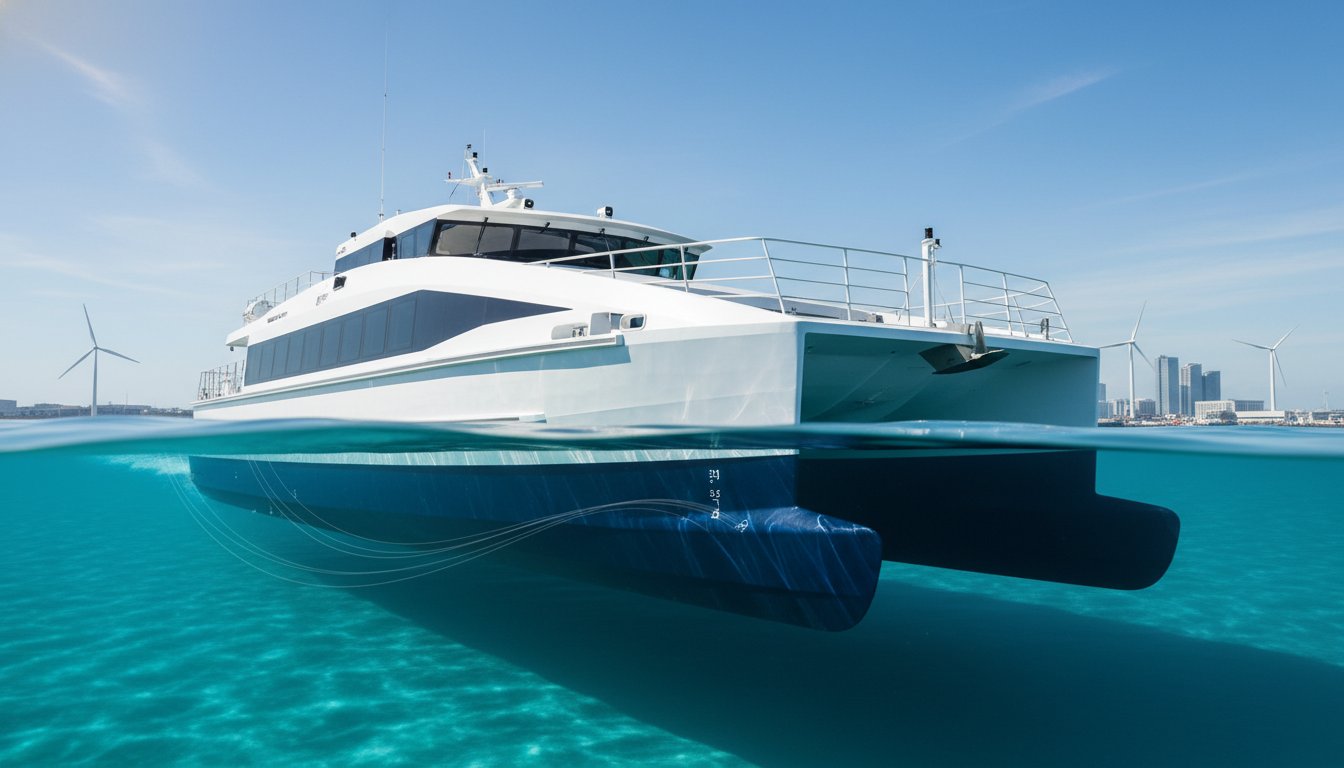
By September 30, 2026, ferry operators must surrender allowances for 70% of their verified emissions under the EU ETS, transforming hydrodynamic efficiency from a technical preference into a regulatory mandate. You’ve likely experienced the frustration of choosing between fuel-efficient coatings that tear during frequent docking and rugged, traditional paints that drive up fuel consumption. The search for high performance ferry hull coatings often feels like a compromise between the fragility of soft silicone and the high frictional drag of biocidal systems.
We understand that operational reliability and environmental stewardship are inseparable in modern maritime management. You’ll discover how advanced silane-siloxane technology, such as Sea-Speed V 10 X Ultra, provides a hard-film surface that’s both mechanically durable and hydrodynamically superior. We’ll detail how these non-toxic solutions achieve measurable fuel savings between 6% and 12%, helping you meet the 11% CII reduction factor required in 2026 while significantly extending dry-dock intervals. This guide examines the technical shift from temporary fixes to permanent, performance-enhancing assets that protect your bottom line and the coastal ecosystems you navigate.
Key Takeaways
- Learn why high-speed hydrodynamics and coastal biofouling demand more than traditional antifouling paints; it’s essential for maintaining operational efficiency.
- Understand how high performance ferry hull coatings based on silane-siloxane technology create a hard-film surface that reduces frictional drag while resisting mechanical wear.
- Discover why hard-film systems are superior for vessels that dock frequently, as they don’t suffer from the tearing and delamination common with soft silicone foul release systems.
- Evaluate the economic impact of premium coatings as a strategic Energy Efficiency Technology to meet 2026 CII reduction targets.
- Review how Sea-Speed V 10 X Ultra aligns with strict environmental regulations through its non-toxic, biocide-free composition.
The Ferry Efficiency Challenge: Why Hull Performance Matters
High-speed ferry operations occupy a unique niche in the maritime sector. They require a precise balance of velocity and reliability that standard cargo vessels rarely face. At speeds exceeding 20 knots, fuel consumption doesn’t just increase; it accelerates along a steep curve driven by hydrodynamic resistance. The Ferry Efficiency Challenge begins at the hull-water interface. Any deviation from a perfectly smooth surface creates turbulent flow, demanding significantly more engine power to maintain schedule integrity. Specialized high performance ferry hull coatings aren’t merely protective layers. They’re sophisticated foul release systems engineered to minimize this drag under the intense conditions of high-frequency service.
Coastal and estuarine environments are typically nutrient-rich, which dramatically accelerates the growth of marine organisms. For ferries operating in these zones, the biofouling pressure remains constant throughout the year. Beyond the immediate fuel costs, hull roughness contributes to the ‘wash’ effect. Excessive turbulence from a fouled or rough hull can lead to increased shoreline erosion and the disruption of sensitive coastal habitats. Managing this environmental impact requires a surface that maintains its mechanical integrity despite the aggressive chemistry of shallow, brackish waters and varying salinity levels. These pressures manifest in several ways:
- Increased fuel consumption due to micro-fouling.
- Higher mechanical stress on engines to maintain speed.
- Accumulation of invasive species in localized port areas.
- Heightened environmental disruption in sensitive coastal zones.
Hydrodynamic Drag at High Speeds
At 20 knots and above, the skin friction of a vessel accounts for a massive portion of total resistance. Traditional antifouling paints often possess a microscopic texture that disrupts laminar flow. This roughness triggers an early transition to turbulent flow, increasing the energy required to push the hull through the water. Effective coatings must provide a surface profile that remains smooth at the molecular level. This sustained smoothness ensures that the vessel hits its performance targets without overstressing the propulsion system or burning excess fuel. It’s the difference between a vessel that glides and one that fights the water.
Coastal Environmental Pressures
Regulatory bodies are increasingly scrutinizing the chemical discharge in protected ferry routes and busy harbors. Traditional copper-based paints leach heavy metals into harbor ecosystems, a process that is no longer sustainable or legally viable under 2026 environmental standards. Transitioning to biocide-free, high performance ferry hull coatings allows operators to meet strict local regulations while avoiding the liability of toxic runoff. By adopting non-ablative technology, fleets can demonstrate a serious commitment to preserving the very waters that support their regional economies. This move away from biocides isn’t just about compliance; it’s about the long-term health of our marine infrastructure.
The Science of Silane-Siloxane: Hard-Film Foul Release
Silane-siloxane technology represents a fundamental shift in material science for high performance ferry hull coatings. While traditional antifouling relies on the controlled release of biocides and soft silicones depend on fragile elastomeric properties, silane-siloxane creates a cross-linked molecular structure. This hybrid chemistry results in a covalent bond with the substrate, forming a surface that is both inherently hydrophobic and exceptionally hard. It doesn’t just sit on top of the hull; it becomes a permanent part of the vessel’s physical defense. This structural density ensures that the coating remains non-porous, preventing the microscopic ‘roots’ of marine organisms from penetrating the surface and establishing a permanent bond.
The mechanical hardness of this technology is its primary advantage for ferry operators. Soft silicone foul release systems often suffer from ‘tearing’ when exposed to the high-velocity water flow and physical contact typical of ferry routes. In contrast, silane-siloxane provides a ‘hard-film’ finish that resists abrasion from suspended solids in coastal waters and survives the physical stresses of daily docking. This durability ensures that the hydrodynamic benefits aren’t lost to surface damage within the first year of service. Fleet managers often find that Sea-Speed V 10 X Ultra provides the necessary durability to withstand the rigours of high-speed coastal service without sacrificing efficiency.
Molecular Bonding vs. Mechanical Adhesion
Standard epoxy coatings rely on mechanical adhesion, essentially ‘hooking’ into the profile of the hull. Silane-siloxane technology utilizes molecular bonding to create a unified, dense barrier. This chemical integration prevents the delamination often seen in multi-layer systems. Because the finish is non-porous, it denies bio-attachment at the most basic level. This approach aligns with the latest guidelines for Regulatory Compliance (EEXI/CII), as it manages fouling through surface energy rather than toxic leaching. It’s a permanent solution rather than a sacrificial one.
Surface Roughness and Flow Efficiency
In the world of high-speed transit, we measure success in microns. Ultra-low surface roughness (ULSR) is the critical metric for reducing the energy required to maintain 20+ knots. While traditional paints may have a surface roughness exceeding 250 microns, Sea-Speed V 10 X Ultra can achieve a glass-like finish significantly below industry averages. This level of smoothness is vital for maintaining laminar flow across the hull. By creating an exceptionally smooth surface at the molecular level, silane-siloxane technology reduces skin friction by up to 10%. This reduction in drag translates directly into lower fuel consumption and a smaller carbon footprint for every nautical mile traveled.
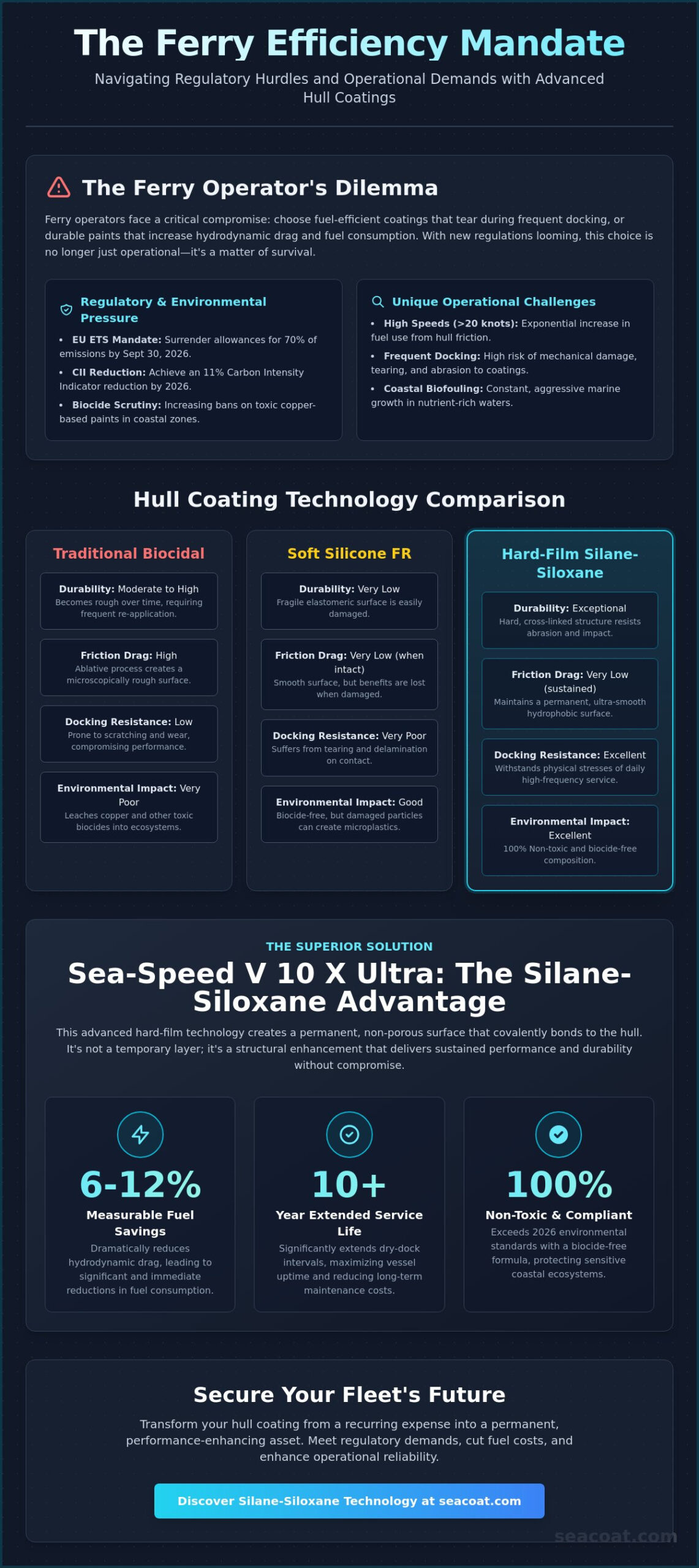
Durability vs. Drag: Why Ferries Need Hard-Film Systems
Daily ferry service places extreme mechanical stress on a vessel’s exterior. While deep-sea cargo ships might go weeks between port calls, a commuter ferry or Ro-Pax vessel often docks ten or more times in a single day. This frequency exposes the hull to constant fender friction, pier contact, and abrasive particulates found in shallow coastal waters. Selecting high performance ferry hull coatings requires looking beyond mere drag reduction; it requires a surface that can survive the physical reality of the berth. Without mechanical durability, the most efficient hydrodynamic profile will fail long before the next scheduled dry-docking.
The Weakness of Soft Silicone in Ferry Operations
Soft silicone foul release coatings were originally designed for vessels with high activity and low docking frequency. For ferries, these systems often prove to be a liability. The elastomeric nature of silicone makes it susceptible to tearing and delamination when compressed by fenders or scraped against a dock. Once the coating is compromised, the hydrodynamic profile is destroyed, and the exposed areas become immediate targets for bio-attachment. Repairing these patch-up areas is not only a recurring operational expense but often requires specialized application environments that are difficult to maintain during short maintenance windows. This fragility frequently results in a cycle of damage and repair that negates the initial fuel-saving promises of the technology.
Mechanical Resistance of Sea-Speed V 10 X Ultra
A superior alternative for high-frequency routes is a hard-film system that combines the durability of an ice-class coating with the slickness of a racing hull. Sea-Speed V 10 X Ultra is engineered with a high Shore D hardness rating, allowing it to withstand intense fender rub without sacrificing its surface integrity. This mechanical resistance means the coating stays intact for the entire service interval, maintaining its ultra-low surface roughness even in high-traffic commercial environments. The benefits extend to maintenance as well:
- Resistance to impact damage from floating debris and harbor debris.
- Ability to withstand rigorous in-water cleaning without surface degradation.
- Elimination of the delamination risks associated with soft-film systems.
- Extended lifespan that often doubles the effective service window of traditional foul release systems.
By prioritizing mechanical hardness alongside hydrodynamic efficiency, operators ensure that their investment in high performance ferry hull coatings survives the daily grind of the pier. It’s a strategic shift from delicate, high-maintenance surfaces to a rugged, permanent asset. When the coating remains intact, the fuel savings remain consistent, providing a predictable return on investment throughout the vessel’s operational cycle.
Operational ROI & Regulatory Compliance (EEXI/CII)
The transition toward net-zero maritime operations has moved from a voluntary goal to a rigid regulatory deadline. For 2026, the Carbon Intensity Indicator (CII) annual reduction factor has increased to 11% relative to the 2019 baseline. This significant jump places immense pressure on ferry operators who navigate high-frequency routes within EU waters, where the Emissions Trading System (ETS) now covers 100% of intra-EU voyages. Implementing high performance ferry hull coatings represents the most immediate and cost-effective Energy Efficiency Technology (EET) available. Unlike complex mechanical retrofits, a superior coating addresses the root cause of efficiency loss: hydrodynamic drag.
Shipowners are finding that the physical integrity of the hull is the foundation of a vessel’s market value. A sound hull is no longer just a maintenance requirement; it’s a strategic asset. By 2026, vessels with environmentally compliant, non-toxic coatings are commanding higher resale values as the industry moves toward strict decarbonization targets. Transitioning to a permanent hard-film system allows operators to move from a reactive maintenance model to a proactive performance strategy, ensuring that the vessel remains a viable asset in a tightening regulatory environment.
CII and EEXI Compliance for Ferries
Lowering a vessel’s drag profile directly correlates with a reduction in the fuel-per-mile ratio, which is the primary driver of a vessel’s CII rating. Vessels that fail to meet these standards face the mandatory submission of a Corrective Action Plan by April 30, 2026, if they receive a ‘D’ rating for three consecutive years or an ‘E’ rating in a single year. By optimizing the hull surface, operators can shift their assets into higher compliance categories without the capital expenditure required for alternative fuel conversions. You can explore these regulatory transitions in depth by reading Environmental Marine Coatings: The 2026 Shift Toward Sustainable Hull Performance.
Long-Term Cost Savings
The financial logic for premium silane-siloxane systems is rooted in the extended lifecycle of the asset. While the initial investment for high performance ferry hull coatings is higher than standard biocidal paints, the return is realized through fuel economy and maintenance intervals. Verified data indicates that high-performance coatings like Sea-Speed V 10 X Ultra can reduce fuel consumption by 6% to 12%. Over a five-year period, these savings often exceed the total cost of the coating application several times over. Additionally, the shift from a 2-year to a 5-to-10-year service life eliminates the need for frequent, costly haul-outs. This strategy maximizes vessel availability and reduces the total cost of ownership. To see how these efficiencies apply to your fleet, evaluate the performance metrics of Sea-Speed V 10 X Ultra.
Implementing Sea-Speed V 10 X Ultra for Ferry Fleets
Adopting high performance ferry hull coatings requires a transition from sacrificial maintenance to a permanent asset protection strategy. The success of this conversion depends on the technical synergy between the substrate preparation and the coating system. For ferry hulls, which often carry layers of legacy antifouling, the initial step involves the complete removal of these spent materials to expose the underlying profile. This is where Seapoxy 73 becomes essential. As a high-build epoxy primer, it creates a chemically receptive surface that allows the subsequent silane-siloxane layers to bond at a molecular level. Without this specific foundation, the hydraulic stresses of high-speed transit could lead to premature failure at the interface.
The application of Sea-Speed V 10 X Ultra follows a methodical technical window. Once the Seapoxy 73 primer has reached the appropriate cure stage, the topcoat is applied to create the final non-stick barrier. This process transforms the hull from a high-drag surface into a hydrodynamically optimized asset. Technical supervisors monitor environmental conditions throughout the application to ensure the cross-linking of the silane-siloxane molecules is uniform. This oversight guarantees that the finished surface achieves the ultra-low roughness metrics required for laminar flow, providing a glass-like finish that stays intact through years of commercial service.
The Sea-Speed Advantage
The flexibility of the Sea-Speed system allows operators to tailor the application to their specific fleet requirements. Whether utilizing the pigmented version for traditional aesthetic standards or the Sea-Speed V 10 X Ultra Clear for easier visual inspections of the hull’s integrity, the performance metrics remain consistent. This biocide-free formulation ensures that your vessels don’t face restrictions in harbors that have banned copper-based leaching. To understand how these systems compare to traditional methods in the 2026 regulatory environment, review The Definitive Guide to Antifouling Boat Paint and Foul Release Systems in 2026.
Next Steps for Fleet Managers
Planning a transition to high performance ferry hull coatings should begin well in advance of the vessel’s next dry-docking. We recommend starting with a comprehensive hull performance audit to identify specific areas where drag-related energy loss is most significant. This data allows for a more precise calculation of the projected ROI and helps in scheduling the necessary labor and materials. For organizations ready to modernize their fleet’s efficiency and environmental profile, the next step is a direct consultation with our technical team. You can initiate this process by contacting Seacoat SCT, LLC to discuss technical specifications and bulk industrial contracts for your upcoming maintenance cycle.
Securing Fleet Longevity in a Regulated Future
The transition to 2026 regulatory standards requires a strategic pivot toward materials that offer both hydrodynamic efficiency and extreme mechanical durability. As we’ve explored, the dual challenges of high-speed drag and frequent docking wear are no longer solved by traditional biocides or soft silicones. Proprietary silane-siloxane technology provides the necessary hard-film surface to withstand daily fender friction while maintaining the ultra-low surface roughness essential for laminar flow. By implementing high performance ferry hull coatings, operators can achieve proven fuel savings of up to 12% and satisfy the 11% CII reduction factor mandate. These non-toxic, biocide-free systems ensure that your fleet remains compliant and cost-effective throughout its entire service life.
Optimizing your vessel’s performance is a commitment to both operational excellence and environmental stewardship. If you’re ready to move beyond temporary maintenance cycles toward a permanent, performance-enhancing asset, we invite you to Request a Technical Consultation for Your Ferry Fleet. Taking this step today ensures your operations are prepared for the high-stakes requirements of tomorrow’s maritime landscape. Together, we can establish a foundation for a more efficient and sustainable maritime future.
Frequently Asked Questions
What makes a ferry hull coating ‘high performance’ compared to standard marine paint?
A coating is considered high performance when it achieves ultra-low surface roughness (ULSR) while maintaining extreme mechanical hardness. Unlike standard marine paints that rely on sacrificial biocidal leaching, these systems use advanced silane-siloxane chemistry to create a permanent, glass-like finish. This minimizes skin friction at high speeds and resists the physical abrasion typical of ferry operations; it provides a strategic asset rather than a temporary maintenance layer.
How much fuel can a ferry save by switching to a silane-siloxane coating?
High performance silane-siloxane coatings can reduce fuel consumption by 6% to 12% for high-speed vessels. These savings are achieved by maintaining a laminar flow across the hull, which significantly reduces the energy required to overcome hydrodynamic drag at speeds exceeding 20 knots. Over a standard five-year service interval, these measurable efficiencies often offset the initial investment while helping operators meet the 11% CII reduction factor required in 2026.
Will a hard-film coating survive the friction of daily docking against rubber fenders?
Yes, hard-film systems are specifically engineered to withstand the mechanical stress of daily docking and fender friction. While soft silicone foul release coatings are prone to tearing and delamination in high-frequency environments, silane-siloxane technology provides a high Shore D hardness rating. This ensures the coating remains intact and maintains its hydrodynamic profile despite constant contact with rubber fenders and pier structures, effectively eliminating the need for frequent patch-up repairs.
Are Sea-Speed coatings compliant with IMO 2026 environmental regulations?
Sea-Speed coatings are fully compliant with all global environmental regulations, including the 2026 IMO standards and EU ETS requirements. Because the formulation is non-toxic and biocide-free, it doesn’t leach heavy metals or volatile organic compounds into protected coastal waters. This allows ferry operators to maintain unrestricted access to sensitive harbor ecosystems while demonstrating a proactive commitment to the industry’s 2050 decarbonization strategy and strict local water quality mandates.
How long does a high-performance foul release coating last on a commercial ferry?
A high performance foul release coating typically provides an effective service life of 5 to 10 years on a commercial ferry. This longevity is a result of the permanent molecular bond formed by silane-siloxane technology, which doesn’t wear away like traditional ablative paints. By extending dry-dock intervals and reducing the frequency of full hull recoating, these systems lower the total cost of ownership and maximize the operational availability of the fleet.
Can Sea-Speed V 10 X Ultra be applied over existing hull paint?
Sea-Speed V 10 X Ultra requires a specific application protocol to ensure maximum performance, which usually involves removing existing ablative paints. Once the hull is properly prepared, Seapoxy 73 is applied as a high-strength primer to create a robust bond between the substrate and the topcoat. This systematic approach ensures that high performance ferry hull coatings don’t suffer from adhesion failure or delamination caused by incompatible legacy layers or poor surface preparation.
Is in-water cleaning safe for silane-siloxane ferry coatings?
In-water cleaning is entirely safe and highly effective for silane-siloxane coatings due to their exceptional mechanical hardness. Unlike soft silicone systems that can be easily damaged by cleaning brushes, the hard-film surface of Sea-Speed V 10 X Ultra resists abrasion. This allows for proactive biofouling management without degrading the coating’s integrity or increasing surface roughness, ensuring that the vessel maintains its peak hydrodynamic efficiency between scheduled dry-docking events.
What is the difference between foul release and traditional antifouling for ferries?
The primary difference lies in the mechanism of biofouling prevention. Traditional antifouling uses toxic biocides that leach into the water to kill marine growth, whereas foul release systems use ultra-smooth, low-energy surfaces to prevent organisms from establishing a permanent bond. For ferries, high performance ferry hull coatings offer a more sustainable and durable solution, as they don’t lose effectiveness over time and provide superior drag reduction compared to rough, ablative paints.