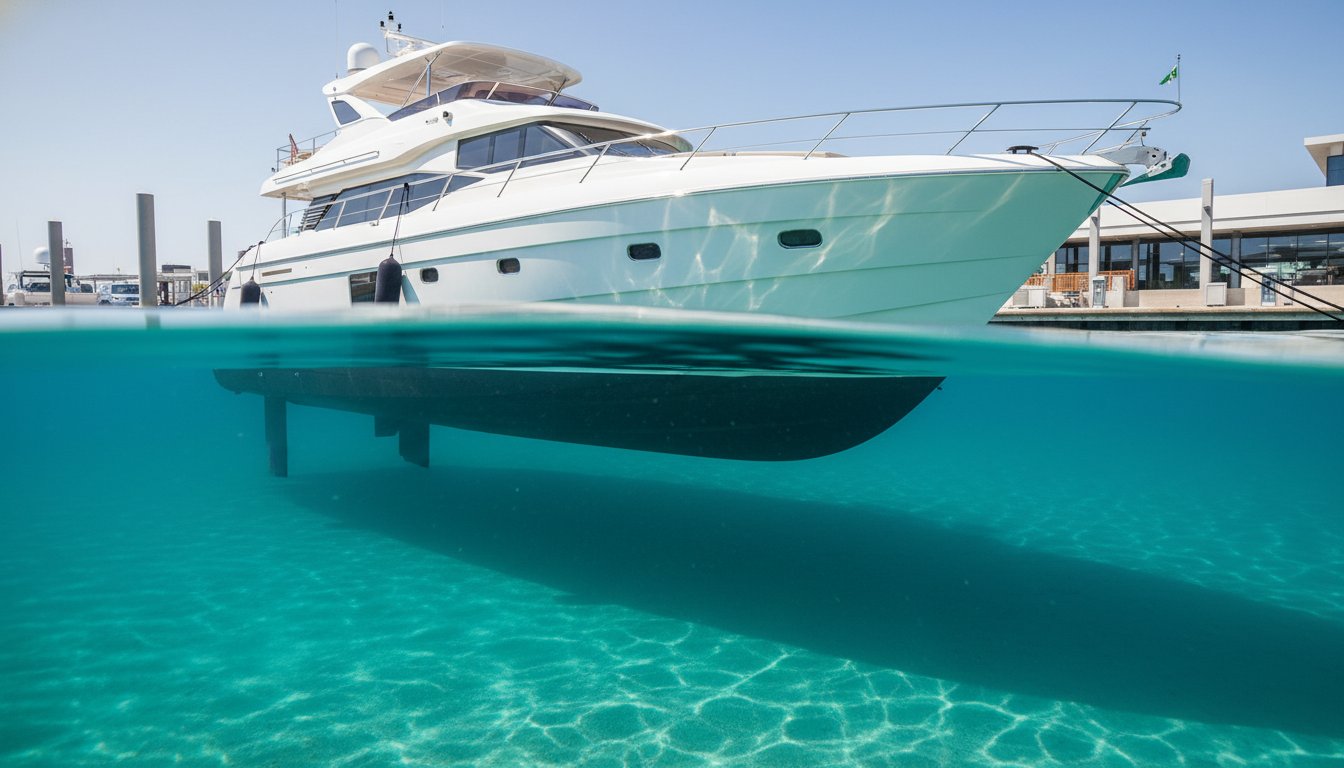
The traditional reliance on copper-based antifouling for permanently moored vessels is no longer the safest or most efficient path forward. You likely understand the frustration of watching biofouling degrade your hull performance just weeks after an expensive cleaning. It’s a cycle that drains fuel efficiency and demands constant maintenance. This guide demonstrates why switching to a high-performance hard bottom paint for boats left in water is the most strategic decision you can make for your vessel in 2026.
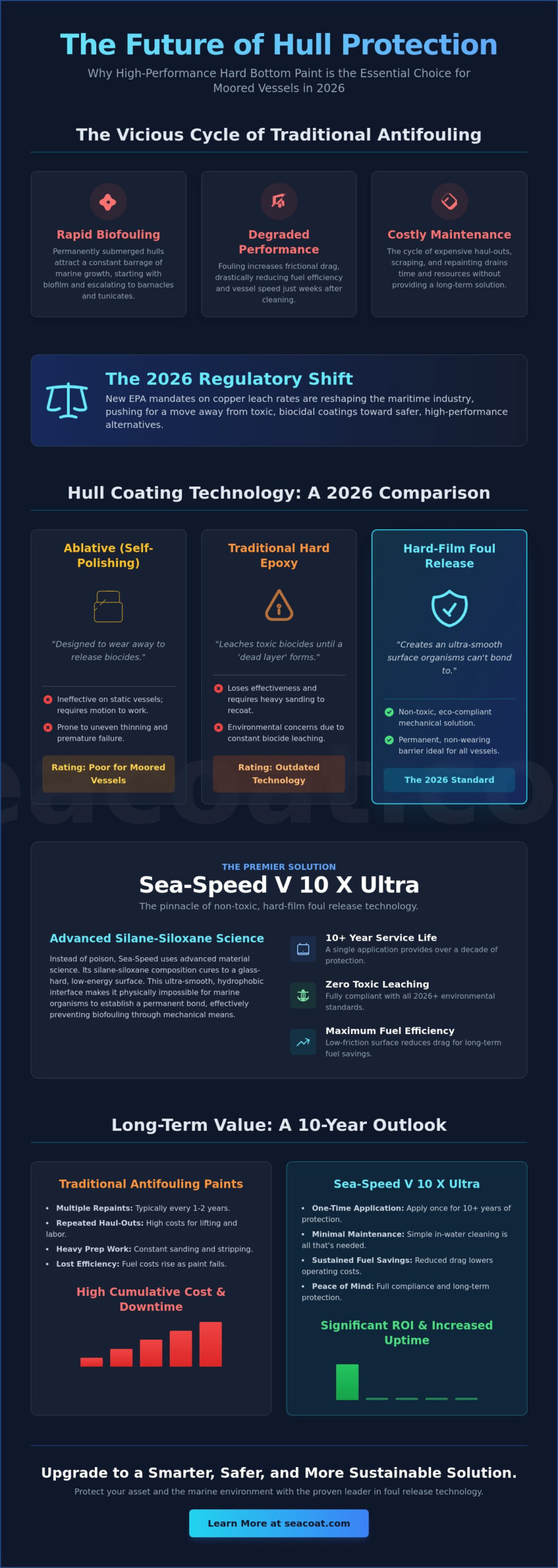
As new EPA mandates on copper leach rates take effect this year, the maritime industry is shifting toward non-toxic, silane-siloxane technology. We’ll explore how hard-film systems like Sea-Speed V 10 X Ultra provide a permanent, low-friction surface that eliminates the need for toxic biocides. You’ll discover how these advanced coatings offer an extended service life of five years or more while ensuring full compliance with the latest environmental standards. We’ll detail the technical mechanisms that reduce frictional drag and explain how modern material science has finally decoupled physical durability from ecological harm.
Key Takeaways
- Analyze the specific biofouling mechanics that affect static vessels and why hard-film coatings outperform traditional ablative alternatives.
- Evaluate the regulatory landscape of 2026 to select a hard bottom paint for boats left in water that meets strict environmental standards.
- Explore the molecular properties of silane-siloxane and its ability to create a permanent, low-friction surface for improved fluid dynamics.
- Calculate the long-term return on investment by comparing the maintenance cycles and fuel efficiency gains of modern foul release systems.
- Learn how Sea-Speed V 10 X Ultra provides a non-toxic, high-performance solution that can extend hull service life up to a decade.
Why Boats Left in Water Require Hard Bottom Paint
Permanently moored vessels exist in a state of constant biological warfare. Unlike trailered boats that enjoy regular dry periods, a submerged hull is a target for primary colonizers like bacteria and diatoms. These organisms create a biofilm, or slime layer, which acts as a foundational substrate for macro-fouling species such as barnacles, tunicates, and bryozoans. For owners and operators, selecting the correct hard bottom paint for boats left in water is not merely a maintenance choice; it’s a critical decision regarding the long-term structural integrity and hydrodynamic efficiency of the asset.
The efficacy of a coating depends largely on its surface energy. Traditional Anti-fouling paint often relies on the controlled release of biocides to poison settling larvae. However, modern material science has shifted toward manipulating the mechanical properties of the surface itself. By creating a low-energy, hydrophobic interface, hard-film coatings make it physically difficult for marine organisms to establish a permanent bond. This mechanical approach is particularly vital for boats that remain stationary, as they don’t benefit from the “wash” of high-speed transit that might otherwise dislodge loosely attached growth.
The Reality of Constant Submersion
Stagnant water conditions significantly accelerate the accumulation of biofouling. In environments with high water temperatures and fluctuating salinity, the metabolic rates of marine organisms increase, leading to rapid colonization. Traditional self-polishing copolymers are designed to wear away as the boat moves through the water, exposing fresh biocides. When a vessel remains at a slip, this chemical process stagnates. Without the friction of water flow, the paint doesn’t “polish,” and the hull becomes a static platform for growth. This is why many owners find that their “self-polishing” paint fails prematurely when the boat isn’t used frequently.
Hard Film vs. Ablative: A Mooring Perspective
The fundamental flaw of using ablative bottom paint for moored vessels is its sacrificial nature. These coatings are engineered to slough off over time. In high-current moorings or tidal estuaries, the constant movement of water can cause uneven thinning of the coating, leaving vulnerable sections of the hull exposed to the environment.
In contrast, a dedicated hard bottom paint for boats left in water provides a durable, non-wearing barrier. These systems maintain a consistent film thickness regardless of water velocity or duration of submersion. We categorize these hard systems into two primary types:
- Traditional Hard Epoxies: These create a porous, durable film that leaches biocides. They’re tough but eventually lose their effectiveness as the active ingredients deplete.
- Hard-Film Foul Release: These represent the pinnacle of 2026 technology. They don’t rely on leaching toxins but instead use a glass-hard, ultra-smooth surface to prevent adhesion.
Choosing a hard-film system ensures that the hull remains protected for years without the “thinning” risks associated with soft, sacrificial alternatives.
Comparing Hard Bottom Paint Systems for 2026
The selection of a hard bottom paint for boats left in water has evolved from a choice of biocide concentration to a decision between chemical leaching and mechanical resistance. As we enter 2026, the regulatory environment is more complex than ever. While the Washington Department of Ecology has postponed its review of copper alternatives until 2029, new EPA mandates on copper leach rates are actively reshaping the market. Operators must now weigh the immediate efficacy of traditional coatings against the long-term operational advantages of modern foul release technology.
Traditional Epoxy Antifouling
Traditional hard epoxy paints function through a controlled leaching mechanism. These coatings are packed with cuprous oxide or other biocides that slowly release into the water column to deter biological growth. While effective in the short term, they suffer from the “dead layer” phenomenon. As the biocide is depleted from the surface, a porous, inactive layer of resin remains. This layer prevents deeper biocides from reaching the surface, rendering the paint ineffective even if the film remains intact.
Maintenance for these systems is labor-intensive. Because the spent resin layer doesn’t slough off, it accumulates over several seasons, eventually requiring heavy sanding or complete stripping to ensure the adhesion of new coats. The environmental impact of these leached toxins is under increasing scrutiny. Although some regions have seen a temporary suspension of specific enforcement, the broader trend is moving away from high-leach formulas. For those navigating these shifts, understanding the 2026 ban on copper-based paints and similar regional restrictions is essential for maintaining compliance.
Modern Foul Release Systems
In contrast, modern foul release systems represent a paradigm shift in hull protection. Rather than poisoning marine life, these coatings utilize a molecularly smooth, hydrophobic surface that organisms simply cannot grip. This mechanical approach eliminates the “dead layer” issue entirely. Because there are no active chemicals to deplete, the coating’s efficacy remains consistent throughout its service life.
These systems often outlast traditional epoxy paints by two to three times, particularly in high-fouling tropical environments where chemical leaching rates must be excessively high to remain effective. In temperate waters, the longevity is even more pronounced. For a technical breakdown of how these surfaces manipulate fluid dynamics to prevent attachment, you can explore our antifouling boat paint comprehensive guide.
Cleaning a foul release surface is significantly easier than scrubbing traditional hard paint. The glass-hard finish resists the abrasive damage typically caused by hull cleaning brushes, allowing for “wipe-away” maintenance that doesn’t compromise the coating’s integrity. If you’re looking to transition your vessel to a more sustainable, high-performance solution, Seacoat SCT, LLC offers a range of silane-siloxane options designed for maximum durability.
- Traditional Hard Paint: High initial protection; requires frequent sanding; degrades via biocide depletion.
- Hard-Film Foul Release: Mechanical protection; zero toxicity; maintains surface smoothness for 5-10 years.
The Evolution of Hard-Film Technology: Silane-Siloxane
While traditional markets often view hull protection through the lens of sacrificial layers, the emergence of silane-siloxane technology represents a fundamental shift toward permanent material science. Silane-siloxane is a molecular-level coating that cross-links with the substrate to create a glass-hard, hydrophobic surface. This technology stands as the pinnacle of marine coatings because it provides a non-porous barrier that traditional epoxies cannot match. Unlike porous paints that absorb water pollutants, this dense molecular structure resists “ghosting” and permanent staining from hydrocarbons or tannins found in busy marinas. It’s a strategic asset that maintains aesthetic and functional integrity through the complete absence of heavy metals or volatile organic compounds (VOCs).
How Silane-Siloxane Works on Hulls
The core mechanism involves extremely low surface tension. This property inhibits bio-adhesion by making the hull too slippery for the glue-like proteins used by barnacles and mussels. As a hard bottom paint for boats left in water, this creates a unique self-cleaning effect. While it’s not a substitute for occasional maintenance, the low friction allows even modest water movement to shed accumulated slime. Because the coating bonds chemically to the hull, it’s virtually impossible to chip or peel. This ensures the surface remains hydrodynamically optimized for years without the degradation seen in traditional resins.
Meeting 2026 Regulatory Compliance
The global maritime sector is rapidly moving toward a zero-biocide standard. Stricter antifouling paint regulations are no longer just a regional concern in places like California; they’re becoming the baseline for international operations. By choosing a non-toxic hard-film system, you future-proof your vessel against upcoming restrictions that will likely render traditional copper-based paints obsolete or illegal to apply.
Adopting environmental marine coatings today isn’t just an ecological choice. It’s a savvy business move that avoids the cost of premature stripping and recoating when laws inevitably tighten. Using a high-performance hard bottom paint for boats left in water ensures your vessel remains compliant and efficient regardless of changing legislation. This transition from chemical poisoning to mechanical resistance is the only way to achieve multi-year protection in a modern regulatory landscape.
Performance Metrics: Speed, Fuel, and ROI
The transition from traditional antifouling to high-performance hard-film systems is driven by more than just environmental compliance. It’s a fundamental shift in asset management where the hull surface is treated as a performance-enhancing tool. For vessels that remain submerged, the choice of hard bottom paint for boats left in water directly impacts the bottom line through measurable gains in speed and fuel economy. By treating the hull as a strategic asset rather than a maintenance burden, operators can unlock significant operational efficiencies that traditional paints simply cannot provide.
Hydrodynamic Efficiency
Surface roughness is the primary driver of skin friction drag. Even a 10-20 micron difference in surface profile can significantly alter the hydrodynamic resistance of a hull at cruising speeds. Traditional paints often have a higher coefficient of friction due to their porous nature and the uneven leaching of biocides. In contrast, hard-film foul release systems provide an ultra-smooth, non-porous finish that maintains its profile over time. By minimizing surface roughness, these advanced coatings can reduce fuel consumption by 5-12% depending on the vessel’s operational profile and hull geometry. This reduction in drag also allows for higher top speeds without increasing engine load, directly contributing to reduced wear on propulsion systems.
Long-Term Financial Analysis
While the initial investment in a premium hard-film system is higher than standard paints, the return on investment is realized through the elimination of the annual sacrificial cycle. Traditional coatings require frequent haul-outs, labor-intensive sanding, and recoating to maintain effectiveness. A superior hard bottom paint for boats left in water can extend dry-dock intervals to five years or even a decade. This keeps the vessel operational for longer periods and drastically reduces the cumulative cost of professional labor and shipyard fees. The reduction in maintenance frequency translates to a lower total cost of ownership over the life of the vessel.
Beyond fuel and labor, these coatings serve as a critical barrier against osmotic blistering and moisture ingress. By sealing the hull with a glass-hard, impermeable layer, you preserve the structural integrity of the substrate. For a comprehensive look at how these factors combine to improve your vessel’s life cycle, consult the guide to boat hull paint. You can secure these long-term gains by choosing a high-performance system like Sea-Speed V 10 X Ultra for your next application.
Sea-Speed V 10 X Ultra: The Ultimate Choice for Moored Boats
Selecting the right hard bottom paint for boats left in water requires a move away from temporary chemical fixes toward permanent material solutions. Sea-Speed V 10 X Ultra represents the practical application of the silane-siloxane technology previously discussed. It’s a high-gloss, biocide-free coating engineered to provide a 10-year potential service life, significantly outperforming the two-year cycle typical of traditional paints. This system isn’t just a protective layer; it’s a strategic asset for vessel owners who prioritize long-term ROI and environmental stewardship. From high-performance racing yachts to massive commercial tankers, the versatility of this coating stems from its ability to maintain hydrodynamic perfection in any aquatic environment.
The durability of Sea-Speed V 10 X Ultra is rooted in its chemical composition. By forming a dense, cross-linked molecular bond with the hull, it creates a surface that’s both impermeable and exceptionally hard. This prevents the common issues of osmosis and substrate degradation that plague vessels in high-static environments. Because it contains zero heavy metals and zero VOCs, it remains fully compliant with the strictest global regulations, including the 2026 EPA mandates. It’s a reliable, no-nonsense solution for those who manage high-stakes maritime assets, backed by the Seacoat SCT, LLC commitment to scientific field performance and rigorous testing standards.
Unique Benefits of Sea-Speed V 10 X Ultra
The primary technical advantage of this system is its physical hardness. Sea-Speed V 10 X Ultra registers between 6H and 7H on the pencil hardness scale, providing a surface that’s remarkably resistant to abrasion and impact. Unlike soft coatings that can be damaged during routine maintenance, this glass-hard finish allows for frequent in-water cleaning without the risk of scratching or thinning the film. Interestingly, the foul release properties often improve with use. As the vessel moves, the mechanical action of the water helps polish the surface at a molecular level, maintaining its low-friction profile. Divers can clean the hull easily using soft cloths or sponges, ensuring no toxic plumes are released into the local marina ecosystem.
Next Steps for Your Vessel
Transitioning to a high-performance hard bottom paint for boats left in water is a straightforward process when following professional protocols. The transition from old, depleted antifouling requires a thorough removal of the existing “dead” layers to ensure the silane-siloxane bond is achieved directly on a stable substrate. For owners looking to upgrade, options range from coordinated applications by certified professionals to specialized DIY kits for smaller recreational hulls. This investment secures the vessel’s performance for the next decade, eliminating the need for the annual sanding and painting cycle. To begin your transition to a cleaner, faster hull, contact Seacoat SCT, LLC for a custom quote on Sea-Speed V 10 X Ultra and discover how modern material science can transform your operational efficiency.
Strategic Hull Management for a Sustainable Future
The shift toward advanced material science has fundamentally redefined what’s possible for permanently moored vessels. By moving beyond the sacrificial cycles of traditional antifouling, you’ve seen how mechanical foul release technology offers a permanent solution to biofouling pressure. This transition ensures that your vessel remains hydrodynamically optimized while meeting the rigorous 2026 environmental standards that now govern our waterways. Choosing a high-performance hard bottom paint for boats left in water is the most effective way to secure a multi-year return on investment through reduced fuel consumption and extended service windows.
Sea-Speed’s proprietary Silane-Siloxane technology is already trusted by commercial fleets and military operations worldwide. It provides a non-toxic, 100% biocide-free surface that achieves maximum durability without ecological compromise. You can protect your asset and the natural ecosystems it inhabits by adopting these innovative systems today. Upgrade your hull performance with Sea-Speed V 10 X Ultra from Seacoat SCT, LLC and experience the peak of modern maritime engineering. Your vessel is ready for the next decade of operation.
Frequently Asked Questions
Can hard bottom paint sit out of the water for extended periods?
Hard-film coatings can remain out of the water for extended periods without compromising their structural integrity or performance. Traditional ablative paints often lose their chemical efficacy through oxidation when exposed to air; however, silane-siloxane systems like Sea-Speed V 10 X Ultra are non-sacrificial and chemically stable. This makes them ideal for vessels that alternate between mooring and dry storage, as the surface doesn’t require sanding or reactivation before re-launching.
How often should I clean a hard-bottom boat left in the water?
Cleaning frequency depends on local water temperatures and nutrient levels, but most operators find a light wipe-down every four to eight weeks sufficient. Because hard bottom paint for boats left in water creates a molecularly smooth surface, organisms cannot establish a strong mechanical bond. You don’t need aggressive scrubbing; a soft cloth or sponge is usually enough to remove biofilm and maintain the coating’s low-friction profile throughout the season.
Is hard bottom paint better than ablative for slow-moving boats?
Hard bottom paint is significantly more effective for slow-moving or stationary boats because it doesn’t rely on water friction to function. Ablative coatings are designed to slough off during transit; if the vessel remains at a slip, the paint doesn’t “self-polish,” allowing biofouling to accumulate rapidly. A hard-film system provides a durable, non-wearing barrier that protects the hull even when the boat is moored for long intervals.
Does hard bottom paint prevent blisters in fiberglass hulls?
High-performance hard coatings and primers act as an impermeable barrier that significantly reduces the risk of osmotic blistering in fiberglass hulls. Systems like Seapoxy 73 are engineered to seal the substrate, preventing water molecules from migrating into the laminate. While no coating can fix existing structural damage, applying a dense, cross-linked hard film provides the best defense against moisture ingress for boats that stay submerged year-round.
How long does a professional hard-film coating like Sea-Speed last?
A professionally applied silane-siloxane coating like Sea-Speed V 10 X Ultra can provide a service life of up to 10 years. This longevity is possible because the material doesn’t leach biocides or wear away over time. While traditional paints require annual or biennial application, these advanced systems maintain their thickness and foul release properties for a decade, provided the hull receives regular, non-abrasive maintenance to clear surface biofilm.
Can I apply hard bottom paint over my existing old paint?
It’s technically possible but not recommended to apply hard-film systems over old, unknown antifouling paint. For the coating to achieve a permanent molecular bond, it must be applied to a clean, stable substrate. Applying over old ablative paint is particularly risky, as the soft underlying layers will eventually fail, causing the new hard coating to peel. Stripping the hull ensures maximum longevity and prevents the need for premature repairs.
What is the most environmentally friendly hard bottom paint in 2026?
In 2026, the most environmentally responsible choice is a 100% biocide-free, non-toxic hard bottom paint for boats left in water. Modern silane-siloxane technology eliminates the release of heavy metals and volatile organic compounds into the marine ecosystem. These coatings meet all current EPA and international regulations because they rely on mechanical foul release properties rather than chemical poisoning, ensuring your vessel remains compliant without harming local water quality.
Does hard paint increase the top speed of my boat?
Hard bottom paint can increase a boat’s top speed by creating a significantly smoother hull surface with lower skin friction drag. Traditional coatings often have a microscopic roughness that creates turbulence as the vessel moves through the water. By contrast, a high-gloss hard film reduces the coefficient of friction, allowing the hull to glide more efficiently. Many operators report speed gains of several knots after switching from traditional antifouling to a hard-film system.