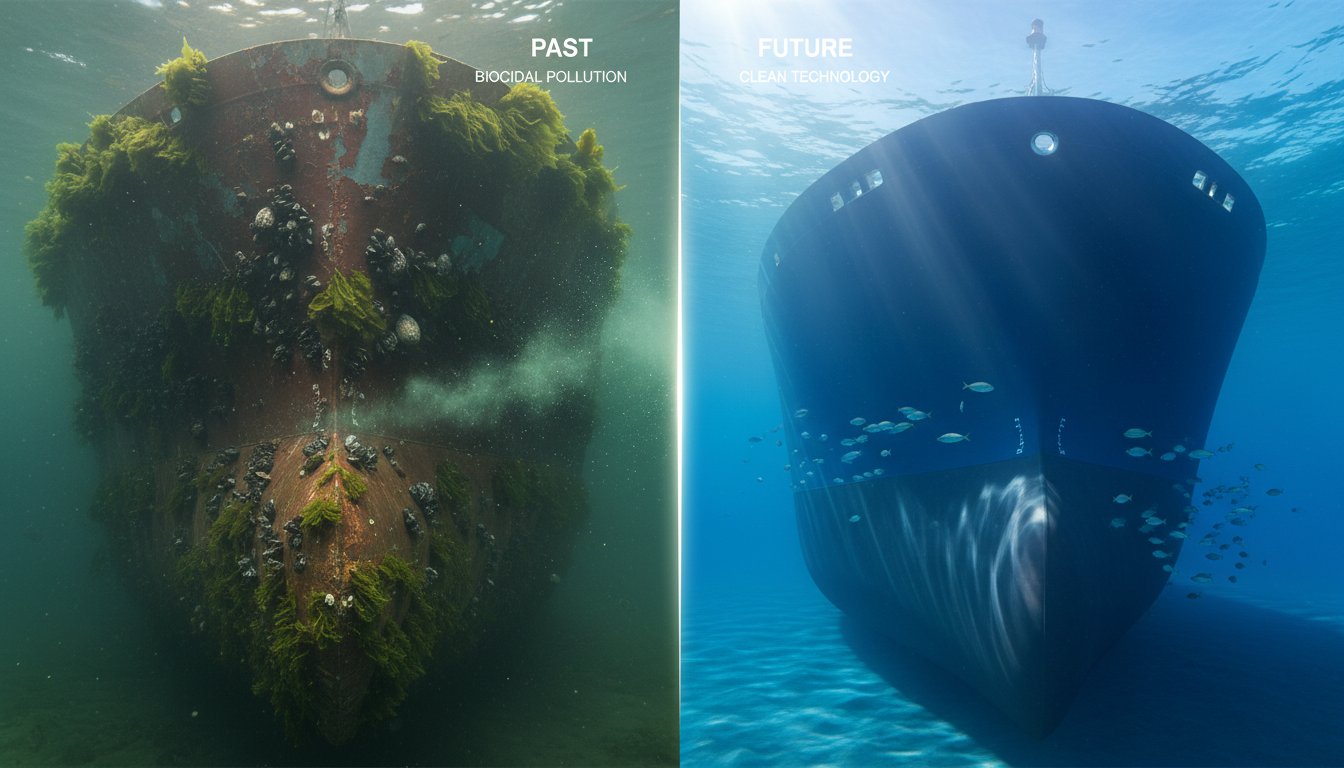
Recent 2026 longitudinal studies reveal that traditional biocidal coatings release over 50,000 tons of heavy metals into global waterways annually, even as vessels remain at berth. This staggering volume underscores the hidden environmental impact of antifouling paint, where the leaching of copper and organic biocides disrupts marine endocrine systems. You likely understand the mounting pressure to align fleet operations with the AFS Convention and EEXI decarbonization targets. Balancing these rigid environmental mandates with high-performance hull protection often feels like a zero-sum game. It’s a complex challenge for any fleet manager.
This review provides a technical analysis of how modern foul-release technology replaces chemical toxicity with physical hydrodynamics. We’ll examine the transition from sacrificial films to siloxane-based surfaces that can reduce fuel consumption by 10% or more. The results are measurable. You’ll gain a clear framework for choosing sustainable coatings that offer a ten-year service life and zero VOC emissions. We explore the chemistry of biocide leaching before detailing the path toward improved vessel efficiency and a minimized carbon footprint.
Key Takeaways
- Analyze the persistent ecological risks associated with biocidal leaching and the cumulative environmental impact of antifouling paint on sensitive marine sediments.
- Quantify the correlation between hull surface roughness and increased fuel burn to understand how traditional coating degradation dictates greenhouse gas emission levels.
- Navigate the technical requirements for 2026 EEXI compliance and the AFS Convention to ensure your fleet aligns with evolving international maritime mandates.
- Discover the mechanical advantages of Silane-Siloxane technology, a biocide-free foul-release solution that optimizes hydrodynamic efficiency through an ultra-slick surface.
- Evaluate the strategic ROI of transitioning to hard-film systems that offer a ten-year service life and zero VOC profile for sustainable vessel management.
Understanding the Ecological Legacy of Traditional Antifouling Systems
Antifouling paint serves as a sacrificial or non-stick chemical barrier designed to mitigate the colonization of submerged surfaces by aquatic organisms. For decades, Traditional Antifouling Systems relied on the controlled release of toxic agents to prevent the attachment of algae, barnacles, and mollusks. While effective at maintaining hull cleanliness, these biocides create a fundamental ecological paradox. The chemicals are engineered to terminate life, yet they lack the molecular specificity to distinguish between target fouling organisms and non-target marine species. This lack of selectivity results in widespread unintended consequences for marine biodiversity, as toxins accumulate in the water column and benthic sediments. Understanding the environmental impact of antifouling paint is no longer just a regulatory requirement; it’s a strategic necessity for sustainable fleet management in 2026.
The shift from heavy metals to contemporary booster biocides hasn’t fully resolved these ecological concerns. Modern formulations often combine copper with organic co-biocides to target a broader spectrum of species. However, the leaching of these substances into sensitive marine habitats continues to disrupt local food webs. When biocides enter the environment, they don’t simply disappear. They persist, bioaccumulate, and often settle in harbor sediments where they pose a long-term threat to bottom-dwelling organisms.
The Mechanism of Biofouling and Why it Matters
Biofouling progresses through distinct stages: molecular conditioning, micro-fouling (biofilms), and macro-fouling (barnacles and mussels). As these organisms mature, they create significant surface roughness that disrupts laminar flow. This increases hydrodynamic drag, elevating fuel consumption by as much as 40% for commercial vessels. Biofouling is a biological process that compromises maritime engineering efficiency. Increased drag doesn’t just impact the bottom line; it also raises the carbon footprint of every voyage.
A Brief History of Marine Toxicity: From TBT to Copper
The industry’s reliance on heavy metals reached a crisis with Tributyltin (TBT) in the 1970s, which caused reproductive failure in oyster and whelk populations. This led to the 2008 AFS Convention ban and a shift to copper-based systems. In 2026, copper faces similar scrutiny due to its persistence in harbor sediments and its toxic effect on non-target larval crustaceans. The environmental impact of antifouling paint is now driving a transition toward biocide-free, foul-release technologies that prioritize ecosystem integrity without sacrificing vessel performance.
The Lifecycle of Biocides: Leaching, Accumulation, and Marine Toxicity
Ablative antifouling systems rely on a controlled depletion mechanism. As a vessel moves through the water, the paint surface erodes to expose fresh layers of biocides, primarily cuprous oxide. This design ensures a constant release of toxic agents into the water column to prevent biofouling. While this mechanism maintains hull smoothness, the process facilitates the continuous environmental impact of antifouling paint through chemical leaching. Data from 2024 indicates that a single large commercial vessel can release several kilograms of copper into a harbor during a standard port call. This leaching isn’t just a chemical concern; it’s intrinsically linked to vessel efficiency. Understanding The Carbon Footprint of Hull Friction reveals how the degradation of these coatings affects both the ecosystem and fuel consumption profiles.
Biocides don’t simply dissipate once they enter the sea. Heavy metals and booster biocides bind to organic matter and settle into seafloor sediments, particularly in low-flow areas like marinas and ports. This accumulation creates a toxic legacy. These substances enter the marine food chain via benthic organisms and eventually reach apex predators through biomagnification. High concentrations of copper and zinc in predatory fish species have been linked to suppressed immune systems and lower reproductive success rates. The persistence of booster biocides like Cybutryne remains a significant challenge. Although the IMO issued a global ban on Cybutryne in 2023, its chemical stability means it remains detectable in marine sediments and water samples today, continuing to impact the environmental impact of antifouling paint across global shipping routes.
Antifouling Paint Particles (APPs) as Microplastics
Paint flakes are a significant but frequently underreported source of marine microplastics. These Antifouling Paint Particles (APPs) are released in high concentrations during mechanical hull scrubbing or high-pressure washing in dry docks. Unlike soluble biocides, APPs settle directly into the sediment where they’re ingested by bottom-dwellers. In 2025, studies confirmed that these particles act as concentrated delivery vectors for toxins, causing acute ecotoxicological effects in sediment-dwelling species. This mechanical shedding turns every cleaning event into a localized pollution surge.
Impact on Non-Target Marine Organisms
Biocides don’t discriminate between target foulers and vital marine flora. Chemicals designed to kill barnacles also inhibit the Photosystem II (PSII) process in marine algae, corals, and seagrasses. This inhibition starves the base of the marine food chain, leading to reduced biodiversity in coastal regions. In fish populations, metallic residues act as endocrine disruptors, causing hormonal imbalances that lead to physical abnormalities. This data underscores the critical environmental marine coatings shift toward biocide-free alternatives. As the industry moves toward 2026 standards, adopting non-toxic solutions is the only way to ensure long-term regulatory compliance. Consider how advanced siloxane technology can optimize your fleet’s performance without ecological compromise.
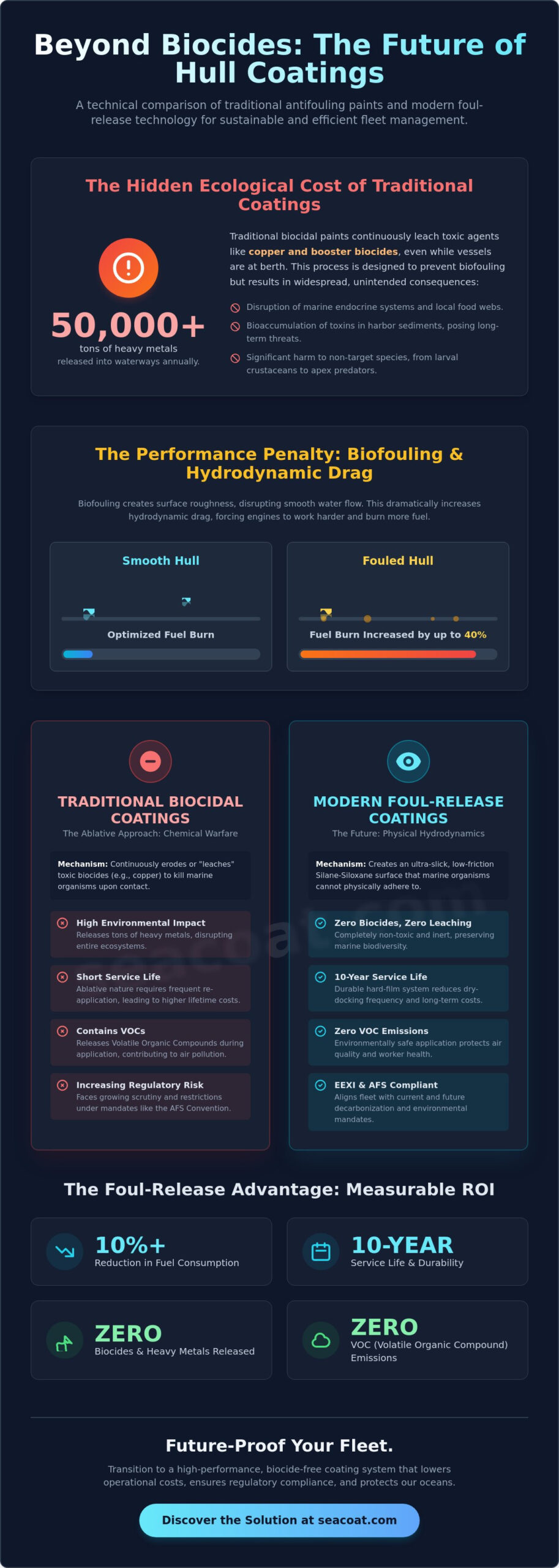
Beyond Toxicity: The Carbon Footprint of Hull Friction and Drag
While chemical leaching remains a primary concern for marine biologists, the environmental impact of antifouling paint extends significantly into the atmosphere through hydrodynamic resistance. A vessel’s fuel consumption is directly proportional to its hull’s surface roughness. Traditional ablative coatings operate through a controlled erosion process, which inherently increases micro-texture as the paint layers deplete. This rising friction forces propulsion systems to consume more energy to overcome drag, leading to a measurable spike in greenhouse gas (GHG) emissions. By contrast, hard-film foul release systems maintain a consistent, ultra-smooth profile that optimizes water flow and minimizes the carbon intensity of every nautical mile traveled.
Frictional Drag and Operational Efficiency
The physics of maritime transit dictates that the boundary layer, the thin volume of water immediately adjacent to the hull, must remain laminar to ensure peak efficiency. When surface roughness increases, this flow becomes turbulent, creating a parasitic drag that drains kinetic energy. Conventional self-polishing copolymers often fall into a “vicious cycle” where the hull requires frequent mechanical cleaning, which further scars the surface and accelerates fouling attachment. Recent biocide-free antifouling coating research indicates that maintaining a low Average Hull Roughness (AHR) is essential for long-term sustainability. For a deeper technical analysis of how surface texture dictates financial outcomes, operators should consult the definitive guide to boat hull paint performance science and ROI, which links hydrodynamic optimization to asset longevity.
Mitigating Maritime Carbon Emissions
The International Maritime Organization (IMO) has set ambitious targets for net-zero emissions by 2050, making hull efficiency a strategic priority for global fleets. A clean, hydrodynamically optimized hull is the most immediate and cost-effective method for reducing a vessel’s carbon footprint. Data from sea trials confirms that switching from high-texture biocidal paints to smooth, non-toxic foul release systems can yield fuel savings between 5% and 15%. These efficiencies are achieved through several key factors:
- Reduced Surface Tension: Siloxane-based chemistries lower the energy of the hull surface, preventing bio-adhesion.
- Durability: Hard-film coatings do not erode, ensuring the hull remains smooth for up to ten years.
- Weight Mitigation: Eliminating the heavy build-up of calcareous fouling reduces the displacement weight of the vessel.
By prioritizing coatings that offer superior smoothness, the maritime industry can align its ecological responsibilities with its economic requirements. The environmental impact of antifouling paint is therefore a dual challenge: we must protect the water from toxins while simultaneously protecting the air from unnecessary combustion emissions. Non-toxic, high-performance coatings provide the necessary bridge to reach these 2050 sustainability benchmarks without sacrificing operational speed or profitability.
Navigating the Regulatory Landscape: AFS Convention and EEXI Compliance
The maritime industry’s transition toward decarbonization is governed by a rigid framework of international mandates. Central to this is the IMO International Convention on the Control of Harmful Anti-Fouling Systems (AFS), which dictates the chemical composition of hull coatings to mitigate the environmental impact of antifouling paint on non-target species. By 2026, the enforcement of these standards has moved beyond simple biocide management into a broader strategy of operational efficiency. Non-compliance in protected marine areas or sensitive ports now carries heavy financial penalties and the risk of vessel detention, making technical due diligence a prerequisite for fleet managers.
Global Bans and Restricted Biocides in 2026
Regulatory scrutiny on biocidal leaching has intensified. Following the total ban on Cybutryne mandated by IMO Resolution MEPC.331(76), all vessels must have either removed or sealed existing coatings containing this substance by their next scheduled dry-docking. Simultaneously, regional restrictions on copper-based coatings have tightened; California and several EU member states now enforce strict leach rate limits, often capping them at 9.5 µg/cm²/day. To verify the regulatory status of a coating, operators should utilize this checklist:
- Confirm the presence of an International Anti-Fouling System Certificate (IAFSC).
- Verify that the Safety Data Sheet (SDS) lists zero prohibited organotin compounds or Cybutryne.
- Check regional compliance for copper leach rates if operating in the Baltic Sea or North American ECAs.
- Assess the Volatile Organic Compound (VOC) content to ensure it meets the 2026 local air quality standards.
The Role of Coatings in EEXI and CII Ratings
The Energy Efficiency Existing Ship Index (EEXI) and the Carbon Intensity Indicator (CII) have transformed hull maintenance from a routine task into a critical regulatory lever. For older vessels struggling to meet EEXI technical requirements, reducing hydrodynamic drag is often more cost-effective than installing expensive Engine Power Limitation (EPL) systems. High-performance antifouling boat paint systems can reduce hull friction by up to 15%, directly influencing the vessel’s attained EEXI value.
CII ratings are annual and operational, meaning a fouled hull can cause a vessel’s grade to drop from a ‘C’ to an ‘E’ within a single season due to increased fuel consumption. Efficiency coatings are now a strategic regulatory asset. By maintaining a low surface roughness profile, these technologies ensure that the environmental impact of antifouling paint is neutralized through massive carbon emission reductions. Choosing a coating with a ten-year life cycle and zero biocide leaching isn’t just about ecology; it’s about securing the vessel’s commercial viability in a carbon-taxed market.
Ensure your fleet remains compliant and efficient by exploring SeaCoat’s biocide-free siloxane solutions today.
Sustainable Solutions: The Shift to Hard-Film Foul Release Technology
The maritime industry faces a critical juncture as global regulatory bodies tighten restrictions on heavy metals and chemical leaching. Silane-Siloxane technology represents the most viable path forward, offering a sophisticated, non-toxic alternative to conventional biocide systems. Unlike traditional coatings that rely on the controlled release of toxins to kill marine life, these advanced siloxane systems utilize a physical foul release mechanism. The ultra-slick, low-friction surface prevents organisms from gaining a secure foothold. This shift effectively mitigates the environmental impact of antifouling paint by eliminating the discharge of copper and other biocides into sensitive aquatic ecosystems. SeaCoat’s Sea-Speed V 10 X Ultra stands as the benchmark for this technology, delivering a permanent solution that prioritizes both planetary health and vessel performance.
Silane-Siloxane vs. Traditional Biocides
Hard-film coatings redefine vessel maintenance schedules by moving away from sacrificial chemistry. Traditional ablative paints function through a wearing process, eroding over a short 24-month period and requiring frequent, costly reapplication. In contrast, siloxane systems offer a documented 10-year life cycle, which significantly reduces material waste and dry-docking frequency. These coatings are fundamentally biocide-free and contain zero volatile organic compounds (VOCs). For vessels operating at speeds above 10 knots, the self-cleaning property becomes a primary operational advantage. Hydrodynamic forces simply wash away any accumulated biofouling, maintaining a clean hull without the need for chemical intervention.
The Long-Term ROI of Environmental Stewardship
Adopting sustainable technology isn’t just a regulatory necessity; it’s a strategic financial decision for modern fleet managers. The transition to marine coatings that prioritize durability over chemical leaching leads to substantial operational savings. By maintaining a lower surface roughness, these films reduce hydrodynamic drag, which translates directly into lower fuel consumption and reduced carbon emissions.
Furthermore, the hard-film structure acts as an impermeable barrier that protects the underlying substrate from corrosion, extending the asset’s total operational lifespan. SeaCoat’s Sea-Speed V 10 X Ultra leads this sector by delivering high-performance results that align with the strictest 2026 environmental standards. It’s a strategic asset that replaces the cycle of temporary, toxic fixes with a single, high-durability application. This approach ensures that the environmental impact of antifouling paint is minimized while maximizing the bottom line.
Ready to optimize your vessel’s performance?
Aligning Maritime Performance with Ecological Integrity
The maritime industry’s shift toward sustainable operations requires a departure from temporary, toxic solutions. Decades of scientific data show that traditional biocidal coatings create an ecological legacy that persists long after a vessel leaves the water. Modern regulations like the AFS Convention and EEXI standards now demand a sophisticated approach to hull management. This strategy must address the environmental impact of antifouling paint while simultaneously optimizing hydrodynamic performance. By prioritizing hard-film foul release systems, operators eliminate the cycle of biocide accumulation in sensitive marine habitats.
SeaCoat has led this transition since 2001 with its proprietary Silane-Siloxane technology. This advanced chemistry provides a stable, non-migratory surface that delivers a proven 10-year life cycle with zero biocide leaching. Beyond its toxicological benefits, the ultra-smooth finish significantly reduces frictional drag, leading to measurable decreases in fuel consumption and carbon emissions. It’s a strategic asset that aligns operational ROI with environmental stewardship. You don’t have to choose between a clean hull and a healthy ocean.
Switch to the most advanced non-toxic hull coating; Discover Sea-Speed V 10 X Ultra
Building a more efficient, compliant fleet starts with the right surface technology.
Frequently Asked Questions
Is copper-based antifouling paint harmful to the environment?
Yes, copper-based coatings pose a documented risk to marine ecosystems by leaching heavy metals into the water column. Studies from the Port of San Diego indicate that dissolved copper concentrations often exceed the 3.1 micrograms per liter limit set by the California Toxics Rule. This bioaccumulation disrupts the sensory systems of salmon and inhibits the growth of phytoplankton. Transitioning to biocide-free alternatives mitigates the long-term environmental impact of antifouling paint.
What is the most environmentally friendly bottom paint for boats?
Non-toxic foul release coatings (FRCs) represent the most sustainable option currently available for maritime operators. These biocide-free systems, such as advanced siloxane-based technologies, rely on physical properties rather than chemical toxicity to prevent attachment. They typically contain zero Volatile Organic Compounds (VOCs) and offer a 10 year service life. This longevity reduces the frequency of hull stripping, which prevents thousands of tons of toxic scrapings from entering landfills annually.
How does antifouling paint impact marine life beyond the hull?
Traditional antifouling paints release biocides like cuprous oxide and Irgarol 1051 that persist in benthic sediments. Research published in the 2024 Marine Pollution Bulletin shows these chemicals accumulate in filter feeders, leading to shell deformities in oysters. These toxins don’t just stay near the vessel; they enter the food chain and affect apex predators. By choosing non-leaching coatings, operators protect the entire local biodiversity of the harbor and surrounding estuaries.
Can I use non-toxic foul release coatings on aluminum hulls?
You can safely apply non-toxic foul release coatings to aluminum hulls without the risk of galvanic corrosion. Unlike copper-based paints, which require thick epoxy primers to prevent the hull from corroding, siloxane-based systems are electrically inert. This makes them a superior choice for aluminum vessels. They eliminate the need for sacrificial anodes specifically meant to counter paint-induced corrosion, which simplifies maintenance for 2026 fleet operations and extends asset life.
What are the current IMO regulations regarding biocide-free coatings?
The International Maritime Organization (IMO) currently focuses on banning harmful biocides, such as the January 2023 prohibition of Cybutryne. While the IMO doesn’t yet mandate biocide-free coatings, the Anti-Fouling Systems (AFS) Convention sets strict criteria for substance leaching. Vessels using non-toxic coatings often receive higher environmental scores in port incentive programs. These regulations aim to reduce the cumulative environmental impact of antifouling paint across international shipping lanes by 2030.
Do non-toxic hull coatings actually work as well as traditional paints?
Modern foul release coatings meet or exceed the performance of traditional biocidal paints in high-activity scenarios. While traditional paints rely on controlled depletion, non-toxic systems use low surface energy to prevent permanent adhesion. Data from sea trials shows these coatings maintain a surface roughness below 100 micrometers over five years. This results in sustained hydrodynamic efficiency. It’s a shift from killing organisms to simply making the hull too slippery for them to stick.
What happens to the environment when a ship is pressure washed at a boatyard?
Pressure washing a biocidal hull releases concentrated heavy metals and microplastics into the shipyard effluent. A 2022 study found that a single washdown can shed up to 5 kilograms of copper-laden paint flakes. If the facility lacks a closed-loop filtration system, these toxins flow directly into the watershed. Using hard-film, non-ablative coatings prevents this shedding entirely. It ensures that maintenance activities don’t compromise the health of coastal waters or violate discharge permits.
How do hull coatings help with EEXI and CII compliance in 2026?
Advanced hull coatings directly improve Energy Efficiency Existing Ship Index (EEXI) and Carbon Intensity Indicator (CII) ratings by reducing hydrodynamic drag. A 10% reduction in hull friction can lead to a 6% decrease in fuel consumption. This lower fuel burn translates to fewer CO2 emissions, which is essential for maintaining an ‘A’ or ‘B’ CII rating. By keeping the hull smooth, operators ensure their vessels remain compliant with 2026 MARPOL requirements and avoid operational penalties.