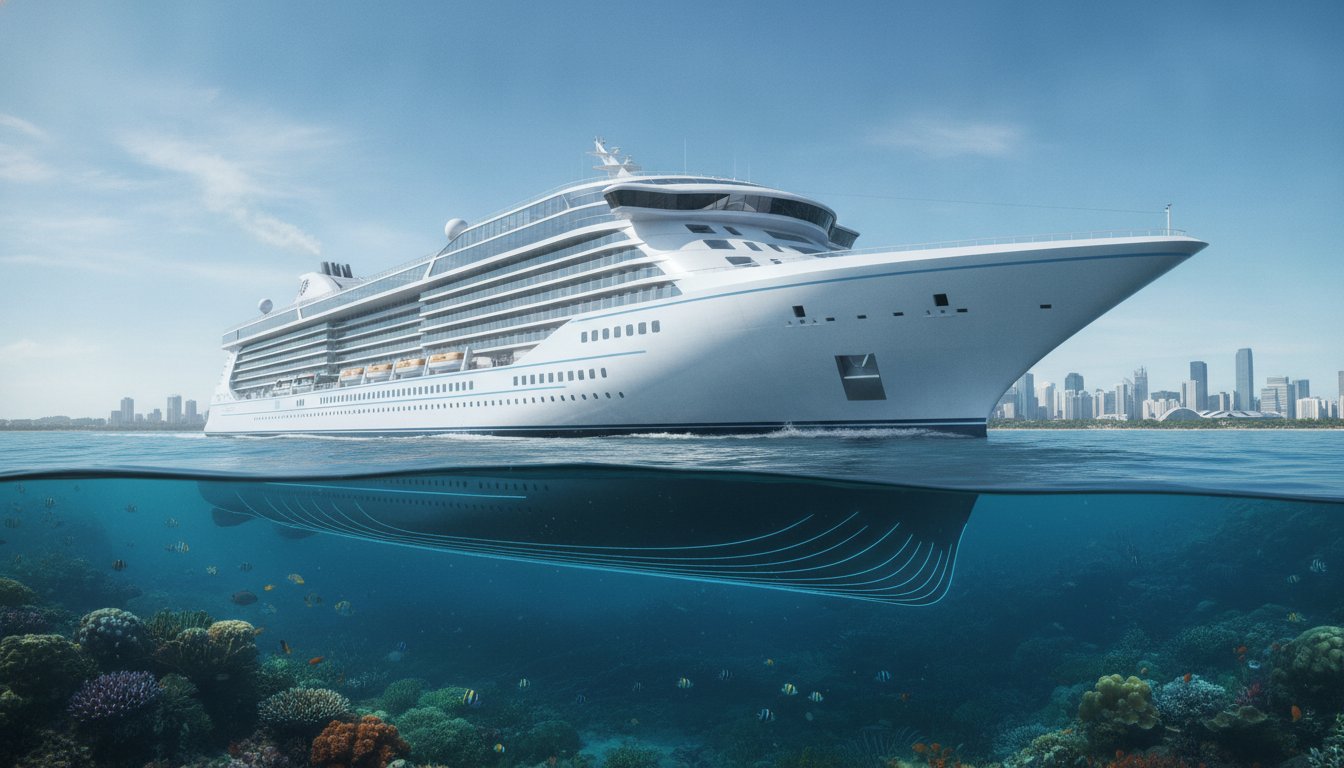
Can a single material choice determine whether a vessel meets its Carbon Intensity Indicator (CII) rating or falls into a costly cycle of regulatory non-compliance? Most maritime professionals understand that the traditional trade-off between hull durability and environmental safety is becoming unsustainable as 2026 approaches. You’re likely dealing with the high maintenance costs of soft silicone coatings that damage easily, or perhaps the looming pressure of stricter biocide regulations that make conventional antifouling paints a strategic liability.
By integrating an advanced eco-friendly coating for cruise ships, specifically a silane-siloxane hard-film system, it’s possible to achieve superior drag reduction without the fragility of legacy products. This performance guide details how Sea-Speed V 10 X Ultra redefines operational efficiency by combining the physical toughness of an epoxy with the fluid dynamic advantages of a biocide-free foul release surface. We’ll examine the technical evidence behind fuel savings, reduced greenhouse gas emissions, and the extended service life these innovative materials provide for modern cruise fleets.
Key Takeaways
- Understand how the 2026 IMO greenhouse gas strategy and Carbon Intensity Indicator (CII) ratings prioritize hull efficiency as a primary lever for regulatory compliance.
- Learn why silane-siloxane technology is the superior eco-friendly coating for cruise ships, utilizing low surface energy instead of toxic biocides to prevent marine attachment.
- Compare the physical durability of hard-film systems against fragile soft silicones to ensure your hull protection survives frequent port maneuvers and fender contact.
- Analyze the total cost of ownership benefits where a 5-10% reduction in frictional drag leads to significant annual fuel savings and extended service windows.
- Discover why Sea-Speed V 10 X Ultra serves as a strategic asset for fleet managers aiming for long-term sustainability and measurable performance gains.
Navigating the 2026 Regulatory Landscape for Cruise Fleet Sustainability
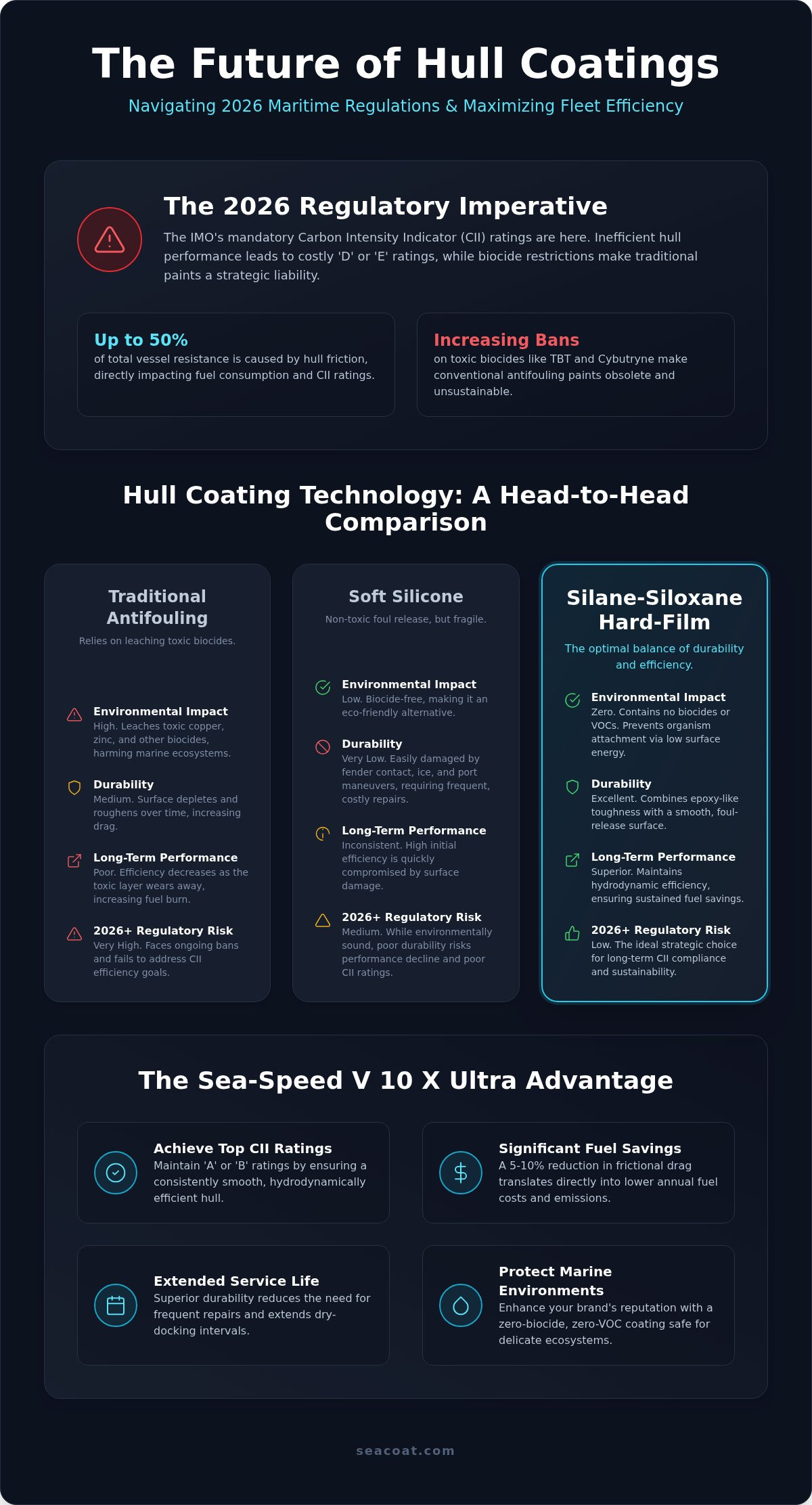
The maritime industry is undergoing a fundamental shift in how it measures asset performance. The International Maritime Organization (IMO) greenhouse gas strategy has moved from a series of recommendations to a rigid framework of operational requirements. By 2026, the industry will have completed its first full three-year cycle of Carbon Intensity Indicator (CII) reporting. This period is critical because it marks the transition from data collection to mandatory performance improvements. For cruise operators, the choice of an eco-friendly coating for cruise ships is the most direct way to influence these ratings without undergoing massive structural engine overhauls.
CII and EEXI: The New Benchmarks for Cruise Efficiency
The physics of maritime transport are unforgiving; hull friction accounts for up to 50% of total vessel resistance. As biofouling accumulates, this drag increases exponentially, forcing engines to work harder and consume more fuel to maintain schedule. This extra fuel consumption directly degrades a ship’s CII rating. Operators aiming to maintain ‘A’ or ‘B’ ratings must focus on surface technology that remains smooth over long periods. Traditional toxic paints often fail here because they rely on a depleting surface layer that becomes rougher over time. Transitioning to a high-performance foul release system ensures that the hull remains hydrodynamically efficient, preventing the regulatory penalties associated with ‘D’ or ‘E’ ratings. Business as usual is no longer a viable financial strategy.
Global Biocide Bans and Environmental Stewardship
Environmental stewardship in the cruise sector is increasingly defined by the elimination of harmful chemical leaching. The legacy of Tributyltin (TBT) taught the industry the high cost of toxic additives, and we’re now seeing similar restrictions with the 2023-2026 bans on Cybutryne. To understand the underlying biological challenge, one must look at The Science of Foul Release, which explains how marine organisms attach to submerged surfaces. Rather than killing these organisms with toxins, modern systems use low surface energy to prevent permanent attachment. This shift toward environmental marine coatings allows cruise lines to meet the growing passenger demand for sustainable travel. Investing in an eco-friendly coating for cruise ships that contains zero biocides or volatile organic compounds (VOCs) protects both the delicate reef ecosystems and the brand’s reputation as an industry leader in conservation.
The Science of Foul Release: Why Non-Toxic Solutions Outperform Traditional Paints
Understanding the transition to an eco-friendly coating for cruise ships requires a shift from chemical warfare to surface science. Traditional antifouling paints operate through the controlled release of biocides, which leach toxic substances like copper or zinc into the water column to kill settling larvae. In contrast, foul release technology relies on the physical properties of the surface itself. By utilizing high-performance Silane-Siloxane chemistry, these coatings create a low-energy surface that prevents the permanent adhesion of marine organisms. This mechanical barrier is far more effective for ships that spend significant time at sea, as it doesn’t rely on a depleting chemical reservoir to remain functional.
Silane-Siloxane molecules bond at a molecular level to form a cross-linked matrix that is both hydrophobic and exceptionally smooth. This disruption occurs at the earliest stages of the colonization cycle. When micro-organisms attempt to secure a foothold, the lack of surface tension ensures that the bond remains weak. As the vessel moves, the hydrodynamic shear force of the water effectively washes the hull clean. This represents a significant reduction in the chemical footprint of maritime operations, as no active ingredients are depleted or released into the ecosystem.
Silane-Siloxane vs. Traditional Antifouling
The increasing scrutiny within the 2026 Regulatory Landscape has made toxic biocides a long-term liability for global cruise lines. Traditional ablative paints become rougher as they wear, increasing drag and requiring frequent re-application. Foul release is a mechanical rather than chemical deterrent to biofouling. By providing a slick interface, Silane-Siloxane systems reduce frictional drag at the molecular level. This permanent surface doesn’t require the leaching of heavy metals to remain effective, positioning it as the premier choice for operators prioritizing both environmental safety and long-term asset protection.
Drag Reduction and Fluid Dynamics
The relationship between surface roughness and fuel consumption is linear and well-documented in naval architecture. Average Hull Roughness (AHR) is a critical metric; even minor increases in micro-fouling can lead to substantial performance losses. By maintaining an ultra-smooth profile, a non-toxic marine hull coating minimizes the turbulent boundary layer around the ship. You can find detailed data on how a 5-10% reduction in drag translates to operational savings in our guide to hull paint ROI. As the industry moves toward a more sustainable future, selecting an eco-friendly coating for cruise ships that prioritizes mechanical efficiency over chemical toxicity is a strategic necessity. For those seeking a proven application of this science, Sea-Speed V 10 X Ultra provides the technical foundation needed for modern fleet efficiency.
Hard-Film vs. Soft Silicone: Choosing a Durable Eco-Friendly Coating
While the maritime industry has many options for an eco-friendly coating for cruise ships, fleet managers often find that environmental safety and physical durability remain at odds. Soft silicone foul release systems have gained market share due to their initial slickness, yet they possess a fundamental material weakness. These coatings are elastomeric and fragile. In the high-traffic environment of a cruise terminal, where fender contact and tug maneuvers are daily occurrences, a soft surface is a liability. A single mechanical strike can compromise the entire hydrodynamic profile of the vessel.
The distinction between a soft elastomeric surface and a hard-film system is critical for long-term asset management. Cruise operations require a coating that can withstand the rigors of frequent port calls without requiring constant repair. Hard-film systems provide the necessary impact resistance while maintaining the low surface energy required for foul release performance. This synergy ensures that the vessel remains efficient between dry-docking cycles, even in challenging operational conditions.
The Vulnerability of Soft Silicone Coatings
Soft silicone systems are prone to specific failure modes that compromise their performance. Tearing, peeling, and delamination are frequent issues, especially when the vessel operates in areas with floating debris. Once the surface is breached, the hydrodynamic profile is ruined. This creates localized turbulence and increased drag. Repairing these tears isn’t a simple task; it often requires specialized patches that don’t always bond perfectly with the existing layer. Additionally, these surfaces are incompatible with standard mechanical hull cleaning equipment. Brushes designed for traditional paints will shred a soft silicone coating, forcing operators to use expensive, specialized cleaning methods or risk permanent damage.
The Sea-Speed Advantage: Industrial Grade Durability
Choosing a hard-film eco-friendly coating for cruise ships like Sea-Speed V 10 X Ultra eliminates these mechanical risks. Unlike silicones, silane-siloxane technology creates a permanent, non-sacrificial surface that is as tough as an industrial epoxy but as smooth as a foul release system. This hard-film profile is resistant to abrasion and impact. It doesn’t tear when it brushes against a dock or a fender. This durability allows for standard in-water cleaning protocols using conventional equipment, which simplifies maintenance schedules. The physical properties of Sea-Speed V 10 X Ultra ensure that the hull remains protected for years, avoiding the frequent and costly touch-ups required by softer alternatives. It’s a strategic asset that prioritizes asset longevity as much as it does fuel efficiency.
Maximizing ROI: Fuel Savings and Maintenance Cycles in the Cruise Industry
Financial viability in the cruise sector is inextricably linked to operational uptime and fuel economy. While traditional hull treatments are often viewed as a recurring maintenance expense, an eco-friendly coating for cruise ships should be treated as a strategic capital investment. By analyzing the Total Cost of Ownership (TCO), fleet managers can see that the initial application cost is rapidly offset by multi-year performance gains. This shift in perspective is essential for operators facing the dual pressures of rising fuel prices and stricter environmental mandates.
Frictional drag is the primary consumer of energy for large-scale vessels. Technical data indicates that a 5-10% reduction in drag, achievable through the ultra-smooth surface profile of silane-siloxane technology, translates directly into millions of dollars in annual fuel savings for a typical cruise fleet. Beyond the immediate fuel pump benefits, this increased efficiency reduces the physical strain on propulsion systems. Engines operating at lower load factors to achieve the same cruising speeds experience less wear, which results in lower long-term engine maintenance costs and fewer unplanned repairs.
The most significant impact on ROI comes from the extension of dry-dock intervals. Traditional antifouling paints require frequent re-application as their biocide reservoirs deplete or their surfaces roughen. Hard-film systems break this cycle, allowing operators to move from a standard two-year maintenance window to a five-year or even ten-year service life. This extension maximizes vessel uptime during peak travel seasons, ensuring that the asset remains in revenue-generating service rather than sitting in a shipyard.
Fuel Efficiency and Carbon Credit Potential
Reducing fuel consumption is the most effective lever for lowering CO2, SOx, and NOx emissions. As global maritime markets evolve, these measurable emission reductions may soon provide access to tradeable carbon credits or other financial incentives. By using data-driven performance metrics, operators can justify the switch to an eco-friendly coating for cruise ships through both direct fuel ROI and long-term regulatory resilience. High-performance coatings essentially turn the hull into a tool for emissions management.
Simplified In-Water Maintenance
Hard-film coatings simplify the logistics of hull husbandry. Unlike soft silicones that require delicate, specialized handling to avoid tearing, hard-film surfaces allow for efficient in-water cleaning using conventional equipment. At cruising speeds typically above 10 knots, these surfaces exhibit a ‘self-cleaning’ effect where hydrodynamic force removes loosely attached silt and bio-slime. This reduces the frequency of required cleanings and minimizes the environmental impact on local port waters. To optimize your fleet’s performance and reduce annual overhead, explore our high-performance coating solutions.
Implementing Sea-Speed V 10 X Ultra for Global Cruise Operations
Selecting the right eco-friendly coating for cruise ships is a decision that impacts fleet performance for a decade. Sea-Speed V 10 X Ultra is engineered specifically to meet these long-term requirements by providing a non-toxic, biocide-free alternative that outperforms traditional systems in both durability and hydrodynamic efficiency. Whether you’re managing a newbuilding project at a major shipyard or coordinating a retrofit during a scheduled dry-dock, the versatility of this silane-siloxane system ensures a seamless transition to more sustainable operations. It’s a strategic asset for the modern maritime era provided by Seacoat SCT, LLC.
The application process itself is designed for industrial efficiency. One of the most significant benefits is the single-coat system. This approach drastically reduces the time spent in dry-dock, which lowers both labor costs and the opportunity cost of having a vessel out of service. While some advanced coatings require complex electrostatic application tools that limit where and how they can be applied, Sea-Speed V 10 X Ultra is applied using standard high-pressure equipment. This makes it accessible for global cruise operations, regardless of the shipyard’s specific technical infrastructure. Our global availability ensures that your fleet has access to premium eco-friendly coating for cruise ships at any major maritime hub.
Operational Integration and Application
A high-performance finish is only as good as its foundation. For optimal results, preparing the hull with Seapoxy 73 provides the ideal foundation. This heavy-duty epoxy primer provides the ideal chemical bond for the Sea-Speed V 10 X Ultra topcoat, creating a unified barrier against corrosion and fouling. This integrated system has been successfully deployed on large-scale commercial vessels, demonstrating consistent performance in diverse maritime environments. The technical support team at Seacoat SCT, LLC provides on-site guidance during the application process to ensure the hull meets strict standards for smoothness and adhesion.
The Future of Your Fleet with Seacoat SCT, LLC
Seacoat SCT, LLC remains a pioneer in the transition away from damaging chemical treatments. Our commitment to biocide-free innovation helps cruise lines navigate the path toward net-zero emissions while protecting the marine ecosystems that serve as their primary destinations. By choosing a permanent, hard-film solution, fleet managers can secure their CII ratings and reduce operational overhead simultaneously. It’s about moving beyond temporary fixes toward a visionary management strategy. To evaluate how our technology can be integrated into your next maintenance cycle, Contact Seacoat SCT, LLC for a technical consultation on Sea-Speed V 10 X Ultra.
Securing Long-Term Performance in a Sustainable Maritime Era
The transition toward 2026 regulatory benchmarks requires a strategic shift from temporary maintenance to permanent material solutions. We’ve explored how proprietary Silane-Siloxane technology provides the necessary durability to withstand rigorous port operations while delivering the fluid dynamic efficiency required for CII compliance. By moving away from toxic biocides and fragile soft silicones, fleet managers can achieve a measurable reduction in greenhouse gas emissions and operational costs. Implementing an eco-friendly coating for cruise ships is no longer just an environmental choice; it’s a fundamental component of a vessel’s economic viability.
Optimize your cruise fleet’s performance with Sea-Speed V 10 X Ultra to benefit from a biocide-free, non-toxic system with proven drag reduction for commercial fleets. The future of the cruise industry depends on the synergy of industrial strength and ecological responsibility. By adopting advanced foul release systems today, your fleet will be positioned to lead the sector in both efficiency and stewardship for years to come.
Frequently Asked Questions
Are eco-friendly cruise ship coatings as effective as traditional antifouling paint?
Yes, advanced eco-friendly systems are often more effective over a full multi-year service cycle. While traditional antifouling paints lose potency as their biocide reservoirs deplete, foul release technology maintains a consistent physical barrier. This prevents the gradual increase in hull roughness that typically occurs with legacy paints, ensuring the ship remains hydrodynamically efficient from the first day of the cycle to the last.
What is the difference between a foul release coating and antifouling paint?
The primary difference lies in the underlying mechanism of biofouling prevention. Antifouling paints use chemical biocides to kill marine organisms that attempt to settle on the hull. In contrast, an eco-friendly coating for cruise ships utilize low surface energy to create a slick interface. This mechanical approach prevents organisms from forming a strong bond, allowing them to be washed away by hydrodynamic force once the vessel is in motion.
How do silane-siloxane coatings help with IMO CII compliance?
These coatings directly improve a vessel’s Carbon Intensity Indicator (CII) rating by minimizing frictional drag. By maintaining an exceptionally smooth hull surface, the ship requires less engine power to sustain cruising speeds. This increased efficiency results in lower fuel consumption and a corresponding reduction in CO2 emissions per nautical mile, which is essential for meeting the stricter 2026 maritime environmental standards.
Can a hard-film coating really reduce cruise ship fuel consumption?
Yes, technical data demonstrates that reducing frictional resistance can lower fuel consumption by 5-10% for large-scale vessels. Hard-film coatings maintain their smooth profile over years of continuous operation. This stability prevents the “roughness penalty” that occurs when traditional paints degrade or soft coatings tear, ensuring that the vessel’s fuel economy doesn’t degrade prematurely between dry-docking intervals.
How long does a silane-siloxane hull coating last on a cruise ship?
Silane-siloxane systems like Sea-Speed V 10 X Ultra are designed for a service life that can reach 10 years. Unlike sacrificial paints that require re-application every two years, this non-sacrificial matrix remains physically intact. This longevity significantly extends the intervals between major dry-docking cycles, allowing cruise operators to maximize vessel uptime and reduce the total cost of ownership over the asset’s life.
Is in-water cleaning safe for hard-film foul release coatings?
Yes, hard-film coatings are specifically engineered to withstand standard in-water cleaning protocols without sustaining damage. They don’t suffer the tearing or delamination common with soft silicones when exposed to mechanical brushes. This durability allows divers to use conventional cleaning equipment to remove light bio-slime or silt, simplifying maintenance logistics and ensuring the hull remains at peak performance without costly specialized handling.
Does Sea-Speed V 10 X Ultra contain any harmful biocides or heavy metals?
No, Sea-Speed V 10 X Ultra is entirely biocide-free and contains no heavy metals or volatile organic compounds (VOCs). It relies purely on its proprietary chemical structure to manage biofouling through surface tension rather than toxicity. This makes it a safe and compliant choice for vessels operating in ecologically sensitive regions where the leaching of copper or other contaminants is strictly regulated.
How does the durability of hard-film coatings compare to soft silicone?
Hard-film coatings provide significantly higher mechanical resistance than soft, elastomeric silicone systems. While silicone is easily damaged by tug contact, fenders, or floating debris, hard-film technology is abrasion-resistant and physically robust. This makes it the superior eco-friendly coating for cruise ships that operate in high-traffic ports. It eliminates the frequent repair costs and performance losses associated with the tearing and delamination common in softer alternatives.