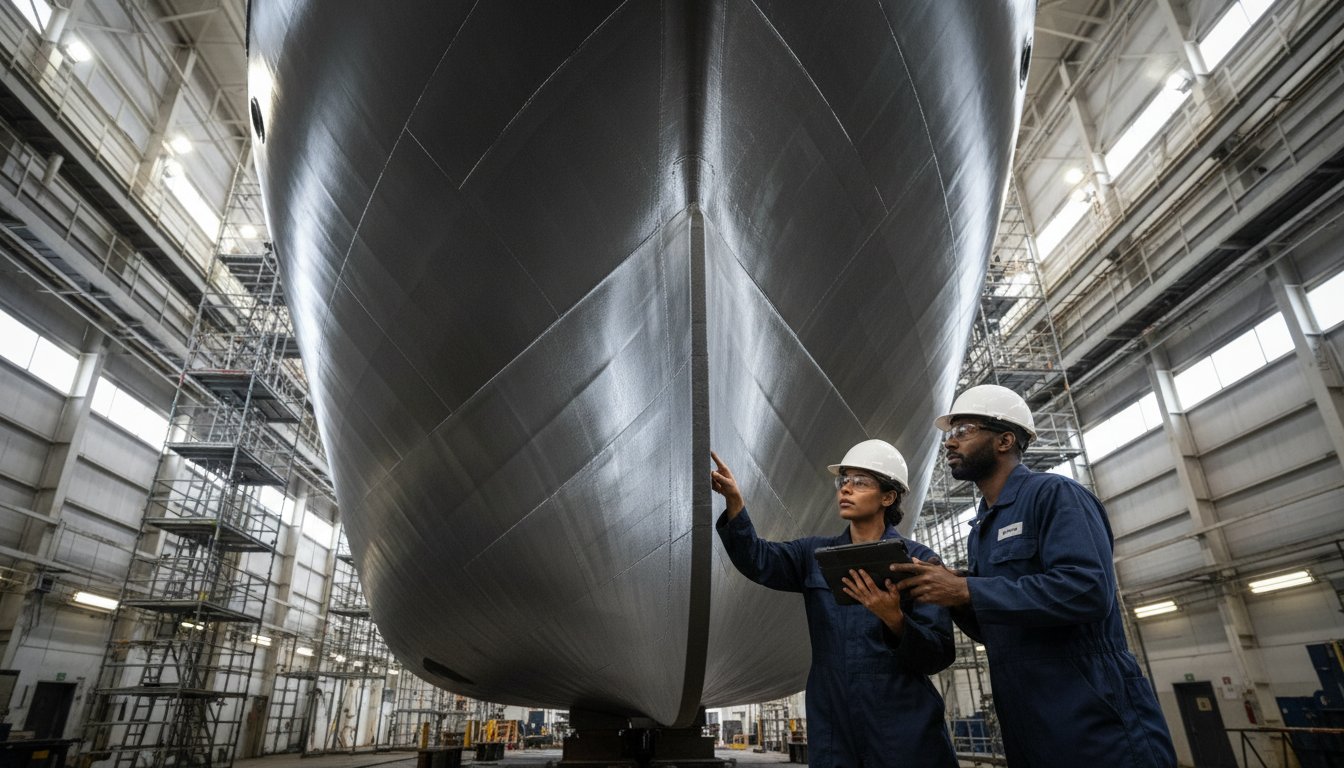
Research indicates that a mere 0.5 millimeter of slime on a hull can trigger a 20% increase in hydrodynamic drag, directly inflating operational costs as fuel prices remain volatile. You likely recognize that the traditional approach to commercial fishing boat bottom paint is failing to keep pace with both economic pressures and ecological mandates. The relentless cycle of hauling out every 24 months to reapply sacrificial biocidal coatings isn’t just a maintenance burden; it’s a strategic liability in an industry where margins are tightening. You’re facing a landscape where 2026 regulatory updates will further restrict toxic additives, making legacy solutions obsolete.
This guide demonstrates how transitioning to advanced foul release technology allows fleets to achieve a 10-year coating life cycle while maintaining strict compliance with EEXI standards and emerging toxic paint bans. You’ll discover how to lower fuel consumption and reduce maintenance frequency by moving toward biocide-free siloxane systems. We’ll analyze the technical shift from chemical toxicity to surface energy optimization, providing a roadmap for long-term vessel management and environmental stewardship.
Key Takeaways
- Learn how reducing hydrodynamic drag through advanced hull coatings directly mitigates fuel consumption and improves overall fleet profitability.
- Understand the scientific shift from toxic biocidal mechanisms to Silane-Siloxane foul release technology for superior, long-term hull protection.
- Analyze the total cost of ownership over a ten-year cycle to see why choosing the right commercial fishing boat bottom paint yields a higher ROI than traditional ablative options.
- Prepare your fleet for 2026 regulatory shifts, including EEXI compliance and the global transition away from copper and TBT-based paints.
- Discover how hard-film, biocide-free solutions eliminate galvanic corrosion risks for aluminum vessels while significantly extending dry-dock intervals.
The Impact of Biofouling on Commercial Fishing Profitability
Biofouling isn’t merely an aesthetic concern for vessel owners; it’s a persistent biological tax on the bottom line. In the context of commercial maritime operations, biofouling is the unwanted accumulation of microorganisms, plants, algae, and small animals on the hull. This process begins within minutes of immersion as a microscopic biofilm forms, eventually maturing into macro-fouling like barnacles and tubeworms. The Impact of Biofouling manifests as an immediate degradation of vessel performance, forcing propulsion systems to work harder to overcome increased resistance. For a commercial fleet, this biological growth represents a direct increase in overhead that erodes seasonal profits.
The link between hull condition and a vessel’s carbon footprint is undeniable. As international regulations tighten for 2026, the maritime industry must recognize that a fouled hull is a high-emission hull. Increased fuel burn to compensate for drag leads to a higher volume of greenhouse gas emissions per pound of catch. Utilizing a technologically advanced commercial fishing boat bottom paint is the most effective way to mitigate these environmental and financial risks. By maintaining a smooth, foul-free surface, operators ensure compliance with evolving environmental standards while protecting their operational margins.
Understanding Hydrodynamic Drag and Fuel Loss
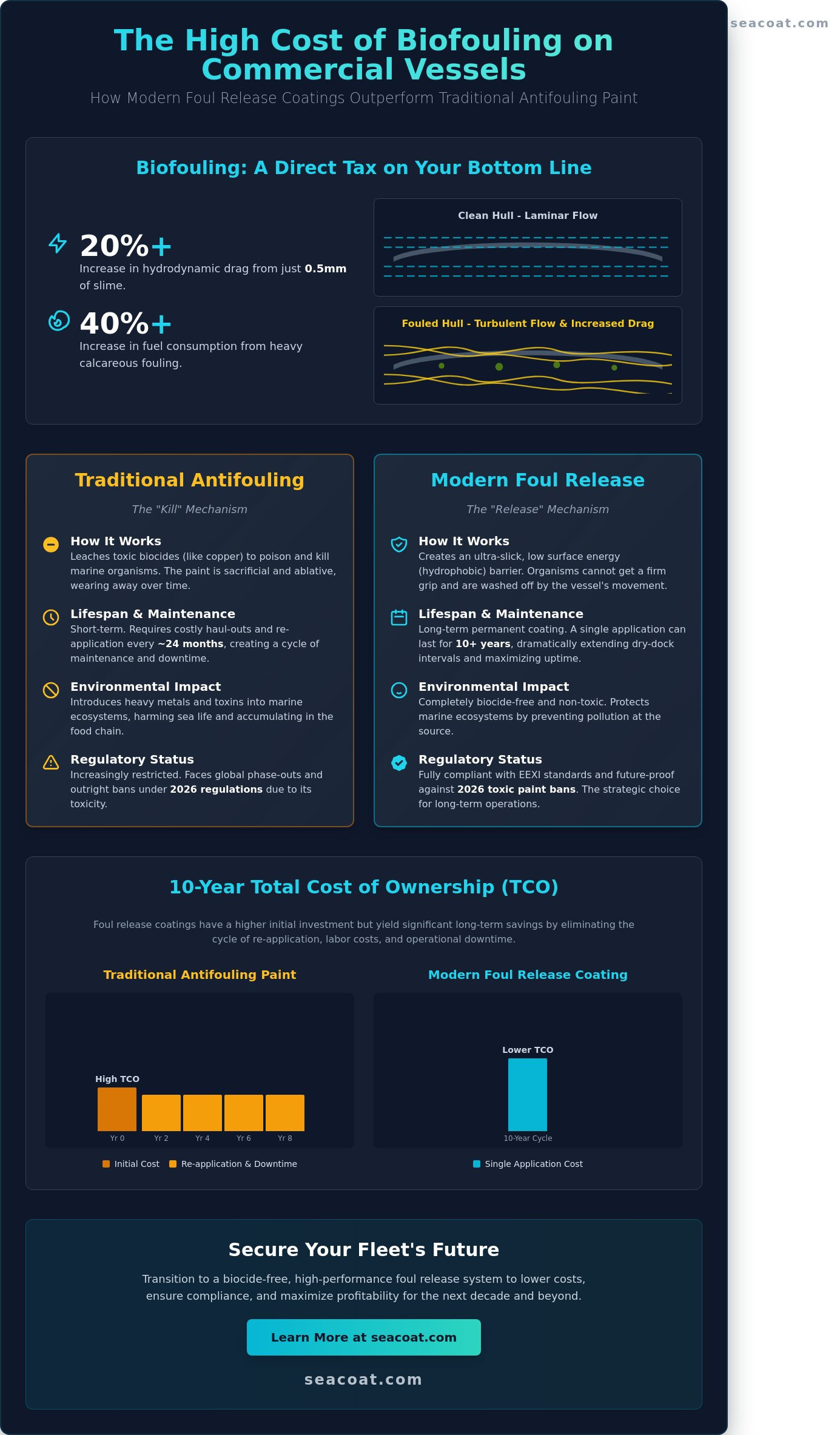
Barnacles, bryozoans, and even thin layers of slime disrupt the laminar flow, which is the smooth, parallel movement of water across the hull surface. When this flow becomes turbulent due to biological obstructions, hydrodynamic drag increases exponentially. Data from naval engineering studies show that heavy calcareous fouling can increase fuel consumption by as much as 40% compared to a clean hull. We define surface roughness as the quantitative measure of physical irregularities on the hull’s wetted surface area. It’s the primary metric for determining a fishing vessel’s hydrodynamic efficiency. Even a minor increase in surface roughness, often invisible to the naked eye, can trigger a 5% to 10% spike in fuel costs. Efficiency starts with the skin of the ship.
The Maintenance Trap of Traditional Bottom Paints
Traditional ablative paints operate on a sacrificial principle. These coatings are designed to wear away over time, theoretically releasing biocides to prevent growth. However, this mechanism often fails commercial fleets that face high-utilization cycles. The “soft” nature of these paints means they’re easily damaged and require frequent, costly haul-outs for re-application. The hidden costs of this maintenance trap include:
- Expensive labor for hull scraping and professional painting.
- Lost revenue during unscheduled dry-docking intervals.
- Constant sacrificial paint loss that requires thicker, more frequent applications.
The transition to permanent, hard-film solutions is essential for long-term ROI. For a deeper look at the performance science behind modern coatings, refer to the Definitive Guide to Boat Hull Paint. Investing in a durable commercial fishing boat bottom paint eliminates the cycle of decay and repair, allowing vessels to remain in the water and productive for longer periods.
Foul Release vs. Antifouling: The Science of Modern Hull Protection
Traditional hull protection relies on a “kill” mechanism. These conventional antifouling paints leach biocides, typically copper oxides or co-biocides, into the surrounding water to prevent marine growth. While effective in the short term, this chemical leaching depletes the coating over time and introduces heavy metals into fragile marine ecosystems. In contrast, modern foul release technology utilizes a “release” mechanism. This physical solution creates a surface so slick that organisms cannot maintain adhesion. For operators selecting a commercial fishing boat bottom paint, the shift from chemical toxicity to physical hydrodynamics represents a significant leap in both environmental compliance and vessel performance.
The distinction between these two methods is critical for 2026 regulatory alignment. Antifouling coatings are sacrificial; they wear away to expose new layers of biocide. Foul release systems are permanent, non-depleting barriers. This transition doesn’t just protect the water; it optimizes the vessel’s movement through it. By reducing surface roughness, foul release coatings mitigate frictional drag, which directly correlates to lower fuel consumption and reduced engine strain during heavy hauls.
How Silane-Siloxane Technology Works
At the molecular level, Silane-Siloxane technology creates a high-density, low-energy surface through a robust covalent bond with the hull substrate. This chemical structure results in an ultra-smooth finish that lacks the microscopic anchors marine organisms like barnacles or tube worms need to establish a mechanical grip. Unlike traditional coatings that rely on a depleting reservoir of toxins, this technology remains stable and effective throughout its service life. “The biocide-free nature of Silane-Siloxane coatings transforms the hull into a non-stick surface where marine life simply cannot find purchase, ensuring long-term protection without environmental degradation.” When a vessel reaches cruising speeds, usually between 7 and 10 knots, the sheer force of water flow provides a self-cleaning effect that strips away any accumulated biofilm.
Durability in Harsh Fishing Environments
Commercial fishing demands more than just a slick surface; it requires physical resilience. Traditional foul release systems often utilized soft silicones, which are notoriously prone to tearing and abrasion from floating debris, fishing gear contact, or dock strikes. Modern hard-film systems provide the impact resistance necessary for vessels operating in ice-prone waters or high-debris coastal zones. These coatings, such as the Sea-Speed system, offer a 10-year life cycle. This represents a 400% increase over the standard two-year haul-out cycle common with ablative commercial fishing boat bottom paint.
This longevity is paired with a 0 VOC profile, meeting the strictest international environmental standards. For fleets looking to optimize their maintenance schedules, investing in advanced foul release systems provides a strategic asset that reduces drag and lowers the total cost of ownership over a decade of operation. Because the film is hard and non-porous, it doesn’t absorb water or add unnecessary weight to the hull, maintaining the vessel’s designed buoyancy and stability.
Ablative vs. Hard vs. Foul Release: The ROI Framework
Selecting the right commercial fishing boat bottom paint requires moving beyond the initial per-gallon invoice. Traditional ablative coatings operate on a sacrificial basis; they erode to expose fresh biocides, which leads to a predictable loss of film thickness and performance. Hard antifouling paints offer more durability but suffer from paint build-up, which increases hull weight and skin friction over time. Foul release systems represent a paradigm shift by using low-surface-energy chemistry to prevent attachment rather than killing organisms. This Guide to Antifouling Boat Paint and Foul Release Systems details how these technologies compare across varying salinity and temperature profiles.
Calculating the 10-Year Maintenance Cycle
A 10-year analysis reveals the hidden costs of cheap coatings. If a vessel’s hauled out every 24 months for traditional paint, it faces five sets of yard fees and ten to fifteen days of inactivity per decade. When you factor in the labor for sanding and the rising costs of hazardous waste disposal for copper-laden scrapings, the cheap option’s actually the most expensive. High-durability foul release coatings provide a 120-month service life. By maintaining a smooth hull, these systems consistently reduce fuel consumption by 8% or more. In many commercial scenarios, the fuel savings alone pay for the entire application within the first 18 months.
Performance Gains for Commercial Hulls
Efficiency is measured in knots and gallons per hour. The slickness of a hard-film foul release system significantly lowers the hydrodynamic resistance of the hull. This reduction in drag allows for higher top speeds and faster transit times to the fishing grounds, which is critical when timing market openings or weather windows. Because these coatings don’t rely on chemical depletion, they remain effective even during long periods of inactivity. If fouling does occur, the bond is so weak that it can be removed with a simple wipe or the movement of the vessel through the water. Technical performance metrics regarding surface roughness and shear stress are available in the Advanced Marine Hull Coatings Guide. Lowering engine load doesn’t just save fuel; it reduces wear on the powertrain and cuts long-term repair costs.
Navigating 2026 Regulations: EEXI and Toxic Paint Bans
The regulatory framework governing commercial fishing boat bottom paint is shifting from voluntary guidelines to mandatory compliance. While the 2008 global ban on Tributyltin (TBT) established a baseline for marine safety, current legislation focuses on copper leach rates and volatile organic compound (VOC) emissions. In 2024, several jurisdictions have already implemented strict limits on copper-based biocides to prevent heavy metal accumulation in benthic ecosystems. Selecting the right commercial fishing boat bottom paint now prevents forced dry-docking when new local biocide bans take effect. Transitioning to non-toxic coatings isn’t just an environmental choice; it’s a strategic necessity for maintaining port access and avoiding hefty non-compliance fines.
EEXI Compliance and Hull Efficiency
The Energy Efficiency Existing Ship Index (EEXI) is a mandatory technical measure for carbon reduction. It requires existing vessels to meet specific energy efficiency thresholds based on their technical design and fuel consumption. For commercial fishing fleets, particularly older vessels, achieving these standards through mechanical upgrades is often cost-prohibitive. Optimizing hull hydrodynamics offers a more accessible path. Reducing skin friction drag allows a vessel to maintain speed with lower power output, directly influencing the Carbon Intensity Indicator (CII) ratings. A smoother hull surface, maintained by siloxane-based foul-release technology, prevents the performance degradation that typically occurs with traditional ablative paints.
The Shift Toward Environmental Marine Coatings
Traditional biocidal coatings function by leaching toxins into the water, a process that inherently damages the very fishing grounds the industry relies upon. This chemical runoff can compromise “green” seafood certifications, which are increasingly required by high-end retailers and international markets. Adopting 100% non-toxic coatings eliminates the risk of biocide leaching and aligns operations with global sustainability standards. Detailed regulatory transitions are further explored in this Environmental Marine Coatings guide, which outlines how the 2026 shift impacts hull performance requirements.
Future-proofing your fleet involves moving beyond temporary fixes toward permanent material solutions. Zero VOC coatings are becoming a prerequisite for entry into sensitive maritime zones and strict international ports. By investing in high-durability, biocide-free systems, owners ensure their vessels remain operational in a tightening regulatory environment. This proactive approach minimizes long-term maintenance costs while maximizing the asset’s lifecycle. It’s about securing the operational longevity of the fleet through scientific optimization and hydrodynamic efficiency.
Ensure your fleet meets 2026 standards by upgrading to SeaCoat’s advanced non-toxic hull solutions today.
Sea-Speed V 10 X Ultra: The Strategic Choice for Fishing Fleets
Sea-Speed V 10 X Ultra isn’t a typical coating. It’s a high-performance siloxane foul release system that redefines the 10-year lifecycle for maritime assets. This hard-film technology doesn’t rely on the “leach and deplete” model of traditional biocides. Instead, it creates an ultra-smooth surface with extremely low surface energy. This makes it a superior commercial fishing boat bottom paint for fleets that prioritize speed and fuel economy. By moving away from ablative chemistries, operators eliminate the constant release of heavy metals into the water, ensuring full compliance with 2026 environmental mandates.
The application process in commercial dry-docks is designed for long-term durability. We require a clean substrate, typically prepared to SSPC-SP10 (near-white metal) or SP11 standards. Once the surface is ready, the coating is applied in a controlled environment to ensure a uniform, hydrodynamic finish. This isn’t a seasonal fix. It’s a permanent structural asset that remains effective for over a decade without the need for re-coating, significantly lowering the total cost of ownership for commercial operators.
Protection for Aluminum and Steel Hulls
Aluminum hulls face unique risks in saltwater environments. Copper-laden paints create a battery effect that eats away at the metal through galvanic action. Because our formula is completely biocide-free and non-conductive, it’s the best choice for aluminum boats and steel vessels alike. We pair this technology with Seapoxy primers. These primers act as a high-build epoxy barrier, providing 100% protection against corrosion and electrolysis. This combination ensures that the hull’s structural integrity remains uncompromised by the very paint meant to protect it.
Case Studies in Commercial Efficiency
Performance metrics from active fleets are clear. In commercial applications, vessels have consistently shown fuel savings between 10% and 15% due to reduced drag. Because the film is durable and non-ablative, it doesn’t wear away during high-speed transit or in heavy weather. Maintenance is a streamlined process. You can clean the hull with a standard pressure wash at 2,000 PSI. This eliminates the need for aggressive mechanical scrubbing that damages traditional commercial fishing boat bottom paint. It’s a shift from reactive maintenance to proactive efficiency.
Fleet managers looking to optimize their operations can’t afford to ignore these data-backed gains. Contact SeaCoat today to request a technical consultation and discover how Sea-Speed V 10 X Ultra can transform your fleet’s performance and regulatory standing.
Future-Proofing Fleet Operations for 2026 and Beyond
The maritime landscape is shifting toward stringent environmental compliance and heightened operational efficiency. As 2026 regulations like EEXI approach, the choice of commercial fishing boat bottom paint becomes a strategic asset rather than a routine maintenance task. Traditional biocidal coatings can’t meet the dual requirements of global regulatory adherence and long term hydrodynamic durability. Transitioning to a high performance foul release system effectively mitigates drag and eliminates the recurring expenses associated with frequent reapplication cycles.
Sea-Speed V 10 X Ultra utilizes specialized Silane-Siloxane technology that’s been technically proven since 2001. This biocide-free solution offers a documented 10-year life cycle on commercial vessels, providing a stable ROI that outlasts conventional ablative alternatives. With Zero VOCs and a 100% non-toxic profile, it ensures your fleet remains compliant with evolving international standards while significantly optimizing fuel economy. It’s time to move beyond temporary fixes toward a permanent, scientific approach to hull management.
Optimize your fleet’s performance with Sea-Speed V 10 X Ultra
Secure your operational future with a coating solution engineered for the next decade of maritime challenges.
Frequently Asked Questions
Is foul release coating better than traditional antifouling for slow-moving fishing boats?
Modern siloxane-based foul release coatings like Sea-Speed V 10 X Ultra outperform traditional ablative paints even at speeds below 10 knots. Traditional paints rely on chemical leaching that depletes over time, whereas hard-film coatings utilize low surface energy to prevent permanent adhesion. Hull roughness measurements show that while traditional paints average 150 to 300 microns, foul release surfaces remain below 50 microns. This smoothness minimizes drag regardless of your vessel’s operating speed.
Can I apply Sea-Speed V 10 X Ultra over my existing bottom paint?
Sea-Speed V 10 X Ultra cannot be applied directly over existing antifouling paint because it requires a stable, high-profile substrate to ensure a 10-year life cycle. You’ll need to remove old, spent coatings via abrasive blasting to a near-white metal or gelcoat finish. This ensures the siloxane-epoxy hybrid forms a permanent bond. Proper surface preparation according to SSPC-SP10 standards is essential for the coating to function as a strategic asset rather than a temporary fix.
How much fuel can a commercial fishing boat realistically save with a slick hull?
Choosing a high-performance commercial fishing boat bottom paint can reduce fuel consumption by 12% to 15% compared to a fouled hull. Data from the International Maritime Organization (IMO) indicates that even a 0.5 mm layer of slime can increase drag by 20%. By maintaining a surface roughness of less than 50 microns, vessels optimize hydrodynamic efficiency. These savings are measurable through engine load data and fuel flow meters during standard steaming operations.
Are non-toxic bottom paints as effective as copper-based paints in high-growth areas?
Non-toxic siloxane coatings are more effective than copper-based paints in high-growth areas because they don’t lose potency over time. Copper paints rely on a steady leaching rate that often fails during extended stationary periods in warm water. In contrast, the hard-film surface of Sea-Speed V 10 X Ultra prevents the mechanical interlocking of barnacles and tubeworms. It allows for simple removal of 100% of growth without damaging the coating or releasing heavy metals.
How long does a professional foul release coating actually last on a working vessel?
A professional foul release coating like Sea-Speed V 10 X Ultra is engineered to last 10 years or more with proper maintenance. Unlike traditional ablative paints that require reapplication every 12 to 24 months, this siloxane-epoxy hybrid doesn’t wear away or leach chemicals. The durability of the hard film withstands the rigorous conditions of commercial fishing, including frequent contact with gear and ice. This longevity significantly reduces dry-docking frequency and long-term operational expenses.
Do I need special equipment to clean a hard-film foul release hull in the water?
You don’t need specialized high-pressure equipment to clean a hard-film foul release hull; simple soft-bristle brushes or squeegees are sufficient. Because the coating is biocide-free and non-ablative, cleaning doesn’t release toxic plumes into the water column. Divers can remove light slime and grass with minimal effort, maintaining the vessel’s hydrodynamic profile between scheduled hauls. This process is safer for the environment and preserves the 50-micron surface smoothness required for peak efficiency.
Is Sea-Speed V 10 X Ultra compliant with 2026 EEXI and IMO regulations?
Sea-Speed V 10 X Ultra is fully compliant with 2026 EEXI and IMO regulations, including the 2023 IMO Strategy on Reduction of GHG Emissions from Ships. By reducing hull friction and improving fuel efficiency by up to 15%, it helps vessels meet Carbon Intensity Indicator (CII) ratings. The coating’s zero-VOC and biocide-free formulation also aligns with the IMO AFS Convention. It’s a proactive solution for operators facing stricter environmental mandates and carbon reduction targets.
Why is copper-based paint dangerous for aluminum fishing boat hulls?
Copper-based paint is dangerous for aluminum hulls because it triggers a galvanic reaction that leads to rapid hull corrosion and pitting. When copper and aluminum are in contact in salt water, the aluminum acts as an anode and dissolves to protect the copper. This can compromise structural integrity within a single season. Using a biocide-free commercial fishing boat bottom paint eliminates this electrochemical risk, providing a safe and durable alternative for aluminum fishing fleets.