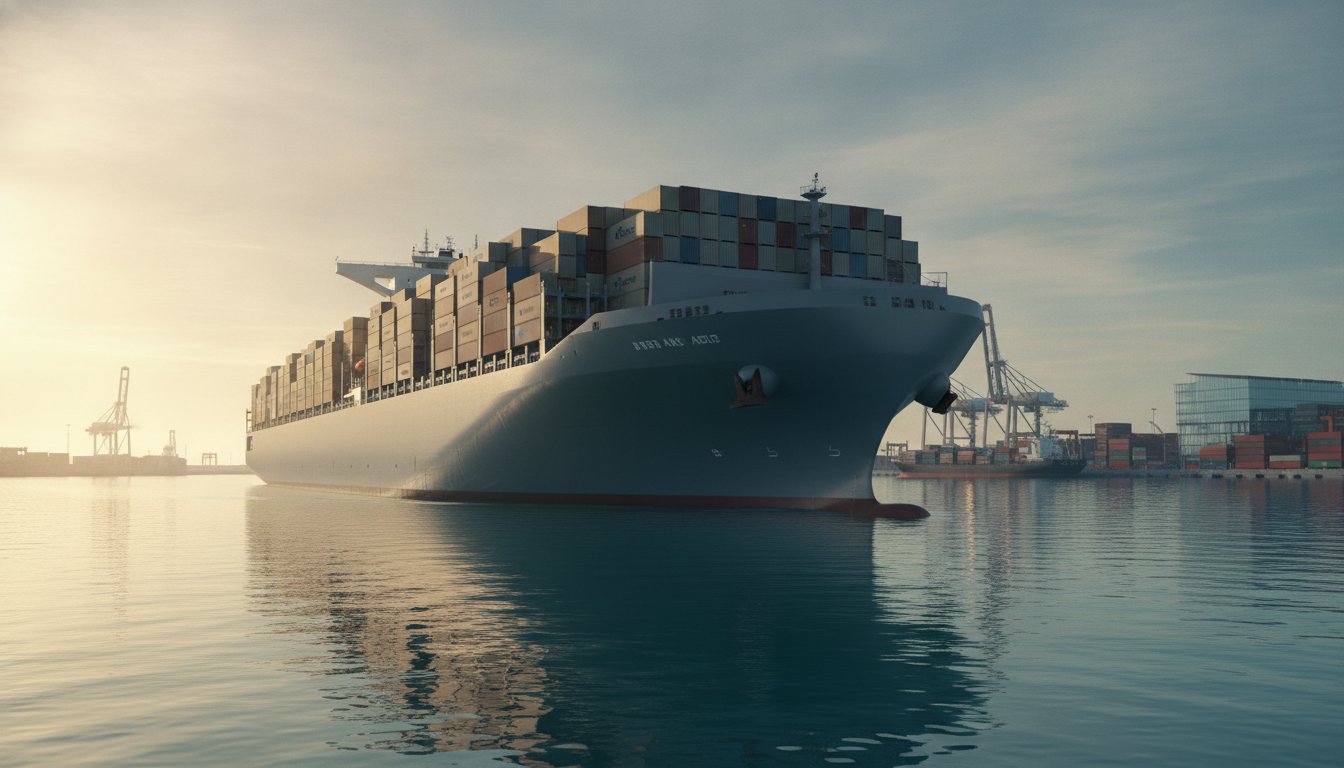
Can a single hull coating decision reduce your vessel’s Carbon Intensity Indicator (CII) by as much as 22% while shielding your fleet from the 2026 EPA copper leaching mandates? When building a business case for foul release coatings, maritime stakeholders must recognize that the transition from traditional biocidal paints to advanced technology is no longer just an environmental preference; it’s a financial necessity. You’re likely managing the pressure of rising fuel costs and the 11% carbon reduction target required for 2026 compliance. Traditional ablative paints, with their short service lives and degrading performance, often fail to meet these rigorous operational demands.
This article provides a technical framework for evaluating the intersection of hydrodynamic efficiency and long-term ROI. We’ll explore how high-performance, biocide-free systems stabilize fuel consumption and extend dry-docking intervals for up to a decade. By shifting the focus from temporary fixes to permanent material science solutions, you can ensure your fleet remains both compliant and profitable in an increasingly regulated global market.
Key Takeaways
- Learn how transitioning from sacrificial ablative cycles to permanent performance systems eliminates the hidden costs of hull roughness and biocidal leaching.
- Gain a strategic framework for building a business case for foul release coatings that prioritizes hydrodynamic efficiency and measurable drag reduction over traditional maintenance cycles.
- Identify the critical differences between hard-film and soft silicone technologies to ensure your hull protection can withstand rigorous operational environments and mechanical cleaning.
- Evaluate how advanced hull management mitigates regulatory risk by improving Carbon Intensity Indicator (CII) ratings and ensuring compliance with the latest international environmental mandates.
- Explore the technical advantages of Sea-Speed V 10 X Ultra and its compatibility with Seapoxy 73 to maximize the operational lifespan of your maritime assets.
The Economic Shift: Why Traditional Antifouling is a Sunk Cost
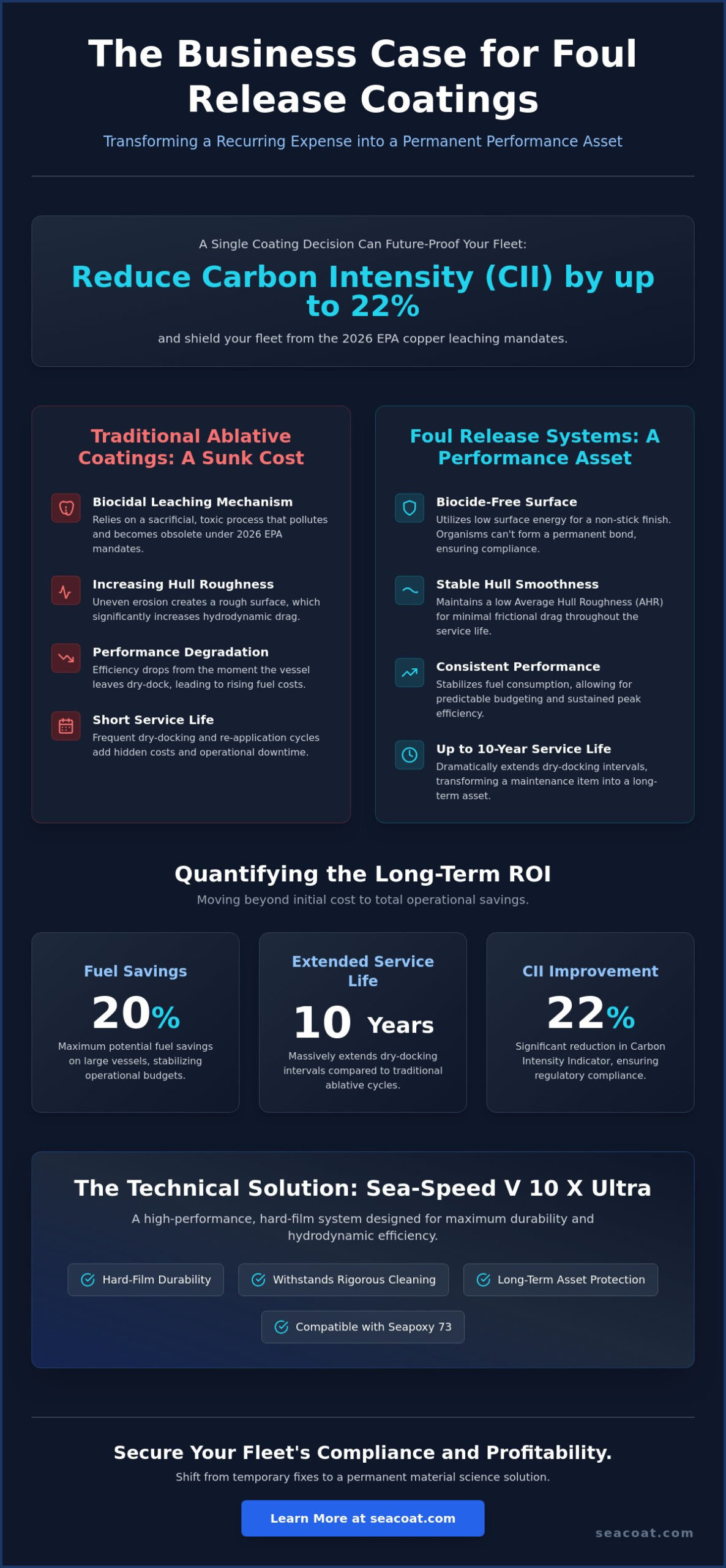
The maritime industry’s reliance on traditional biocidal coatings is reaching a definitive breaking point. For decades, shipowners viewed hull paint as a recurring maintenance expense rather than a performance-enhancing asset. However, as of January 1, 2026, new EPA mandates restrict copper leaching to 9.5 micrograms per square centimeter per day, effectively rendering many legacy products obsolete. When building a business case for foul release coatings, the focus must shift from the initial price per gallon to the total cost of ownership over a vessel’s lifecycle. Traditional coatings are a sunk cost because they rely on a depleting mechanism that inherently degrades vessel performance from the moment the ship leaves dry-dock.
The Limitations of Ablative Systems
Traditional ablative bottom paint functions through a sacrificial process. These coatings are designed to erode over time, theoretically exposing fresh biocides to deter growth. This mechanism creates a self-defeating cycle where the hull surface becomes increasingly irregular as the paint wears unevenly. This roughness increase significantly impacts hydrodynamic efficiency. Biofouling or biological fouling begins to take hold as the biocidal concentration drops, leading to an exponential rise in drag. For a standard fleet, this increased resistance can result in fuel consumption spikes of 6% to 12%, making the cheap paint option the most expensive part of the operational budget.
Foul Release as a Strategic Asset
Transitioning to advanced technology represents a fundamental shift in the marine coatings performance paradigm. Instead of relying on toxic leaching, foul release systems utilize low surface energy to prevent organisms from establishing a permanent bond. This isn’t just about protection; it’s about surface efficiency. By maintaining a smooth, non-porous finish, these systems allow vessels to shed fouling through hydrodynamic shear once they reach cruising speed. Building a business case for foul release coatings requires accounting for the extended service life, which can reach up to 10 years, and the massive fuel savings that larger vessels, such as Capesize bulkers, often see at rates as high as 20%. This approach transforms the hull from a friction-heavy liability into a high-durability performance asset.
Quantifying ROI: Fuel Efficiency and Drag Reduction
ROI in the maritime sector is often obscured by the volatile nature of fuel prices and the complexity of dry-docking schedules. To achieve clarity when building a business case for foul release coatings, operators must move beyond qualitative benefits and focus on the quantitative relationship between surface topography and hydrodynamic resistance. Every micron of added hull roughness translates directly into increased fuel burn. By utilizing advanced Silane-Siloxane technology, vessels maintain a consistently low average hull roughness (AHR) throughout the docking cycle. This stability allows for precise fuel budgeting and predictable financial performance over multi-year operational windows.
The Physics of Frictional Drag
Efficiency begins at the boundary layer, the thin region of fluid immediately adjacent to the hull surface. When a hull is coated with traditional epoxy or biocidal paint, the surface profile is inherently irregular, which disturbs the laminar flow and creates turbulent eddies. These eddies increase frictional drag, forcing the propulsion system to work harder to maintain speed. Unlike traditional methods, fouling-release coatings (FRC) like Sea-Speed V 10 X Ultra provide a non-stick, ultra-smooth surface that minimizes these disturbances. Frictional drag reduction is the primary fuel lever available to shipowners today. By optimizing the surface energy of the hull, this technology ensures that water slides across the surface with minimal resistance, preserving the kinetic energy of the vessel.
Projecting 5-Year Operational Savings
A robust financial model must account for the total operational cycle. While the initial investment in high-performance systems is higher than that of standard paints, the payback period is frequently achieved within the first 12 to 18 months through fuel savings alone. For a standard fleet, savings of 6% to 12% are common, while larger vessels like Capesize bulkers can see reductions as high as 20%. These figures are detailed further in our definitive guide to boat hull paint. Reducing the engine load not only slashes fuel expenditures but also significantly lowers greenhouse gas emissions, which directly impacts the vessel’s regulatory standing and carbon footprint.
The ROI profile varies based on the vessel’s operational profile. High-speed vessels, such as container ships or passenger ferries, experience the most dramatic gains because drag increases exponentially with speed. However, even low-speed vessels benefit from the sustained smoothness of a hard-film Silane-Siloxane system, which avoids the “roughness creep” associated with eroding biocidal paints. If you’re ready to optimize your fleet’s performance, exploring the technical specifications of advanced foul release technology is the logical next step in your asset management strategy. This shift toward data-driven hull management ensures that your coating is a durable performance asset rather than a recurring maintenance liability.
Operational Durability: Hard-Film vs. Soft Silicone
A primary hurdle when building a business case for foul release coatings is the historical perception that these systems are fragile. Many fleet managers associate the term “foul release” with first-generation silicone elastomers, which, while effective at reducing drag, are notoriously susceptible to mechanical damage. This vulnerability often leads to a cycle of expensive spot repairs and compromised performance. However, the emergence of hard-film Silane-Siloxane technology has redefined the durability standards for the industry. By choosing a system that combines surface slickness with structural integrity, operators can secure a multi-year return on investment without the risks associated with delicate coatings.
The Vulnerability of Silicone Elastomers
Soft silicone coatings rely on a low-modulus, rubber-like surface to prevent the adhesion of marine organisms. While this works well in controlled environments, it often fails in the high-traffic reality of commercial shipping. These coatings are prone to tearing and delamination when subjected to the impact of fenders, tugs, or floating debris. Once the surface is breached, the hydrodynamic benefits are lost, and the exposed area becomes a site for aggressive fouling. Repairing these systems is technically demanding and costly, often requiring the removal of large sections of the coating to ensure proper adhesion of the patch. For vessels operating in debris-heavy coastal waters or busy ports, the fragility of soft silicones represents a significant operational risk.
The Hard-Film Silane-Siloxane Advantage
The mechanical advantages of a hard-film system like Sea-Speed V 10 X Ultra stem from its unique chemical composition. Unlike silicones, this technology forms a rigid, impact-resistant bond with the hull substrate. It provides the same low surface energy required for foul release performance but with the hardness of a traditional epoxy. This durability allows for proactive in-water cleaning and grooming without the risk of damaging the coating. Regular maintenance maintains optimal smoothness and maximizes fuel efficiency throughout the docking cycle. When comparing these systems to traditional antifouling boat paint, the longevity of hard-film technology becomes clear. It doesn’t erode or polish away; it remains a permanent part of the vessel’s hull management strategy, significantly reducing the frequency and duration of dry-docking intervals.
By moving beyond the limitations of soft elastomers, stakeholders can implement a solution that stands up to the physical rigors of the maritime environment. Hard-film coatings ensure that the calculated fuel savings and regulatory gains aren’t erased by mechanical failure. This shift toward high-durability materials provides the reliability needed for long-term strategic planning and asset preservation.
Regulatory Risk Mitigation: EEXI, CII, and the Biocide Ban
Compliance is no longer a static goal but a dynamic operational requirement. As the maritime industry enters “Phase 2” of the Carbon Intensity Indicator (CII) regulations in 2026, the pressure to optimize hull performance has shifted from a voluntary efficiency gain to a mandatory survival strategy. Building a business case for foul release coatings requires a clear understanding of how hull friction directly dictates a vessel’s regulatory standing. While the Energy Efficiency Existing Ship Index (EEXI) served as a one-time technical certification, the annual CII rating demands continuous improvement. For the year 2026, the annual carbon intensity reduction factor is 11% relative to the 2019 baseline. This represents a significant escalation from previous years, and vessels failing to meet these targets face mandatory Corrective Action Plans and intensified Port State Control inspections.
Decarbonization Through Hull Performance
Hull coatings are the most accessible lever for immediate carbon reduction in the IMO 2030 strategy. High-performance systems can lower a vessel’s CII by as much as 22% compared to standard coatings, potentially moving a ship from a “D” or “E” rating to a compliant “C” or higher. This shift is critical for asset valuation; a poorly rated vessel faces restricted port access and accelerated depreciation. By integrating environmental marine coatings into your fleet management, you’re not just buying paint. You’re securing the vessel’s right to operate in a decarbonizing global economy. The transition to biocide-free technology ensures that your fleet remains ahead of the tightening “Z factor” reduction curve without requiring massive capital expenditures on alternative fuels or engine retrofits.
Eliminating Environmental Liability
The regulatory landscape regarding biocides is reaching a tipping point. As of January 1, 2026, the EPA mandates a copper leaching limit of 9.5 micrograms per square centimeter per day. This effectively renders many traditional antifouling paints obsolete and creates a significant financial risk for operators who remain tethered to leaching technologies. Beyond legal compliance, the move toward non-toxic solutions offers a distinct marketing advantage, particularly for the cruise and eco-tourism sectors where environmental stewardship is a core brand value. Sea-Speed products contain no volatile organic compounds or harmful additives, ensuring that your operations never contribute to the degradation of sensitive marine ecosystems. This total absence of volatile contaminants eliminates the long-term liability associated with toxic runoff and future remediation costs.
Non-compliance isn’t just a matter of fines; it’s a threat to your fleet’s operational viability. To ensure your vessels meet the 2026 CII requirements and avoid the sanctions of Phase 2 oversight, you should evaluate your current hull coating strategy today. Adopting a hard-film, biocide-free system is the most effective way to future-proof your assets against the evolving global trend of environmental protectionism.
Implementing the Solution: Sea-Speed V 10 X Ultra
Implementing the final stage of building a business case for foul release coatings requires moving from theoretical savings to operational execution. Sea-Speed V 10 X Ultra represents the pinnacle of this transition, offering a hard-film Silane-Siloxane system that bridges the gap between extreme durability and hydrodynamic excellence. Unlike traditional coatings that require frequent re-application, this technology is engineered as a permanent asset for your hull. The implementation process is streamlined through a systematic approach to surface preparation and coating synergy, ensuring that the transition from legacy systems is both technically sound and financially justifiable. It isn’t merely a coating; it’s a strategic asset for large-scale management.
Engineering a High-Performance Hull
The core of the Sea-Speed V 10 X Ultra system is its proprietary Silane-Siloxane chemistry. This molecular structure creates a non-permeable barrier that resists both biological attachment and chemical degradation. Its versatility is a key advantage for diversified fleets, performing with equal efficiency on commercial tankers, naval vessels, and high-speed ferries. For operators managing specialized assets, this technology serves as the premier boat paint for aluminum boats, providing essential corrosion protection alongside foul release performance. This Expert Innovator approach ensures that each vessel, regardless of substrate or operational profile, receives a customized solution that maximizes its specific performance window.
The Path to Conversion
Successful implementation begins with a thorough fleet assessment and a detailed ROI analysis. This data-driven phase allows stakeholders to visualize the precise impact on fuel expenditures and dry-docking intervals before the first gallon is applied. The logistics of conversion are simplified by the compatibility of Sea-Speed with existing primers such as Seapoxy 73. This high-build epoxy primer provides the ideal foundation, ensuring maximum adhesion and long-term stability for the foul release topcoat. It’s a methodical progression that eliminates the guesswork often associated with hull maintenance.
To ensure the integrity of the application, Seacoat SCT, LLC emphasizes the importance of certified application protocols and rigorous surface preparation. This focus on quality control is what enables the system to maintain its ultra-smooth profile for up to a decade. If you’re ready to finalize your strategy for building a business case for foul release coatings, the next step is to request a technical consultation. Our team provides comprehensive data sheets and performance modeling to support your procurement process. Contact Seacoat SCT, LLC today to discuss bulk industrial contracts and begin the transition toward a more efficient, compliant, and sustainable fleet.
Future-Proofing Fleet Performance Through Strategic Coating Selection
The maritime industry is no longer in a position to treat hull maintenance as an isolated expense. The transition from sacrificial ablative paints to high-durability performance systems is essential for meeting the 11% carbon reduction targets required in 2026. By building a business case for foul release coatings, you’re investing in a technology that has been proven in commercial use since 2001. This isn’t a temporary fix; it’s a permanent shift toward hydrodynamic efficiency. It allows your fleet to operate at peak performance while drastically reducing the frequency of dry-docking intervals.
Our proprietary Silane-Siloxane hard-film technology provides the mechanical resilience needed for global operations while remaining non-toxic and 100% biocide-free. This ensures your fleet avoids the legal risks of copper leaching mandates and the operational inefficiencies of “roughness creep.” Choosing a non-toxic solution isn’t just about environmental stewardship; it’s about securing the long-term ROI of your maritime assets. Ready to optimize your fleet? Build your business case with a Seacoat technical consultation and discover how advanced material science can transform your operational bottom line. The path to a more efficient and compliant future starts with a single, data-driven decision.
Frequently Asked Questions
How does a foul release coating differ from traditional antifouling paint?
Foul release coatings utilize low surface energy to prevent the mechanical attachment of organisms, whereas traditional antifouling paints rely on the leaching of biocides. This fundamental difference means foul release systems don’t erode or lose effectiveness over time. Instead, they maintain a smooth, non-porous surface that minimizes hydrodynamic drag and preserves vessel speed throughout the docking cycle without releasing toxic contaminants into the marine environment.
What is the typical ROI period for a foul release coating like Sea-Speed V 10 X Ultra?
The typical ROI period for a system like Sea-Speed V 10 X Ultra is between 12 and 18 months. This rapid payback is driven by fuel savings ranging from 6% to 12% for standard vessels. When building a business case for foul release coatings, stakeholders should account for these operational efficiencies alongside the elimination of mid-cycle repainting costs, which compounds the total financial gain over the vessel’s service life.
Can foul release coatings be applied to aluminum or composite hulls?
Yes, these coatings are highly compatible with aluminum, fiberglass, and composite hulls. Sea-Speed V 10 X Ultra is particularly effective for aluminum assets because it provides a non-permeable barrier that prevents corrosion without the use of heavy metals or copper. This versatility ensures that diverse fleets, from high-speed ferries to specialized naval workboats, can achieve consistent performance standards across all vessel types and hull materials.
Are foul release coatings durable enough for commercial shipping and tug operations?
Silane-Siloxane hard-film systems are specifically engineered to withstand the mechanical rigors of commercial shipping and tug operations. Unlike soft silicone elastomers that tear upon impact with fenders or debris, hard-film coatings provide the impact resistance of a traditional epoxy. This durability is a critical factor when building a business case for foul release coatings, as it ensures the technology remains intact during high-traffic port maneuvers and frequent docking.
How do hull coatings assist with EEXI and CII regulatory compliance?
Hull coatings assist with compliance by directly reducing the vessel’s carbon intensity. By lowering frictional drag, these systems reduce the fuel required to maintain cruising speed, which is the primary metric for annual CII ratings. Advanced foul release technology can lower a vessel’s CII by up to 22%. This helps operators meet the 11% reduction target required for 2026 without necessitating expensive engine modifications or alternative fuel retrofits.
Do foul release coatings require specialized in-water cleaning?
Hard-film foul release coatings are compatible with standard in-water cleaning and proactive grooming techniques. Because the surface is rigid and durable, divers or robotic hull cleaners can remove slime and light fouling without damaging the coating’s integrity. This ease of maintenance contrasts with soft silicones, which often require specialized, non-abrasive equipment to avoid tearing the delicate elastomer layer, making hard-film systems much simpler to manage operationally.
Is the initial cost of foul release coatings significantly higher than ablative paint?
The initial application cost of a foul release system is higher than standard ablative paint, but the lifecycle cost is significantly lower. Traditional paints require expensive re-application every 24 to 36 months and suffer from “roughness creep” that increases fuel costs. A hard-film system eliminates these recurring expenses by providing up to a decade of performance, making it the more economical choice for long-term fleet asset management.
What is the service life of a Silane-Siloxane hard-film coating?
A high-performance Silane-Siloxane hard-film coating offers an operational service life of up to 10 years. This longevity is achieved because the coating doesn’t rely on a sacrificial or depleting mechanism to function. Its chemical bond remains stable and non-porous, protecting the hull substrate from corrosion and fouling throughout multiple docking cycles while maintaining the same hydrodynamic profile it had on the day of application.