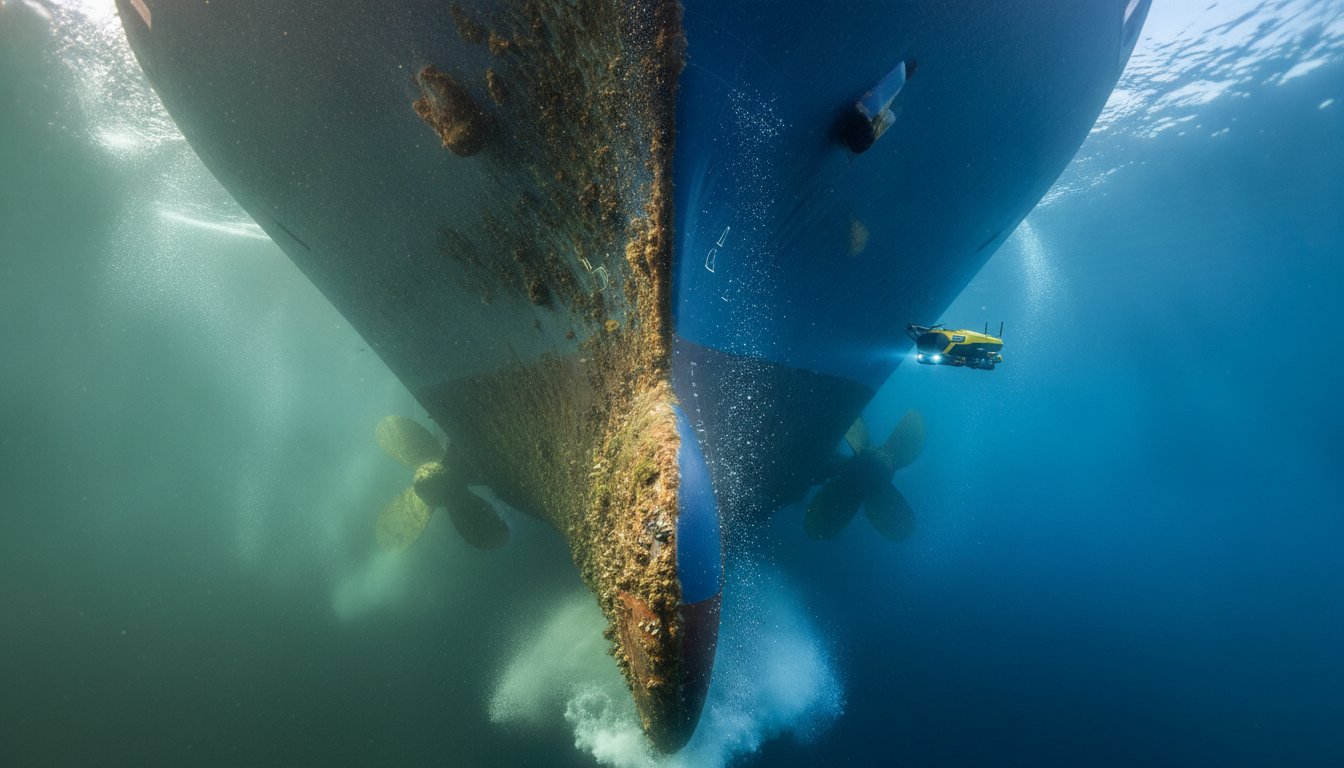
Did you know that maintaining a micro-smooth hull surface can reduce a vessel’s carbon intensity by as much as 22%? As global shipping faces a convergence of rising fuel costs and tightening environmental mandates, the traditional approach to hull maintenance is no longer viable. You’re likely already feeling the pressure of the 2023 IMO Biofouling Guidelines and regional requirements like Brazil’s NORMAM-401, which entered into force on June 10, 2026, and mandates a fouling rating of 1 or lower for port entry. Developing a robust biofouling management plan for ships is no longer just a bureaucratic hurdle; it’s a critical operational necessity for avoiding port entry denials and escalating fuel drag.
We understand that navigating these shifting regulations while managing heavy industry assets requires a balance of technical precision and long-term vision. This guide will help you master the complexities of IMO 2023 compliance while transforming your management plan into a strategic asset for vessel efficiency. We’ll examine how to move beyond reactive in-water cleaning toward proactive, hard-film foul release systems that reduce frictional drag by up to 20%. By the end of this article, you’ll have a clear roadmap for simplifying record-keeping, extending dry-docking intervals, and ensuring your fleet meets the latest international standards without compromising bottom-line performance.
Key Takeaways
- Identify the core requirements of the 2023 IMO Guidelines (MEPC.378(80)) and how they transition biofouling control from a voluntary practice to a scrutinized regulatory standard.
- Learn to draft a comprehensive biofouling management plan for ships that integrates vessel-specific operational profiles with detailed anti-fouling system descriptions.
- Evaluate the technical advantages of hard-film silane-siloxane coatings over traditional toxic systems to maximize the longevity of your hull protection and reduce maintenance frequency.
- Implement best practices for underwater hull inspections and in-water cleaning using ROV technology to ensure regulatory compliance without compromising operational windows.
- Leverage advanced foul-release technology to achieve measurable reductions in frictional drag, directly enhancing your vessel’s CII and EEXI compliance ratings and long-term ROI.
Understanding the IMO 2023 Biofouling Guidelines (MEPC.378(80))
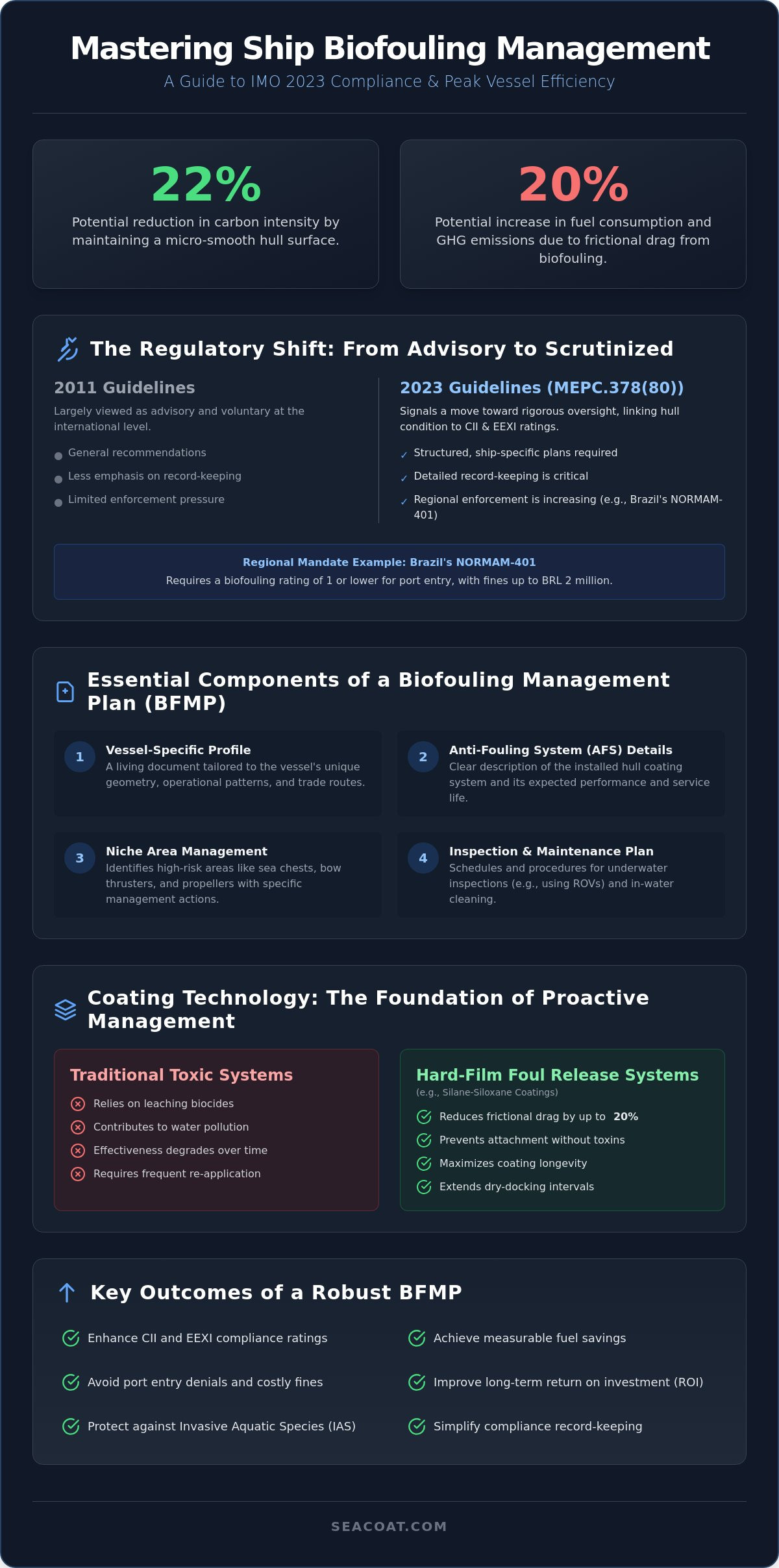
The maritime industry is undergoing a fundamental shift in how it manages the submerged surfaces of its fleets. While the 2011 guidelines were largely viewed as advisory, the adoption of the 2023 Guidelines for the control and management of ships’ biofouling (Resolution MEPC.378(80)) signals a move toward rigorous oversight. This transition isn’t merely about environmental stewardship; it’s a direct response to the impact of hull condition on a vessel’s Carbon Intensity Indicator (CII) and Energy Efficiency Existing Ship Index (EEXI). A poorly executed biofouling management plan for ships leads to increased frictional drag, which can inflate fuel consumption and greenhouse gas (GHG) emissions by as much as 20% to 22%.
Modern fleet management requires a data-driven approach to hull performance. The 2023 guidelines emphasize that biofouling is a dynamic biological process that starts the moment a vessel enters the water. By maintaining a micro-smooth hull, operators don’t just comply with environmental standards; they protect the long-term operational viability of their assets. The cost of neglect is no longer just a matter of extra fuel; it involves the risk of being excluded from major trading hubs that prioritize ecological integrity.
The Threat of Invasive Aquatic Species (IAS)
Biofouling acts as a primary vector for the translocation of invasive aquatic species across distinct biogeographic regions. When non-native organisms like dreissenid mussels or specific macro-algae establish themselves in new ecosystems, the ecological and economic damage is often irreversible. By Understanding Biofouling as a biological process rather than just a maintenance nuisance, operators can better appreciate why the IMO prioritizes IAS prevention. The solution lies in adopting environmental marine coatings that prevent attachment without leaching toxins into the water column, effectively decoupling operational efficiency from environmental degradation.
Regulatory Evolution: From 2011 to 2023
The 2023 revisions introduced a more structured approach than their 2011 predecessor, emphasizing ship-specific plans and detailed record-keeping. While the guidelines remain voluntary at the international level, regional authorities are rapidly incorporating these standards into local law. For instance, Brazil’s NORMAM-401 regulation, which entered into force on June 10, 2026, already mandates a biofouling rating of 1 or lower for vessels entering its waters. Waiting for a legally binding global instrument, which the IMO initiated in 2026 but isn’t expected to finalize until 2029, creates significant risk. Early adoption of a comprehensive biofouling management plan for ships ensures that fleet operators aren’t caught off guard by sudden port entry denials or heavy fines, which in Brazil can reach up to BRL 2 million.
Essential Components of a Biofouling Management Plan (BFMP)
A successful biofouling management plan for ships serves as a technical blueprint for maintaining hull integrity across diverse operating environments. It isn’t a generic template; it’s a living document that must account for a vessel’s unique geometry and its specific trade routes. According to the IMO 2023 Biofouling Guidelines (MEPC.378(80)), the plan must clearly describe the installed anti-fouling system (AFS) and its expected service life. This ensures that shore-side management and shipboard personnel understand the performance thresholds of the hull coating before biological growth compromises efficiency. When the plan is tailored to the vessel’s specific design, it transforms from a compliance burden into a tool for maximizing return on investment.
Beyond the vertical sides and flat bottom, the plan must identify “niche areas” where fouling is most likely to accumulate. These include sea chests, bow thrusters, propeller shafts, and internal seawater cooling systems. For each area, the BFMP should specify management actions, such as the use of specialized coatings or chemical dosing systems. When these areas are managed proactively, the risk of transferring invasive species drops significantly. Utilizing a high-performance marine coating as the foundation of your plan simplifies these requirements by providing a durable, hard-film surface that resists attachment and facilitates easier cleaning.
The Biofouling Record Book (BFRB)
The BFRB is the evidentiary partner to the BFMP. It must contain a chronological log of all inspections, cleanings, and maintenance performed on the hull and niche areas. Digital record-keeping has become the industry standard for ensuring accuracy during port state control (PSC) inspections. A common pitfall is the failure to document “nil” findings; if an inspection occurs and no fouling is found, it must still be recorded to prove the efficacy of the management strategy. Incomplete logs often lead to delays or secondary inspections that disrupt tight delivery schedules and increase operational overhead.
Defining Operational Profiles and Risk Levels
Inspection frequency shouldn’t be arbitrary. It should be dictated by the vessel’s operational profile. An operational profile is the set of parameters including vessel speed, duration of port stays, and geographic trading areas that determine the biological pressure exerted on the hull. Vessels that spend extended periods in tropical waters or have low activity levels face a higher risk of macro-fouling. A risk-based approach allows operators to schedule inspections when they’re most needed, rather than following a rigid, calendar-based system. This intelligence-led strategy reduces the frequency of required in-water cleaning and optimizes the multi-year performance cycle of the asset.
Coating Selection: The Foundation of Your Management Plan
The efficacy of a biofouling management plan for ships is fundamentally limited by the physical properties of the hull’s protective system. A document can outline inspection schedules and cleaning protocols, but if the underlying coating cannot withstand the rigors of a multi-year service window, the plan will inevitably fail. Modern fleet operators must transition from viewing hull protection as a sacrificial maintenance item to seeing it as a performance-enhancing tool. Choosing the right marine coatings is the most critical decision in the development of a BFMP, as it dictates the frequency of required interventions and the overall drag profile of the vessel.
Traditional antifouling systems rely on the controlled leaching of biocides, such as copper oxides, to deter settlement. This mechanism is inherently temporary and environmentally problematic. As the biocide depletes, the hull becomes increasingly vulnerable to macro-fouling, forcing operators into reactive cleaning cycles that can damage the coating further. In contrast, modern foul release technologies utilize low surface energy to prevent organisms from establishing a strong bond. According to the IMO Biofouling Guidelines, selecting a system that aligns with the vessel’s operational profile is essential for minimizing the transfer of invasive species. Foul release systems offer a more sustainable, long-term solution that maintains a micro-smooth surface throughout the entire dry-docking interval.
There is a persistent myth in the maritime sector that hard coatings are more difficult to manage because they lack the “self-polishing” action of biocidal paints. This is a misunderstanding of fluid dynamics and material science. While self-polishing copolymers erode over time, they often leave behind a roughened surface that actually increases frictional drag. A permanent, hard-film foul release system provides a stable, non-depleting surface that is significantly easier to clean. Because the surface remains intact, ROV-based cleaning can be performed more frequently and aggressively without the risk of releasing toxic plumes or stripping away the protective layer. This predictability is what makes a biofouling management plan for ships truly effective.
Silane-Siloxane vs. Silicone Foul Release
While both technologies aim to reduce adhesion, silane-siloxane systems like Sea-Speed V 10 X Ultra offer superior durability compared to soft silicone coatings. Silicone is notoriously fragile; it’s easily torn by fenders, tug contact, or even standard cleaning brushes. This mechanical vulnerability leads to localized coating failure and rapid fouling. Silane-siloxane creates a hard-film surface that resists impact and abrasion while providing a non-toxic, non-depleting barrier. It’s a permanent solution that doesn’t require the frequent touch-ups common with softer alternatives.
Niche Area Management Strategy
Niche areas like sea chests, bow thruster tunnels, and rudders require specialized attention due to high turbulence and complex geometries. These zones are often the primary culprits for the translocation of invasive species. Using high-durability coatings like Armor-Sil R/G in these areas ensures that the protection remains intact even under extreme flow conditions. Seacoat products simplify niche area management by providing a consistent, hard-film surface across the entire submerged hull, reducing the need for disparate maintenance strategies for different vessel components.
Actionable Guidance: In-Water Inspections and Cleaning
Inspections should be intelligence-driven, not calendar-driven. While a rigid quarterly schedule may satisfy a checkbox, it rarely reflects the actual biological pressure a hull is experiencing. A vessel returning from an extended layover in warm, nutrient-rich tropical waters faces a fundamentally different fouling risk than one running continuous high-speed transatlantic routes. Structuring your inspection protocol around the vessel’s operational profile, as established in the broader biofouling management plan for ships, ensures that resources are deployed when they generate the highest return.
The practical challenge has always been conducting inspections without pulling a vessel off revenue-generating routes. ROV technology resolves this directly. Modern inspection ROVs equipped with high-definition cameras and structured-light scanning can complete a full hull survey while the vessel is at anchor or alongside in port, generating a georeferenced fouling map that documents growth by hull zone and severity. This data feeds directly into the Biofouling Record Book, creating an auditable, timestamped record that satisfies port state control requirements without consuming dry-dock time. The output also provides a quantitative baseline for measuring coating performance across successive inspection cycles.
Knowing when to clean requires understanding the fouling threshold specific to your coating type. For hard-film foul release systems, the threshold is considerably higher than for biocidal paints because the adhesion strength of any settled organisms remains weak. Light biofilm and early-stage soft fouling can often be removed with low-pressure ROV brushing without any risk to the coating’s integrity. Ablative systems, by contrast, have a much narrower intervention window; delayed cleaning allows macro-fouling to establish mechanical grip on a surface that’s already depleting. Matching the cleaning trigger to the coating’s actual performance characteristics is what separates a reactive maintenance program from a strategic one. For practical guidance on selecting a compatible boat hull paint system, understanding the relationship between surface energy and fouling adhesion is essential.
Minimizing Environmental Impact During Cleaning
Cleaning traditional antifouling coatings carries a significant environmental liability. When a biocide-loaded paint is agitated by brushes or high-pressure water jets, it doesn’t release toxins gradually; it releases them in a concentrated pulse directly into the surrounding water column. Several port authorities and regional regulators are now moving to require effluent capture systems for in-water cleaning operations, particularly in ecologically sensitive anchorages. Non-toxic hard-film coatings eliminate this liability entirely. Because there are no leachable biocides present, cleaning operations can proceed in environmentally sensitive ports without the risk of regulatory scrutiny or the logistical burden of deploying capture filtration equipment. This flexibility translates directly into fewer operational constraints and broader port access.
Maintenance Intervals and Dry-Docking ROI
A coating engineered for a ten-year service life fundamentally restructures the BFMP timeline. Instead of planning around a five-year dry-docking cycle driven by coating depletion, operators can schedule hull maintenance based on structural survey requirements rather than coating failure. Extending a dry-dock interval by 24 months eliminates one complete docking cycle over a vessel’s operational life, a saving that typically encompasses yard fees, off-hire days, and mobilization costs that collectively represent a material reduction in total cost of ownership. The superior foul release properties of silane-siloxane systems like Sea-Speed V 10 X Ultra reduce the frequency of reactive in-water cleaning, which means fewer Biofouling Record Book entries, lower contractor costs, and a consistently smoother hull surface that sustains CII performance between dockings.
Ready to build a maintenance protocol that extends your coating’s performance window and reduces unplanned interventions? Explore Seacoat’s hard-film foul release systems to see how the right coating foundation changes your entire maintenance calculus.
Optimizing Fleet Performance with Seacoat SCT Technology
Adopting a high-performance coating is the most effective way to turn a regulatory requirement into a competitive advantage. Sea-Speed V 10 X Ultra isn’t merely a protective layer; it’s a strategic asset designed to help vessel owners meet Carbon Intensity Indicator (CII) and Energy Efficiency Existing Ship Index (EEXI) targets. By maintaining a micro-smooth hull surface, this technology directly addresses the primary cause of efficiency loss: frictional drag. A well-executed biofouling management plan for ships that utilizes silane-siloxane technology can reduce fuel consumption and greenhouse gas emissions by as much as 20% compared to hulls with significant biological growth.
The economic benefits of this system extend far beyond the bunker bill. Because the surface is permanent and non-depleting, the vessel maintains its design speed with lower engine load, reducing mechanical wear and extending the life of propulsion components. Traditional systems often suffer from a performance “decay” as biocides leach out and the surface becomes physically rougher. Seacoat systems, in commercial use since 2001, eliminate this decay by providing a stable, hard-film finish that remains intact for a 10-year service life. This longevity significantly reduces the frequency of Biofouling Record Book entries and simplifies the administrative burden of modern fleet management.
Real-world performance data from commercial shipping confirms that the transition to hard-film foul release systems provides a superior return on investment. By minimizing the need for reactive in-water cleaning and extending dry-docking intervals, operators can realize material savings in total cost of ownership. Partnering with Seacoat SCT allows you to draft a biofouling management plan for ships that is rooted in evidence-based performance metrics rather than optimistic estimates. This proactive approach ensures that your fleet remains compliant with the most stringent global standards while operating at peak thermodynamic efficiency.
Sea-Speed V 10 X Ultra: The Non-Toxic Advantage
The technical precision of the silane-siloxane bond creates a molecularly tight, low-energy surface that offers maximum slickness. This unique chemistry prevents organisms from establishing a mechanical bond with the hull, making any accumulated biofilm easy to remove through the vessel’s natural movement or light cleaning. The system is completely free of biocides, heavy metals, and VOCs, ensuring it never leaches harmful contaminants into the marine environment. This absence of toxins doesn’t just protect natural ecosystems; it positions your vessel as an industry leader in sustainability, a critical factor for ESG reporting and maintaining access to environmentally sensitive ports.
Implementation and Global Support
Seacoat SCT maintains a worldwide reach, capable of supplying industrial bulk contracts for global fleets across all major maritime hubs. We don’t just provide the material; we offer comprehensive technical support for application and long-term hull monitoring to ensure the system performs to its technical specifications. Our experts work as peers with your technical teams to integrate our technology into your broader operational strategy.
Contact Seacoat for a technical consultation on your Biofouling Management Plan to see how our silane-siloxane technology can transform your fleet’s efficiency and regulatory standing.
Securing Future-Ready Fleet Performance
The maritime industry’s move toward stricter biological oversight isn’t a temporary trend. It’s a permanent shift in how assets are managed across their entire lifecycle. A successful biofouling management plan for ships must move beyond administrative compliance to embrace material science that actually prevents attachment. By integrating hard-film silane-siloxane technology, you ensure that your vessel remains prepared for the scrutiny of port state control while maintaining peak hydrodynamic efficiency between dry-docking intervals.
Reliability in heavy industry comes from evidence-based solutions. Seacoat SCT has provided biocide-free, non-toxic technology since 2001, proving that environmental stewardship and operational profitability are synergistic. Transitioning to Sea-Speed V 10 X Ultra allows you to meet the highest sustainability standards while securing a measurable reduction in frictional drag and fuel consumption. It’s time to transform your hull maintenance from a reactive cost center into a strategic performance advantage. Your fleet is ready for the next generation of global trade.
Optimize your fleet’s Biofouling Management Plan with Sea-Speed V 10 X Ultra.
Frequently Asked Questions
Is a Biofouling Management Plan mandatory for all ships?
While the 2023 IMO guidelines are voluntary at the international level, they serve as the technical foundation for mandatory national and regional regulations. For example, Brazil’s NORMAM-401 regulation, which entered into force on June 10, 2026, requires all vessels over 24 meters to maintain a plan. As more coastal states adopt these standards to prevent invasive species, a biofouling management plan for ships has become an essential requirement for uninterrupted global port access.
What is the difference between a BFMP and a Biofouling Record Book?
The Biofouling Management Plan (BFMP) is a proactive, ship-specific document that outlines the strategies, technical descriptions of coatings, and planned maintenance schedules for the vessel. The Biofouling Record Book (BFRB) is the reactive, chronological log used to document every inspection, cleaning, and maintenance event actually performed. One defines the protocol, while the other provides the evidence of compliance required by port state control authorities.
How often should in-water hull inspections be conducted under IMO guidelines?
Inspection frequency is dictated by the vessel’s operational profile, including its trade routes, speed, and the duration of stay in high-risk tropical waters. The IMO guidelines emphasize a risk-based approach rather than a rigid calendar schedule. High-performance hard-film coatings allow for more frequent ROV inspections without the risk of surface depletion, ensuring that macro-fouling is identified and addressed before it compromises the vessel’s hydrodynamic efficiency.
Can a foul release coating help with my vessel’s CII rating?
Maintaining a micro-smooth hull surface with advanced foul release technology can reduce a vessel’s carbon intensity by 20% to 22%. By significantly lowering frictional drag, the propulsion system requires less energy to maintain design speeds. This reduction in fuel consumption directly lowers the greenhouse gas emissions used to calculate the Carbon Intensity Indicator (CII), helping vessels maintain higher efficiency ratings over longer service windows.
Are niche areas like sea chests included in the Biofouling Management Plan?
Niche areas are a primary focus of any robust biofouling management plan for ships because their complex geometries and variable flow rates make them ideal habitats for invasive species. The plan must specify management actions for sea chests, bow thrusters, and rudders. Utilizing specialized, high-durability coatings like Armor-Sil R/G in these zones ensures the protective barrier remains intact even under the extreme turbulence common in internal seawater systems.
What happens if a ship fails to produce a Biofouling Management Plan during inspection?
Failure to produce a valid plan can result in severe operational consequences, including heavy fines, detention, or outright port entry denial. In jurisdictions like Brazil, penalties for non-compliance with NORMAM-401 can reach up to BRL 2 million. Beyond the immediate financial impact, being barred from a port due to missing documentation or excessive fouling disrupts delivery schedules and can lead to significant off-hire costs and reputational damage.
How does Sea-Speed V 10 X Ultra simplify the management of biofouling?
Sea-Speed V 10 X Ultra simplifies compliance by providing a permanent, non-toxic surface that lasts for a 10-year service life without the need for biocide monitoring. Its hard-film silane-siloxane chemistry creates a molecularly tight surface that resists attachment and facilitates rapid in-water cleaning. This stability reduces the frequency of required interventions and simplifies record-keeping, as the coating performance remains consistent throughout the entire dry-docking interval.
Does the 2023 IMO guideline apply to existing ships or only new builds?
The 2023 IMO guidelines apply to all vessels, regardless of their age or date of construction. While new builds can integrate advanced foul release systems during the initial coating phase, existing ships must update their management plans and record books to reflect the revised standards. Fleet-wide compliance is necessary to ensure that older assets don’t become a liability when entering ports with strict environmental and invasive species regulations.