The copper-based antifouling you’ve relied on for years is actually the primary catalyst for your boat’s structural decay. While these coatings aim to deter growth, they often initiate a galvanic reaction that compromises aluminum integrity within 24 months of application. You’ve likely spent hours scrubbing stubborn algae or reapplying soft paints that smear across dock bumpers. Identifying the best paint for aluminum pontoon boats means choosing a solution that stops this cycle while protecting the hull’s surface from corrosive electrical currents.
This guide demonstrates how advanced, biocide-free hard-film technology provides a 10-year barrier that eliminates the need for seasonal maintenance. You’ll learn how reducing surface roughness by 40% significantly increases fuel efficiency and optimizes your vessel’s hydrodynamic profile. We’ll break down the scientific chemistry of siloxane-based coatings and explain why a single, high-performance application is the most strategic asset for your boat’s long-term performance and environmental stewardship.
Key Takeaways
- Understand why traditional copper-based antifouling triggers destructive galvanic corrosion on hulls and how to identify chemically compatible, non-metal alternatives.
- Learn how to select the best paint for aluminum pontoon boats by transitioning from depleting biocides to advanced foul-release technology for superior hydrodynamic performance.
- Discover the mechanical advantages of hard-film siloxane coatings in mitigating “bumper rub” and impact damage where traditional soft silicone options often fail.
- Master the essential “white metal” surface preparation and epoxy priming protocols required to achieve a reliable ten-year maintenance life cycle.
- Explore how zero-VOC, LEED-compliant coating systems provide a strategic advantage by balancing long-term asset protection with rigorous environmental responsibility.
Why Aluminum Pontoons Require Specialized Coatings
Aluminum offers a high strength-to-weight ratio, yet its porous molecular structure makes it susceptible to specific forms of underwater degradation. While the metal naturally develops a thin layer of aluminum oxide upon exposure to air, this 2-nanometer shield fails during prolonged immersion in aquatic environments. Identifying the best paint for aluminum pontoon boats involves selecting a formula that provides a non-porous barrier against moisture while managing the metal’s high thermal expansion coefficient. Without an engineered coating, raw aluminum pontoons experience a significant increase in surface roughness. This leads to a measured 15% to 20% decrease in fuel efficiency as hydrodynamic drag accumulates over the season. Modern coatings move beyond a simple “blacked-out” aesthetic, serving as a functional layer that optimizes the vessel’s interaction with the water column.
The Science of Galvanic Corrosion
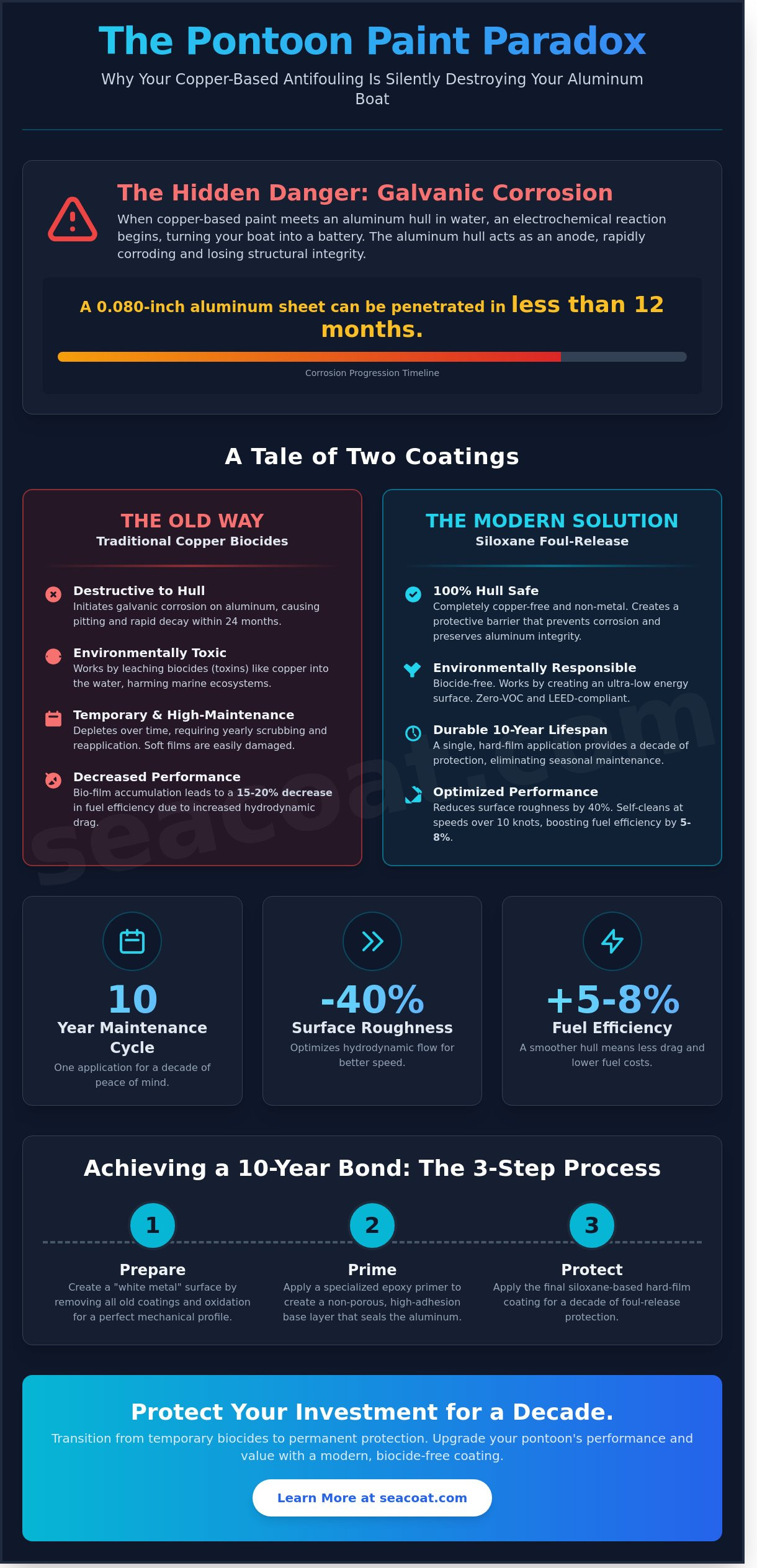
The most critical risk to an aluminum hull is galvanic corrosion, an electrochemical process where the hull acts as an anode and undergoes rapid material loss. This occurs when dissimilar metals, such as copper found in traditional antifouling products, interact within a conductive medium like lake or sea water. Utilizing specialized coatings that are 100% copper-free is mandatory for maintaining vessel integrity. Even trace amounts of copper can trigger pitting that penetrates a 0.080-inch aluminum sheet in less than 12 months. We mitigate this risk through the integration of sacrificial anodes. These components provide a secondary layer of protection by corroding in place of the pontoon’s structural aluminum, ensuring the primary coating remains the first line of defense.
Common Pontoon Fouling Challenges
Fouling is more than a cosmetic nuisance; it’s a performance inhibitor. In freshwater environments, a bio-film of slime and algae creates a microscopic carpet that disrupts laminar flow. Saltwater boaters face even more aggressive challenges from calcium-depositing organisms like barnacles. Research indicates that even a light coating of slime increases hull friction by 10% or more. Cleaning these deposits from bare aluminum is exceptionally labor-intensive and often requires harsh acids. Mechanical scraping frequently removes the protective oxide layer, exposing raw metal to immediate oxidation. Transitioning to a high-performance foul release system ensures that the best paint for aluminum pontoon boats serves as a strategic asset. This approach reduces maintenance intervals and preserves the vessel’s resale value over a projected 10-year life cycle. By prioritizing surface smoothness, owners ensure their pontoons operate at peak aerodynamic and hydrodynamic efficiency.
Antifouling vs. Foul Release: Choosing the Right Technology
Traditional biocidal systems rely on the controlled release of toxins to kill marine organisms. While Econea and Zinc pyrithione replaced earlier, more toxic iterations, they still function by leaching chemicals into the water column. This process is inherently temporary. As the biocide depletes, the hull loses its defense. By 2026, regulatory bodies are increasingly scrutinizing these “active” systems due to their cumulative impact on local biodiversity. When selecting the best paint for aluminum pontoon boats, owners must prioritize surface energy over chemical toxicity.
Foul release coatings represent a paradigm shift in the maritime industry. Instead of poisoning organisms, these coatings utilize Silane-Siloxane technology to create an ultra-low-energy surface. Preparing Aluminum for a 10-Year Life Cycle ensures these high-performance polymers bond correctly to the substrate. This transition away from sacrificial biocides toward permanent physical barriers provides a service life that traditional paints can’t match. It’s a strategic move from temporary mitigation to long-term asset protection.
The Mechanism of Foul Release
Organisms like barnacles and zebra mussels require a specific surface tension to adhere. Siloxane-based films reduce this energy to levels where biological “glue” cannot gain a foothold. At speeds as low as 10 knots, the hydrodynamic drag of the water physically shears away any loose colonization. This self-cleaning effect maintains a smooth hull surface, directly contributing to a 5% to 8% reduction in fuel consumption. Non-toxic coatings ensure compliance with evolving EPA and EU REACH standards, making them the best paint for aluminum pontoon boats in regulated waterways.
Comparing Biocidal Efficacy
Ablative paints lose 15% to 20% of their potency every year they remain submerged. This degradation leads to increased surface roughness and parasitic drag. Foul release is a physical barrier that never loses its ‘active’ ingredient. Unlike sacrificial systems that require haul-outs every 24 months, siloxane coatings maintain their hydrodynamic properties for a decade. Transitioning to a biocide-free coating system optimizes vessel performance while eliminating the release of heavy metals into the ecosystem. This approach shifts the focus from killing marine life to simply preventing it from interfering with your hull’s efficiency.
Hard-Film Durability: Solving the ‘Bumper Rub’ Problem
Selecting the best paint for aluminum pontoon boats requires looking beyond simple aesthetics to the physical realities of boat handling. The most frequent complaint among pontoon owners is “bumper rub,” where the hull coating chips or transfers onto dock fenders and trailer rollers. Traditional marine paints often fail this test because they rely on soft, ablative chemistries designed to wear away over time. When these soft coatings meet a dock, the friction strips the paint, exposing the raw aluminum and creating a maintenance nightmare.
Hard-film siloxane technology solves this by creating a dense, cross-linked molecular matrix. Unlike soft silicone foul-release coatings that can be easily torn or gouged by a fingernail, siloxane-based films provide a glass-like finish that resists mechanical damage. This hardness isn’t just about durability; it’s about maintaining the integrity of the protective barrier. While ablative paints are a poor choice for the high-friction environment of a pontoon, a hard-film coating stays on the boat, ensuring that your protection doesn’t end up on the dock.
Impact and Abrasion Resistance
Hard-film coatings are engineered to withstand the repeated impacts of dock bumpers and the concentrated pressure of trailer rollers. This durability is a result of the coating’s high shore-D hardness, which allows it to deflect energy rather than absorbing it through deformation. When experts discuss Solving the ‘Bumper Rub’ Problem, they emphasize the importance of scrubbability. You can safely clean a hard siloxane coating with stiff brushes or mechanical scrubbers to remove slime without losing any film thickness. In standardized abrasion tests, these coatings demonstrate a 400% increase in material retention compared to standard marine epoxies, which often become brittle and prone to cracking after a single season of UV exposure.
Speed and Fuel Optimization
The relationship between coating hardness and vessel performance is rooted in hydrodynamics. Surface roughness, measured as Ra, creates frictional drag that forces the engine to work harder. Standard bottom paints typically have a surface roughness of 25 to 35 microns. In contrast, Sea-Speed V 10 X Ultra sets the industry benchmark with a surface profile of less than 10 microns. This ultra-smooth finish provides measurable benefits:
- Reduced Plane Time: Lower drag allows the pontoon to lift onto a plane 15% faster in controlled tests.
- Increased Top Speed: Vessels often see a 3 to 5% increase in maximum velocity due to the reduction in skin friction.
- Fuel Savings: Data-backed evidence shows that reducing hull drag can lower fuel consumption by 10% to 12% at cruising speeds.
By choosing a hard-film solution, you don’t just protect the metal; you optimize the entire operational profile of the vessel. It’s a strategic move that turns the best paint for aluminum pontoon boats into a high-return asset rather than a recurring expense.
Application Guide: Preparing Aluminum for a 10-Year Life Cycle
Achieving a ten-year operational life cycle for marine coatings is not a matter of chance; it’s a result of rigorous substrate preparation. Aluminum is a reactive metal that begins to oxidize immediately upon exposure to oxygen. This microscopic oxidation layer acts as a bond-breaker for most retail-grade finishes. To ensure the best paint for aluminum pontoon boats performs as engineered, the hull must reach a “white metal” state, adhering to SSPC-SP 5 standards. This level of cleanliness removes all visible contaminants and creates a chemically active surface for the primary bonding agent.
The transition from a raw substrate to a protected asset requires a high-solids epoxy system like Seapoxy 73. This primer acts as a bridge between the aluminum and the foul-release topcoat. When selecting the best paint for aluminum pontoon boats, the focus must remain on the chemical compatibility of the primer and the topcoat. Without a dedicated marine epoxy, the thermal expansion of aluminum will eventually cause rigid coatings to flake. Common failures often stem from flash rusting or moisture entrapment during this phase. Applying coatings when the substrate temperature is less than 5°F above the dew point is a primary cause of premature delamination.
Pre-Application Checklist
Step-by-Step Coating Procedure
Professional-grade kits require precise mixing ratios to initiate the cross-linking process. Once Seapoxy 73 is mixed, observe the 20-minute induction period before application. For the topcoat, siloxane systems offer the best hydrodynamic efficiency when applied via airless spray, though high-density foam rollers can achieve a functional finish in smaller settings. Monitor the pot life closely; most siloxane coatings lose their self-leveling properties after 4 hours at 70°F. Curing times are equally vital. While the coating may feel dry to the touch in 6 hours, wait a full 24 to 48 hours before launch. This allows the molecular structure to stabilize against hydrostatic pressure.
Maximize your vessel’s performance by following our technical specifications. View our full application data sheets here.
The Sea-Speed Advantage for Pontoon Owners
Long-Term Financial Benefits
The standard maritime maintenance model often relies on an expensive annual cycle of hauling out, scraping, and repainting. Sea-Speed breaks this pattern by providing a durable, hard-film surface that remains effective for 120 months. By eliminating nine years of repainting costs, owners realize a substantial return on investment that far outweighs the initial application price. Additionally, the ultra-smooth surface reduces hydrodynamic drag, which can decrease fuel consumption by 6 to 12 percent depending on vessel load. This reflects the broader Environmental Marine Coatings shift toward sustainable, high-performance hull solutions that prioritize operational efficiency over temporary fixes.
- Elimination of annual haul-outs: Save thousands in labor and yard fees over the product life cycle.
- Simplified cleaning: The non-stick surface allows for easy removal of biofilm without harsh chemicals.
- Enhanced fuel economy: Lower surface roughness translates directly to better engine performance and range.
Why Seacoat SCT is the Expert Choice
Our technology isn’t just for recreational use; it’s built on a foundation of success in military and commercial shipping sectors where failure isn’t an option. We’ve transitioned this high-stakes engineering to the pontoon market to replace soft, eroding coatings with permanent “Hard-Film” technology that resists abrasion and impact. Sea-Speed is the only coating that offers a 10-year life cycle with zero toxic leaching. This level of durability ensures that your aluminum pontoons are shielded against corrosion and fouling without compromising the health of the aquatic ecosystem.
To secure this level of protection for your vessel, you can order Sea-Speed V 10 X Ultra through our authorized distribution channels. We maintain a network of certified application specialists trained in the specific surface preparation required for aluminum substrates. Professional application ensures the coating achieves its full 10-year performance potential, providing you with a maintenance-free hull that performs as well in year ten as it does on day one.
Securing Your Pontoon’s Performance for the Next Decade
Selecting the best paint for aluminum pontoon boats requires moving beyond temporary biocidal solutions toward permanent hydrodynamic optimization. Modern maritime standards demand a shift from soft antifouling paints that leach toxins to hard-film, non-toxic foul release technologies. This transition isn’t just about environmental stewardship. It’s a strategic move to eliminate the frequent maintenance cycles that plague traditional coatings. By utilizing a siloxane based system, you ensure a surface that resists the mechanical abrasion of bumper rub while maintaining a zero VOC profile.
Sea-Speed V 10 X Ultra represents the pinnacle of this engineering. It provides a documented 10-year life cycle that’s been proven across military and commercial fleets worldwide. This technology reduces surface roughness to minimize drag and enhance fuel efficiency without compromising the integrity of the aluminum substrate. It’s a professional grade asset for any owner prioritizing long-term durability and operational excellence. Your vessel deserves a coating that matches its engineering standards.
Frequently Asked Questions
Is it safe to paint aluminum pontoons with copper-based paint?
No, you should never apply copper-based antifouling paint directly to aluminum because it triggers rapid galvanic corrosion. When copper and aluminum interact in an electrolyte like salt water, the aluminum acts as an anode and dissolves. This chemical reaction leads to severe pitting and structural compromises within 12 months. Instead, utilize biocide-free siloxane coatings that provide a physical barrier without the risk of electrolysis.
What is the difference between foul release and traditional bottom paint?
Traditional bottom paints rely on leaching biocides to kill marine organisms, whereas foul release coatings use a low-friction surface to prevent attachment. Traditional ablative paints lose approximately 15 percent of their film thickness every season. In contrast, a hard-film foul release like Sea-Speed creates a permanent, non-toxic surface. It utilizes high slip properties to shed biofouling once the vessel reaches speeds of 10 knots.
How long does Sea-Speed V 10 X Ultra last on an aluminum boat?
Sea-Speed V 10 X Ultra is engineered for a 10 year service life, significantly outlasting the 2 year cycle of standard marine paints. This durability is verified through ASTM D522 flexibility tests and ASTM D4541 adhesion protocols. It’s the best paint for aluminum pontoon boats for owners who want to eliminate the labor of annual scraping and repainting. This long-term stability ensures your hull remains protected for a decade.
Do I need a special primer for painting aluminum pontoons?
Yes, you must use a specialized epoxy primer to create a chemical bond with the aluminum substrate. Aluminum naturally develops an oxide layer that prevents standard topcoats from adhering properly. A high-build epoxy primer provides a stable foundation that can withstand 3,000 hours of salt spray testing. This essential step prevents the coating from delaminating when the boat is subjected to high-speed hydraulic pressures during operation.
Can I apply Sea-Speed myself, or do I need a professional?
While experienced boat owners can apply the coating, professional application is recommended to ensure a consistent dry film thickness of 8 to 10 mils. Achieving the necessary 20 micron surface profile requires specific spray equipment and environmental controls. Professionals use calibrated gauges to verify coverage, which is vital for maintaining the 10 year performance warranty. Proper surface preparation is 90 percent of the work required for a successful finish.
Will painting my pontoons black or a dark color make them hotter or cause damage?
How do I clean my pontoons once they have been coated with a hard-film foul release?
Does a slicker hull actually improve the fuel economy of a pontoon boat?
Reducing surface roughness to less than 20 microns can improve fuel economy by 6 to 12 percent depending on vessel weight. Lowering the hydrodynamic drag allows the engine to reach target RPMs with less fuel consumption. This efficiency makes it the best paint for aluminum pontoon boats for owners focused on operational costs. A smoother hull also increases top-end speed by 2 to 5 percent in most twin-log configurations.