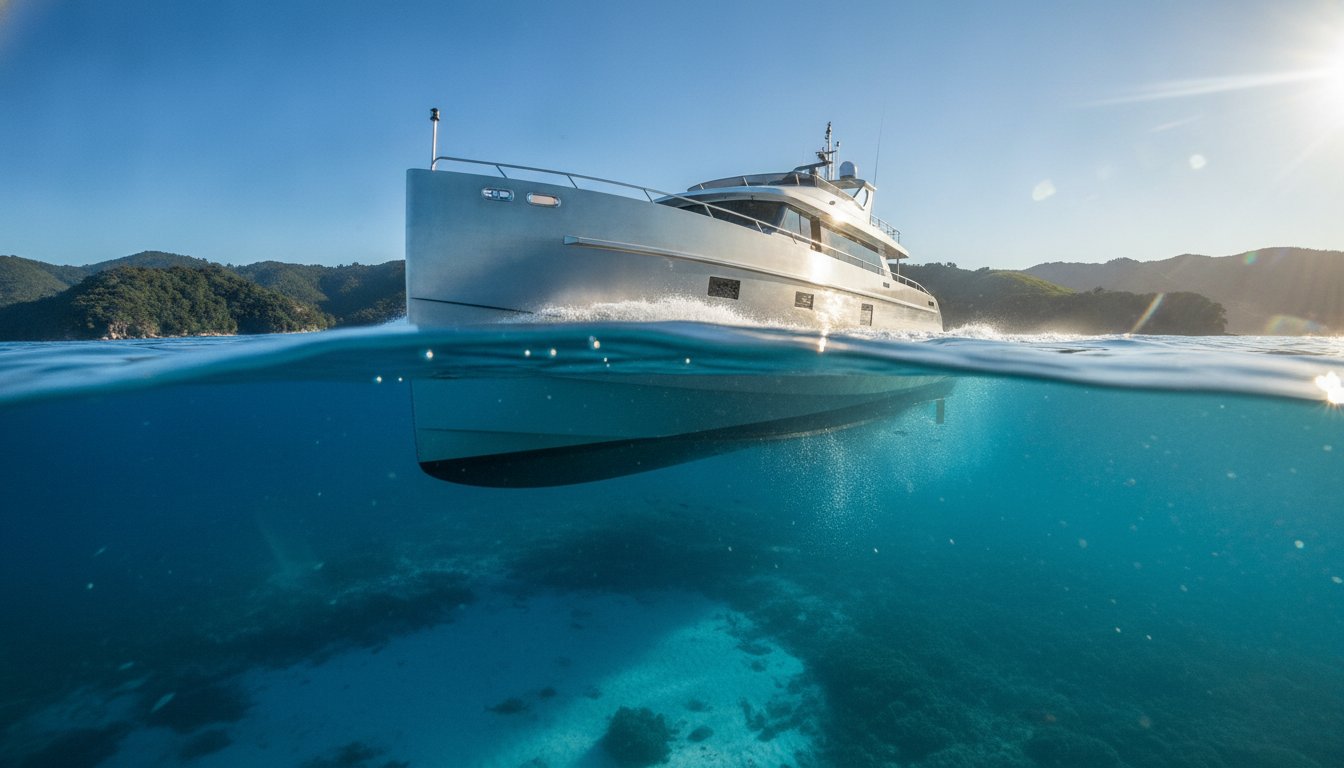
The most effective way to protect your hull from New Zealand’s aggressive marine growth isn’t by poisoning the water, but by mastering surface tension. As the 2026 maritime landscape evolves, choosing the best boat paint for New Zealand waters has transitioned from a routine maintenance task into a critical regulatory and strategic decision. With the Ministry for Primary Industries (MPI) enforcing the Craft Risk Management Standard (CRMS) with increasing rigor, the margin for error regarding hull fouling has effectively disappeared.
You likely understand that maintaining a clean hull is no longer just about aesthetics; it’s a legal requirement to avoid heavy fines and entry denials at local marinas. This guide explores why advanced foul-release technology, such as Sea-Speed V 10 X Ultra, represents the superior choice for meeting these strict bio-security regulations while simultaneously maximizing vessel efficiency. We’ll examine how transitioning to biocide-free, high-performance coatings can extend your maintenance cycles to over a decade, reduce fuel consumption through superior fluid dynamics, and ensure total compliance with New Zealand’s unique environmental standards.
Key Takeaways
- Understand the technical requirements of the Craft Risk Management Standard (CRMS) and how high-performance coatings ensure continuous compliance with New Zealand’s biosecurity regulations.
- Discover the scientific advantages of Silane-Siloxane technology, which utilizes low surface energy to prevent bio-attachment without the ecological impact of traditional biocidal leaching.
- Evaluate how reducing frictional drag through advanced surface engineering directly correlates to increased vessel speed and measurable fuel savings across the Tasman and Pacific.
- Learn why advanced foul-release systems are considered the best boat paint for New Zealand waters when protecting specific hull materials, especially the region’s prevalent aluminum fleet.
- Analyze the long-term financial benefits of transitioning to a 10-year maintenance cycle, significantly reducing the Total Cost of Ownership compared to conventional two-year antifouling applications.
Navigating New Zealand’s Unique Marine Environment and Bio-security Standards
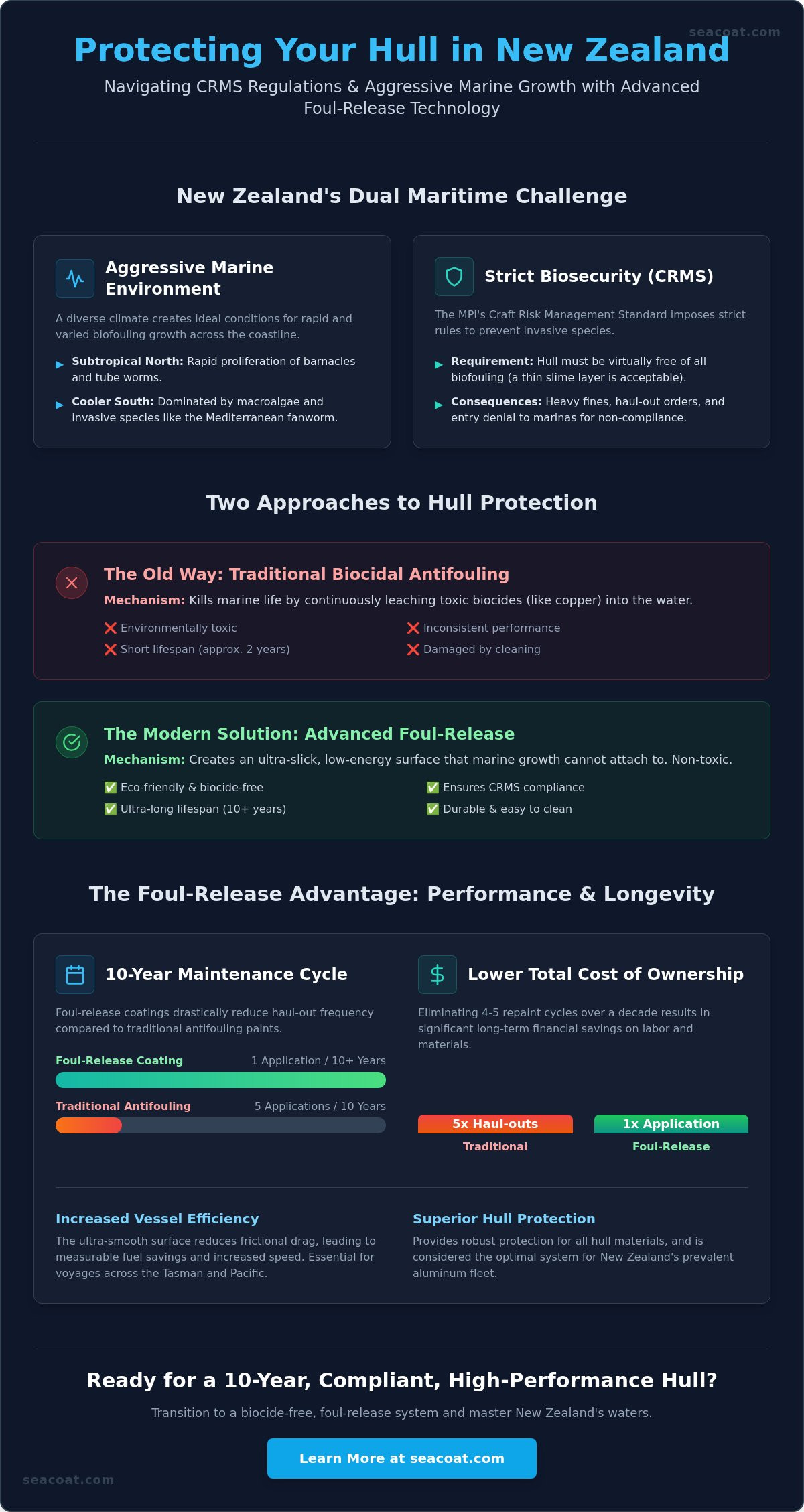
New Zealand’s coastline presents a formidable challenge for vessel maintenance. The maritime climate ranges from the subtropical warmth of the Bay of Islands to the subantarctic conditions of the Southern Ocean. This temperature gradient dictates the metabolic rate of biofouling organisms. In warmer northern waters, barnacles and tube worms proliferate rapidly. In the cooler south, macroalgae and invasive species like the Mediterranean fanworm dominate. Traditional ablative paints, which rely on the steady leaching of biocides, often struggle to provide consistent protection across these varying thermal zones. Consequently, identifying the best boat paint for New Zealand waters requires a solution that performs regardless of water temperature or the presence of aggressive local species like the green-lipped mussel.
Understanding the Craft Risk Management Standard (CRMS)
The Ministry for Primary Industries (MPI) enforces the CRMS to prevent the introduction of invasive marine species. This standard differentiates between short-stay vessels and long-stay vessels, with 21 days being the critical threshold for stricter compliance. For those planning extended coastal voyages, the hull must be virtually free of all biofouling except for a thin slime layer. Failure to comply can result in expensive haul-out orders or being turned away from sensitive ports. While the science of antifouling coatings has evolved, traditional soft paints often lack the physical durability to withstand the frequent cleaning required for CRMS compliance. Hard-film foul-release systems provide a more reliable compliance trajectory because the surface remains structurally intact, allowing for easy removal of slime without depleting the coating’s protective properties.
The Environmental Imperative in NZ Waters
Regional governance is shifting rapidly toward stricter environmental controls. In areas like the Marlborough Sounds, there is significant pressure to move away from copper-based and biocidal coatings that contaminate the seabed. New Zealand vessel owners are increasingly recognized as early adopters of environmental marine coatings. This transition is driven by a dual commitment to ecological preservation and operational efficiency. By selecting a non-toxic, foul-release system, boaties can ensure their vessels are welcome in all New Zealand marinas, many of which now adhere to the “6 or 1” rule. This rule requires a vessel to have been antifouled within the last six months or professionally cleaned within the last month for entry, making a long-lasting, easy-to-clean surface a strategic asset for any modern mariner.
Beyond Toxic Antifouling: The Science of Silane-Siloxane for New Zealand
Traditional maritime maintenance has long relied on the gradual release of biocides to combat marine growth. However, Silane-Siloxane technology offers a fundamentally different approach by utilizing material science rather than chemical toxicity. This technology is increasingly recognized as the best boat paint for New Zealand waters because it creates a surface with exceptionally low surface energy. At a molecular level, the coating is so slick that the microscopic glue used by barnacles and algae cannot find a mechanical or chemical foothold. This is a critical distinction in the context of New Zealand’s antifouling regulations, which are becoming more stringent regarding the leaching of heavy metals into the marine ecosystem.
While traditional antifouling is designed to kill organisms on contact, foul-release systems focus on preventing their permanent residence. This is particularly vital for New Zealand’s unique biodiversity, where protecting native species from biocidal runoff is as important as preventing the spread of invasive ones. For those seeking technical depth on how these coatings compare across different operational profiles, our definitive guide to boat hull paint provides a comprehensive breakdown of the ROI associated with high-performance systems.
The Mechanism of Foul Release
The efficacy of a Silane-Siloxane system relies on hydrodynamic shear. When a vessel reaches speeds of 10 knots or greater, the force of the water moving across the hull is sufficient to wash away any nascent bio-accumulation. This self-cleaning property is ideal for the high-velocity coastal transits common in the Hauraki Gulf or the Cook Strait. Unlike silicone-based coatings, which are often soft and susceptible to tearing or abrasion, Silane-Siloxane forms a hard, durable film. This physical robustness is essential for New Zealand’s rugged coastal conditions where contact with debris or fenders is a daily reality.
Silane-Siloxane vs. Traditional Copper Paints
Ablative copper paints are sacrificial by design; they wear away over time to expose fresh biocides. This means their effectiveness is inherently limited by the thickness of the application and the rate of depletion. In contrast, Sea-Speed V 10 X Ultra creates a permanent chemical bond with the substrate. It contains zero volatile organic compounds (VOCs) and no heavy metals, ensuring that your vessel’s performance doesn’t come at the cost of the environment. This combination of durability and ecological safety is precisely why silane-siloxane is emerging as the best boat paint for New Zealand waters in 2026. If you’re ready to move beyond temporary fixes, you can explore our range of high-performance coatings designed for long-term durability.
Performance Metrics: Efficiency and Speed in the Tasman and Pacific
Maximizing the operational window of a vessel in the Tasman Sea requires more than just biological protection. It demands a surface engineered for peak hydrodynamic performance. Choosing the best boat paint for New Zealand waters is a strategic investment in efficiency, as frictional drag can account for up to 80% of a vessel’s total resistance. By utilizing Sea-Speed V 10 X Ultra, operators have observed measurable increases in top-end speed of up to 10%. This improvement isn’t merely about velocity; it’s about the reduction of the energy required to maintain cruising speeds during long coastal transits. As international carbon intensity standards like EEXI and CII become more relevant to the regional fleet, the ability to lower emissions through surface optimization has become a primary concern for stakeholders.
Maintaining a clean hull is also essential for meeting New Zealand’s Craft Risk Management Standard. A fouled hull doesn’t just risk biosecurity fines; it creates turbulent flow that drastically increases fuel consumption. Hard-film coatings ensure that the hull remains smooth and efficient throughout the service window, unlike traditional paints that can become rough as biocides leach out and the film degrades.
Fuel Savings for Commercial and Private Fleets
The financial impact of fuel consumption is particularly acute in New Zealand, where energy prices and long-distance transits between Auckland, Wellington, and Christchurch dictate operational budgets. Reduced drag directly translates to an extended cruising range and lower overheads for both commercial operators and private voyagers. Silane-Siloxane technology reduces hydrodynamic drag by creating an ultra-smooth, low-friction surface profile that minimizes turbulent flow along the hull’s boundary layer. This efficiency gain provides a clear return on investment, as the cost of the coating is offset by the cumulative fuel savings realized over thousands of nautical miles.
Durability in Harsh Southern Conditions
The Southern Ocean and the deep-water sounds of the South Island present environmental stressors that would compromise inferior coatings. Vessels in these regions face abrasion from floating debris, variable salinity, and ice-melt runoff that can be physically taxing on the hull. A hard-film system is essential for these conditions because it resists the mechanical wear associated with frequent in-water cleaning or scrubbing. Sea-Speed V 10 X Ultra is engineered to maintain its low-energy surface and structural integrity across a 10-year service life. This longevity ensures that the best boat paint for New Zealand waters provides consistent performance, protecting the asset from the elements while ensuring it remains compliant and efficient in one of the world’s most demanding maritime environments.
Selecting the Optimal Coating System for NZ Vessel Types
Substrate compatibility is a fundamental factor in determining the longevity and effectiveness of any maritime coating. While the biological challenges remain constant across the coast, the chemical interaction between the hull material and the paint system varies significantly. For New Zealand vessel owners, the best boat paint for New Zealand waters must be tailored to the specific properties of fiberglass, steel, or aluminum. A critical component of this success is the application of Seapoxy 73, a specialized epoxy primer engineered to provide the high-strength mechanical bond necessary for Silane-Siloxane topcoats to endure the high-shear environments of the open Pacific.
The Aluminum Advantage
New Zealand’s maritime sector is characterized by an exceptionally high concentration of aluminum vessels, ranging from recreational trailer boats to large-scale commercial ferries. Traditional antifouling paints often contain cuprous oxide, which triggers rapid galvanic corrosion when applied to alloy hulls. This electrochemical reaction can compromise the structural integrity of the vessel over time. Because Seacoat products are completely biocide-free and non-conductive, they are inherently safe for use on aluminum without the risk of metal degradation. For a deeper analysis of these technical requirements, consult our boat paint for aluminum boats guide. Ensuring your coating is chemically inert is the first step in long-term asset preservation.
Recreational Yachts vs. Commercial Workboats
Operational profiles dictate which specific coating variation will yield the highest return on investment. For Hauraki Gulf weekenders and recreational yachts, the primary objectives are low maintenance and high aesthetics. Sea-Speed V 10 X Ultra provides a hard, high-gloss finish that remains clean with minimal effort. In contrast, racing yachts often opt for Sea-Speed V 10 X Ultra Clear, which preserves the visual profile of high-performance carbon fiber or specialized racing hulls while delivering the same low-friction benefits discussed in previous sections.
Commercial operators, such as those managing Cook Strait ferries or fishing fleets, prioritize durability and fuel ROI. These vessels operate on rigorous schedules where dry-docking represents a significant operational cost. By utilizing a hard-film foul-release system, these fleets can extend their service windows and maintain peak fuel efficiency despite the aggressive fouling species found in southern ports. If you are managing a commercial fleet or a high-performance vessel, you can view our full technical specifications to determine which system aligns with your operational requirements.
Long-Term ROI and Maintenance in New Zealand’s Maritime Sector
When assessing the best boat paint for New Zealand waters, the evaluation must move beyond initial material costs to encompass the Total Cost of Ownership (TCO). In the traditional maritime maintenance model, vessels are typically hauled out every 18 to 24 months for high-pressure water blasting and the reapplication of biocidal coatings. This cycle incurs recurring expenses including yard fees, labor, and the cost of the paint itself. By transitioning to a high-performance Silane-Siloxane system like Sea-Speed V 10 X Ultra, the financial trajectory changes fundamentally. The durability of the hard-film bond allows for the extension of dry-dock intervals to five or even ten years, effectively eliminating several expensive maintenance events from the vessel’s lifecycle budget.
The operational savings are further enhanced by simplified in-water cleaning protocols. Because foul-release surfaces rely on low surface energy rather than chemical depletion, they don’t require the aggressive scrubbing that often damages ablative paints. For New Zealand operators, this means maintenance can be performed more quickly and at a lower cost, often requiring only a soft brush or cloth to restore the hull to a “as-new” hydrodynamic state. This ease of maintenance is a strategic advantage for remaining compliant with regional biosecurity standards without the need for frequent, labor-intensive haul-outs.
Extending the Service Life of Your Hull
Comparing the long-term economics of maritime coatings reveals a stark contrast between sacrificial systems and permanent ones. Standard antifouling boat paint is designed to fail; it must wear away to remain effective. In contrast, the Silane-Siloxane bond is chemically stable and doesn’t degrade through leaching. Over a ten-year period, the cumulative cost of five traditional bi-annual applications, including the associated downtime, significantly exceeds the investment in a single, high-durability Seacoat application. This long-term ROI is particularly compelling for New Zealand’s commercial fleets and dedicated blue-water cruisers who prioritize asset availability and predictable overheads.
Application and Local Support
Achieving the maximum service life from your coating requires precise application, especially given New Zealand’s variable humidity and coastal conditions. Successful installation begins with the Seapoxy 73 primer protocol, which ensures the substrate is perfectly prepared for the foul-release topcoat. It’s vital to monitor dew points and ambient moisture during the curing process to guarantee the chemical integrity of the bond. For vessel owners ready to upgrade their performance, following these technical standards is the final step toward a hull that stays clean, fast, and compliant for a decade. If you’re looking for the best boat paint for New Zealand waters to future-proof your asset, it’s time to move beyond the limitations of traditional antifouling and embrace the efficiency of advanced material science.
Future-Proofing Your Vessel for New Zealand’s Maritime Future
The transition toward advanced foul-release systems is a strategic necessity for any operator navigating the South Pacific. By prioritizing surface engineering over chemical toxicity, you ensure continuous compliance with the Craft Risk Management Standard while significantly lowering your operational overheads. This shift from sacrificial coatings to permanent silane-siloxane technology represents the most reliable path to securing the best boat paint for New Zealand waters in 2026. The ability to maintain a clean hull through hydrodynamic shear rather than biocidal leaching is no longer just an environmental preference; it’s a performance imperative.
Backed by a global track record in high-stakes commercial and military applications, our Zero VOC and non-toxic formulations provide a 10-year service life that traditional paints simply cannot match. This technology doesn’t just protect the environment; it optimizes the physical performance of your asset by reducing drag and extending maintenance intervals. Upgrade your vessel with Sea-Speed V 10 X Ultra today and experience a level of efficiency that redefines modern maritime standards. Secure your vessel’s future with a solution that is as durable as it is responsible.
Frequently Asked Questions
Is Sea-Speed V 10 X Ultra compliant with NZ bio-security regulations?
Sea-Speed V 10 X Ultra is fully compliant with the New Zealand Craft Risk Management Standard (CRMS). Its biocide-free, hard-film surface allows for the easy removal of biofouling to meet the “clean hull” requirements mandated by the Ministry for Primary Industries (MPI). Unlike traditional paints that degrade over time, this technology maintains a smooth profile that resists the attachment of invasive species.
How long does a foul-release coating last compared to traditional antifouling?
A high-performance foul-release coating can provide a service life of up to 10 years. In contrast, traditional ablative antifouling typically requires reapplication every 18 to 24 months. This extended window makes it the best boat paint for New Zealand waters for owners looking to reduce the frequency and cost of dry-docking while maintaining consistent hull protection.
Can I apply Seacoat products to an aluminum boat in New Zealand?
Yes, Seacoat products are specifically engineered for the aluminum hulls common in the New Zealand fleet. Because the formulation is non-conductive and biocide-free, it eliminates the risk of galvanic corrosion associated with copper-based paints. The application requires the Seapoxy 73 primer to ensure a permanent mechanical bond with the alloy substrate for long-term durability.
Does a non-toxic coating really work as well as copper-based paint?
Non-toxic foul-release coatings are highly effective, relying on low surface energy rather than chemical leaching to prevent bio-attachment. While copper paints attempt to kill organisms, Sea-Speed creates a surface so slick that growth cannot adhere. This mechanism is particularly efficient for vessels that operate at speeds above 10 knots, where hydrodynamic shear naturally cleans the hull during transit.
What is the cleaning process for a hard-film foul release hull?
Cleaning a hard-film foul-release hull is significantly simpler than maintaining traditional paints. Most accumulated slime or light growth can be removed using a soft brush, sponge, or cloth while the vessel is in the water. You don’t need aggressive scrubbing or high-pressure water blasting, which preserves the integrity of the coating and reduces the cost of professional cleaning services.
How much fuel can I realistically save with a high-performance coating?
Real-world data indicates that vessels using Sea-Speed V 10 X Ultra can achieve a speed increase of up to 10% or a corresponding reduction in fuel consumption. By minimizing frictional drag along the hull, the engine requires less power to maintain cruising speeds. These savings are particularly noticeable during long transits across the Tasman or between New Zealand’s coastal ports.
Will this coating help my vessel meet international EEXI standards?
Yes, upgrading to a high-efficiency hull coating is a recognized method for improving a vessel’s Energy Efficiency Existing Ship Index (EEXI) and Carbon Intensity Indicator (CII) ratings. By reducing the energy required for propulsion, the coating directly lowers the vessel’s carbon footprint. This makes it an essential strategic asset for commercial fleets facing stricter international environmental regulations in 2026.
Can Sea-Speed be applied over existing old paint?
Sea-Speed cannot be applied directly over existing antifouling paint. To achieve the necessary chemical and mechanical bond, the hull must be stripped to the original substrate and primed with Seapoxy 73. This rigorous preparation is necessary to ensure the 10-year service life and performance metrics that make it the best boat paint for New Zealand waters.