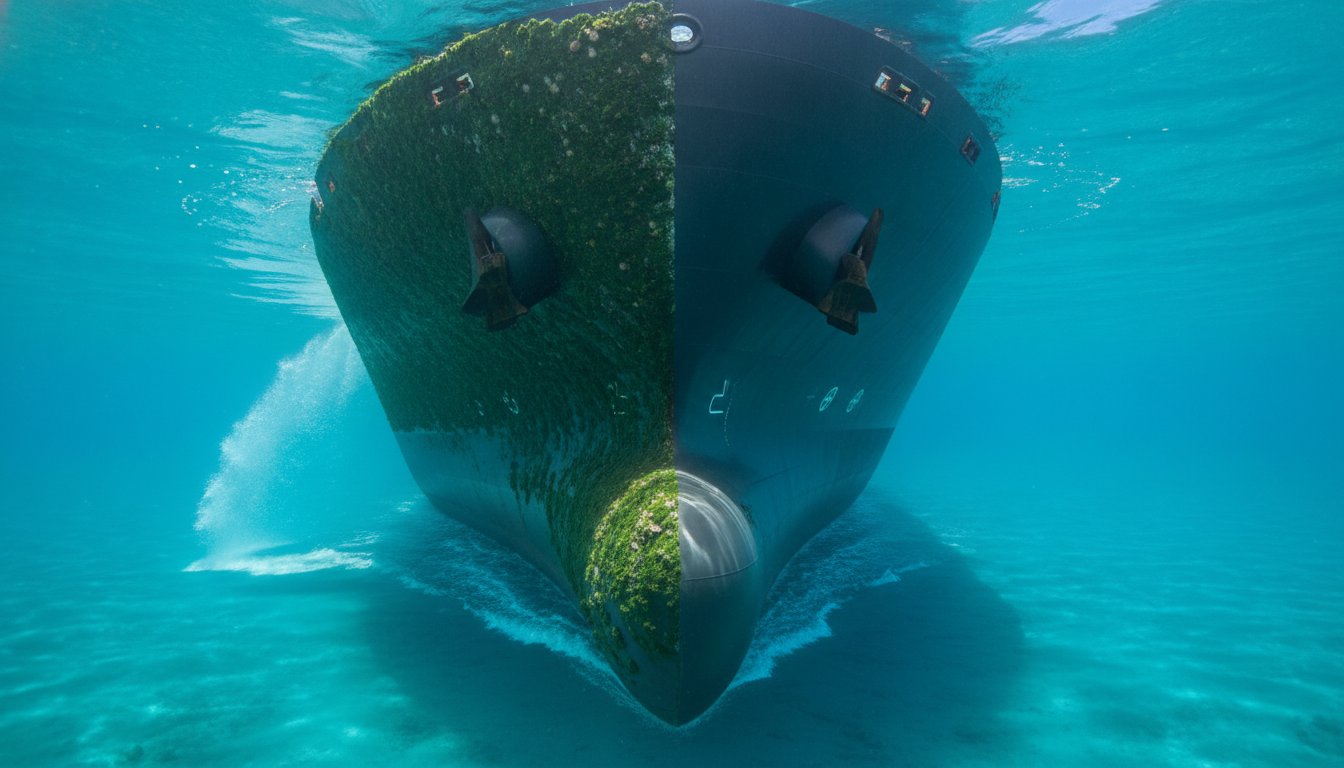
By September 2026, the operational cost of maintaining a traditional biocidal hull coating will no longer be measured solely by paint and labor, but by carbon allowances and strict regulatory penalties. You’ve likely felt the pressure of rising fuel consumption and the exhausting cycle of frequent dry-docking required to manage hull drag. As global standards like the EU Emissions Trading System and the EPA’s new copper leaching limits take full effect, the search for viable antifouling paint alternatives has shifted from a secondary environmental concern to a primary financial necessity.
This guide demonstrates how modern foul-release technologies outperform legacy toxic coatings in durability, environmental stewardship, and hydrodynamic efficiency. You’ll discover how next-generation silane-siloxane systems can reduce your Carbon Intensity Indicator by as much as 22 percent while significantly extending your service windows. We will analyze the transition from biocidal depletion to surface energy management, providing a clear technical roadmap for achieving long-term return on investment and compliance in a rapidly tightening regulatory landscape. It’s time to view your hull coating as a strategic asset rather than a recurring maintenance burden.
Key Takeaways
- Understand the critical 2026 regulatory shifts, including the EU Emissions Trading System and new EPA copper limits, that make transitioning to non-toxic systems a financial priority.
- Evaluate the comparative performance of various antifouling paint alternatives and why hard-film silane-siloxane technologies are the preferred choice for industrial durability.
- Learn the science of surface energy management and how foul-release mechanisms prevent marine growth adhesion without the environmental impact of leaching heavy metals.
- Analyze the operational ROI of high-performance coatings, which can deliver up to 20% fuel savings and extended dry-dock intervals through superior hydrodynamic efficiency.
- Discover how to implement a permanent, non-toxic strategy using Sea-Speed V 10 X Ultra to ensure long-term compliance and asset protection.
The Shift Away from Biocides: Why Antifouling Paint Alternatives Matter in 2026
The global shipping industry is confronting a regulatory bottleneck that renders traditional biocidal coatings obsolete. For decades, the history of antifouling paint was defined by the controlled release of toxins, such as tributyltin (TBT) and copper, to kill marine organisms upon contact. This era of biocidal dominance is ending. As of January 1, 2026, new EPA mandates restrict copper leaching to 9.5 micrograms per square centimeter daily, a threshold that many traditional paints simply cannot meet without compromising efficacy. Simultaneously, the 60-month window to address existing Cybutryne layers following the 2023 ban expires this year, forcing fleet managers to seek permanent, non-toxic solutions.
Modern antifouling paint alternatives represent a departure from chemical warfare against marine life, focusing instead on physical surface optimization. Traditional paints leach heavy metals that accumulate in the sediment and enter the food chain, causing endocrine disruption in gastropods and other marine species. By transitioning to foul-release mechanisms, operators move away from “killing” growth and toward “shedding” it. These systems utilize advanced material science to create a surface where adhesion is physically impossible, ensuring compliance with 2026 IMO environmental standards while preserving delicate aquatic ecosystems.
The True Cost of Traditional Antifouling
While the purchase price of biocidal paint might appear lower, the lifecycle costs are prohibitive. Traditional ablative coatings rely on a sacrificial layer that gradually wears away, creating a microscopically rough surface profile. This roughness increases frictional drag, which can elevate fuel consumption by up to 10 percent even before biological fouling occurs. Once heavy marine growth takes hold, fuel consumption can surge by as much as 40 percent. Beyond fuel, the hidden expenses of frequent hauling, aggressive sanding, and the hazardous waste disposal of toxic paint chips create an ongoing financial and environmental liability for commercial operators.
Defining Foul Release Technology
Foul release systems operate on the principle of surface energy management. By utilizing low-surface-energy materials like silane-siloxane, these coatings create a “slippery” interface that prevents barnacles, tube worms, and algae from forming a permanent bond. This technology relies on hydrodynamic shear; as the vessel moves, the water flow naturally peels away any hitchhiking organisms. Most advanced systems reach this “critical speed” at relatively low velocities, ensuring that even slower-moving commercial vessels remain clean. In 2026, non-toxic doesn’t mean a compromise in performance; it means a transition to a more sophisticated, hard-film durability that resists mechanical damage far better than soft silicone predecessors.
Foul Release vs. Antifouling: Understanding the Mechanism
The engineering distinction between traditional biocidal coatings and modern foul-release systems lies in how they manage the interface between the hull and the aquatic environment. Traditional antifouling paints rely on a chemical depletion model, where biocides leach into the water column to terminate settling organisms. This process requires a sacrificial, ablative layer that constantly erodes, creating a microscopically turbulent surface. In contrast, antifouling paint alternatives utilize a physical management strategy. These systems focus on surface energy rather than toxicity, creating a permanent barrier that denies marine life the ability to gain a foothold. This shift is supported by an EPA study on safer alternatives, which confirms that non-biocidal coatings can match the performance of heavy-metal paints without the ecological fallout.
Material science has moved toward hard-film durability to address the weaknesses of early soft silicone coatings. While soft silicones were effective at shedding growth, they were notoriously fragile, often tearing during high-speed impacts or routine hull grooming. Modern silane-siloxane systems provide a robust, non-permeable surface that withstands the mechanical stresses of commercial operations. This hard-film approach ensures the hull maintains its hydrodynamic profile over multi-year service cycles, preventing the increase in roughness that typically plagues ablative coatings.
Surface Energy and Adhesion
Biofouling is a biological adhesion process that requires a high-energy surface. To counteract this, silane-siloxane technologies modify the hull’s molecular structure to achieve extremely low surface energy. This creates a “non-stick” effect where the adhesive proteins secreted by barnacles and tube worms cannot form a stable bond. Because the surface is molecularly smooth, any microscopic organisms that do settle are easily displaced by the laminar flow of water once the vessel reaches its critical speed.
The Performance Gap
The direct correlation between surface smoothness and operational economy is found in the boundary layer. A rough, ablative hull thickens this layer, increasing frictional drag and forcing engines to work harder to maintain speed. By utilizing a hard-film foul-release system, operators can achieve fuel savings of up to 20 percent and a significant reduction in CO2 emissions. For a detailed breakdown of these metrics, see our guide on Boosting Vessel Efficiency with Hull Coatings. Reducing drag is the most effective way to lower a vessel’s Carbon Intensity Indicator by as much as 22 percent. If you’re looking to optimize your fleet’s hydrodynamic profile, consider a strategic transition to Sea-Speed V 10 X Ultra for permanent surface management.
Comparing the Alternatives: Silicone, Copper-Epoxy, and Silane-Siloxane
Selecting the right antifouling paint alternatives requires a nuanced understanding of material science and operational demands. While the market offers several biocide-free paths, they aren’t created equal in terms of mechanical resilience or environmental compliance. Stakeholders must evaluate whether a coating merely avoids toxins or if it actively enhances the vessel’s multi-year performance cycle. In 2026, the distinction between “soft” and “hard” non-toxic films has become the primary factor in determining long-term return on investment.
Soft silicone coatings are often praised for their initial release properties, but they possess a significant flaw: fragility. These elastomeric films are prone to tearing from floating debris, fenders, or even high-pressure water during cleaning. Once the film is breached, repair is notoriously difficult, often requiring a total strip-down because new silicone won’t bond effectively to old, contaminated surfaces. Copper-epoxy systems represent a different compromise. While they offer extreme longevity, they don’t truly escape the regulatory net. They still rely on heavy metal leaching, which remains a liability under the 2026 EPA limit of 9.5 micrograms per square centimeter. Similarly, ultrasonic systems provide a mechanical deterrent but often struggle to maintain a clean hull in high-fouling tropical waters or during extended stationary periods.
Silicone vs. Silane-Siloxane: The Durability Debate
The transition to silane-siloxane technology, such as Sea-Speed V 10 X Ultra, solves the durability crisis inherent in soft silicones. As a hard-film coating, it doesn’t tear or ablate. This robust molecular structure allows the coating to withstand the mechanical stresses of commercial shipping and military operations without losing its hydrodynamic profile. Because it’s a permanent, non-depleting surface, advanced hard-film systems boast an expected service life of 10 years or more. If damage does occur, these systems are easily patched in-situ, ensuring the hull remains protected without a full dry-dock cycle.
Evaluating Maintenance Requirements
There’s a persistent myth that antifouling paint alternatives require zero maintenance. In reality, all hulls need occasional grooming to remove the biofilm or “slime layer” that precedes macro-fouling. The advantage of a hard-film system is its compatibility with aggressive in-water cleaning. Unlike soft coatings that are easily damaged by brushes, Sea-Speed V 10 X Ultra can be scrubbed repeatedly without degrading the film thickness. For optimal results, these systems are applied over high-performance primers like Seapoxy 73, creating a comprehensive barrier that prevents corrosion while maintaining a molecularly smooth, low-drag finish.
Operational ROI: The Economic Case for Switching
The financial justification for adopting antifouling paint alternatives is often obscured by a narrow focus on initial procurement costs. However, a rigorous lifecycle analysis reveals that traditional biocidal coatings are the more expensive option over a ten-year horizon. By moving away from the biennial cycle of stripping and repainting, fleet managers can fundamentally alter their operational expenditure. The transition to a hard-film, non-toxic system allows for the extension of dry-dock intervals from the standard 24 months to 60 months or more, drastically reducing off-hire time and associated labor costs.
In the current economic climate, a hull coating must be viewed as a performance-enhancing tool rather than a mere maintenance requirement. The durability of silane-siloxane systems ensures that the hull’s surface remains molecularly smooth throughout the service life of the coating. This permanence eliminates the performance degradation seen with ablative paints, which become progressively rougher as they deplete. For large-scale asset management, the reliability of a permanent surface management system provides a predictable and superior return on investment.
Fuel Consumption and Speed
Quantifiable data from commercial shipping and military trials demonstrate that surface efficiency directly dictates the bottom line. Advanced hard-film coatings provide a 12 to 15 percent improvement in surface efficiency compared to aged ablative paints. This reduction in drag does more than just lower fuel bills; it reduces the thermal and mechanical load on propulsion machinery, leading to decreased long-term wear. In high-speed military craft, these performance gains translate to higher top speeds and improved maneuverability, proving that hydrodynamic optimization is a critical operational advantage.
Regulatory and ESG Benefits
In 2026, environmental compliance has become a core financial metric. Vessels failing to meet Carbon Intensity Indicator (CII) or Energy Efficiency Existing Ship Index (EEXI) standards face escalating carbon taxes and potential port restrictions in strictly regulated “green” zones. Implementing zero-biocide technology isn’t just a matter of corporate stewardship; it’s a strategic mechanism for securing carbon credits and maintaining global market access. For a technical breakdown of how these regulations impact your fleet’s standing, review our analysis of Environmental Marine Coatings.
To calculate the specific fuel savings and interval extensions available for your vessels, consult with Seacoat SCT to evaluate a transition to Sea-Speed technology.
Implementing a Sustainable Strategy with Sea-Speed V 10 X Ultra
Sea-Speed V 10 X Ultra is the definitive silane-siloxane solution for operators prioritizing a transition to antifouling paint alternatives. This technology isn’t a temporary coating; it’s a permanent surface optimization system designed for the rigors of heavy industry. Since 2001, the system has provided a non-toxic, hard-film barrier that resists the mechanical wear that typically destroys soft silicone coatings. By creating a molecularly smooth finish, it ensures that your vessel maintains peak hydrodynamic efficiency regardless of the operating environment or service duration.
The versatility of the Sea-Speed line allows it to serve as a strategic asset across the entire maritime sector. Its performance characteristics are equally effective on high-performance racing yachts, where weight and surface friction are critical, and on Very Large Crude Carriers (VLCCs) that require multi-year durability. Because the coating is non-permeable and does not ablate, it provides a consistent level of protection that does not degrade over time, a fundamental requirement for achieving the extended dry-dock intervals discussed in previous sections.
Why Sea-Speed Leads the Alternative Market
The system’s superiority is rooted in its sophisticated chemical composition. It contains zero volatile organic compounds (VOCs) and no heavy metals, ensuring total compliance with the strictest 2026 environmental standards. Unlike traditional paints that may fail in extreme temperatures, Sea-Speed has proven its performance in diverse climates, from Arctic ice-fields to tropical high-fouling zones. Its hard-film nature allows for aggressive mechanical cleaning without the risk of coating depletion. This is a critical factor for vessels that experience long stationary periods or operate in high-debris environments.
Planning Your Transition
Transitioning to a non-toxic strategy requires meticulous preparation to ensure long-term adhesion. Success depends on the complete removal of existing ablative layers to establish a high-strength bond with the hull substrate. Seacoat SCT provides the necessary technical guidance and specialized products, such as Seapoxy 73, to create a stable, corrosion-resistant foundation. The application process is scalable and precise; we provide bulk industrial supplies for major dry-dock operations as well as specialized kits for smaller assets. Moving away from biocides is more than an environmental choice; it’s a commitment to superior asset management. To begin your assessment and specification process, contact Seacoat SCT for a technical consultation today.
Securing Long-Term Performance in a Regulated Maritime Future
The transition toward 2026 regulatory compliance requires a fundamental shift in how hull protection is prioritized. You’ve seen that the era of depleting biocides is ending, replaced by advanced material science that treats the hull as a high-efficiency surface rather than a maintenance liability. By selecting hard-film antifouling paint alternatives, you eliminate the risks of environmental non-compliance while simultaneously capturing significant operational gains.
The evidence for silane-siloxane technology is clear. These systems provide a 100 percent non-toxic and biocide-free solution that reduces fuel consumption by up to 12 percent through superior drag reduction. Unlike soft silicones, the hard-film durability of Sea-Speed V 10 X Ultra offers a 10-year potential service life, ensuring that your initial investment yields a permanent return. It’s time to move beyond temporary chemical fixes toward a strategic asset that preserves both your bottom line and the marine ecosystem.
Upgrade to Sea-Speed V 10 X Ultra for superior hull performance and ensure your fleet remains efficient and compliant for the decade ahead.
Frequently Asked Questions
Are antifouling paint alternatives as effective as traditional copper paint?
Modern foul-release systems are equally effective but utilize a physical rather than chemical mechanism. While traditional copper paint relies on toxic leaching to kill organisms, hard-film systems manage surface energy to prevent biological adhesion from occurring. This proactive approach matches the performance of biocides without the environmental liabilities or the performance degradation associated with ablative paint depletion.
How long does a foul release coating like Sea-Speed last?
Sea-Speed V 10 X Ultra is engineered for a service life of 10 years or more. Unlike traditional coatings that require frequent reapplication as they wear away, this is a permanent, non-depleting hard-film system. It maintains its molecularly smooth profile over multiple dry-dock cycles, provided the hull receives occasional grooming to remove the initial biofilm layer.
Can I apply a non-toxic alternative over my old bottom paint?
Direct application over existing ablative paint isn’t recommended for high-performance systems. To ensure a permanent bond and maximum hydrodynamic efficiency, you must remove old toxic layers down to a stable substrate. We recommend applying antifouling paint alternatives over a specialized primer like Seapoxy 73 to create a durable, corrosion-resistant foundation for the foul-release topcoat.
What is the difference between a silicone coating and a silane-siloxane coating?
The primary distinction lies in mechanical durability and repairability. Silicone coatings are typically soft and elastomeric, making them prone to tearing from debris or cleaning equipment. Silane-siloxane systems, such as Sea-Speed, are hard-film coatings that offer superior resistance to abrasion. This robustness allows for aggressive in-water grooming and easier in-situ repairs compared to fragile silicone alternatives.
Do non-toxic coatings require special cleaning methods?
Non-toxic hard-film coatings actually simplify maintenance by allowing for frequent mechanical grooming. Because these systems don’t rely on biocides, you can use brushes or squeegees to remove slime without releasing harmful contaminants into the water. This proactive cleaning keeps the hull at peak efficiency and is much safer for the environment than scrubbing traditional toxic paints.
Is there a specific speed my boat needs to reach for foul release to work?
Most foul-release systems utilize the laminar flow of water to shed growth once a vessel reaches its “critical speed.” For silane-siloxane systems, this shedding typically occurs at relatively low velocities. Even for slower vessels or those with high idle times, the low surface energy makes any accumulated growth significantly easier to remove during transit or routine grooming.
How do these alternatives affect fuel consumption?
Switching to a biocide-free system can reduce fuel consumption by up to 20 percent. This efficiency gain is achieved by maintaining a molecularly smooth hull surface that minimizes frictional drag. Traditional ablative paints become progressively rougher as they leach biocides, whereas hard-film alternatives preserve their hydrodynamic profile, leading to lower engine loads and reduced greenhouse gas emissions.
Are there regulations banning traditional antifouling paint in 2026?
While a total global ban isn’t in effect, 2026 marks a significant tightening of regional and international restrictions. The EPA has implemented a copper leaching limit of 9.5 micrograms per square centimeter, and the 60-month window to address Cybutryne layers expires this year. These mandates are driving the industry-wide transition toward non-toxic antifouling paint alternatives to ensure long-term port access.