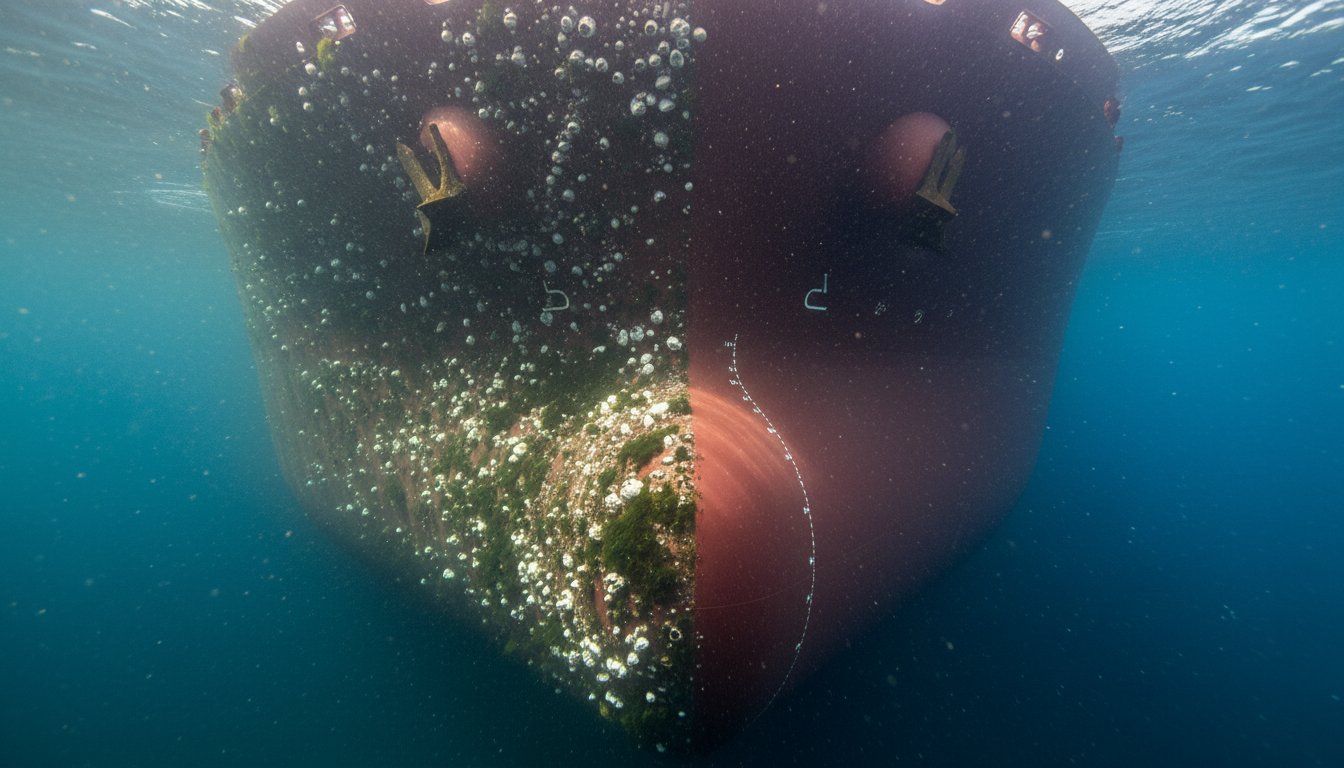
Selecting the optimal antifouling bottom paint represents a critical operational decision, one frequently complicated by a dense lexicon of technical terms from ablative biocides to biocide-free foul release. The consequences of an incorrect choice are significant, manifesting as increased hydrodynamic drag, escalated fuel consumption, and the high cost of premature dry-docking. For vessel operators committed to both economic efficiency and environmental stewardship, navigating these variables to find a truly effective, long-term solution is a paramount challenge.
This definitive guide is engineered to eliminate that uncertainty. We will demystify the core science behind modern hull coatings, providing a detailed analysis of competing technologies and their impact on vessel performance. Our objective is to equip you with the data-driven insights necessary to select an antifouling system that not only protects your hull from damaging marine growth but also maximizes operational efficiency, mitigates long-term maintenance costs, and ensures regulatory compliance. Prepare to make a confident, informed decision that delivers superior performance and longevity for your asset.
Key Takeaways
- Understand the direct correlation between marine biofouling and increased hydrodynamic drag to quantify its impact on your vessel’s fuel efficiency.
- Differentiate between traditional biocide-leaching coatings and modern, non-toxic foul release technologies to make a compliant and sustainable choice.
- Learn to evaluate your antifouling bottom paint not as a single product, but as the topcoat of an integrated system where the primer is critical for adhesion and longevity.
- Develop a decision-making framework for selecting a coating system based on your vessel’s specific operational profile, service environment, and long-term ROI goals.
The Foundation: Why Antifouling Bottom Paint is Critical for Any Vessel
A vessel’s hull is the critical interface between the asset and its operational environment, a surface where hydrodynamic efficiency and structural integrity converge. Protecting this surface is not merely a matter of routine maintenance but a fundamental component of performance optimization and asset preservation. At its core, antifouling bottom paint is a specialized coating system engineered as a protective barrier against marine biofouling. The science behind what is antifouling paint involves creating a surface that is inhospitable to subaquatic organisms, thereby preserving the hull’s intended design and function.
What is Marine Biofouling?
Marine biofouling is the progressive and inevitable colonization of any submerged surface by marine organisms. This process unfolds in stages, beginning within minutes as a microscopic slime layer (biofilm), which provides a foundation for more complex lifeforms like algae and seaweed. This soft fouling eventually gives way to hard-shelled animals such as barnacles, tubeworms, and mussels. The severity of this colonization is dictated by environmental factors including water temperature, salinity, and nutrient levels, with warmer waters accelerating the process significantly. The resulting rough, uneven surface creates immense hydrodynamic drag—akin to an athlete attempting to run while deploying a parachute.
The Economic and Environmental Cost of Inaction
A fouled hull directly translates into severe operational penalties. The increased drag forces the propulsion system to work exponentially harder to maintain a given speed, a condition that can elevate fuel consumption by as much as 40%. This inefficiency corresponds directly to a proportional increase in carbon emissions and other greenhouse gases. Furthermore, fouled hulls are a primary vector for the translocation of invasive aquatic species, posing a substantial threat to global marine biodiversity and local ecosystems—a risk that is facing increasing regulatory scrutiny worldwide.
Ultimately, allowing biofouling to accumulate is a decision with cascading negative consequences. Beyond the immediate performance losses and environmental impact, severe fouling can trap corrosive elements and moisture against the hull. This can lead to accelerated corrosion and pitting, potentially compromising the structural integrity of the asset over its service life. Therefore, a high-performance antifouling coating system is not an operational expense; it is a strategic investment in mitigating costs, ensuring environmental compliance, and protecting the long-term value of any maritime vessel.
Comparing Technologies: Traditional Biocides vs. Modern Foul Release
The selection of an antifouling bottom paint represents a critical decision in vessel maintenance, directly impacting operational efficiency, environmental compliance, and long-term cost. The industry is defined by two fundamentally different approaches to mitigating biofouling: the traditional method of releasing toxins to kill marine growth, and the modern, biocide-free strategy of preventing its attachment in the first place.
Traditional Antifouling Paints: Ablative and Hard
Conventional antifouling systems rely on the controlled release of biocides, most commonly cuprous oxide, to create a toxic barrier that poisons marine organisms. This technology is delivered in two primary forms:
- Ablative (Self-Polishing) Paints: These coatings are designed to wear away with the friction of water, continuously exposing fresh layers of active biocide. While effective for a limited period, their lifespan is finite, and they contribute directly to heavy metal pollution.
- Hard Paints: These create a durable, porous matrix from which biocides leach out over time. As the biocides deplete, the paint loses effectiveness, and the remaining inert layers build up, eventually requiring costly and labor-intensive stripping.
Both methods share significant limitations, including a finite service life, documented environmental toxicity, and the inevitable buildup of spent coatings that degrade hull hydrodynamics.
Foul Release Coatings: The Future of Hull Protection
Foul release technology marks a paradigm shift from toxic extermination to passive prevention. Instead of poisoning marine life, these coatings create an ultra-slick, low surface energy finish that organisms cannot firmly adhere to. Any growth that does settle is easily dislodged by the vessel’s movement through water or simple cleaning.
Early iterations included soft silicone coatings, which offered excellent foul release properties but were mechanically fragile and easily damaged. The modern evolution is the Hard Film Foul Release system. Technologies like SeaCoat’s silane-siloxane chemistry combine the non-stick properties of silicone with the extreme durability of an epoxy, creating a long-lasting, abrasion-resistant surface that optimizes hydrodynamic performance for a decade or more.
Regulatory Landscape and Environmental Responsibility
The maritime industry faces increasing global scrutiny over the environmental impact of traditional biocides. Jurisdictions worldwide are implementing stricter controls on the use of copper and other toxic agents in marine coatings. This global shift is reflected in increasingly stringent national and International Anti-fouling Regulations, which are phasing out harmful substances to protect marine ecosystems. Biocide-free, zero-VOC coatings are the definitive solution for future-proofing vessel assets, ensuring compliance while safeguarding applicator health and eliminating air pollutants during application.
The System Approach: Why the Primer is as Important as the Paint
In high-performance marine applications, viewing antifouling bottom paint as a standalone product is a critical oversight. True hull protection and efficiency are achieved through a multi-layer coating system, where the primer serves as the indispensable foundation. The most technologically advanced topcoat will inevitably fail if applied to an improperly prepared or unprimed surface, as the system’s integrity is only as strong as its foundational layer. A correctly specified and applied primer is the difference between a ten-year service life and premature coating failure.
Function 1: Unbreakable Adhesion
A marine primer functions as a critical tie-coat, engineered to form a tenacious mechanical and chemical bond between the hull substrate and the subsequent antifouling layers. This bond is essential for system longevity, as it directly prevents catastrophic failures such as delamination, blistering, and peeling. Ensuring chemical compatibility between the primer and the topcoat creates a unified system that flexes and endures the immense hydrodynamic and thermal stresses a vessel faces.
Function 2: Corrosion and Osmosis Barrier
Beyond adhesion, high-solids epoxy primers create a formidable, impermeable barrier against water intrusion. For metal hulls, this function is paramount, providing the primary defense against the electrochemical process of corrosion on steel and aluminum. On fiberglass composite hulls, the primer’s barrier properties are equally critical for preventing water absorption into the laminate, a precursor to osmotic blistering. While a comprehensive overview of antifouling paint focuses on preventing marine growth, it is the primer system that safeguards the hull’s fundamental structural integrity.
Choosing the Right Primer: Seapoxy 73 & 85
The SeaCoat system utilizes high-solids, zero-VOC epoxy primers designed for maximum performance and environmental compliance. Selecting the correct primer is dependent on the vessel’s substrate, operational profile, and performance requirements.
- Seapoxy 73: A versatile, general-purpose marine primer offering exceptional adhesion and barrier protection for a wide range of vessels and substrates. It is the ideal foundation for standard service conditions.
- Seapoxy 85: Formulated for maximum durability and chemical resistance, Seapoxy 85 is specified for applications demanding superior impact and abrasion protection, such as ice-class vessels or hulls operating in aggressive industrial waters.
Not sure which primer your vessel needs? Consult our technical experts.
A Practical Guide: Selecting the Right Antifouling System
Selecting the optimal antifouling bottom paint is not about finding the “best” product, but about engineering the best integrated system for your specific operational profile. This requires moving beyond short-term costs to a more strategic analysis of long-term performance and value. To make an informed decision, vessel operators must evaluate a matrix of interconnected factors.
Factor 1: Hull Material and Condition
The substrate of your hull dictates the chemical compatibility of any coating. While fiberglass is compatible with most systems, metal hulls require specialized consideration. Crucially, copper-based biocides react with aluminum, causing aggressive galvanic corrosion that can compromise hull integrity; therefore, a copper-free solution is mandatory. Steel and wood hulls have their own unique primer and preparation requirements. Equally important is the condition of the existing coating. Is it compatible with a new layer, or has its integrity failed, necessitating a full strip-down to the substrate for proper adhesion?
Factor 2: Vessel Usage and Water Conditions
A vessel’s operational tempo and environment directly influence coating performance. High-speed planing vessels demand a durable, hard-film or foul-release coating that resists abrasion and optimizes hydrodynamics. Slower displacement hulls or vessels that sit idle for long periods may be suited to controlled-release ablative paints. The water itself is a critical variable. The biological load—from aggressive barnacle growth in warm saltwater to slime in freshwater—dictates the required protective mechanism. A system designed for low-fouling North Atlantic waters will likely fail in the high-fouling environment of the Caribbean.
Factor 3: Maintenance Cycles and Long-Term ROI
A low-cost paint job requiring reapplication every 1-2 years presents a deceptively high total cost of ownership. When factoring in recurrent haul-outs, labor costs, and operational downtime, the initial savings are quickly negated. Compare this with the lifecycle of premium systems engineered for a ten-year service life, which fundamentally change the economic calculation. The most significant return, however, is often realized through fuel efficiency. A perfectly smooth, foul-free hull minimizes hydrodynamic drag, directly translating into quantifiable fuel savings and reduced emissions over the vessel’s operational life.
The Sea-Speed Solution: Superior Performance Through Advanced Chemistry
Throughout this guide, we have explored the critical criteria for selecting a high-performance hull coating: durability, effective foul release, and environmental compliance. The culmination of these principles is found in the Sea-Speed V 10 X Ultra system—an advanced solution engineered not merely as a paint, but as a long-term strategic asset for vessel management. This system moves beyond the limitations of traditional biocidal coatings and fragile silicones to deliver a new standard in operational efficiency and hull protection.
Hard Film Durability, Foul Release Efficiency
At the core of the Sea-Speed system is a proprietary Silane-Siloxane chemistry that creates an exceptionally hard, abrasion-resistant film. Unlike soft silicone coatings that are susceptible to damage from mechanical cleaning, debris, or even routine operational contact, our hard-film technology maintains its integrity and low-friction surface. This unparalleled durability makes it the definitive choice for any vessel type, from high-speed commercial craft to specialized ice-breakers operating in the harshest marine environments.
A 10-Year Lifecycle with Proven ROI
The Sea-Speed V 10 X Ultra is designed for a service life of 10 years, a significant extension that fundamentally alters vessel maintenance schedules and costs by drastically reducing dry-dock cycles. This longevity is matched by quantifiable performance gains. Independent studies and fleet data consistently demonstrate that the ultra-smooth, low-drag surface delivers significant hydrodynamic improvements. The tangible outcomes for operators include:
- Fuel Savings: Documented fuel efficiency gains ranging from 8% to 15%.
- Reduced Maintenance: Elimination of frequent re-application cycles required by ablative paints.
- Consistent Performance: The non-depleting surface maintains its foul-release properties for the entire service life.
These operational savings ensure that the initial investment in this superior antifouling bottom paint system generates a compelling return, often paying for itself well within its lifecycle.
The Environmentally Compliant Choice
Sea-Speed V 10 X Ultra represents the future of responsible marine coating technology. Its formulation is 100% biocide-free and non-toxic, ensuring it does not leach harmful chemicals into marine ecosystems. Furthermore, the system is engineered with zero Volatile Organic Compounds (VOCs), promoting a safer application environment for shipyard crews and eliminating air pollutants. Adopting this system is not just an operational upgrade; it is a commitment to sustainability and a proactive step toward ensuring compliance with increasingly stringent global environmental regulations.
To explore the technical specifications and case studies for your fleet, visit seacoat.com.
Navigating the Future of Hull Performance and Protection
As we’ve explored, the integrity of a vessel’s hull is the foundation of its operational efficiency and economic viability. The industry’s evolution is clear: a decisive pivot from traditional, ablative biocides to sophisticated, non-toxic foul-release technologies that enhance hydrodynamic performance. Therefore, the selection of the right antifouling bottom paint is no longer a simple maintenance protocol but a critical strategic investment. It directly influences fuel expenditure, regulatory adherence, and the long-term preservation of your maritime assets.
Sea-Speed V 10 X Ultra embodies the pinnacle of this technological shift. Engineered for longevity and peak performance, it offers a 10-year proven coating lifecycle, mitigating the need for frequent and costly dry-docking. This advanced chemistry translates into a tangible competitive advantage, with documented cases of up to a 15% reduction in fuel consumption. By choosing our 100% non-toxic, biocide-free system, you are not just coating a hull; you are future-proofing your fleet for global compliance and superior operational returns. Discover the Sea-Speed V 10 X Ultra system for your vessel and embrace a new standard in marine protection.
Frequently Asked Questions
How often does antifouling bottom paint need to be reapplied?
The reapplication frequency depends entirely on the coating technology. Traditional ablative or hard paints that leach biocides typically require reapplication every 12 to 36 months as the active ingredients are depleted. In contrast, advanced biocide-free foul release coatings are engineered for longevity, creating a durable, non-depleting surface that can protect a hull for a decade or more. This significantly extends maintenance intervals, offering a superior long-term return on investment by minimizing haul-out cycles.
Can I apply a foul release coating over my old antifouling paint?
It is not recommended. The performance and adhesion of a high-technology foul release system are contingent upon a stable, properly prepared substrate. Applying it over a soft, ablative, or compromised layer of old paint will inevitably lead to delamination and coating failure. For optimal hydrodynamic performance and to realize the full 10-year service life of the coating, the hull must be stripped to a sound primer or gelcoat and prepared according to technical specifications.
What is the difference between antifouling and anti-fouling paint?
Semantically, there is no functional difference; both terms refer to coatings designed to mitigate the settlement of marine organisms on a submerged surface. “Antifouling” is the more prevalent and contemporary spelling used in technical and industry contexts. While the terminology is interchangeable, the underlying technology has evolved dramatically from traditional biocide-based paints to advanced, non-toxic foul release systems that create an ultra-smooth surface organisms cannot adhere to, enhancing both protection and vessel performance.
Are hard foul release coatings like Sea-Speed suitable for slow-moving or stationary boats?
Yes. While early-generation foul release coatings relied heavily on high-speed water flow to self-clean, modern hard foul release technologies are fundamentally different. Their extremely low surface energy and non-porous finish create a surface that is exceptionally easy to clean, regardless of vessel speed. This physical barrier prevents strong adhesion, allowing for simple, low-effort removal of any bio-slime, making them a highly effective and low-maintenance solution for vessels with any operational profile.
How do I clean the hull of a boat with a hard foul release coating?
Cleaning a hard foul release coating is a simple mechanical process that does not release biocides into the marine environment. Any accumulated slime or growth can be easily removed using non-abrasive methods, such as a soft-bristle boat brush, sponges, or a low-pressure water jet. The non-stick properties of the coating ensure that marine organisms cannot form a tenacious bond, making in-water cleaning a rapid and effective procedure for maintaining optimal hull performance.
What is the average cost to have a professional apply antifouling bottom paint?
Professional application costs for conventional antifouling bottom paint can range from $50 to over $100 per linear foot, inclusive of haul-out, surface preparation, and labor. While advanced foul release systems may represent a higher initial capital investment, their extended service life eliminates the recurring costs of reapplication every 1-3 years. This results in a significantly lower total cost of ownership and a more predictable maintenance budget over the vessel’s operational lifetime.
Is there a specific antifouling paint recommended for aluminum boats?
Yes, protecting aluminum hulls requires specific formulations due to the risk of galvanic corrosion. Traditional antifouling paints containing cuprous oxide must be avoided as the copper will aggressively corrode the aluminum. The industry standard is to use a copper-free, biocide-based paint. However, a superior and more sustainable solution is a biocide-free foul release coating. This technology creates an inert physical barrier, providing robust protection without introducing corrosive metals or environmental toxins.