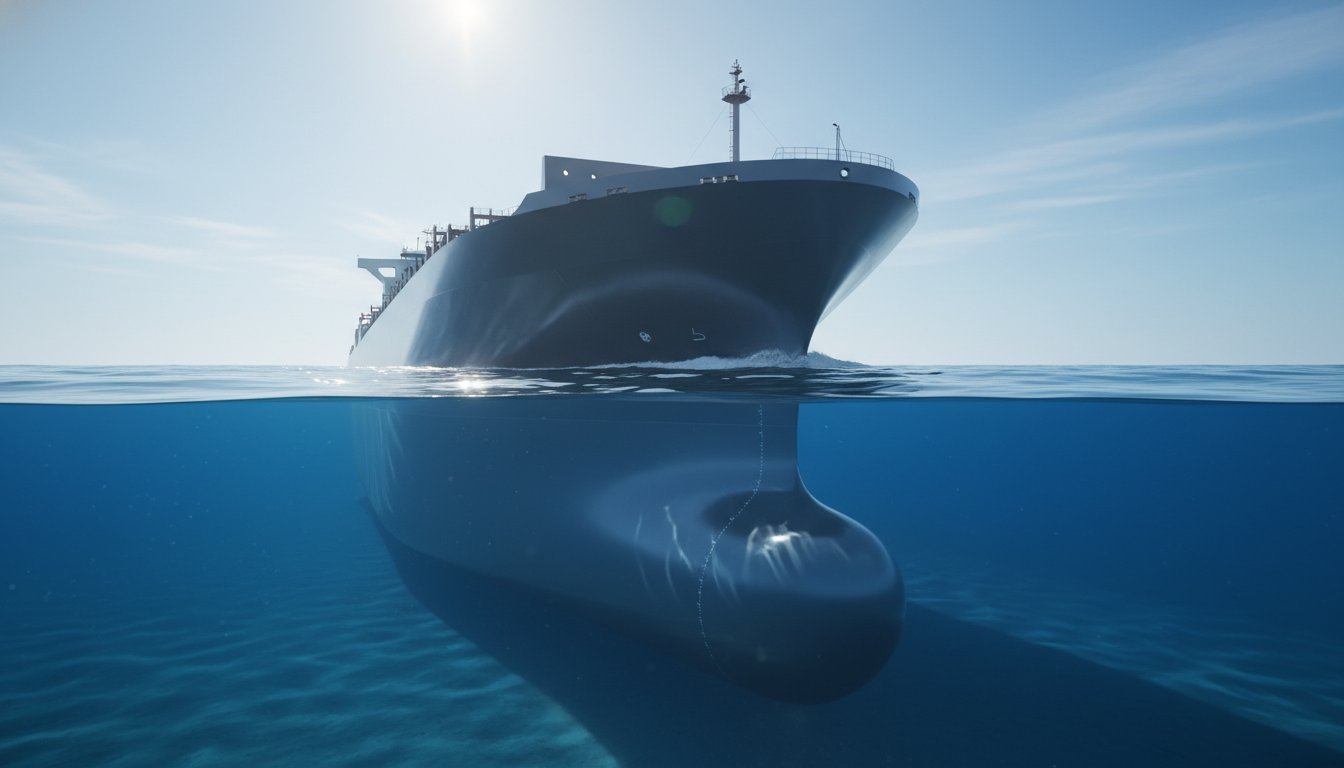
The IMO’s 2023 Greenhouse Gas Strategy has set a clear trajectory for the industry, making the 40% increase in fuel consumption caused by biofouling an unacceptable operational risk. You likely recognize that traditional biocidal paints are failing to meet the dual demands of environmental compliance and operational profitability. This is why the maritime sector is pivoting toward advanced polymer marine coatings as a strategic asset rather than a mere maintenance expense. These systems move beyond the limitations of soft silicones to provide a hard-film surface that withstands the rigors of commercial operation.
You’ll discover how next-generation polymer chemistry is replacing toxic antifouling paints to deliver unprecedented fuel efficiency and a 10-year durability cycle. We’ll examine the hydrodynamic science behind these siloxane-based systems and how they facilitate in-water cleaning without compromising the integrity of the hull. This guide details the transition from biocide-heavy mitigation to a permanent, high-performance solution that optimizes your fleet’s long-term ROI and environmental stewardship.
Key Takeaways
- Learn why cross-linked thermoset resins are replacing sacrificial ablative paints to provide a permanent, foul-release solution for modern vessels.
- Discover how the molecular structure of advanced polymer marine coatings provides superior substrate adhesion and surface smoothness compared to traditional hull protection.
- Analyze the financial impact of improved hydrodynamics, including how specialized coatings can optimize fuel efficiency by up to 10%.
- Identify the strategic advantages of transitioning to a non-toxic, 10-year coating system that balances environmental stewardship with high-performance durability.
What are Advanced Polymer Marine Coatings?
Advanced polymer marine coatings represent a sophisticated evolution in maritime engineering, moving beyond the structural limitations of traditional sacrificial chemistries. These coatings are high-performance, cross-linked thermoset resins that create a permanent, hard-film barrier on the hull. Unlike traditional Anti-fouling paint, which relies on the continuous leaching of biocides like cuprous oxide into the water column, these advanced systems utilize inert polymer matrices. It’s a fundamental shift from chemical toxicity to mechanical resistance. The resulting surface is exceptionally durable, resisting both mechanical damage from port operations and the attachment of marine organisms through physical properties rather than chemical poisoning.
The transition from ablative paints to permanent foul-release systems allows for significantly longer dry-docking intervals. While traditional paints wear away over time, advanced polymer marine coatings maintain their integrity, providing a strategic asset for vessel management. This technology eliminates the need for frequent recoating, as the hard-film surface doesn’t degrade or lose thickness during operation. This durability ensures that the hull remains protected against corrosion and fouling for cycles exceeding ten years.
The Chemistry of Modern Hull Protection
At the molecular level, these coatings rely on tightly woven polymer chains that form a non-porous, low-energy surface. A critical component in this architecture is Silane-Siloxane, which creates a robust hydrophobic barrier that prevents water and organic matter from penetrating the film. While traditional epoxy or vinyl-based paints are inherently porous and prone to osmotic blistering, advanced polymers maintain a smooth, glass-like finish. This lack of porosity ensures that even when biofouling occurs, the bond is so weak that the hydrodynamic pressure of the vessel moving through the water can effectively clear the hull.
Why the Maritime Industry is Switching in 2026
The global maritime sector faces a critical deadline as 2026 approaches, driven by increasingly stringent environmental regulations and the need for operational optimization. International maritime authorities are accelerating the ban on various toxic biocides, forcing shipowners to seek alternatives that don’t compromise performance. Advanced polymers are essential for vessels to meet the Energy Efficiency Existing Ship Index (EEXI) standards, as they significantly reduce hydrodynamic drag. By maintaining a low surface roughness, these coatings contribute to fuel savings of 6% to 10% compared to traditional systems. This shift toward environmental marine coatings reflects a broader industry commitment to sustainability and long-term return on investment.
- Regulatory Compliance: Meeting IMO 2023 and 2026 carbon intensity requirements.
- Zero VOCs: Eliminating volatile organic compounds during application.
- Friction Reduction: Optimizing hull speed and reducing engine strain.
- Durability: Resisting hull cleaning tools and abrasive maritime environments.
The Molecular Advantage: Silane-Siloxane Technology
Silane-Siloxane technology represents a fundamental shift in how advanced polymer marine coatings protect a vessel’s wetted surface. These hybrid polymers combine an inorganic silane backbone with organic siloxane side chains, creating a structure that’s both resilient and flexible. This dual nature allows the coating to form covalent bonds with the vessel’s substrate, which creates a permanent chemical link rather than a temporary mechanical layer. Because the bond occurs at a molecular level, it effectively eliminates the risk of delamination common in older, solvent-based systems. The resulting surface possesses extremely low surface energy, which is the primary driver of its foul-release capabilities.
Marine organisms, such as barnacles or tube worms, require a high-energy surface to anchor their adhesive proteins. On a Silane-Siloxane surface, these proteins can’t penetrate the polymer matrix. This forces the organism to remain only loosely attached to the hull. As industry standards shift due to Marine Coatings, Biocides, and Environmental Regulations, the move toward these non-toxic foul release mechanisms has become an operational necessity for global fleets. The technology doesn’t rely on the leaching of heavy metals; instead, it uses physics to deny attachment.
Hydrodynamics and Surface Roughness
Hull surface roughness is the primary driver of frictional drag, which can account for up to 80% of a vessel’s total resistance. These advanced polymer marine coatings achieve a significantly lower Average Hull Roughness (AHR) compared to traditional biocidal paints. While standard paints often leave a textured finish that increases turbulence, these polymers cure to a glass-like smoothness. A 10-micron reduction in roughness can lead to a 1% fuel saving. Once the vessel reaches cruising speeds, typically above 10 knots, the hydrodynamic shear forces become greater than the organism’s bond strength. This results in a self-cleaning effect that maintains hull efficiency without the need for aggressive manual scrubbing or underwater cleaning interventions.
Durability and Hard-Film Integrity
Traditional silicone coatings are often criticized for their fragility, but advanced polymers solve this through superior Shore D hardness. While standard silicones are soft and easily torn by debris or fenders, these polymers provide a rigid, high-integrity film. This hardness is vital for vessels navigating ice-prone routes or shallow harbors with high suspended solids. The molecular density of the film also prevents undercutting corrosion, which occurs when water migrates beneath the coating at a scratch point. By sealing the substrate at a molecular level, these coatings ensure that localized impact damage doesn’t lead to widespread coating failure or corrosion. Vessel owners can evaluate their specific fleet requirements by reviewing our advanced foul release solutions to ensure long-term protection and maximized ROI.
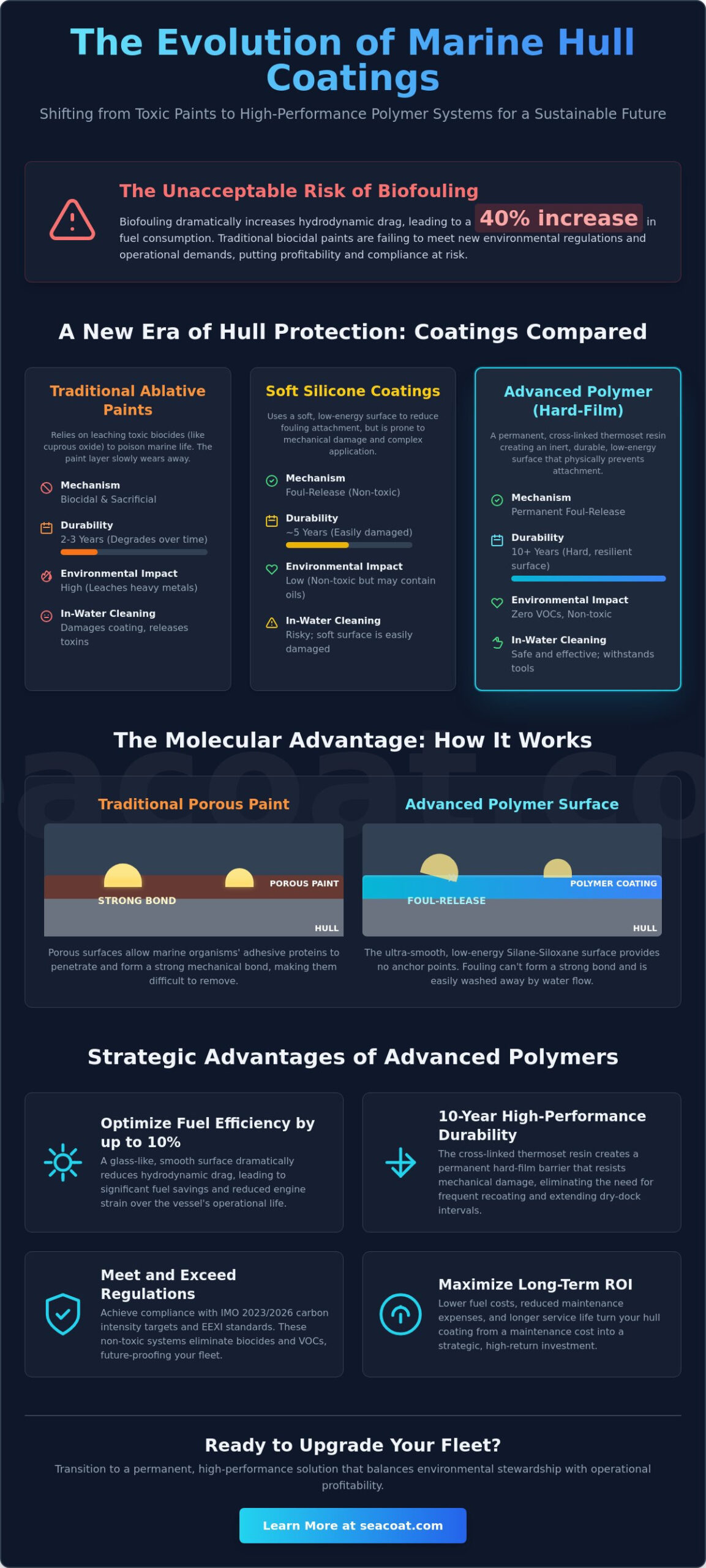
Comparing Polymer Systems: Hard-Film vs. Soft Silicone vs. Ablative
Modern hull protection is categorized into three distinct chemical strategies. A pervasive industry myth suggests that selecting a biocide-free solution necessitates a compromise on surface hardness. This isn’t true. While legacy systems relied on toxic leaching to deter growth, advanced polymer marine coatings utilize structural integrity and surface energy to prevent biofouling adhesion. Over a 10-year operational window, the total cost of ownership (TCO) for these advanced systems often sits 30% to 40% lower than traditional methods. This financial advantage stems from eliminated repainting cycles and sustained fuel optimization through reduced skin friction.
Ablative Antifouling: The Sacrificial Legacy
Ablative systems function through a controlled erosion process. As the vessel moves through the water, the outer layer of the ablative bottom paint wears away to reveal fresh biocides. This sacrificial cycle creates a constant environmental discharge of heavy metals like copper or zinc. It also results in high surface roughness as the paint erodes unevenly over time. Increased drag leads to a measurable 5% to 12% penalty in fuel efficiency compared to smooth polymer films. Maintenance is frequent; these hulls typically require hauling and repainting every 24 months to remain effective.
Soft Silicones: The Fragile Alternative
Soft silicone foul-release coatings provide excellent hydrodynamics and low surface energy. They work effectively for high-activity vessels that maintain consistent speeds. However, their physical vulnerability is a critical operational drawback. The silicone matrix is susceptible to tearing during routine fender contact, tug maneuvers, or accidental groundings. Once the film is breached, the foul-release property is lost in that area, leading to localized colonization. This fragility limits their utility in demanding commercial environments where impact resistance is a priority for long-term asset protection.
Hard-Film Polymers: The Best of Both Worlds
Hard-film polymers represent the evolution of marine chemistry. These systems merge the structural durability of a cross-linked epoxy with the non-stick characteristics of siloxane. They’re engineered to withstand rigorous in-water cleaning without degrading the coating’s thickness or hydrodynamic performance. This stability ensures a zero-leach profile, providing 100% compliance with tightening global environmental regulations. For a deeper look at how these compare to historical technologies, consult the definitive guide to antifouling boat paint.
Key benefits of hard-film advanced polymer marine coatings include:
- Durability: High resistance to mechanical damage from ice, debris, or dock contact.
- Cleanability: Surfaces can be scrubbed repeatedly to maintain a 0-foul rating without releasing toxins.
- Longevity: A single application provides a service life exceeding 10 years, drastically reducing dry-docking expenses.
- Sustainability: Zero VOCs and zero biocides ensure the vessel meets all international port standards.
These coatings act as a permanent asset rather than a consumable. They maintain a smooth, low-drag profile for a full decade, optimizing both the vessel’s carbon footprint and its operational bottom line.
Calculating ROI: Fuel Efficiency and Maintenance
Transitioning from traditional anti-fouling systems to advanced polymer marine coatings shifts the hull from a recurring maintenance liability to a strategic operational asset. The primary driver of this return on investment is the immediate and sustained reduction in hydrodynamic drag. Most vessel operators report fuel savings between 4% and 10% depending on the hull form and operational profile. Beyond direct fuel costs, these coatings are essential for maintaining a favorable Carbon Intensity Indicator (CII) rating. Because the CII measures how efficiently a ship transports goods, hull performance directly dictates whether a vessel remains in a high-performing category or faces regulatory penalties that could limit its trade routes.
The Economics of Reduced Drag
The financial benefits of a low-friction surface become clear when examining long-haul routes. For a mid-sized container ship consuming 30 tons of fuel daily at 14 knots, a 10,000 nautical mile journey takes roughly 30 days. A 6% reduction in drag saves over 50 tons of fuel in a single voyage. Unlike conventional paints that roughen as biocides leach out, polymer surfaces remain stable over time. Traditional systems often see a speed loss of 1.5% per year due to surface degradation; advanced polymers mitigate this decay entirely. You can explore more specific performance data in the definitive guide to boat hull paint to see how these variables impact long-term profitability.
Maintenance and In-Water Cleaning
One of the most significant operational advantages is the extension of dry-docking intervals. While standard coatings typically require a full refresh every 36 months, advanced polymer marine coatings are engineered for 10-year lifecycles. This longevity is supported by the “always clean” hull philosophy. Because the coating is biocide-free and extremely durable, it supports regular in-water grooming without the risk of paint thinning or toxic runoff. This approach offers several benefits:
- Elimination of mid-term dry-docking expenses and associated off-hire time.
- Significant reduction in the cost of specialized hull cleaning services over the lifecycle.
- Consistent top-speed performance throughout the entire ten-year life of the coating.
- Prevention of invasive species translocation without chemical leaching into sensitive ecosystems.
This durability ensures that the vessel’s performance on day 1,000 is identical to day one. It’s a level of reliability that traditional ablative paints simply can’t match. To start maximizing your vessel’s potential, contact SeaCoat to optimize your fleet’s operational lifecycle.
Sea-Speed V 10 X Ultra: The Pinnacle of Polymer Marine Coatings
Sea-Speed V 10 X Ultra represents the definitive silane-siloxane system for modern vessel management. While traditional coatings rely on the depleting release of biocides, this technology creates a permanent, non-stick surface that prevents aquatic organisms from establishing a bond. It’s a premier example of advanced polymer marine coatings that offers a 100% non-toxic, zero-VOC profile. This chemical composition ensures complete compliance with international environmental standards while maintaining peak hydrodynamic performance.
The application protocol is designed for shipyard efficiency. Sea-Speed functions as a “one-coat” topcoat solution when integrated with Seapoxy primers. This streamlined process significantly reduces labor requirements and shortens the critical path during dry-docking intervals. Operational reliability is non-negotiable; the system is backed by a 10-year warranty. This performance record is proven across diverse sectors, from naval military assets to high-utilization commercial fleets. It doesn’t just protect the hull; it optimizes the entire operational lifecycle of the vessel.
Key Performance Metrics of Sea-Speed
The technical superiority of Sea-Speed V 10 X Ultra is evidenced by its physical properties. Because it contains no heavy metals, it eliminates the risk of leaching into marine protected areas. The resulting finish is exceptionally smooth, delivering a surface profile that rivals specialized racing-grade coatings. This lack of roughness reduces skin friction, which is a primary driver of fuel consumption. Additionally, the film provides high-level abrasion resistance. This is vital for commercial workboats and aluminum hulls that operate in shallow or debris-heavy environments where mechanical wear is a constant threat.
- Zero VOCs: Eliminates atmospheric pollution and improves safety for shipyard personnel.
- Hydrodynamic Efficiency: Ultra-low surface roughness leads to measurable fuel savings.
- Durability: Hard-film technology withstands frequent cleaning and mechanical impact.
Next Steps for Fleet Optimization
Adopting a permanent polymer solution is a strategic move for any fleet seeking to reduce its carbon footprint and operational costs. Owners can initiate this transition by requesting a detailed hull performance audit from SeaCoat technical experts. These audits analyze current drag factors and project the ROI of a coating upgrade. SeaCoat maintains a network of authorized applicators in global maritime centers like Singapore, the USA, and Australia to ensure consistent quality. It’s time to move beyond the cycle of temporary paints. Choosing advanced polymer marine coatings provides a durable, scientific solution for the challenges of 21st-century seafaring.
Contact a SeaCoat representative today to schedule a technical consultation and discover how Sea-Speed V 10 X Ultra can transform your fleet’s efficiency.
Securing Long-Term Vessel Efficiency Through Science
The maritime industry’s transition toward sustainable, high-performance hull protection is a strategic necessity for operational longevity. By moving beyond traditional ablative biocides and adopting advanced polymer marine coatings, fleet managers can effectively eliminate the trade-off between environmental compliance and hydrodynamic efficiency. The integration of silane-siloxane technology creates a durable, non-toxic surface that fundamentally changes how a vessel interacts with the water. It’s a shift that prioritizes permanent solutions over temporary fixes.
Data from commercial trials demonstrates that this technological shift yields substantial returns, specifically through 4-10% fuel savings. Sea-Speed V 10 X Ultra sets a new benchmark with its zero VOC, non-toxic formulation and a documented 10-year life cycle performance. This longevity reduces the frequency of dry-docking intervals and mitigates the long-term costs associated with hull maintenance. Investing in superior coating technology isn’t just about protection; it’s a commitment to a more profitable and ecologically responsible future for your fleet. You’re choosing a path that values both the bottom line and the preservation of global marine ecosystems.
Upgrade your fleet performance with Sea-Speed V 10 X Ultra
Frequently Asked Questions
What makes a polymer coating “advanced” compared to standard marine paint?
Advanced polymer coatings use biocide-free siloxane technology to create a non-porous surface, whereas standard paints rely on leaching toxins. These systems focus on low surface energy and hydrodynamic smoothness. SeaCoat’s technology achieves a surface roughness of less than 20 microns, while standard paints often exceed 100 microns. This reduction in friction is the core differentiator between a temporary chemical barrier and a permanent performance asset.
Can advanced polymer coatings be applied to aluminum boats?
Yes, advanced polymer marine coatings are ideal for aluminum hulls because they’re non-conductive and prevent galvanic corrosion. Since these coatings don’t contain copper or heavy metals, there’s zero risk of the electrolytic reaction that typically degrades aluminum in saltwater. Our siloxane-based formulas provide a dielectric barrier that isolates the metal from the environment. This ensures long-term structural integrity while maintaining a high-performance finish.
How much fuel can I realistically save by switching to a foul-release polymer?
Switching to a foul-release polymer can realistically reduce fuel consumption by 6% to 12% based on vessel speed and route. This efficiency stems from a lower coefficient of friction and the prevention of macro-fouling, which can increase drag by 40%. By maintaining a smooth, hydrodynamic surface, operators achieve a measurable reduction in carbon emissions. Data from independent sea trials confirms these performance gains over traditional anti-fouling methods.
Do polymer coatings require special equipment for application?
No, applying advanced polymer marine coatings doesn’t require specialized machinery beyond standard airless spray equipment. Contractors typically use a pump with a 45:1 ratio and a specific tip size, such as a .017 or .019, to ensure a uniform film thickness. The process is straightforward for professional applicators familiar with high-solids materials. Proper surface preparation to an SSPC-SP10 near-white metal blast remains the most critical factor for adhesion.
Are advanced polymer coatings compliant with IMO and REACH regulations?
These coatings are fully compliant with IMO Anti-Fouling Systems (AFS) Convention and REACH regulations because they’re biocide-free and contain zero VOCs. They don’t leach organotin compounds or heavy metals into the water column, meeting the strictest environmental standards internationally. This compliance future-proofs your vessel against tightening maritime laws. It ensures your operations remain sustainable in sensitive ecological zones like the Great Barrier Reef or the Baltic Sea.
What happens if a hard-film polymer coating is scratched or damaged?
If a hard-film polymer coating is scratched, the damage is localized and doesn’t lead to the systemic peeling seen in traditional paints. You can repair small areas by cleaning the site and applying a touch-up kit of the same polymer resin. Because the material forms a permanent covalent bond with the substrate, the integrity of the surrounding coating remains intact. This prevents corrosion from spreading beyond the immediate point of impact.
How often does a Sea-Speed V 10 X Ultra coating need to be replaced?
A Sea-Speed V 10 X Ultra coating typically lasts 10 years or longer before it needs a full replacement. Unlike ablative paints that require reapplication every 24 months, this hard-film system is designed for multiple dry-dock cycles. You’ll only need to perform minor touch-ups during scheduled maintenance. This extended lifecycle significantly reduces the total cost of ownership and minimizes the environmental impact of frequent repainting.
Is in-water cleaning safe for advanced polymer coatings?
In-water cleaning is safe and highly effective for advanced polymer coatings when you use soft brushes or specialized cleaning tools. Because the surface is non-porous and lacks biocides, you aren’t scrubbing away active ingredients or releasing toxins into the harbor. Regular cleaning maintains the coating’s low-friction properties and extends its service life. Most slime and light growth can be removed at speeds above 10 knots through passive hydrodynamic action.