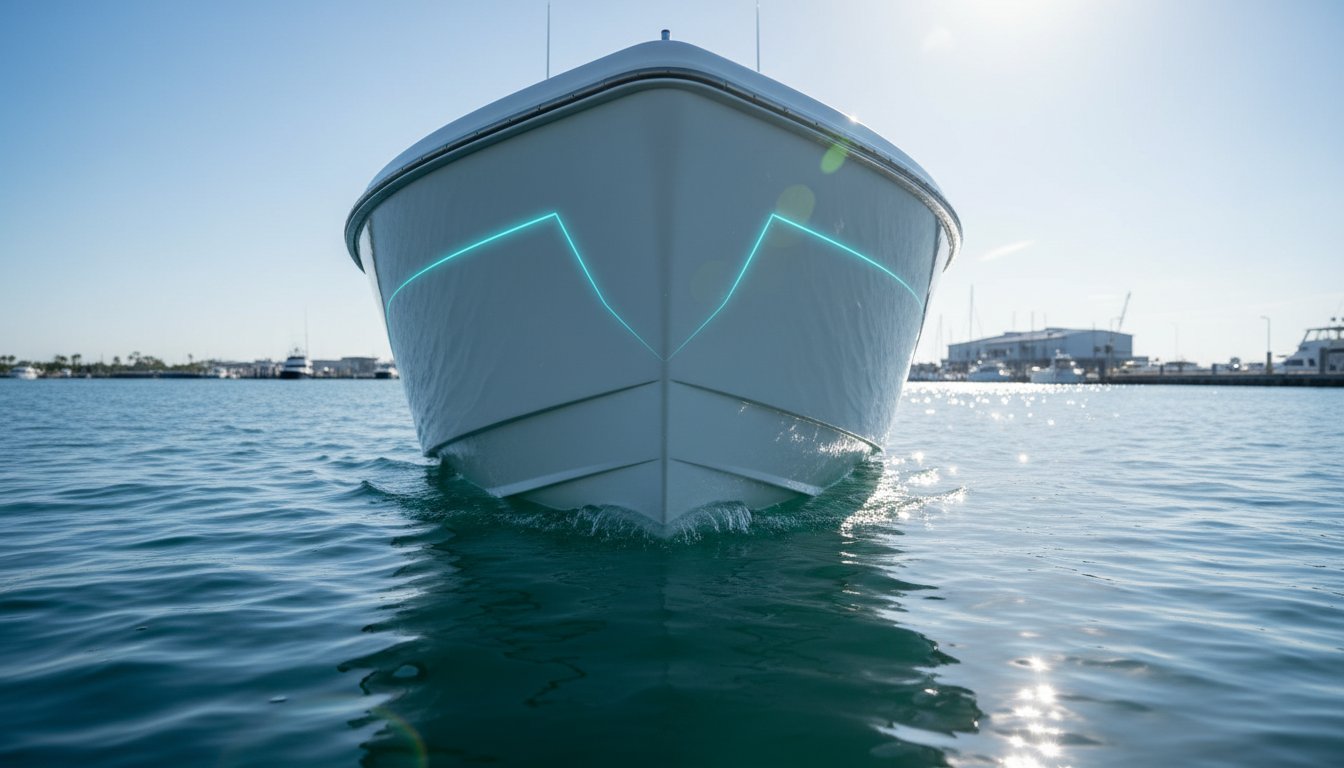
Why are you still treating your vessel’s hull as a recurring liability when it could be your most profitable performance asset? Most operators accept the grueling cycle of annual dry-docking and the escalating costs of ablative paint as an unavoidable reality of maritime life. You’re likely feeling the pressure of the March 26, 2026, deadline for copper discharge compliance in Marina del Rey or the strict new NORMAM-401 enforcement in Brazil. Finding the right marine coating for fiberglass hulls shouldn’t just be about meeting regulations; it should be about fundamental optimization.
This guide demonstrates how transitioning to hard-film silane-siloxane technology, specifically Sea-Speed V 10 X Ultra, can secure a 10-year coating life cycle and reduce fuel consumption by up to 12%. We’ll examine the technical shift from toxic biocides to non-toxic hydrodynamic films that eliminate frictional drag and ensure your fleet remains compliant with global 2026 mandates. You’ll discover how a 95% solids nano-coating with a VOC content as low as 21.80 grams per liter transforms maintenance from a sunk cost into a strategic advantage for vessel management.
Key Takeaways
- Understand the fundamental shift from chemical toxicity to physical surface tension in modern foul release systems.
- Discover how the right marine coating for fiberglass hulls provides a 10-year life cycle and reduces fuel consumption by up to 12%.
- Learn the technical requirements for surface profiling to ensure long-term adhesion and hydrodynamic efficiency on fiberglass substrates.
- Evaluate the performance metrics of silane-siloxane technology compared to traditional ablative and soft silicone alternatives.
The Evolution of Marine Coating for Fiberglass Hulls in 2026
Modern marine coating for fiberglass hulls has moved beyond the era of sacrificial toxins. In 2026, these systems are defined as advanced polymer matrices that prevent biofouling through physical properties rather than chemical leaching. This evolution is driven by necessity. Regulatory deadlines, such as the March 26, 2026, copper discharge limit in California’s Marina del Rey, have made traditional methods obsolete. Unlike steel or aluminum, fiberglass requires a specific chemical bond to its gelcoat surface to prevent delamination while maintaining a non-porous barrier against osmotic blistering.
The industry is pivoting from anti-fouling paint that relies on biocidal release to “foul release” technology. While traditional paints use heavy metals to poison marine growth, modern foul release systems utilize low surface energy to prevent attachment. This shift prioritizes the integrity of the marine ecosystem while simultaneously improving vessel hydrodynamics. It’s a transition from temporary chemical warfare to permanent surface engineering.
Why Traditional Bottom Paint is Failing Modern Owners
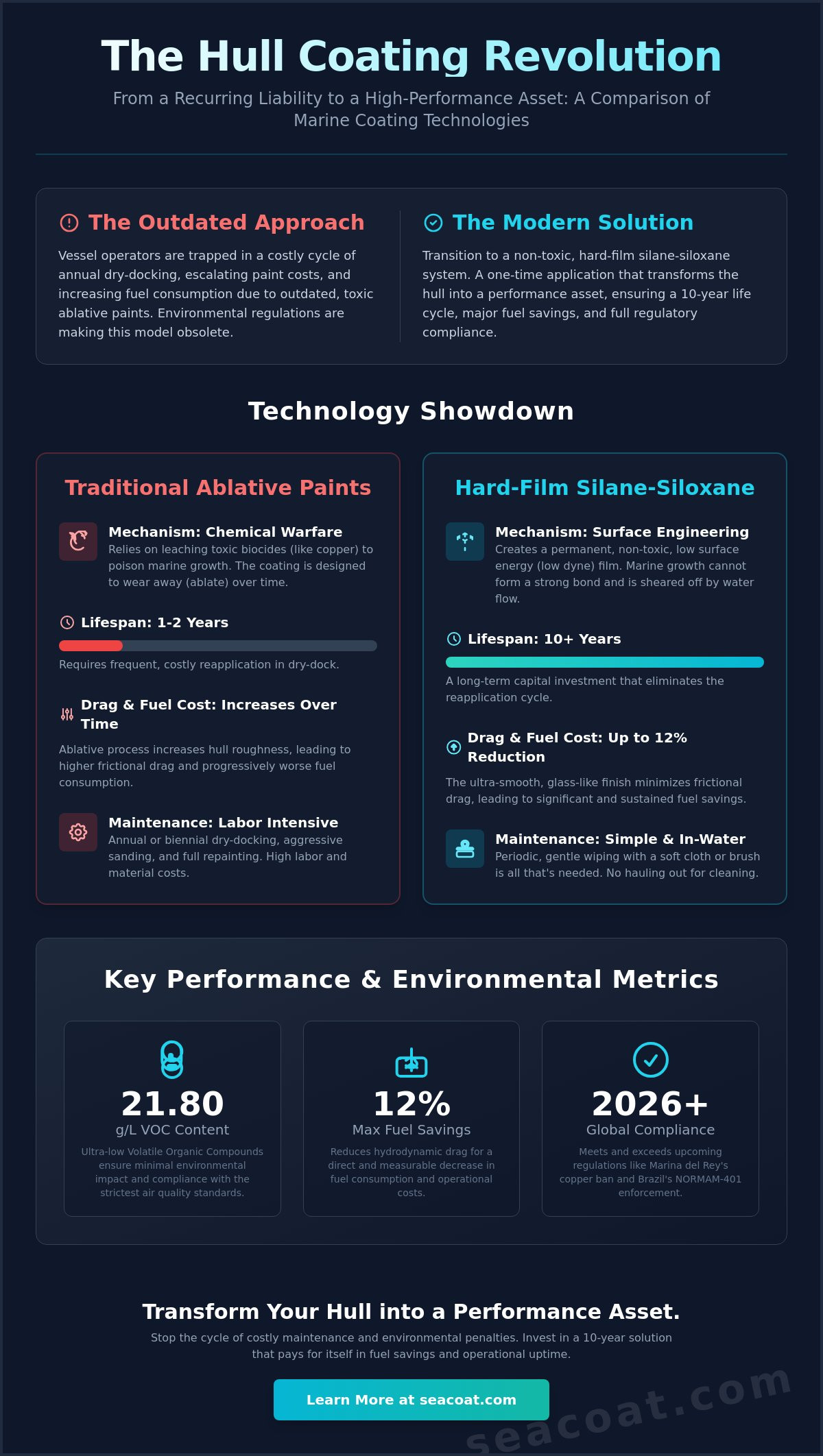
Traditional ablative paints are fundamentally sacrificial. They’re designed to wear away, which inevitably increases hull roughness as the coating erodes unevenly. This degradation leads to a measurable rise in frictional drag and fuel consumption. Owners face a costly cycle of annual sanding and repainting. Beyond the financial burden, the environmental cost is high; heavy metal leaching in sensitive marinas has led to strict non-toxic mandates across global ports. These older systems treat the symptom of fouling rather than the cause of attachment.
Understanding the Hard-Film Revolution
The hard-film revolution introduces a permanent alternative to both ablative paints and fragile soft silicone coatings. Unlike soft silicones that tear easily during cleaning or docking, hard-film Silane-Siloxane technology creates a durable, glass-like shield. This technology works by optimizing surface energy, measured in dynes. By maintaining an extremely low dyne level, the coating prevents barnacles and algae from forming a permanent bond. When the vessel moves, the water’s laminar flow simply shears away any incipient growth, keeping the hull clean without the need for toxic additives. It’s a strategic asset that treats the hull as a performance-critical surface.
Hard-Film Foul Release vs. Traditional Antifouling Paints
Choosing the right marine coating for fiberglass hulls requires a technical understanding of the difference between biocidal action and surface energy management. Traditional antifouling paints operate on a depletion model; they leach copper or other biocides to kill marine organisms upon contact. This process is inherently temporary, typically offering a functional lifespan of only 12 to 24 months before the sacrificial layers are exhausted. In contrast, hard-film foul release systems like Sea-Speed V 10 X Ultra are non-depleting. By utilizing physical properties to prevent attachment, these coatings provide a 10-year life cycle, fundamentally shifting hull maintenance from a recurring operational expense to a long-term asset investment.
Surface architecture plays a decisive role in vessel performance. Traditional ablative paints are porous and develop significant surface roughness as they erode, which creates turbulent flow and increases hydrodynamic drag. Hard-film coatings cure to a glass-like finish that is significantly smoother than even the best-applied traditional paints. This reduction in skin friction doesn’t just save fuel; it provides a critical barrier against water ingress. The dense molecular structure of these advanced coatings offers superior resistance to osmosis and the resulting gelcoat blistering that often plagues fiberglass vessels in warm or stagnant waters.
The Science of Silane-Siloxane Bonding
The efficacy of these systems is rooted in the way silanes create a covalent bond with the fiberglass or primer substrate, ensuring the coating becomes an integral part of the hull surface. Silane-Siloxane is a hybrid organic-inorganic polymer that provides superior UV and abrasion resistance. While the silane component handles the adhesion, the siloxanes are engineered to create an exceptionally low-friction surface. This slickness prevents the mechanical keying that barnacles and tubeworms require to anchor themselves. Maintenance is simplified to a periodic in-water wiping with a soft cloth rather than the aggressive scrubbing required for traditional paints.
Soft Silicone vs. Hard Film: The Durability Gap
While some operators consider soft silicone coatings as a non-toxic alternative, they often fail in real-world maritime environments due to their low mechanical strength. Soft silicones are highly susceptible to tearing from dock strikes, floating debris, or even standard cleaning equipment. Hard-film systems provide the necessary impact resistance for high-velocity operations and debris-heavy waters. For recreational fiberglass boats, this durability translates to a permanent reduction in “get on plane” time and a consistent top-end speed. If you are looking to optimize your vessel’s hydrodynamic profile, exploring the technical specifications of silane-siloxane systems reveals the clear advantage of hard-film durability over sacrificial or soft alternatives.
Maximizing Hydrodynamic Efficiency and Fuel Savings
Efficiency in the maritime sector is no longer a luxury; it’s a regulatory requirement. The physics of drag dictate that any increase in surface roughness directly correlates with the energy required to propel a vessel. Traditional coatings, by their sacrificial nature, create a fluctuating hydrodynamic profile that worsens as the paint erodes unevenly. A high-performance marine coating for fiberglass hulls, such as Sea-Speed V 10 X Ultra, maintains an ultra-smooth surface that facilitates laminar flow. This reduction in skin friction allows the vessel to move through the water with less resistance, which is a primary driver for achieving EEXI (Energy Efficiency Existing Ship Index) compliance in 2026.
Data-backed studies indicate that moving from a standard ablative paint to a hard-film foul release system can yield a reduction in fuel consumption between 5% and 12%. These savings are immediate and compound over the life of the coating. For commercial operators, this efficiency translates into fewer carbon emissions and potential eligibility for carbon credits, which are becoming increasingly valuable in the current regulatory environment. For a deeper dive into these metrics, consult The Definitive Guide to Boat Hull Paint: Performance, Science, and ROI.
Calculating ROI Over a 10-Year Life Cycle
Evaluating the total cost of ownership (TCO) reveals the stark difference between short-term savings and long-term profitability. While retail paints may appear cost-effective initially, they require biennial dry-docking, labor-intensive sanding, and frequent reapplication. A premium hard-film system eliminates these recurring expenses for a full decade. When you factor in the reduced dry-docking fees, lower labor costs, and the preservation of engine longevity due to reduced strain, the initial investment pays for itself within a fraction of its service life. Increased vessel speed and reduced “time to plane” further enhance the operational value for recreational and commercial fiberglass assets alike.
Environmental Stewardship as a Competitive Advantage
Modern vessel management requires a serious commitment to sustainability. Zero VOC formulations are essential in 2026 to meet air quality standards and protect the health of application teams. Non-toxic, biocide-free coatings allow vessels to enter protected marine zones without the risk of heavy metal leaching, which significantly improves brand reputation for commercial operators and charter fleets. This shift toward responsible performance is detailed in our analysis of Environmental Marine Coatings: The 2026 Shift Toward Sustainable Hull Performance. Using a coating that prioritizes the ecosystem ensures that your operations remain resilient against future environmental mandates.
Application Standards and Maintenance for Fiberglass Substrates
Applying a high-performance marine coating for fiberglass hulls requires a departure from the simplistic methods used with retail bottom paints. The most critical failure point in modern hull management is the attempt to apply advanced silane-siloxane systems over residual ablative layers. For the coating to achieve its 10-year design life, the fiberglass must be stripped of all previous sacrificial coatings. This ensures the chemical bonding occurs directly with the gelcoat or a dedicated high-build primer, preventing the delamination that occurs when incompatible systems are layered.
We specify the use of Seapoxy 73 as a foundational step for fiberglass vessels. This high-build epoxy primer provides essential osmotic protection, sealing the fiberglass against the water intrusion that leads to subsurface blistering. Once the primer is set, application teams must monitor environmental conditions to facilitate optimal siloxane cross-linking. This molecular hardening process is what creates the durable, non-porous surface that characterizes a true foul release system. It’s not just a layer of paint; it’s a chemical transformation of the hull’s interface with the ocean.
Step-by-Step Fiberglass Surface Preparation
Adhesion begins with the total removal of mold release waxes and environmental contaminants. De-waxing and degreasing the gelcoat is mandatory before any mechanical abrasion begins. For the mechanical stage, technicians typically use 80-grit media or precision soda blasting to achieve the required anchor pattern for the primer. During this phase, it’s vital to inspect the hull for fiberglass “wicking,” where moisture has been trapped within the laminate. Coating over a wet substrate will compromise the bond and lead to premature failure, so moisture meter readings should be taken to ensure the hull is sufficiently dry.
In-Water Maintenance and Cleaning Protocols
One of the primary advantages of a hard-film system is that it allows for non-destructive in-water cleaning. Unlike traditional paints that release toxic plumes when scrubbed, these coatings require only a simple wiping to remove bio-slime or light growth. We recommend using soft brushes or low-pressure water systems rather than aggressive scrapers that might mar the finish. The frequency of these cleanings depends on local environmental factors; vessels in high-salinity or warm waters, typically above 25°C, may require more frequent attention to maintain peak hydrodynamic efficiency. To ensure your vessel is prepared for these 2026 standards, you should review our technical application guidelines for fiberglass substrates.
Choosing Seacoat SCT, LLC: Advanced Silane-Siloxane Solutions
Seacoat SCT, LLC provides the technical framework necessary to transition from sacrificial maintenance to permanent asset management. While previous sections detailed the hydrodynamic and environmental benefits of silane-siloxane technology, the actual implementation requires a partner with deep expertise in marine chemistry. As the innovator of the world’s slickest hull surfaces, Seacoat SCT, LLC offers a comprehensive suite of biocide-free solutions that exceed the 2026 environmental standards. Our flagship Sea-Speed V 10 X Ultra isn’t merely a product; it’s a meticulously engineered system that addresses the specific surface tension requirements of fiberglass substrates.
Product Spotlight: Sea-Speed V 10 X Ultra
Sea-Speed V 10 X Ultra is optimized for high-stakes environments where performance is non-negotiable. Beyond the 10-year lifespan, the coating is available in several specialized formulations to meet specific operational needs. For instance, Sea-Speed V 10 X Ultra Clear allows owners to maintain the original aesthetic of their gelcoat while gaining the full spectrum of foul-release benefits. This versatility ensures that whether you’re managing a fleet of commercial ferries or a single racing yacht, the marine coating for fiberglass hulls you select provides a consistent, high-performance interface with the water. Because it’s a 95% solids nano-coating, it provides a level of physical durability that far exceeds the capabilities of traditional sacrificial layers.
Partnering with Seacoat SCT, LLC for Fleet Optimization
Maximizing the ROI of your coating choice involves more than just application; it requires customized specifications based on your vessel’s duty cycle and geographic operating area. Seacoat SCT, LLC supports military and commercial procurement by providing rigorous technical data and case studies that validate our performance claims. We recognize that every fiberglass hull presents unique challenges, from varied resin types to historical maintenance patterns. By requesting a technical consultation, you gain access to our expert-led specifying process, ensuring that your transition to a biocide-free future is both seamless and scientifically sound. Our commitment to stewardship and operational efficiency makes us the primary choice for stakeholders who view their vessels as long-term strategic assets.
Securing Long-Term Performance for the 2026 Maritime Era
The maritime industry’s transition toward non-toxic, high-efficiency hull management is no longer a future projection; it’s a current operational necessity. By replacing sacrificial, biocide-heavy paints with a permanent marine coating for fiberglass hulls, you’re moving beyond the technical limitations of traditional maintenance cycles. The evidence is clear: a 10-year life cycle and documented fuel savings of up to 12% in commercial trials offer a level of ROI that ablative systems can’t match.
Since 2001, our proprietary Silane-Siloxane technology has provided a scientifically rigorous solution for vessel owners who prioritize both performance and environmental stewardship. These zero VOC, biocide-free formulations ensure your fleet remains compliant with the strict 2026 global mandates while significantly reducing frictional drag. It’s time to treat your hull as a strategic asset rather than a recurring expense.
Upgrade your fiberglass hull with Sea-Speed V 10 X Ultra today and experience the standard in modern hydrodynamic engineering. We’re ready to help you optimize your vessel’s efficiency for the next decade of operation.
Frequently Asked Questions
Is marine coating for fiberglass hulls different from aluminum boat paint?
Yes, the primary difference lies in the bonding chemistry and galvanic considerations required for each substrate. Fiberglass requires a coating that adheres to non-porous gelcoat without the risk of osmotic blistering. While our silane-siloxane systems are versatile, the surface preparation for fiberglass focuses on de-waxing and profiling the gelcoat, whereas aluminum requires specific primers like Armor-Sil R/G to prevent oxidation and ensure long-term adhesion.
Can I apply a foul release coating over existing antifouling paint?
No, you cannot apply a hard-film foul release coating directly over existing ablative or biocidal paint. These advanced systems require a stable, chemically clean substrate to achieve a permanent covalent bond. All old sacrificial layers must be removed through mechanical abrasion or soda blasting to reveal the original gelcoat. This ensures the 10-year life cycle isn’t compromised by the failure of an underlying, inferior paint layer.
How much fuel can I really save by switching to a hard-film coating?
Commercial trials and hydrodynamic modeling consistently demonstrate fuel savings between 5% and 12% for vessels using these systems. This reduction is achieved by maintaining a lower surface roughness profile compared to traditional paints. By minimizing skin friction and preventing the accumulation of heavy biofouling, the engine operates with significantly higher efficiency. These savings are especially pronounced at higher cruising speeds where drag becomes the primary factor in consumption.
Is Sea-Speed V 10 X Ultra safe for sensitive marine environments?
Yes, Sea-Speed V 10 X Ultra is a 100% biocide-free and non-toxic solution designed to meet the strictest environmental mandates. It doesn’t leach heavy metals like copper or tin into the water column. This makes it an ideal choice for vessels operating in sensitive ecosystems or regions with strict 2026 discharge regulations, such as California’s Marina del Rey or the revised NORMAM-401 regime in Brazil.
Does a hard-film coating prevent fiberglass osmosis and blistering?
Yes, when used in conjunction with a high-build primer like Seapoxy 73, a hard-film system creates a non-porous barrier that significantly mitigates the risk of osmosis. This dense molecular structure prevents water molecules from penetrating the gelcoat and reaching the laminate. This application effectively seals the hull, preserving the structural integrity of the fiberglass over a 10-year service life while maintaining a glass-like hydrodynamic finish.
What is the expected lifespan of a silane-siloxane coating on a fiberglass boat?
The expected service life of a correctly applied silane-siloxane marine coating for fiberglass hulls is 10 years. Unlike traditional antifouling paints that require reapplication every 12 to 24 months, these hard-film systems don’t wear away or deplete over time. The coating remains a permanent hydrodynamic asset that only requires periodic, non-destructive in-water cleaning to maintain its peak foul-release properties and surface smoothness.
Do I need special equipment to apply Seacoat products to my boat?
Standard professional painting equipment, such as high-quality airless sprayers or specific rollers, is typically sufficient for a successful application. However, precision is required regarding film thickness and environmental monitoring. We provide detailed technical specifications to ensure that the siloxane cross-linking occurs correctly. This methodical approach results in the glass-like finish necessary for the 12% fuel savings and long-term durability our clients expect.
How does temperature affect the application of fiberglass marine coatings?
Temperature directly influences the curing rate and the molecular cross-linking of the siloxane matrix. Most applications should occur in temperatures between 10°C and 35°C with humidity levels below 85% to ensure proper chemical bonding. Applying the coating outside of these specific parameters can compromise the bond strength and surface smoothness. This reduction in quality would negatively impact the overall hydrodynamic efficiency and the 10-year life cycle of the system.