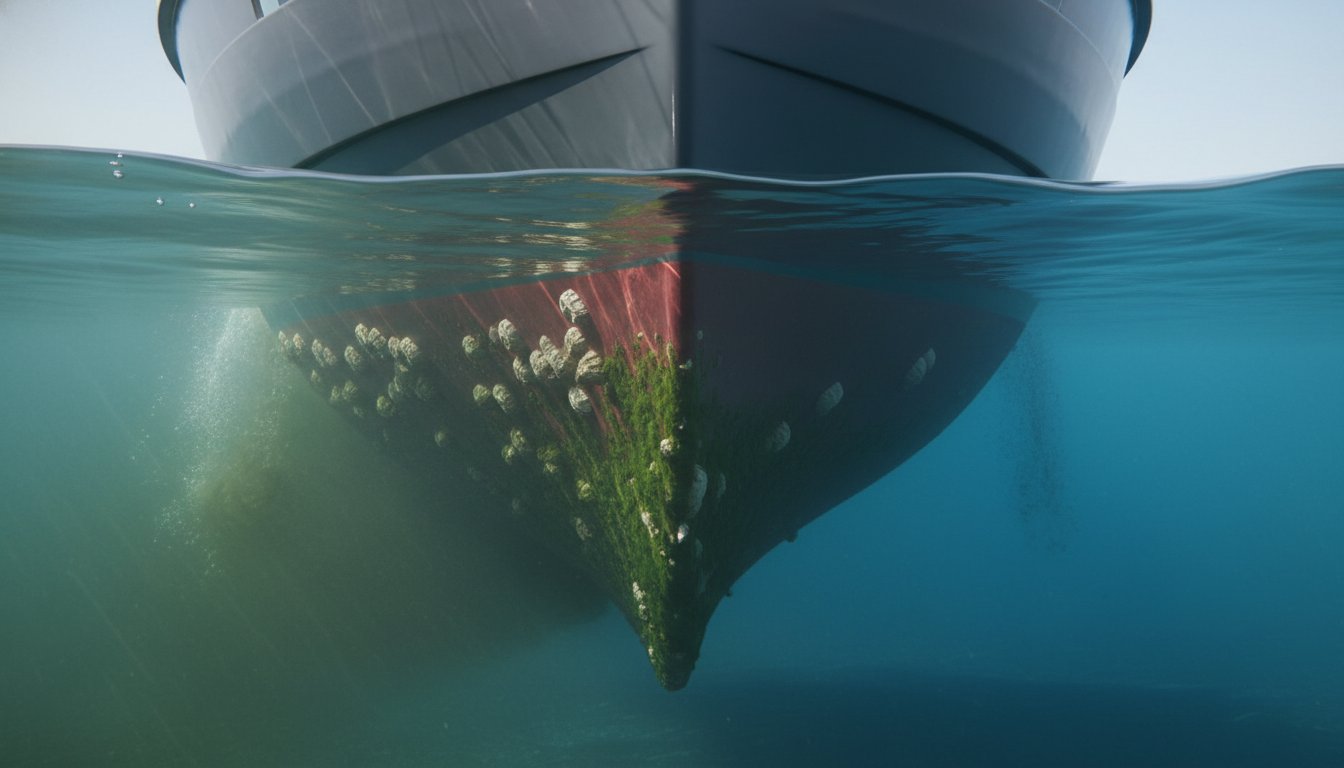
What if the most expensive recurring cost in your maintenance budget isn’t a mechanical failure, but the very coating designed to protect your hull? According to 2023 maritime efficiency data, a mere 10 microns of additional surface roughness can increase fuel consumption by 1% annually. You’ve likely accepted that applying bottom paint on a boat is a necessary, albeit frustrating, annual ritual of sanding, venting VOCs, and managing toxic copper leaching. It’s a cycle that many vessel owners view as unavoidable to prevent fouling and corrosion.
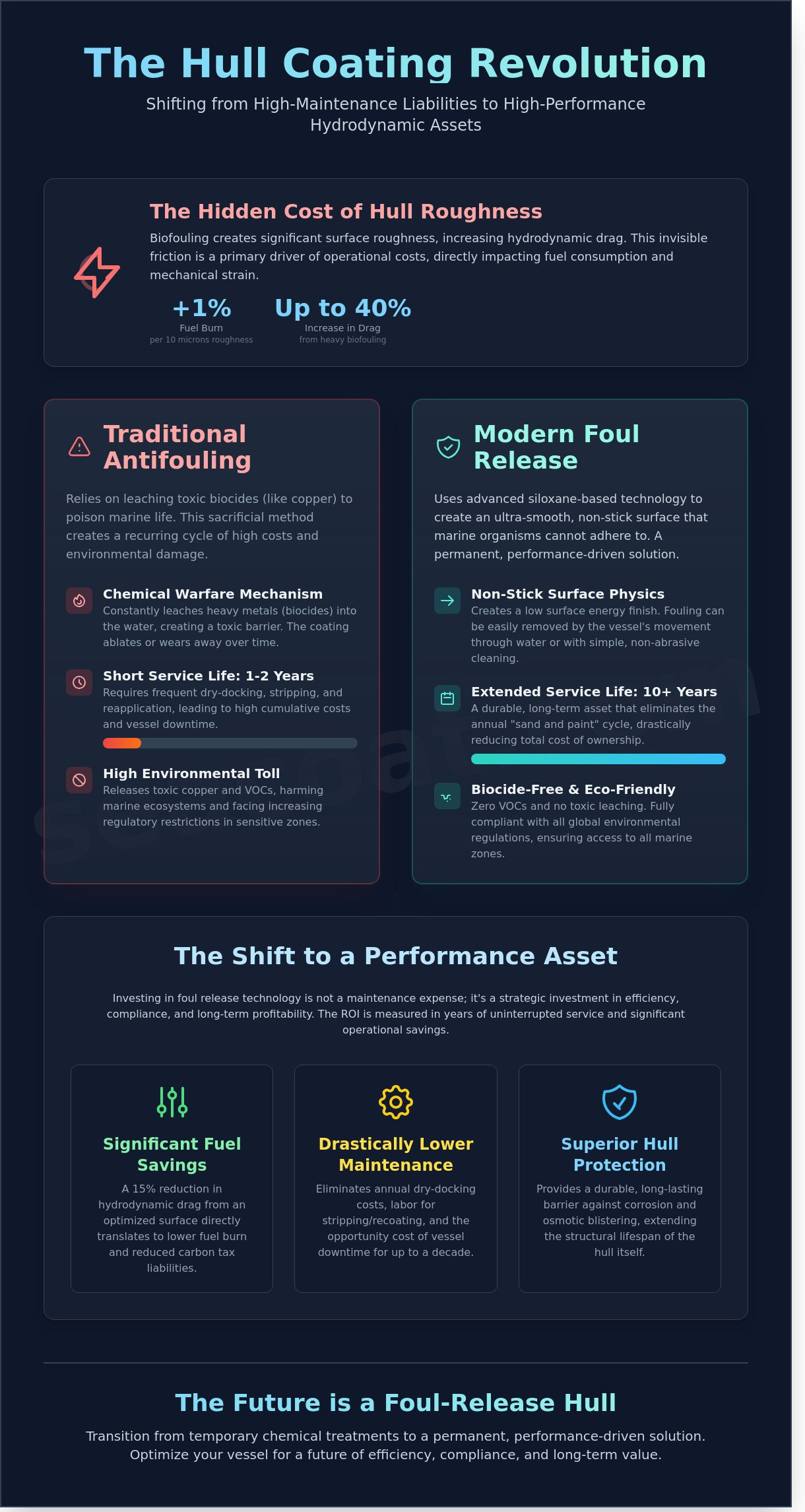
This guide demonstrates how a shift to siloxane-based, biocide-free technology transforms your hull from a high-maintenance liability into a hydrodynamic asset capable of a 10-year service life. We’ll examine the chemical mechanics of foul release systems, the 15% reduction in drag achieved through surface optimization, and the path to total regulatory compliance in sensitive marine zones. You’ll discover how modern hull coatings transition from basic protection to high-performance assets that slash fuel costs and environmental impact. We’ll break down the technical transition from traditional ablative methods to permanent, performance-driven solutions that redefine long-term ROI.
Key Takeaways
- Analyze how biofouling-induced drag increases operational costs and why specialized coatings are essential for maintaining hydrodynamic efficiency.
- Compare the chemical mechanisms of toxic antifouling versus non-stick foul release to select the optimal bottom paint on a boat.
- Master the strategic application process, from substrate profiling to advanced primer bonding, to maximize the lifespan of your hull coating.
- Explore the economic and ecological benefits of biocide-free technology, including documented fuel savings and reduced maintenance intervals.
- Shift from temporary maintenance cycles to permanent performance assets with coatings designed for ten-year durability and zero VOC impact.
What is Bottom Paint on a Boat and Why is it Critical?
Bottom paint on a boat serves as the primary defense against the relentless biological colonization of submerged surfaces. This specialized coating, applied below the waterline, is engineered to mitigate biofouling, the accumulation of marine organisms that degrade vessel performance. While traditional methods relied on the leaching of heavy metals, modern maritime standards have shifted toward more sophisticated solutions. Understanding what anti-fouling paint represents historically helps operators appreciate the move toward biocide-free, foul-release technologies. These advanced systems rely on surface energy and mechanical properties rather than chemical toxicity to maintain a clean hull.
Neglecting this coating leads to severe consequences for the vessel’s operational health. Barnacles, tubeworms, and grass don’t just sit on the surface; they create significant surface roughness. This roughness can increase hydrodynamic drag by as much as 40 percent. Beyond efficiency, biofouling can compromise the structural integrity of the substrate. It leads to localized corrosion in steel or osmotic blistering in composite hulls. The transition from toxic “antifouling” to non-toxic “foul release” is a strategic pivot. It’s about moving from temporary chemical poisoning to long-term surface optimization. This shift ensures regulatory compliance while protecting the marine ecosystems your fleet traverses.
Understanding the Biofouling Challenge
The process begins within minutes of immersion as a microscopic biofilm, or slime, forms on the hull. This layer provides the foundation for secondary colonizers like algae and bryozoans. If left unchecked, the hull eventually hosts hard macro-fouling, such as calcareous barnacles and mollusks. Rates of accumulation vary significantly based on the environment. For instance, vessels operating in tropical waters with temperatures exceeding 25°C experience fouling rates up to five times faster than those in temperate zones. High salinity also accelerates the calcification of hard-shell organisms. This growth restricts intake valves, placing immense strain on engine cooling systems and increasing the risk of mechanical failure.
The Economic Impact of Hull Drag
Hydrodynamic drag is the primary enemy of vessel efficiency. Every millimeter of added surface roughness directly correlates to a rise in fuel consumption. For a standard commercial vessel, a 10 percent increase in hull roughness typically translates to a 6 percent increase in total power requirements. Traditional “sand and paint” cycles often involve a high-frequency maintenance schedule, usually every 12 to 24 months. These annual costs are deceptive. When you factor in the expense of dry-docking, labor, and the lost opportunity cost of vessel downtime, the cheap biocide paint becomes a liability. Transitioning to a durable, low-friction bottom paint on a boat can extend service intervals to 10 years, drastically reducing the total cost of ownership. This long-term ROI is achieved through:
- Reduction of fuel burn through sustained surface smoothness
- Elimination of annual stripping and recoating labor
- Lowered carbon tax liabilities due to improved engine efficiency
- Extended lifespan of the hull substrate through superior barrier protection
The decision to invest in a high-performance coating isn’t merely a maintenance choice; it’s a strategic asset management move. By prioritizing surface integrity, operators can mitigate the hidden costs that erode profitability over a vessel’s life cycle. Modern foul-release systems provide the durability required to survive harsh maritime environments without the environmental toll of traditional biocides.
This same principle of protecting valuable assets with durable, high-performance surfaces is seen in other industries; for example, suppliers like Nature Living Floor provide premium flooring and wall panels to ensure long-term architectural integrity.
The Science of Foul Release vs. Traditional Antifouling
Traditional bottom paint on a boat relies on a chemical warfare strategy to manage marine growth. These coatings typically utilize biocides, primarily cuprous oxide or zinc pyrithione, to poison marine organisms upon contact. It’s a sacrificial process by design. As the paint film wears away or “ablates,” it constantly leaches heavy metals into the surrounding water column. While effective in the short term, this mechanism creates a cycle of depletion that necessitates frequent reapplication and extensive hull preparation during dry-docking.
The Problem with Leaching Biocides
The leaching mechanism creates a significant environmental footprint that the maritime industry can no longer ignore. Scientific data shows that copper concentrations in high-traffic marinas often exceed 3.1 micrograms per liter, a threshold that disrupts the sensory systems of juvenile salmon and other vital marine species. Because of these ecological impacts, federal and state regulations on antifouling paints are tightening rapidly. Several jurisdictions have already initiated phase-outs of copper-based coatings, with broader global bans expected to take effect by 2026.
Beyond environmental concerns, traditional paints suffer from the “depleting film” issue. As the biocide reservoir within the paint matrix empties, the hull loses its protective capacity. This leads to a rapid increase in surface roughness, which heightens hydrodynamic drag and forces the engine to work harder. For a commercial vessel, this degradation can result in a 10% to 15% increase in fuel consumption over a standard 24-month docking cycle.
Hard-Film Siloxane: The Expert Innovator’s Choice
Modern foul release systems represent a paradigm shift from toxicity to physics. Instead of poisoning life, these coatings utilize silane-siloxane chemistry to create a surface with extremely low surface energy. This “non-stick” technology prevents organisms like barnacles and tubeworms from forming a permanent bond with the hull. While early foul release products used soft silicone, which is notoriously prone to tearing and abrasion, siloxane creates a permanent, non-porous molecular bond with the substrate.
This hard-film architecture is a strategic asset for vessel managers who prioritize durability. Unlike soft coatings that peel during dock strikes or fender contact, siloxane is engineered to withstand mechanical stress. The chemistry provides a sophisticated solution that balances hydrodynamic smoothness with rugged protection. The performance metrics for these systems are compelling:
- Mechanical Resistance: Siloxane coatings resist impact and abrasion from floating debris and harbor ice.
- Hydrodynamic Efficiency: The ultra-smooth surface reduces skin friction, often resulting in a 5% to 8% reduction in total hull drag.
- Operational Longevity: High-performance siloxane systems are designed for 10-year life cycles, whereas traditional bottom paint on a boat rarely exceeds 36 months of peak effectiveness.
- Zero VOCs: These advanced formulations eliminate hazardous air pollutants, ensuring compliance with the strictest air quality standards.
Self-cleaning is the hallmark of this technology. When a vessel reaches speeds of 10 knots or higher, the hydrodynamic shear force becomes greater than the adhesive strength of the marine biofilm. The water movement effectively washes the hull clean during transit. For vessels that remain stationary for long periods, the hard-film surface allows for easy underwater grooming without releasing toxic plumes into the harbor. You can optimize your fleet’s efficiency by integrating siloxane technology into your long-term maintenance strategy. This move ensures your operations remain profitable and compliant as we approach the 2026 regulatory shifts.
Evaluating Bottom Paint Options: A Comparison Framework
Selecting the correct bottom paint on a boat dictates more than just surface aesthetics; it determines the operational lifespan and environmental footprint of the vessel. Traditional maritime solutions generally fall into two categories: ablative and hard epoxy. While these coatings have served the industry for decades, they often fail to meet the rigorous demands of modern 60-month or 120-month dry-docking cycles. Operators must weigh the immediate cost of application against the long-term degradation of hydrodynamic efficiency.
Ablative vs. Hard Bottom Paint
Ablative coatings function through a controlled erosion process. As the vessel moves, the outer layer of the paint wears away, exposing fresh biocides. This mechanism works for vessels that operate at lower speeds or spend significant time at anchor. However, this “wear-away” design limits the coating’s life to roughly 18 to 24 months. Once the film thickness depletes, the hull loses its protective properties and requires a full haul-out.
Hard epoxy paints provide a tougher, non-eroding surface. Racing yachts favor these for their smooth, burnished finish. The trade-off is a consistent decline in biocide effectiveness over time. To maintain performance, divers must frequently scrub the hull. This process releases toxic copper or zinc into the water column, which creates significant regulatory risk. Neither traditional option provides a sustainable path for operators looking to extend service intervals beyond five years.
- Low-Speed Vessels (<15 knots): Ablative coatings are common but require biennial re-application and frequent touch-ups.
- High-Speed Vessels (>25 knots): Hard coatings are preferred to prevent premature erosion, though they suffer from biocide leaching.
- Commercial and Serious Recreational: Sea-Speed V 10 X provides a 10-year foul release solution that maintains its integrity regardless of speed.
The 10-Year Lifecycle of Sea-Speed V 10 X
Investing in Sea-Speed V 10 X shifts the focus from recurring maintenance costs to long-term asset optimization. A standard bottom paint on a boat requires complete removal and re-application every two years. Over a decade, this involves five expensive dry-docking events. Sea-Speed V 10 X is engineered as a single-application solution for that same 10-year period, drastically reducing total overhead.
The economic impact is measurable. By eliminating four out of five painting cycles, operators reduce their total cost of ownership by approximately 40% over ten years. Maintenance is simplified through in-water cleaning. Because the siloxane-based coating is non-ablative, divers can wipe away biofilm without stripping the material. This keeps the hull’s surface roughness low, which is critical for EEXI compliance and fuel efficiency. It’s a strategic asset, not just a coating.
Sea-Speed V 10 X contains zero VOCs. It meets the strictest environmental standards, including those set by the IMO. This biocide-free technology ensures that your vessel remains compliant with evolving international regulations while protecting the marine ecosystems it traverses. Choosing this system means prioritizing hydrodynamic precision and environmental stewardship simultaneously. Reliability is built into the chemistry.
Strategic Application and Maintenance for Maximum ROI
Achieving a ten year lifecycle for a vessel coating requires more than just high quality chemistry; it demands technical precision during the application phase. The transition from traditional ablative coatings to a permanent hard film system shifts the focus from frequent recoating to strategic asset management. Precision matters. When you apply bottom paint on a boat, the bond strength is dictated by the substrate profile. A mechanical anchor profile of 2.5 to 3.0 mils is the industry standard for ensuring the coating remains intact under high hydrodynamic stress. Cleanliness is equally vital. Removing ionic contaminants prevents osmotic blistering, a common failure point that can reduce coating life by 60% if ignored.
This emphasis on meticulous preparation and application is a principle shared by all high-quality coating specialists, from marine experts to residential professionals like Roll On Painting.
The primer system acts as the critical bridge between the hull and the functional topcoat. Seapoxy 73 is engineered to create a permanent chemical bond, utilizing high solids epoxy technology that eliminates the need for repeated sanding in future maintenance cycles. Environmental control during this process is non-negotiable. Technicians must maintain relative humidity below 85% and ensure the substrate temperature remains at least 5 degrees above the dew point. These parameters ensure the siloxane cross-linking process completes fully, resulting in a surface that is both physically durable and hydrodynamically optimized.
Step-by-Step Application Best Practices
Surface preparation begins with achieving an SSPC-SP10 Near-White Metal blast for steel or an equivalent profile for fiberglass. When using two-part siloxane systems, a 20 minute induction time is required after mixing to allow the chemical reaction to stabilize. While roller application is possible for smaller vessels, airless spray application is the preferred method for commercial fleets. This technique achieves a surface roughness of less than 60 microns, which is essential for maximizing fuel efficiency and reducing drag by up to 12% compared to traditional methods.
Special Considerations for Aluminum Hulls
Aluminum hulls face unique risks when selecting bottom paint on a boat. Standard copper-based paints trigger galvanic corrosion, essentially turning the hull into a battery that degrades the metal through rapid pitting. SeaCoat’s non-metallic Silane-Siloxane technology is electrically inert, making it the safest choice for aluminum structures. A 2022 deployment of response craft utilizing this technology showed zero signs of corrosion after 48 months of continuous salt water immersion. This biocide-free approach protects the integrity of the alloy while meeting strict environmental regulations in sensitive littoral zones.
Post-application care for a hard-film hull is significantly less labor-intensive than maintaining ablative systems. Because the surface is non-porous and incredibly smooth, biofouling cannot firmly attach. Periodic grooming with a soft brush or high-pressure water wash at 1,500 PSI is usually sufficient to remove slime layers. This maintenance routine avoids the release of heavy metals into the water and preserves the film thickness for the entire ten year service life. It’s a shift toward a more sustainable, cost-effective operational model.
The Seacoat Standard: Transitioning to Biocide-Free Performance
The shift toward sustainable maritime operations isn’t just a regulatory requirement; it’s an economic imperative. Sea-Speed V 10 X Ultra stands as the pinnacle of non-toxic foul release technology, offering a sophisticated alternative to traditional copper-based coatings. While standard bottom paint on a boat functions by leaching toxins into the water, our siloxane technology relies on a low-energy surface that makes it nearly impossible for marine growth to maintain a permanent bond. This mechanical approach to foul release ensures that the coating remains effective for its entire service life, which often exceeds ten years. It’s a permanent solution that replaces the cycle of frequent repainting with a single, durable application.
Real-world performance data confirms the financial viability of this transition. Documented sea trials have demonstrated fuel savings of up to 12% due to the extreme smoothness of the hull. By reducing hydrodynamic drag, Sea-Speed V 10 X Ultra allows vessels to maintain higher speeds at lower RPMs, directly impacting the bottom line. These savings are particularly evident in commercial fleets where fuel represents the largest operational expense. Furthermore, because the coating is a hard-film system, it doesn’t polish away or lose thickness over time. This stability maintains the vessel’s hydrodynamic profile from the day it leaves dry-dock until its next scheduled inspection, ensuring that performance gains don’t degrade after the first year of service.
Logistical support is critical for global fleet management. Seacoat SCT, LLC maintains a robust supply chain that supports operations from our headquarters in Tomball, Texas, to the major maritime hubs in Singapore and Rotterdam. We’ve structured our global availability to ensure that shipyards and vessel owners can access high-performance coatings regardless of their geographical location. This infrastructure allows for a seamless transition when upgrading bottom paint on a boat, providing consistent product quality and technical oversight across diverse international ports. Whether you’re managing a single racing yacht or a multinational tanker fleet, the technical support remains uniform and expert-driven.
Why Sea-Speed is the Industry Disruptor
Sea-Speed V 10 X Ultra delivers a hard-film durability that traditional soft foul-release systems can’t match. It’s scrubbable and resistant to mechanical damage, which eliminates the need for annual repainting. For racing yachts and luxury vessels, the ‘Ultra Clear’ option provides a high-gloss, aesthetic finish without sacrificing performance. Commercial and military partners frequently report that the zero VOC, biocide-free formulation simplifies environmental compliance while providing superior protection against aggressive biofouling in tropical waters.
Take the Next Step in Vessel Optimization
Transitioning to a high-performance hull system begins with a technical consultation tailored to your vessel’s specific operating profile and hull material. Our team analyzes your current maintenance intervals and fuel consumption to project the long-term ROI of a Sea-Speed application. We provide direct access to a worldwide network of certified distributors and applicators who are trained in the precise application standards required for siloxane technology.
Ready to move beyond temporary fixes? Optimize your hull performance with Sea-Speed V 10 X Ultra and secure a ten-year advantage for your maritime assets. Our consultants are ready to assist with fleet-wide specifications and individual vessel transitions today.
Optimizing Maritime Assets through Advanced Surface Chemistry
Selecting the right bottom paint on a boat isn’t just a matter of seasonal maintenance; it’s a strategic decision that dictates hydrodynamic efficiency and long-term ROI. Modern naval engineering has shifted away from the cycle of toxic ablative coatings toward permanent, biocide-free foul release systems. This transition prioritizes surface smoothness to mitigate drag, directly impacting fuel economy and operational readiness. By moving beyond two-year maintenance windows, vessel owners can secure a decade of protection while adhering to global environmental standards.
SeaCoat provides this stability through our proprietary Silane-Siloxane technology. Unlike traditional options, Sea-Speed V 10 X Ultra is completely biocide-free and contains Zero VOCs, ensuring your operations don’t harm sensitive marine ecosystems. We’ve engineered this solution to provide a proven 10-year service life, significantly reducing the frequency of dry-docking and reapplication. It’s a professional-grade asset that turns hull protection into a performance advantage. Take the next step in vessel management by upgrading to a system that values both science and sustainability.
Switch to Sea-Speed V 10 X Ultra for 10-year hull protection
Your commitment to high-performance maritime stewardship begins with a smarter coating choice.
Frequently Asked Questions
How long does bottom paint last on a boat?
Conventional bottom paint on a boat typically lasts between 12 and 24 months depending on water temperature and local salinity levels. Traditional ablative coatings wear away over time, which requires frequent reapplication during annual dry-docking cycles. In contrast, advanced siloxane-based foul release systems provide a 10-year service life. This longevity eliminates the need for biennial hauling, significantly reducing long-term maintenance costs and operational downtime for vessel owners.
Can I apply new bottom paint over old paint?
You can apply new coating over existing layers if the previous material is compatible and the surface remains structurally sound. However, applying new bottom paint on a boat over failing or thick layers increases the risk of delamination and hydrodynamic drag. Surface roughness can increase by 20 micrometers for every additional layer. For optimal performance and 100% adhesion, we recommend a full abrasive blast to a Sa 2.5 standard.
What is the difference between ablative and non-ablative bottom paint?
Ablative coatings function through a controlled erosion process where the paint wears away to reveal fresh biocides. This mechanism is effective for vessels that move frequently but results in a 5% to 10% increase in hull roughness over time. Non-ablative or hard-film coatings create a permanent, durable barrier that doesn’t erode. These systems utilize a leach-rate technology or a biocide-free siloxane surface to prevent attachment without losing film thickness.
Is bottom paint necessary if I keep my boat on a trailer?
Bottom paint isn’t necessary for boats that spend less than 48 to 72 hours in the water at a single time. Trailerable vessels benefit more from a high-gloss ceramic coating or a simple wax barrier to prevent staining. If a boat stays moored for more than 14 consecutive days, biofouling will begin to accumulate. In these cases, a thin-film epoxy primer provides 100% osmotic blister protection without the need for toxic agents.
What is the most eco-friendly bottom paint available in 2026?
The most eco-friendly options in 2026 are biocide-free foul release systems that contain zero volatile organic compounds (VOCs). These coatings don’t leach heavy metals like copper or zinc into the marine ecosystem, meeting the strict California EPA and EU REACH standards. By utilizing a low-surface-energy siloxane matrix, these systems prevent 99% of larval attachment through physical rather than chemical means. This technology ensures compliance with the latest 2025 maritime environmental regulations.
How much does it cost to bottom paint a 30-foot boat?
Professional application for a 30-foot boat costs between $1,500 and $3,500 for standard anti-fouling materials and labor. This estimate includes a 24-hour haul-out, basic hull preparation, and two coats of premium paint. High-performance foul release systems involve a higher initial investment of approximately $5,000 to $7,000. While the upfront cost is 50% higher, the 10-year lifecycle saves owners an average of $12,000 in recurring maintenance and fuel costs.
Can I use copper-based paint on an aluminum boat hull?
You shouldn’t use copper-based paint on an aluminum hull because it triggers rapid galvanic corrosion. When copper and aluminum interact in saltwater, the aluminum acts as an anode and dissolves, potentially compromising hull integrity within 6 to 12 months. Aluminum vessels require copper-free alternatives such as Econea-based products or biocide-free siloxane coatings. These specialized systems provide a dielectric barrier that maintains a 0.5-volt potential difference, ensuring the hull remains intact.
Does bottom paint affect the speed of my boat?
Traditional bottom paint can reduce a vessel’s top speed by 2 to 5 knots if the surface is poorly applied or heavily fouled. Rough surfaces increase skin friction, requiring up to 15% more power to maintain the same velocity. Conversely, advanced foul-release coatings reduce surface roughness to below 100 micrometers. This hydrodynamic optimization can improve fuel efficiency by 6% to 10% and increase overall hull speed compared to standard ablative paints.