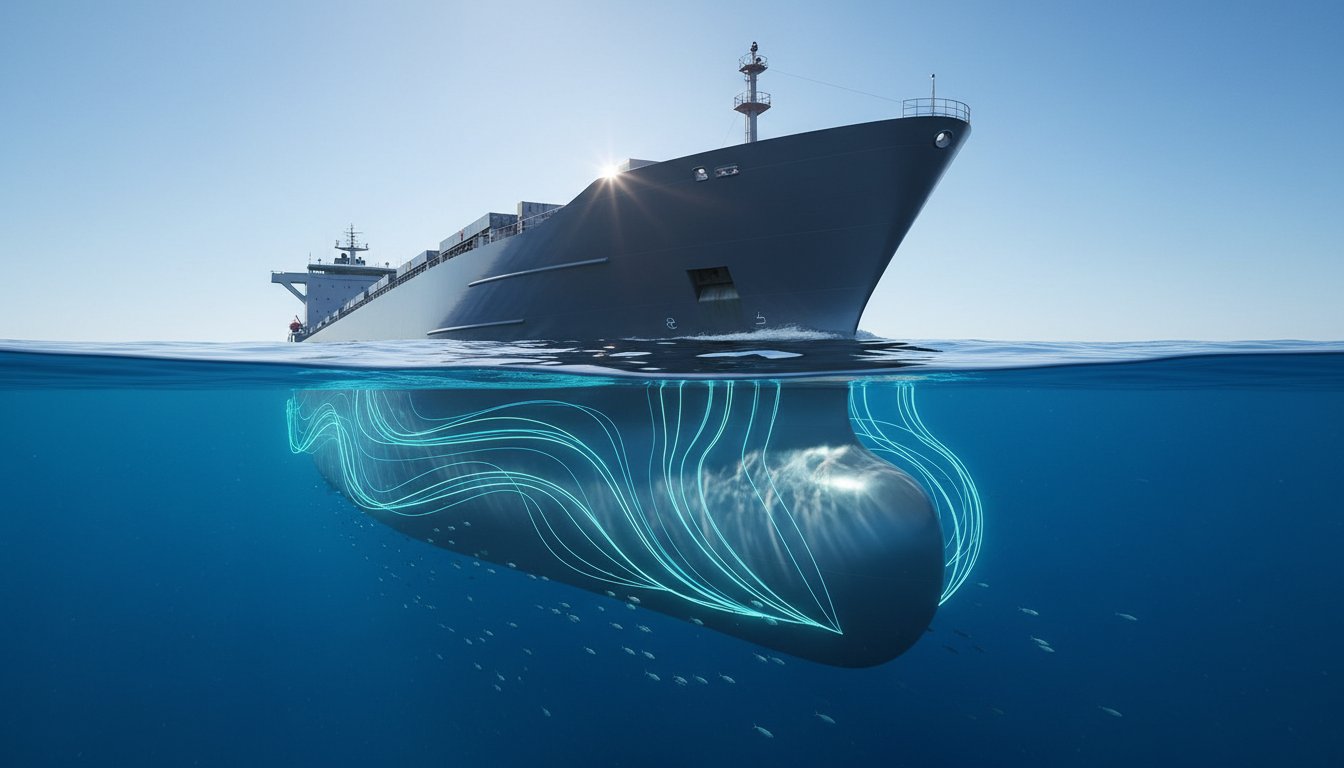
For decades, the maritime industry treated the hull as a passive surface, but in 2026, your choice of boats paint is actually a high-performance engine component. Recent data from naval engineering trials indicates that a 10 micron reduction in average hull roughness can yield a 1.5% decrease in total fuel consumption. You likely recognize the frustration of watching operational margins disappear into the wake due to biofouling and hydrodynamic drag. It’s a persistent challenge, particularly as regulatory bodies like the IMO tighten restrictions on traditional copper-based coatings that damage marine biodiversity.
This guide demonstrates how modern marine coatings have evolved from simple maintenance products into sophisticated hydrodynamic assets that lower fuel costs and protect the ocean. You’ll discover the science behind biocide-free siloxane technologies that offer a ten-year life cycle and zero VOC emissions. We’ll analyze the transition from labor-intensive annual maintenance to high-performance foul-release systems that ensure your vessel meets global environmental standards while maximizing long-term ROI.
Key Takeaways
- Understand the critical distinction between aesthetic topside finishes and functional hull coatings to ensure your vessel meets modern performance and regulatory standards.
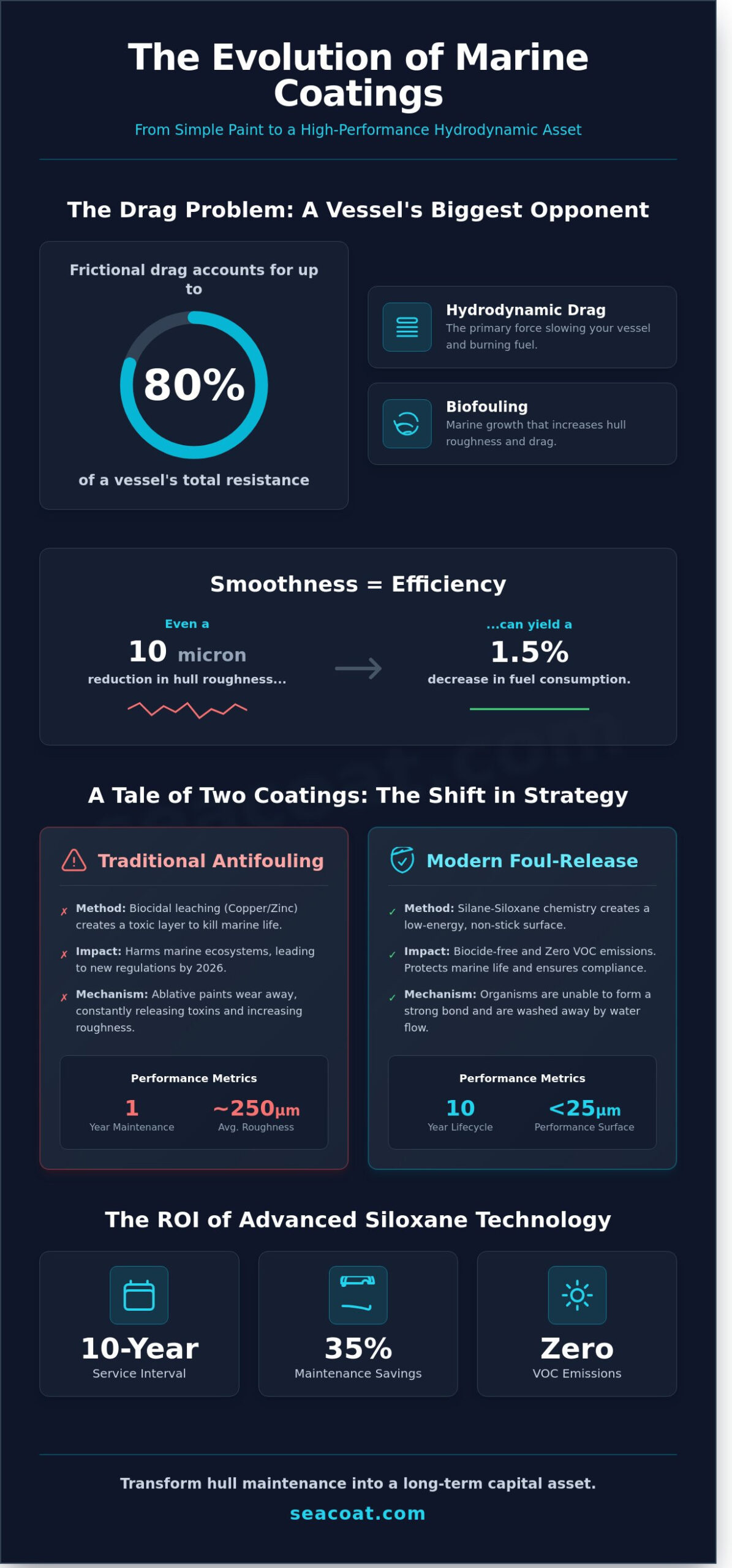
- Discover how the latest advancements in boats paint can optimize hydrodynamics and reduce frictional drag, which represents up to 80% of a vessel’s total resistance.
- Evaluate the strategic shift toward biocide-free foul release systems that utilize low-energy surfaces to prevent organism adhesion without harming marine ecosystems.
- Learn how to select specialized coating chemistries tailored to your specific hull material, including solutions to mitigate galvanic corrosion on aluminum vessels.
- Gain insights into the long-term ROI of silane-siloxane technology, which transforms hull maintenance into a 10-year capital asset with zero VOC emissions.
Understanding the Core Categories of Boats Paint
Selecting the appropriate boats paint requires a technical appreciation for the two distinct environments a vessel inhabits. Marine coatings are categorized into topside finishes, designed for atmospheric exposure; and bottom coatings, engineered for constant immersion. These systems serve different chemical purposes. Topside products defend against intense solar radiation and mechanical abrasion. Bottom paints manage the biological pressure of the marine environment. Understanding these categories is the first step in optimizing vessel performance and ensuring regulatory compliance.
Topside Paints: Aesthetics Meets UV Protection
Topside coatings must withstand high UV indices that degrade polymer chains. One-part polyurethanes are convenient but lack the molecular density of two-part systems. A high-quality two-part linear polyurethane maintains its gloss 60% longer than traditional alkyd enamels over a 36-month exposure cycle. Substrate preparation is the determining factor for longevity. Fiberglass requires epoxy-based primers with high build properties, while aluminum substrates demand specialized wash primers to ensure a 2,500-psi bond strength. These systems prioritize aesthetic retention and structural protection against salt-air corrosion.
Bottom Paints: The Battle Against Biofouling
The hull’s primary challenge is biofouling, the accumulation of microorganisms, plants, and animals on submerged surfaces. Understanding Antifouling Paint reveals a history dominated by biocidal leaching. Traditional heavy-metal paints utilize copper or zinc to create a toxic boundary layer. These biocides often leach at rates exceeding 15 micrograms per square centimeter per day, which has led to significant environmental scrutiny. Owners typically choose between two mechanical styles:
- Ablative Paints: These coatings wear away over time, much like a bar of soap, to consistently expose fresh biocide.
- Hard Paints: These create a durable, non-wearing film that relies on the controlled release of toxins from a porous matrix.
Surface roughness is a critical metric for racing and performance hulls. A standard ablative paint often exhibits a surface roughness profile between 200 and 300 micrometers. This texture creates significant hydrodynamic drag. High-performance racing hulls require profiles below 25 micrometers to maximize laminar flow and increase top-end speeds by as much as 5%. Reducing drag isn’t just about speed; it’s a strategic move to lower fuel consumption and engine strain.
The maritime industry is undergoing a structural shift due to the January 2026 environmental regulations. These mandates target the reduction of copper leaching in sensitive waterways, effectively ending the era of high-emission boats paint. The maintenance cycle is moving away from the annual haul-out toward 10-year service intervals. This transition utilizes hard-film, biocide-free technologies that offer zero VOC emissions and superior durability. By adopting these advanced siloxane-based systems, operators can reduce their long-term maintenance expenditure by 35% while meeting the strictest global environmental standards. This shift represents a move toward permanent, sophisticated solutions rather than temporary fixes.
The Science of Hull Performance: Beyond Simple Protection
Frictional resistance isn’t a minor variable; it accounts for up to 80% of a vessel’s total resistance at cruising speeds. While traditional boats paint focuses primarily on biocidal leaching to kill marine organisms, performance-oriented hulls require a more sophisticated approach. Sea-Speed V 10 X utilizes Silane-Siloxane chemistry to move beyond toxic mitigation. This technology creates a low-energy surface that essentially makes the hull “invisible” to water molecules and marine larvae alike. By altering the surface tension at a molecular level, the coating prevents the chemical bonding necessary for fouling to take hold.
The transition toward these non-toxic, high-performance materials represents a significant shift in maritime engineering. Industry experts at PCI Magazine have noted that advancements in marine coatings are now prioritizing the balance between environmental safety and hydrodynamic efficiency. Unlike ablative paints that wear away and release heavy metals into the ecosystem, Silane-Siloxane systems provide a stable, non-leaching barrier. This ensures that the hull remains smooth over a 10-year lifecycle without the degradation typical of copper-based alternatives.
Hydrodynamics and Frictional Resistance
The boundary layer is the thin region of water directly adjacent to the hull where velocity gradients are most intense. Any surface roughness in this zone disrupts laminar flow, creating turbulence that increases drag. Even micro-fouling, such as a thin layer of slime, can increase fuel consumption by 10% to 15% almost immediately. Sea-Speed V 10 X achieves a mirror-smooth finish with a surface roughness profile of less than 20 microns. This extreme smoothness optimizes water flow, allowing racing hulls to maintain higher speeds with less energy expenditure.
Durability Metrics: Hard Film vs. Soft Coatings
Many foul-release systems rely on soft silicone oils that are easily damaged. These soft coatings often peel or tear when subjected to fender rub, dock strikes, or even high-speed water pressure. In contrast, Sea-Speed V 10 X is a hard-film coating that provides superior mechanical bond strength. It’s tough enough to withstand high-pressure in-water cleaning and aggressive scrubbing without losing its integrity. This durability is critical for vessels that operate in debris-heavy environments or require frequent maintenance to maintain peak racing trim.
The relationship between coating thickness and weight is equally vital for high-speed performance. Traditional boats paint often requires multiple heavy coats that add significant mass to the hull. Sea-Speed V 10 X is applied at a dry film thickness of only 150 to 200 microns. This thin profile reduces the overall weight of the vessel, which directly translates to improved hydrodynamic lift and faster planing times. Because the coating doesn’t absorb water, the hull’s displacement remains constant, ensuring that performance metrics don’t drift over the course of a season.
Vessel owners looking to maximize their operational efficiency should consider how a strategic investment in advanced hull coatings can reduce long-term maintenance costs while improving top-end speed and fuel economy.
Antifouling vs. Foul Release: Choosing the Right Strategy
The maritime industry is undergoing a fundamental shift from biocidal suppression to mechanical prevention. Traditional methods rely on the controlled release of toxins to kill settling organisms. In contrast, foul release technology utilizes a low-energy, non-stick surface to prevent marine life from securing a permanent bond. This distinction is critical for performance hulls where surface roughness directly dictates speed and fuel consumption. Modern operators are moving away from traditional boats paint formulations that depend on chemical leaching, opting instead for permanent, hard-film solutions.
The Toxic Legacy of Antifouling Paints
Copper leaching remains a primary threat to harbor water quality and local food chains. Most traditional coatings release heavy metals at a rate of 10 to 20 micrograms per square centimeter per day. This cumulative toxicity has led to strict legal restrictions. By 2026, several international jurisdictions will implement total bans on specific biocidal concentrations in recreational and commercial coatings. Regulatory bodies are intensifying oversight; specifically, the EPA regulations on boat paint emissions highlight the transition toward lower hazardous air pollutants (HAPs) during the manufacturing and application phases.
Beyond environmental impact, these legacy coatings create a “ghost” layer problem. Every annual application adds thickness and weight. Over five years, a hull can accumulate 500 to 1,000 microns of uneven paint. Stripping these toxic layers is a labor-intensive, hazardous process that requires specialized containment. The mechanical failure of these thick layers often leads to cracking and delamination, which compromises the hydrodynamic profile of the vessel.
The Foul Release Advantage
Hydrodynamics drive the efficiency of foul release systems like Sea-Speed V 10 X. When a vessel reaches speeds above 10 knots, the sheer force of water clears away slime and incipient barnacles. This self-cleaning mechanism is the preferred choice for high-speed racing and commercial transit where maintaining a low coefficient of friction is paramount. It’s a strategic asset that ensures the hull remains optimized throughout the entire service interval.
The “static fouling” myth suggests that foul release systems fail when a boat isn’t moving. This is inaccurate for modern siloxane-based coatings. While organisms may land on the hull during stationary periods, they cannot form a primary chemical bond with the surface. Any accumulated growth is easily removed via simple underwater wiping or the vessel’s own movement through the water. This eliminates the need for aggressive scrubbing that often destroys traditional soft-ablative coatings.
Choosing the right boats paint strategy requires a long-term perspective on the Total Cost of Ownership (TCO). While the initial investment in a high-performance foul release system is higher than a standard gallon of bottom paint, the 10-year ROI is undeniable.
- Maintenance Intervals: Traditional paints require annual hauling and recoating. Sea-Speed V 10 X provides a multi-year in-water service life, often exceeding 10 years.
- Fuel Efficiency: A clean foul-release surface can reduce fuel consumption by 6% to 12% compared to a depleted antifouling surface.
- Operational Readiness: Eliminating the annual haul-out cycle keeps the vessel in the water and ready for use, maximizing operational days.
This transition represents a move toward scientific precision. By prioritizing surface energy over chemical toxicity, boaters achieve superior performance while fulfilling their role as stewards of the marine environment.
Selecting the Best Paint for Your Specific Boat Type
Choosing the correct boats paint is a strategic decision that impacts a vessel’s hydrodynamic efficiency, structural integrity, and long term operational costs. Marine environments vary significantly; therefore, a universal approach to hull protection often leads to premature coating failure or accelerated corrosion. Identifying the specific requirements of your hull material and its intended use is the first step toward achieving a 10 year service life.
Coatings for Aluminum and Metal Hulls
Aluminum hulls face a unique chemical threat when paired with traditional antifouling products. Most standard boats paint utilizes cuprous oxide as a biocide. When copper comes into contact with aluminum in a saltwater electrolyte, it triggers a galvanic reaction that can dissolve a hull from the outside in. This process leads to severe pitting and structural compromise within 18 to 24 months. To mitigate this risk, Seacoat SCT, LLC utilizes copper free, siloxane based technology that is inherently inert.
- Dielectric Protection: Seapoxy primers are essential for metal substrates, creating a high build barrier that ensures superior adhesion and prevents electrical continuity between the water and the metal.
- Military Standards: Our coatings meet rigorous military grade requirements for durability and stealth, providing a low friction surface that resists the attachment of calcareous growth.
- Weight Efficiency: Aluminum vessels, often designed for speed or shallow drafts, benefit from the thin film application of Sea-Speed, which adds negligible mass compared to heavy, multi coat ablative systems.
Performance Racing and Luxury Yachts
For high performance yachts, every micron of surface roughness translates into drag. Traditional paints can have a surface profile exceeding 25 to 50 microns. In contrast, Sea-Speed V 10 X Clear optimizes the wetted surface area by providing a finish with less than 10 microns of roughness. This smoothness directly impacts the vessel’s ability to maximize knots while reducing fuel consumption by up to 12% at cruising speeds.
Aesthetic requirements are equally critical in the luxury sector. Clear coatings have become a standard for carbon fiber hulls, allowing the intricate weave of the composite to remain visible while providing robust UV protection and impact resistance. Because Sea-Speed is a hard film coating, it doesn’t rub off or leave “ghosting” marks on the hull. It provides a permanent, glass like finish that maintains its hydrophobic properties through multiple racing seasons.
Commercial operators face even stricter pressures due to 2023 IMO regulations regarding the Energy Efficiency Existing Ship Index (EEXI) and the Carbon Intensity Indicator (CII). Hull optimization is no longer optional; it’s a regulatory necessity. A clean, slick hull ensures a lower carbon footprint and helps vessels maintain a high CII rating, which is vital for port access and charter value. For cruising sailboats, the priority shifts toward longevity. Owners don’t want to haul out every two years. Our siloxane technology allows for easy in water maintenance, where a simple wipe with a soft sponge removes biofilm without releasing toxic biocides into the ecosystem.
Optimize your vessel’s performance and ensure regulatory compliance by choosing a coating designed for the next decade of maritime operations. Explore our high-performance hull coating solutions from Seacoat SCT, LLC
The Sea-Speed Solution: A New Era of Marine Coatings
Sea-Speed V 10 X Ultra represents a fundamental shift in maritime chemistry. It isn’t just another boats paint; it is a sophisticated silane-siloxane system designed to replace outdated ablative technologies. While traditional coatings rely on the controlled release of toxins to prevent fouling, Sea-Speed creates an ultra-smooth, hard-film surface that organisms simply cannot grip. This non-stick characteristic is achieved through a molecular structure that provides high-density cross-linking. It results in a surface that is both exceptionally durable and hydrodynamically superior.
The transition from a two-year maintenance cycle to a 10-year life cycle changes the financial profile of vessel ownership. Most operators view bottom paint as a recurring operational expense that vanishes every few seasons. Sea-Speed V 10 X Ultra transforms this into a capital asset. By providing a decade of protection without the need for stripping or frequent re-coating, the technology offers a level of longevity that traditional boats paint cannot match. This durability is paired with a zero VOC (Volatile Organic Compound) profile. It’s entirely biocide-free, ensuring that no heavy metals or poisons leach into the water column. This allows operators to meet the strictest global environmental standards, including those set by the IMO and regional port authorities, without sacrificing hull speed or protection.
The performance metrics are as clear as the coating itself. Documented case studies across the commercial maritime sector have demonstrated fuel savings ranging from 8% to 12%. These figures aren’t theoretical estimates; they’re based on real-world data from bulk carriers and high-speed ferries where drag reduction directly correlates to lower fuel consumption. In a sector where fuel accounts for a massive portion of operating costs, these percentage gains represent hundreds of thousands of dollars in annual savings per vessel.
Engineered for Efficiency
Seacoat adopts an “Expert Innovator” approach that prioritizes empirical data over marketing rhetoric. The focus remains on surface roughness. By achieving a finish that is significantly smoother than conventional coatings, Sea-Speed reduces the frictional resistance of the hull. This efficiency directly mitigates the carbon footprint of the global fleet. Whether it’s a single pleasure craft using a DIY kit or a massive industrial tanker requiring bulk supply, the application process is versatile. The coating’s ability to be applied over existing epoxy primers or directly to prepared substrates makes it a flexible tool for both new builds and retrofits.
- Zero VOCs: Eliminates atmospheric pollution during application and curing.
- Biocide-Free: Protects marine biodiversity by utilizing physical rather than chemical deterrence.
- Hydrodynamic Optimization: Reduces hull drag to maximize knots per gallon.
Strategic Asset Management
Operational readiness depends on minimizing time spent in dry-dock. Sea-Speed V 10 X Ultra reduces both the frequency and duration of these maintenance intervals. Because the coating doesn’t deplete or “chalk” like ablative paints, cleaning is often limited to a simple high-pressure wash or light mechanical wiping. The ROI is calculated not just through fuel savings, but through the drastic reduction in labor and material costs over a ten-year period. It’s a strategic choice for owners who value long-term reliability and environmental stewardship. You can Optimize your vessel’s performance with Sea-Speed V 10 X Ultra to begin realizing these technical and economic advantages today.
Optimizing Vessel Performance Through Scientific Precision
The evolution of marine coatings in 2026 represents a shift from reactive maintenance to proactive asset management. Selecting the optimal boats paint requires a deep understanding of how surface energy impacts hydrodynamic drag and fuel consumption. SeaCoat’s proprietary Silane-Siloxane Technology provides a high-durability surface with a documented 10-year life cycle, significantly extending the interval between major dry-dockings. This technology isn’t just a protective layer; it’s a performance-enhancing asset that carries Zero VOC and biocide-free certifications. By eliminating toxic leaching, operators meet international environmental mandates while simultaneously reducing operational overhead. It’s clear that the synergy between durability and sustainability is the new industry standard for modern fleets. You’ll find that moving away from traditional ablative methods toward advanced foul release systems provides the most reliable path to long-term efficiency. We’re here to support your transition toward a more profitable and responsible maritime operation.
Request a Technical Consultation for Your Fleet or Vessel
Frequently Asked Questions
Is non-toxic boat paint as effective as traditional antifouling?
Non-toxic foul release coatings are technically superior to traditional biocidal paints because they utilize surface energy rather than chemical leaching to manage biofouling. While traditional methods rely on the constant release of toxins, siloxane-based technologies create a surface with 20 millinewtons per meter of energy, making it physically impossible for organisms to form a permanent bond. Data from maritime trials shows that these coatings maintain a 95% clean hull surface during active operation without the environmental degradation associated with heavy metals.
How does a foul release coating save money on fuel?
Fuel savings result from the drastic reduction in hydrodynamic drag achieved through an ultra-smooth surface profile. Sea-Speed V 10 X reduces hull friction by 8% to 12% compared to standard ablative coatings, which translates directly into lower engine load and decreased fuel consumption. For a vessel operating 2,000 hours annually, this efficiency gain can reduce total fuel expenditures by $15,000 or more depending on current maritime diesel prices. It’s a strategic asset that pays for itself through operational optimization.
Can I apply Sea-Speed over my existing bottom paint?
You cannot apply Sea-Speed directly over existing ablative or leaching coatings because the chemical bond requires a stable, non-porous substrate. To ensure the 10-year performance cycle, you must remove 100% of the old boats paint via grit blasting or mechanical sanding to a near-white metal or clean fiberglass finish. This preparation ensures the siloxane resin integrates with the hull surface, preventing the delamination issues that often plague multi-layer systems. Proper substrate preparation is the foundation of long-term hull integrity.
What is the difference between hard film and soft silicone coatings?
Hard film siloxane coatings offer a Shore D hardness rating of 65, providing a durable barrier that resists mechanical damage during scrubbing or grounding. Soft silicone coatings are fragile and prone to tearing or “peeling” when they encounter debris or dock pilings. Our hard film technology provides the same low-friction benefits as silicone but with the structural resilience of an epoxy. You get a surface that’s 5 times more abrasion-resistant, ensuring the coating remains intact for a decade of service.
How long does a professional-grade marine coating typically last?
A high-performance siloxane coating like Sea-Speed is designed for a service life of 10 years. Unlike traditional boats paint that requires reapplication every 18 to 24 months as the biocides deplete, our non-depleting film maintains its hydrodynamic properties indefinitely. This extended lifecycle eliminates four to five haul-out cycles over a decade. The long-term ROI becomes clear when you calculate the saved labor, material, and dry-docking costs over that 120-month period.
Why is copper being phased out of marine paints in many regions?
Copper is being restricted because it’s a persistent heavy metal that accumulates in marine sediments, reaching toxic concentrations that harm non-target species like larvae and shellfish. Legislation such as Washington State’s SB 5436 has set the precedent for these bans to protect vital aquatic ecosystems. Our biocide-free formulas comply with all global environmental regulations, including the 2008 IMO Anti-fouling System Convention. We provide a solution that meets 100% of regulatory requirements while delivering elite performance.
Does boat paint affect the top speed of my vessel?
Hull coatings directly impact top speed by determining the thickness of the boundary layer and the level of turbulent flow. A hull with a surface roughness of 50 microns will move through the water significantly faster than one with the 300-micron roughness typical of ablative paints. In racing applications, switching to a clear siloxane coating has demonstrated speed increases of 2 to 5 knots. It’s not just about protection; it’s about maximizing the kinetic potential of your hull design.
What are the maintenance requirements for a foul release hull?
Maintenance is simplified to periodic underwater grooming with a soft carpet or sponge to remove light biofilm. Because the coating lacks the porosity of traditional paints, “slime” cannot take root and is often shed naturally once the vessel exceeds 10 knots. You’ll find that cleaning intervals are extended by 50% compared to traditional systems. You don’t need harsh scrapers or pressure washers, which protects the coating’s integrity and ensures the surface remains ultra-smooth for its entire lifespan.