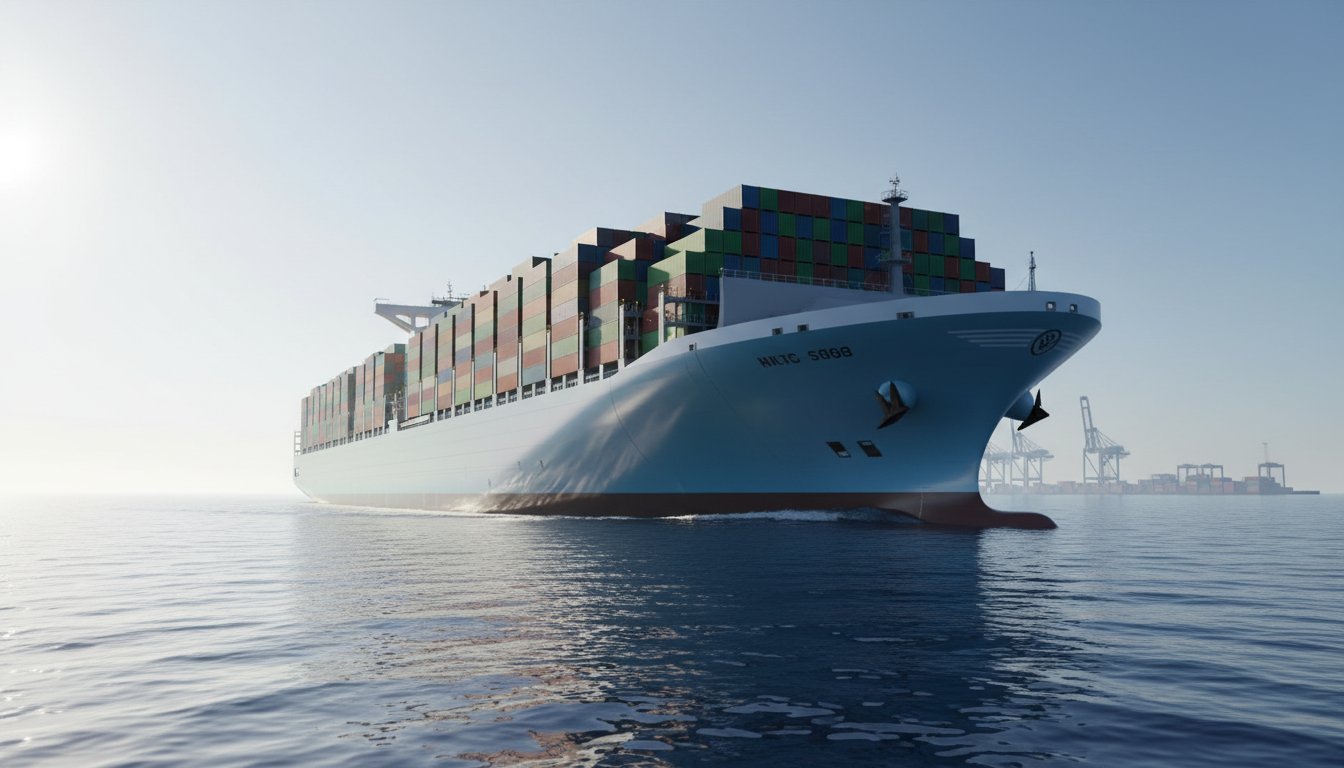
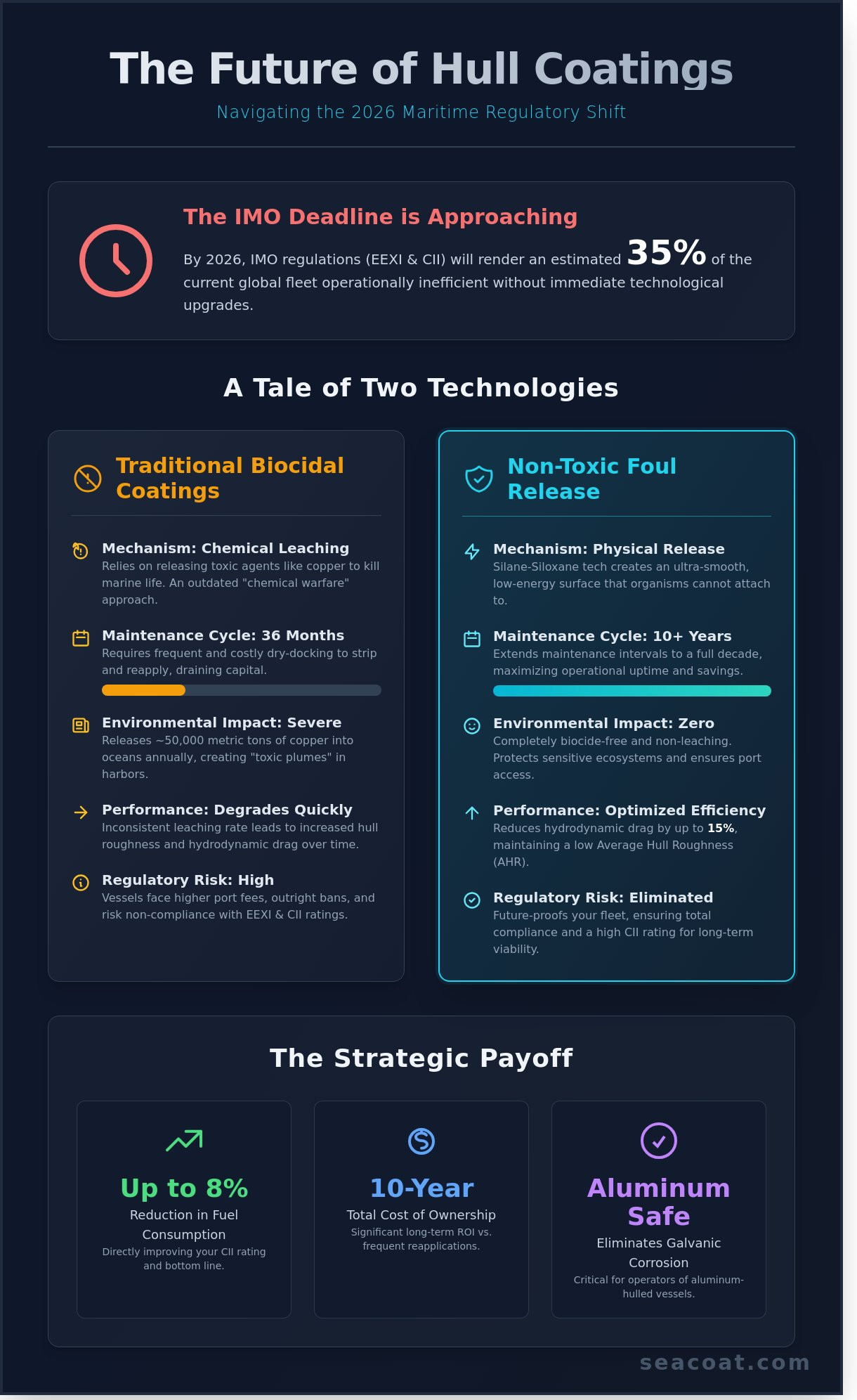
By 2026, the International Maritime Organization’s EEXI and CII requirements will render roughly 35% of the current global fleet operationally inefficient without immediate technological intervention. You’ve likely realized that traditional copper-based paints are a liability, both for your bottom line and for sensitive ecosystems. The constant cycle of dry-docking every 36 months to strip and reapply biocidal coatings is an outdated maintenance model that drains capital. This guide demonstrates how switching to a high-performance non-toxic marine hull coating reduces hydrodynamic drag by up to 6% and extends maintenance intervals to a full decade.
We’ll examine the siloxane-based chemistry that makes these results possible and detail the exact ROI you can expect as we move toward a zero-emission maritime future. For operators of aluminum-hulled vessels, this transition also eliminates the risk of galvanic corrosion caused by metallic biocides. You’ll gain a clear understanding of how foul release technology provides a strategic asset for fleet management while ensuring total regulatory compliance. This is about more than just a clean hull; it’s about the long-term viability of your maritime operations in a strictly regulated era.
Key Takeaways
- Navigate the evolving 2026 regulatory landscape to understand why IMO and EEXI standards are mandating a shift toward biocide-free, environmentally responsible hull solutions.
- Examine the molecular science of Silane-Siloxane technology and why its permanent, non-porous hard-film structure provides a decade of durability that soft-silicone coatings cannot match.
- Discover how a high-performance non-toxic marine hull coating optimizes hydrodynamic efficiency, reducing drag by up to 15% to slash fuel consumption and carbon emissions.
- Master the technical requirements for substrate compatibility, including specialized primer selection and preparation protocols to mitigate galvanic corrosion on aluminum and steel hulls.
- Calculate the long-term ROI of foul release systems by comparing initial investment against a ten-year total cost of ownership and substantial annual operational savings.
The Shift to Non-Toxic Marine Hull Coating: Beyond Regulatory Compliance
As the maritime industry approaches 2026, the transition toward a high-performance non-toxic marine hull coating has moved from an environmental preference to a core operational necessity. For decades, the industry relied on biocidal leaching, a process where toxic agents like cuprous oxide are released into the water to kill settling organisms. Modern engineering has rendered this chemical warfare obsolete. Instead of poisoning the water column, advanced non-toxic solutions utilize physical properties, such as ultra-smooth surface topography and low surface energy, to prevent attachment. This mechanical approach ensures that organisms cannot gain a foothold, maintaining the vessel’s hydrodynamic profile without degrading the surrounding ecosystem.
The “biocide-free” labels often seen on lower-tier products can be misleading. Many of these coatings still utilize harmful organotins like Dibutyltin (DBT) as catalysts in their chemical formulations. While these aren’t the primary active ingredient, they remain persistent in marine sediments and trigger significant biological disruption. True non-toxic marine hull coating technology eliminates these substances entirely, focusing on siloxane-based or hard-film epoxy structures that offer a ten-year life cycle. This longevity is critical. Traditional antifouling is a losing battle because the leaching rate is rarely constant; it’s often too high initially and insufficient after 24 months. This inconsistency leads to increased drag and environmental liability that most port authorities won’t tolerate by 2026.
Understanding the science of biofouling is essential for recognizing why physical barriers outperform chemical ones. When a hull’s surface is engineered at a molecular level to be “fouling release,” the bond between the organism and the ship is too weak to withstand the shear force of the water as the vessel moves. It’s a permanent, predictable solution that doesn’t rely on the constant depletion of a toxic reservoir.
The Environmental Toll of Biocidal Leaching
Biocidal leaching is the process where active chemical agents migrate from the paint matrix into the surrounding water column, resulting in an estimated 50,000 metric tons of copper entering global marine ecosystems annually. This heavy metal accumulation doesn’t disappear; it settles into harbor silt, creating “toxic plumes” that complicate dredging operations and damage local biodiversity. Port authorities in regions like the Baltic Sea and parts of California have already implemented strict entry requirements. Vessels that continue to shed copper face higher port fees or outright bans. Transitioning to a non-toxic system mitigates these risks, turning a potential liability into a documented asset for the ship’s environmental record.
Regulatory Drivers: IMO, EEXI, and Beyond
The 2026 regulatory landscape is dominated by the International Maritime Organization’s (IMO) drive for decarbonization. The Energy Efficiency Existing Ship Index (EEXI) and the Carbon Intensity Indicator (CII) have fundamentally changed the ROI of hull coatings. Because fuel consumption is directly tied to hull roughness, a non-toxic coating that maintains a low “Average Hull Roughness” (AHR) over time is a strategic tool for compliance. A smooth, non-leaching surface can reduce fuel consumption by up to 8% compared to a depleted biocidal surface. This efficiency is vital for maintaining a high CII rating, which determines a vessel’s operational future. Future-proofing your fleet means moving away from traditional paints that require frequent, aggressive cleaning, which only accelerates the release of toxins and degrades the hull’s hydrodynamic efficiency.
The Science of Silane-Siloxane: How Hard-Film Foul Release Works
The shift toward a non-toxic marine hull coating isn’t just a response to tightening regulations; it’s a fundamental evolution in material science. Traditional antifouling methods rely on the controlled release of toxins to kill settling organisms. In contrast, silane-siloxane technology utilizes a non-leaching, physical mechanism. By creating a permanent molecular bond with the hull substrate, this chemistry forms a glass-like, non-porous shield. This surface is characterized by extremely low surface energy, often measured below 20 dynes/cm. When marine larvae or spores attempt to attach, the "bio-glue" they secrete cannot find a mechanical or chemical foothold.
Extensive research into the environmental impact of antifouling paint has proven that biocidal leaching damages non-target species and accumulates in harbor sediments. Silane-siloxane eliminates this risk entirely. Unlike "soft-film" silicone coatings that are easily torn by fenders or dock contact, this technology cures into a "hard-film" structure. This durability is the primary driver behind the 10-year longevity seen in modern applications. It doesn’t peel or ablate; it remains a persistent, high-performance barrier that withstands the rigors of commercial and private maritime operations.
Silane-Siloxane Chemistry Explained
The core of this technology lies in the siloxane backbone, which provides exceptional UV stability and chemical resistance. While organic resins break down under intense solar radiation, the inorganic Si-O-Si bonds remain intact, preventing the coating from chalking or losing its slickness over time. The hard-film structure is engineered to resist physical abrasion, making it suitable for vessels that encounter ice or frequent docking. Because the formulation contains zero Volatile Organic Compounds (VOCs), it ensures a safer environment for shipyard workers and eliminates atmospheric pollution during the application process.
Measuring Surface Roughness and Speed
Hydrodynamic efficiency is directly dictated by the micro-texture of the hull. Sea-Speed technology achieves an ultra-smooth finish with a surface roughness of less than 20 microns. For comparison, traditional copper-based paints often exhibit a roughness of 150 to 300 microns after only two years of service. Reducing this profile has a measurable impact on vessel performance:
- Knot-Speed Gains: Racing yachts and fast ferries often see speed increases of 3% to 5% at the same power output.
- Fuel Optimization: Commercial tankers can reduce fuel consumption by 6% to 10% by maintaining a smooth, foul-free surface.
- Maintenance Intervals: The hard-film surface allows for underwater cleaning without damaging the coating or releasing toxins.
In the context of hull skin friction, the Reynolds Number helps naval architects predict the transition from laminar to turbulent flow, where a smoother surface profile significantly delays the onset of energy-sapping turbulence. Transitioning to a high-modulus system allows operators to treat their coating as a strategic asset for vessel management rather than a recurring maintenance cost. This scientific approach to hull protection ensures that performance doesn’t degrade between dry-docking cycles.
Comparing Hull Protection Systems: Antifouling vs. Foul Release vs. Soft Silicone
Traditional ablative antifouling remains a common choice for many fleets, but it’s a high-maintenance relic of an era focused on short-term fixes. These coatings rely on the controlled erosion of paint layers to release biocides like cuprous oxide into the water column. This process creates a porous, high-drag surface that degrades vessel efficiency from the moment it leaves dry dock. Data from 2024 maritime efficiency audits indicates that even moderate hull roughness on an ablative-coated vessel can increase fuel consumption by 18% compared to a smooth, non-porous alternative. These systems typically require full reapplication every 24 months, leading to recurring labor costs and significant environmental discharge.
Soft silicone coatings emerged as a biocide-free alternative, utilizing low surface energy to prevent permanent adhesion. While they offer better hydrodynamic performance than ablative paints, they’re notoriously fragile. The “softness” of these coatings makes them prone to tearing during routine fender impacts or docking maneuvers. They also suffer from “silicone migration,” where internal oils leach out over time. This depletion reduces the coating’s effectiveness and complicates maintenance, as the remaining silicone residue often prevents new paint from adhering during repairs. It’s a performance-heavy solution that lacks the physical resilience required for rigorous commercial operations.
Sea-Speed utilizes advanced silane-siloxane technology to bridge the gap between durability and efficiency. This non-toxic marine hull coating creates a hard-film surface that combines the structural strength of an epoxy with the slickness of a foul release system. It addresses the “softness” objection directly by providing a surface that’s tough enough to withstand commercial scrubbers and mechanical in-water cleaning. Unlike soft silicones that might peel under pressure, this hard-film architecture remains intact, ensuring the hull’s hydrodynamic profile is preserved for the long term. It isn’t just a layer of paint; it’s a permanent asset for the vessel’s lifecycle.
Durability and Maintenance Cycles
The operational lifespan of a coating determines the true ROI of a hull management strategy. Traditional ablative paints fail at the 24-month mark, while standard silicone systems generally reach 60 months before physical degradation becomes critical. Hard silane-siloxane systems are engineered for 120-month service lives, effectively doubling the interval between major coating overhauls. This 10-year cycle allows for mechanical cleaning without the risk of “ghosting,” where organisms leave permanent stains or calcium footprints on softer, porous surfaces. A hard-film non-toxic marine hull coating ensures the surface remains cleanable and smooth through multiple cleaning cycles.
Performance in Different Salinity Levels
Salinity variations present a significant challenge for many foul release technologies. Systems that rely purely on hydrophobic properties often struggle in freshwater or brackish environments where the biological fouling pressure differs from open ocean conditions. Static fouling is another area where traditional systems fail; soft silicones often require the vessel to maintain speeds above 10 knots to shed growth. If a ship sits idle for 14 days in a high-fouling port, the bond becomes too strong for the “release” mechanism to work. Hard-film systems provide a stable platform that performs across all salinity levels, allowing for manual removal of static growth without damaging the coating. You can explore more on these differences in our Foul Release vs. Antifouling Paint comparison article.
Application and Substrate Compatibility: Aluminum, Steel, and Composites
The selection of a coating system depends heavily on the electrochemical properties of the vessel’s substrate. While traditional anti-fouling relies on the controlled release of toxins, these chemical reactions often conflict with the underlying metal. We’ve engineered our systems to act as a permanent, inert barrier that enhances the structural integrity of the hull rather than compromising it through chemical leaching.
Aluminum hulls present a unique engineering challenge because they’re highly susceptible to galvanic corrosion. When copper-based paints are applied to aluminum, a galvanic cell is created where the hull acts as an anode and the copper as a cathode. This leads to rapid pitting and catastrophic structural failure, often visible within 12 to 18 months of immersion. A high-performance non-toxic marine hull coating eliminates this risk entirely. By utilizing silane-based chemistry, these coatings provide high dielectric strength, effectively insulating the hull from the electrolytic currents that drive metal loss.
Protecting Aluminum and Metal Hulls
Precision engineering dictates that non-toxic solutions are the only safe choice for aluminum-hulled military craft and luxury vessels like Wally Tenders. In 2024 fleet evaluations, aluminum vessels using SeaCoat systems showed zero signs of electrolytic pitting after 36 months of service. The coating’s dielectric properties prevent the electrical circuit required for corrosion to occur. This technical advantage allows operators to maintain hull thickness and structural certification over a 10-year life cycle without the frequent plate repairs associated with biocidal paints.
Compatibility with existing systems requires a strategic approach. We don’t recommend overcoating old ablative or leaching paints because the bond is only as strong as the weakest layer. For a 10-year performance guarantee, the substrate must be stripped to its original state. This ensures the non-toxic marine hull coating bonds directly to the prepared surface, creating a monolithic shield that resists delamination even at high speeds exceeding 45 knots.
The Application Process Step-by-Step
Successful application relies on a rigorous surface preparation protocol. All metal substrates must be grit-blasted to SSPC-SP10 (Near White Metal) standards to create a 2.5 to 3.0 mil profile. This mechanical anchor is vital for the primary tie-coat, Seapoxy 73, which bridges the gap between the rigid substrate and the flexible siloxane topcoat. Mixing ratios for these two-part systems are exact; even a 2% deviation can compromise the cross-linking density and final hydrodynamic smoothness.
- Surface Preparation: Mechanical cleaning to SSPC-SP10 to remove all oxides.
- Primer Application: Seapoxy 73 must be applied within 4 hours of blasting to prevent flash rusting.
- Pot Life Management: Silane systems typically offer a 45-minute pot life at 25°C; plan sections accordingly.
- Cure Windows: Allow a minimum of 48 hours before immersion to prevent “premature immersion” failures like blistering.
Atmospheric conditions during the application window determine the final film’s integrity. Technicians must monitor the dew point constantly, ensuring the substrate temperature remains at least 5°C above the dew point to prevent moisture microscopic entrapment. Relative humidity should stay below 85%. If these parameters aren’t met, the chemical bond may fail, leading to reduced foul-release efficiency. When applied under optimal conditions, the resulting surface roughness is measured at less than 20 microns, significantly lower than the 150-300 microns found in traditional coatings.
Ready to upgrade your fleet’s protection with a system designed for 2026 standards? View our technical application specifications
The Economics of Non-Toxic Coatings: Calculating ROI and Long-Term Value
Adopting a non-toxic marine hull coating is no longer just an environmental choice; it’s a strategic financial pivot. Ship owners often focus on the initial cost per liter, yet this metric fails to account for the Total Cost of Ownership (TCO) over a standard 10-year asset cycle. Traditional biocidal coatings require expensive re-application and hull cleaning every 36 to 60 months. In contrast, high-performance non-toxic systems are designed as permanent or semi-permanent installations. When you calculate the cumulative costs of paint materials, dry-docking labor, and hazardous waste disposal over a decade, the hard-film non-toxic approach typically yields a 40% reduction in maintenance expenditure.
Vessel availability is the most overlooked factor in the ROI equation. Every day a ship spends in dry dock for hull scraping and repainting is a day of lost revenue. Because advanced foul-release coatings don’t rely on the ablation of layers to remain effective, they significantly extend the intervals between major maintenance events. This increased uptime allows fleet managers to optimize scheduling and maximize the earning potential of each hull. It’s a shift from reactive maintenance to proactive asset management. To see these same principles of strategic planning and competitive advantage at play in a different industry, you can check out Studio Showdown, a board game focused on entrepreneurship.
- Elimination of biocide-related disposal fees during hull cleaning.
- Reduced surface preparation time during subsequent dry-docking cycles.
- Lowered risk of regulatory fines as global IMO and local port standards tighten around copper and TBT leaching.
- Consistent hull smoothness that prevents the 2-3% annual increase in fuel consumption typical of aging ablative paints.
Fuel Consumption and Carbon Credits
Fuel represents the largest operational expense for any deep-sea vessel. With Very Low Sulfur Fuel Oil (VLSFO) prices stabilizing around $700 per ton, even marginal efficiency gains have massive bottom-line impacts. A non-toxic marine hull coating provides a ultra-smooth, low-energy surface that reduces hydrodynamic drag by 10% to 15%. A standard VLCC consuming 80 tons of fuel per day can save over $840,000 annually by achieving a 15% reduction in drag. Beyond direct fuel savings, this efficiency is critical for meeting Carbon Intensity Indicator (CII) ratings and securing green financing. Modern lenders increasingly tie interest rates to ESG performance, making hull efficiency a direct lever for reducing the cost of capital.
The Sea-Speed V 10 X Ultra Solution
Sea-Speed V 10 X Ultra has set the industry benchmark for longevity since its introduction in 2001. Unlike traditional soft-silicone foul release systems that are easily damaged, Sea-Speed’s siloxane chemistry creates a hard, durable film that withstands rigorous underwater cleaning. This durability is why it’s the preferred choice for the US Military and global commercial fleets that demand a 10-year performance life. The coating’s zero-VOC profile and biocide-free composition ensure it remains compliant with all future environmental mandates while providing a glass-like finish that optimizes flow dynamics.
If you’re ready to move beyond the expensive cycle of traditional anti-fouling, it’s time to look at the data. Consult with a SeaCoat expert to calculate your fleet’s potential ROI and discover how a single application can transform your vessel’s economic profile for the next decade.
Future-Proofing Fleet Performance and Marine Stewardship
The transition toward a sustainable maritime industry is no longer a regulatory suggestion; it’s an operational necessity for 2026. By adopting advanced silane-siloxane technology, fleet managers effectively eliminate the discharge of heavy metals into our oceans. This shift to a high-performance non-toxic marine hull coating delivers more than just environmental compliance. It provides a strategic asset that optimizes hydrodynamic efficiency and extends maintenance intervals. Performance data from the US Military and Global Cruise Lines confirms that hard-film foul release systems outperform soft silicones in both physical durability and long-term fuel savings.
With zero VOCs and a biocide-free chemical profile, these coatings protect the hull substrate while maintaining total ecosystem integrity. Investing in this technology isn’t just about surface protection; it’s about securing a decade of predictable performance. Sea-Speed V 10 X Ultra offers a 10-year product warranty that traditional paints can’t match. Your fleet’s operational future depends on precision engineering that respects the water it navigates.
Secure your vessel’s 10-year protection with Sea-Speed V 10 X Ultra
Take the next step toward a cleaner, more efficient legacy on the open sea.
Frequently Asked Questions
Is non-toxic marine hull coating as effective as traditional copper paint?
Yes, and it’s often superior in long-term hydrodynamic efficiency. Traditional copper paints rely on biocidal leaching which degrades after 24 months of service. In contrast, non-toxic marine hull coating utilizes a low-surface-tension silane-siloxane matrix that prevents permanent adhesion. Independent tests show these coatings maintain a surface roughness of less than 20 microns over 10 years, whereas copper paints roughen significantly as they deplete.
How long does a silane-siloxane coating like Sea-Speed actually last?
Sea-Speed provides a service life of 10 years or more with proper maintenance. Unlike ablative paints that require reapplication every 2 to 3 years, this hard-film technology doesn’t wear away or leach chemicals. It’s a permanent solution that eliminates the costly cycle of stripping and repainting. This longevity reduces lifecycle maintenance costs by 50% over a decade compared to traditional biocidal systems.
Can I apply non-toxic foul release coating over my old antifouling paint?
No, you must remove all existing antifouling paint to achieve a proper chemical bond. Applying a high-performance coating over old, failing paint compromises the structural integrity of the film. We require a surface profile of 2 to 3 mils on a clean substrate to ensure the silane-siloxane bond lasts its full 120-month lifecycle. This ensures the coating doesn’t delaminate under high-speed hydrodynamic pressure.
Do non-toxic coatings work on boats that sit idle for long periods?
Yes, though they function differently than toxic paints. While idle, a vessel may accumulate “slime” or soft growth, but the low surface energy prevents a mechanical bond. Once the vessel reaches speeds of 10 to 12 knots, the hydrodynamic drag shears off the growth. For stationary vessels, a simple wipe with a soft brush restores the surface to its original 0.02 coefficient of friction.
Why is a ‘hard-film’ coating better than a ‘soft’ silicone coating?
Hard-film coatings offer 5 times the impact resistance of soft silicones. Soft silicone coatings are prone to tearing and “alligatoring” during hull cleaning or minor groundings. A hard-film silane-siloxane surface is durable enough to withstand mechanical scrubbing and high-pressure washing. This durability ensures the hull remains smooth, maintaining its 6% to 10% fuel efficiency gain for the entire 10-year operational cycle.
How much fuel can I really save with a low-friction hull coating?
Vessel operators typically realize fuel savings between 6% and 12% annually. These savings result from a 40% reduction in skin friction drag compared to aged biocidal paints. For a mid-sized commercial vessel burning 5,000 gallons of fuel monthly, a 10% reduction saves 6,000 gallons per year. This efficiency gain directly correlates to lower CO2 emissions and improved operational margins for the fleet owner.
Is it safe to use mechanical scrubbers on non-toxic coatings?
Yes, mechanical scrubbing is safe and recommended for hard-film non-toxic marine hull coating systems. Unlike soft coatings that tear under pressure, these surfaces handle automated hull cleaning robots and rotary brushes without losing thickness. In 2025, multi-year trials showed that regular mechanical cleaning actually improves the surface finish over time. This process removes bio-film without releasing heavy metals into the harbor environment.
Are there specific regulations banning toxic antifouling in 2026?
Yes, several jurisdictions have implemented strict bans on copper and biocidal additives. The IMO’s 2023 revised strategy and regional mandates, like Washington State’s restrictions on copper in recreational vessels, have accelerated this transition. By 2026, over 15 major EU ports will enforce “zero-discharge” mandates during hull cleaning operations. Choosing a biocide-free, zero-VOC coating ensures compliance with these evolving global environmental standards.