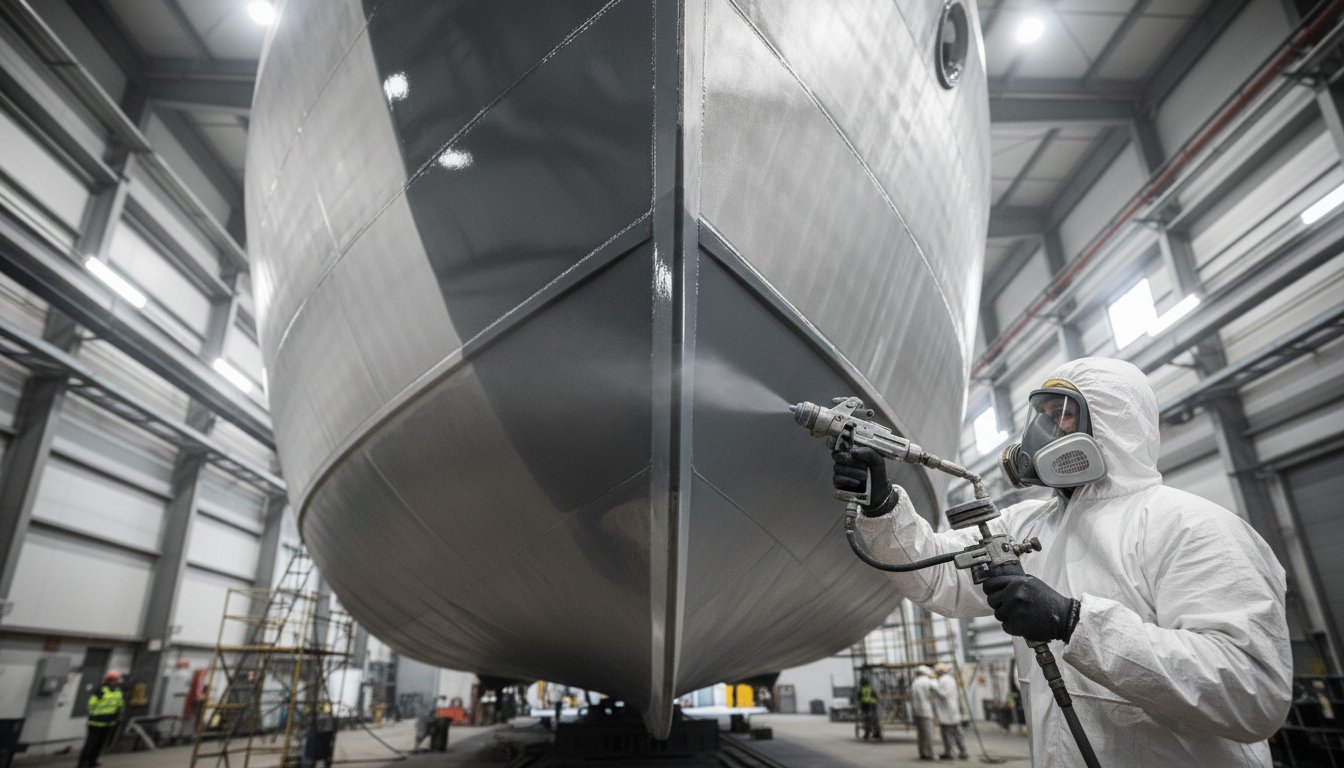
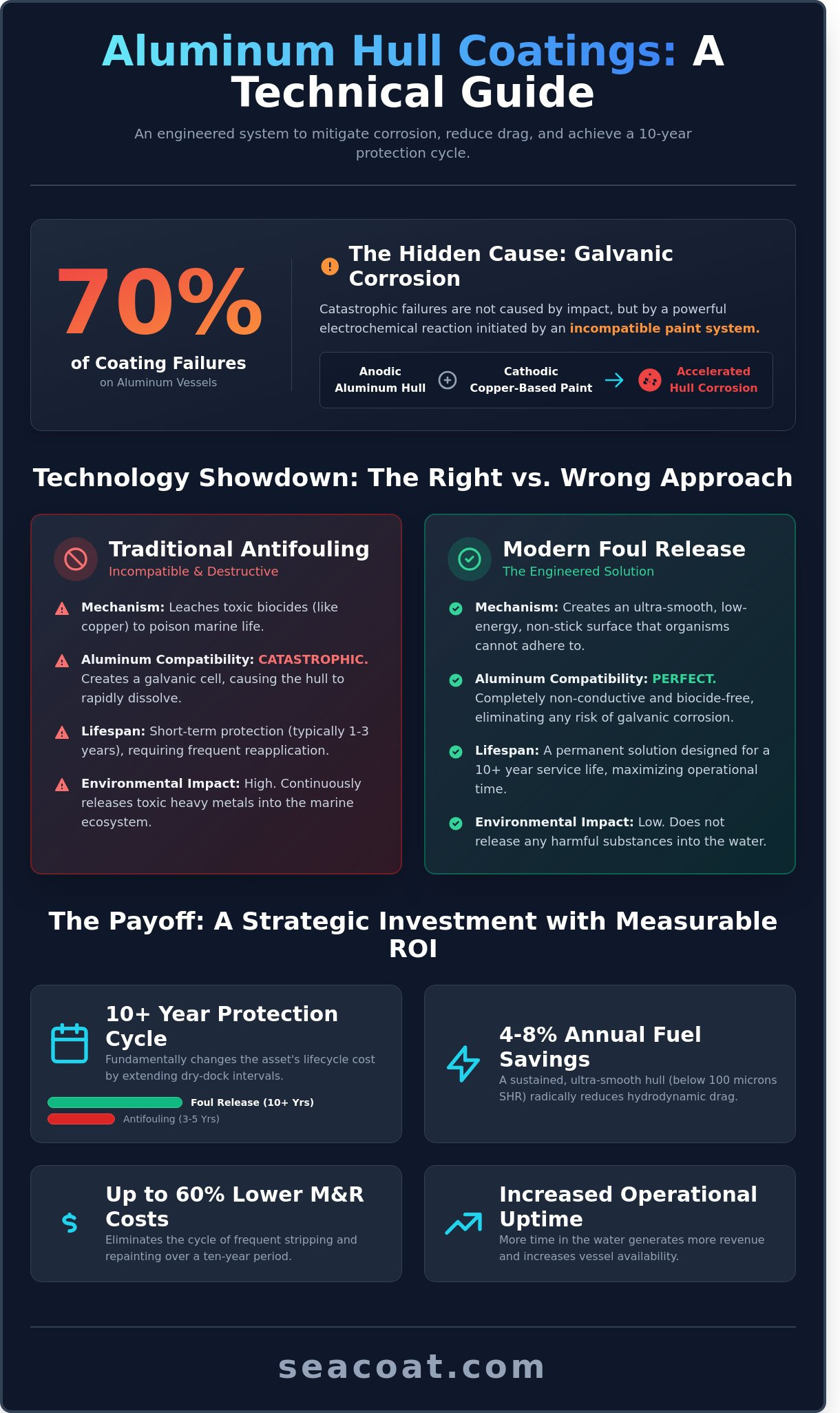
Over 70% of catastrophic coating failures on aluminum vessels aren’t caused by impact or abrasion, but by galvanic corrosion initiated by an incompatible paint system.
It’s a frustrating and costly cycle for any operator; you invest in a premium topcoat, only to see it blister and peel, compromising the hull’s integrity and operational readiness. This guide moves beyond temporary fixes, providing the definitive technical framework for selecting the correct paint for boats aluminum hulls. Here, you will master the engineering principles behind a permanent, high-performance coating system that mitigates corrosion, reduces hydrodynamic drag for improved fuel efficiency, and offers a ten-year protection cycle.
We will deconstruct the science of surface preparation, analyze the critical function of specialized primers, and detail the application strategies that deliver a measurable return on investment through radically reduced maintenance and optimized vessel performance.
Key Takeaways
- Understand the electrochemical principles behind galvanic corrosion to select a coating that acts as an effective dielectric barrier on reactive metal hulls.
- Differentiate between modern foul release and traditional antifouling technologies to optimize your vessel’s hydrodynamic efficiency and environmental compliance.
- Master the critical surface preparation techniques required for maximum coating adhesion, preventing premature failure and ensuring long-term protection.
- Evaluate the key performance metrics-such as drag reduction and life cycle-to select the ideal high-performance paint for boats aluminum that meets your operational demands.
Why Aluminum Hulls Require Specialized Marine Coatings
Aluminum’s high strength-to-weight ratio makes it an exceptional material for modern vessel construction, yet its inherent chemical properties present a significant challenge in marine environments. As a highly reactive metal, aluminum instantly forms a passive layer of aluminum oxide upon exposure to air. While this layer offers some initial protection, it also creates a low-energy surface that traditional marine paints struggle to adhere to. A high-performance aluminum boat coating is not merely a layer of color; it’s an engineered system designed to chemically integrate with the substrate, forming an impermeable, non-conductive barrier that can withstand constant immersion and electrochemical pressures for over a decade.
Applying standard marine paints, particularly those formulated for fiberglass or steel, to an aluminum hull is a direct path to premature coating failure and accelerated corrosion. These conventional coatings lack the specialized primers and etchers required to create a permanent molecular bond with the aluminum oxide. Without this foundational adhesion, the system is susceptible to blistering, peeling, and delamination within as little as 12-24 months. This failure exposes the bare metal to saltwater, initiating pitting and crevice corrosion that can compromise the hull’s structural integrity far sooner than its designed service life.
The Aluminum-Copper Conflict: A Warning
The most critical error in specifying a paint for boats aluminum hulls is the application of traditional copper-based antifouling paints. Placing copper, a highly cathodic metal, directly onto an anodic aluminum hull in the presence of saltwater creates a powerful galvanic cell. This electrochemical reaction turns the hull itself into a sacrificial anode, causing it to rapidly dissolve. This accelerated degradation is a textbook example of The Science of Galvanic Corrosion, a process that can destroy a hull in a single season. While some products are labeled “aluminum-safe,” they often rely on less potent biocides; a truly permanent solution requires a completely non-conductive, biocide-free system that eliminates the electrical potential altogether.
Performance Benefits of a Smooth Hull
A properly specified coating system does more than just protect; it optimizes performance. The hydrodynamic efficiency of a vessel is directly tied to the smoothness of its hull. Research from the U.S. Office of Naval Research indicates that even a minor increase in surface roughness can increase frictional drag by over 15%, leading to a commensurate rise in fuel consumption. A durable, hard-film foul-release coating maintains a smooth, low-drag surface (typically below 100 microns SHR) for its entire 10-year service life.
For commercial operators and aluminum fleets, the economic impact is substantial. By extending dry-docking intervals from the typical 3-5 years to 10 years or more, a superior coating system fundamentally changes the asset’s lifecycle cost. This translates directly to:
- Reduced Fuel Burn: Sustained hull smoothness results in documented fuel savings of 4-8% annually.
- Lower Maintenance Costs: Eliminating the need for frequent stripping and repainting reduces M&R budgets by up to 60% over a decade.
- Increased Operational Availability: More time in the water means more revenue-generating opportunities.
The right coating transforms from a maintenance expense into a strategic investment in long-term operational efficiency and asset preservation.
Comparing Modern Technologies: Foul Release vs. Antifouling
The selection of a hull coating for an aluminum vessel is a critical operational decision, governed by a complex interplay of material science, hydrodynamic efficiency, and escalating environmental regulations. Historically, the strategy was purely chemical. Today, the maritime industry is pivoting from biocidal leaching to advanced physical-release mechanisms, a shift that fundamentally redefines longevity and maintenance cycles. This transition isn’t just about performance; it’s about future-proofing assets against regulatory changes projected for 2026 and beyond.
Ablative and Hard Antifouling Paints
Traditional antifouling paints operate on a simple, yet environmentally taxing, principle: they continuously release toxic biocides, most commonly cuprous oxide, to poison marine organisms that attempt to attach to the hull. This method is fundamentally incompatible with aluminum hulls. Applying a copper-based paint directly to aluminum creates a galvanic cell, where the more reactive aluminum hull becomes an anode and rapidly corrodes. This destructive electrochemical reaction underscores the importance of preventing galvanic corrosion through proper material selection and isolation. Even with specialized barrier coats, the risk of a breach causing catastrophic damage remains high. Consequently, the maintenance burden is significant, requiring haul-outs every 12-24 months for scraping and repainting, a cycle that introduces heavy metals into sensitive marine ecosystems with each application.
Advanced Foul Release Systems (The Silane-Siloxane Advantage)
Foul release coatings represent a paradigm shift from chemical deterrence to physical prevention. Instead of poisoning marine life, these systems create an ultra-smooth, low-surface-energy finish that organisms simply cannot adhere to. The core of this technology is a silane-siloxane polymer matrix, which cures into a slick, hydrophobic, and oleophobic surface. This isn’t just a coating; it’s a precisely engineered surface with a roughness profile measured in microns. The result is a hull that offers no purchase for biofouling.
For trailerable vessels or any craft subject to frequent contact, the distinction between soft-silicone and hard-film foul release systems is critical. Soft silicones, while effective, are highly susceptible to mechanical damage from trailers, slings, or even aggressive cleaning. A hard-film silane-siloxane system, however, provides the same low-friction surface with vastly superior durability and abrasion resistance. This makes it the ideal paint for boats aluminum owners can trust for a service life exceeding 10 years without reapplication. The system’s genius lies in its dynamic, self-cleaning function. As the vessel moves through the water at speeds as low as 7 knots, the hydrodynamic pressure shears off any loosely settled slime or organisms, maintaining a clean and efficient hull. This passive cleaning mechanism eliminates the need for frequent scrubbing and ensures peak fuel efficiency, directly impacting operational costs and reducing the vessel’s carbon footprint. Understanding the specific performance data for your vessel type is the first step to leveraging this advantage; you can review our documented case studies to see the long-term results.
The Science of Preventing Galvanic Corrosion
An aluminum hull submerged in saltwater forms a natural electrochemical cell, an environment ripe for galvanic corrosion. This destructive process requires three components: an anode (the more reactive metal, like aluminum), a cathode (a less reactive metal, such as a bronze propeller or stainless steel fitting), and an electrolyte (the saltwater itself). Electrons flow from the anode to the cathode through a metallic path, causing the aluminum to corrode and lose mass. The selection of a specialized paint for boats aluminum is not merely a cosmetic choice; it is a critical engineering decision to mitigate this electrochemical degradation.
A common and costly misconception is that any primer or coating provides adequate protection. This is fundamentally incorrect. Inferior coatings, often porous or prone to microscopic pinholes, fail to stop the electrochemical reaction. Instead, they concentrate it. A tiny flaw in the coating creates a small, highly active anode surrounded by a large passive cathode (the rest of the coated hull). This dynamic accelerates corrosion at the pinhole, leading to deep, localized pitting that can compromise a vessel’s structural integrity far more rapidly than uniform surface corrosion.
The Dielectric Barrier Strategy
The most effective defense is a high-impedance dielectric barrier. A superior coating system functions as a powerful electrical insulator, physically and electronically separating the aluminum hull (anode) from the seawater (electrolyte). This high-resistance layer effectively breaks the galvanic circuit, arresting the flow of corrosive current. The efficacy of these barrier coatings is quantifiable through ASTM D7091 testing for electrical resistance, and objective methodologies for comparing antifouling coatings have been developed to assess these properties under simulated marine conditions. A coating with high dielectric strength prevents long-term hull thinning, preserving the vessel’s asset value and ensuring operational safety over a 10-year service cycle.
Sacrificial Anodes and Coating Synergy
Sacrificial anodes, typically made of zinc or magnesium alloys, are designed to corrode in place of the hull. They are more anodically active than aluminum, so they sacrifice themselves to protect the vessel. However, anodes and coatings are not mutually exclusive; they form a synergistic protection system. A high-quality, non-conductive coating dramatically reduces the exposed surface area of the hull, lowering the total current demand on the anode system. This synergy can reduce anode consumption rates by up to 75%, extending their service life and significantly cutting maintenance costs and the heavy metal load discharged into marine ecosystems.
For this system to function optimally, best practices must be followed:
- Ensure Electrical Continuity: All underwater metallic components, including engines, shafts, and rudders, must be properly bonded to the anode system. A broken or corroded bonding wire renders an anode useless.
- Avoid Painting Anodes: Never apply paint for boats aluminum or any other coating over sacrificial anodes. Doing so insulates them and prevents them from providing protection.
- Regular Inspection: Anodes should be inspected during every haul-out and replaced when they are approximately 50% depleted to maintain protective potential.
Professional Application: Ensuring Maximum Adhesion on Aluminum
The ten-year performance of a foul release system is not determined solely by its chemistry; it is fundamentally dependent on a technically precise application protocol. For aluminum hulls, this process is particularly demanding due to the metal’s inherent reactivity. Achieving a bond that withstands a decade of hydrodynamic stress and saltwater immersion requires a methodical, five-step process where each stage is a critical point of failure or success. The longevity of any high-performance paint for boats aluminum is ultimately a direct result of meticulous, professional execution.
This level of meticulous, professional execution is the gold standard for any high-value asset, whether on water or on land. For vehicle owners interested in how these principles apply to automotive finishes, you can check out Dripping Auto Pros for their expertise in paint correction.
Surface Preparation: The Critical Phase
Aluminum’s primary challenge is its instantaneous formation of a low-energy aluminum oxide layer upon exposure to oxygen. This passive layer, which forms in nanoseconds, prevents proper chemical adhesion. Timing is everything. Any delay between abrasion and priming allows this layer to reform, compromising the entire coating system. Furthermore, applicators must avoid all ferrous materials; using steel wool or contaminated abrasives introduces iron particles that initiate galvanic corrosion cells beneath the coating, leading to blistering and premature failure. A final water-break test, where a continuous sheet of water confirms a contaminant-free surface, is a mandatory quality gate before priming.
The path to a decade of protection is systematic. It demands adherence to a strict operational sequence:
- Step 1: Comprehensive Surface Decontamination. The hull must first be degreased using a high-performance, solvent-based cleaner compliant with SSPC-SP 1 standards to remove all oils, waxes, and soluble contaminants that would inhibit adhesion.
- Step 2: Mechanical Abrasion. A surface profile of 2-3 mils (50-75 microns) must be created using 80-grit aluminum oxide sanding discs or sweep blasting with a non-metallic abrasive. This profile creates the mechanical “teeth” necessary for the primer to anchor itself securely to the substrate.
- Step 3: Immediate Primer Application. Within 30 minutes of achieving the final surface profile, a high-build, two-part epoxy primer must be applied. This immediate action is non-negotiable, as it encapsulates the activated aluminum surface before the oxide layer can re-establish itself.
- Step 4: Topcoat Application Within the Critical Window. The Seacoat SCT, LLC foul release topcoat must be applied within the primer’s specified recoat window, typically between 4 and 24 hours at 77°F (25°C). This ensures a chemical, covalent bond forms between the primer and the silane-siloxane topcoat, creating a unified, monolithic system rather than just layered paint.
- Step 5: Curing Protocols and Quality Control. The vessel must be kept in a controlled environment for the full cure duration specified in the technical data sheet. Throughout the process, technicians must use an electronic gauge to verify Dry Film Thickness (DFT) at multiple points, ensuring it meets the 10-12 mil specification for the complete system.
Optimizing the Application Environment
Our advanced silane-siloxane paint for boats aluminum requires stringent environmental controls for proper cross-linking. Ambient temperatures must be maintained between 50°F (10°C) and 95°F (35°C), with relative humidity remaining below 85%. While a “tip and roll” method may suffice for small areas, only professional airless spraying can achieve the uniform, pinhole-free surface required for optimal hydrodynamic performance and a 10-year service life. This precision ensures the specified Dry Film Thickness is met across 100% of the hull, mitigating weak points and guaranteeing long-term operational efficiency. For a complete breakdown of the equipment specifications and environmental parameters, download our complete technical application guide for aluminum hulls.
Sea-Speed V 10 X Ultra: The Standard for Aluminum Vessels
While traditional marine paints struggle with the unique surface properties and operational demands of aluminum, Seacoat’s Sea-Speed V 10 X Ultra establishes a new performance benchmark. This system isn’t a conventional paint; it’s a proprietary, non-toxic, hard-film siloxane coating engineered specifically for longevity and hydrodynamic efficiency. Its unique chemistry creates an inert, impermeable barrier that chemically bonds with the substrate, solving the adhesion and corrosion challenges that plague typical coatings on aluminum. The result is a permanent foul-release surface that optimizes vessel performance for a decade or more.
The operational advantages are quantified by clear, data-driven metrics. Unlike ablative or soft foul-release coatings that degrade over time, Sea-Speed delivers consistent performance throughout its service life. Key performance indicators include:
- Hydrodynamic Drag Reduction: The ultra-smooth, low-friction surface reduces hull resistance, delivering documented drag reduction of 6-8% compared to conventional anti-fouling paints.
- VOC Levels: The formulation is 100% solids, containing zero Volatile Organic Compounds (VOCs). This eliminates harmful emissions during application and ensures compliance with the most stringent air quality regulations globally.
- Service Life Cycle: Sea-Speed V 10 X Ultra is engineered for a minimum 10-year life cycle, backed by a comprehensive warranty. This eliminates the need for biennial or triennial dry-docking and recoating cycles.
This combination of extreme durability and performance optimization makes it the preferred hull coating for high-value aluminum assets, including military patrol craft, fast ferries, and commercial workboats. These sectors demand unwavering reliability and predictable maintenance schedules, where coating failure is not an option. The hard, non-porous finish is the ideal paint for boats aluminum hulls require to resist abrasion and impact damage while maximizing operational readiness.
Real-world data confirms these benefits. A case study involving a 38-meter aluminum high-speed catamaran demonstrated a 14% reduction in fuel consumption at its service speed of 28 knots. The vessel also recorded a top speed increase of 2.1 knots, directly attributable to the hydrodynamic efficiency of the Sea-Speed coating system. These gains translate directly to lower operational expenditures and a significantly reduced carbon footprint.
Unmatched Durability and Longevity
The primary value proposition of Sea-Speed is its departure from the costly 2-year cycle of traditional anti-fouling paints. Its 10-year service life delivers a superior return on investment by drastically cutting dry-docking costs and material waste. The coating’s exceptional hardness (ASTM D3363 rating of 6H-8H) provides robust resistance to mechanical damage from trailer loading, docking, and floating debris. Furthermore, the surface can be cleaned in-water with approved methods without damaging the coating or releasing toxins into the marine environment.
Environmental Leadership and Compliance
As a completely biocide-free and zero-VOC technology, Sea-Speed V 10 X Ultra meets and exceeds the world’s strictest environmental standards, including those set by California, the IMO, and the European Union. For commercial operators, the sustained fuel efficiency gains from this premier paint for boats aluminum directly contribute to achieving and maintaining compliance with critical decarbonization regulations like EEXI and CII. It’s a strategic asset for future-proofing a fleet against evolving environmental mandates. View the technical specifications of Sea-Speed V 10 X Ultra.
Engineer a Superior Finish for Your Aluminum Fleet
Protecting an aluminum hull isn’t about applying a simple coating; it’s a calculated engineering decision. The optimal solution must actively prevent galvanic corrosion while moving beyond the limitations of traditional, biocide-leaching antifouling paints. Modern foul release systems represent the pinnacle of this evolution, optimizing hydrodynamic performance without environmental compromise. Selecting the premier paint for boats aluminum is a strategic investment that directly impacts operational efficiency and maintenance cycles for over a decade. Sea-Speed V 10 X Ultra has set this industry standard.
Trusted by military and global shipping fleets since its commercial introduction in 2001, our hard-film siloxane technology delivers a documented 10-year life cycle with zero VOCs. It’s a solution engineered for longevity and peak performance. Don’t just coat your vessel; enhance its operational capacity. Request a Technical Quote for Your Aluminum Vessel and take the first step toward a more efficient and sustainable future on the water.
Frequently Asked Questions
Can I use regular bottom paint on an aluminum boat?
No, you cannot use conventional copper-based bottom paint directly on an aluminum boat. The copper biocide in these paints initiates a destructive galvanic corrosion process when in contact with an aluminum hull. This electrochemical reaction can compromise the hull’s structural integrity in as little as one season. It’s imperative to use a completely copper-free system or a biocide-free foul release coating to prevent this damage.
Does aluminum boat paint require a special primer?
Yes, a specialized primer is absolutely critical for achieving proper adhesion and corrosion mitigation on aluminum hulls. Aluminum rapidly forms an oxide layer that prevents most coatings from bonding effectively. A high-performance, two-part epoxy primer chemically etches and bonds to the metal, creating an inert barrier. This foundation is essential for the topcoat to achieve its designed ten-year performance life without delamination or failure.
How do I prevent my aluminum boat from corroding after painting?
Preventing corrosion on a painted aluminum boat is achieved through a two-pronged approach: a complete, non-conductive coating system and correct anode maintenance. A hard, impermeable coating like Sea-Speed V 10 X Ultra fully isolates the hull from saltwater. Concurrently, you must ensure sacrificial anodes are properly installed and replaced when they are 50% depleted to protect against any stray electrical currents in the water.
How long does a professional aluminum hull coating last?
A professional-grade, hard foul release coating system is engineered to provide a service life of at least ten years. Unlike traditional ablative paints which are designed to wear away within 1-2 seasons, advanced siloxane coatings form a permanent, hard film. They don’t deplete or leach any substances, so their foul release and protective properties remain 95% effective for a full decade, delivering a significant return on investment through eliminated repaint cycles.
Is it better to leave the bottom of an aluminum boat bare?
No, leaving an aluminum hull bare is not a viable strategy for any vessel that remains in the water. An uncoated hull is immediately susceptible to aggressive marine fouling, which can increase hydrodynamic drag by over 40% and degrade fuel efficiency. More importantly, it leaves the hull vulnerable to pitting and crevice corrosion. A proper paint for boats aluminum provides an essential barrier, preserving both performance and asset integrity.
What is the most durable paint for a trailerable aluminum boat?
The most durable coating for a trailerable aluminum boat is a hard, non-ablative system, such as a siloxane or epoxy-based paint. These coatings are specifically designed to withstand the mechanical abrasion from trailer bunks, rollers, and beaching. Soft ablative paints will rub off quickly under these conditions. A hard film maintains its thickness and protective qualities, making it the superior paint for boats aluminum that are frequently hauled out.
Can I apply Sea-Speed V 10 X Ultra over existing paint?
No, Sea-Speed V 10 X Ultra requires a direct application over its specified primer on a properly prepared substrate; it cannot be applied over existing antifouling paint. For the coating to establish its chemical bond and achieve its ten-year service life, all previous coatings must be removed. An old, unstable paint layer will cause certain delamination. The hull must be taken back to the original substrate before applying the SF-21 CR epoxy primer.
How does a foul release coating improve boat speed?
A foul release coating improves vessel speed by creating an exceptionally smooth, low-friction surface that reduces hydrodynamic drag. Marine biofouling creates significant surface roughness, disrupting the laminar flow of water across the hull. Sea-Speed’s siloxane chemistry produces a surface with a measured roughness of less than 20 microns, which minimizes friction and can reduce fuel consumption by up to 12% at cruising speeds.