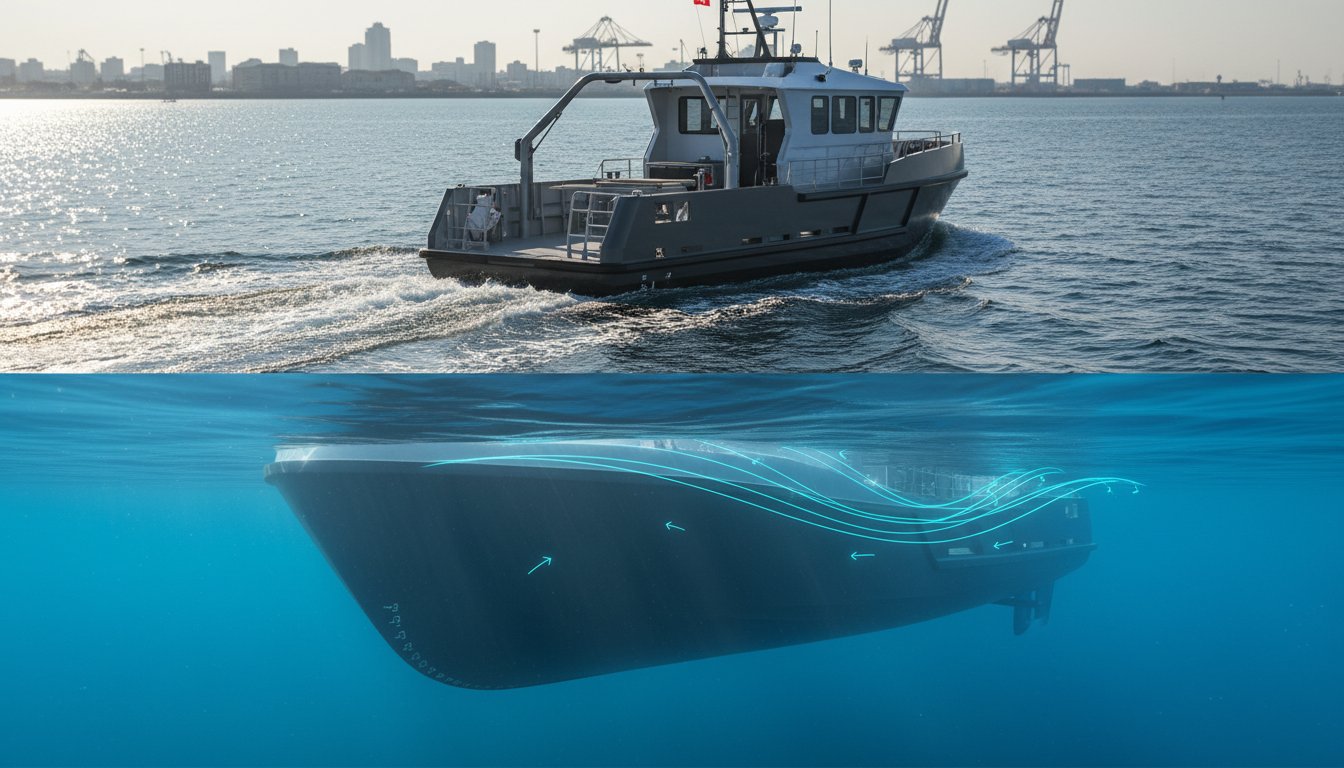
Selecting the optimal hull coating is a critical strategic decision, fraught with the risks of escalating maintenance costs, regulatory non-compliance, and the pervasive fear of a failed application. The lexicon of traditional bottom paint antifouling-ablative, hard, biocidal-often creates more confusion than clarity, leaving vessel operators to navigate a complex market where long-term performance is promised but rarely delivered without significant environmental trade-offs.
This 2026 guide is engineered to provide a clear, data-driven pathway forward. We will move beyond the limitations of legacy coatings to systematically analyze the next generation of foul release systems. You will gain a comprehensive understanding of the hydrodynamic and economic principles that differentiate these advanced polymers, learning how their biocide-free, low-friction surfaces mitigate biofouling while significantly reducing fuel consumption. We will demystify the science, quantify the return on investment, and empower you to select a strategic asset that ensures operational efficiency and environmental stewardship for years to come.
Key Takeaways
- Reframe your budget from short-term paint costs to a 10-year Total Cost of Ownership (TCO) to accurately assess long-term operational savings.
- Discover the critical difference between traditional biocidal coatings and modern foul release systems that prevent attachment without harmful toxins.
- Move beyond basic water type to a modern framework for selecting the optimal bottom paint antifouling solution based on your vessel’s specific operational profile.
- Understand how advanced hard-film coatings simultaneously reduce hydrodynamic drag for fuel efficiency and mitigate long-term maintenance cycles.
Understanding Bottom Paint: The Foundation of Vessel Performance
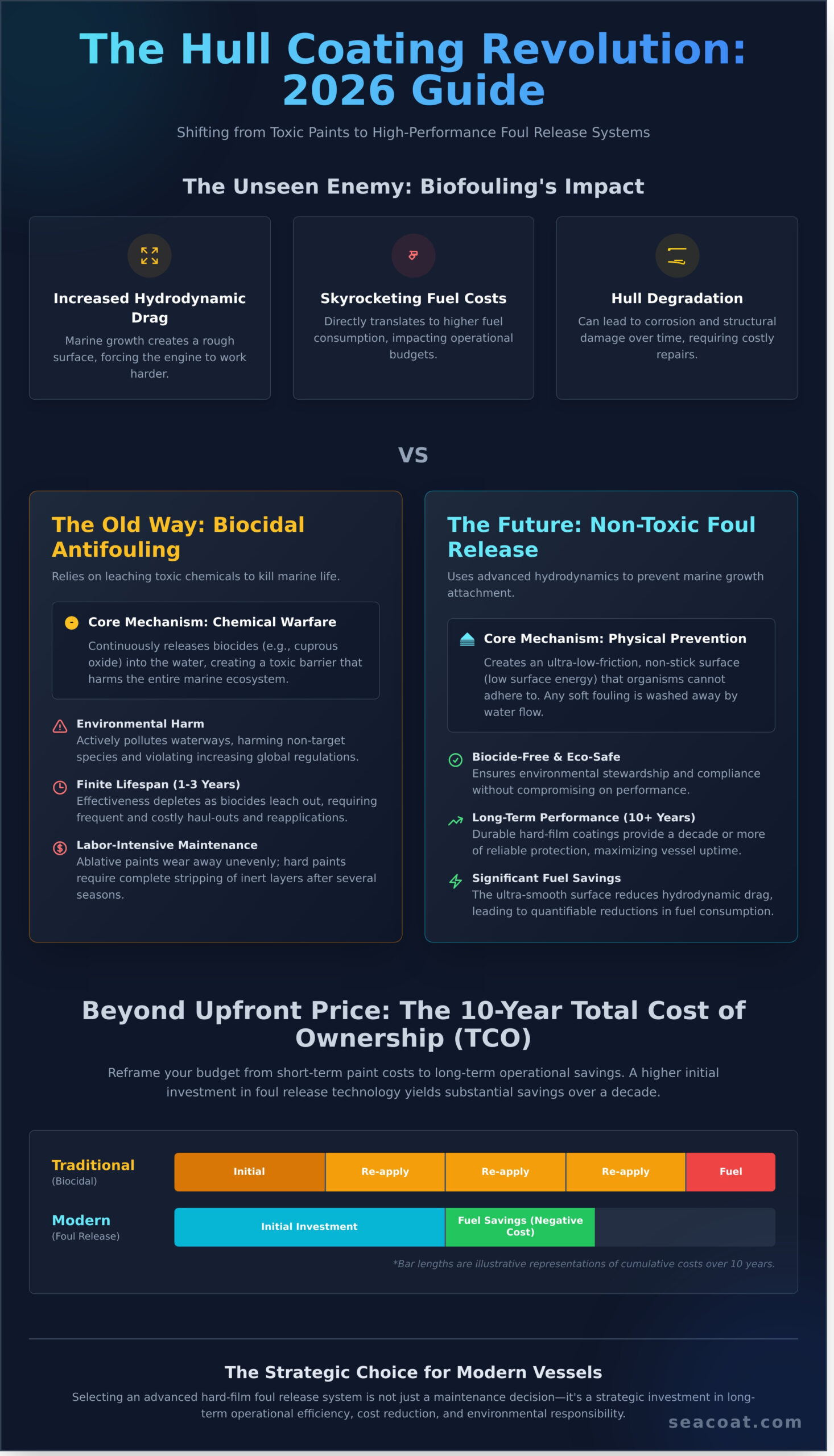
For any vessel, the condition of its hull is a primary determinant of operational efficiency and longevity. The specialized coating applied to the underwater portion of the hull is known as bottom paint antifouling, a critical barrier engineered to combat the persistent threat of biofouling. Biofouling-the accumulation of marine organisms like algae, barnacles, and slime-creates significant hydrodynamic drag. This increased resistance directly translates to substantial increases in fuel consumption, reduced speed, and can, over time, lead to corrosion and structural damage to the hull surface.
Historically, the maritime industry has relied on two primary categories of biocide-based coatings to mitigate this challenge. These legacy systems, while effective to a degree, represent a technological approach with inherent compromises. The fundamental principles of traditional Antifouling paint technology and history are centered on releasing toxic compounds into the water. This core mechanism is the source of their primary limitations: a finite service life and a significant, cumulative environmental impact.
Traditional Hard Antifouling Paints
Often referred to as contact leaching paints, these coatings function by leaching biocidal agents, most commonly cuprous oxide, into the water’s boundary layer. This creates a toxic barrier that is inhospitable to marine life. While effective, this system has distinct operational characteristics.
- Pros: The cured paint forms a hard, durable finish that can withstand regular cleaning and can be burnished to a smooth, low-friction surface, making it popular for racing sailboats.
- Cons: The paint’s effectiveness wanes as the biocides are depleted. Over time, this creates a buildup of inert paint layers that must be stripped, a labor-intensive and costly process.
Traditional Ablative (Self-Polishing) Paints
Ablative paints are designed to wear away, or “ablate,” with the friction of water moving past the hull. This controlled erosion constantly exposes a fresh layer of the biocide-infused paint, ensuring consistent antifouling performance throughout its lifespan.
- Pros: This self-polishing action eliminates the buildup of old paint layers, significantly reducing the prep work required for reapplication.
- Cons: The softer film is less durable and not ideal for high-speed powerboats, trailered vessels, or boats that are scrubbed frequently. More critically, its mechanism ensures a constant, deliberate release of toxins into the marine ecosystem.
The Critical Divide: Biocidal Antifouling vs. Non-Toxic Foul Release
The modern paradigm for vessel hull protection has shifted from a conversation about hard versus soft paints to a more fundamental strategic choice: chemical warfare against marine life versus advanced physical prevention. This evolution is not merely technological but is driven by a convergence of operational demands, environmental stewardship, and stringent global regulations. The selection of a bottom paint antifouling solution is now a critical decision that impacts a vessel’s long-term performance, operational costs, and ecological footprint.
How Biocidal Coatings Work (And Why They’re Obsolete)
Traditional antifouling paints function as marine pesticides. They are formulated to continuously leach biocides-typically cuprous oxide or other heavy metals-into the surrounding water to kill barnacles, algae, and other organisms that attempt to attach to the hull. This approach, however, is fundamentally flawed. The constant release of toxins causes significant harm to non-target species and contributes to the contamination of marine ecosystems. This legislative pressure is not new; the International Convention on the Control of Harmful Anti-fouling Systems effectively banned the most toxic organotins decades ago, signaling a definitive industry trajectory away from biocides. Furthermore, their effectiveness steadily degrades as the biocidal layer ablates, necessitating reapplication every 1-3 years.
The Superior Mechanism of Foul Release Coatings
Foul release technology represents a significant advancement in marine engineering, moving from a toxicological solution to a hydrodynamic one. Instead of killing marine life, these coatings create an ultra-low-friction, non-stick surface that organisms simply cannot adhere to. This is achieved through advanced siloxane-polyurethane chemistry, which results in a smooth, low surface energy film. Any soft fouling that does manage to settle is easily dislodged by the vessel’s movement through the water, creating a self-cleaning effect. The core benefits are undeniable: these systems are completely non-toxic, environmentally inert, and engineered for extreme durability, offering peak performance for 10+ years without reapplication.
| Metric | Biocidal Antifouling | Foul Release Coatings |
|---|---|---|
| Mechanism of Action | Kills marine organisms via leached toxins (e.g., copper). | Prevents organism attachment with a low-friction, non-stick surface. |
| Environmental Impact | Toxic; contaminates waterways and harms non-target marine life. | Non-toxic and inert; zero harmful discharge into the marine environment. |
| Effective Lifespan | 1-3 years, with declining performance over time. | 10+ years, with consistent, long-term effectiveness. |
| Regulatory Outlook | Facing increasing global restrictions and outright bans. | Fully compliant with current and anticipated environmental regulations. |
A Modern Framework for Selecting Your Bottom Paint System
Selecting the optimal hull coating requires a strategic assessment that extends far beyond the simplistic salt-versus-freshwater dichotomy. A modern approach evaluates the vessel as a long-term operational asset, prioritizing performance, maintenance efficiency, and regulatory compliance. To make an informed decision, vessel owners and fleet managers must analyze their specific operational parameters through a more sophisticated lens.
Factor 1: Vessel Usage and Speed
A vessel’s operational profile is the primary determinant of coating suitability. High-speed vessels operating above 10 knots gain significant hydrodynamic advantages from the ultra-low friction of a hard foul release system, translating directly into enhanced fuel efficiency and performance. For stationary or slow-moving vessels, these systems prevent permanent marine growth adhesion but may require periodic, simple in-water cleaning. This proactive maintenance is a stark contrast to the constant biocide leaching of traditional paints, whether the vessel is active or idle.
Factor 2: Maintenance Cycles and Dry-Docking
The traditional cycle of frequent haul-outs for repainting represents a significant operational and financial drain. Consider the total cost of ownership: annual dry-docking fees, labor for stripping layers of depleted toxic paint, and costly vessel downtime. A superior bottom paint antifouling strategy focuses on maximizing service life. By investing in a durable, long-life coating system designed for a ten-year performance cycle, you fundamentally shift from a recurring expense to a long-term capital improvement, drastically reducing maintenance overhead and maximizing asset availability.
Factor 3: Environmental Regulations and Future-Proofing
The global regulatory landscape is decisively moving to restrict the use of harmful biocides in marine coatings. Jurisdictions worldwide are tightening controls on copper and other toxic agents, creating a significant compliance risk for operators. As detailed in comprehensive reviews of U.S. regulations on TBT and copper antifouling paints, the legislative trend is clear. Choosing a biocide-free, non-toxic system today is not merely an environmental choice; it is a strategic decision to future-proof your vessel against impending regulations, ensuring operational continuity and avoiding mandated, costly coating replacements.
Beyond Upfront Price: Calculating the True Cost of Ownership (TCO)
An evaluation of advanced hull coatings based solely on initial application cost is fundamentally incomplete. While systems like Nautique-SEAL represent a greater upfront investment than traditional paints, a comprehensive 10-year Total Cost of Ownership (TCO) analysis reveals a far more compelling economic reality. The decision must be reframed from the cost of paint to the long-term cost of hull performance, operational availability, and regulatory compliance.
This strategic shift in perspective demonstrates that the most significant expenses are not found in the initial purchase, but are instead embedded in the recurring cycle of maintenance and inefficiency inherent to conventional solutions.
The Hidden Costs of Traditional Antifouling
Conventional ablative or hard matrix bottom paint antifouling creates a cycle of compounding expenses. The true cost extends far beyond the price of the materials, encompassing a range of direct and indirect financial drains that accumulate annually. These recurring costs include:
- Annual Reapplication: The direct expense of hauling the vessel, surface preparation, and the labor and materials for repainting.
- Increased Fuel Burn: As the ablative surface roughens and inevitably collects biofouling, hydrodynamic drag increases, leading to a direct and measurable rise in fuel consumption to maintain service speed.
- Lost Operational Time: Every haul-out translates to days or weeks of vessel downtime, representing significant lost revenue for commercial operators or lost time on the water for private owners.
The ROI of a Foul Release System
In stark contrast, a biocide-free, foul release system like Nautique-SEAL is engineered for a ten-year service life, fundamentally altering the cost equation. The return on investment is realized through multiple operational efficiencies. By eliminating the porous, drag-inducing surface of paint, vessels achieve a documented 5-10% reduction in fuel consumption. Furthermore, the TCO is dramatically lowered by avoiding up to nine costly haul-out and repainting cycles over a decade. This translates not only to immense savings in labor and materials but also to maximized operational uptime and enhanced vessel performance, including improved speed and maneuverability from a consistently smooth, clean hull.
When calculated over its full service life, the initial investment in an advanced foul release coating is systematically amortized, delivering a superior financial and performance outcome. This technology is not a maintenance expenditure; it is a strategic asset for optimizing vessel efficiency. To understand how these savings apply to your vessel, explore our performance data at seacoat.com.
The Seacoat Solution: A Hard-Film Foul Release System
The evolution from traditional, biocide-leaching coatings to advanced, environmentally sound systems culminates in a technology engineered for permanent performance. Seacoat SCT, LLC represents this apex, moving beyond the temporary protection of conventional varnishes and the vulnerabilities of soft foul release coatings. Seacoat SCT, LLC’s Sea-Speed V 10 X Ultra is not merely a coating; it is an integrated surface solution designed to optimize vessel hydrodynamics and operational longevity for the entire service life of the hull.
The Science of Silane-Siloxane Technology
At the core of Seacoat SCT, LLC’s system is an advanced silane-siloxane chemistry. This technology creates a highly cross-linked, inorganic ceramic-like surface that is exceptionally hard and durable. Unlike soft silicones that are susceptible to damage, Seacoat SCT, LLC’s hard-film finish resists abrasion and impact. This process yields an inert, extremely low-energy surface that is non-stick and slick, mitigating bio-adhesion and simplifying in-water cleaning. The result is a proven 10-year performance life with zero VOCs, establishing a new benchmark for sustainable marine protection.
Why Sea-Speed V 10 X Ultra is the Optimal Choice
For discerning operators, the Sea-Speed V 10 X Ultra system delivers a decisive advantage by moving beyond the cycle of reapplication inherent to traditional bottom paint antifouling solutions. The tangible benefits directly address the primary concerns of modern fleet management, providing a comprehensive return on investment.
- Maximized Fuel Efficiency: The ultra-smooth, low-friction surface significantly reduces hydrodynamic drag, leading to documented fuel savings and lower operational costs.
- Minimal Maintenance: The durable, non-stick surface resists marine growth, drastically reducing the frequency and intensity of hull cleanings and eliminating the need for costly dry-dock repainting cycles.
- Guaranteed Regulatory Compliance: As a completely biocide-free and zero-VOC system, it ensures full compliance with the most stringent current and future environmental regulations worldwide.
This technology is engineered for high-value assets where performance and reliability are non-negotiable, making it the ideal choice for commercial, military, and performance recreational vessels. For serious operators focused on long-term asset value and environmental stewardship, the logical next step is to transition to a superior system. Request a technical consultation to assess the Sea-Speed system for your vessel.
Redefining Hull Performance for the Next Decade
The landscape of bottom paint antifouling is undergoing a fundamental transformation, moving decisively away from temporary biocidal applications toward sustainable, long-term solutions. As we have explored, a modern approach prioritizes the total cost of ownership over initial price and recognizes the superior hydrodynamic efficiency of advanced foul release technologies. This strategic shift is no longer a future concept but a present-day operational imperative for any fleet serious about performance, regulatory compliance, and environmental stewardship.
SeaCoat stands at the forefront of this evolution. Our Sea-Speed V 10 X Ultra system is a testament to this progress, delivering a proven 10+ year service life, documented 5-10% fuel savings, and an entirely biocide-free, environmentally safe profile. Trusted by commercial and military fleets worldwide, it represents the pinnacle of hard-film foul release technology. We invite you to examine the data and see the impact for yourself.
Discover the technical specifications of the Sea-Speed V 10 X Ultra foul release system. Equip your assets with a coating engineered for the decade ahead.
Frequently Asked Questions
What is the main difference between antifouling paint and a foul release coating?
The fundamental difference lies in their mechanism of action. Traditional bottom paint antifouling systems leach biocides, such as copper, to poison marine organisms that attempt to attach to the hull. In contrast, a biocide-free foul release coating like Nautique-SEAL creates an ultra-slick, low-energy surface. This hydrodynamic surface is too slick for marine life to adhere to firmly, causing it to wash off as the vessel moves through the water, thereby preserving marine ecosystems.
How long does a foul release bottom paint like Sea-Speed V 10 X Ultra last?
Unlike conventional ablative paints that require reapplication every one to three years, a hard-film foul release coating is engineered for extreme durability. With proper surface preparation and application, systems like Sea-Speed V 10 X Ultra are designed to provide a service life of ten years or more. This exceptional longevity significantly reduces dry-docking intervals and maintenance costs, delivering a superior long-term return on investment and minimizing the environmental impact associated with frequent repainting.
Are foul release coatings suitable for slow-moving or stationary boats?
Foul release coatings perform optimally on vessels that are regularly in service, as water flow is the primary self-cleaning mechanism. For slow-moving or stationary vessels, some soft growth may accumulate. However, due to the coating’s non-stick properties, this growth does not adhere tenaciously. It can be removed with minimal effort, often with a soft cloth or a low-pressure water wash, without damaging the durable hard-film surface of the coating.
Can I apply a foul release coating over my old antifouling paint?
For optimal performance and adhesion, a foul release coating must be applied to a properly prepared and profiled substrate. Applying it over old, soft antifouling paint is not recommended, as the underlying layer will eventually fail and compromise the entire system. The existing paint must be completely removed to the original gelcoat or primer. This ensures the new hard-film coating achieves a permanent chemical bond with the hull, guaranteeing its ten-year performance life.
Is a hard-film foul release coating difficult to clean?
On the contrary, a primary characteristic of a hard-film foul release coating is its ease of cleaning. The non-porous surface is exceptionally slick, preventing marine organisms from forming a strong bond. Any accumulated slime or soft growth can be easily wiped away with a non-abrasive sponge or soft brush. Unlike traditional paints that can be damaged by scrubbing, our durable hard-film coatings can be cleaned repeatedly without degrading performance or releasing harmful substances into the environment.
How much fuel can I really save with a low-friction bottom paint?
The fuel savings are a direct result of significant hydrodynamic drag reduction. A smooth, foul-free hull coated with a low-friction surface glides through water with far less resistance than a hull with conventional paint, which roughens over time. Documented case studies and performance data consistently show fuel efficiency gains in the range of 6-10%. For commercial operators, this translates into substantial operational cost savings and a measurable reduction in carbon emissions over the vessel’s service life.
Are there any environmental regulations I should be aware of when choosing a bottom paint?
Yes. Global and regional environmental regulations are increasingly stringent regarding biocides in marine coatings. Many jurisdictions have banned organotins (like TBT) and are now scrutinizing copper-based bottom paint antifouling systems due to their toxic impact. Choosing a biocide-free, zero-VOC foul release coating ensures full compliance with current and future environmental mandates. This approach future-proofs your vessel against regulatory changes while actively protecting sensitive marine habitats from harmful chemical leaching.