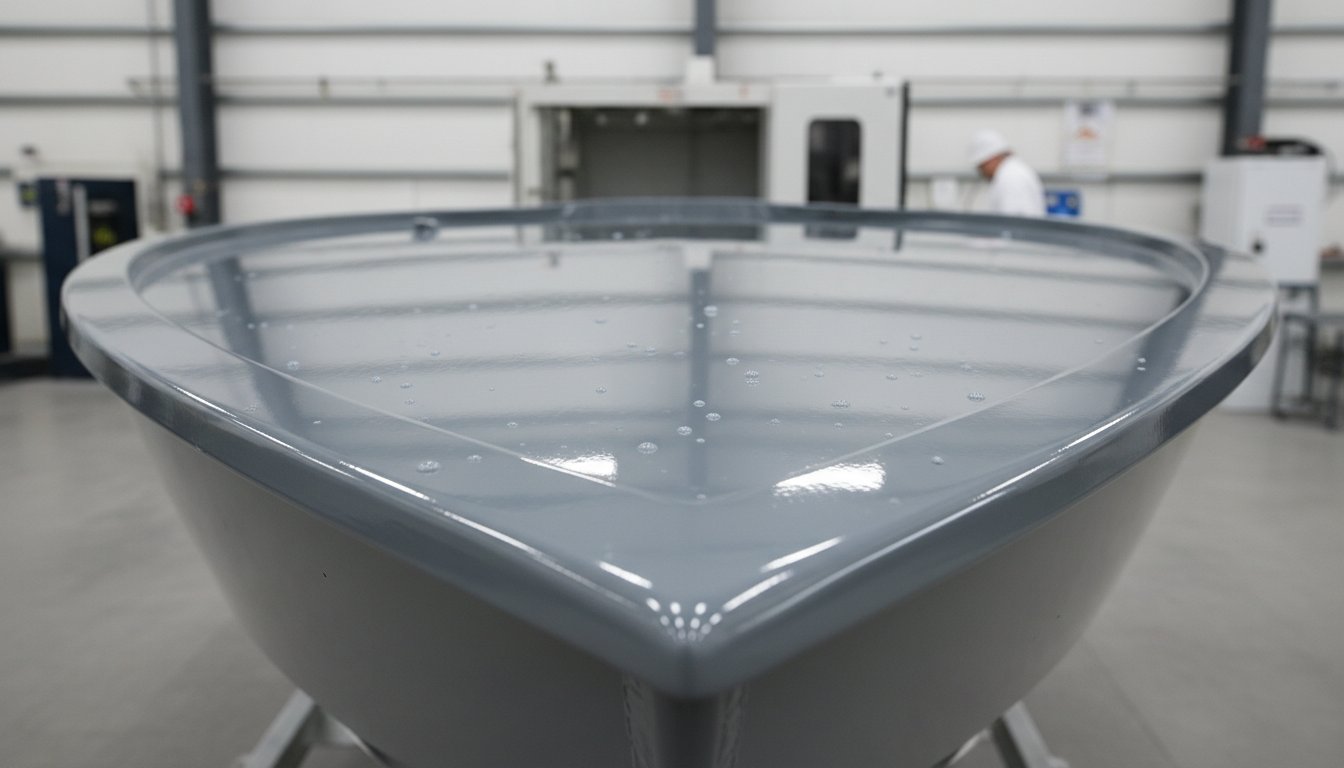
The premature failure of coatings on aluminum hulls—manifesting as peeling, blistering, and flaking—is not a random occurrence but a predictable outcome of an inadequate application system. The unique electrochemical properties of aluminum create a challenging substrate where improper preparation or material selection can accelerate corrosion rather than mitigate it, leading to costly maintenance cycles and compromised asset integrity. A successful aluminum paint boat application, therefore, demands a systematic, science-driven approach that moves beyond conventional methods to ensure long-term adhesion and protection.
This definitive guide provides that system. We will detail the critical, science-backed protocols for surface preparation, primer selection, and topcoat application essential for achieving a durable, high-performance finish. By following this methodology, you will gain the technical understanding to prevent coating delamination, inhibit galvanic corrosion, and secure the operational longevity and value of your marine vessel for years to come, transforming a recurring maintenance challenge into a strategic, long-term asset protection plan.
Key Takeaways
- Master the two essential surface preparation techniques—mechanical and chemical—that are non-negotiable for overcoming aluminum oxide and preventing coating delamination.
- Learn to distinguish between topside coatings and below-the-waterline systems, ensuring you select the right chemistry for UV stability above the waterline and corrosion prevention below it.
- Debunk the myths surrounding “aluminum-safe” copper antifouling and understand the significant risk of galvanic corrosion this guide outlines for any aluminum paint boat project.
- Implement a science-backed system that moves beyond conventional paint, providing a durable, 10-year foul-release surface engineered for the unique properties of aluminum.
Why Painting Aluminum Boats Requires a Specialized System
Aluminum’s combination of high strength, low weight, and inherent corrosion resistance makes it a premier material for modern vessel construction. However, these same chemical properties present unique challenges for coating adhesion and long-term protection in a marine environment. Unlike inert fiberglass or even ferrous metals like steel, aluminum’s surface is highly reactive and cannot be treated with conventional paints. A successful aluminum paint boat coating is therefore not a single product, but an integrated system where each layer performs a specific, critical function to ensure hull integrity and coating longevity.
Understanding Aluminum Oxide
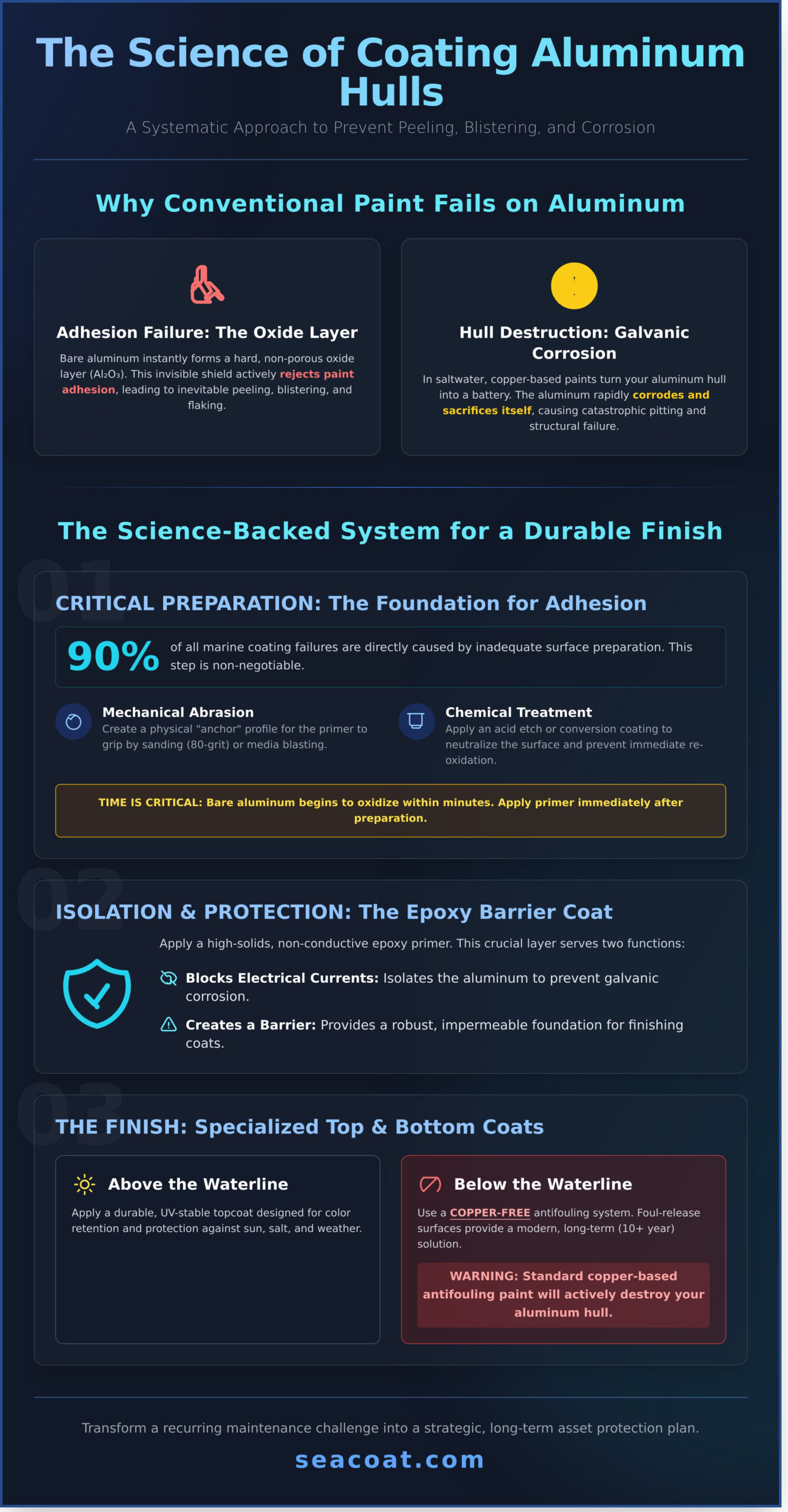
Upon exposure to oxygen, bare aluminum instantly forms an invisible, chemically inert layer of aluminum oxide (Al₂O₃). While this “passivation” layer is highly effective at preventing atmospheric corrosion, its hard, non-porous nature actively rejects paint adhesion, which inevitably leads to peeling and systemic coating failure. To achieve a durable mechanical and chemical bond, this oxide layer must be meticulously removed through abrasion and then immediately treated with a specialized etching primer or a chemical conversion coating. This critical step stabilizes the surface, creating a receptive profile for the subsequent primer coat.
The Risk of Galvanic Corrosion
Aluminum is an electrochemically active, or “less noble,” metal. When submerged in an electrolyte like saltwater alongside a more noble metal—such as the cuprous oxide found in most traditional antifouling paints—a destructive galvanic cell is formed. This phenomenon functions precisely like a battery: the aluminum hull becomes the anode and rapidly sacrifices itself to protect the copper cathode. This accelerated electrochemical process of corrosion can cause severe pitting and catastrophic structural failure in a remarkably short period. It is for this reason that applying a standard, copper-based antifouling paint to an aluminum hull will actively destroy the vessel.
The dual challenges of surface adhesion and galvanic corrosion dictate that a comprehensive, multi-layered coating system is the only viable solution. This is not merely a cosmetic application but a strategic protocol designed for asset protection:
- Surface Preparation: Thorough mechanical abrasion to remove the oxide layer, followed by a chemical conversion coating to create a stable, paintable surface.
- Barrier Primer: Application of a high-solids, non-conductive epoxy primer. This isolates the aluminum substrate from electrical currents and provides a robust, impermeable foundation for subsequent coats.
- Finishing Coats: Application of a compatible, copper-free antifouling system or a durable topcoat engineered for the unique demands of an aluminum paint boat application.
Failure at any one of these stages compromises the entire system, underscoring the absolute necessity for specialized products and processes.
The Critical First Steps: Surface Preparation and Priming
In maritime coating applications, the longevity and performance of the final system are not determined by the topcoat alone. In fact, industry data consistently shows that over 90% of coating failures are directly attributable to inadequate surface preparation. For any high-performance aluminum paint boat system, the preparatory phase is the most critical investment in ensuring multi-year adhesion and corrosion resistance. This process is a meticulous combination of creating a physical anchor for the coating and a chemically stable substrate. Once this surface is achieved, the immediate application of a high-performance primer is non-negotiable, as bare aluminum begins to oxidize within minutes of exposure to air.
Step 1: Mechanical and Chemical Surface Preparation
Achieving a successful bond with an aluminum substrate requires a two-pronged approach. First, mechanical abrasion is used to create a “surface profile”—a uniform texture of microscopic peaks and valleys that the primer can physically grip. This is typically achieved through sanding with 80-grit abrasive paper or through controlled media blasting. Second, the surface must be chemically treated. This two-pronged approach is fundamental to achieving a durable bond, a point reinforced by maritime authorities who detail the necessity of proper surface preparation for any aluminum surface. An acid etch or a chromate-free conversion coating passivates the aluminum, removing surface oxides and creating a stable, inert layer that is chemically receptive to the primer. A rigorous cleaning protocol is the final prerequisite.
- Degrease: Use a high-quality marine-grade degreaser or solvent to remove all oils, grease, and wax.
- Solvent Wipe: Perform a final wipe-down with a clean, lint-free cloth and an appropriate solvent to eliminate any residual contaminants.
- Inspect: Ensure the surface is completely clean, dry, and free of all foreign material before priming begins.
Step 2: Applying the Right Primer
The primer serves as the foundational layer, providing both tenacious adhesion to the prepared aluminum and an impermeable barrier against corrosion. For marine aluminum, high-solids, two-part epoxy primers are the industry standard due to their superior chemical resistance and minimal porosity. Modern formulations must also adhere to strict environmental regulations, necessitating TBT-free and chromate-free chemistry without compromising performance. A properly applied epoxy primer is the essential link in the entire aluminum paint boat coating system. SeaCoat specifies the use of its advanced, zero-VOC epoxy primers, which are engineered to provide maximum protection and a stable foundation for our foul-release topcoats. For detailed specifications, please review our technical article on Seapoxy 73 & 85.
Selecting Your Coating: Topside vs. Bottom Paint for Aluminum
A vessel’s hull exists in two fundamentally different environments, demanding two distinct and highly specialized coating systems. The area above the waterline, or topside, battles atmospheric exposure, while the submerged portion, the bottom, contends with constant immersion and marine life. Attempting to use a single paint type for both is not a compromise; it is an operational failure that sacrifices both protection and performance. The chemical engineering required to excel in one environment precludes effectiveness in the other.
The core distinction lies in their primary objectives:
- Topside Paint Priorities: The primary function is to provide a durable barrier against UV radiation, salt spray, and physical abrasion. Its formulation is optimized for color and gloss retention, aesthetic appeal, and cleanability.
- Bottom Paint Priorities: The sole focus is to mitigate marine growth (biofouling) and maintain a smooth, low-drag surface to optimize hydrodynamic efficiency and fuel consumption.
Choosing a Topside Paint
Topside coatings for aluminum are engineered for resilience against the elements. For maximum durability and a superior, long-lasting finish, two-part polyurethane systems are the industry benchmark. These coatings cure to a hard, non-porous film that offers exceptional resistance to chemical exposure and abrasion. While their application is more technical, their performance longevity provides a significant return on investment. For smaller recreational vessels where ease of repair is a factor, high-quality single-part marine enamels offer a viable alternative with a simpler application process.
The Unique Challenges of Aluminum Bottom Paint
Protecting a submerged aluminum hull presents a unique set of electrochemical challenges. The primary objective is to prevent biofouling without compromising the hull itself. Conventional antifouling paints, which rely on copper biocides, are entirely unsuitable as they will initiate aggressive galvanic corrosion when in contact with aluminum. A comprehensive grasp of this electrochemical reaction is essential for asset preservation, making further research into understanding aluminum boat corrosion a prerequisite for any owner. While some biocide-free ablative paints exist, their soft film lacks the mechanical durability for high-use vessels, leading to frequent and costly reapplication cycles. These limitations underscore the need for a more advanced solution—a durable, non-toxic coating that addresses fouling through advanced surface physics rather than leached chemicals. This is the domain where hard-film foul release systems provide a definitive technological advantage for any serious aluminum paint boat strategy.
Below the Waterline: Solving the Aluminum Antifouling Problem
For any aluminum vessel owner, the primary challenge below the waterline is mitigating marine growth without compromising the hull’s structural integrity. Conventional antifouling strategies, designed for steel or fiberglass hulls, are not merely ineffective on aluminum—they are actively destructive. This high-stakes problem demands a modern, scientifically-grounded solution that moves beyond the outdated reliance on toxic biocides.
The Failure of Traditional Antifouling on Aluminum
Traditional antifouling paints depend on the steady release of copper biocides to poison marine life. When these copper ions make contact with an aluminum hull, a powerful galvanic cell is created. The aluminum, being a less noble metal, becomes the anode and sacrificially corrodes to protect the cathodic copper. Even when a barrier coat is applied, a single scratch or pinhole breach becomes a focal point for accelerated, catastrophic pitting that can compromise the vessel. The application of any metal-based biocide is an unacceptable and unnecessary risk.
The search for a non-corrosive alternative led to early-generation soft silicone coatings. While these systems eliminated the biocide risk, their poor mechanical properties rendered them impractical for most operational profiles. Lacking abrasion resistance, they were easily damaged during routine use or cleaning, necessitating frequent and costly reapplication.
The Foul Release Advantage
The definitive solution is advanced hard-film foul release technology, which prevents marine bio-adhesion rather than killing organisms. These coatings operate on a principle of surface physics, creating an ultra-slick, low-surface-energy film. This ensures that marine growth cannot gain a secure foothold and is detached by the vessel’s movement or light cleaning. Built on a cross-linked siloxane-polyurethane backbone, this superior aluminum paint boat coating offers a clear performance hierarchy:
- Soft Silicone Coatings: Suffer from low mechanical strength, are easily damaged by abrasion, and have a short service life of 2-3 years.
- Hard-Film Siloxane Coatings: Provide exceptional durability and abrasion resistance, withstand mechanical cleaning, and deliver a ten-year performance cycle.
For aluminum vessels, hard-film foul release coatings are the only logical long-term strategy. They provide a biocide-free, zero-VOC solution that eliminates corrosion risk while delivering significant operational benefits, including reduced hydrodynamic drag and improved fuel efficiency. This synergy of robust asset protection and environmental stewardship is the new benchmark for high-performance marine coatings. To understand how this technology optimizes vessel performance, explore the technical data at seacoat.com.
The Sea-Speed System: A 10-Year Solution for Aluminum Hulls
While many seek a durable coating, the SEA-SPEED V 10 X transcends the category of a conventional aluminum paint boat solution entirely. It is a complete, long-term hull coating system engineered specifically for the unique electrochemical properties of aluminum. Its foundation is an advanced silane-siloxane chemistry that creates a hard, slick, non-porous surface, fundamentally different from ablative or soft foul-release coatings. This system is designed not just to protect, but to optimize vessel performance for a full decade, delivering a measurable return on investment through operational efficiency and dramatically reduced maintenance cycles.
The key benefits of the Sea-Speed system represent a paradigm shift in hull management:
- 10-Year Performance Life: A single application is designed to last a minimum of ten years, eliminating the need for frequent dry-docking and re-application.
- Zero Toxic Biocides: The system utilizes a non-toxic foul-release mechanism, ensuring full compliance with global environmental regulations and protecting marine ecosystems.
- Proven ROI: Significant fuel savings and minimized maintenance costs provide a clear and demonstrable return on investment over the vessel’s operational life.
Engineered for Performance on Aluminum
The system’s integrity stems from the chemical cross-linking between the epoxy primer and the siloxane topcoat. This process forms a single, unified layer that bonds tenaciously to the aluminum substrate, eliminating the delamination and blistering risks associated with traditional coatings. Crucially, the Sea-Speed system is entirely non-conductive. This property completely mitigates the risk of galvanic corrosion—a persistent and destructive challenge for aluminum hulls. Its robust performance is validated by a proven track record on demanding commercial and military aluminum vessels operating in the world’s most challenging marine environments.
Beyond Protection: Fuel Savings and Sustainability
The primary operational benefit of the Sea-Speed system is a significant reduction in hydrodynamic drag. Its exceptionally low-friction surface can improve fuel economy by up to 8%, directly lowering operational expenditures and carbon emissions. This performance is achieved with a zero-VOC, biocide-free formulation, ensuring full compliance with current and future environmental regulations. For a comprehensive analysis of how this technology can be applied to your assets, we invite you to request a technical specification for your aluminum vessel.
Optimizing Your Aluminum Vessel: A Final Analysis on Hull Coating Strategy
Protecting an aluminum hull requires a technically sound, systematic approach, moving beyond conventional paint to a complete coating system. As we have established, success is contingent upon two critical factors: uncompromising surface preparation to ensure adhesion and the selection of a coating that actively prevents galvanic corrosion. Traditional antifouling methods often fail this second test, creating significant risk. Therefore, choosing the right aluminum paint boat solution is a pivotal decision, directly influencing your vessel’s operational longevity and maintenance overhead for years to come.
This focus on specialized, high-performance finishing extends beyond the marine world. Enthusiasts who appreciate the meticulous work of protecting and customizing their vessels often share a passion for craftsmanship in other areas, such as high-end vehicle modification. For those interested in seeing how similar principles of quality and customization are applied in the motorcycle industry, you can discover Fat Boy Design USA for a look at their specialized components.
For fleet managers and owners seeking a permanent, high-performance alternative, the path forward is clear. The Sea-Speed V 10 X is a hard-film siloxane foul release system engineered specifically for these challenges, providing an expected service life of 10+ years while completely eliminating galvanic corrosion risk. This is the same proven technology trusted by commercial and military fleets worldwide to optimize efficiency and ensure regulatory compliance. Discover the Sea-Speed V 10 X foul release system for aluminum vessels.
By investing in a superior coating strategy today, you are securing your vessel’s performance, value, and environmental stewardship for the decade ahead.
Frequently Asked Questions About Aluminum Boat Paint
Can I paint over the existing paint on my aluminum boat?
Yes, provided the existing coating is in sound condition with no flaking or blistering. The surface must be meticulously cleaned, degreased, and then scuff-sanded to create a sufficient mechanical profile for adhesion. It is imperative to confirm the chemical compatibility between the old coating and the new topcoat system. Applying an incompatible aluminum boat paint can result in delamination and complete system failure, making a full strip to bare metal the superior protocol for long-term asset protection.
What is the best primer for a bare aluminum boat?
For bare aluminum substrates, a two-part, strontium chromate-free epoxy primer delivers the highest level of adhesion and corrosion resistance. When applied over a properly prepared and conversion-coated surface, these primers form a chemical bond with the metal, creating an impermeable barrier against moisture intrusion. This foundational layer is critical for the long-term performance of the entire coating system and is vastly superior to single-part etch primers in any demanding marine application.
How do I paint an aluminum boat that will be kept in saltwater?
Saltwater immersion requires a robust, multi-layer coating system engineered to withstand high salinity and marine fouling. The protocol begins with aggressive surface preparation, followed by a conversion coating and a high-solids epoxy barrier primer. For below the waterline, a biocide-free, copper-free antifouling or foul-release coating is mandatory to prevent galvanic corrosion and comply with environmental regulations. This comprehensive approach ensures maximum protection against the accelerated corrosive effects of the saltwater environment.
Is powder coating a good option for small aluminum boats?
While powder coating provides a hard, uniform finish, it is generally not a recommended solution for marine vessels. The primary disadvantage is its lack of field repairability. Any scratch or impact that breaches the coating creates a pathway for moisture to creep underneath, initiating hidden corrosion that cannot be spot-repaired. Liquid marine coatings, in contrast, allow for localized maintenance and repair, a critical advantage for preserving the vessel’s integrity over its operational lifespan.
How much does it cost to have an aluminum boat professionally painted?
The cost for professional painting is significant and reflects the intensive labor required for correct surface preparation. For a mid-sized vessel (18-25 feet), costs can range from $4,000 to over $12,000. This variability depends on the hull’s initial condition, the extent of preparation required (e.g., media blasting vs. sanding), and the technical specifications of the chosen coating system. The investment is primarily in the meticulous labor that ensures the long-term performance of the coating asset.
Why can’t I use regular copper-based bottom paint on my aluminum hull?
Applying copper-based antifouling paint to an aluminum hull will initiate rapid and severe galvanic corrosion. Aluminum and copper are dissimilar metals, and in the presence of an electrolyte like saltwater, the aluminum hull becomes the anode and sacrifices itself, corroding away to protect the copper. This electrochemical reaction can lead to catastrophic pitting and structural failure of the hull. Therefore, only copper-free antifouling paints specifically formulated for aluminum substrates must be used.
How long does a proper aluminum boat paint job last?
The service life of a professionally applied aluminum boat paint system is a direct function of the surface preparation protocol and material quality. A high-performance system, utilizing premium epoxy primers and a durable polyurethane or siloxane-based topcoat, should be expected to last from 8 to 12 years. This longevity is contingent on the system’s ability to resist UV degradation, abrasion, and chemical attack. Consistent, proper maintenance further extends the coating’s effective operational window.
What is a conversion coating and is it necessary for painting aluminum?
A conversion coating is a chemical pre-treatment applied to a cleaned aluminum surface before priming. It is not a paint but a chemical process that modifies the substrate, forming a stable, non-reactive molecular layer. This passivated surface serves two critical functions: it significantly enhances primer adhesion by creating a more receptive profile and provides a secondary layer of corrosion resistance, preventing under-film oxidation. It is an indispensable step for achieving maximum coating system longevity and performance.