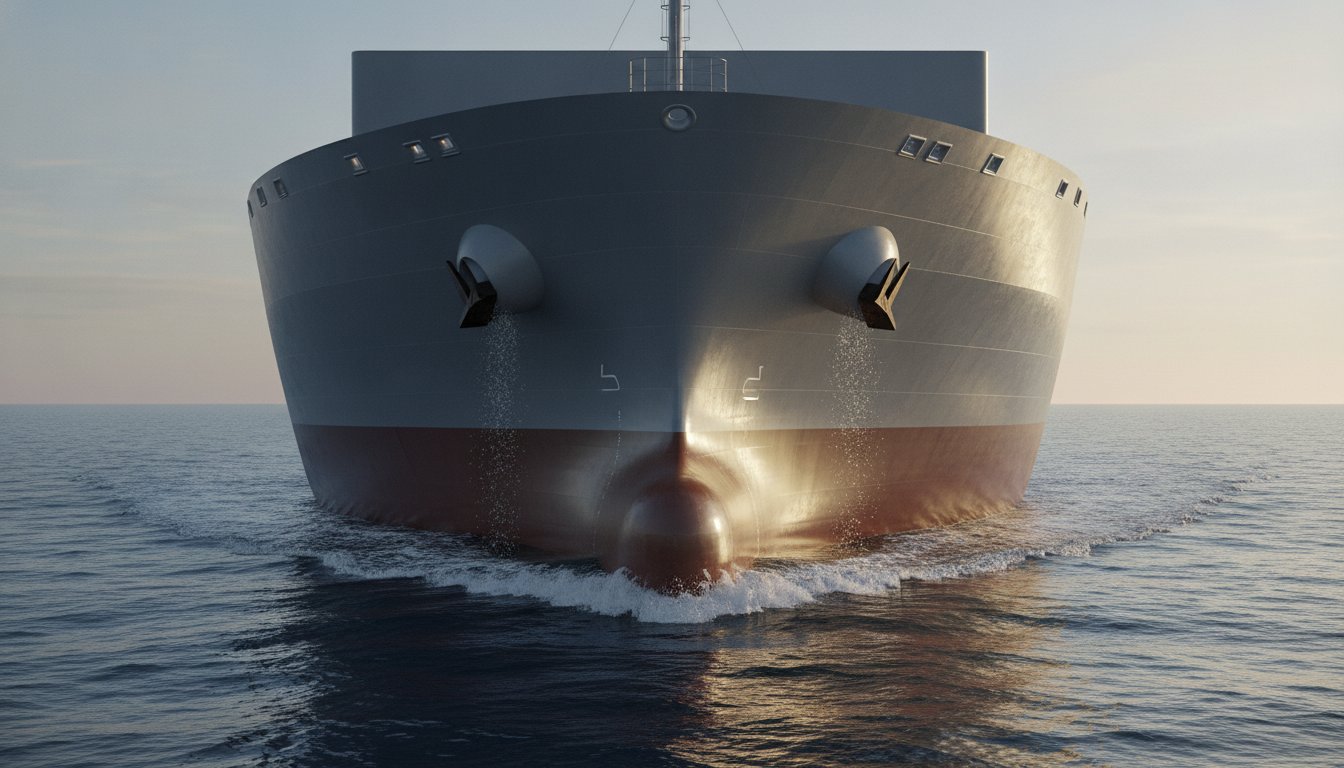
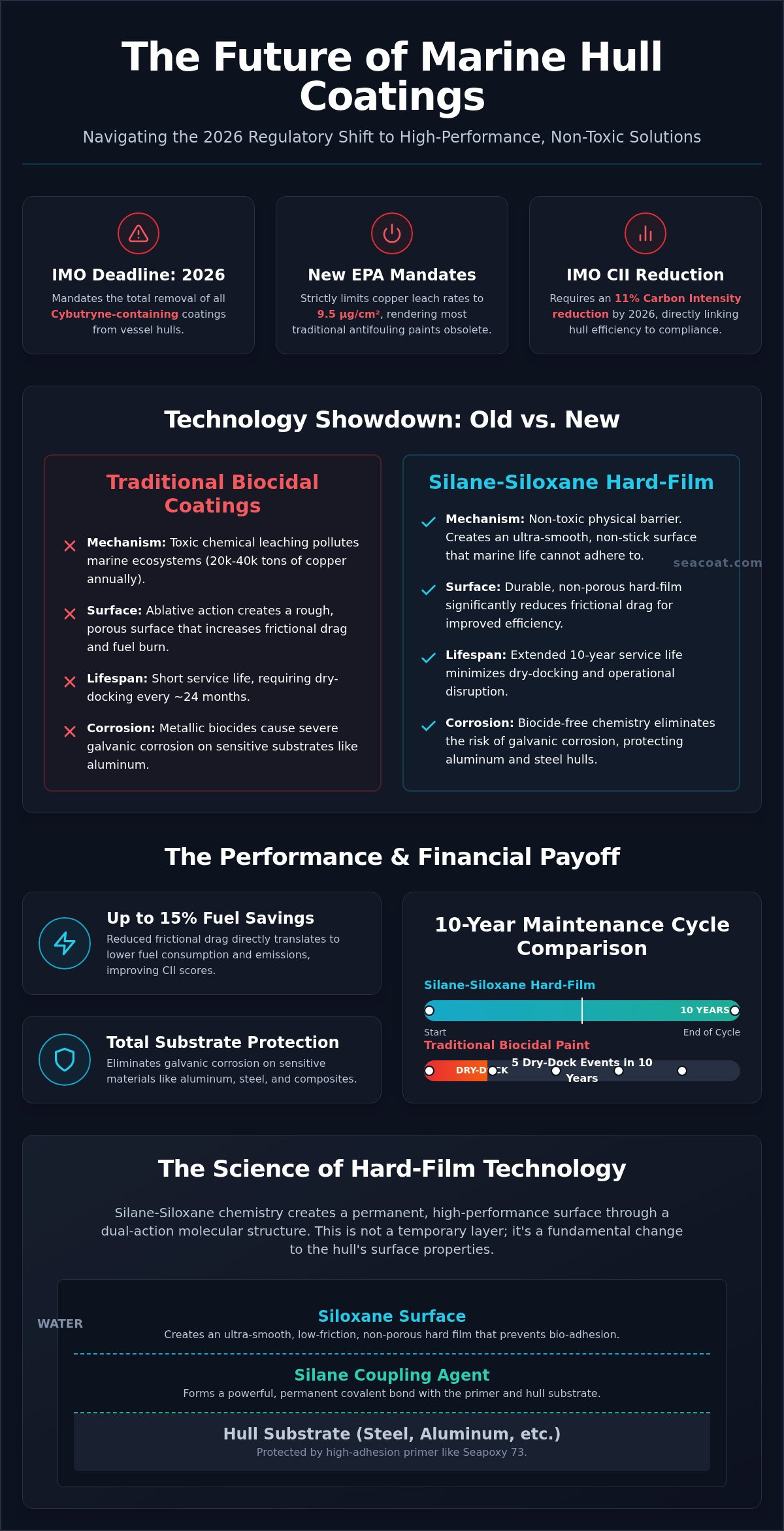
The International Maritime Organization has set a 2026 deadline for the total removal of Cybutryne-containing coatings, while new EPA mandates now strictly limit copper leach rates to 9.5 micrograms per square centimeter. For vessel operators, this shift often feels like a forced choice between environmental compliance and hull protection, yet the adoption of silane-siloxane marine paint proves that performance and sustainability are not mutually exclusive. This advanced foul-release technology replaces toxic chemical leaching with a high-performance hard-film surface, fundamentally changing how we approach hull maintenance and fluid dynamics.
You likely face the constant pressure of escalating fuel costs and the operational disruption of dry-docking every 24 months to address coating failure or galvanic corrosion. This guide promises to show how moving toward non-toxic solutions can secure your fleet’s future while delivering a 10-year service life and up to 15% in fuel savings. We will examine the technical shift toward biocide-free systems that meet the IMO’s 11% carbon intensity reduction factor for 2026; this ensures your assets remain both compliant and exceptionally efficient in an increasingly regulated maritime landscape.
Key Takeaways
- Navigate the 2026 regulatory landscape, including new IMO deadlines and EPA mandates that render traditional biocidal coatings an operational risk.
- Explore the technical advantages of silane-siloxane marine paint, which utilizes molecular engineering to create a durable, non-porous surface far superior to soft-silicone alternatives.
- Calculate the long-term ROI of a 10-year maintenance cycle and learn how advanced foul release technology can reduce your vessel’s frictional drag by up to 15%.
- Protect sensitive substrates like aluminum from galvanic corrosion by eliminating metallic biocides and utilizing the high-adhesion Seapoxy 73 system.
- Develop a strategic transition plan to integrate Sea-Speed V 10 X Ultra into your fleet management, directly improving your Carbon Intensity Indicator (CII) scores.
The Regulatory Shift: Why Non-Toxic Marine Hull Coating is Mandatory in 2026
The maritime industry is entering an era where environmental stewardship is no longer a peripheral concern but a core requirement for operational viability. By early 2026, the regulatory framework governing hull maintenance will shift from voluntary guidelines to strict, enforceable mandates. For fleet managers, the reliance on traditional biocidal paints is transitioning from a standard practice to a significant legal liability. This isn’t just about avoiding fines; it’s about maintaining the right to operate in sensitive global waters and major international ports. Proactive operators are already moving away from reactive “patch and paint” cycles toward permanent, high-performance solutions.
The End of Biocidal Leaching
Conventional antifouling systems operate through the deliberate leaching of heavy metals, primarily copper and zinc, into the surrounding water column. Research indicates that these coatings release between 20,000 and 40,000 tons of copper into marine ecosystems annually, where it contaminates sediment and bioaccumulates in the food chain. As of September 30, 2025, the manufacture of high-leach paints exceeding the 9.5 microgram limit was prohibited, setting the stage for the 2026 enforcement of new EPA and Washington State mandates that make applying these legacy products illegal.
Many products marketed as “biocide-free” still contain harmful additives like dibutyltin or organotins that cause severe endocrine disruption in marine life. True compliance requires a move toward inert, non-toxic chemistries. Using a high-performance silane-siloxane marine paint eliminates this chemical discharge entirely. These systems provide a physical barrier rather than a chemical one, ensuring that vessels can enter protected marine areas without risking regulatory action or environmental damage. It’s a fundamental shift from poisoning the water to perfecting the surface.
Meeting Global Maritime Standards
A vessel’s Carbon Intensity Indicator (CII) rating is now a critical metric for commercial success. Because hull efficiency is the primary driver of fuel consumption, the choice of coating directly determines whether a ship achieves the IMO’s required 11% carbon intensity reduction by 2026. The Science of Hard-Film Foul Release demonstrates that even minor surface roughness significantly increases frictional drag, forcing engines to work harder and emit more CO2 to maintain cruising speeds.
The Energy Efficiency Existing Ship Index (EEXI) requires vessels to meet specific technical efficiency thresholds by 2026, directly penalizing hulls that rely on high-drag, deteriorating coatings. By adopting advanced environmental marine coatings, ship owners can move from reactive maintenance to proactive asset management. This strategic shift ensures that the hull remains a performance-enhancing tool rather than a source of regulatory friction. Proactive management isn’t just about following the law; it’s about securing a 10-year operational window that traditional paints simply cannot provide.
The Science of Hard-Film Foul Release vs. Traditional Antifouling
Traditional hull protection has long relied on a process of controlled toxicity. This sacrificial cycle is the fundamental mechanism of ablative bottom paint, where the coating intentionally wears away to release fresh biocides into the water. While effective at killing marine growth, this method creates a microscopically rough and porous surface that increases frictional drag. Modern material science has moved beyond this reactive model, utilizing molecular engineering to create surfaces that organisms simply cannot bond to in the first place.
Silane-Siloxane Chemistry Explained
The efficacy of silane-siloxane marine paint lies in its dual-action molecular structure. Silanes act as the coupling agents, forming a powerful covalent bond with the hull substrate, whether it’s steel, aluminum, or composite. This isn’t a mere physical stick; it’s a permanent chemical fusion that prevents delamination. Once the base is secure, the siloxanes create an ultra-slick, non-porous top layer with exceptionally low surface energy. At a microscopic level, traditional paints are sticky, providing the anchors biofouling needs to settle. Silane-siloxane surfaces are so slick that most organisms are shed by the sheer force of water as the vessel reaches cruising speeds.
It’s vital to distinguish this chemistry from biocide-free silicone coatings that often rely on hidden toxins. Many soft silicone systems use Dibutyltin (DBT) as a catalyst during the curing process, which can remain as a persistent contaminant. True non-toxic performance requires an inert film that contains no volatile environmental contaminants. This technical distinction is becoming a primary focus of The Regulatory Shift in maritime law, where authorities are looking past marketing labels to examine the underlying chemical composition of hull coatings.
Hard-Film vs. Soft Silicone Systems
While soft silicone foul release systems offer low surface energy, they suffer from extreme mechanical fragility. A minor dock strike, a stray piece of debris, or even a standard cleaning brush can tear the soft film, exposing the substrate and necessitating immediate repair. This fragility often forces operators into a hands-off maintenance approach that allows biofilms to accumulate, eventually negating any fuel savings gained from the coating.
Hard-film systems like Sea-Speed V 10 X Ultra solve this durability gap. They provide the same slick, foul-release properties as silicone but with a glass-hard finish that resists mechanical damage. This resilience allows for proactive in-water cleaning without degrading the coating’s integrity. Because the film doesn’t wear away or tear easily, these systems reliably provide a 10-year service life. If you’re evaluating long-term asset protection, choosing a hard-film silane-siloxane system ensures your hull remains a performance asset rather than a maintenance liability.
Calculating ROI: Fuel Savings and Extended Maintenance Windows
For fleet operators, the transition to high-performance hull coatings is often viewed through the lens of initial capital expenditure. However, a comprehensive financial analysis reveals that the coating is not merely a maintenance requirement; it’s a strategic asset that directly dictates a vessel’s operational profitability. By moving away from the frequent, labor-intensive cycles of traditional antifouling, ship owners can realize significant returns through both reduced fuel consumption and the dramatic extension of service intervals. This shift is essential for maintaining a competitive edge in a market where fuel costs and carbon taxes are increasingly volatile.
The Physics of Hydrodynamic Drag
The relationship between surface roughness and fuel burn is a matter of fundamental fluid dynamics. Traditional antifouling paints typically exhibit a surface roughness between 120 and 175 microns, which increases as the coating ablates and deteriorates. In contrast, advanced silane-siloxane marine paint can achieve a surface roughness of less than 5 microns. This ultra-smooth profile reduces frictional drag by up to 10% or 15% for commercial vessels, significantly lowering the engine load required to maintain cruising speeds. Non-toxic hard-film coatings maintain their structural integrity and surface smoothness over time because they do not rely on a degrading sacrificial layer. This sustained efficiency is a critical factor for vessels aiming to meet the 11% carbon intensity reduction factor mandated for 2026, as every percentage of drag reduction translates directly into improved Carbon Intensity Indicator (CII) scores.
Total Cost of Ownership (TCO) Analysis
When evaluating the long-term economics of boat hull paint, the service life of the system is the most influential variable. Traditional biocidal paints necessitate dry-docking every 24 to 36 months for stripping and reapplication, a process that incurs high labor costs and significant vessel downtime. A hard-film system like Sea-Speed V 10 X Ultra is engineered for a 10-year service life, effectively eliminating two to three full dry-docking cycles over a decade. The savings extend beyond labor and material; operators also avoid the escalating costs associated with the containment, removal, and disposal of toxic biocidal waste.
Maintenance costs are further reduced through the ease of in-water cleaning. Because the silane-siloxane film is glass-hard and non-porous, biofilms and calcareous growth cannot establish a deep bond. Divers can perform proactive cleaning using soft brushes without damaging the film or releasing contaminants into the water. This allows for a “clean hull” policy that ensures the vessel operates at peak hydrodynamic efficiency between major inspections, maximizing the return on investment through consistent fuel savings and minimized operational disruption.
Substrate Compatibility: Protecting Aluminum, Steel, and Composites
Substrate compatibility is the primary determinant of a coating system’s structural integrity. While traditional antifouling paints are often marketed as universal, they frequently ignore the specific electrochemical requirements of different materials. This oversight is particularly dangerous for aluminum hulls, where the wrong choice leads to rapid structural failure. Advanced silane-siloxane marine paint provides a sophisticated alternative by creating an inert barrier that is physically and chemically compatible with steel, aluminum, and composite substrates alike.
Eliminating Galvanic Corrosion
Aluminum hulls are uniquely susceptible to galvanic corrosion when paired with traditional antifouling products. Most legacy paints rely on copper or other heavy metals to deter biofouling. In a salt-water environment, these metals act as a cathode while the aluminum hull becomes the anode, creating a battery effect that accelerates metal loss through severe pitting. This process can compromise the hull’s structural integrity in just a few seasons. Using a non-conductive, non-toxic coating provides a permanent electrical barrier that halts this process entirely. For owners of metal vessels, choosing the right boat paint for aluminum boats is a matter of asset preservation as much as performance.
Surface Preparation and Application Protocols
The transition to a hard-film system requires a rigorous approach to surface preparation. Unlike soft silicones or ablative paints that rely on mechanical stick, a silane-siloxane marine paint system establishes a permanent bond through a multi-step protocol. This begins with grit-blasting to achieve a specific anchor profile, ensuring the substrate has the necessary tooth for adhesion. The application of Seapoxy 73 is the critical next step. This high-build epoxy primer acts as the foundation, providing superior corrosion resistance and a stable surface for the topcoat. Proper curing times and environmental controls during this phase are non-negotiable for achieving a 10-year service life.
Whether you’re managing high-speed racing hulls that require ultra-low surface roughness or slow-moving commercial fleets focused on long-term durability, the base layer remains the most vital component. High-speed vessels benefit from the glass-hard finish that doesn’t deform under pressure, while commercial fleets gain from the elimination of the sacrificial cycle. To ensure your vessel’s substrate is protected with the highest industrial standards, consider the long-term benefits of the Sea-Speed V 10 X Ultra system for your next dry-docking.
Implementation Strategy: Transitioning Your Fleet to Sea-Speed V 10 X Ultra
Transitioning a fleet from legacy biocidal paints to silane-siloxane marine paint requires a methodical evaluation of the existing coating history and hull condition. If a vessel has been maintained with multiple layers of ablative paint, a total removal via grit-blasting is often necessary to ensure the Seapoxy 73 base coat achieves an optimal covalent bond. This initial investment in surface preparation is the only way to secure the 10-year service life that defines the Sea-Speed V 10 X Ultra system. For fleet managers, this transition isn’t merely a maintenance event; it’s a strategic move toward long-term operational excellence and environmental stewardship.
The scalability of this technology allows it to serve as a universal solution across diverse maritime sectors. From individual pleasure craft to global commercial and military fleets, the underlying chemical mechanism remains consistent. By choosing a hard-film foul release system, operators move beyond the limitations of temporary fixes. They adopt a permanent asset that enhances the hydrodynamic profile of every vessel in the fleet. This unified approach simplifies maintenance protocols and ensures that every asset remains compliant with the 2026 IMO carbon intensity reduction mandates.
Case Studies in Efficiency
In commercial shipping, industrial deployments of Sea-Speed V 10 X Ultra have documented fuel savings of up to 15%. These results are achieved through the sustained reduction of frictional drag, which allows vessels to maintain higher speeds at lower engine loads. Military and cruise ship applications prioritize this technology for its dual benefit of high-performance durability and aesthetic consistency. In these sectors, the hard-film surface resists the mechanical stress of frequent docking while maintaining a clean, professional appearance. Recreational yacht owners similarly benefit from the system’s longevity, combining the design aesthetics of a high-gloss finish with the functional durability required for extended blue-water cruising.
Next Steps for Vessel Owners
The first step in a successful transition is a comprehensive technical assessment. This evaluation considers the vessel’s substrate, operational profile, and geographic deployment to tailor the application protocol. For large-scale projects, finding authorized applicators who understand the specific curing requirements and environmental controls of silane-siloxane systems is essential. Technical support teams can provide detailed ROI projections based on your fleet’s current fuel consumption and dry-docking intervals. To better understand how these systems compare to traditional methods, you may consult our guide on antifouling boat paint and foul release technologies. Moving toward a non-toxic, high-performance future is a deliberate choice; we are here to provide the scientific expertise and material solutions to make that transition a success.
Securing Operational Excellence in a Regulated Future
The transition to biocide-free systems is no longer an optional environmental gesture but a strategic requirement for global maritime operations. As we move toward 2026, the industry is shifting away from the sacrificial cycle of traditional paints in favor of permanent, hard-film technology. We’ve detailed how this technical evolution protects sensitive substrates from galvanic corrosion and ensures your fleet remains compliant with the newest IMO efficiency standards. Implementing a high-performance silane-siloxane marine paint allows you to move beyond temporary maintenance fixes toward a decade-long cycle of operational reliability. The science is clear. By eliminating toxic leaching and reducing frictional drag, you secure a 10-year service life and achieve up to 15% fuel savings. This military-grade durability provides the scientific foundation for a more profitable and ethically responsible maritime future. Optimize your vessel’s performance with Sea-Speed V 10 X Ultra. Your commitment to advanced material science today will define your operational success in the high-stakes landscape of tomorrow.
Frequently Asked Questions
Is non-toxic marine hull coating as effective as traditional antifouling paint?
Non-toxic foul release technology is often more effective than traditional biocidal paints because it addresses the root cause of hull drag. While traditional coatings rely on a sacrificial release of toxins to kill organisms, silane-siloxane marine paint creates an ultra-slick surface that prevents attachment. This mechanical barrier maintains its integrity for years, whereas biocidal coatings lose efficacy as the active ingredients leach away.
How much fuel can I save by switching to a foul release coating like Sea-Speed?
Switching to Sea-Speed V 10 X Ultra can reduce fuel consumption by up to 15%. This efficiency gain is achieved by minimizing frictional drag on the hull’s surface. By maintaining a surface roughness of less than 5 microns, the coating allows the vessel to glide through the water with significantly less engine load, translating directly into lower fuel costs and reduced emissions.
Can Sea-Speed V 10 X Ultra be applied over existing bottom paint?
Sea-Speed V 10 X Ultra cannot be applied directly over existing bottom paint. To ensure a permanent chemical bond, the hull must be grit-blasted to the bare substrate before applying the Seapoxy 73 primer system. Applying a hard-film coating over old, unstable ablative paint would lead to delamination and system failure, as the foundation would eventually flake off.
How long does a non-toxic hard-film coating actually last?
A high-performance silane-siloxane marine paint system has a verified service life of up to 10 years. This is a significant improvement over the 24 to 36-month cycle typical of traditional antifouling paints. Because the hard film doesn’t ablate or leach chemicals, it maintains its protective properties and surface smoothness throughout its entire lifespan with only basic maintenance.
Why is copper-based paint dangerous for aluminum boats?
Copper-based paints create a catastrophic galvanic cell when applied to aluminum hulls. In this electrochemical reaction, the copper acts as a cathode and the aluminum hull as an anode, leading to rapid metal loss and severe pitting. Using an inert, non-toxic coating provides a permanent electrical barrier that eliminates this risk, preserving the structural integrity of the metal vessel.
What are the maintenance requirements for a foul release system?
Maintenance for these systems primarily involves periodic in-water cleaning with soft brushes or sponges. Unlike soft silicone coatings that are easily torn, the hard-film surface of Sea-Speed is resilient enough to withstand mechanical cleaning. Regularly removing light biofilm ensures the hull maintains its low-drag properties, maximizing fuel efficiency between major dry-docking intervals.
Does Sea-Speed help with IMO EEXI and CII compliance?
Sea-Speed is a strategic tool for meeting the IMO’s 2026 carbon intensity reduction mandates. By reducing hull drag and subsequent fuel burn, the coating lowers a vessel’s total CO2 emissions. This performance improvement directly impacts the Carbon Intensity Indicator (CII) and Energy Efficiency Existing Ship Index (EEXI) ratings, helping operators avoid regulatory fines and port restrictions.
Is the coating safe for use in sensitive marine protected areas?
This coating is entirely safe for use in sensitive marine protected areas and regulated ports. Because it is biocide-free and contains no heavy metals like copper or zinc, there is zero toxic leaching into the water column. The inert nature of the film ensures that your vessel can operate in ecologically fragile environments without contributing to sediment contamination or bioaccumulation in marine life.