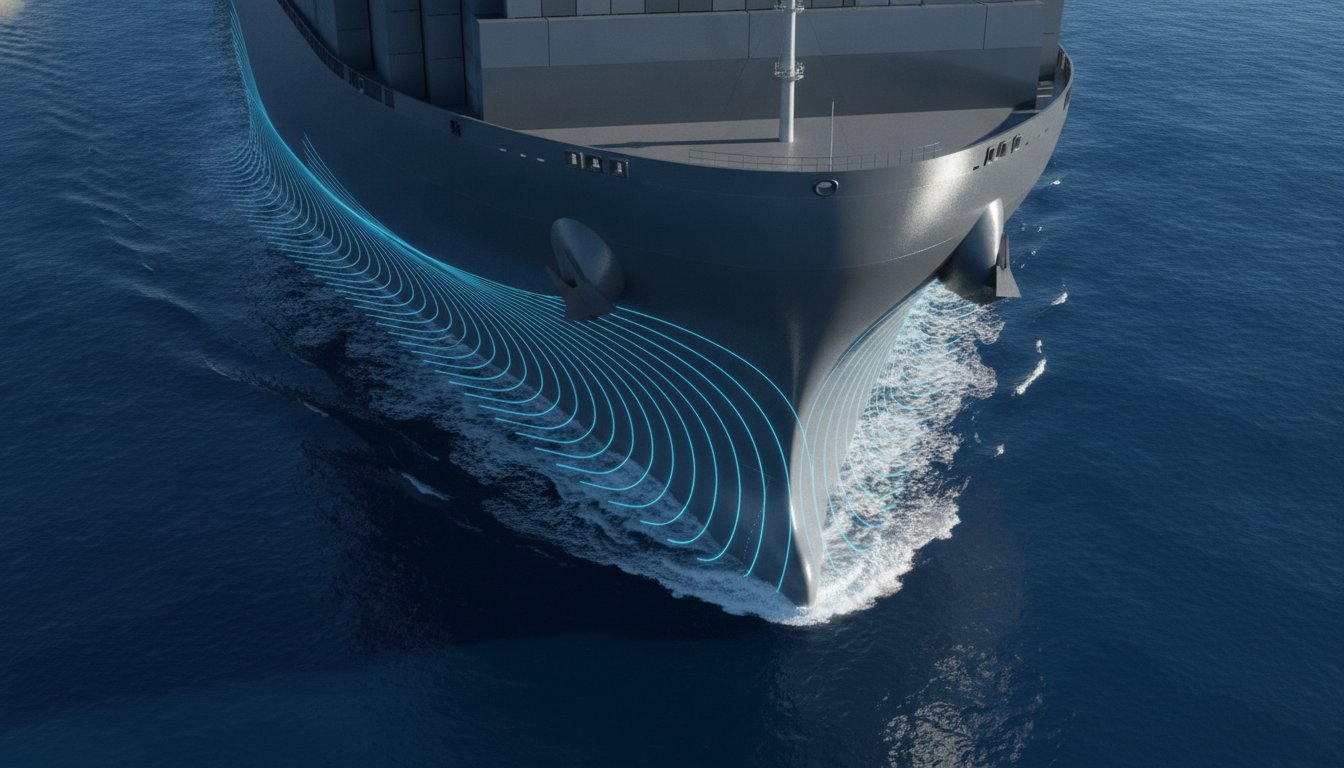
Could a surface thinner than a human hair be the most effective tool in your fleet’s decarbonization strategy? As maritime regulations tighten and bunker prices remain volatile, vessel operators are forced to look beyond traditional engine optimizations to find operational savings. You’ve likely noticed that even a well-maintained hull can suffer from significant efficiency losses if the coating texture isn’t specifically engineered for fluid dynamics. The search for a high-performance fuel efficient boat paint is no longer just about preventing biofouling; it’s about managing the molecular interaction between the hull and the water to minimize resistance.
By shifting from soft, ablative paints to advanced silane-siloxane technology, you can achieve a measurable reduction in frictional drag while eliminating toxic runoff. This article details the science behind these hard-film coatings and how they facilitate long-term compliance with international emissions standards like EEXI. We’ll break down the mechanics of surface energy, the financial impact of extended dry-docking intervals, and the data-driven results of modern maritime material science. Discover how these strategic assets provide a permanent solution for both your bottom line and the marine ecosystem.
Key Takeaways
- Understand how microscopic hull roughness contributes to frictional drag and why optimizing surface texture is essential for reducing total vessel resistance.
- Explore the molecular advantages of silane-siloxane technology. This chemistry creates a durable hard-film surface that outperforms traditional soft silicone foul release systems.
- Evaluate the long-term return on investment when switching to a fuel efficient boat paint like Sea-Speed V 10 X Ultra; focus on reduced fuel burn and extended service life.
- Learn how high-performance coatings serve as a critical passive efficiency tool for achieving compliance with IMO 2026 EEXI and CII standards without engine modifications.
- Discover the operational benefits of non-toxic, VOC-free formulations. These allow for routine in-water cleaning without compromising coating integrity or marine ecosystems.
The Relationship Between Hull Surface Friction and Fuel Efficiency
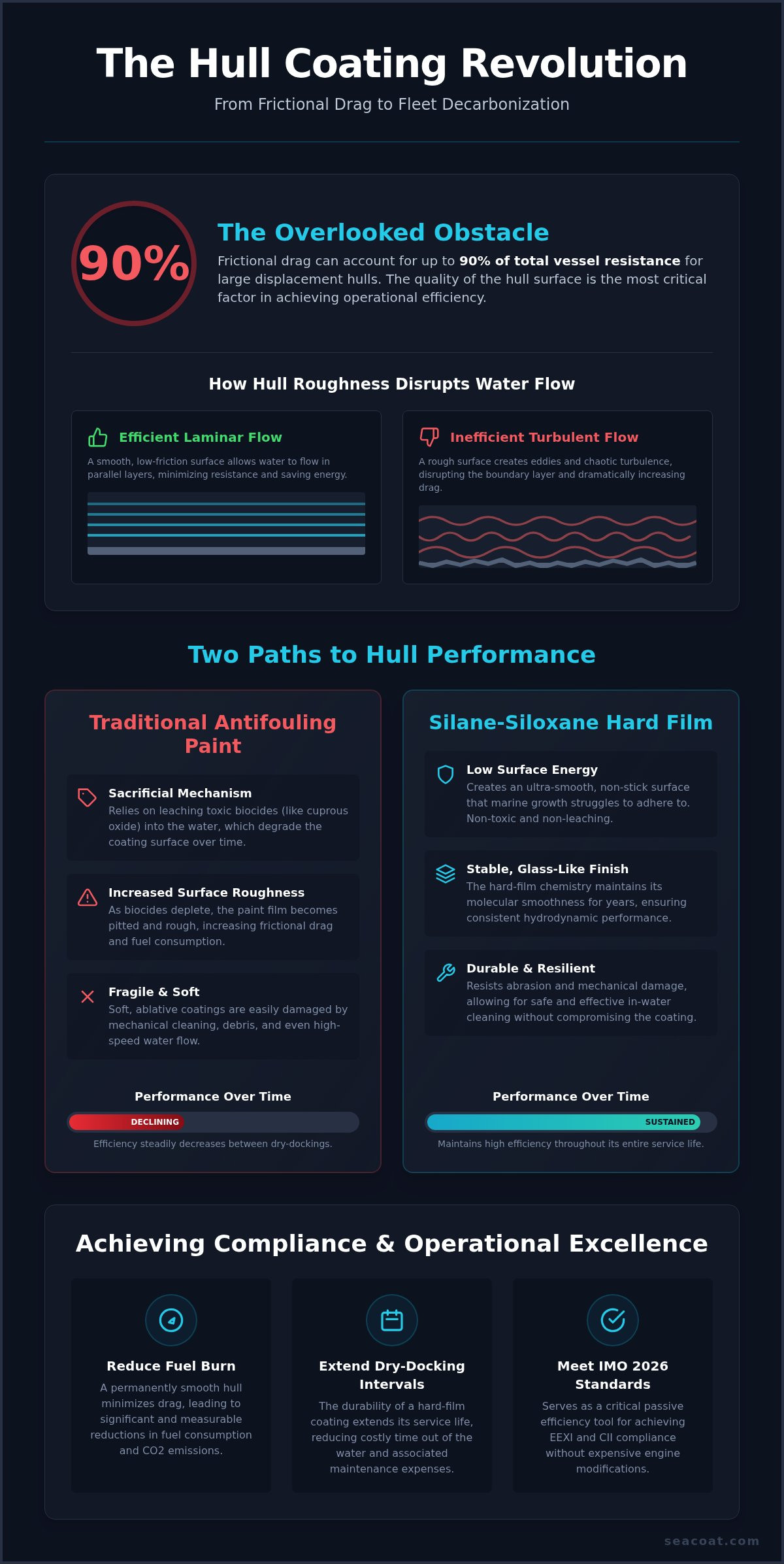
Frictional drag represents the single largest obstacle to maritime efficiency, frequently accounting for up to 90% of total vessel resistance on large displacement hulls. While most operators focus on engine output or propeller pitch, the hydrodynamic quality of the hull surface remains the most accessible lever for operational savings. Traditional Anti-fouling paint focuses primarily on chemical toxicity to deter marine life, but it often ignores the physics of fluid flow. As these coatings leach biocides, their physical profile degrades, leading to a “fuel penalty” caused by increased surface roughness. A high-performance fuel efficient boat paint addresses this by maintaining a molecularly smooth profile that prioritizes fluid dynamics over simple growth prevention.
This surface degradation isn’t just a maintenance issue; it’s a structural inefficiency. When we define a fuel efficient boat paint, we’re referring to a strategic material that optimizes the hull’s interaction with water at a molecular level. Several factors influence the severity of the fuel penalty, including:
- Microscopic peaks and valleys created during initial application or through uneven erosion.
- The rapid accumulation of biofilms and hard growth on low-quality surfaces.
- Mechanical damage and scarring caused by the frequent scrubbing required for soft coatings.
Understanding Boundary Layer Interference
The boundary layer is the thin region of water directly adjacent to the hull where viscous forces are most dominant. When a hull surface is microscopically rough, it disrupts this layer, causing a premature transition from laminar flow to turbulent flow. This turbulence creates eddies that sap energy from the vessel’s propulsion system, forcing the engine to work harder to maintain speed. Skin friction is the component of drag caused by the viscous shear stress of the fluid acting on the surface of the vessel’s hull. By utilizing a coating with low surface energy, operators can stabilize the boundary layer and reduce the energy required to overcome water resistance.
The Cost of Biofouling and Surface Roughness
Biofouling is a progressive challenge that begins the moment a vessel enters the water. Even before visible barnacles appear, a microscopic biofilm of slime and algae can increase drag by up to 20%, significantly impacting fuel consumption and carbon intensity. Traditional coatings often fail because they rely on a sacrificial process; as the paint wears away to release biocides, the surface becomes increasingly uneven. This transition from “smooth” to “rough” means that a ship’s efficiency declines steadily between dry-docking intervals. Preventing growth is only half the battle. True efficiency requires a surface that remains hydrodynamically stable and physically durable throughout its entire service life, regardless of cleaning frequency.
Silane-Siloxane Technology: Engineering a Low-Friction Marine Surface
Silane-siloxane technology represents a fundamental departure from the sacrificial mechanisms of the past. Instead of a soft, eroding layer, this chemistry produces a rigid, hard-film matrix that remains physically stable under high-speed hydrodynamic pressure. This structural integrity is critical for maintaining a low-friction profile over multiple years of operation. While soft silicone coatings are notoriously fragile and susceptible to tearing, silane-siloxane hybrids provide a resilient surface that resists abrasion from suspended solids and mechanical cleaning equipment. Choosing a fuel efficient boat paint based on this chemistry ensures that the hull’s engineered smoothness isn’t compromised by the rigors of the maritime environment.
The Chemistry of Non-Toxic Performance
Traditional coatings rely on the steady leaching of heavy metals like cuprous oxide to prevent biofouling. This process inherently creates a microscopically rough surface as the biocides leave the paint film, leading to increased drag. In contrast, Sea-Speed V 10 X Ultra utilizes a non-leaching, VOC-free formulation that achieves a glass-like finish upon application. Because the coating doesn’t rely on chemical depletion, the surface remains consistent and smooth throughout its service life. This approach aligns with International Maritime Organization (IMO) guidelines, which increasingly emphasize the reduction of harmful environmental impacts alongside efficiency gains. By removing toxic additives, operators achieve a superior hydrodynamic profile without the environmental liability of heavy metal runoff.
Hydrophobicity and Drag Reduction
The efficiency of a fuel efficient boat paint is largely determined by its surface energy. Silane-siloxane coatings are highly hydrophobic, meaning they actively repel water and prevent the strong adhesion of marine organisms. This is the core of the “foul release” mechanism; unlike “antifouling” which seeks to kill growth, foul release creates a surface so slick that organisms cannot maintain a grip at cruising speeds. The permanent nature of this protection is due to the unique way silane molecules bond to the hull.
During application, silane molecules act as molecular bridges between the substrate and the protective siloxane resin. These molecules possess alkoxy groups that hydrolyze in the presence of moisture to form silanols. These silanols then undergo a condensation reaction with the hydroxyl groups on the vessel’s substrate, forming a covalent Si-O-Metal bond. This chemical fusion is far more durable than the simple physical adhesion found in standard paints, creating a permanent barrier that won’t peel or delaminate under stress. For fleet managers looking to optimize long-term performance, exploring the technical advantages of Sea-Speed V 10 X Ultra offers a scientifically proven path toward sustained fuel savings.
Comparing Foul Release Systems and Traditional Antifouling for ROI
Return on investment for marine coatings is often miscalculated by focusing solely on the initial cost per gallon. A comprehensive lifecycle analysis reveals that traditional biocidal paints are operational liabilities rather than simple maintenance requirements. While these sacrificial coatings are inexpensive upfront, they necessitate frequent dry-docking and contribute to a compounding fuel penalty as the surface degrades. In contrast, a high-performance fuel efficient boat paint like Sea-Speed V 10 X Ultra functions as a long-term strategic asset. By maintaining a stable, low-friction profile over a 10-year period, vessel operators achieve substantial net savings through reduced fuel burn and lower maintenance overhead. Efficiency is measurable.
The financial benefits extend beyond the fuel pump. Reduced hydrodynamic resistance allows engines to operate at lower RPMs to maintain cruising speeds, directly extending the service life of propulsion systems. This decrease in mechanical load translates to fewer engine overhauls and reduced wear on auxiliary components. When a hull remains smooth, the vessel gains operational flexibility; it can either maintain schedule at lower costs or increase transit speed without exceeding fuel budgets. Reliability drives profitability.
Fuel Savings Calculations for Commercial Fleets
Calculating the true impact of a coating requires looking at the vessel’s Energy Efficiency Existing Ship Index (EEXI). Because hull friction accounts for the majority of resistance, even a modest improvement in surface energy leads to measurable gains in efficiency. For commercial fleets, these gains are quantified by monitoring fuel burn per nautical mile before and after application. Case studies in the commercial sector demonstrate that silane-siloxane technology provides a passive efficiency gain that requires no mechanical modification to the vessel. This makes it one of the most cost-effective methods for meeting modern carbon intensity goals.
Maintenance and Longevity Comparison
Traditional ablative paints are designed to wear away, which inherently creates a rougher surface over time. This cycle requires complete re-painting every 24 to 36 months, involving significant labor and hazardous waste disposal costs. Sea-Speed V 10 X Ultra provides a permanent, hard-film surface that resists delamination and mechanical damage. Because it’s non-toxic and durable, it allows for frequent in-water scrubbing without releasing harmful chemicals or losing coating thickness. For a deeper dive into the technical metrics of these systems, consult The Definitive Guide to Boat Hull Paint. Switching to a permanent film eliminates the recurring costs of paint removal and re-application, drastically lowering the total cost of ownership over the vessel’s lifecycle.
Regulatory Compliance and Operational Strategy: EEXI and CII Goals
The maritime industry is currently navigating a pivotal transition as the International Maritime Organization (IMO) enforces stricter standards for carbon intensity and technical efficiency. By 2026, the Carbon Intensity Indicator (CII) and the Energy Efficiency Existing Ship Index (EEXI) will dictate the operational viability of most commercial vessels. While many operators explore complex mechanical retrofits, the implementation of a high-performance fuel efficient boat paint offers a passive efficiency gain that requires no structural engine modifications. Because hull friction is a primary driver of carbon emissions, maintaining a molecularly smooth surface becomes a foundational strategy for achieving and sustaining a favorable CII rating.
Hull performance is not a static metric; it is a dynamic variable that directly impacts a vessel’s regulatory standing. A hull coated with traditional ablative paint suffers from progressive surface degradation, which inevitably increases viscous drag and fuel consumption as the vessel ages between dry-dockings. This degradation can cause a vessel to slip from a ‘B’ rating to a ‘D’ or ‘E’ rating under the CII framework, triggering mandatory corrective action plans. Utilizing a stable, non-ablative coating ensures that the vessel’s hydrodynamic profile remains consistent, providing a predictable baseline for long-term emissions compliance and operational planning.
Meeting EEXI Requirements with Hull Optimization
For many older vessels, meeting EEXI technical requirements involves a complex calculation within the ship’s Technical File. While technologies like air lubrication systems or wing sails offer significant gains, they often involve high capital expenditure and extended downtime. In contrast, optimizing the hull surface with advanced silane-siloxane technology provides a cost-effective alternative that can be integrated into standard maintenance schedules. This reflects a broader maritime trend toward sustainable hull performance, where material science is leveraged to meet technical efficiency targets without the complexity of mechanical intervention. Ensuring your fleet is equipped with the right surface technology is essential for future-proofing assets against tightening efficiency mandates.
The Environmental Impact of Non-Ablative Coatings
Beyond carbon efficiency, the regulatory landscape is shifting toward the total elimination of toxic biocides and microplastics. Traditional antifouling paints rely on a sacrificial process that releases heavy metals and paint particles into sensitive marine ecosystems. Non-ablative, silane-siloxane systems like Sea-Speed V 10 X Ultra eliminate this leaching process entirely, providing a VOC-free solution that protects both the hull and the environment. Global maritime authorities are increasingly pivoting toward non-toxic, non-leaching surface technologies to preserve marine biodiversity while enforcing strict carbon reduction targets. To ensure your fleet meets these evolving standards while maximizing operational uptime, explore the compliance-ready solutions at Seacoat SCT, LLC.
Optimizing Performance with Sea-Speed V 10 X Ultra
Sea-Speed V 10 X Ultra represents the practical application of the fluid dynamics and chemical engineering discussed throughout this analysis. While traditional coatings are often limited by substrate compatibility, this system is engineered for maximum versatility across diverse materials, including aluminum, steel, and fiberglass hulls. This adaptability makes it a strategic asset for fleet managers who oversee a variety of vessel types. By providing a uniform, high-performance surface across an entire fleet, operators can standardize their maintenance protocols and achieve more predictable fuel consumption metrics. It’s a permanent solution that moves beyond the limitations of temporary, sacrificial paints.
One of the primary operational advantages of this technology is the high-build, single-coat application process. In an industry where dry-dock time is a significant expense, reducing the application window provides an immediate return on investment. This efficiency is anchored by the use of Seapoxy 73, a specialized primer designed to create a superior bond between the hull and the topcoat. Seapoxy 73 ensures maximum adhesion while providing a robust barrier against corrosion, which is essential for preserving the structural integrity of the vessel. Together, these products form a synergistic system that prioritizes both physical durability and hydrodynamic efficiency.
Solutions for Commercial and Military Vessels
For large-scale maritime operations and military applications, the performance metrics of Sea-Speed V 10 X Ultra are particularly compelling. In high-speed craft applications, the reduction in frictional drag directly correlates to lower fuel burn per nautical mile and increased top-end speed. Fleet-wide maintenance contracts benefit from the coating’s ten-year service life, which drastically reduces the frequency of full re-applications. For those managing complex assets, our comprehensive guide to marine coatings provides the technical specifications required to integrate these solutions into a long-term vessel protection strategy.
Recreational and Racing Applications
The recreational sector also gains from this technology, particularly through the use of Sea-Speed V 10 X Ultra Clear. This variant provides the same hydrodynamic benefits as the standard formulation while preserving the aesthetic finish of high-end yachts and racing hulls. Unlike soft silicone alternatives, the hard-film nature of this fuel efficient boat paint is ideal for trailered boats. It resists the mechanical stress of rollers and bunks without tearing or delaminating, ensuring the surface remains smooth for peak performance. To determine the potential operational savings and technical requirements for your specific vessel, Consult with Seacoat experts for a fuel-efficiency audit.
Securing Sustainable Hydrodynamic Performance
Adopting a high-performance fuel efficient boat paint is a critical step for operators navigating the complexities of modern maritime regulations. By moving beyond traditional, sacrificial coatings, you implement a permanent hydrodynamic solution that stabilizes fuel consumption and secures long-term compliance with CII and EEXI standards. The transition to silane-siloxane technology represents a shift from reactive maintenance to proactive asset management; surface energy is optimized at a molecular level to ensure maximum efficiency throughout the coating’s service life.
This 100% non-toxic and biocide-free system is already a trusted strategic asset for military and commercial fleets worldwide. It proves that physical durability and ecological safety aren’t competing interests, but rather essential components of a modern operational strategy. These coatings provide a significant reduction in frictional drag without the environmental liability of leaching toxins. By prioritizing a hard-film, low-friction surface, you ensure your vessel remains a high-performing asset in an increasingly demanding global market. Optimize your vessel’s fuel efficiency with Sea-Speed V 10 X Ultra. The path toward a more efficient and sustainable fleet begins with the science of the hull surface.
Frequently Asked Questions
How much fuel can I save with a high-efficiency boat paint?
Savings vary based on vessel type and operating profile, but high-performance coatings like Sea-Speed V 10 X Ultra can reduce frictional drag significantly compared to traditional antifouling. Some operators report fuel consumption reductions in the range of 10% to 12%. These gains are achieved by maintaining a molecularly smooth surface that minimizes turbulent flow in the boundary layer, allowing the engine to maintain speed at lower RPMs.
Is silane-siloxane coating better than traditional antifouling?
Silane-siloxane technology is superior for long-term operational efficiency because it creates a permanent, hard-film surface rather than a sacrificial, eroding layer. Unlike traditional antifouling, these coatings are non-toxic and don’t rely on heavy metal leaching to prevent growth. This results in a consistently smooth hull that doesn’t degrade between dry-docking intervals, providing a better return on investment through sustained performance and reduced maintenance labor.
Can fuel-efficient coatings help with EEXI compliance?
Implementing a fuel efficient boat paint serves as a passive technical measure to improve a vessel’s Energy Efficiency Existing Ship Index (EEXI) rating. By reducing the viscous resistance of the hull, the coating lowers the power required to reach a specific speed, which is a core component of EEXI calculations. This allows ship owners to meet efficiency targets without the high capital expenditure associated with complex mechanical retrofits or engine power limitations.
How long does a foul-release coating like Sea-Speed last?
Sea-Speed V 10 X Ultra is engineered for a service life of up to ten years, significantly outlasting the 24 to 36 month cycle of traditional ablative paints. This longevity is due to the chemical covalent bonding of silane molecules to the substrate, which prevents delamination and physical wear. Because the film is durable and non-leaching, it maintains its hydrodynamic properties throughout its life, reducing the frequency of costly full-hull re-applications.
Are non-toxic boat paints as effective at preventing growth?
Modern non-toxic coatings are highly effective, utilizing a foul release mechanism rather than chemical toxicity to manage biofouling. These surfaces have extremely low surface energy, making it difficult for organisms to establish a permanent bond. While some slime may accumulate during stationary periods, it’s typically released once the vessel reaches cruising speed. This approach prevents growth while protecting marine ecosystems from the harmful effects of biocidal runoff.
Can I apply Sea-Speed V 10 X Ultra over my existing bottom paint?
Sea-Speed V 10 X Ultra requires a clean, properly prepared substrate to ensure maximum chemical adhesion. Existing antifouling paint must be completely removed via abrasive blasting or mechanical stripping before application. Once the hull is prepared, we recommend using Seapoxy 73 as a specialized primer. This creates the necessary molecular bond for the topcoat while providing an additional layer of corrosion protection for steel, aluminum, or fiberglass hulls.
Is in-water cleaning safe for hard-film marine coatings?
In-water cleaning is safe and highly recommended for hard-film coatings because they lack the fragile, soft texture of silicone or ablative paints. The rigid matrix of silane-siloxane technology resists damage from mechanical brushes and cleaning equipment. Frequent cleaning ensures the hull remains at peak efficiency without the risk of coating loss or environmental contamination, as there are no toxic biocides to be released into the water column during the process.
What is the difference between foul release and low-friction coatings?
While the terms are often used interchangeably, a fuel efficient boat paint like Sea-Speed V 10 X Ultra is both a foul release and a low-friction coating. Foul release refers to the surface’s ability to shed organisms through hydrodynamic force, whereas low-friction refers to the engineered smoothness that reduces skin friction drag. Combining these properties ensures that the hull remains free of growth while minimizing the energy required to move the vessel through the water.