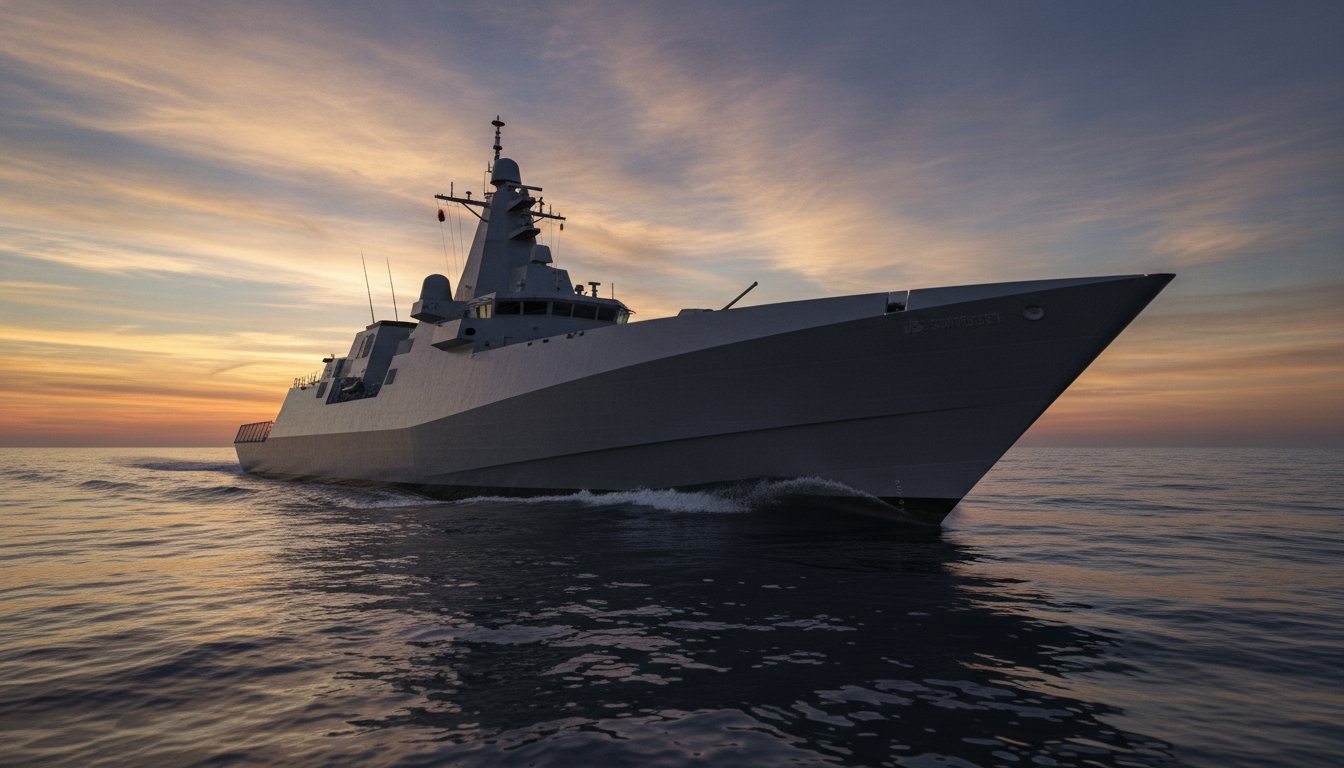
With Very Low Sulphur Fuel Oil prices reaching $962.55 per metric ton in May 2026, the hydrodynamic efficiency of military ship hull coatings has transitioned from a routine maintenance concern into a critical strategic priority. You likely recognize that legacy ablative paints and fragile silicone systems often fail to withstand the mechanical stresses of active duty while struggling to meet the 11% IMO Carbon Intensity Indicator reduction mandate. We agree that the historical trade-off between physical durability and ecological safety is no longer a viable path for modern fleet management.
Discover how advanced silane-siloxane foul release technology is replacing toxic antifouling paints to enhance naval fleet efficiency and long-term durability. This article examines the molecular engineering behind hard-film systems and explains how a permanent, non-leaching barrier can deliver a documented 12% reduction in fuel consumption. We’ll explore the operational ROI of these strategic assets and provide a technical overview of transitioning your vessels to a more resilient and compliant performance profile.
Key Takeaways
- Analyze the transition from toxicant-leaching paints to physical foul release mechanisms to ensure compliance with 2026 EPA and IMO regulations.
- Evaluate why hard-film military ship hull coatings outperform soft silicones in high-stress environments, offering greater resistance to fender friction and mechanical wear.
- Quantify the long-term ROI of advanced coatings through significant fuel savings and the extension of dry-docking intervals to 60 months or more.
- Examine the molecular science behind silane-siloxane technology and how it creates a permanent, non-porous barrier against biofouling.
- Identify the specific surface preparation and application protocols necessary to maximize the durability and hydrodynamic efficiency of silane-siloxane systems.
The Evolution of Military Ship Hull Coatings in 2026
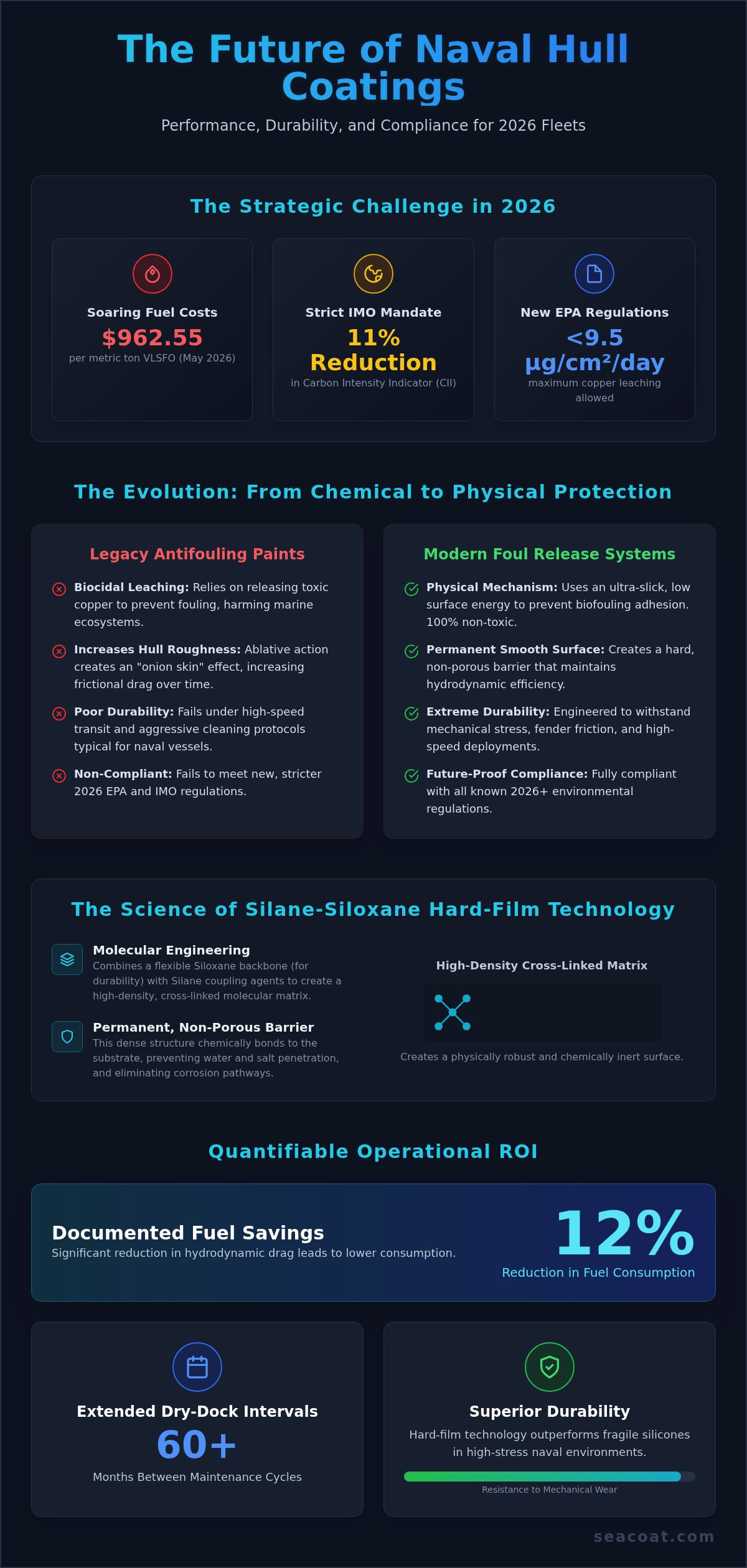
The maritime defense sector is navigating a pivotal transition in 2026. For decades, the industry relied on biocidal leaching to keep hulls clean, but this approach is no longer sustainable or strategically viable. The evolution of military ship hull coatings is now defined by a shift toward physical foul release mechanisms that prioritize surface engineering over chemical toxicity. This change is driven by a convergence of high fuel costs, which reached $962.55 per metric ton for VLSFO in May 2026, and stringent international mandates aimed at preserving marine ecosystems.
Military-grade requirements differ significantly from commercial standards. Naval vessels often face extended periods of inactivity followed by high-speed deployments. This operational profile causes traditional coatings to fail. While commercial ships might accept a degree of performance degradation, naval assets require absolute hydrodynamic precision. Standard coatings frequently fail naval stress tests because they cannot withstand the mechanical forces of high-speed transit or the aggressive cleaning protocols required to maintain peak readiness. Effective management in 2026 requires coatings that act as performance-enhancing tools rather than simple maintenance layers.
Why Traditional Antifouling is No Longer Sufficient
Traditional antifouling paints rely on the controlled release of biocides, most commonly copper. However, as of January 1, 2026, new EPA mandates restrict copper leaching to 9.5 micrograms per square centimeter per day. Beyond regulatory hurdles, these coatings use an ablative cycle that actually increases hull roughness over time. This “onion skin” effect creates microscopic turbulence, leading to higher frictional drag. In high-speed military operations, even a minor increase in drag results in millions of dollars in wasted fuel and a reduced operational range. The hidden cost of this drag is a primary driver behind the search for more permanent, smoother alternatives.
The Rise of Foul Release Systems (FRS)
The transition toward Foul Release Systems (FRS) represents a move toward permanent, non-toxic solutions. Unlike biocidal paints, an FRS uses low surface energy to prevent biofouling from adhering to the hull. The Evolution of Military Ship Hull Coatings has historically been a struggle between effectiveness and toxicity, but modern silane-siloxane technology provides a sustainable way out. These systems create a surface so slick that organisms cannot maintain a grip at speeds over 10 knots. It’s vital to distinguish between “biocide-free” coatings, which may still contain harmful chemicals, and truly non-toxic systems like Sea-Speed V 10 X Ultra. By maintaining a smooth, non-porous barrier, these advanced military ship hull coatings help fleets meet the 11% IMO Carbon Intensity Indicator reduction required in 2026 while protecting sensitive port environments from volatile contaminants.
The Science of Silane-Siloxane Hard-Film Technology
Modern military ship hull coatings in 2026 are engineered at the molecular level to solve the dual challenges of durability and hydrodynamic resistance. While traditional coatings rely on sacrificial, leaching layers, silane-siloxane technology creates a permanent, non-porous barrier through a high-density cross-linked matrix. This chemical structure doesn’t just sit on the surface; it bonds with the substrate to provide a robust shield that maintains its integrity under extreme naval operational stresses. By moving away from temporary fixes, fleet managers can treat the hull surface as a strategic engineering component rather than a recurring maintenance burden.
Molecular Structure and Surface Energy
The efficacy of this technology stems from the specific combination of siloxane backbones and silane coupling agents. Siloxane provides the necessary flexibility and UV resistance to withstand the harsh maritime environment, while silanes facilitate a dense molecular network that prevents water and salt penetration. Surface energy is the physical property that dictates the degree to which organisms can wet and adhere to a material, and by keeping this energy extremely low, silane-siloxane coatings ensure that marine life cannot form a permanent bond with the hull. A Naval Postgraduate School study on hull coating wear underscores how surface degradation directly impacts vessel performance over time. By utilizing a hard-film approach, these systems avoid the rapid wear and mechanical failure seen in softer, less stable alternatives.
Corrosion Resistance vs. Hydrodynamic Slickness
A primary advantage of a non-porous film is its ability to act as the ultimate defense against hull electrolysis. By preventing ionic transfer, the coating significantly reduces the risk of corrosion, working in perfect synergy with existing cathodic protection systems. For a deeper dive into these mechanisms, consult our Marine Coatings Definitive Guide. This structural integrity doesn’t come at the expense of speed. In fact, the inherent slickness of the hard film reduces boundary layer thickness, allowing for higher speeds and a documented 10% reduction in drag. Unlike traditional 3-year paint cycles, silane-siloxane systems like Sea-Speed V 10 X Ultra are designed for a 10-year service life, providing a strategic asset for long-term fleet management. If you’re looking to optimize your fleet’s lifecycle, you can explore our high-performance coating solutions to find the right fit for your vessels.
The hard-film advantage is particularly evident when analyzing fluid dynamics. By creating an exceptionally smooth surface, these coatings minimize the boundary layer, the thin layer of fluid directly adjacent to the hull where turbulence typically originates. Reducing this layer’s thickness allows the vessel to move through the water with less resistance, enabling higher top speeds and better maneuverability. Longevity is another critical metric where silane-siloxane systems outperform legacy options. While traditional ablative paints require reapplication every 2 to 3 years due to their sacrificial nature, silane-siloxane films maintain their properties for a decade or more. This extended service window represents a fundamental shift in how naval assets are managed over their multi-year performance cycles.
Comparing Hard-Film Silane-Siloxane to Soft Silicone Coatings
While soft silicone systems are frequently positioned as a standard for foul release, they often fail to meet the rigorous physical demands of active naval duty. The fundamental difference lies in mechanical resilience. Soft silicones rely on a delicate elastomeric layer that’s highly susceptible to tearing and delamination when subjected to the friction of docking fenders or contact with floating debris. For military ship hull coatings, this fragility translates to a high risk of premature failure and unplanned maintenance, which directly compromises fleet readiness and operational schedules.
The Vulnerability of Soft Silicone Systems
The vulnerability of soft silicone systems extends beyond physical damage. As these coatings degrade or tear, they can shed silicone oil and micro-particles into the water column. This shedding not only reduces the coating’s effectiveness but also introduces non-biodegradable contaminants into sensitive marine ecosystems. In contrast, hard-film systems like Sea-Speed V 10 X Ultra provide a durable, inert surface that resists mechanical wear. This makes them the preferred choice for high-tempo operations where vessels must maintain peak performance without the constant threat of coating loss or environmental contamination.
Hard-Film Performance in Extreme Environments
Extreme environments, such as those containing ice or high-velocity water impact, demand a coating with genuine structural integrity. Hard-film silane-siloxane technology provides a “scrubbable” surface, allowing for aggressive in-water cleaning with specialized brushes without damaging the film’s slickness or integrity. This is a critical advantage for stationary vessels or those stationed in high-fouling tropical ports that require frequent biofouling removal to maintain speed. To learn more about the ecological benefits of these systems, see our guide on Environmental Marine Coatings.
The cost-benefit analysis of these systems reveals a clear advantage for hard-film technology over a multi-year cycle. While the initial investment may differ from traditional paint, the maintenance savings are substantial. Soft silicones often require complex multi-coat application processes, including specific tie-coats and narrow overcoat windows that complicate dry-docking logistics. Silane-siloxane systems simplify this with a more streamlined application and a 10-year service life. By eliminating the need for frequent re-applications and allowing for efficient in-water maintenance, these military ship hull coatings provide a superior return on investment and a lower total cost of ownership across the vessel’s lifecycle.
Cleaning protocols further highlight the hard-film advantage. When a soft silicone hull becomes heavily fouled during an extended port stay, cleaning it often results in permanent damage to the coating. The soft material is easily gouged by cleaning tools, creating sites for even more aggressive fouling to take hold. A hard-film silane-siloxane surface is engineered to be cleaned repeatedly. It maintains its low-energy surface properties even after multiple scrubbing cycles, ensuring that the vessel returns to sea with its hydrodynamic efficiency fully restored.
Operational ROI: Speed, Fuel, and Maintenance Cycles
Financial performance in naval operations is increasingly tethered to hull efficiency. With VLSFO prices reaching $962.55 per metric ton in May 2026, even marginal gains in hydrodynamic performance yield significant fleet-wide savings. While legacy systems focus on short-term protection, advanced military ship hull coatings like Sea-Speed V 10 X Ultra provide a documented 12% reduction in fuel consumption by minimizing frictional drag. This efficiency doesn’t just lower fuel bills; it extends the operational range and mission endurance of the vessel. Maintaining top-tier velocity is critical for readiness, and silane-siloxane technology ensures that ships retain their design speed even after months of stationary port time.
Strategic management of dry-docking intervals offers another layer of return. Transitioning from traditional 24-month cycles to 60-month or longer service windows drastically reduces the total cost of ownership. By utilizing a 10-year service life coating, operators eliminate at least two full dry-docking events over a decade. These savings include not just the cost of application, but also the lost operational availability of the asset. When a ship remains in the water longer while maintaining peak efficiency, the return on investment moves from a maintenance line item to a strategic advantage.
Decarbonization and Regulatory Compliance
Compliance with the 2026 maritime mandates requires a proactive approach to hull roughness. The Energy Efficiency Existing Ship Index (EEXI) and Carbon Intensity Indicator (CII) scores are directly influenced by a vessel’s ability to move through water with minimal resistance. Because foul release technology reduces the required engine load to maintain speed, it directly decreases greenhouse gas emissions and improves the vessel’s regulatory standing. By reducing the torque required to overcome frictional resistance, foul release technology allows engines to operate at lower RPMs for the same transit speed, effectively cutting carbon output. This is a critical component for meeting the FuelEU Maritime initiative’s 2% reduction requirement in greenhouse gas intensity for 2026.
In-Water Maintenance and Cleaning Durability
Proactive in-water grooming is far more cost-efficient than reactive dry-docking for heavy fouling removal. Hard-film coatings are specifically engineered to withstand zero-damage cleaning from automated hull robots, which can maintain the hull in a “permanently clean” state. Over a 10-year service life, the ROI of Sea-Speed V 10 X Ultra becomes undeniable when factoring in the cumulative fuel savings and reduced maintenance labor. To see how these metrics apply to your fleet, calculate your potential savings with our performance coatings.
Implementing Sea-Speed V 10 X Ultra for Naval Fleets
Successful deployment of advanced military ship hull coatings depends on precise execution during the dry-docking window. Unlike legacy ablative systems that are relatively forgiving of surface imperfections, silane-siloxane technology requires a specific mechanical anchor profile to ensure permanent adhesion. This process begins with a detailed assessment of the hull substrate, whether it’s steel, aluminum, or composite. Each material presents unique electrochemical challenges, particularly in high-stress naval environments where cavitation and mechanical impact are common. Proper implementation ensures the coating acts as a permanent structural asset rather than a temporary layer.
Hull Preparation and Application Standards
Achieving maximum coating longevity starts with the removal of all existing contaminants and legacy paint layers. A near-white metal blast is typically required to create the necessary surface profile for a mechanical bond. For optimal results, the total system incorporates specialized primers like Seapoxy 73, which provides a robust anti-corrosive foundation and promotes the high-density cross-linking of the silane-siloxane topcoat. This methodical approach ensures the coating remains intact for its full 10-year service life. For a deeper technical comparison of these methodologies, see our Guide to Antifouling and Foul Release. Following the updated NAVSEA Standard Item 009-32 for FY-26, which now cites MIL-PRF-23236, Class 17a coatings, is essential for maintaining compliance and performance standards on modern naval vessels.
Seacoat SCT: Your Strategic Partner in Fleet Efficiency
Seacoat SCT provides a comprehensive technical support model that extends from the initial specification phase to on-site application oversight. We work with fleet managers to develop a phased transition plan, prioritizing vessels with the highest fuel consumption or those operating in sensitive ecological zones. This strategic approach ensures a steady improvement in fleet-wide Carbon Intensity Indicator (CII) scores without disrupting mission readiness. By aligning application schedules with operational cycles, we help minimize downtime while maximizing long-term return on investment.
The Seacoat portfolio, including the Armor-Sil R/G and Sea-Speed V 10 X Ultra product lines, is engineered to address the diverse needs of modern naval assets. Whether managing high-speed littoral vessels or heavy transport ships, our biocide-free solutions offer a permanent alternative to toxic methods. Transitioning a fleet is a multi-year commitment to performance engineering and environmental stewardship. If you’re ready to modernize your maintenance cycles and achieve significant operational gains, you can Contact Seacoat SCT for a Fleet Technical Consultation. Our team ensures that every application meets the highest standards of durability and hydrodynamic efficiency, providing a reliable shield for the multi-year performance cycle of your assets.
Advancing Naval Readiness through Surface Engineering
Modernizing the selection of military ship hull coatings is a strategic imperative that directly influences fleet endurance and environmental stewardship. By transitioning from traditional biocidal paints and fragile soft silicone systems to silane-siloxane technology, naval operators secure a permanent, hard-film barrier that maintains hydrodynamic efficiency for over a decade. This shift ensures full compliance with 2026 EPA copper leaching limits and IMO carbon intensity mandates while delivering a documented reduction in frictional drag of up to 10%. Since 2001, these proprietary solutions have been deployed by global commercial and military fleets to extend dry-docking intervals and reduce the total cost of ownership.
Adopting a non-toxic, zero-VOC system isn’t merely a regulatory requirement; it’s a commitment to the long-term operational integrity of high-stakes assets. These advanced coatings provide the mechanical resilience necessary for aggressive in-water cleaning and the structural strength required for high-velocity deployments. It’s time to move beyond temporary maintenance cycles toward a permanent engineering solution that protects your fleet and the marine ecosystems it navigates. Optimize Your Fleet’s Performance with Sea-Speed V 10 X Ultra. We’re ready to help you achieve a more efficient and sustainable future for your naval operations.
Frequently Asked Questions
Are silane-siloxane coatings compliant with NAVSEA and MIL-Spec standards?
Yes, advanced silane-siloxane systems are engineered to align with rigorous naval requirements. For fiscal year 2026, the NAVSEA Standard Item 009-32 was updated to cite MIL-PRF-23236, Class 17a coatings. These specifications ensure that military ship hull coatings meet the highest standards for corrosion protection and durability. Our technology provides the structural integrity required for active naval duty while maintaining full compliance with these evolving military performance protocols.
How much fuel can a military vessel save by switching to Sea-Speed V 10 X Ultra?
Documented performance data indicates that switching to Sea-Speed V 10 X Ultra can deliver a 12% reduction in fuel consumption. This significant efficiency gain is achieved by minimizing frictional drag through a permanent, non-porous surface. With VLSFO prices reaching $962.55 per metric ton in May 2026, these fuel savings translate into millions of dollars in fleet-wide operational cost reductions over a multi-year performance cycle.
Can hard-film foul release coatings be applied to aluminum-hulled patrol boats?
Yes, silane-siloxane technology is fully compatible with aluminum, steel, and composite hulls. Because these coatings are non-metallic and chemically inert, they don’t trigger the galvanic corrosion often associated with copper-based paints. This makes them an ideal solution for aluminum patrol boats that require high-speed performance and long-term durability. The hard-film surface provides a robust shield that protects the light-weight hull from mechanical wear and environmental degradation.
What is the expected service life of a silane-siloxane hull coating?
The expected service life of a silane-siloxane system like Sea-Speed V 10 X Ultra is 10 years. This represents a fundamental shift from traditional military ship hull coatings, which typically require reapplication every 2 to 3 years. By extending the service window to a decade, fleet managers can eliminate multiple dry-docking events. This longevity ensures that the vessel remains a strategic asset with consistent hydrodynamic performance throughout its operational lifecycle.
How do non-toxic coatings help with EEXI and CII regulatory compliance?
Non-toxic foul release coatings improve regulatory scores by significantly reducing a vessel’s carbon footprint. These systems lower the engine load required to maintain transit speeds, which directly decreases greenhouse gas emissions. This efficiency is critical for meeting the 11% IMO Carbon Intensity Indicator reduction mandated in 2026. By maintaining a smooth, low-energy surface, vessels can achieve the necessary EEXI ratings while avoiding the environmental penalties associated with toxicant-leaching paints.
Can Sea-Speed coatings be cleaned in the water without damaging the film?
Yes, the hard-film durability of Sea-Speed V 10 X Ultra allows for frequent in-water cleaning without surface damage. Unlike soft silicone coatings that tear under mechanical pressure, our silane-siloxane matrix is “scrubbable” and compatible with automated hull robots and specialized brushes. This capability allows for proactive grooming in high-fouling tropical ports, ensuring that the hull remains in a permanently clean state to maximize speed and fuel efficiency.
How does foul release technology differ from traditional copper-based antifouling?
Traditional antifouling uses toxic biocides like copper to kill marine organisms, but foul release technology uses physical properties to prevent adhesion. Silane-siloxane creates a surface with exceptionally low energy, making it too slick for organisms to form a permanent bond. Instead of leaching chemicals into the water, the technology relies on the vessel’s movement to wash away biofouling. It’s a permanent, non-toxic engineering solution rather than a sacrificial chemical layer.
Is a special primer required for applying silane-siloxane coatings to steel hulls?
Yes, a high-performance primer like Seapoxy 73 is essential for a successful application on steel hulls. This primer provides a robust anti-corrosive foundation and the necessary anchor profile for the silane-siloxane topcoat to form a permanent mechanical bond. Using a complete, integrated system ensures that the coating doesn’t delaminate under high-velocity water impact. This methodical approach is what allows the system to maintain its integrity for a full 10-year service life.