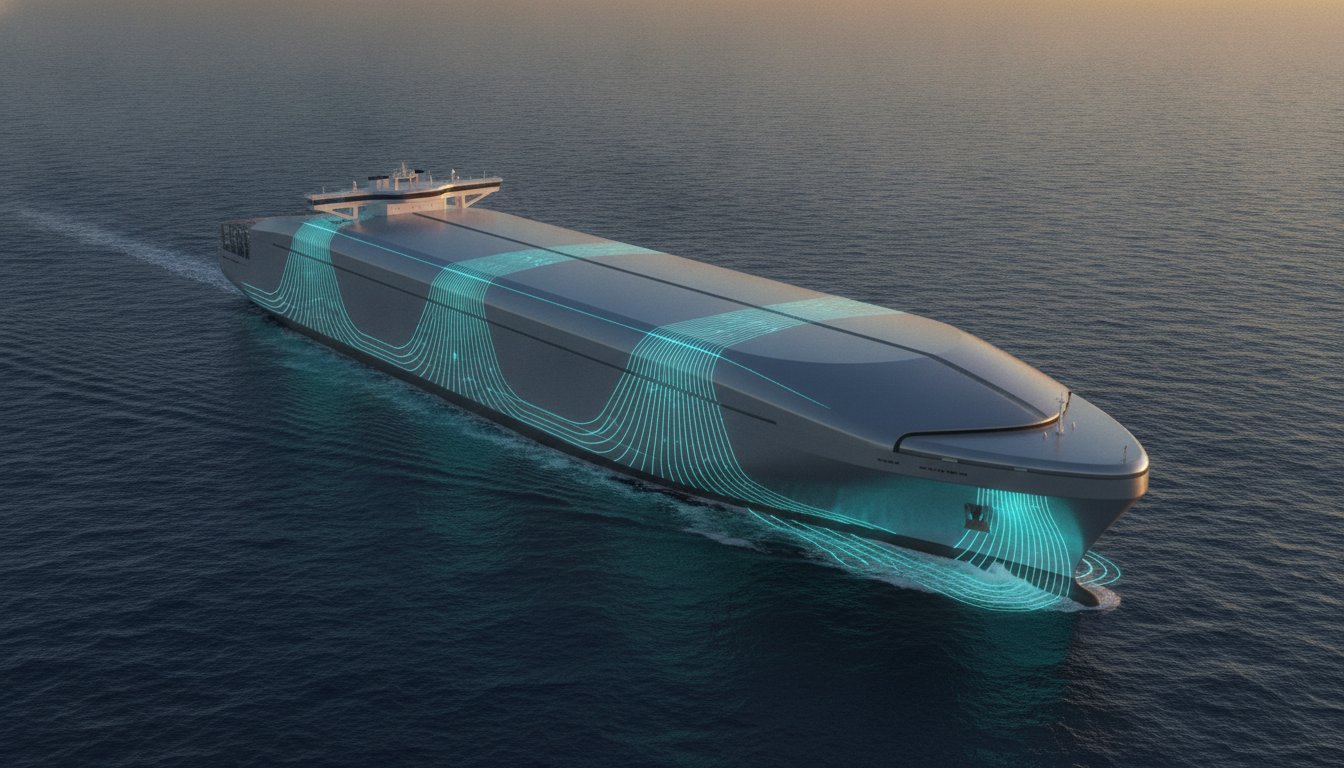
Can your fleet remain competitive when the 2026 Carbon Intensity Indicator (CII) demands a staggering 11% reduction in emissions while fuel prices hover at $5.425 per gallon? You’re likely grappling with the reality that traditional maintenance cycles and toxic antifouling paints, which saw price increases of up to 30% this year, are no longer sufficient to protect your bottom line. It’s a high-stakes environment where every point of frictional drag translates directly into a regulatory liability or a missed margin.
This guide explores how specialized fuel efficiency technology for ships, specifically advanced Silane-Siloxane hull coatings and hydrodynamic optimizations, provides a scientifically proven path to 5-10% fuel savings and improved CII ratings. We’ll analyze the transition from temporary biocidal fixes to permanent hard-film foul release systems that extend service life and ensure compliance with the 100% coverage requirements of the EU Emissions Trading System. By the end, you’ll understand how to turn hull performance into a strategic asset for long-term operational resilience and environmental stewardship.
Key Takeaways
- Navigate the complexities of the 2026 IMO regulatory landscape by aligning your fleet’s technical specifications with mandatory CII and EEXI performance targets.
- Identify the most impactful fuel efficiency technology for ships by analyzing how hull roughness and biofouling contribute to skin friction and increased drag.
- Compare the structural integrity and hydrodynamic benefits of hard-film Silane-Siloxane systems against traditional ablative and soft silicone coatings to maximize long-term ROI.
- Implement a data-driven operational strategy to establish high-frequency performance monitoring and select coating solutions tailored to your vessel’s unique speed and duty cycle.
- Leverage Sea-Speed V 10 X Ultra as a non-toxic, high-performance asset that delivers significant fuel savings without the ecological impact of biocidal paints.
The Regulatory Landscape: EEXI, CII, and the Drive for Ship Efficiency
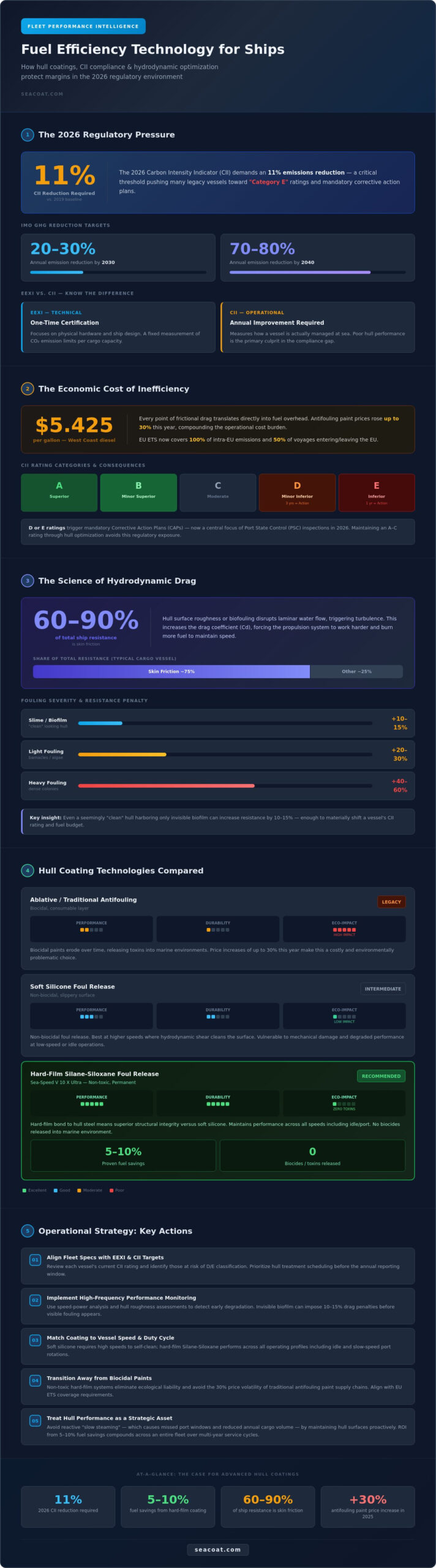
The maritime industry is currently navigating a period of unprecedented regulatory pressure as the International Maritime Organization (IMO) accelerates its decarbonization timeline. The revised Greenhouse Gas (GHG) strategy targets a 20% to 30% reduction in total annual emissions by 2030, with a more ambitious 70% to 80% reduction by 2040. These aren’t merely aspirational goals; they’re enforced through a framework of technical and operational mandates that directly impact a vessel’s commercial viability. In 2026, the industry has reached a critical threshold where the annual Carbon Intensity Indicator (CII) reduction factor has intensified to 11% relative to the 2019 baseline. This represents a significant jump from earlier years, pushing many legacy vessels toward the risk of “Category E” ratings.
For shipowners, the Energy Efficiency Existing Ship Index (EEXI) remains the primary technical hurdle, requiring a one-time certification to ensure older vessels meet specific CO2 emission limits per cargo-carrying capacity. However, the CII is a continuous operational metric that demands annual improvement. If a ship falls into the “E” category in a single year, or “D” for three consecutive years, it must implement a mandatory Corrective Action Plan. These plans are now a central focus of Port State Control (PSC) inspections in 2026, making the adoption of proven fuel efficiency technology for ships a necessity rather than an optional upgrade.
EEXI vs. CII: Understanding the Compliance Gap
There is a distinct difference between technical design and operational reality. While EEXI focuses on the physical hardware of Marine propulsion systems and ship design, the CII measures how a vessel is actually managed at sea. Poor hull performance is often the primary culprit behind a compliance gap, where a technically sound ship design fails to meet operational targets due to excessive drag. High-performance marine coatings provide a passive but powerful route to compliance. By reducing surface roughness and mitigating biofouling, these systems allow a vessel to maintain its service speed while consuming less fuel. This directly improves the CII rating without requiring the drastic measure of engine power limitation, which can negatively affect charterability and asset value.
The Economic Cost of Inefficiency
The financial stakes of non-compliance have reached new heights in 2026. With West Coast diesel fuel prices at $5.425 per gallon as of July, even a minor increase in frictional resistance can lead to massive operational expenditures. This is compounded by the EU Emissions Trading System (EU ETS), which now covers 100% of emissions for voyages within the EU and 50% for voyages entering or leaving the region. The hidden costs of “slow steaming”—the practice of reducing speed to lower emissions—often include missed windows at port and reduced annual cargo volume. Proactive investment in fuel efficiency technology for ships allows operators to avoid these reactive pitfalls. It’s no longer enough to simply maintain a hull; the surface must be treated as a performance-enhancing tool that minimizes both carbon taxation and fuel overhead.
Understanding Hydrodynamic Drag: The Science of Surface Friction
Skin friction accounts for approximately 60% to 90% of a ship’s total resistance, depending on the vessel type and speed. When a hull surface is physically rough or colonized by marine organisms, it disrupts the laminar flow of water, triggering a transition to turbulent flow. This turbulence significantly increases the drag coefficient ($C_d$), requiring the propulsion system to work harder and consume more fuel to maintain the same velocity. Even “micro-fouling,” such as the thin layer of slime known as biofilm, can increase a vessel’s resistance by 10% to 15%. This penalty is a critical concern for operators striving to meet IMO carbon reduction measures, as even a seemingly “clean” hull can harbor invisible efficiency losses that compromise compliance.
The boundary layer is the thin region of fluid immediately adjacent to the hull where viscous forces dominate, directly dictating the frictional resistance encountered as the vessel moves through the water.
The Boundary Layer and Laminar Flow
The efficacy of any fuel efficiency technology for ships depends on its ability to manipulate the boundary layer. Advanced coatings focus on surface energy, often measured by the water contact angle, to create a hydrophobic environment that encourages water release. While physical roughness is a measurable mechanical trait, chemical drag refers to the molecular interactions between the hull and the water. Hard-film foul release systems are particularly effective because they provide a stable, non-porous surface that resists the mechanical “locking” of bio-adhesives. Computational Fluid Dynamics (CFD) modeling allows engineers to predict how these surface properties will behave across different speed profiles, ensuring that the chosen coating aligns with the ship’s specific hydrodynamic needs.
Biofouling as an Efficiency Killer
Biofouling is a progressive biological process that begins seconds after a hull is submerged. It starts with the formation of a biochemical conditioning film, which soon evolves into a complex microbial biofilm. If left unchecked, this micro-fouling provides the foundation for macro-fouling, such as barnacles and tube worms, which can increase drag by more than 40%. Traditional antifouling boat paint relies on a sacrificial biocidal cycle that often leaves the hull surface increasingly rough as the active ingredients leach out over time. In contrast, modern foul release systems utilize a non-toxic mechanism that prevents organisms from establishing a permanent bond. This approach maintains a “clean hull” profile throughout the entire dry-docking interval, significantly reducing the energy required for propulsion. Understanding these fluid dynamics is the first step toward optimizing your fleet’s performance; you can explore advanced Silane-Siloxane solutions to see how these principles are applied in real-world maritime operations.
Evaluating Hull Coating Technologies: Hard-Film vs. Soft Silicone vs. Ablative
Selecting the appropriate fuel efficiency technology for ships is not a simple choice between brands; it’s a strategic evaluation of material science and long-term operational impact. Traditional ablative bottom paint functions through a continuous erosion process, where biocides like copper are leached into the water column to prevent growth. While initially effective, this mechanism creates a self-defeating cycle where the hull surface becomes increasingly rough as the coating depletes. This depletion doesn’t just increase hydrodynamic drag; it also releases heavy metals and volatile organic compounds (VOCs) into sensitive marine ecosystems, creating a significant environmental liability that modern regulations are increasingly targeting.
Soft silicone foul release systems offer an alternative by creating a very smooth, low-energy surface that provides high initial hydrodynamic efficiency. However, their physical fragility is a major drawback in commercial operations. These “soft” films are easily torn during tug maneuvers, fender contact, or navigation through light ice, leading to localized coating failure and rapid biofouling in the damaged areas. For fleet managers, this creates a maintenance paradox where the fuel savings gained from smoothness are often offset by the costs of frequent repairs and delicate handling requirements.
Hard-film Silane-Siloxane technology represents a fundamental shift in this paradigm. It provides the low-frictional resistance of a foul release system with the mechanical hardness of a high-grade epoxy. This hybrid approach ensures that the hull remains protected from physical abrasion while maintaining a permanent, non-toxic surface that prevents biological adhesion without the use of sacrificial biocides.
The Durability Challenge in Commercial Shipping
Commercial vessels don’t operate in laboratory conditions. Soft silicones often fail in high-traffic ports or cold-water routes where mechanical stress is constant. Maintaining these systems requires delicate handling and specific cleaning protocols that can increase downtime and operational complexity. Conversely, hard-film systems provide the mechanical resistance necessary for heavy-duty operations, significantly reducing the frequency of dry-docking. By choosing a system that withstands physical impact, operators ensure that their investment in fuel efficiency technology for ships remains intact for the entire service interval.
Foul Release Chemistry: How Silane-Siloxane Works
The efficacy of Silane-Siloxane lies in its molecular structure, which creates a high-density, cross-linked bond. This creates a surface that is chemically inert and physically smooth at a microscopic level. Because it doesn’t rely on the leaching of toxins, the “non-stick” properties don’t degrade over time like traditional paints. Operators can eliminate the need for aggressive hull cleaning, as the hydrodynamic forces generated during transit are often sufficient to shed micro-fouling. This transition from a toxic, sacrificial model to a permanent, non-leaching system is the key to sustainable maritime efficiency.
Operational Strategies for Maximizing Fuel Savings and ROI
Implementing fuel efficiency technology for ships requires a methodical, multi-stage approach that moves beyond the simple application of a coating. The first step involves establishing a robust performance baseline through high-frequency monitoring, which captures real-time data on shaft power, fuel flow, and environmental conditions. Without this empirical foundation, it’s impossible to quantify the specific gains provided by hydrodynamic upgrades. Once a baseline is established, operators must select a coating system that aligns with the vessel’s specific duty cycle. A container ship maintaining high service speeds requires different surface characteristics than a bulk carrier with significant idle time in tropical waters, where biofouling pressure is extreme.
The application phase during scheduled dry-docking represents the most critical window for ensuring long-term performance. Precision in surface preparation and environmental control during the coating process dictates the ultimate adhesion and smoothness of the film. For vessels utilizing hard-film systems, the operational strategy should include a proactive in-water cleaning regime. Unlike soft silicones that can be damaged by mechanical brushes, hard coatings allow for frequent, non-abrasive cleaning to remove micro-fouling before it impacts the drag coefficient. This disciplined maintenance cycle ensures the hull remains at peak efficiency between major dry-docking events.
Calculating the Return on Investment (ROI)
True ROI extends far beyond a 5% or 10% reduction in fuel consumption. A comprehensive financial analysis must factor in the total volume of paint required over a ten-year cycle and the associated labor costs of more frequent reapplications. Advanced boat hull paint systems often justify their initial cost by enabling extended service windows of five years or more, effectively doubling the time between major hull maintenance projects. This longevity increases the asset’s resale value and makes the vessel more attractive to charterers who prioritize low operational overhead and high environmental standards.
Regulatory Compliance as a Profit Center
In 2026, maintaining a superior CII rating is a direct driver of profitability. Vessels with high efficiency ratings avoid the “off-hire” time associated with mandatory corrective actions and can often negotiate lower insurance premiums through green-certified risk assessments. Integrating real-time hull performance data into the Ship Energy Efficiency Management Plan (SEEMP) allows for more accurate voyage planning and emissions reporting. By treating fuel efficiency technology for ships as a strategic asset, fleet managers can leverage their compliance status to access preferential green financing rates. To begin optimizing your fleet’s financial and environmental performance, you should consult with a specialist in hard-film Silane-Siloxane technology to evaluate your specific asset requirements.
Sea-Speed Silane-Siloxane Technology: A Non-Toxic Strategic Asset
Sea-Speed V 10 X Ultra represents the pinnacle of fuel efficiency technology for ships, offering a sophisticated alternative to the sacrificial cycles of the past. As a 100% non-toxic, biocide-free hard film, this Silane-Siloxane system creates a permanent, glass-like surface that fundamentally changes the vessel’s interaction with water. Unlike traditional coatings that rely on chemical leaching to deter growth, Sea-Speed utilizes a high-density molecular matrix that prevents biological adhesion through low surface energy and extreme physical smoothness. This transition toward environmental marine coatings is no longer a matter of corporate social responsibility alone; it’s a strategic move to future-proof assets against the tightening “Zero Leaching” standards expected in the coming decade.
The versatility of the Silane-Siloxane bond allows for high-performance applications across a diverse range of maritime assets. For smaller vessels, it is often cited as the best performance option for aluminum boats, where it provides essential dielectric insulation to prevent galvanic corrosion while simultaneously reducing drag. On a larger scale, massive container ships and tankers leverage the coating’s durability to maintain hydrodynamic efficiency over multi-year deployments. This reliability is why the technology has seen widespread adoption in military and cruise fleets, where operational readiness and environmental stewardship are non-negotiable priorities.
Performance Metrics: Sea-Speed in Action
Documented trials and commercial applications have consistently demonstrated that Sea-Speed V 10 X Ultra delivers measurable drag reduction, directly translating into the 5-10% fuel savings required for CII compliance. For specialized underwater assets and running gear, Armor-Sil R/G provides a targeted Silane-Siloxane nano-coating that protects propellers and rudders from cavitation damage and fouling. The longevity of these bonds in harsh marine environments ensures that the hull’s performance doesn’t degrade between dry-docking intervals. It’s a “fit and forget” solution that maintains its integrity even under the mechanical stress of high-speed transit or abrasive port conditions.
The Future-Proof Fleet
The maritime industry’s shift toward decarbonization requires a move away from temporary design fixes toward permanent material solutions. Sea-Speed provides the technical foundation for this transition, ensuring that a fleet remains compliant with both current IMO mandates and future regional discharge regulations. By eliminating volatile organic compounds and heavy metal leaching, shipowners can operate in sensitive ecological zones without the risk of regulatory penalties or environmental damage. The synergy of physical durability and ecological safety makes this technology the superior choice for modern operations. To determine the specific ROI for your vessels, you can consult with Seacoat for a fleet-wide efficiency audit and begin the transition toward a more resilient, high-performance maritime future.
Advancing Fleet Resilience Through Surface Excellence
The evolution of maritime regulations in 2026 has made it clear that passive maintenance is no longer a viable strategy for large-scale asset management. By prioritizing hydrodynamic efficiency at the molecular level, shipowners can navigate the 11% CII reduction factor while simultaneously lowering their fuel overhead. The transition to hard-film Silane-Siloxane systems represents a move toward permanent, high-performance solutions that treat the hull as a strategic asset rather than a recurring cost. This approach ensures your fleet remains compliant with global environmental standards without compromising on operational speed or reliability.
Choosing the correct fuel efficiency technology for ships is fundamental to securing a competitive advantage in a high-stakes industry. Since 2001, our non-toxic, zero-biocide formulations have been proven to deliver significant reductions in frictional drag and fuel consumption across diverse commercial applications. It’s an investment in both the operational longevity of your vessels and the health of the marine ecosystems they traverse. Optimize your fleet’s fuel efficiency with Sea-Speed V 10 X Ultra to begin your transition toward a more efficient, future-proof maritime operation. We look forward to supporting your journey toward sustainable excellence.
Frequently Asked Questions
How much fuel can a ship save by using advanced hull coatings?
Advanced hull coatings can reduce fuel consumption by approximately 5% to 10% depending on the vessel’s speed and operating profile. By minimizing surface roughness and preventing biofouling, these systems ensure that fuel efficiency technology for ships delivers a tangible return on investment. This reduction is critical for operators facing the 2026 CII reduction factor of 11%, as it allows for lower emissions without the need for significant mechanical retrofits or speed reductions.
What is the difference between foul release and traditional antifouling paint?
Traditional antifouling paints rely on a sacrificial biocidal cycle, leaching heavy metals like copper to kill marine organisms. Foul release systems, such as Silane-Siloxane technology, utilize a non-toxic, low-energy surface that prevents organisms from establishing a permanent bond. While traditional paints become rougher as they deplete, foul release systems maintain a smooth, hydrophobic profile throughout their service life, ensuring consistent hydrodynamic efficiency and reduced environmental impact.
How do hull coatings help with CII and EEXI compliance?
Hull coatings act as a primary technical measure for EEXI and an operational tool for CII by lowering the total energy required for propulsion. A smoother hull decreases the carbon intensity per ton-mile, which can prevent a vessel from falling into “Category D” or “E” ratings. In the 2026 regulatory environment, maintaining a high-performance surface is the most cost-effective way to meet these mandatory greenhouse gas reduction targets.
Can non-toxic marine coatings be as effective as biocidal paints?
Non-toxic coatings are highly effective because they address the root cause of drag: biological adhesion. By creating a microscopic environment where bio-adhesives cannot “lock” into the surface, systems like Sea-Speed V 10 X Ultra provide performance that matches or exceeds biocidal paints. This fuel efficiency technology for ships avoids the self-defeating roughness caused by leaching, resulting in a cleaner hull and more stable fuel performance over multi-year deployments.
What is the typical lifespan of a silane-siloxane hard-film coating?
A high-quality Silane-Siloxane hard-film coating can provide an operational lifespan of ten years or more with proper maintenance. Unlike ablative coatings that require reapplication every three years, these permanent systems don’t erode or lose their active properties over time. This longevity allows shipowners to extend dry-docking intervals to five years or longer, significantly reducing labor costs and material volume while ensuring the hull remains at peak hydrodynamic efficiency.
Are hard-film coatings suitable for aluminum or carbon fiber hulls?
Hard-film coatings are exceptionally well-suited for aluminum and carbon fiber hulls due to their high adhesion and dielectric properties. On aluminum vessels, Silane-Siloxane acts as a protective barrier that prevents galvanic corrosion without the need for toxic primers. For carbon fiber assets, the coating’s mechanical hardness provides essential impact resistance while maintaining a smooth surface that maximizes the weight-saving benefits inherent in advanced composite materials.
How does biofouling impact a vessel’s carbon footprint?
Biofouling increases a vessel’s carbon footprint by elevating the drag coefficient, which forces the engine to burn more fuel to maintain speed. Even a thin layer of microbial slime can increase resistance by up to 15%, leading to a proportional rise in CO2 emissions. In 2026, with the EU ETS covering 100% of intra-EU voyages, this inefficiency translates directly into higher carbon taxation and a compromised environmental profile.
What are the maintenance requirements for a foul release system?
Maintenance for a hard-film foul release system centers on periodic, non-abrasive in-water cleaning to remove micro-fouling. Because these coatings are mechanically hard, they can withstand standard cleaning brushes without the tearing or peeling associated with soft silicone films. This proactive regime prevents the progression to macro-fouling, ensuring the hull maintains its “clean” hydrodynamic profile and low-frictional resistance between major scheduled dry-docking events.