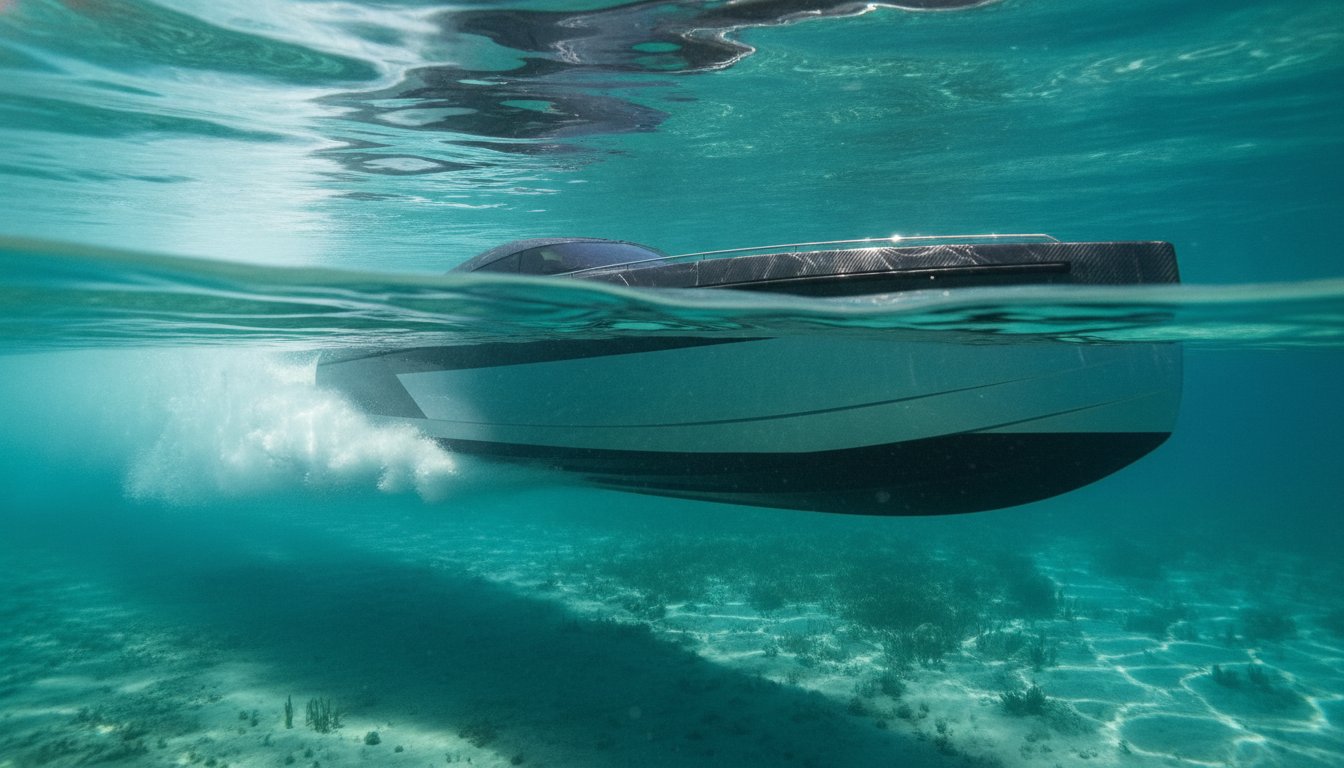
While conventional antifouling paints often have a surface roughness between 120 and 175 microns, a high-performance clear hull coating for performance boats can achieve a profile of less than 5 microns. You understand that every micron of resistance translates directly to lost knots and wasted fuel at cruise. It’s frustrating to invest in a custom gelcoat only to bury it under thick, abrasive layers of black or blue bottom paint that compromise both your boat’s lines and its hydrodynamic efficiency. You shouldn’t have to choose between a clean hull and peak performance.
In this article, you’ll discover how advanced foul-release technology eliminates frictional drag and preserves hull aesthetics without the toxic trade-offs of traditional heavy-metal paints. We will examine the fluid dynamics of surface energy, the impact of modern copper regulations, and how material science now allows for a permanent, clear finish that increases top-end speed while reducing fuel burn by as much as 20 percent. By shifting from biocidal chemistry to mechanical surface efficiency, you can secure a strategic asset that enhances your vessel’s operational life and environmental stewardship.
Key Takeaways
- Learn why traditional ablative paints create a “sandpaper effect” that induces turbulence and slows down high-speed vessels.
- Discover how a clear hull coating for performance boats uses Silane-Siloxane technology to manipulate surface energy and prevent bio-attachment without toxins.
- Understand the critical differences between hard-film coatings and ceramic epoxies to ensure your hull remains lightweight and hydrodynamically efficient.
- Gain practical insights on surface preparation and trailer safety protocols to protect your investment and maintain the pristine look of your gelcoat.
- Explore why Sea-Speed V 10 X Ultra Clear is the preferred strategic asset for racing and poker run vessels seeking maximum top-end speed.
The Performance Penalty: Why Traditional Antifouling Fails High-Speed Hulls
Traditional antifouling systems were engineered for slow-moving displacement vessels where the primary concern was preventing growth at any cost. For performance boaters, these coatings represent a significant technical bottleneck. Most traditional paints rely on a sacrificial or “ablative” process. This means the paint is designed to wear away over time, shedding layers to prevent the problem of biofouling. While this keeps the hull clean, it creates a surface that is constantly changing and micro-textured, which induces unnecessary turbulence in the boundary layer.
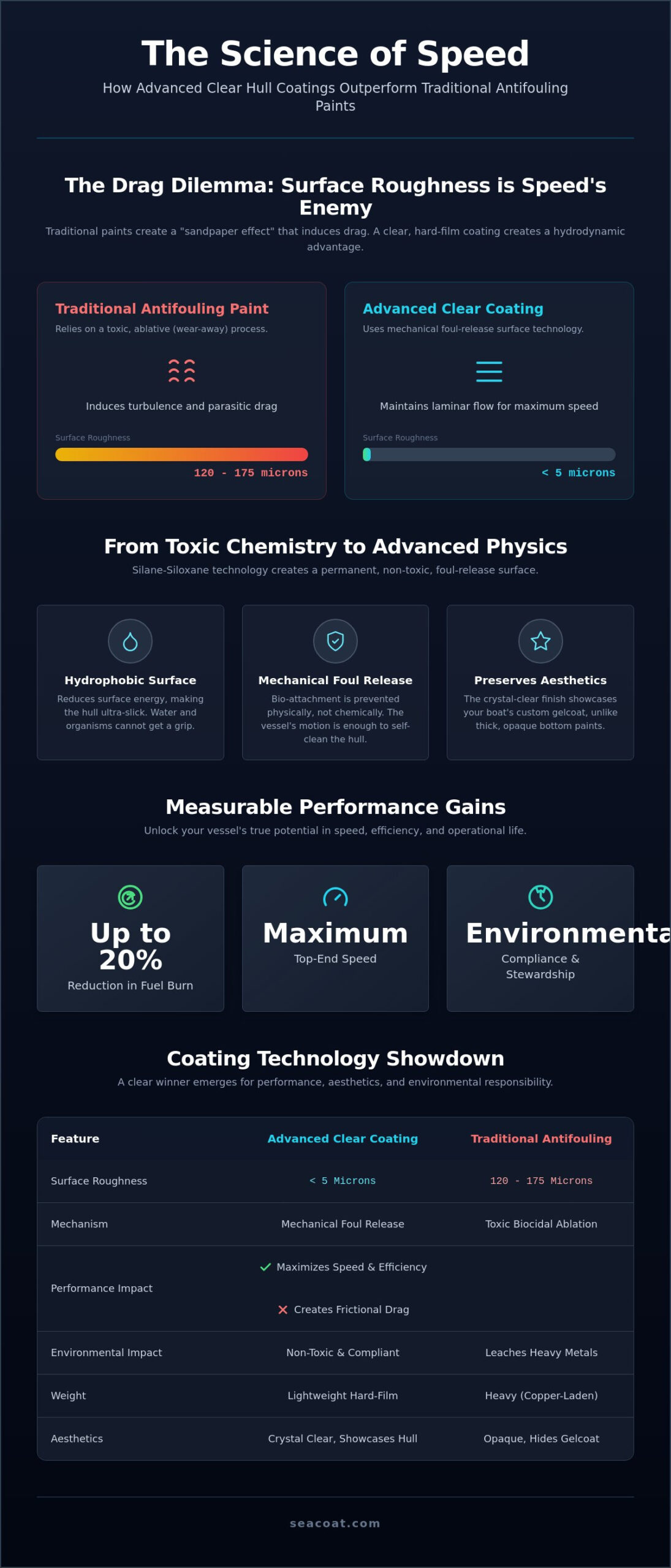
The “sandpaper effect” is a reality for anyone using copper-based paints. These coatings typically exhibit a surface roughness ranging from 120 to 175 microns. When you consider that every 20-micron difference can equate to a 1% difference in fuel consumption, the performance penalty becomes clear. Choosing a clear hull coating for performance boats eliminates this friction, replacing a gritty surface with a hard-film finish that measures less than 5 microns.
Heavy metals don’t just pose an ecological risk; they add physical mass. A standard gallon of copper-laden bottom paint can weigh significantly more than a high-solids clear epoxy. When you’re chasing every possible advantage in power-to-weight ratio, adding several pounds of unnecessary metallic weight below the waterline is counterproductive. These traditional systems create a cycle of environmental liability and mechanical inefficiency that modern owners are no longer willing to accept.
Understanding Frictional Drag in High-Performance Vessels
Frictional drag is the primary force resisting a vessel’s forward motion, especially at planing speeds. The “wetted surface” of your hull is where the battle for speed is won or lost. Micro-roughness in traditional paint creates parasitic drag by disrupting the laminar flow of water. As speed increases, this resistance grows. Reducing hull resistance through a superior surface profile is the most direct way to reclaim lost horsepower.
The Aesthetic and Regulatory Shift Toward Clear Systems
Regulations are catching up to the science. In Washington State, legislation now prohibits antifouling paint with more than 0.5% copper for recreational vessels. This pressure, combined with the desire for a “naked” hull look, drives the industry toward non-toxic foul release. A clear hull coating for performance boats offers a strategic advantage, allowing owners to showcase a pristine finish while meeting environmental standards without sacrificing speed.
The Science of Speed: Silane-Siloxane and Fluid Dynamics
The transition from traditional biocidal chemistry to advanced surface science represents a paradigm shift in marine engineering. While older paints rely on the leaching of toxins, a high-performance clear hull coating for performance boats utilizes Silane-Siloxane technology to create a molecularly dense, hard-film surface. This technology doesn’t just sit on top of the hull; it modifies the surface energy of the substrate. By reducing the surface energy, the coating becomes inherently hydrophobic, meaning water molecules cannot effectively grip the hull. This mechanical approach to foul release prevents bio-attachment without the environmental liability of heavy metals.
Scientific research into the drag forces of ceramic hull coating and similar advanced materials shows that manipulating the wetted surface can lead to substantial gains in efficiency. By creating a surface that’s both chemically inert and physically smooth, Sea-Speed V 10 X Ultra Clear acts as a strategic engineering asset. It allows the vessel to move through the water with minimal resistance, effectively turning the hull into a performance-optimized tool. For those looking to maximize their vessel’s potential, choosing the right surface technology is as critical as engine tuning.
Boundary Layer Optimization
The boundary layer is the thin volume of water immediately adjacent to the hull that moves at a different velocity than the surrounding fluid. In high-performance vessels, maintaining a laminar boundary layer is essential for speed. Micro-roughness causes this layer to become turbulent, which significantly increases drag. Silane-Siloxane is a non-migratory, permanent surface modifier. At speeds exceeding 20 knots, the low surface tension of this hard-film system facilitates rapid water release, ensuring the boundary layer remains as thin and stable as possible.
Durability Under High-Speed Cavitation
High-velocity water creates immense “stripping” forces that can easily peel away soft silicone-based foul-release systems. Performance boats, often subjected to high-speed cavitation and impact from debris, require the structural integrity of a hard-film epoxy. Silane-Siloxane bonds are far more resilient than traditional epoxy resins, offering superior impact resistance and long-term durability. Unlike soft systems that require delicate handling, these hard-film surfaces maintain their hydrodynamic properties even after years of high-speed operation. This longevity ensures that your investment in a clear hull coating for performance boats delivers a consistent return on investment over multiple seasons.
Comparing Clear Hull Coatings: Hard-Film vs. Ceramic Epoxies
While many manufacturers market “ceramicized” epoxies, there’s a distinct difference in the chemical backbone between these and Silane-Siloxane hybrids. Ceramic epoxies typically suspend ceramic particles within a standard epoxy resin. This often results in a thicker application, which can negatively impact the power-to-weight ratio of high-performance hulls. In contrast, a clear hull coating for performance boats based on Silane-Siloxane technology creates a molecularly dense, thin-film barrier that is significantly lighter and more durable under high-speed stress.
Maintenance protocols also differ significantly between these systems. While ceramic epoxies might require periodic scrubbing to remove biofilm, Silane-Siloxane coatings are true foul-release systems. Most accumulated growth can be removed with a simple high-pressure rinse or by the vessel’s movement through the water. This ease of maintenance is paired with a “Zero-Toxin” standard. Unlike traditional coatings that rely on biocidal leaching, these advanced systems contain no heavy metals and maintain ultra-low VOC levels, ensuring compliance with evolving global environmental regulations.
Evaluating Product Longevity and ROI
Strategic asset management requires looking beyond the initial application cost. A 10-year system like Sea-Speed V 10 X Ultra Clear offers a much higher return on investment than a standard 2-year ablative paint cycle. When you factor in the labor costs of frequent hauls and the cumulative fuel savings from reduced drag, the long-term economics favor high-performance clear systems. For a detailed breakdown of these metrics, you can refer to The Definitive Guide to Boat Hull Paint, which outlines specific ROI frameworks for vessel operators.
Surface Hardness and Frictional Resistance
Surface hardness is measured on the Shore D scale, a critical metric for marine coatings. For high-speed applications, a harder film is superior because it resists the deformation caused by high-pressure water flow. There’s a persistent myth that “softness” or a rubbery texture is necessary for foul release. In reality, performance boats need rigidity to maintain a stable boundary layer. Researchers at the UCLA Samueli School of Engineering have explored drag-reduction technology for boats that emphasizes how surface architecture and hardness influence fluid dynamics. A rigid, hard-film coating ensures that the hull remains hydrodynamically consistent even at speeds exceeding 50 knots, preventing the “stripping” often seen in softer silicone-based alternatives.
Operational Logistics: Application, Maintenance, and Trailer Safety
Adopting a high-performance clear hull coating for performance boats requires a shift in maintenance and handling logic. Unlike traditional paints that tolerate casual application, advanced foul-release systems demand technical precision to ensure the molecular bond is secure. The transition from a sacrificial surface to a permanent, hard-film asset means the application process is as critical as the chemistry itself. Proper logistics ensure that the speed gains you achieve in the water aren’t compromised by avoidable errors on the dock or the trailer.
Surface preparation is the foundation of a successful bond. Mechanical abrasion is critical; the substrate must be profiled to allow the Silane-Siloxane chemistry to anchor properly. This isn’t a surface that relies on chemical “bite” alone. Without proper profiling, even the most advanced coating risks delamination under the extreme shear forces of high-speed travel. Once applied, however, the coating is remarkably resilient. If the surface is physically damaged, it remains easily repairable. Because it’s clear and non-ablative, you can patch localized areas without the visible seams or color-matching issues common with pigmented paints.
In-water maintenance becomes a matter of simple hydraulics. On a Sea-Speed V 10 X Ultra surface, the “slime” layer lacks a mechanical grip. A soft sponge or a high-pressure rinse is usually sufficient to restore the hull to its peak hydrodynamic state. This ease of cleaning reduces the need for frequent haul-outs, directly lowering your long-term operational costs. For those looking to implement these systems, it’s vital to understand the technical requirements for a professional finish.
Professional Application Protocols
Achieving a mirror-like performance finish requires strict environmental controls. Humidity and temperature must be monitored during the curing phase to prevent moisture entrapment, which can cloud the finish. While roller application is possible for smaller areas, spray application is preferred for a truly hydrodynamic profile. For more technical details on environmental parameters, consult our Guide to Advanced Marine Hull Coatings.
The “Trailer Slip” Solution
A common concern among performance boaters is the “slick hull” phenomenon on trailers. Because a clear hull coating for performance boats reduces friction so effectively, the vessel can slide off the trailer bunks if not properly secured. You should never unhook the winch cable before the boat is submerged. We recommend using heavy-duty bow straps and ratcheting stern tie-downs to lock the vessel to the trailer frame. Some operators also opt for alternative bunk materials, such as high-density polyethylene pads, to provide a consistent resting surface without the grit-trapping issues of traditional carpeted bunks.
Strategic Advantage: Sea-Speed V 10 X Ultra Clear
Sea-Speed V 10 X Ultra Clear isn’t merely a consumer-grade finish; it’s a direct derivative of heavy-industry engineering. While many competitors focus on basic DIY kits for the recreational market, our technology is rooted in decades of experience with commercial and military fluid dynamics. This heritage ensures that the clear hull coating for performance boats we provide meets the rigorous standards of high-stakes marine operations. For racing teams and poker run participants, this translates to a reliable, evidence-based advantage where every knot counts and reliability is non-negotiable.
Adopting this technology represents a fundamental shift in how you view your vessel’s underwater profile. You’re no longer just satisfying a routine maintenance requirement; you’re implementing a performance upgrade that pays dividends in speed and efficiency. Sea-Speed V 10 X Ultra Clear provides a strategic asset by optimizing the hull’s interaction with the water at a molecular level. Our team at Seacoat supports owners through extensive technical data and industrial expertise, ensuring that the transition to a non-toxic, high-efficiency surface is both seamless and effective for long-term asset management.
Why Sea-Speed is the Expert Choice
The technical superiority of the V 10 X Ultra Clear formula lies in its clean chemical composition. Unlike many foul-release systems that rely on migrating silicone oils, our coating is a hard-film, non-leaching system. It contains zero heavy metals, eliminating the risk of environmental contamination while ensuring the surface remains easy to repair or overcoat in the future. We’ve documented consistent fuel savings and speed increases across diverse vessel types, proving that environmental stewardship doesn’t have to come at the expense of performance. It’s a permanent solution that respects natural ecosystems while maximizing your boat’s operational potential.
Next Steps for Performance Boat Owners
Determining the correct kit size for your specific hull length is the first step toward reclaiming your boat’s performance and protecting its aesthetic value. Whether you choose to work with an authorized applicator or prepare for a DIY project, the focus remains on precise execution and proper surface profile management. High-performance hulls deserve a coating that matches their engineering. You can view the Sea-Speed V 10 X Ultra Clear product specifications to begin your technical evaluation and secure your vessel’s competitive edge.
Maximizing Efficiency Through Advanced Surface Science
Transitioning from traditional antifouling to a clear hull coating for performance boats is more than an aesthetic choice; it’s a strategic commitment to operational efficiency. You’ve seen how the molecular density of Silane-Siloxane technology eliminates the “sandpaper effect” of copper paints, resulting in a significant reduction in frictional drag and fuel burn. By prioritizing surface energy manipulation over chemical toxicity, you protect both your vessel’s top-end speed and the natural ecosystems it navigates.
Since 2001, this technology has served the high-stakes demands of the commercial and military sectors, proving that durability and ecological safety are inseparable. Our zero-toxic, VOC-free formula provides a permanent, hard-film finish that withstands high-speed cavitation without the heavy maintenance cycles of ablative systems. It’s time to move beyond temporary fixes toward a sophisticated, evidence-based solution for your hull. Upgrade your hull performance with Sea-Speed V 10 X Ultra Clear and experience the synergy of speed and stewardship. Your boat’s potential is waiting to be unlocked.
Frequently Asked Questions
Will a clear hull coating make my boat faster?
Yes, a high-performance clear hull coating for performance boats reduces the wetted surface friction that limits top-end speed. By replacing the micro-roughness of traditional paints with a hard-film surface of less than 5 microns, you minimize the energy lost to turbulence. This allows the vessel to reach higher speeds with the same power output, effectively reclaiming horsepower that was previously spent overcoming parasitic drag.
Can I apply a clear coating over existing bottom paint?
No, we don’t recommend applying these advanced systems over existing antifouling paint. The Silane-Siloxane chemistry requires a direct molecular bond with a stable substrate like gelcoat or epoxy primer. Existing paint is often sacrificial or poorly bonded, which would lead to premature failure of the clear coat. Proper surface preparation involves removing all old paint and mechanically profiling the hull to ensure long-term adhesion.
Is Sea-Speed V 10 X Ultra Clear safe for aluminum performance boats?
Yes, Sea-Speed V 10 X Ultra Clear is ideal for aluminum hulls because it contains no copper or heavy metals. Traditional antifouling paints can trigger galvanic corrosion when applied to aluminum, leading to structural degradation. Because our formula is non-conductive and chemically inert, it provides a protective barrier that prevents corrosion while maintaining the high-speed performance required for aluminum racing or utility vessels.
How do I prevent my boat from sliding on the trailer with a slick coating?
Preventing “trailer slip” requires a change in your launching and recovery protocols. You must keep the winch cable and safety chain attached until the boat is fully submerged in the water. We also recommend utilizing ratcheting stern tie-downs and heavy-duty bow straps to lock the vessel to the trailer frame. These mechanical restraints compensate for the ultra-low friction of the coating, ensuring the boat remains secure during transport.
How long does a clear foul-release coating last compared to antifouling?
A professional clear hull coating for performance boats is designed as a permanent asset with a service life often reaching 10 years. In contrast, traditional ablative paints are sacrificial and typically require reapplication every 12 to 24 months. This extended longevity reduces the frequency of haul-outs and labor costs, providing a significantly higher return on investment over the vessel’s operational lifecycle.
Does a clear coating protect against osmosis and hull blistering?
Yes, the molecular density of Sea-Speed V 10 X Ultra Clear provides an exceptional moisture barrier. Osmosis and blistering occur when water molecules penetrate the gelcoat and react with the underlying laminate. By sealing the hull with a hard-film, non-porous epoxy hybrid, you significantly reduce the rate of water absorption. This protection preserves the structural integrity of the hull and helps maintain the vessel’s long-term resale value.
How do I clean a performance hull coated with Sea-Speed?
Cleaning a Sea-Speed surface is a mechanical process rather than a chemical one. Because the surface energy is so low, marine organisms cannot form a strong bond. Most biofilm or “slime” can be removed with a high-pressure water rinse or a soft sponge while the boat is in the water. You don’t need harsh abrasive cleaners or specialized chemicals, which reduces your environmental footprint and maintenance time.
Is Sea-Speed V 10 X Ultra Clear environmentally friendly?
Yes, the formula is entirely non-toxic and contains zero Volatile Organic Compounds (VOCs). It doesn’t rely on the leaching of copper, tin, or other biocides to prevent fouling. Instead, it uses mechanical surface properties to deter growth. This ensures compliance with the strictest global regulations while protecting natural ecosystems and the health of the applicators. It’s a strategic asset for owners concerned with both performance and stewardship.