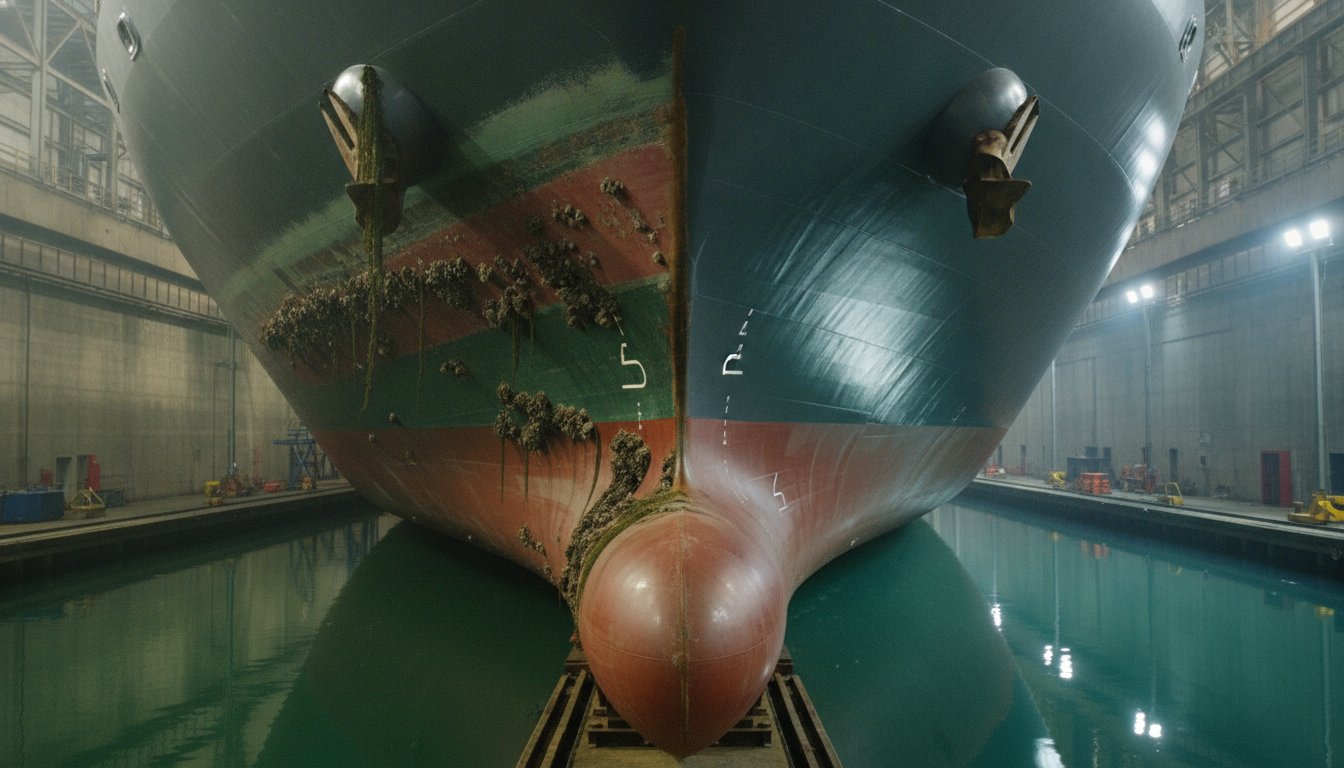
The era of relying on high-leaching biocides to maintain hull efficiency is rapidly closing, as the toxic antifouling paint ban update 2026 introduces a strict ceiling on traditional copper-based coatings. While the total ban in Washington State has been postponed until 2029, the U.S. EPA has finalized a maximum copper leach rate of 9.5 µg/cm²/day for recreational vessels, effective January 1, 2026. You’re likely concerned that tighter regulations will lead to compromised hull protection or prohibitive maintenance costs. It’s a valid concern; the industry has long viewed environmental safety and mechanical durability as opposing forces.
This briefing provides a clear roadmap for the 2026 regulatory landscape, detailing the shift toward hard-film Silane-Siloxane technologies that satisfy both the EPA and the European Union’s cybutryne bans. We’ll examine how transitioning to non-toxic, high-performance alternatives like Sea-Speed V 10 X Ultra isn’t just about avoiding fines. It’s a strategic move to reduce hull drag and lower fuel consumption. You’ll learn the technical mechanics behind biocide-free coatings and how they deliver a long-term return on investment through extended service windows and superior surface efficiency.
Key Takeaways
- Understand the specific global shifts in marine regulations, including the new EPA copper leaching limits and the international phase-out of booster biocides.
- Prepare for the toxic antifouling paint ban update 2026 by identifying which legacy coatings in your fleet now pose a regulatory and compliance risk.
- Evaluate the durability gap between traditional chemical ablation and hard-film foul release systems that offer significantly extended service lives of up to ten years.
- Learn how to calculate the Total Cost of Ownership and carbon intensity reductions achieved through the adoption of biocide-free, low-friction hull technologies.
- Discover how zero-VOC and zero-biocide formulations like Sea-Speed V 10 X Ultra provide a permanent, high-performance solution for modern commercial and military vessel management.
The 2026 Regulatory Landscape: IMO and Regional Antifouling Updates
The maritime industry is currently transitioning from the legacy restrictions of the 2008 Tributyltin (TBT) ban toward a more granular and rigorous era of biocide management. The toxic antifouling paint ban update 2026 marks a significant tightening of the International Maritime Organization (IMO) International Convention on the Control of Harmful Anti-fouling Systems. While previous decades focused on eliminating organotin compounds, the current regulatory focus has shifted toward booster biocides and heavy metal leach rates that persist in marine ecosystems. This shift requires a deep understanding of the history of antifouling paint to appreciate how the industry moved from total toxicity to the sophisticated, high-performance mechanical barriers available today. Compliance is no longer about avoiding a single banned substance; it’s about navigating a evolving list of restricted chemical agents that impact global port entry.
The Cybutryne Ban: Deadline and Compliance Requirements
Cybutryne, often marketed under trade names like Irgarol 1051, is a potent inhibitor of photosynthesis that causes catastrophic damage to non-target marine flora, specifically coral reefs and seagrass meadows. Under the latest IMO amendments, the application of antifouling systems containing this substance was prohibited as of January 1, 2023. However, the toxic antifouling paint ban update 2026 is critical because it represents the approaching deadline for vessels currently carrying Cybutryne on their hulls. By the next scheduled renewal survey after the 2023 prohibition, but no later than 60 months after the last application, ship owners must either remove the coating or apply a sealer coat to prevent further leaching. Port State Control (PSC) inspections now require detailed documentation, including the International Anti-fouling System Certificate and the Material Safety Data Sheet (MSDS), to verify compliance during dockside audits.
Regional Hotspots: EU and North American Enforcement
Regional enforcement often moves faster than international mandates, creating a complex patchwork for global fleet management. In the European Union, the REACH regulation has already severely restricted biocide use in the Baltic and Mediterranean Seas, where low water exchange rates exacerbate chemical accumulation. Simultaneously, the United States EPA has established a maximum copper leach rate of 9.5 micrograms per square centimeter per day, effective January 1, 2026. This federal standard aligns with ongoing reviews by the California Department of Pesticide Regulation (DPR), which targets copper discharge in high-traffic marinas. These regional bans don’t just affect local craft. They impact global trade routes by forcing vessel operators to choose coatings that meet the strictest possible standard to avoid restricted entry or heavy non-compliance fines in key economic hubs.
Beyond TBT: The Hidden Toxins Targeted in 2026
While the maritime industry successfully moved away from Tributyltin (TBT) decades ago, the toxic antifouling paint ban update 2026 reveals that the chemicals used to replace it are equally problematic. Modern formulations often rely on “booster biocides” such as Irgarol 1051 and Diuron. These substances don’t stay on the hull; they leach into the water column. Because these coatings are regulated as pesticides, their environmental footprint is under intense scrutiny. Irgarol, specifically, has been targeted for its ability to inhibit photosynthesis in non-target marine flora, leading to its 2023 ban in Washington State and broader restrictions across the European Union.
Even copper, the industry’s primary fallback, is facing a hard ceiling. The U.S. EPA has mandated that after September 30, 2025, manufacturers cannot produce paint exceeding a copper leach rate of 9.5 micrograms per square centimeter per day. By January 1, 2026, applying these high-leach paints to recreational vessels will be illegal. This isn’t just about the active ingredients. It’s about how the paint delivers them. The toxic antifouling paint ban update 2026 represents a pivotal shift from managing single chemicals to addressing the total ecological impact of hull maintenance strategies.
The Failure of Ablative Chemistry
Ablative or self-polishing copolymer (SPC) systems are designed to wear away over time. This “controlled” erosion releases biocides to prevent fouling. However, this mechanism also sheds microplastics and chemical residues directly into the sea. The industry’s reliance on sacrificial layers is fundamentally flawed. It creates a constant stream of pollutants that settle in harbor basins and enter the food chain. Moving toward a non-ablative, hard-film solution allows for protection without the environmental cost of chemical shedding. This transition is essential for operators who value both mechanical efficiency and ecological stewardship.
Sediment Contamination and ESG Liability
Harbor dredging has become an expensive nightmare for port authorities. Traditional antifouling residues persist in sediments for years, making the disposal of dredged material complex and costly. If you’re managing a fleet, this translates into potential legal liabilities and increased pressure from port stakeholders. Environmental Social Governance (ESG) reporting is also evolving. By 2026, stakeholders will demand evidence of reduced environmental impact. Relying on legacy toxins is no longer a viable corporate strategy. Proactive compliance is the only way to mitigate long-term financial and reputational risks associated with contaminated harbor sediments.
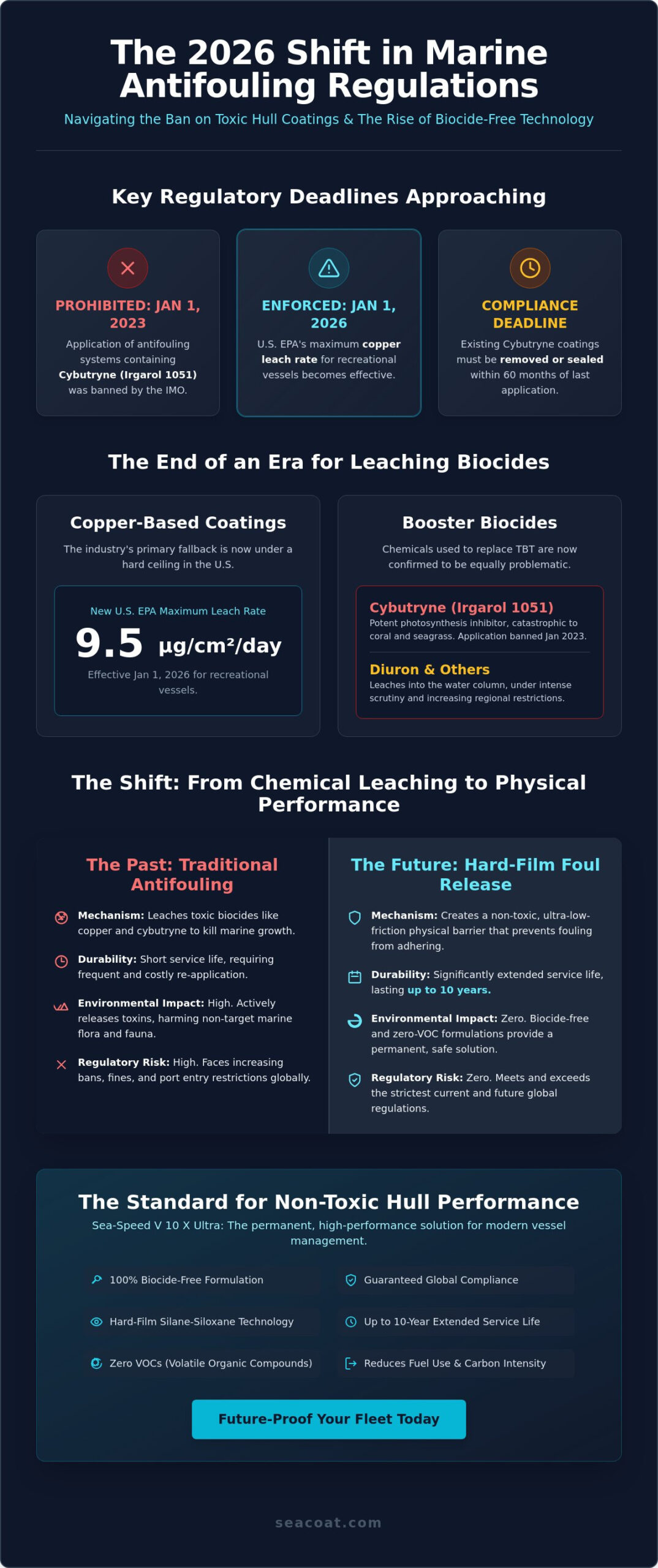
Hard-Film Foul Release vs. Traditional Antifouling: A Performance Comparison
Traditional antifouling relies on the constant elution of biocides; a process that is fundamentally limited by the chemical reservoir within the coating layers. As the toxic antifouling paint ban update 2026 approaches, the inherent limitations of this chemical-heavy approach become an operational liability. Hard-film foul release systems represent a paradigm shift in material science. Instead of attempting to poison the marine environment to prevent biological growth, these systems utilize advanced surface chemistry to deny adhesion. This mechanical barrier aligns with the core objectives of the IMO’s AFS Convention, which seeks to mitigate the ecological impact of hull coatings without compromising vessel safety.
The durability gap between these two technologies is profound. Traditional ablative paints are sacrificial; they’re designed to wear away, typically requiring a full re-application cycle every 24 months to remain effective. Hard-film coatings are permanent. By eliminating the self-polishing mechanism, these coatings provide a service life that can exceed 10 years with proper maintenance. This longevity fundamentally changes the return on investment for fleet managers, shifting the focus from recurring application costs to long-term asset protection. It’s no longer necessary to accept the bi-annual expense of dry-docking solely for paint renewal when the toxic antifouling paint ban update 2026 provides a clear path toward more resilient technology.
The Science of Silane-Siloxane Coatings
The efficacy of these systems is rooted in their molecular structure. Silane-Siloxane technology creates a high-density, cross-linked barrier that is chemically inert and physically robust. Unlike traditional silicones that are often soft and easily damaged by mechanical cleaning or debris, hard-film Silane-Siloxane maintains its integrity under high-stress conditions. It significantly reduces skin friction by creating an ultra-smooth surface at the molecular level. Silane-Siloxane technology provides a non-biocidal, hard-film solution that ensures full 2026 compliance while maintaining extreme physical durability. This reduction in hydrodynamic drag is a direct result of the coating’s ability to manipulate fluid dynamics at the hull-water interface, ensuring that the surface remains inhospitable to marine organisms.
Operational Performance: Drag, Speed, and Fuel
The financial impact of hull smoothness can’t be overstated. Even a minor increase in surface roughness leads to significant parasitic drag, which forces engines to work harder and consume more fuel. By maintaining a low-friction profile over several years, hard-film coatings ensure that speed retention remains consistent. Traditional paints often suffer from “roughness creep” as the ablative layers wear unevenly or build up thick, brittle edges over multiple cycles. For a detailed breakdown of these metrics, consult The Definitive Guide to Antifouling Boat Paint and Foul Release Systems in 2026. Switching to a high-performance foul release system allows operators to meet carbon intensity requirements while simultaneously lowering operational overhead. This synergy between compliance and efficiency is the hallmark of modern marine engineering.
Strategic Fleet Transition: Compliance, ROI, and Carbon Intensity
Navigating the toxic antifouling paint ban update 2026 requires more than a simple product swap; it demands a comprehensive audit of existing fleet assets. Vessel managers must identify hulls currently coated with Cybutryne or high-leaching copper systems that will soon exceed the EPA’s 9.5 µg/cm²/day limit. Transitioning to a compliant system is a strategic opportunity to align operational goals with new environmental benchmarks. Performance and safety are synergistic. Beyond legal adherence, selecting a coating that permits safe in-water cleaning is essential. Traditional ablative paints often release a plume of biocides during cleaning, creating localized environmental hazards. Hard-film foul release systems allow for mechanical grooming without the risk of chemical discharge, ensuring that your fleet remains compliant in sensitive coastal zones.
Maximizing ROI Through Coating Longevity
Financial performance in the maritime sector is increasingly tied to the frequency of dry-docking cycles. When you compare the Total Cost of Ownership (TCO) of a biennial repainting schedule against a single 10-year application, the economic advantage shifts toward advanced foul release technology. Standard paints require repetitive labor, material costs, and significant off-hire time every 24 months. By contrast, a high-durability coating reduces the long-term maintenance burden and keeps vessels in service longer. Longevity drives profit. For a technical breakdown of these financial metrics, see The Definitive Guide to Boat Hull Paint: Performance, Science, and ROI. This transition effectively moves hull maintenance from a recurring operational expense to a strategic capital investment with a multi-year return.
Carbon Intensity Indicator (CII) and Hull Performance
The IMO’s Carbon Intensity Indicator (CII) and Energy Efficiency Existing Ship Index (EEXI) have transformed hull efficiency from a fuel-saving preference into a regulatory mandate. Biological fouling increases skin friction, which directly degrades a vessel’s CII rating by increasing the fuel required to maintain speed. Drag is a direct cost. The toxic antifouling paint ban update 2026 pushes the industry toward surfaces that maintain their hydrodynamic profile over time. Efficiency is no longer optional. Hard-film coatings act as a primary technical measure for meeting IMO 2030 greenhouse gas targets. Because these surfaces don’t become rougher through the “self-polishing” process, they provide consistent drag reduction. This stability is critical for fleet managers who must report and improve their carbon intensity ratings annually to maintain market access. You can evaluate our non-toxic coating solutions to see how they integrate into your fleet’s carbon reduction strategy.
Sea-Speed V 10 X Ultra: The Standard for Non-Toxic Hull Performance
The toxic antifouling paint ban update 2026 isn’t a distant hurdle; it’s a current operational reality for fleet managers. Sea-Speed V 10 X Ultra offers a definitive exit from the cycle of chemical dependency and regulatory risk. This coating is engineered as a zero-VOC, zero-biocide system, ensuring that your vessels meet the 2026 EPA copper leach rate limits and the IMO’s Cybutryne restrictions without compromise. Because it relies on a permanent, hard-film Silane-Siloxane structure, it provides a surface that marine organisms simply cannot adhere to. This mechanical approach is fundamentally different from the sacrificial layers used in legacy systems. It doesn’t wear away or leach toxins into the water column, making it a strategic asset for long-term fleet management.
Durability is the cornerstone of the Sea-Speed formulation. While soft silicone coatings are often prone to tearing or mechanical failure, our hard-film technology allows for aggressive mechanical cleaning without damaging the protective barrier. This resilience ensures that the hull remains smooth and efficient over a 10-year service life. We provide global availability and bulk industrial supply to ensure that fleet-wide deployment is seamless, regardless of your vessel’s operational theater. This logistical readiness is essential for operators who need to transition multiple assets before the 2026 enforcement deadlines take full effect.
The Seacoat Advantage: Expert Innovation
Our history is rooted in solving the most demanding challenges in fluid dynamics. Silane-Siloxane technology was initially developed for high-speed military hulls where durability and drag reduction are paramount. Today, these same performance metrics are available for commercial shipping and cruise line operators. For a deeper look at the industry transition, read Environmental Marine Coatings: The 2026 Shift Toward Sustainable Hull Performance. Our data from over 20 years of application shows that vessels using Sea-Speed V 10 X Ultra maintain speed and fuel efficiency far longer than those using traditional biocide-based systems.
Securing Your Fleet’s Future
Transitioning a fleet requires precision and foresight. We recommend initiating a comprehensive coating audit with Seacoat SCT, LLC to determine the most efficient path to compliance. Our team provides customized coating kits tailored to specific vessel types and operational profiles, whether you’re managing commercial cargo fleets or specialized military craft. We focus on providing a solution that aligns with your multi-year maintenance cycle and carbon reduction targets. Ensure your fleet is 2026 compliant with Sea-Speed V 10 X Ultra and secure a future defined by operational efficiency and ecological safety.
Securing Operational Longevity in a Regulated Marine Environment
The 2026 regulatory shift represents a fundamental realignment of marine maintenance priorities. It’s no longer enough to merely avoid banned substances; fleet managers must now optimize for carbon intensity while navigating the toxic antifouling paint ban update 2026. This transition from sacrificial chemical coatings to permanent mechanical barriers is not just a compliance hurdle. It’s a strategic upgrade that yields measurable returns in fuel efficiency and asset longevity. By moving away from leaching biocides, you protect both the marine ecosystem and your bottom line. Compliance is your competitive edge.
By utilizing Silane-Siloxane technology, which has been in commercial use since 2001, operators can achieve a proven 10-year service life on both commercial and military hulls. Our Zero-VOC, Zero-Biocide, and Zero-Leaching formulations provide the technical certainty required for modern operations. You can bridge the gap between environmental stewardship and heavy industry performance with a solution that is as durable as it is safe. Contact Seacoat SCT, LLC for a 2026 Fleet Compliance Consultation to begin auditing your assets and securing your operational future. Transitioning your fleet today ensures you stay ahead of global mandates while maximizing your long-term return on investment.
Frequently Asked Questions
What exactly is the 2026 toxic antifouling paint ban update?
The toxic antifouling paint ban update 2026 primarily refers to the U.S. EPA’s enforcement of a maximum copper leach rate of 9.5 micrograms per square centimeter per day for recreational vessels. It also encompasses the global deadline for the removal or sealing of coatings containing Cybutryne. These regulations signify a shift toward biocide-free alternatives as the new standard for global fleet management and environmental compliance.
Is Cybutryne completely banned on all ships by 2026?
Cybutryne application has been prohibited since early 2023, but 2026 serves as a critical milestone for vessels already carrying it. By their next renewal survey, and no later than 60 months after the last application, ships must either remove the coating or apply a verified sealer. This ensures that the chemical, which damages non-target marine flora, is no longer released into international waters.
Can I over-coat my existing toxic paint with a non-toxic foul release system?
Applying a high-performance foul release system over existing toxic paint is typically not recommended because legacy coatings are often ablative and unstable. To achieve the full 10-year service life of a hard-film system, the hull must be blasted to the substrate. This ensures a permanent bond and prevents the old, leaching layers from compromising the integrity of the new, non-toxic barrier.
Do non-toxic hull coatings really work as well as copper-based paints?
Non-toxic coatings often outperform traditional paints by utilizing mechanical foul release rather than chemical elution. While copper-based paints lose efficacy as biocides leach away, hard-film systems maintain a low-energy surface that prevents biological adhesion. This results in a hull that stays cleaner for longer periods without the environmental degradation associated with pesticide-based solutions.
How do hard-film coatings like Sea-Speed V 10 X Ultra affect fuel consumption?
Hard-film coatings like Sea-Speed V 10 X Ultra significantly lower fuel consumption by reducing hydrodynamic drag at the hull-water interface. By creating an ultra-smooth, non-porous surface, these coatings minimize skin friction. This efficiency allows vessels to maintain higher speeds at lower engine RPMs, directly improving the Carbon Intensity Indicator (CII) rating and reducing operational overhead.
What are the penalties for using non-compliant antifouling paint in 2026?
Penalties for failing to meet the toxic antifouling paint ban update 2026 include substantial financial fines and vessel detention by Port State Control (PSC) authorities. Beyond immediate legal consequences, using restricted coatings can lead to exclusion from certain environmentally sensitive ports. It also creates long-term liability for harbor sediment contamination, which can negatively impact a company’s corporate ESG reporting.
Does the 2026 ban apply to aluminum boats and pleasure craft?
Yes, the 2026 EPA mandate specifically targets recreational vessels, which includes pleasure craft and many aluminum-hulled boats. While aluminum boats traditionally avoided copper to prevent galvanic corrosion, the substitute biocides are now facing similar scrutiny. Switching to a biocide-free, non-conductive hard-film coating provides a safe, compliant solution for all hull materials and vessel types.
How does the IMO verify hull coating compliance during inspections?
Verification is conducted through a review of the International Anti-fouling System Certificate and the Material Safety Data Sheet (MSDS). Port State Control officers check these documents to ensure the coating does not contain prohibited substances like Cybutryne. In some cases, physical samples may be taken for laboratory analysis to verify that leaching rates and chemical compositions align with the documented certifications.