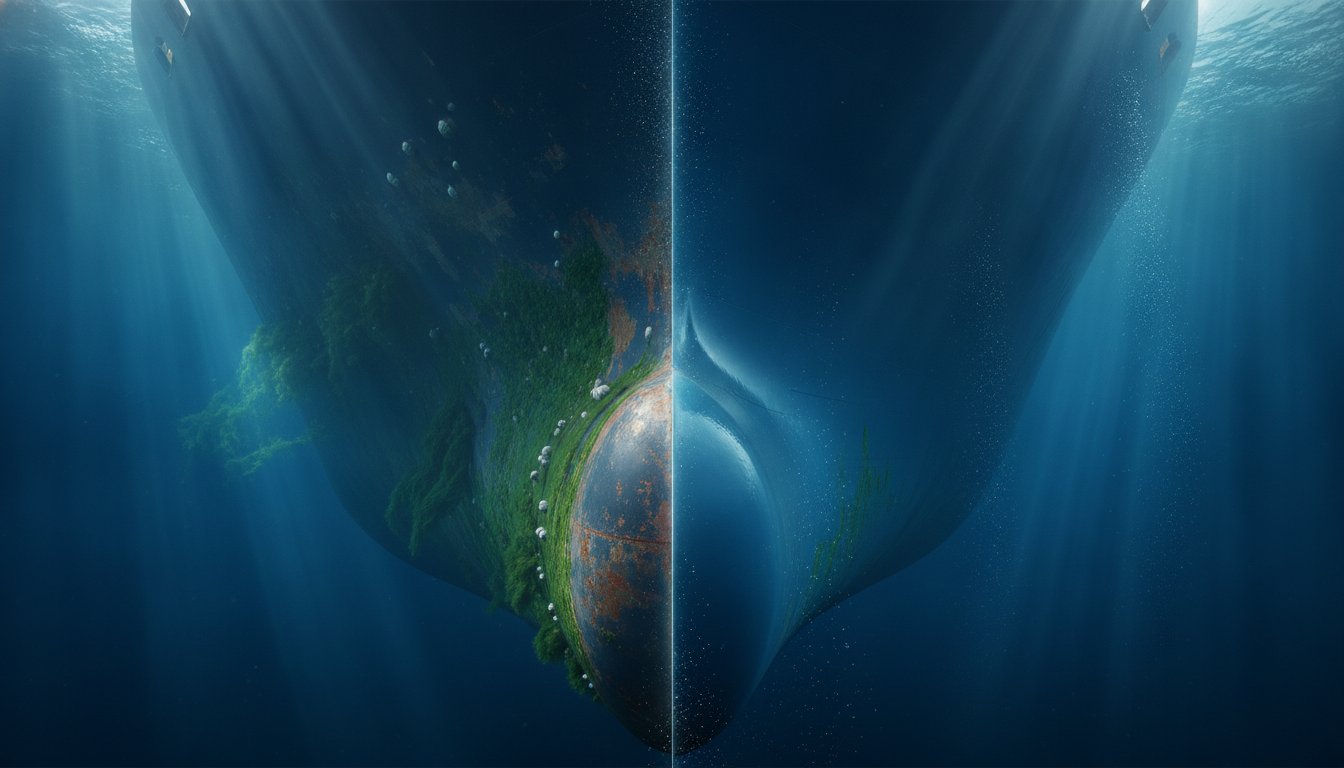
If you’re still planning your fleet operations around an annual dry-docking cycle, you’re likely investing in a legacy of planned obsolescence rather than a strategic asset. The fundamental question of how long does marine hull paint last has evolved beyond simply measuring the thickness of a sacrificial layer that’s designed to fail. It’s now a calculation of chemical stability and surface energy. You understand the high cost of toxic leaching and the significant fuel loss that accompanies traditional coating degradation as the surface roughens over time.
This article provides a technical analysis of the transition from 1-year sacrificial paints to advanced 10-year foul release systems. We’ll examine the science of silane-siloxane technology and how these non-toxic formulations address shifting environmental regulations in major maritime hubs. You’ll learn how to extend service windows and reduce frictional drag through hard-film systems like Sea-Speed V 10 X Ultra. We’ll show you how to transform your hull coating from a recurring maintenance expense into a high-ROI performance tool that ensures long-term regulatory compliance.
Key Takeaways
- Learn why traditional ablative paints often fail after 12 months while evaluating how long does marine hull paint last when utilizing advanced silane-siloxane chemistry.
- Understand the molecular benefits of non-porous hard-film coatings, which create a covalent bond with the substrate to prevent delamination and chemical degradation.
- Identify how specific environmental factors, including water temperature and vessel duty cycles, directly impact the degradation rate of sacrificial versus permanent systems.
- Discover the procedural requirements for maximizing coating ROI, including the use of specialized primers like Seapoxy 73 to ensure long-term mechanical adhesion.
- Explore the operational advantages of Sea-Speed V 10 X Ultra, a foul-release solution engineered to provide a 10-year service life and improved fuel efficiency.
The Lifespan of Marine Hull Paint: Ablative vs. Hard Film Systems
The traditional approach to hull maintenance treats coatings as a consumable expense, much like fuel or lubricants. However, the decision between Ablative vs. Hard Film Systems determines whether your hull remains a recurring liability or becomes a high-performance asset. In the current maritime environment, understanding how long does marine hull paint last requires looking beyond the surface and into the underlying material science. While legacy technologies rely on a sacrificial cycle, modern innovations prioritize surface integrity and long-term mechanical stability.
Understanding Ablative (Sacrificial) Coatings
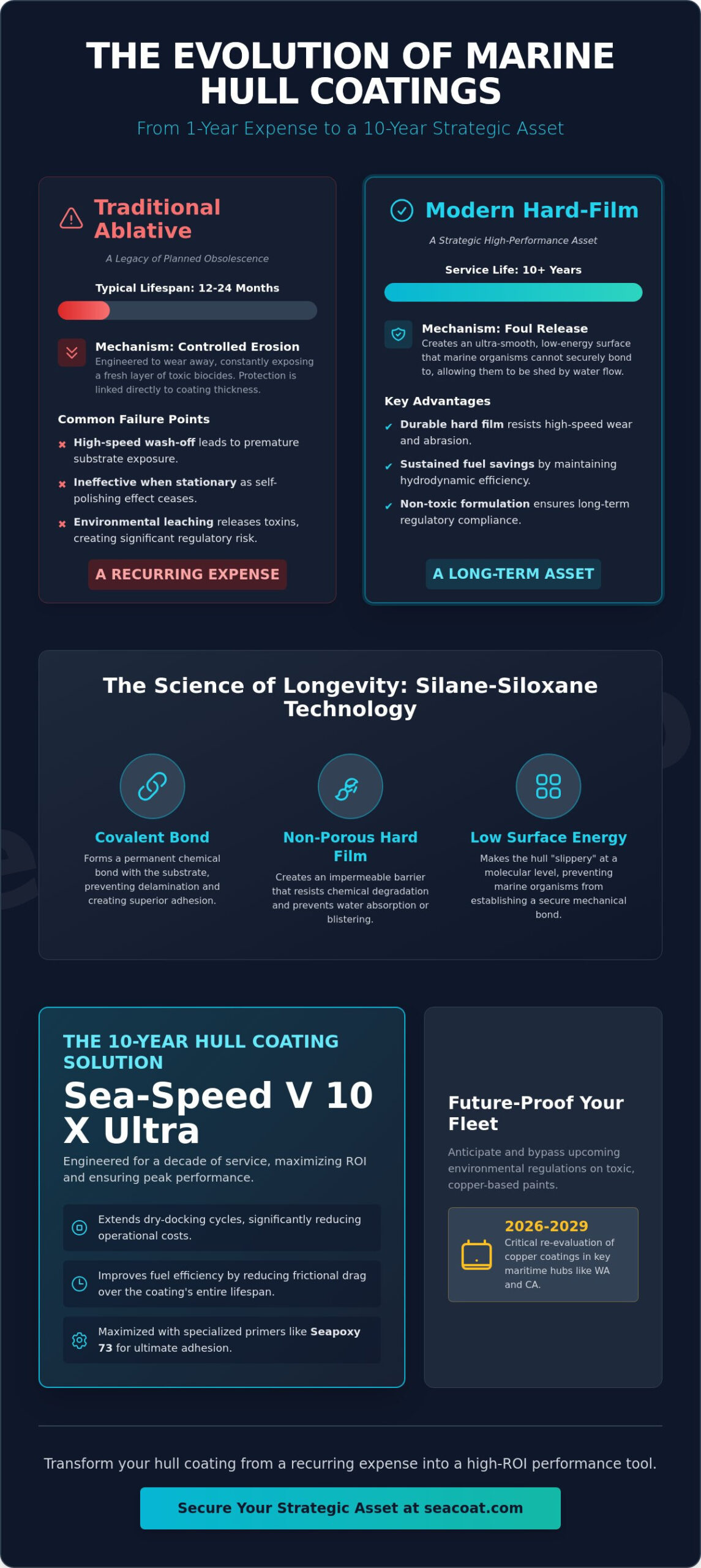
Ablative coatings function through a mechanism of controlled erosion. These paints are engineered to wear away gradually as the vessel moves through the water, constantly exposing a fresh layer of biocides to deter marine growth. Because the protection is tied to the physical thickness of the coating, the lifespan is inherently limited. Most ablative systems provide effective protection for only 12 to 24 months before the active layer is depleted.
Common failure points for these systems include:
- High-speed wash-off: Vessels operating at higher speeds often erode the coating faster than the manufacturer intended, leading to premature substrate exposure.
- Stationary biofouling: When a vessel remains idle, the lack of water friction prevents the self-polishing effect, allowing organisms to bypass the biocidal layer.
- Environmental leaching: The constant shedding of material releases toxins into the water column, which creates significant regulatory risks as standards tighten.
Modern Hard-Film Foul Release Systems
In contrast, hard-film foul release systems represent a shift toward a permanent asset strategy. These coatings don’t rely on toxic leaching or physical erosion to maintain a clean hull. Instead, they create a non-porous, ultra-smooth surface with extremely low surface energy. This molecular structure makes it difficult for marine organisms to establish a secure mechanical bond, allowing them to be shed simply by the vessel’s movement through the water.
When considering how long does marine hull paint last, hard-film systems like Sea-Speed V 10 X Ultra offer a stark contrast to traditional options. These coatings are designed to remain intact for multiple dry-dock cycles, often reaching a service life of 10 years or more. Because the film doesn’t wear away, the hull maintains its original hydrodynamic efficiency, resulting in sustained fuel savings and reduced drag over the entire lifespan of the coating.
The year 2026 marks a turning point as environmental agencies in jurisdictions like Washington and California conduct critical re-evaluations of copper-based coatings, with new reports and standards expected between 2027 and 2029. Short-lived toxic paints are becoming a significant liability, both ecologically and operationally, as vessel owners face the prospect of stricter future restrictions. Shifting to a permanent hard-film system allows operators to bypass the high cost of frequent dry-docking and ensures compliance with evolving standards. By investing in a 10-year solution, you move beyond a cycle of constant repair and secure a strategic asset for the next decade.
Key Factors That Influence How Long Your Bottom Paint Lasts
Determining how long does marine hull paint last requires a multi-faceted analysis of the vessel’s specific operating environment. It’s not a static number. A coating that provides three years of service in the cold, brackish waters of the Baltic might fail in six months in the high-salinity, tropical heat of the Caribbean. Longevity is a variable of chemical stability, mechanical wear, and biological pressure. Understanding these variables allows fleet managers to move beyond guesswork and into predictive maintenance cycles.
Environmental Impact on Coating Degradation
The waterline, or splash zone, is frequently the first point of failure. This area endures the highest concentration of UV radiation, which breaks down the chemical binders in traditional paints, leading to chalking and brittleness. Salinity levels also play a critical role; brackish water can alter the leaching rate of biocidal paints, often causing them to deplete faster than in open-ocean conditions. With 2026 ocean temperature trends showing consistent warming in traditional shipping lanes, the accelerated metabolic rates of biofouling organisms are effectively shortening the functional lifespan of traditional biocidal paints. This increased biological pressure demands a more resilient surface chemistry that doesn’t rely on the slow release of toxins.
Operational Factors: Speed and Frequency
Your vessel’s duty cycle is perhaps the most significant operational determinant of coating health. Foul release systems are engineered with a “self-cleaning” speed threshold. When a vessel maintains a consistent speed, typically above 10 knots, the hydrodynamic pressure is sufficient to shed accumulated slime and adolescent barnacles. Conversely, long idle periods are the enemy of traditional ablative paints. Without water movement to “polish” the surface, the biocide becomes trapped beneath a layer of biofilm, rendering the protection useless. Mechanical wear also compromises integrity. Fenders, floating debris, and occasional groundings create micro-fractures in the film. Once the barrier is breached, sub-film corrosion or osmotic blistering can begin, regardless of how much paint remains on the rest of the hull.
Application quality remains the primary technical hurdle. Even the most advanced coating will fail prematurely if the surface preparation is inadequate. Utilizing a high-performance primer like Seapoxy 73 ensures the necessary mechanical bond to prevent delamination. Furthermore, cleaning protocols must be strictly managed. Traditional abrasive scrubbing, often used to “refresh” old paint, can destroy a multi-year coating in a single afternoon by stripping away the engineered surface profile. Choosing a coating engineered for durability, such as Sea-Speed V 10 X Ultra, ensures that your investment remains resilient against these varied environmental and operational stressors.
The Science of Longevity: Why Silane-Siloxane Technology Excels
The durability of a marine coating is fundamentally limited by its chemical architecture. While legacy systems rely on resin binders that eventually hydrolyze or erode, silane-siloxane technology utilizes a hybrid chemistry to create a glass-like, non-porous hard film. This transition from a permeable, reactive surface to an inert barrier is the primary reason why the industry is re-evaluating how long does marine hull paint last. By shifting the focus from sacrificial biocide release to permanent surface energy management, operators can achieve a level of longevity that was previously unattainable with traditional materials.
At the molecular level, silanes excel because they create a covalent bond with the substrate. Most marine paints rely on mechanical adhesion, which is susceptible to moisture ingress and subsequent delamination. Silane-siloxane systems, however, form a chemical link that integrates the coating with the hull surface. This extreme adhesion ensures the film remains intact even under the intense hydrodynamic pressures of commercial transit. The resulting surface is not just a barrier but a performance-enhancing tool that maintains its integrity for over a decade. It’s a shift from a temporary maintenance requirement to a permanent strategic asset.
Moving Beyond Silicone: The Hard-Film Advantage
While soft silicone coatings were an early attempt at foul-release technology, they often fail in commercial environments due to their low tear strength. A single encounter with floating debris or a fender can compromise the entire system, leading to costly repairs. Silane-siloxane provides the necessary industrial durability by combining low surface energy with a hard-film finish. This resistance to mechanical damage is critical for maintaining long-term efficiency in high-stakes sectors. For a deeper dive into these technical properties, consult The Science of Silane-Siloxane Marine Coatings Explained. This hard-film approach ensures that the protective barrier remains functional despite the rigors of heavy industrial use.
Eliminating the Leaching Cycle
Traditional anti-fouling paints essentially “die” as they lose their active ingredients. Once the biocides have leached into the ecosystem, the remaining paint film is nothing more than a porous, high-drag surface that encourages growth. Silane-siloxane technology is inherently inert. It doesn’t react with seawater or deplete its properties over time. This performance stability means the hull maintains the same low-frictional resistance in year five as it did on day one. When calculating how long does marine hull paint last, this lack of chemical degradation is the key to extending dry-dock intervals and maximizing return on investment. By eliminating the leaching cycle, you achieve a cleaner hull and a significantly reduced environmental footprint without sacrificing performance.
Maximizing ROI: Extending the Life of Your Marine Coating
Maximizing the return on investment for a hull coating requires a shift from reactive repair to proactive asset management. While the chemical composition of the coating is the foundation, the operational protocols you implement determine the ultimate answer to how long does marine hull paint last. A high-performance system is only as effective as the precision of its application and the consistency of its maintenance. By following a structured optimization plan, vessel operators can ensure that their coatings reach their full 10-year potential.
- Professional surface preparation: The integrity of the system begins with the substrate. Using advanced priming systems like Seapoxy 73 creates the necessary chemical and mechanical bond to prevent sub-film corrosion.
- Precise film thickness control: Uniform protection requires strict adherence to Dry Film Thickness (DFT) specifications. Inconsistent application creates weak points that lead to premature failure.
- Non-abrasive in-water cleaning: Hard-film systems don’t require aggressive scrubbing. Implementing a gentle cleaning schedule preserves the engineered surface energy.
- Strategic inspections: High-wear areas like the bow and rudder endure the most turbulence. Regular monitoring of these zones allows for minor touch-ups before systemic issues arise.
- Performance tracking: Monitoring fuel consumption serves as a proxy for coating health. A sudden increase in drag often signals the need for a light cleaning or inspection.
The True Cost of Annual Maintenance vs. Long-Term Coatings
Evaluating a coating’s value requires a 10-year Net Present Value (NPV) calculation rather than just looking at the initial purchase price. Traditional paints require frequent dry-docking, which involves high haul-out fees and significant lost operational time. Conversely, a premium foul release system extends service windows, drastically reducing these recurring costs. The financial impact is most visible in fuel efficiency. A smooth, well-maintained hull can reduce fuel consumption by 5% to 15% over time compared to a degraded, rough surface. These savings often pay for the entire coating system within the first few years of operation.
Regulatory Compliance and EEXI
In 2026, coating longevity is no longer just a financial concern; it’s a regulatory requirement. The International Maritime Organization (IMO) has set aggressive greenhouse gas reduction targets, and hull efficiency is a critical component of meeting EEXI (Energy Efficiency Existing Ship Index) and CII (Carbon Intensity Indicator) ratings. A coating that maintains its slickness for a decade ensures that a vessel remains compliant without requiring mid-cycle interventions. For detailed regulatory guidance, see Environmental Marine Coatings: The 2026 Shift. To optimize your fleet’s lifecycle costs and ensure long-term performance, explore the strategic assets available at seacoat.com.
Sea-Speed V 10 X Ultra: The 10-Year Hull Coating Solution
Sea-Speed V 10 X Ultra represents the practical application of the silane-siloxane principles discussed earlier, providing a definitive answer to how long does marine hull paint last in high-stakes environments. While traditional systems are defined by their eventual failure, this hard-film foul release technology is engineered for a 10-year service life across commercial and military fleets. It’s a non-toxic, biocide-free formulation that exceeds global environmental standards, ensuring that your vessel remains compliant with the tightening regulations seen in 2026. By creating an ultra-smooth surface, it significantly reduces frictional drag, which translates into immediate and measurable fuel cost savings.
The primary advantage of this system lies in its mechanical durability. Unlike soft silicone coatings that are easily torn or abraded by fenders and debris, Sea-Speed creates a resilient, glass-like finish. This surface energy management prevents the mechanical bonding of marine organisms without the need for toxic leaching. It’s a shift from a consumable product to a permanent engineering solution. The result is a hull that stays cleaner for longer, maintaining its hydrodynamic profile through multiple dry-dock cycles without the degradation typical of sacrificial layers.
Unmatched Durability for All Vessel Types
The versatility of Sea-Speed V 10 X Ultra allows it to deliver consistent performance metrics for commercial cargo ships, cruise lines, and pleasure craft alike. In commercial shipping, where every hour of downtime impacts the bottom line, the ability to bypass multiple dry-docking cycles is a transformative operational advantage. Real-world longevity data from global fleets confirms that Sea-Speed maintains its integrity and performance through extended service windows, often exceeding the 10-year benchmark in varied maritime climates. These metrics demonstrate that the surface roughness remains consistently low, unlike traditional paints that experience a significant increase in roughness annually.
This coating is also the preferred choice for aluminum hulls and racing yachts. Because the formula contains no metallic components, it eliminates the risk of galvanic corrosion that often plagues aluminum vessels using copper-based anti-foulants. For racing yachts, the non-porous finish provides the low-friction surface necessary for maximum competitive speed and efficiency. Operators can also utilize Sea-Speed V 10 X Ultra Clear for applications requiring a transparent, high-performance barrier that preserves the aesthetic of the substrate while providing industrial-grade protection.
Transitioning to a Permanent Hull Strategy
Moving away from the sacrificial cycle of traditional paints requires a methodical transition to a permanent hull strategy. The process involves removing depleted legacy coatings and establishing a stable foundation with a high-build epoxy like Seapoxy 73. Once the substrate is prepared, the Sea-Speed system is applied to create a seamless, non-porous barrier. For specialized protection of running gear and underwater hardware, the Armor-Sil R/G topcoat provides additional resistance against cavitation and high-turbulence wear. This integrated approach ensures that every underwater surface is optimized for longevity. To begin your transition, you can Consult with Seacoat SCT, LLC for a custom 10-year coating strategy and secure your fleet’s performance for the next decade.
Securing Decadal Performance in a Regulated Maritime Future
The evolution of marine coatings has moved beyond temporary fixes toward permanent, scientifically-driven solutions. You’ve seen that the traditional sacrificial cycle is an operational liability, especially as global regulations tighten through the remainder of the decade. By transitioning to a hard-film system, you’re not just protecting a hull; you’re optimizing a strategic asset for a ten-year service window. This shift from reactive maintenance to proactive surface management is essential for operators who prioritize reliability and long-term return on investment.
Determining how long does marine hull paint last is no longer a matter of counting months between haul-outs but rather a strategic decision to invest in surface energy management. Since 2001, our proprietary silane-siloxane technology has provided a 100% biocide-free alternative that significantly reduces fuel consumption and greenhouse gas emissions. This approach ensures your fleet remains compliant and efficient without the environmental cost of toxic leaching. It’s a commitment to both operational excellence and ecological stewardship. Maximize your vessel’s performance with Sea-Speed V 10 X Ultra and secure a higher standard of efficiency for your maritime operations.
Frequently Asked Questions
How long does bottom paint last on a boat that stays in the water?
A boat that remains constantly submerged will typically see traditional ablative paint last between 12 and 24 months before the biocides are exhausted. In contrast, hard-film systems are engineered to endure for a decade without the need for reapplication. Determining how long does marine hull paint last in these conditions depends on whether the coating relies on chemical leaching or a permanent, non-stick surface profile. Constant immersion accelerates the depletion of sacrificial layers.
Can I make my marine paint last longer with extra coats?
Adding extra coats to an ablative system can marginally extend its lifespan by providing more material to erode, but this approach introduces significant drawbacks. Excessive film thickness often leads to cracking, peeling, and increased hydrodynamic drag, which negates any maintenance savings. For advanced hard-film systems, the focus is on achieving the specified dry film thickness for substrate protection rather than layering for longevity. Proper application according to technical data sheets is always superior to over-coating.
What is the difference between foul release and antifouling longevity?
The primary difference lies in the mechanism of failure; antifouling paints eventually lose their active biocides, while foul release coatings maintain their efficacy through surface energy. Antifouling longevity is a countdown to chemical depletion. Foul release systems like Sea-Speed V 10 X Ultra remain inert, meaning the surface doesn’t react with water or wear away. This allows the coating to remain functional through multiple dry-dock cycles without losing its non-stick properties.
How do I know when it is time to repaint my boat hull?
You should monitor both visual indicators and vessel performance metrics to determine when a repaint is necessary. Physical signs include visible substrate exposure, extensive cracking, or chalking of the paint surface. Operationally, a consistent increase in fuel consumption or a decrease in top speed often indicates that the coating’s surface profile has degraded. If a light, non-abrasive cleaning doesn’t restore performance, the coating’s functional life has likely reached its end.
Does the type of water (salt vs. fresh) affect how long paint lasts?
Environmental conditions significantly dictate how long does marine hull paint last, with tropical saltwater being the most challenging environment. High salinity and warm temperatures accelerate the metabolic rates of biofouling organisms and the chemical breakdown of traditional binders. Freshwater environments generally exert less chemical pressure on the coating, but they still present unique biological challenges. Operators should choose a coating based on the highest bio-pressure their vessel will encounter during its duty cycle.
Is it worth paying more for a 10-year marine coating?
Investing in a 10-year coating is statistically advantageous when you calculate the Net Present Value over the life of the asset. While the initial cost is higher, you eliminate the recurring expenses of annual haul-outs, labor, and material for frequent repainting. Additionally, the sustained fuel savings from a low-drag hull often offset the initial investment within a few years. It’s a shift from a maintenance expense to a strategic operational asset.
How does in-water cleaning affect the lifespan of a hard-film coating?
In-water cleaning actually extends the functional life of a hard-film coating by removing biofilm before it can facilitate heavier growth. Because hard-film systems are non-porous and durable, they don’t shed material during the cleaning process like ablative paints do. Using soft, non-abrasive tools ensures the surface energy remains intact. This routine maintenance keeps the hull at peak efficiency without the need for the aggressive scrubbing that destroys traditional coatings.
Does marine paint expire or degrade if the boat is on a trailer?
Traditional anti-fouling paints often degrade or lock up when exposed to air for extended periods, as the biocides oxidize and the binders become brittle. This makes them unsuitable for trailered boats that spend significant time out of the water. Hard-film silane-siloxane coatings are chemically stable and don’t rely on moisture to maintain their integrity. They remain effective regardless of whether the vessel is submerged or stored on a trailer for months at a time.