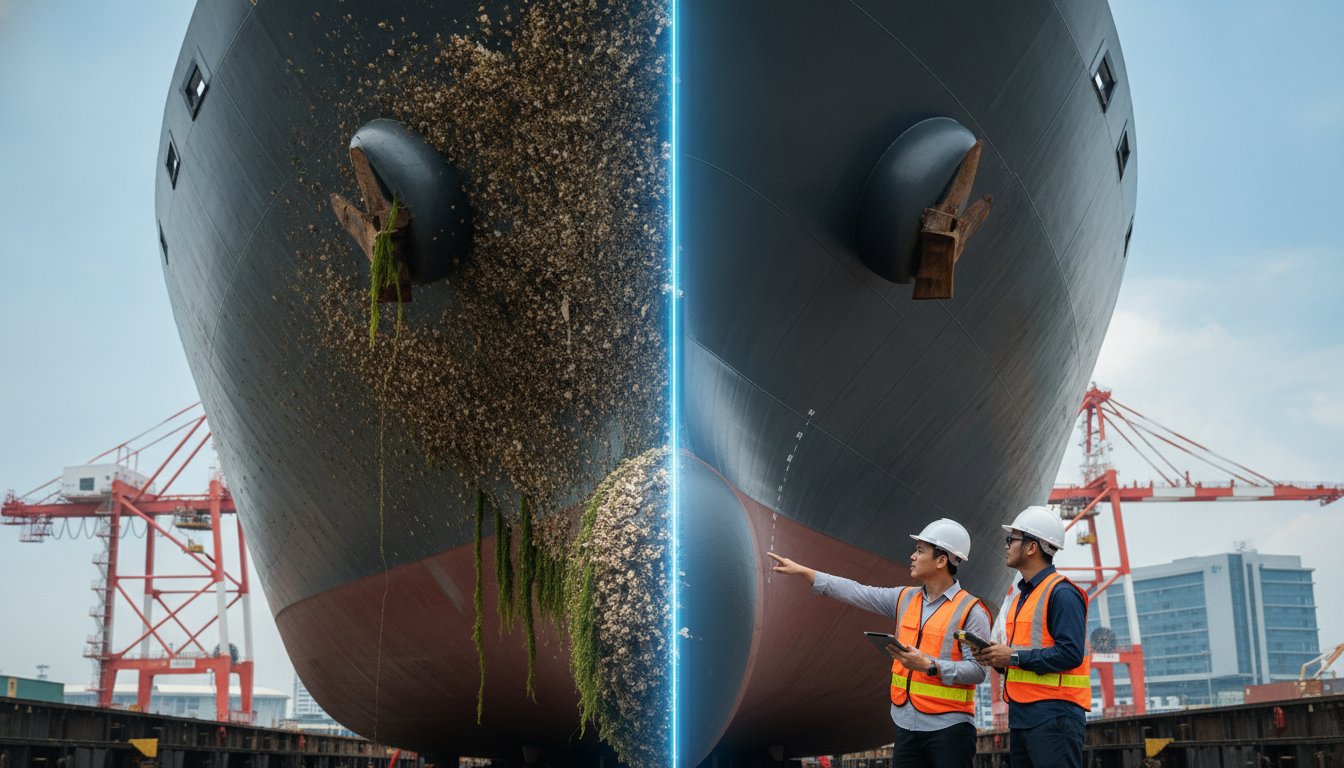
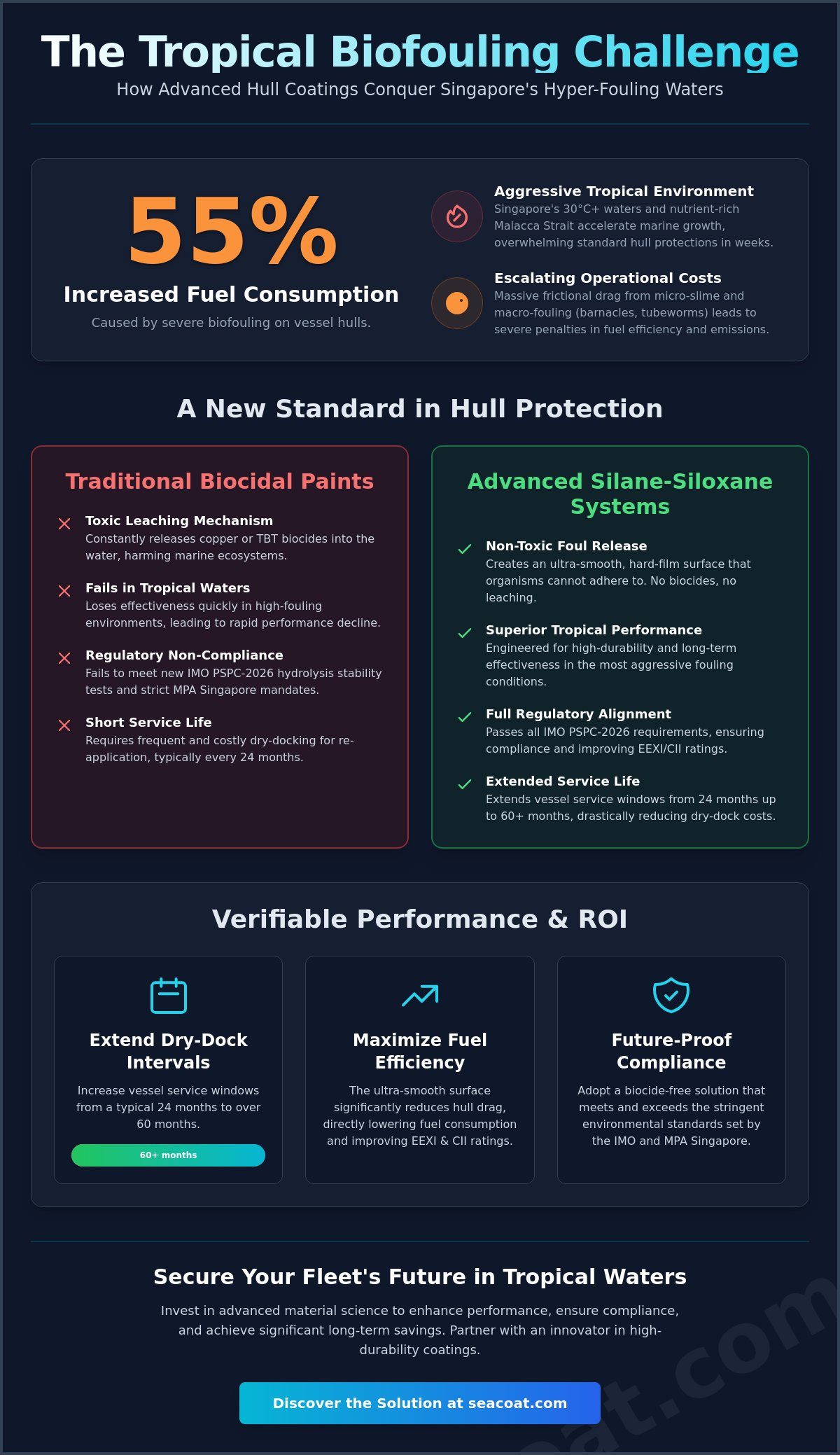
Did you know that severe biofouling in the 30°C+ waters of Singapore can increase a vessel’s fuel consumption by as much as 55%? As a maritime stakeholder, you’re likely aware that traditional biocidal paints often fail to provide long-term protection in these high-activity, hyper-fouling environments. Finding a high-performance foul release coating for tropical waters is no longer just a maintenance choice; it’s a strategic necessity for maintaining EEXI compliance and operational viability under the latest IMO PSPC-2026 standards.
We understand the pressure to balance escalating fuel costs with the Maritime and Port Authority of Singapore’s strict environmental mandates. This article demonstrates how advanced silane-siloxane systems, such as Sea-Speed V 10 X Ultra, solve these challenges by creating a hard-film, non-toxic surface that eliminates leaching while significantly reducing hull drag. You’ll discover how these innovative materials ensure full regulatory alignment with the 2026 hydrolysis stability requirements, offering a clear path to verifiable fuel savings and extended dry-dock intervals through superior material science.
Key Takeaways
- Understand how new IMO PSPC-2026 standards and MPA regulations are reshaping the requirements for hull protection in Singapore’s maritime hub.
- Learn why silane-siloxane technology serves as the most effective foul release coating for tropical waters by utilizing a hard-film, biocide-free mechanism.
- Discover how to extend vessel service windows from 24 months to 60 months, significantly reducing long-term dry-dock frequency and costs.
- Analyze the technical link between molecular surface smoothness and verifiable fuel savings to maximize your fleet’s return on investment.
- Identify the strategic advantages of partnering with an innovator focused on high-durability solutions for the unique fouling challenges of Southeast Asia.
The Singapore Maritime Hub: Selecting a Strategic Marine Coating Supplier
Singapore maintains its global dominance as the premier bunkering and ship repair hub in 2026, serving as the primary gateway for the world’s most intensive shipping lanes. For vessel owners, this high-activity environment demands more than just a logistical pitstop. It requires a sophisticated approach to asset management. Selecting a high-durability foul release coating for tropical waters is no longer a routine procurement task; it’s a strategic decision that directly influences a fleet’s carbon intensity and bottom-line profitability. In a market where fuel costs and environmental surcharges are volatile, the transition from purchasing commodity marine paint to investing in advanced material science is essential for long-term viability.
A strategic supplier in Singapore must function as a technical partner rather than a mere vendor. This partnership involves a deep understanding of fluid dynamics and the specific chemical interactions between a hull’s surface and the nutrient-rich waters of Southeast Asia. Procurement teams are increasingly moving away from general maritime supplies in favor of specialized high-performance coatings that offer verifiable performance metrics. Reliability in this sector is measured by a coating’s ability to maintain a low-friction profile over multi-year service cycles without the need for constant, abrasive cleaning.
The Critical Role of Local Supply Chains in Singapore
Proximity to major shipyards like Keppel and Jurong is a fundamental requirement for effective coating deployment. Rapid mobilization of technical oversight ensures that application standards are met during tight dry-dock windows. Because Singapore’s bunkering schedules are exceptionally rigid, any delay in the coating process can result in cascading operational losses. It’s vital to vet suppliers for their bulk industrial supply capabilities and their ability to provide on-site technical support. A supplier integrated into the local ecosystem can better manage the logistical nuances of the Malacca Strait, ensuring that the foul release coating for tropical waters is applied under optimal conditions to maximize its service life.
Regulatory Drivers: MPA Singapore and IMO 2026
The Maritime and Port Authority of Singapore (MPA) continues to lead the industry by enforcing rigorous environmental standards. Under the latest IMO PSPC-2026 guidelines, self-polishing coatings must now pass a 72-hour accelerated hydrolysis stability test to obtain type approval. These mandates reflect a broader regional transition away from TBT and copper-based biocides, which cause irreversible damage to local marine ecosystems. The Tropical Biofouling Challenge in Singaporean coastal waters is particularly aggressive, making biocide-free, hard-film systems the only logical choice for compliance. By adopting these advanced systems, operators don’t just avoid regulatory penalties; they improve their EEXI and CII ratings through significant drag reduction, turning environmental responsibility into a measurable competitive advantage.
The Tropical Biofouling Challenge in Southeast Asian Waters
Vessels operating in the equatorial belt face a biological onslaught that temperate-water fleets rarely encounter. Singapore’s sea surface temperatures, often exceeding 30°C, accelerate the metabolic rates of marine organisms, leading to colonization speeds that can overwhelm standard hull protections within weeks. The Malacca Strait serves as a concentrated corridor of high salinity and nutrient density, providing the ideal environment for rapid biological proliferation. When a vessel slows or anchors in these waters, it becomes a substrate for an ecosystem that thrives on heat and organic abundance.
The economic consequences of this growth are severe. Even a thin layer of micro-slime can disrupt the boundary layer of water moving past the hull, while macro-fouling from barnacles and tubeworms can increase fuel consumption by as much as 55% due to massive frictional drag. This makes the selection of a specialized foul release coating for tropical waters a critical operational priority for any fleet manager navigating the Indo-Pacific region. Relying on generic solutions in this environment leads to a rapid decline in vessel efficiency and a corresponding spike in emissions.
Micro-slime to Macro-fouling: A Tropical Timeline
In the nutrient-rich waters of Singapore, the timeline from a clean hull to a colonized surface is measured in hours rather than days. Biofilm formation begins almost immediately upon submersion, creating a sticky matrix that facilitates the attachment of larger, more destructive species. This progression from soft slime to hard calcareous growth happens with alarming speed in equatorial climates. Ultimately, biofouling is fundamentally a fluid dynamics problem where biological accumulation disrupts the laminar flow across the hull, converting kinetic energy into wasted thermal drag.
The Failure of Leaching Mechanisms in Warm Waters
Traditional copper-based antifouling paints rely on a steady release of biocides to poison settling larvae, but this chemical approach often falters in the tropics. High water temperatures increase the leaching rate, causing the active ingredients to deplete prematurely and leaving the hull vulnerable long before the next scheduled dry-dock. This rapid depletion also leads to higher concentrations of heavy metals in sensitive coastal ecosystems, a concern that has drawn increased scrutiny from maritime authorities.
Moving toward surface energy solutions, such as the advanced silane-siloxane technology offered by SeaCoat, represents a shift from chemical warfare to mechanical resistance. These systems don’t rely on depletion; instead, they create a surface so slick that organisms cannot maintain a stable bond. This transition is essential for operators who require consistent performance without the diminishing returns and environmental liabilities of traditional biocidal systems.
Silane-Siloxane vs. Traditional Coatings: A Technical Comparison
The efficiency of a hull coating is fundamentally determined by its surface energy and mechanical resilience. Silane-siloxane technology represents a significant departure from traditional silicone-based elastomers. By utilizing a molecular bond that integrates with the substrate, Sea-Speed V 10 X Ultra creates a permanent, non-migratory slick surface. This hard-film foul release coating for tropical waters doesn’t rely on the temporary presence of oils or biocides. It functions through a physical mechanism that prevents the stable adhesion of marine organisms at the microscopic level, ensuring that the hull remains hydrodynamically efficient without the need for toxic leaching.
Unlike conventional coatings that degrade through chemical depletion, silane-siloxane systems offer a stable, non-reactive barrier. This stability is critical for vessels operating in high-temperature environments where chemical reaction rates are accelerated. By removing the regulatory risk of environmental compromise, these advanced materials provide a future-proof solution for fleet managers. The result is a coating that delivers peak performance while remaining fully compliant with international standards regarding hazardous substances and VOC emissions.
Hard-Film Foul Release vs. Soft Silicone
Commercial operations in Singapore involve frequent fender contact, tug maneuvers, and potential debris impact. Soft silicone coatings are notoriously susceptible to mechanical tearing during these events, which compromises the entire protective barrier and leads to localized fouling. Sea-Speed V 10 X Ultra provides a robust, impact-resistant finish that survives these industrial stressors. This durability also enables in-water cleaning and aggressive grooming without the risk of coating loss. While soft silicones often require replacement every 2 to 3 years, a properly applied silane-siloxane system can achieve a service life exceeding 10 years.
Ablative vs. Non-Ablative Systems
Traditional ablative paints are designed to wear away over time to reveal a fresh layer of biocide. This process creates a “roughness profile” that increases as the coating depletes, leading to higher frictional drag and escalating fuel consumption. In contrast, Sea-Speed V 10 X Ultra is a non-ablative system. It maintains its peak surface smoothness throughout its entire operational life. For a deeper analysis of these differences, refer to the definitive guide to antifouling boat paint and foul release systems. By choosing a non-ablative solution, operators eliminate the hidden costs associated with increasing hull resistance and the environmental burden of paint particles entering the water column.
Calculating ROI and Operational Efficiency for Singapore Fleets
Fleet managers in Singapore are increasingly moving away from viewing hull coatings as a recurring maintenance expense. Instead, they’re treating them as strategic assets that dictate the long-term profitability of the vessel. While the initial investment for a high-performance foul release coating for tropical waters may be 20% to 40% higher than conventional options, the Total Cost of Ownership (TCO) analysis reveals a compelling return on investment. With fuel savings typically ranging between 5% and 8%, most operators achieve a full return on the coating within 2 to 4 years. Over a standard 20-year vessel lifespan, these efficiencies can translate into millions of dollars in operational savings.
In the 2026 regulatory environment, these efficiencies are no longer optional. Maintaining high EEXI and CII ratings is directly tied to the physical condition of the hull. A smooth hull isn’t just about speed; it’s about carbon tax mitigation. By reducing the energy required for propulsion, operators can significantly lower their carbon intensity and avoid the financial penalties associated with poor environmental ratings. This shift makes the procurement of advanced coatings a core component of financial risk management.
Fuel Savings in Tropical Trade Routes
The direct correlation between hull smoothness and fuel consumption is a matter of basic fluid dynamics. When a hull’s surface energy is minimized, the laminar flow is preserved, significantly reducing the energy required to maintain transit speeds. For large commercial fleets, even a 4% to 6% reduction in drag leads to substantial reductions in bunkering requirements. Sea-Speed V 10 X Ultra reduces greenhouse gas emissions by optimizing hull hydrodynamics. By utilizing performance data from commercial shipping and cruise lines, procurement teams can justify the shift toward these advanced materials based on verifiable metrics rather than marketing claims. This data-driven approach is essential for mitigating the impact of rising fuel prices.
Extended Service Windows and Maintenance
One of the most significant drivers of ROI is the extension of dry-docking intervals. Traditional systems often require comprehensive re-coating every 24 months to remain effective against aggressive tropical fouling. By switching to a hard-film silane-siloxane system, operators can move toward a 60-month maintenance cycle. This transition is supported by the use of Seapoxy 73, which provides a chemically stable foundation for long-term hull integrity. Rather than recurring, costly abrasive blasting, the maintenance strategy shifts toward simple in-water hull grooming. This approach preserves the coating’s surface profile and minimizes downtime in the Singapore ship repair sector. For a comprehensive look at how material science drives these financial outcomes, consult our definitive guide to boat hull paint.
Investing in advanced hull performance solutions ensures that your fleet remains compliant and competitive in a decarbonizing industry. It’s a move that secures both environmental stewardship and operational longevity.
Seacoat SCT: Your Advanced Coating Partner in Singapore
Seacoat SCT, LLC operates at the intersection of material science and maritime logistics, providing the specialized infrastructure required to manage high-stakes assets in the Singaporean industrial sector. Our global reach is anchored by a deep commitment to the Southeast Asian market, where the environmental conditions demand a level of performance that standard coatings simply cannot provide. By positioning ourselves as a strategic partner rather than a traditional vendor, we offer the technical expertise necessary to transition fleets from reactive maintenance to proactive performance management. Our focus remains on delivering a permanent foul release coating for tropical waters that aligns with the rigorous operational and ecological standards of the modern shipping industry.
Reliability in the Singapore maritime hub is built on consistency and evidence-based results. We provide comprehensive bulk industrial supply capabilities to support fleet-wide hull maintenance programs, ensuring that every vessel in a fleet maintains a uniform standard of protection. Beyond the product itself, Seacoat SCT, LLC provides essential technical guidance for Singapore-based applicators and shipyards. This oversight ensures that the unique properties of silane-siloxane technology are fully realized during the application process, maximizing the longevity and efficiency of the finished surface.
Comprehensive Product Solutions
Our product portfolio is engineered to address the specific hydrodynamic challenges of equatorial operations. Sea-Speed V 10 X Ultra serves as our flagship solution for commercial and military craft, providing maximum foul release performance without the use of toxic biocides or soft silicones. For specialized applications and racing hulls that require a transparent finish without sacrificing durability, Sea-Speed V 10 X Ultra Clear offers an identical high-performance profile. Additionally, Armor-Sil R/G provides auxiliary protection for specialized marine surfaces, ensuring that every part of the vessel’s submerged profile is optimized for drag reduction and resistance to biological colonization.
Strategic Procurement for Singapore Fleets
Initiating a bulk industrial supply contract with Seacoat SCT, LLC allows fleet managers to secure their supply chains and standardize their environmental compliance strategies. Our non-toxic, silane-siloxane technology removes the regulatory burden of heavy metal leaching, making it the ideal choice for vessels operating in sensitive coastal regions. By choosing a non-ablative system, procurement teams eliminate the recurring costs of sacrificial paint cycles and and the associated increase in hull roughness over time. For detailed technical specifications and a deeper look at our material science, refer to our guide to advanced marine coatings. This resource provides the data necessary to align your procurement strategy with the long-term goals of EEXI compliance and operational excellence in the world’s most demanding tropical waters.
Securing Operational Longevity in the Singapore Straits
The maritime industry is undergoing a fundamental shift where environmental stewardship and industrial efficiency are no longer at odds. In Singapore’s demanding waters, the transition to a high-durability foul release coating for tropical waters is the most effective way to ensure EEXI compliance while protecting the bottom line. By moving away from sacrificial, toxic paints and adopting hard-film technology, fleet managers can achieve a stable, low-friction profile that lasts for years. This strategic choice eliminates the cycle of recurring abrasive blasting and the associated downtime that erodes profitability.
Since 2001, our proprietary Silane-Siloxane technology has provided a proven alternative to traditional antifouling methods. It delivers verifiable fuel savings and significant drag reduction without the use of harmful biocides. This approach doesn’t just meet 2026 regulatory standards; it sets a new benchmark for operational reliability in Southeast Asia. We invite you to optimize your fleet performance with Seacoat SCT solutions and experience the benefits of 100% biocide-free protection. Securing the future of your fleet starts with a commitment to superior material science.
Frequently Asked Questions
Is Sea-Speed V 10 X Ultra compliant with Singapore MPA environmental regulations?
Sea-Speed V 10 X Ultra is fully compliant with all Maritime and Port Authority of Singapore (MPA) environmental mandates. It’s a 100% biocide-free and non-toxic solution that exceeds the latest IMO PSPC-2026 hydrolysis stability requirements. Because it doesn’t leach heavy metals or volatile organic compounds into the water column, it remains a preferred choice for vessels operating in sensitive Singaporean coastal ecosystems where regulatory scrutiny is highest.
How does a hard-film foul release coating differ from traditional antifouling paint?
Traditional antifouling paints rely on a chemical leaching mechanism that poisons marine larvae to prevent attachment. In contrast, a hard-film foul release coating for tropical waters utilizes silane-siloxane technology to create an ultra-smooth, low-energy surface. This physical barrier prevents organisms from forming a stable bond without the need for toxic additives. Unlike sacrificial paints, these systems don’t deplete over time, maintaining their protective properties throughout the service life.
Can Sea-Speed V 10 X Ultra be applied over existing hull coatings?
Sea-Speed V 10 X Ultra can’t be applied directly over existing antifouling paints or soft silicone systems. To ensure the molecular bond required for long-term durability, the hull must be blasted to a near-white metal finish. We recommend using Seapoxy 73 as a high-performance primer to provide a chemically stable foundation. This rigorous preparation process is essential for achieving the multi-year adhesion and performance metrics expected in high-fouling equatorial environments.
What is the expected service life of a silane-siloxane coating in tropical waters?
A properly applied silane-siloxane coating typically offers a service life exceeding 10 years in tropical conditions. While traditional biocidal paints often require full replacement every 24 to 36 months due to chemical depletion, the non-ablative nature of Sea-Speed V 10 X Ultra ensures it doesn’t wear away. This extended longevity allows vessel operators to transition from frequent repainting cycles to simple, periodic in-water grooming, significantly reducing long-term maintenance costs.
How much fuel can a commercial vessel save by switching to a low-friction marine coating?
Commercial vessels can expect verifiable fuel savings between 5% and 8% after switching to a high-performance foul release system. By minimizing surface roughness and optimizing the laminar flow of water across the hull, the engine requires less energy to maintain cruising speeds. For large-scale shipping operations, these percentages translate into millions of dollars in bunkering cost reductions over the life of the coating while simultaneously lowering the vessel’s carbon footprint.
Does Seacoat SCT offer bulk supply for commercial fleets in Singapore?
Seacoat SCT specializes in bulk industrial supply and strategic procurement for commercial and military fleets in Singapore. We provide the logistical infrastructure necessary to support large-scale hull maintenance programs across multiple vessels. Our team also offers technical oversight and training for local applicators to ensure that every project meets our strict performance standards. This comprehensive support model is designed to facilitate seamless fleet-wide transitions to advanced coating technologies.
Is in-water cleaning safe for Sea-Speed hard-film coatings?
In-water cleaning is highly effective and safe for Sea-Speed hard-film coatings. Unlike soft silicone foul release systems, which are easily torn by mechanical brushes or debris, our silane-siloxane film is impact-resistant and durable. This allows divers to perform aggressive grooming to remove micro-slime without damaging the coating or releasing particles into the environment. Regular grooming helps maintain peak hydrodynamic efficiency and further extends the time between dry-docking intervals.
How do these coatings help with EEXI and CII compliance for international shipping?
These coatings improve EEXI and CII ratings by directly reducing the ship’s total resistance and fuel consumption. Under the 2026 IMO regulations, vessels must demonstrate improved energy efficiency to avoid operational restrictions. By maintaining a clean, low-friction hull, operators can achieve the necessary emissions reductions without the need for expensive engine modifications or speed caps. This makes the coating a critical component of a vessel’s overall carbon intensity management strategy.