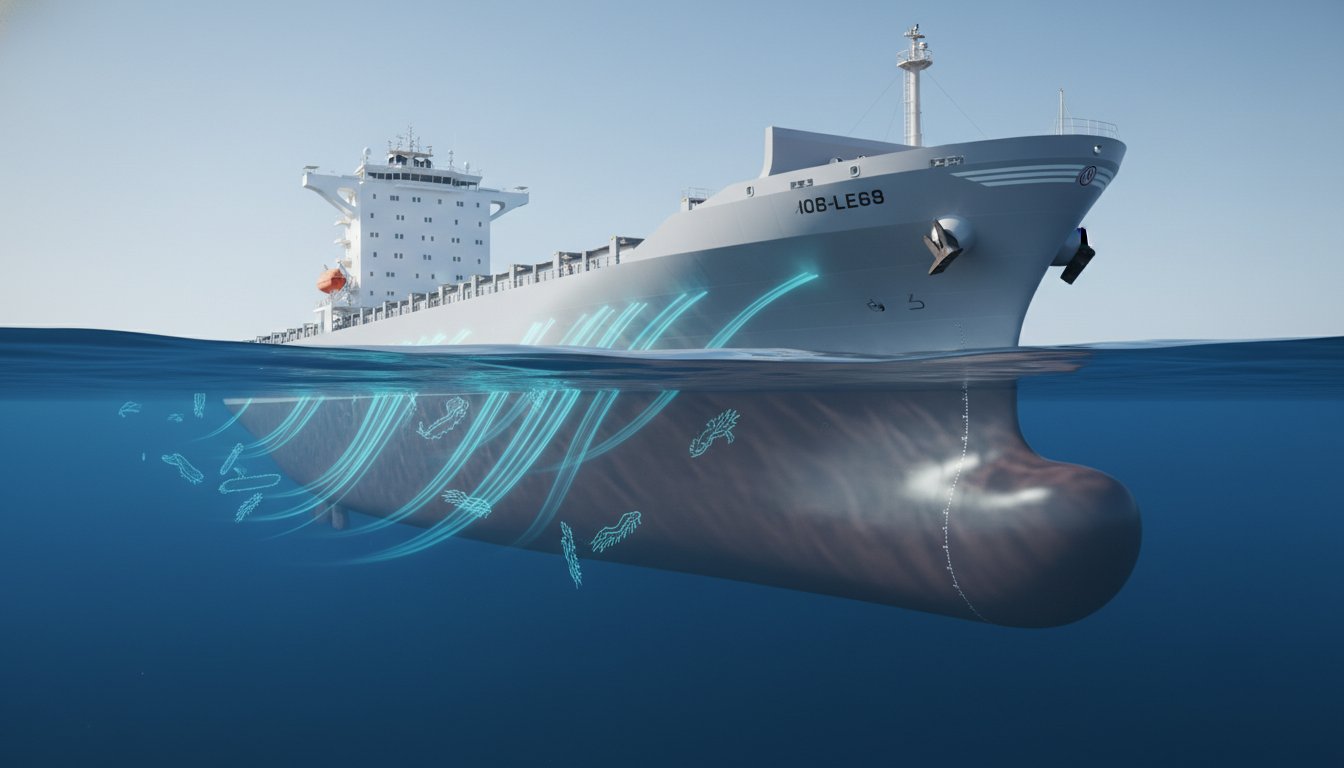
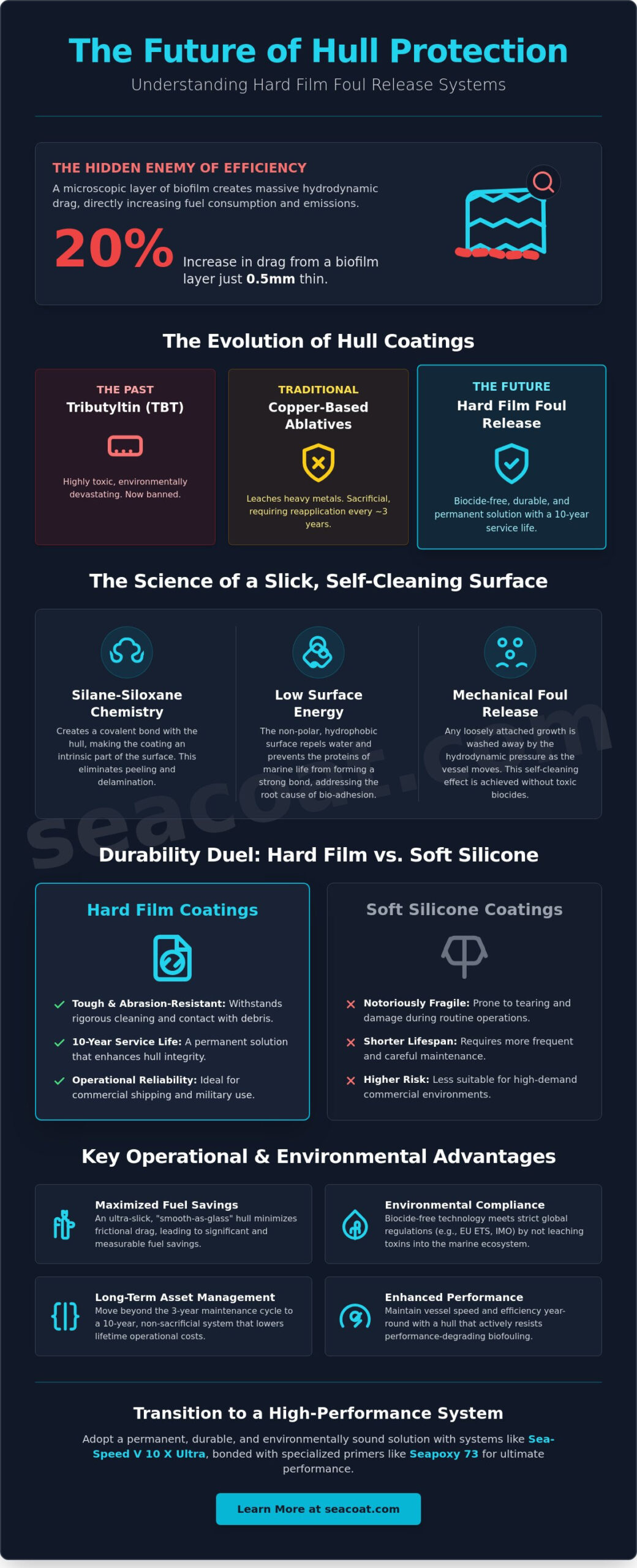
Did you know that a biofilm layer as thin as 0.5 millimeters can increase your vessel’s hydrodynamic drag by up to 20%? For fleet managers and shipowners, this microscopic buildup translates directly into wasted fuel and increased emissions. As global regulations like the EU Emissions Trading System (ETS) tighten their grip, the search for a more permanent solution has led many to ask: what is a hard film foul release system? This technology represents a fundamental shift in hull protection, moving away from the toxic biocides of the past toward a scientifically engineered surface that prioritizes both durability and flow efficiency.
You’ve likely grown tired of the relentless cycle of reapplying ablative paints or the frustrating fragility of soft silicone coatings that tear during routine operations. We understand that operational reliability shouldn’t come at the cost of environmental stewardship or excessive maintenance budgets. In this article, you’ll discover how hard-film foul release technology provides a durable, non-toxic alternative to traditional antifouling while maximizing hydrodynamic efficiency. We’ll examine the silane-siloxane chemistry that enables a 10-year coating lifecycle and explore the measurable fuel savings that come from maintaining an ultra-slick, low-energy surface.
Key Takeaways
- Understand what is a hard film foul release system by exploring its biocide-free, low-energy surface that prevents organic attachment without leaching harmful toxins into the marine environment.
- Discover the molecular science of silane-siloxane polymers and how they create a non-polar, hydrophobic barrier that repels water and proteins at a fundamental level.
- Compare the mechanical resilience of hard-film coatings against fragile soft silicones to see how impact and abrasion resistance support a 10-year service life.
- Learn how maintaining a smooth-as-glass hull surface translates into significant operational efficiency and fuel savings by minimizing frictional drag.
- Identify the necessary steps for a successful transition to high-performance systems like Sea-Speed V 10 X Ultra, including the role of specialized primers like Seapoxy 73.
Defining the Hard Film Foul Release System
To understand what is a hard film foul release system, one must look past traditional chemical deterrents toward the physics of surface energy. Unlike conventional antifouling paints that rely on the leaching of biocides to kill marine organisms, a hard film foul release system is a biocide-free coating. It functions by creating an ultra-smooth, non-polar surface that prevents marine life from forming a permanent bond. This technology represents a fundamental shift in marine engineering. It moves the industry away from sacrificial chemical toxicity and toward a permanent, mechanical solution for hull maintenance.
The “hard” distinction is a critical factor for operational reliability. While soft silicone coatings offer similar foul-release properties, they are notoriously fragile and prone to tearing during hull cleaning or contact with debris. In contrast, hard film systems cure to a tough, abrasion-resistant finish. They can withstand the rigorous demands of commercial shipping, military operations, and high-performance recreational use. These coatings don’t just protect the hull; they enhance its structural integrity against physical wear while maintaining a low-friction profile.
How Mechanical Release Replaces Toxic Biocides
The core mechanism of this technology lies in its low surface energy. The problem of biofouling begins at the molecular level, where proteins and bacteria attempt to adhere to a submerged surface. In a hard film system, the coating’s chemistry ensures that these organisms fail to form a strong molecular bond. Because the surface is both hard and exceptionally slick, any growth that does occur is loosely attached. As the vessel moves through the water, the resulting hydrodynamic pressure effectively “washes” the hull clean. This self-cleaning effect is achieved without releasing heavy metals into the water column. It’s a clean, mechanical process that preserves both the ecosystem and the vessel’s speed.
The Evolution of Hull Coating Technology
The maritime industry has undergone a significant transformation in its approach to hull protection. For decades, Tributyltin (TBT) was the standard, followed by copper-based ablatives. However, these solutions were inherently temporary and environmentally damaging. Stricter global regulations, such as the International Maritime Organization (IMO) mandates, have pushed the industry to find sustainable alternatives. The move toward permanent, non-sacrificial systems is the logical conclusion of this evolution. By adopting a hard film foul release system, fleet managers can move beyond the three-year maintenance cycle. They transition to a long-term asset management strategy that prioritizes environmental compliance and multi-year durability.
The Science of Silane-Siloxane Chemistry
The efficacy of these coatings is rooted in the hybrid nature of silane-siloxane polymers. This chemistry combines the superior adhesion of silanes with the low surface energy characteristics of siloxanes. While traditional coatings rely on mechanical anchoring, silane molecules form a covalent bond directly with the hull’s substrate. This molecular integration ensures that the coating becomes an intrinsic part of the vessel’s surface, effectively eliminating the risk of delamination or peeling that often plagues sacrificial paints. By creating a non-polar surface, the coating repels the organic proteins and bacteria that constitute the primary layer of marine growth. This molecular resistance is the definitive answer to what is a hard film foul release system, as it addresses the root cause of bio-adhesion rather than merely treating the symptoms.
Surface Energy and Bio-Adhesion
Surface energy, measured in millinewtons per meter (mN/m), determines how easily an organism can adhere to a hull. High-energy surfaces allow biological “glues” to spread and bond securely. In contrast, silane-siloxane systems create an exceptionally low-energy environment. This creates a hydrophobic surface where water and organic matter cannot find a grip. The resulting “easy clean” property means that even when a vessel is stationary, any accumulated biofilm remains loosely attached. Maintenance becomes a simple task, as static fouling can often be removed with a sponge or a low-pressure water stream. This shift from a hydrophilic to a hydrophobic profile is essential for maintaining long-term hydrodynamic efficiency.
The Curing Process: Creating a Durable Matrix
As the coating cures, it undergoes a chemical cross-linking process that transforms the liquid into a hard, glass-like film. This dense molecular matrix is nearly impenetrable, providing an effective barrier against moisture and chloride ions. This resistance is vital for preventing “undercutting,” a common failure where corrosion migrates beneath a coating from a point of impact. The thermal stability of this matrix also ensures that the film doesn’t soften or degrade in tropical climates or become brittle in sub-zero conditions. Because these systems are typically Zero VOC, they offer a safer application environment in shipyards while meeting the highest global environmental standards. If you’re managing a fleet in sensitive waters, investigating specialized silane-siloxane systems can provide both regulatory peace of mind and superior hull protection.
Hard Film vs. Soft Silicone: Comparing Durability and Longevity
When evaluating hull protection strategies, it’s vital to distinguish between surface slickness and surface durability. While both technologies aim to reduce bio-adhesion, the physical properties of the finished film create a stark divide in operational longevity. Soft silicone coatings are often prized for their low surface energy, yet they possess an inherent fragility that complicates large-scale maritime operations. These systems are easily compromised by the mechanical stresses of a working hull. In contrast, understanding what is a hard film foul release system requires looking at the coating as a protective armor as much as a performance enhancer. These systems cure to a robust, abrasion-resistant finish that maintains its slickness without sacrificing structural integrity.
The service life of a coating is perhaps the most significant metric for fleet managers. Many soft silicone systems require frequent repairs or complete reapplications every two to three years due to degradation and physical damage. Hard film systems are engineered for a 10-year service cycle. This extended window isn’t just a theoretical target; it’s a result of the coating’s ability to withstand the harsh realities of the marine environment. By choosing a harder matrix, you’re investing in a long-term asset that reduces the frequency of expensive dry-docking intervals and ensures consistent performance over a decade.
Resistance to Mechanical Damage
Consider the impact of a vessel making fender contact in a crowded port. For a hull coated in soft silicone, this routine event often results in significant tearing or peeling. Once the silicone matrix is breached, marine organisms find a foothold in the exposed substrate, leading to localized fouling that can quickly spread. This fragility is why hard film systems are the preferred choice for workboats and military vessels that operate in high-traffic or debris-laden environments. A hard film system withstands the friction of fenders and the impact of floating objects, ensuring the protective barrier remains intact. This resilience prevents the “soft failure” cycle where one small tear necessitates a widespread and costly repair.
Repairability is another critical area where hard films outperform their soft counterparts. Touching up a damaged silicone coating is a complex, multi-stage process that often requires complete removal of the affected area because silicone doesn’t adhere well to itself once cured. Hard film systems allow for straightforward localized repairs. Because the chemistry allows for excellent over-coatability, maintenance crews can quickly patch small areas of mechanical damage during scheduled windows. This ease of maintenance, combined with superior impact resistance, offers a vastly higher return on investment than delicate alternatives.
In-Water Cleaning and Maintenance
Maintenance protocols vary significantly between these two technologies. Soft silicones are notoriously difficult to clean; even a gentle brush can destroy the delicate surface, rendering the foul-release properties useless. Hard-film systems, however, are designed for mechanical grooming. This allows divers or automated cleaning systems to remove light slime or “static fouling” without damaging the coating. For a deeper look at long-term hull management, our Guide to Advanced Marine Hull Coatings provides detailed maintenance strategies. By choosing a hard film, you’re securing a durable finish that supports active maintenance without the risk of surface failure.
Operational Efficiency: Frictional Drag and Fuel Savings
The relationship between surface roughness and hydrodynamic drag is a fundamental principle of naval architecture. Even a seemingly minor increase in hull texture can disrupt laminar flow, leading to turbulence that forces the propulsion system to work harder. Traditional hull treatments often suffer from a “roughness penalty” that increases over time. To understand the economic advantage of modern technology, one must ask what is a hard film foul release system in the context of fuel economy. Unlike biocidal coatings that become pitted as they leach active ingredients, these systems maintain a smooth-as-glass finish for many years. This persistent smoothness minimizes skin friction, allowing the vessel to glide through the water with significantly less resistance.
The impact on the bottom line is substantial. Fleet operators often report a 10% to 15% reduction in operational costs after transitioning to a hard-film system. These savings aren’t limited to large commercial vessels. Racing yachts and fast ferries prioritize this technology because it directly correlates to higher top speeds and better handling. By eliminating the drag associated with traditional coatings, owners can achieve performance metrics that were previously unattainable. It’s a shift from merely preventing growth to actively optimizing the vessel’s movement through the water.
The Hydrodynamic Shear Effect
Vessel speed plays a critical role in the self-cleaning mechanism of a hard film foul release system. As a ship moves, the water flowing past the hull creates hydrodynamic shear. This force is often enough to dislodge any organisms that have attempted to settle on the low-energy surface. While soft silicones may release fouling at lower speeds, they lack the durability to maintain their profile under high-velocity conditions. In contrast, traditional antifouling boat paint creates more drag as it leaches and erodes, which eventually negates any initial speed benefits. Hard-film systems provide a consistent, low-friction profile that remains effective across a wide range of operational speeds.
Long-Term ROI and Carbon Footprint
Adopting a premium hard-film system requires a shift from a maintenance-expense mindset to a strategic-investment perspective. The initial application costs are offset by a rapid payback period, driven by fuel savings and the elimination of frequent repainting cycles. Beyond the financial returns, there’s a critical regulatory component. Reducing greenhouse gas (GHG) emissions is no longer optional under the latest EEXI and CII requirements. By maintaining a clean, efficient hull, operators can significantly lower their carbon footprint and ensure long-term compliance with international maritime standards. For those focused on sustainable performance, evaluating high-efficiency hull coatings is the most effective way to align operational goals with environmental responsibility.
Transitioning to a Hard Film System with Sea-Speed V 10 X Ultra
Transitioning from traditional paints to a superior technology requires a strategic approach. When operators ask what is a hard film foul release system in a practical sense, the answer is found in the Sea-Speed V 10 X Ultra system. This is an industry-leading silane-siloxane coating engineered for extreme durability and rigorous environmental compliance. It isn’t just a coating; it’s a permanent asset designed for those who manage high-stakes maritime assets. Whether you’re overseeing a commercial fleet or a private vessel, this system provides a clear path toward operational excellence.
Why Sea-Speed V 10 X Ultra Redefines the Category
The Sea-Speed V 10 X Ultra system stands apart because it doesn’t rely on the temporary fixes of the past. It’s a completely non-toxic, biocide-free solution that offers exceptionally high durability. By choosing a non-toxic marine hull coating, you aren’t just protecting your vessel; you’re future-proofing your operations against tightening global environmental standards. Success stories from the commercial and military sectors demonstrate that this technology withstands the most demanding conditions. It remains effective where soft silicones and traditional ablatives fail, providing a reliable surface that maintains its performance metrics over a 10-year lifecycle.
Getting Started with a Hard Film Conversion
The conversion process begins with a thorough evaluation of your current hull condition. This system is remarkably versatile, providing superior adhesion and protection for aluminum, steel, and fiberglass hulls. A successful application relies on proper preparation and the use of the Seapoxy 73 primer. This specialized primer creates the ideal foundation for the silane-siloxane matrix, ensuring that the molecular bond is permanent and resistant to corrosion. Understanding what is a hard film foul release system means recognizing it as a total performance package rather than a standalone paint.
Moving away from the maintenance cycles of the past is a logical step for any forward-thinking fleet manager. Our team can help you conduct a technical assessment and a detailed ROI calculation to see exactly how much you can save in fuel and dry-docking costs. Don’t let outdated coating technology hinder your vessel’s performance or environmental compliance. Contact Seacoat SCT to optimize your vessel performance and discover how our advanced materials can transform your operational efficiency for the next decade.
Optimizing Your Fleet for a Decade of Efficiency
The transition toward sustainable, high-performance hull management is no longer a future goal; it’s a current operational necessity. By moving away from sacrificial, biocide-based paints, you’re embracing a technology that prioritizes both ecological safety and industrial reliability. By now, the answer to what is a hard film foul release system should be clear: it’s a strategic asset that bridges the gap between high-performance hydrodynamics and long-term surface protection. This shift represents a move toward permanent, sophisticated solutions for the global maritime industry.
The evidence is found in the metrics. Adopting a system like Sea-Speed V 10 X Ultra allows you to secure a 10-year service life while benefiting from documented 10-15% fuel savings. This Zero VOC and biocide-free compliance ensures your fleet remains ahead of global regulatory shifts without compromising on speed or physical durability. It’s an investment that pays for itself through reduced maintenance and enhanced flow efficiency. If you’re ready to move beyond temporary fixes, Request a Technical Consultation for Sea-Speed V 10 X Ultra today. We’re here to help you redefine your vessel’s performance for the next decade.
Frequently Asked Questions
Is a hard film foul release system the same as ceramic coating?
No, these technologies serve different purposes. While ceramic coatings are often thin layers used for surface aesthetics and minor protection, a hard film foul release system is a high-build, silane-siloxane polymer engineered for permanent submerged use. It creates a much thicker, more resilient barrier that’s specifically designed to manage bio-adhesion and hydrodynamic drag over a 10-year lifecycle in harsh marine environments.
Do I need to go a certain speed for the foul release to work?
While vessel speeds of 10 knots or higher facilitate the best “self-cleaning” through hydrodynamic shear, the system works even at lower velocities. The low surface energy of the coating prevents organisms from forming a permanent bond. This means that even stationary vessels benefit from “easy clean” properties, as any accumulated biofilm remains loosely attached and is easily removed during routine grooming.
Can a hard film coating be applied over old antifouling paint?
You cannot apply these systems directly over existing antifouling paint. For the silane-siloxane chemistry to bond effectively, the hull must be cleaned to the substrate or a stable, compatible primer. Using a specialized primer like Seapoxy 73 is essential for creating a permanent bond that prevents delamination and provides the smooth foundation necessary for the topcoat to perform as intended.
How long does a hard film foul release system actually last?
These systems are designed to provide a 10-year service life under normal operating conditions. Unlike traditional ablative paints that sacrifice material over time or soft silicones that are prone to mechanical failure, the hard matrix remains physically intact. This durability allows the coating to maintain its slick, low-energy properties through multiple years of service without the need for frequent or costly reapplications.
Is the coating safe for aluminum hulls?
Yes, it’s exceptionally safe and often preferred for aluminum because it’s biocide-free and non-metallic. Traditional copper-based paints can trigger galvanic corrosion on aluminum surfaces, leading to structural damage. A hard film system provides an inert, protective barrier that stops corrosion without the risk of metallic interaction. This makes it an ideal solution for high-speed aluminum ferries and military vessels.
Can you clean a hard film hull in the water?
You can absolutely perform in-water cleaning using mechanical grooming or soft brushes. Because the film is tough and abrasion-resistant, it withstands the pressure of cleaning equipment that would typically tear or destroy a soft silicone coating. Regular cleaning helps maintain the “smooth-as-glass” finish, ensuring your vessel continues to operate with the lowest possible frictional drag and maximum fuel efficiency.
How much fuel can I realistically save with a hard-film system?
Most fleet operators document fuel savings between 10% and 15% after switching to this technology. By maintaining a much lower surface roughness than traditional leachable paints, the system significantly reduces the energy required to move through the water. These savings help vessels comply with carbon intensity regulations while providing a rapid return on investment through lower annual fuel expenditures.
Does ‘hard film’ mean the coating is brittle?
No, the coating is engineered to be tough and resilient rather than brittle. The molecular matrix is flexible enough to accommodate the natural expansion and contraction of a vessel’s hull without cracking or losing adhesion. It offers high impact resistance, which allows the coating to survive fender rubs and debris contact that would cause more fragile systems to fail and peel away.