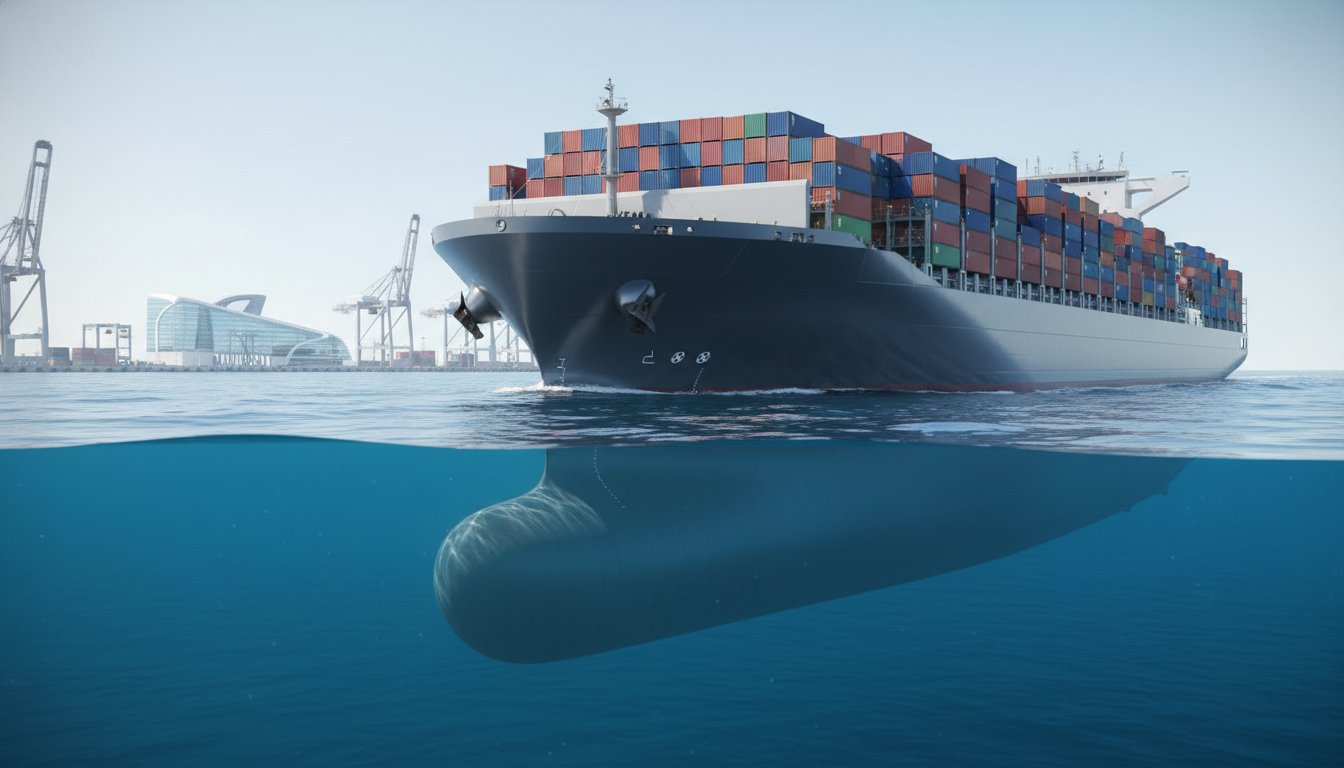
While most operators view vessel protection as a legal or financial insurance policy, the physical integrity of the hull is the only strategy for long-term asset protection for vessels that pays a direct operational dividend. You’ve likely felt the mounting pressure of escalating fuel costs and the 11% carbon intensity reduction mandated by the IMO for 2026. It’s a high-stakes environment where traditional maintenance cycles no longer meet the demands of global efficiency standards or environmental stewardship.
Achieving a superior return on investment requires moving beyond temporary fixes toward permanent, hard-film solutions. This article explains how advanced material science and silane-siloxane technology safeguard your maritime assets against physical degradation and regulatory liability. You’ll learn how high-performance coatings like Sea-Speed V 10 X Ultra can reduce fuel consumption by 6% to 12% while providing a durable, non-toxic surface that extends the functional lifespan of your fleet and significantly reduces maintenance overhead.
Key Takeaways
- Understand why effective asset protection requires a shift from legal “paper” coverage to physical material integrity that actively mitigates structural risk.
- Examine the mechanics of frictional drag and corrosion to prevent the significant financial losses associated with even microscopic biofouling.
- Learn how non-polar, hard-film silane-siloxane coatings outperform soft silicone systems by providing a permanent, low-energy surface.
- Discover the economic benefits of extending dry-dock intervals and improving hydrodynamic efficiency to ensure long-term asset protection for vessels.
- See how Sea-Speed V 10 X Ultra functions as a strategic management tool to maintain compliance with 2026 IMO carbon intensity standards.
Redefining Long-Term Asset Protection for Marine Vessels
In the maritime industry, asset protection is frequently discussed in terms of legal structures, jurisdictional flag states, and insurance premiums. While these “paper” protections are essential for risk transfer, they don’t address the physical reality of a vessel’s most critical component: the hull. True long-term asset protection for vessels must be redefined as the proactive mitigation of structural and financial risk through material integrity. If the physical substrate is allowed to degrade, the asset’s market value and operational viability decline regardless of how robust the legal framework may be. We’re moving toward an era of performance-based protection where the hull coating is no longer a recurring maintenance expense, but a strategic asset that adds measurable value to the balance sheet.
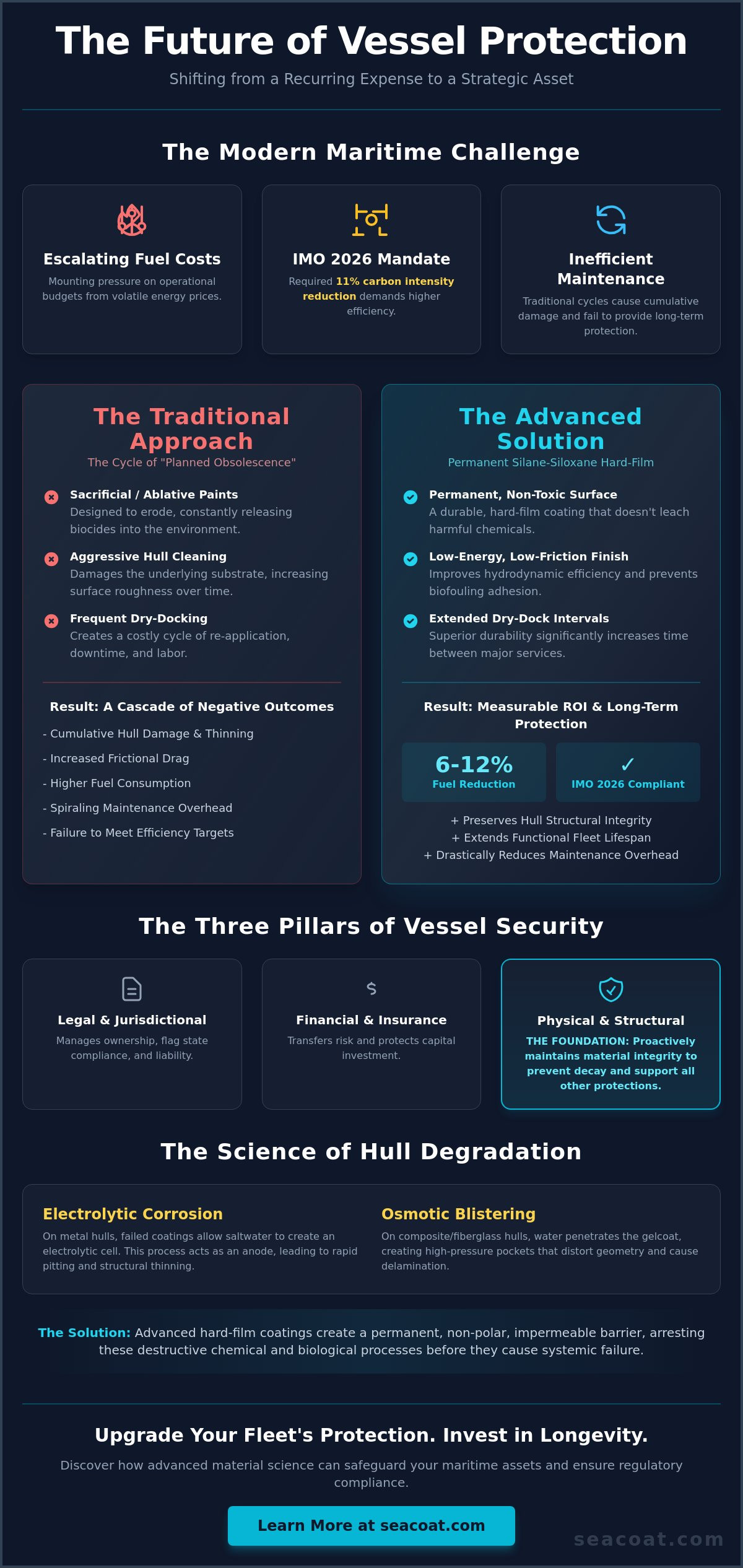
The Three Pillars of Vessel Security
A comprehensive security strategy for any large-scale maritime asset relies on three interconnected pillars that must function in unison:
- Legal and Jurisdictional: Managing ownership structures, flag state compliance, and navigating the complexities of maritime liens.
- Financial and Insurance: Utilizing warranties and risk transfer mechanisms to protect capital investment and ensure recovery.
- Physical and Structural: Maintaining the material integrity of the hull using advanced coatings to prevent permanent material decay.
While legal frameworks provide a necessary safety net for ownership and liability, they offer zero protection against the relentless chemical and biological forces of the marine environment. The physical pillar is the foundation; without a sound hull, the other two pillars have no underlying value to support. High-performance coatings serve as the primary defense mechanism in this pillar, ensuring the ship’s structural longevity remains intact over a multi-decade lifecycle.
Why Traditional Maintenance Fails as a Long-Term Strategy
The historical reliance on ablative, sacrificial paints is fundamentally at odds with the goal of long-term asset protection for vessels. These traditional coatings are designed to erode, constantly releasing biocides to combat What is Biofouling? and other biological growth. This “planned obsolescence” creates a cycle of cumulative damage. Every time a hull undergoes aggressive mechanical cleaning to remove stubborn growth, the underlying substrate is often compromised.
Over a 10-20 year asset lifecycle, these short-term fixes result in significant “hidden” costs, including increased surface roughness and structural thinning. Relying on temporary coatings leads to more frequent dry-docking and higher fuel consumption, which directly conflicts with the 11% carbon intensity reduction targets mandated for 2026. Intelligent management requires a shift away from these damaging, high-maintenance methods toward permanent, non-toxic, hard-film solutions that prioritize the vessel’s long-term health and operational efficiency.
Physical Risks to Vessel Longevity: Corrosion and Biofouling
While mechanical warranties often focus on the engine and electronics, the hull remains the foundation of a vessel’s operational life. If the hull’s surface is compromised, every mechanical system onboard must work harder to compensate for the resulting inefficiency. Effective long-term asset protection for vessels requires a granular understanding of how saltwater environments aggressively attack structural integrity through both chemical and biological vectors. These forces don’t just affect aesthetics; they trigger a cascade of mechanical strain and regulatory liability that can shorten an asset’s lifespan by decades.
The Chemistry of Hull Degradation
In saltwater, the hull functions as part of a massive electrolytic cell. Electrolytic corrosion occurs when the protective barrier coat fails, allowing the metal substrate to act as an anode. This process leads to rapid pitting and structural thinning. For fiberglass and composite vessels, the risk shifts to osmotic blistering. This happens when water molecules penetrate the gelcoat and react with unreacted materials in the laminate, creating high-pressure fluid pockets that distort the hull’s geometry. Moisture ingress initiates the hydraulic pressure and chemical breakdown that leads to delamination in marine structures, effectively separating the structural layers from within. Utilizing advanced hull coatings can arrest these electrolytic processes before they become systemic failures.
Biofouling as a Financial Liability
The transition from a clean hull to one covered in microscopic biofilm happens within hours of submersion. This “slime layer” might seem negligible, but it creates a measurable frictional drag penalty. As biofouling progresses to calcareous growth, such as barnacles and tube worms, the drag increases exponentially. This drag translates into a massive economic impact of biofouling, costing the global shipping industry billions in lost efficiency and excess fuel burn.
Beyond fuel, the mechanical toll is severe. To maintain cruising speed against increased resistance, engines must operate at higher RPMs and temperatures. This leads to premature wear on bearings, seals, and cooling systems. There’s also a growing regulatory risk. As of 2026, the IMO requires an 11% reduction in carbon intensity. Fouled hulls that trigger excessive emissions can lead to poor Carbon Intensity Indicator (CII) ratings. Furthermore, many ports now enforce strict Invasive Aquatic Species (IAS) regulations. A heavily fouled vessel may be denied entry or face significant fines to prevent the spread of non-indigenous species, making a clean hull a prerequisite for global mobility and a core component of long-term asset protection for vessels.
Silane-Siloxane Technology: A Permanent Solution for Asset Protection
The transition from reactive maintenance to a proactive strategy depends on the evolution of material science. Silane-siloxane technology represents a fundamental departure from traditional biocidal coatings by creating a non-polar, low-energy surface that prevents the initial attachment of marine organisms. This molecular approach offers a level of long-term asset protection for vessels that traditional paints can’t match, providing a service life that can exceed 10 years without the need for re-application. It’s a move toward permanent hull integrity where the coating becomes an integral part of the vessel’s structure rather than a sacrificial layer.
Hard-Film Foul Release vs. Traditional Antifouling
Traditional antifouling relies on an ablative process where the paint sloughing cycle constantly exposes new layers of biocides. While this might provide temporary protection, it leads to cumulative hull roughness and a gradual reduction in coating thickness. Hard-film systems are non-ablative, meaning they don’t erode or release toxic contaminants into the water column. This shift is critical for meeting the environmental marine coatings standards of 2026, which emphasize non-toxic performance and minimal ecological impact.
Durability is another significant differentiator. Soft silicone “foul release” coatings are notoriously fragile, often tearing when exposed to fender rub, debris, or ice. In contrast, silane-siloxane coatings create a resilient, hard-film surface that can withstand the rigors of heavy industrial operations. This physical toughness ensures that the protective barrier remains intact even in high-stress environments, preventing the localized corrosion that often starts at a scratch or abrasion in softer coatings.
The Silane-Siloxane Molecular Advantage
The efficacy of this technology is rooted in its chemical architecture. Silane coupling agents establish a covalent bond with the hull’s substrate, creating an impermeable barrier against moisture and corrosive ions. This bond is significantly stronger than the mechanical adhesion used by traditional barrier coats, virtually eliminating the risk of delamination. According to the Institute of Marine Engineering, Science & Technology, maintaining a smooth, hydrophobic surface is essential for maximizing hydrodynamic efficiency. Siloxane groups within the coating matrix create an ultra-slick, hydrophobic finish that minimizes the surface energy of the hull. The non-stick surface allows fouling to release at low speeds. This low-energy state makes it nearly impossible for biofouling to gain a permanent foothold, ensuring the vessel maintains its performance profile over the course of a multi-year service window. By prioritizing this molecular-level defense, operators secure long-term asset protection for vessels that is both economically and environmentally sustainable.
Quantifying ROI: The Economics of Superior Protection
Investing in advanced material science is often framed as an environmental choice, yet the primary driver for long-term asset protection for vessels is the measurable impact on the bottom line. Traditional financial models focus on acquisition and insurance. However, the real value of a maritime asset is dictated by its operating expenditure (OPEX) over time. A hull that maintains its hydrodynamic profile does more than just save fuel; it preserves the mechanical integrity of the entire propulsion system. By analyzing vessel speed and performance metrics, it becomes clear that surface efficiency is the most influential variable in an asset’s multi-year profitability.
Fuel Efficiency and Carbon Credits
Reducing hull drag by 6% to 12% through silane-siloxane technology translates to significant annual fuel savings. This efficiency is no longer optional for competitive operations. As of 2026, the IMO has increased the carbon intensity reduction factor to 11% relative to the 2019 baseline. High-performance coatings are now a critical tool for achieving EEXI and CII compliance. Beyond avoiding regulatory fines, vessels that exceed these standards can potentially access carbon credits and environmental subsidies. This turns regulatory compliance into a proactive revenue stream rather than a cost center.
Maintenance Cost Reduction
The shift from a 2-year to a 5-plus year dry-dock cycle represents one of the most substantial cost-saving opportunities in fleet management. Traditional ablative paints require full removal and re-application at every haul-out. This is a labor-intensive process involving expensive sandblasting and hazardous waste disposal. Hard-film coatings like Sea-Speed V 10 X Ultra eliminate this cycle. Because the surface is durable and non-stick, in-water cleaning is faster and less frequent. This significantly reduces the Total Cost of Ownership (TCO) over a 10-year period. The initial investment in a superior coating is quickly offset by the absence of recurring labor and material costs.
The “Green Premium” adds a final layer to the ROI calculation. As the global industry moves toward net-zero targets, vessels with proven eco-compliant, non-toxic hulls command higher resale values. Buyers prioritize assets that don’t carry the liability of toxic leaching or the need for immediate, costly retrofits to meet stricter emissions standards. Additionally, fuel efficiency acts as a direct hedge against volatile energy markets. When fuel prices spike, the efficiency gain provided by a superior hull surface provides a critical buffer for operational margins. To secure these operational advantages, integrate Sea-Speed V 10 X Ultra into your next maintenance cycle.
Implementing a Fleet-Wide Asset Protection Strategy with Seacoat SCT, LLC
Adopting a modern framework for long-term asset protection for vessels requires a transition from the reactive “sloughing” cycles of the past to a high-performance, hard-film standard. Seacoat SCT, LLC provides the technical foundation for this shift through the Sea-Speed V 10 X Ultra system. The implementation roadmap begins with the removal of depleted biocidal layers, followed by the application of Seapoxy 73 to establish a chemically stable bond with the hull. This process transforms the hull from a high-maintenance liability into a durable, low-friction asset that remains viable for multi-year service windows without the need for toxic re-coating.
Our commitment to material science ensures that every formulation is 100% VOC-free and chemically inert. This allows fleet operators to navigate environmentally restricted waters with confidence, knowing their vessels won’t trigger leaching penalties or bio-security fines. By integrating these advanced materials, Seacoat SCT, LLC enables a seamless transition away from toxic antifouling boat paint toward a future defined by hydrodynamic efficiency and ecological safety.
Custom Solutions for Diverse Assets
Effective long-term asset protection for vessels must account for varying operational profiles and hull materials. Seacoat SCT, LLC offers specialized solutions to address these specific industrial challenges:
- Sea-Speed V 10 X Ultra: The primary choice for deep-sea commercial shipping, engineered for maximum surface slickness and drag reduction.
- Armor-Sil R/G: A high-durability nano-coating designed for industrial assets where physical impact and abrasion resistance are the priority.
- Galvanic Protection for Aluminum: Specialized coatings for aluminum boats that prevent the destructive electrolytic reactions common in lightweight marine structures.
The Seacoat SCT, LLC Advantage: Expert Innovation
Beyond the chemistry, Seacoat SCT, LLC serves as a strategic partner for international fleet management. We provide global industrial supply chains and detailed technical specifications to ensure consistent application standards across diverse shipyards. This expert-led approach minimizes downtime and guarantees that the functional benefits of silane-siloxane technology are fully realized. To begin optimizing your fleet’s performance profile, consult with Seacoat SCT, LLC for a custom asset protection analysis and discover the impact of permanent hull integrity on your long-term operational success.
Securing Operational Excellence in a Decarbonized Future
The maritime industry is at a crossroads where operational efficiency and environmental stewardship are no longer separate goals. By shifting from sacrificial, biocidal coatings to permanent, hard-film technology, operators establish a foundation for long-term asset protection for vessels that survives the scrutiny of both the balance sheet and the regulator. The transition to silane-siloxane systems isn’t merely a maintenance choice; it’s a strategic investment in the vessel’s hydrodynamic future. This approach ensures your fleet remains compliant with 2026 IMO standards while maximizing the service life of every structural component.
Since 2001, Seacoat technology has provided a proven, reliable alternative to toxic methods. Our 100% VOC-free formulations respect marine ecosystems while delivering high-stakes performance in the world’s most demanding shipping lanes. You’ve seen how reducing surface energy can lead to fuel savings of up to 10% and significantly extend the intervals between expensive dry-dock cycles. By prioritizing material integrity today, you’re insulating your assets against the volatility of energy markets and the rising costs of traditional maintenance.
Secure your fleet’s future with Sea-Speed V 10 X Ultra.
Your fleet’s longevity depends on the scientific precision of your protection strategy. We’re committed to helping you navigate this transition with intelligence, stewardship, and a clear focus on your multi-year return on investment.
Frequently Asked Questions
What is the difference between foul release and antifouling for asset protection?
Antifouling paints rely on the controlled release of toxic biocides to kill marine organisms, whereas foul-release systems like Sea-Speed V 10 X Ultra use a non-polar, low-energy surface to prevent attachment. This mechanical approach ensures that even when organisms attempt to settle, they’re easily removed by the vessel’s movement through the water. It’s a shift from chemical warfare to physical resistance, providing a more sustainable method for long-term asset protection for vessels.
How long does a Silane-Siloxane coating actually last on a commercial vessel?
A high-performance silane-siloxane coating can provide a service life exceeding 10 years when properly applied. Unlike traditional paints that require full removal and re-application every two years, these hard-film systems don’t erode or slough off. The molecular bond formed with the substrate remains stable over multiple service windows. This longevity significantly reduces the frequency of dry-docking and the total volume of coating material required over the vessel’s operational lifecycle.
Can advanced coatings help my vessel meet EEXI and IMO carbon intensity standards?
Advanced hull coatings are a primary tool for meeting the 11% carbon intensity reduction mandated by the IMO for 2026. By creating an ultra-smooth, hydrophobic surface, these coatings reduce frictional drag by 6% to 12%. This efficiency gain directly lowers fuel consumption and greenhouse gas emissions. It’s an essential strategy for improving a vessel’s Carbon Intensity Indicator (CII) rating and ensuring compliance with stricter Energy Efficiency Existing Ship Index (EEXI) requirements.
Are non-toxic coatings as effective as traditional biocidal paints in high-fouling areas?
Non-toxic foul-release coatings are highly effective in high-fouling environments because they address the root cause of attachment. While traditional biocidal paints can become overwhelmed as toxins deplete, silane-siloxane technology maintains its low surface energy indefinitely. Calcareous growth and biofilms don’t find a permanent anchor on the slick surface. In static or low-speed conditions, any accumulated growth is easily removed through light grooming or the vessel’s initial acceleration, maintaining a clean hull profile.
Does a hard-film coating protect against hull corrosion and electrolysis?
Hard-film coatings provide an impermeable barrier that isolates the hull substrate from corrosive ions and electrolytic activity. By using a high-build epoxy primer like Seapoxy 73 in conjunction with a silane-siloxane topcoat, operators prevent the moisture ingress that triggers pitting and oxidation. This dual-layer approach is particularly effective at arresting the chemical processes that lead to delamination in composite hulls or structural thinning in steel and aluminum vessels.
What is the typical ROI period for a premium foul-release system?
Most operators see a full return on investment within 12 to 24 months of application. This rapid ROI is driven by immediate fuel savings and the elimination of the labor-intensive sandblasting required for traditional paint maintenance. When calculated over a 10-year period, the total cost of ownership is significantly lower than sacrificial systems. These savings are a cornerstone of long-term asset protection for vessels, allowing capital to be reinvested into other critical operational upgrades.
Is Sea-Speed V 10 X Ultra compatible with existing hull substrates like steel and aluminum?
Sea-Speed V 10 X Ultra is fully compatible with steel, aluminum, fiberglass, and composite substrates. When paired with the correct Seacoat primers, the coating establishes a covalent bond that prevents the galvanic corrosion often seen in aluminum hulls. The chemistry is designed to be versatile across diverse fleet assets, from commercial deep-sea vessels to industrial aluminum workboats. This compatibility ensures a uniform protection strategy can be implemented across an entire fleet regardless of hull material.
How does the durability of a hard-film coating compare to soft silicone options?
Hard-film coatings offer vastly superior durability compared to soft silicone foul-release systems, which are prone to tearing and abrasion. Silane-siloxane finishes create a resilient, glass-like surface that resists damage from fender rub, ice, and floating debris. While soft silicones often require delicate handling and specialized cleaning equipment, hard-film surfaces can withstand aggressive industrial environments. This physical toughness ensures the protective barrier remains intact, preventing localized corrosion and maintaining hydrodynamic efficiency over long service windows.