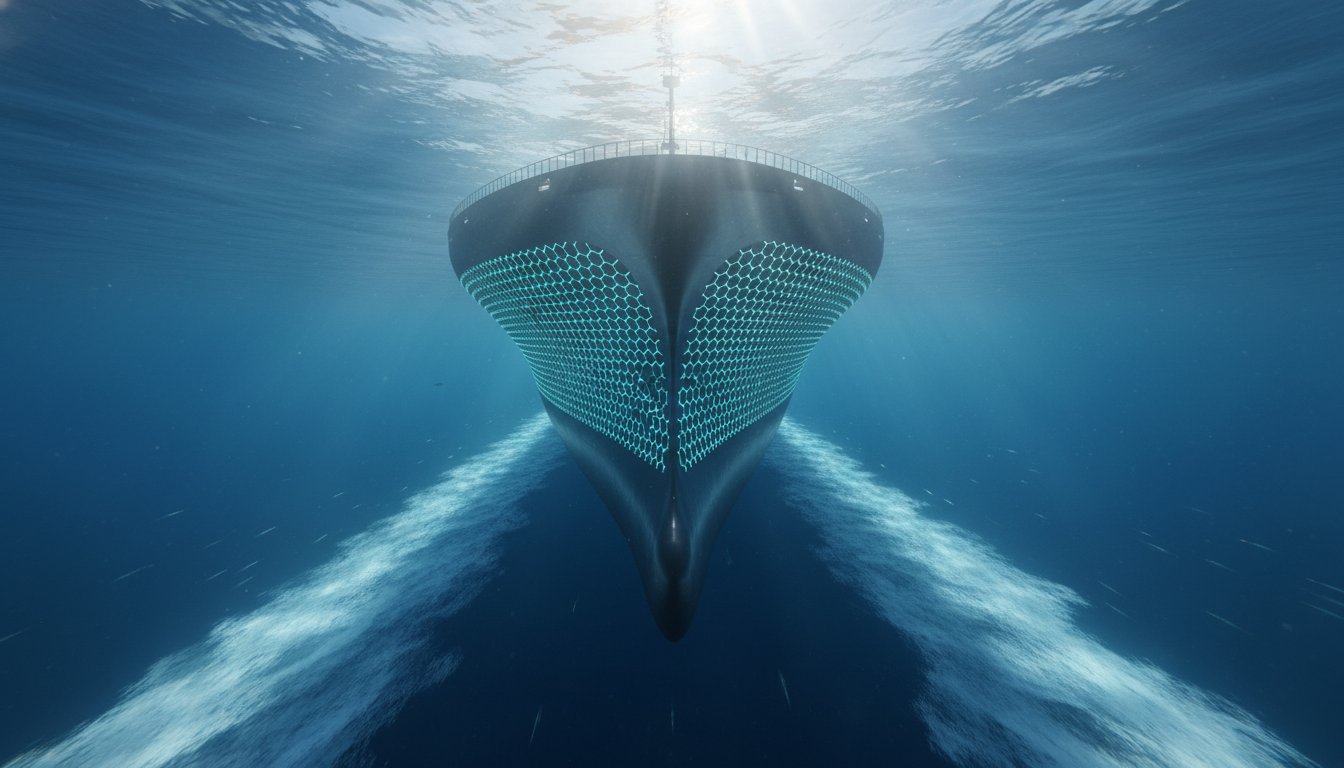
A biofilm layer as thin as 0.5 millimeters can increase a vessel’s hydrodynamic drag by up to 20 percent, which directly translates to a massive inflation of your bunker expenses. With VLSFO prices averaging $856 per metric ton as of May 2026 and the EU ETS now requiring 100 percent allowance coverage for all verified emissions, the financial pressure on shipowners has reached a critical threshold. You’ve likely realized that traditional, reactive maintenance cycles are no longer a viable strategy for reducing operational expenditure for ships in this high-stakes environment.
We believe that sustainable OpEx reduction is achieved not by managing surface degradation, but by engineering surfaces that resist it entirely. This article provides a technical roadmap to slashing vessel OpEx by addressing the root causes of fuel inefficiency and maintenance downtime through advanced material science. We’ll examine how hard-film siloxane technologies like Sea-Speed V 10 X Ultra deliver documented 10 to 15 percent fuel savings and extend maintenance cycles to a decade; ensuring your fleet remains both compliant and commercially superior.
Key Takeaways
- Quantify the financial impact of hydrodynamic drag and micro-fouling on daily bunker consumption and overall vessel performance.
- Identify how engineered surfaces serve as a primary strategy for reducing operational expenditure for ships by mitigating the silent killers of profitability.
- Compare the strategic ROI of a single 10-year coating application versus the recurring costs and downtime associated with traditional biocide-based paints.
- Simplify compliance with EEXI and CII regulations by lowering the vessel’s drag coefficient through advanced surface engineering.
- Explore the technical advantages of Sea-Speed V 10 X Ultra and its non-toxic, hard-film approach to long-term hull efficiency.
The 2026 Maritime OpEx Landscape: Identifying Silent Cost Drivers
Modern maritime operational expenditure (OpEx) is no longer a static line item consisting merely of crew wages and insurance premiums. In the current 2026 regulatory environment, OpEx has evolved into a highly volatile metric dictated by fuel efficiency and carbon intensity. For fleet managers, reducing operational expenditure for ships requires a granular focus on the physical variables that degrade performance over time. Total operating costs are now inextricably linked to the vessel’s environmental footprint, making surface efficiency a strategic priority rather than a secondary maintenance concern.
Frictional drag and biofouling accumulation remain the silent killers of profitability. While they often go unnoticed during daily operations, their cumulative impact on the bottom line is catastrophic. A fundamental step in understanding biofouling is recognizing that even a microscopic layer of slime can disrupt laminar flow, forcing engines to work harder to maintain cruising speed. This physical resistance is compounded by rising port fees and environmental levies that increasingly penalize vessels with poor carbon ratings. In 2026, inefficiency isn’t just a fuel problem; it’s a regulatory liability.
Breaking Down the OpEx Pillars
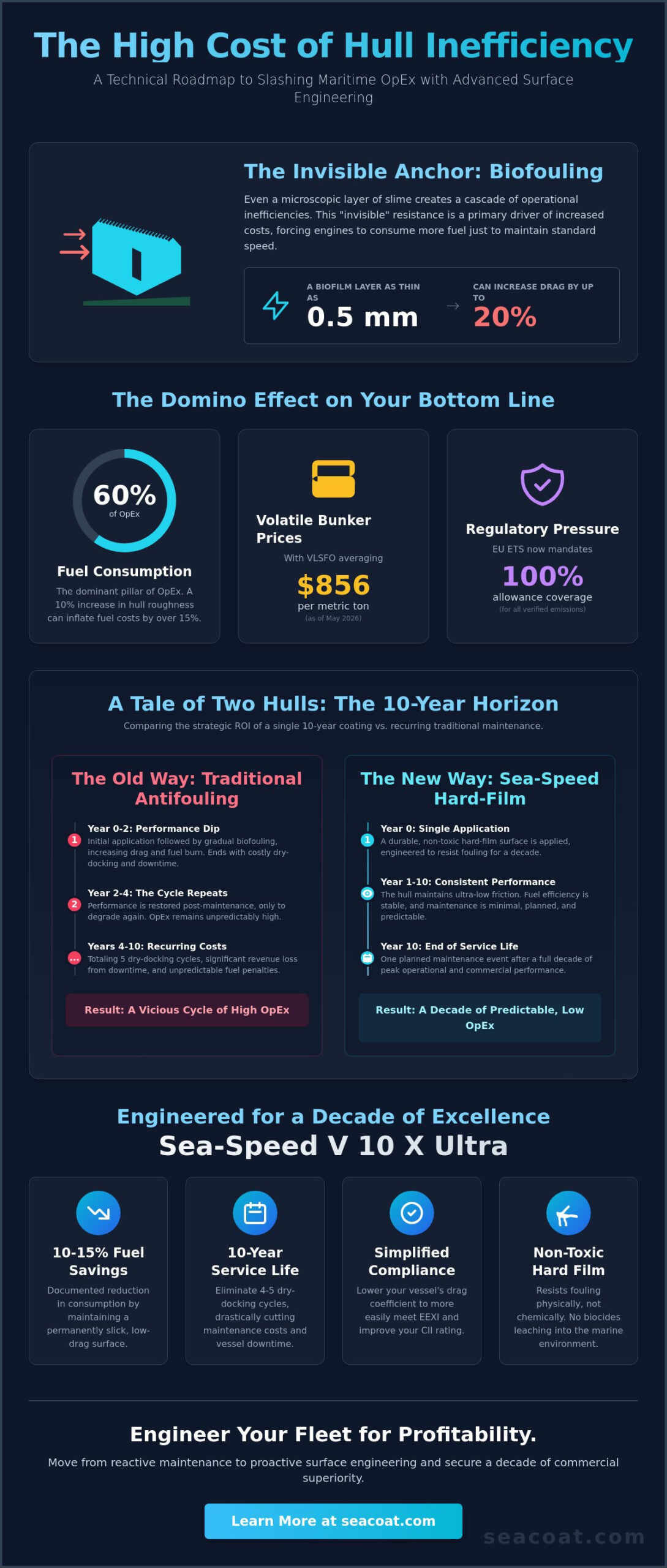
Fuel consumption remains the dominant pillar, often accounting for 50 to 60 percent of a ship’s total operating costs. When hull roughness increases by just 10 percent due to biofouling, the resulting fuel penalty can exceed 15 percent. Maintenance and Repair (M&R) strategies also play a critical role. Reactive strategies, where operators wait for performance to drop before cleaning, lead to higher long-term costs than proactive surface engineering. Finally, compliance costs under the EEXI and CII frameworks have added a new layer of financial weight. As of January 2026, the EU ETS requires companies to surrender allowances for 100 percent of verified emissions, making every ton of wasted fuel a direct tax on the business.
The High Cost of Traditional Maintenance Cycles
The industry’s historical reliance on the 24-month dry-docking cycle is becoming an operational liability. These frequent intervals don’t just incur direct repair costs; they result in significant revenue loss due to vessel downtime. Scheduled and unscheduled hull cleanings often force ships out of service during peak charter periods, disrupting supply chains and eroding margins. To understand the transition from temporary fixes to strategic assets, shipowners should consult The Definitive Guide to Boat Hull Paint: Performance, Science, and ROI. By shifting toward surfaces that maintain their integrity for up to a decade, operators can eliminate the mid-cycle performance dip that characterizes traditional methods.
Hydrodynamic Efficiency: The Correlation Between Surface Friction and Fuel Spend
Hydrodynamic drag isn’t a static constant; it’s a dynamic variable controlled by the quality of the hull surface. As water flows over the vessel, any deviation from a perfectly smooth profile creates turbulence, increasing the energy required to maintain forward momentum. This physical resistance is a primary target for stakeholders focused on reducing operational expenditure for ships. While many operators prioritize engine tuning and voyage optimization, the hull surface remains the most significant physical variable in total fuel spend. It’s the point where material science meets the bottom line.
Biofouling mechanics introduce a compounding layer of inefficiency that data models often struggle to predict. Research indicates that even light micro-fouling, such as a thin biofilm or “slime” layer, can increase fuel consumption by up to 10 percent. This occurs because the biofilm increases the effective roughness of the hull, thickening the boundary layer and dragging a larger mass of water along with the ship. Recent studies into innovative ship hull modifications have highlighted how precise surface management can drastically alter these flow patterns. Unlike traditional paints that simply provide a “smooth” appearance, engineered surfaces are designed to minimize the molecular interaction between the hull and the fluid environment.
Surface Roughness and the Power Penalty
The “Power Penalty” represents the additional kilowatt output required to overcome frictional resistance caused by surface degradation. When a hull’s texture coarsens, the engine must compensate by burning more fuel to maintain speed, which accelerates mechanical wear and increases unscheduled maintenance costs. It’s a vicious cycle where surface neglect leads to internal engine strain and higher thermal stress on components. Maintaining a low hydrodynamic profile is essential for keeping these secondary operational costs under control and ensuring the vessel operates within its designed performance envelope.
Silane-Siloxane Technology vs. Traditional Biocides
Traditional copper-based coatings rely on the controlled leaching of toxins to prevent marine growth. However, as these biocides deplete, the coating becomes increasingly porous and rough, leading to a permanent loss of hydrodynamic efficiency that cannot be recovered through simple cleaning. In contrast, hard-film foul release systems like Sea-Speed V 10 X Ultra utilize a non-leaching chemistry that maintains its slickness for its entire service life. Silane-Siloxane technology creates a permanent molecular bond with the substrate that produces an ultra-smooth, high-density surface that inherently resists the attachment of marine organisms. This approach ensures that the vessel maintains its peak performance profile without the degradation typical of sacrificial coatings. For those seeking long-term asset protection, exploring advanced surface engineering is the most effective path to sustained efficiency.
Life-Cycle Cost Analysis: Why Traditional Antifouling Inflates Long-Term OpEx
A common fallacy in maritime management is categorizing hull coatings as a recurring maintenance expense rather than a capital investment in vessel performance. While the upfront price of premium surface engineering may exceed that of traditional biocidal paints, the long-term impact on reducing operational expenditure for ships is profound. Traditional antifouling systems are designed around a “sacrificial cycle” where the coating intentionally degrades or leaches toxins to remain effective. This necessitates a repetitive and costly 24 to 36-month re-application schedule that keeps vessels in dry-dock and out of the water.
When you analyze a 10-year operational horizon, the financial disparity becomes clear. A traditional system typically requires five separate dry-docking events for full hull recoating within a decade. In contrast, a high-durability system like Sea-Speed V 10 X Ultra is engineered for a 10-year service life from a single application. By eliminating four out of five recoating cycles, shipowners don’t just save on material and labor; they reclaim weeks of operational availability. For a deeper technical comparison of these technologies, consult The Definitive Guide to Antifouling Boat Paint and Foul Release Systems in 2026.
The True Cost of Hull Cleaning
Traditional ablative paints present a hidden financial drain during routine maintenance. Because these coatings are soft, every underwater cleaning session physically removes a layer of the paint, shortening its effective lifespan and releasing particulates into the water. Hard-film coatings, however, provide a permanent, non-destructive surface. These systems allow for simplified, “wipe-away” cleaning that doesn’t damage the integrity of the coating. This shift from abrasive scrubbing to gentle grooming reduces labor hours and ensures the vessel’s hydrodynamic profile remains at its peak between major surveys.
Calculating ROI on Premium Foul Release Systems
Return on investment (ROI) for advanced surface engineering is calculated through a combination of fuel savings, reduced dry-docking frequency, and asset longevity. In the 2026 landscape, this ROI is further accelerated by regulatory pressures like the Energy Efficiency Existing Ship Index (EEXI), which penalizes inefficient hulls. Commercial fleets switching to Sea-Speed have documented significant fuel savings and extended service windows that far outweigh the initial application costs. Furthermore, a hull that maintains its original smooth profile for a decade significantly enhances the resale value of the asset, as the next owner inherits a vessel with proven, long-term efficiency and lower projected OpEx.
Operational Strategies for EEXI Compliance and Reduced Maintenance Windows
By 2026, the intersection of environmental regulation and vessel profitability has become the primary driver of fleet management strategy. Compliance with the Carbon Intensity Indicator (CII) and the Energy Efficiency Existing Ship Index (EEXI) is no longer a secondary administrative task; it’s a core component of reducing operational expenditure for ships. As the annual carbon intensity reduction factor increases to 11 percent relative to the 2019 baseline, the physical efficiency of the hull surface dictates whether a vessel remains commercially viable or faces severe operational restrictions.
A vessel’s drag coefficient serves as a mathematical lever for its CII rating. Because the indicator measures carbon emitted per cargo-carrying capacity and nautical mile, any reduction in fuel consumption through superior hydrodynamics directly improves the ship’s grade. Transitioning from a C to a B rating doesn’t always require expensive engine retrofits. Often, the most cost-effective path is through advanced surface engineering that maintains a low-friction profile over multiple years. This strategic approach ensures that the vessel avoids the “Corrective Action Plans” required for D and E rated ships, which must be submitted by April 30, 2026, for those failing to meet standards in the previous year.
Meeting IMO 2026 Standards
The financial penalties for non-compliance go beyond mere fines; they include higher insurance premiums and reduced charter attractiveness. Sea-Speed V 10 X Ultra functions as a “passive energy saving device” by providing a permanent, ultra-smooth surface that requires no external power or mechanical intervention to save fuel. This technology allows operators to meet stricter greenhouse gas intensity targets, such as the 2 percent reduction required by FuelEU Maritime in 2025 and 2026. For a comprehensive look at how material science facilitates these goals, read about Environmental Marine Coatings: The 2026 Shift Toward Sustainable Hull Performance.
Reducing Dry-Dock Time with Durable Systems
Durable surface systems allow for an “apply and forget” philosophy that aligns perfectly with major five-year and ten-year survey intervals. Unlike soft silicone coatings that are easily damaged during docking or traditional paints that require frequent abrasive blasting, hard-film silane-siloxane systems like Sea-Speed resist mechanical impact and abrasion. This durability streamlines the maintenance window by simplifying surface preparation during future yard stays. When you eliminate the need for full-hull recoating every two years, you significantly reduce the vessel’s time out of service. To optimize your fleet’s long-term performance and regulatory standing, you should evaluate Sea-Speed technology as a strategic asset for your 2026 operational planning.
Seacoat Technology: Engineered for 10-Year Operational Excellence
The transition from managing surface degradation to engineering permanent resistance culminates in the application of Sea-Speed V 10 X Ultra. In an industry where software and engine tuning are often prioritized, the hull surface remains the single most impactful physical factor in reducing operational expenditure for ships. Seacoat provides a strategic asset that transforms the hull from a maintenance liability into a high-performance tool. This technology isn’t a temporary layer; it’s a sophisticated material solution designed to withstand the harsh realities of global maritime trade while delivering measurable economic returns.
The core of this innovation lies in the science of the silane-siloxane bond. Unlike traditional paints that merely adhere to the substrate, this chemistry creates a permanent molecular fusion with the hull. The result is an ultra-slick, high-density surface that minimizes hydrodynamic resistance and prevents the mechanical anchoring of marine organisms. By utilizing a non-leaching, hard-film structure, Seacoat eliminates the need for toxic biocides and heavy metals. This ensures that the vessel remains compliant with increasingly stringent environmental regulations without sacrificing the durability required for long-haul commercial operations.
The Sea-Speed Advantage
- Extended Service Life: Sea-Speed V 10 X Ultra offers a proven 10-year service life in diverse marine environments, from tropical waters to ice-prone routes.
- Ecological Integrity: The formulation contains zero VOCs and no toxic additives, ensuring that your fleet meets future “Zero-Emission” port requirements today.
- Fluid Dynamic Efficiency: The ultra-smooth profile of Armor-Sil R/G and Sea-Speed V 10 X Ultra Clear ensures that running gear and hulls maintain peak laminar flow.
By minimizing the energy required to overcome frictional drag, Sea-Speed directly reduces greenhouse gas emissions by lowering the continuous load on the main engines. This reduction in thermal stress also extends the life of internal engine components, further contributing to a lower total cost of ownership.
Implementation and Global Support
Seacoat supports fleet-wide procurement and industrial supply contracts, providing a reliable alternative to the sacrificial cycles of the past. The technology has been in continuous commercial use since 2001, proving its reliability across commercial, military, and recreational sectors. Whether you’re managing a fleet of tankers or high-speed ferries, the goal remains the same: maximizing uptime and minimizing fuel burn. To optimize your asset’s performance and finalize your strategy for reducing operational expenditure for ships, you should contact Seacoat for a technical consultation and a detailed ROI analysis. Moving toward a 10-year maintenance horizon is the most effective way to secure your fleet’s competitive edge in 2026 and beyond.
Securing Fleet Profitability Through Surface Innovation
The year 2026 has redefined the relationship between material science and maritime profit margins. We’ve explored how surface engineering serves as the most effective physical lever for reducing operational expenditure for ships, moving beyond the limitations of traditional, sacrificial coatings. By adopting a proprietary Silane-Siloxane hard-film system, operators can secure documented fuel savings and a 10-year durability cycle that aligns with major survey intervals. This transition doesn’t just satisfy EEXI and CII requirements; it fundamentally stabilizes your long-term cost structure by eliminating redundant dry-docking events and unnecessary downtime.
Our technology has been in continuous commercial use since 2001, providing a reliable foundation for fleets navigating today’s stricter environmental levies. Reliability in the modern era requires a departure from temporary fixes in favor of permanent, non-toxic solutions that protect both the asset and the ecosystem. Achieving superior hydrodynamic performance is no longer a choice; it’s a strategic necessity for any competitive operator focused on long-term asset value. You don’t have to compromise between ecological safety and industrial efficiency.
Consult with our technical experts to calculate your fleet’s OpEx savings with Sea-Speed. Your fleet’s peak efficiency is a goal we’re ready to help you achieve.
Frequently Asked Questions
What is the most significant factor in reducing ship operational costs?
Fuel consumption remains the most dominant variable, typically representing 50 to 60 percent of a vessel’s total operating expenses. Addressing the physical causes of fuel waste, specifically hydrodynamic drag, is the most effective way to lower these costs. By maintaining a low-friction hull surface, operators can significantly reduce the engine load required to maintain cruising speeds, leading to immediate and compounding financial savings across the fleet.
How do hull coatings impact fuel consumption for commercial vessels?
Hull coatings dictate the surface roughness of the vessel, which directly influences the boundary layer and frictional resistance. A 10 percent increase in hull roughness from biofouling or coating degradation can result in a fuel penalty exceeding 15 percent. Engineered surfaces minimize this turbulence. High-performance coatings ensure that the ship moves through the water with minimal drag, preventing the energy loss associated with traditional, rougher paint systems.
Can non-toxic marine paints be as effective as traditional antifouling?
Modern foul release systems like Sea-Speed V 10 X Ultra are often more effective than traditional toxic paints over long-term operational cycles. Traditional systems rely on depleting biocides that leave the surface porous and rough as they leach away. In contrast, non-toxic silane-siloxane coatings provide a permanent, ultra-slick film. This hard-film technology prevents attachment through surface tension rather than chemical toxicity, maintaining peak efficiency for years.
What is the expected lifespan of a Silane-Siloxane foul release coating?
A properly applied Silane-Siloxane coating is engineered for a 10-year service life in demanding commercial environments. This extended durability is a primary driver in reducing operational expenditure for ships by eliminating the repetitive 24-month dry-docking and recoating cycles. While traditional paints fail as their chemical additives exhaust, these engineered surfaces maintain their physical integrity and slickness, providing a decade of reliable protection and hydrodynamic performance.
How does the EEXI regulation affect my choice of hull coating?
The EEXI regulation mandates specific energy efficiency levels for existing ships, making hull efficiency a regulatory requirement. Because frictional drag is a major source of energy loss, choosing a low-friction coating is one of the most cost-effective ways to improve a vessel’s index. Using high-performance surfaces allows shipowners to meet these technical standards without resorting to more expensive mechanical retrofits or permanent power limitations that could impact commercial speed.
Is the upfront cost of Sea-Speed V 10 X Ultra higher than standard paint?
The initial material investment for premium foul release systems is generally higher than traditional biocidal paints. However, the total cost of ownership is significantly lower when viewed over a five or ten-year horizon. The ROI is achieved through documented fuel savings and the elimination of multiple dry-docking events. Investing in a strategic asset like Sea-Speed avoids the recurring labor and material costs of the sacrificial paint cycle.
Does a hard-film coating require special equipment for hull cleaning?
Hard-film coatings actually simplify maintenance and do not require the aggressive abrasive equipment used on traditional ablative paints. Because the surface is non-porous and ultra-dense, marine growth cannot firmly attach. Simple in-water grooming or gentle “wipe-away” cleaning is sufficient to remove biofilms. This non-destructive process ensures the coating remains intact and smooth, whereas traditional scrubbing often removes the paint layer itself and damages the hull profile.
How do Seacoat products help in achieving CII compliance?
Sea-Speed V 10 X Ultra helps vessels maintain favorable Carbon Intensity Indicator (CII) ratings by reducing the total carbon emitted per nautical mile. By lowering the fuel burn required for propulsion, these coatings help ships stay within the required annual reduction factors. This physical efficiency is critical for reducing operational expenditure for ships that would otherwise face financial penalties or operational restrictions due to poor environmental ratings in the 2026 compliance cycle.