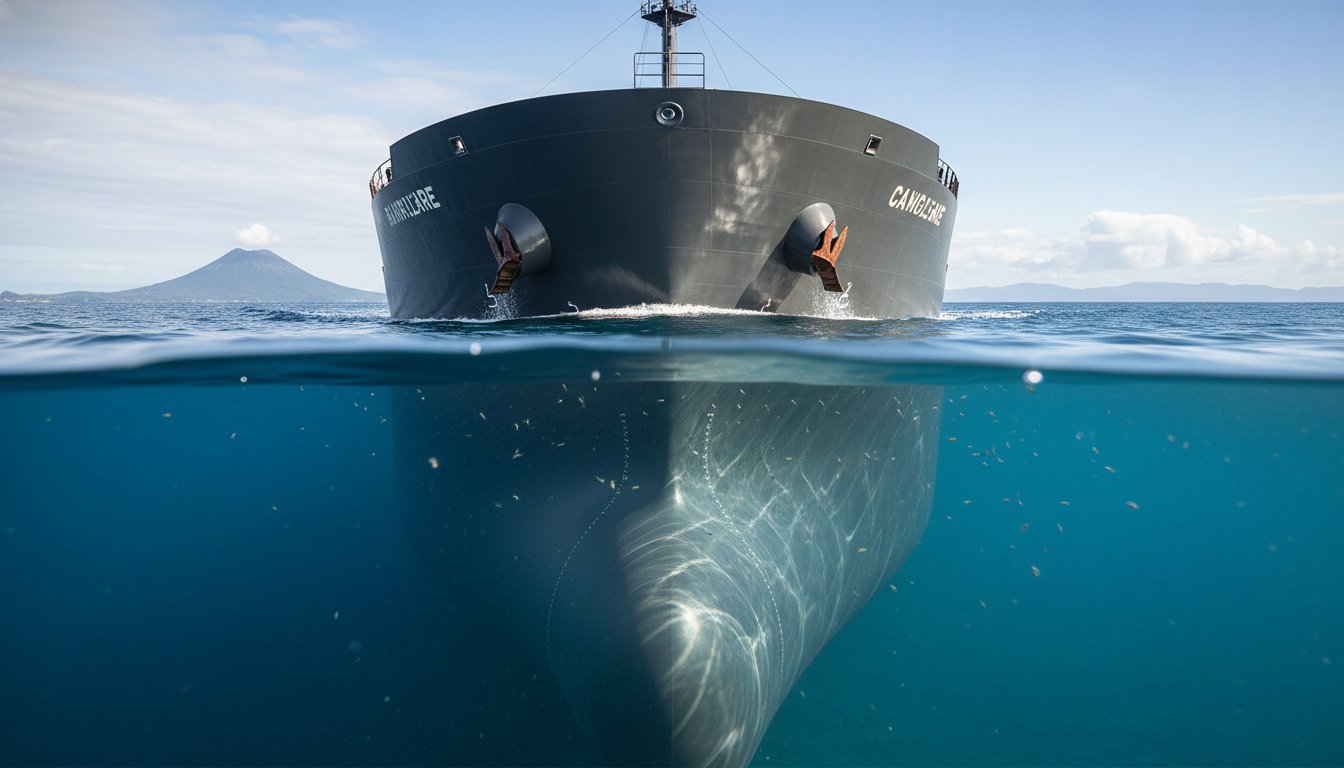
Could a single biofouling inspection in Northland cost your operation more than your entire annual maintenance budget? You likely understand that New Zealand’s biosecurity standards are among the most demanding globally, especially given the aggressive fouling conditions found in the Hauraki Gulf. Since the Biosecurity Pre-Arrival Report (PAR) became mandatory on May 1, 2025, the margin for error has vanished. Navigating the commercial vessel coating regulations New Zealand enforces requires more than just a clean hull; it demands a shift from traditional toxic biocides toward advanced material science.
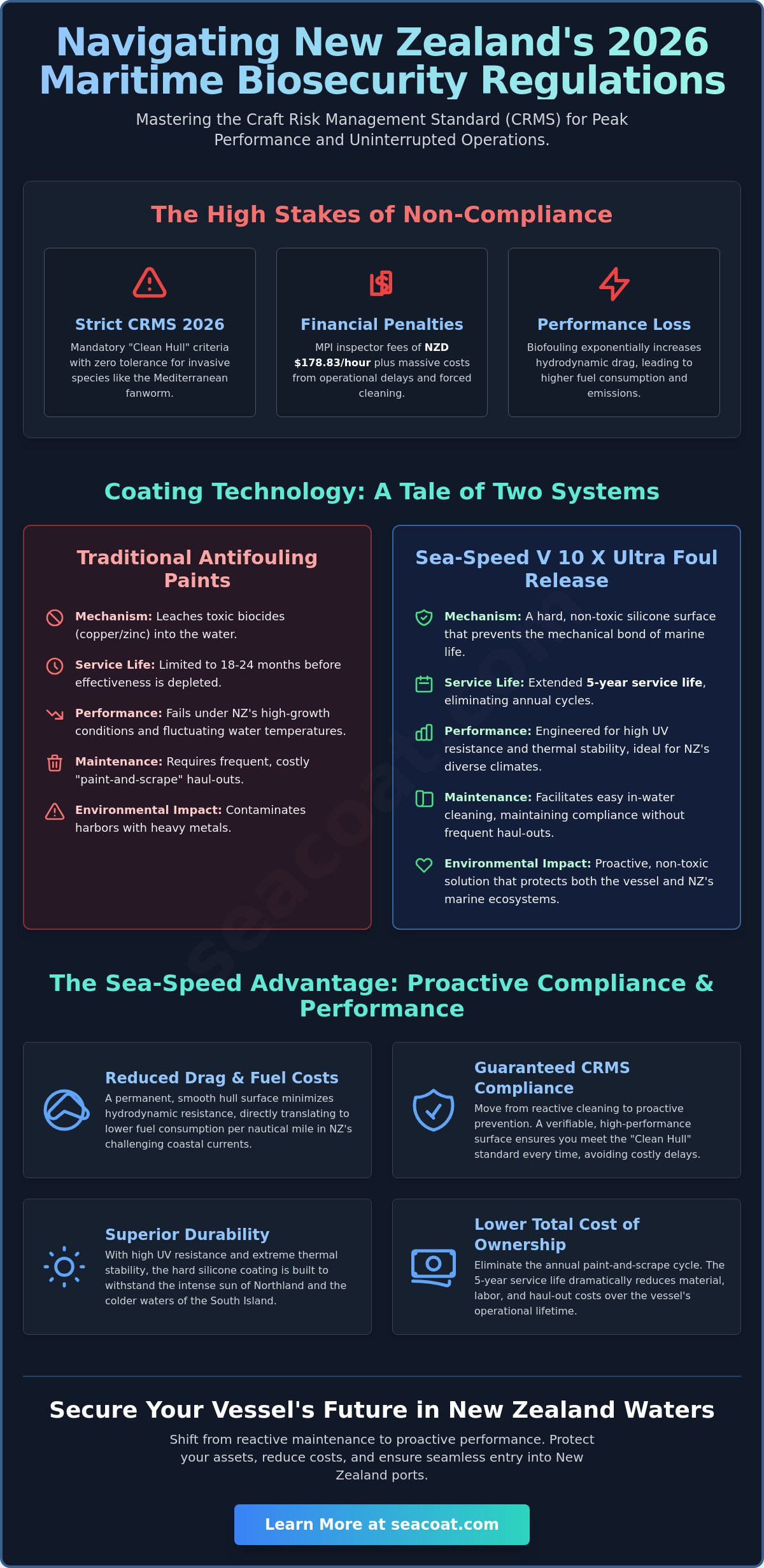
You’ll learn how to master these stringent 2026 requirements while simultaneously reducing the drag that inflates your fuel costs. We’ll analyze the financial implications of the NZD $178.83 hourly MPI inspector fee and explain why the Craft Risk Management Standard (CRMS) prioritizes verifiable performance over outdated maintenance cycles. By utilizing hard silicone surface technologies such as Sea-Speed V 10 X Ultra, operators can leverage high-energy surface properties to prevent the mechanical bond of marine organisms. This approach fundamentally changes the compliance equation from reactive cleaning to proactive prevention, ensuring a five year service life and seamless regulatory entry.
Key Takeaways
- Master the nuances of the 2026 Craft Risk Management Standard (CRMS) to ensure your vessel meets the stringent “Clean Hull” criteria required for entry into New Zealand ports.
- Discover why mechanical foul-release technology provides a superior defense against aggressive invasive species like the Mediterranean fanworm compared to traditional leaching biocides.
- Learn how to optimize your fleet’s performance under commercial vessel coating regulations New Zealand enforces by utilizing coatings engineered for high UV resistance and extreme thermal stability.
- Understand the strategic benefits of switching to hard silicone systems like Sea-Speed V 10 X Ultra, which can eliminate the annual paint-and-scrape cycle and extend service life.
- Gain insights into how low-surface-energy coatings facilitate easier in-water cleaning, helping you maintain compliance with regional council biosecurity bylaws without frequent haul-outs.
Navigating New Zealand’s Bio-Fouling Challenges and CRMS 2026
The updated Craft Risk Management Standard (CRMS) for Vessels, consolidated on October 13, 2023, represents a definitive shift in how international and domestic operators must manage hull integrity. Adhering to the commercial vessel coating regulations New Zealand mandates requires a technical understanding of the science of biofouling and its unique behavior in the South Pacific. It’s no longer sufficient to rely on “best effort” cleaning; the 2026 standards demand verifiable proof of continual maintenance and robust documentation. If an MPI inspector identifies established colonies of the Mediterranean fanworm (Sabella spallanzanii) during a mandatory inspection, the legal implications are immediate. The vessel may be ordered to leave territorial waters for cleaning, incurring massive operational delays and logistical costs that far exceed the price of a compliant coating system.
Traditional “soft” ablative paints, which rely on the physical erosion of the coating to release biocides, often fail under New Zealand’s high-growth summer conditions. This leaching mechanism is inherently limited; it can’t always compensate for the rapid colonization speeds found in nutrient-rich coastal channels. When the biocide release rate drops below the threshold required to repel larvae, the coating itself becomes a substrate for fouling. This leads to a compounding failure where the hull accumulates mass, increasing drag and emissions while simultaneously falling out of regulatory compliance. Transitioning to a hard, non-toxic system like Sea-Speed V 10 X Ultra provides a permanent solution that doesn’t rely on chemical depletion.
Regional Fouling Hotspots: Northland to the Marlborough Sounds
The subtropical climate of Northland creates an environment of accelerated biological activity that challenges even high-specification coatings. In regions like the Bay of Islands, high-flow currents deliver a constant supply of nutrients to hull-bound organisms, making commercial moorings particularly vulnerable to rapid colonization. While southern temperate waters in the Marlborough Sounds offer slightly lower growth rates, the seasonal shifts mean that even “low-risk” areas see rapid fouling spikes during the spring bloom. Traditional biocidal paints often lose efficacy as water temperatures fluctuate, leaving the hull exposed during critical operational windows when compliance is most strictly monitored.
The Economic Impact of Drag in NZ Coastal Channels
Managing hull roughness is a financial necessity for commercial operators traversing the Hauraki Gulf or the Cook Strait. Biofouling increases the wetted surface area and disrupts laminar flow, forcing engines to work harder to maintain speed against New Zealand’s powerful coastal currents. The hidden costs of frequent haul-outs at major hubs like Auckland or Tauranga can quickly erode profit margins, especially when coupled with the NZD $178.83 hourly rate for biosecurity inspectors. The total hydrodynamic resistance of a vessel increases exponentially as biological growth disrupts the boundary layer, directly resulting in higher fuel consumption per nautical mile. By utilizing advanced hard silicone coating systems, operators can maintain a smooth, low-energy surface that resists both fouling and the associated economic penalties of drag.
Antifouling vs. Foul Release: The Science of Efficient NZ Hulls
Traditional hull protection has historically relied on a chemical depletion model. Standard antifouling paints function by leaching biocides, typically heavy metals like copper or zinc, into the surrounding water column to create a toxic boundary layer. While this method can be effective in the short term, it presents two significant challenges for modern operators. First, the leaching process is finite, often resulting in a service life of only 18 to 24 months before the coating is exhausted and requires a full “paint-and-scrape” cycle. Second, the accumulation of these metals in harbor sediments is a growing concern for environmental regulators. Preserving the biological integrity of New Zealand’s marine ecosystems necessitates a transition away from these sacrificial chemical systems toward more sophisticated mechanical solutions.
Foul-release technology represents a paradigm shift in material science. Instead of killing organisms, these coatings utilize low surface energy to prevent them from attaching in the first place. Adhering to the commercial vessel coating regulations New Zealand has established for 2026 is significantly easier when the hull is engineered to be physically “unstickable” rather than chemically repellent. Unlike soft silicone coatings that are easily damaged by marine debris or fenders, hard-film technologies like Sea-Speed V 10 X Ultra provide a durable, non-porous barrier that can withstand the rigors of commercial work without degrading. This durability allows for a service life that can reach 10 years, fundamentally altering the return on investment for vessel owners.
Silane-Siloxane: The Expert Innovator’s Choice for 2026
The molecular architecture of Sea-Speed V 10 X Ultra is based on silane-siloxane technology, which creates an exceptionally smooth, high-density surface. At a microscopic level, this coating is non-polar and hydrophobic, meaning the adhesive proteins secreted by barnacles and tubeworms cannot find a stable anchor point. This zero-biocide approach is particularly advantageous when operating within New Zealand’s Marine Protected Areas (MPAs), where water quality standards are at their highest. Because there’s no chemical leaching, the coating remains stable and effective regardless of how long the vessel is stationary. For fleet managers looking to stabilize long-term operational budgets, adopting a permanent foul-release system provides a clear path to regulatory and financial sustainability.
Performance Metrics: Speed, Drag, and Fuel Savings
Fluid dynamics play a critical role in the economic viability of commercial shipping. Traditional ablative paints are designed to wear away, which often results in a rough “orange peel” texture that increases frictional drag. In contrast, hard-film coatings maintain a consistent, glass-like profile over their entire lifespan. By reducing hull friction, these systems can deliver measurable fuel savings of up to 10% compared to aged traditional paints. The physics are simple. A smoother hull moves through the water with less resistance, allowing engines to maintain cruising speeds at lower RPMs. This reduction in drag doesn’t just save fuel; it also lowers the vessel’s overall carbon footprint, aligning operational efficiency with environmental stewardship.
Evaluating Coatings for NZ’s High-UV and Diverse Climates
Commercial operations in New Zealand navigate a unique environmental paradox. The North Island experiences subtropical water temperatures that can exceed 20°C, while southern regions near Foveaux Strait often drop to 8°C. This thermal variance requires a coating with high glass transition temperature stability to prevent the polymer matrix from softening in the heat or becoming brittle in the cold. Meeting the commercial vessel coating regulations New Zealand enforces requires a substrate that remains physically stable across these extremes. If a coating cracks or delaminates due to thermal stress, it creates niche areas where invasive species can take hold, immediately compromising the vessel’s compliance status.
The intensity of the South Pacific sun presents another significant engineering challenge. New Zealand’s high UV index accelerates the degradation of standard marine paints, particularly at the waterline where the coating is exposed to both salt spray and direct radiation. Compliance with NZ’s Craft Risk Management Standard isn’t just about repelling organisms; it’s about maintaining the physical integrity of the protective barrier. When a coating “chalks” or erodes due to UV exposure, it loses its low-friction properties. Hard silicone systems like Sea-Speed V 10 X Ultra are engineered with inorganic structures that don’t break down under intense light, ensuring the hull remains smooth and compliant for years rather than months.
Abrasion resistance is equally critical in New Zealand’s tidal estuaries and ports. Locations like Tauranga or the Marlborough Sounds often have high concentrations of suspended sediment and sandy bottoms. Soft silicone coatings are easily torn by fenders or light groundings, creating high-friction patches that attract fouling. Hard-film coatings like Armor-Sil R/G provide the mechanical durability needed for commercial workboats, resisting the physical wear that typically destroys traditional antifouling systems.
The Aluminum Factor: Protecting NZ’s Aluminum Workboats
Aluminum is the material of choice for New Zealand’s aquaculture and tourism fleets, yet it’s highly susceptible to improper coating choices. Traditional biocidal coatings often rely on copper oxides which, when applied to an alloy hull, initiate a catastrophic electrolytic reaction. This galvanic corrosion can cause rapid pitting and structural failure. Sea-Speed V 10 X Ultra acts as an inert, non-conductive barrier that is completely copper-free, making it the best boat paint for aluminum boats in the commercial sector. It provides the necessary biosecurity protection without risking the integrity of the alloy.
Longevity in Ozone-Depleted Environments
New Zealand’s thin ozone layer allows higher levels of UV-B and UV-C radiation to reach the surface, which can break the chemical bonds in standard marine polymers. This depolymerization leads to a rough, porous surface that is an ideal nursery for biofilm. A non-chalking finish is vital for maintaining both the vessel’s aesthetic standards and its hydrodynamic efficiency. A coating’s capacity to resist UV-induced degradation directly preserves the smooth surface energy required to minimize drag over long-term deployments. By choosing a UV-stable system, operators ensure their vessels remain fast, efficient, and fully compliant with regional biosecurity bylaws.
Compliance Strategy: Meeting NZ’s Strict Clean Hull Standards
Adhering to the commercial vessel coating regulations New Zealand enforces in 2026 requires a transition from passive observation to active hull management. The Ministry for Primary Industries (MPI) utilizes the Craft Risk Management Standard (CRMS) to ensure all vessels arrive with a “clean hull,” a metric that is verified through rigorous pre-arrival reporting and physical inspections. For commercial operators, the most effective path to compliance involves a documented Clean Hull Plan that prioritizes continual maintenance. Unlike traditional systems that degrade over time, hard silicone coatings provide a stable substrate that simplifies the gathering of evidence for biosecurity audits. Documentation is the cornerstone of modern compliance. By maintaining a detailed log of hull grooming sessions and the specific mechanical properties of the foul-release system, operators can significantly reduce the risk of a “Notice of Direction” from Biosecurity New Zealand, which can lead to expensive delays or mandatory expulsion from territorial waters.
The “slime layer” or biofilm represents the first stage of biological colonization and remains a significant challenge in high-nutrient zones like Northland. While foul-release technology minimizes the adhesion of macro-fouling like barnacles, a microscopic biofilm will eventually form. If this layer is left unmanaged, it creates a textured surface that facilitates secondary fouling. Hard-film coatings like Sea-Speed V 10 X Ultra are engineered to allow for the mechanical removal of this biofilm without compromising the film’s integrity. This capability is vital for vessels entering sensitive regions like Fiordland, where “zero tolerance” for even minor fouling is often the operational standard.
In-Water Cleaning Best Practices in NZ Marinas
Local council bylaws in New Zealand commercial ports, such as Auckland and Lyttelton, strictly regulate in-water cleaning to prevent the release of both heavy metals and non-indigenous species. Traditional antifouling paints are often prohibited from being cleaned in-water because the scrubbing process releases concentrated pulses of biocides into the marine environment. Sea-Speed’s hard, non-toxic film changes this dynamic. Because the coating contains zero biocides, it can be frequently groomed using soft brushes or specialized ROVs without violating environmental discharge standards. This allows for the maintenance of a slick, low-energy surface between scheduled dry-dockings, ensuring the vessel remains within the “continual maintenance” category of the CRMS.
The Strategy of Biosecurity Documentation
Streamlining entry into restricted New Zealand zones depends heavily on the quality of your Biofouling Management Plan (BFMP). A well-structured BFMP that specifies the use of a high-performance foul-release system provides biosecurity officers with the technical assurance that the hull is managed according to international best practices. This proactive approach aligns with environmental marine coatings trends globally, where the industry is moving away from chemical toxicity toward surface-energy management. Utilizing a 10-year system like Sea-Speed V 10 X Ultra provides a consistent, verifiable maintenance history that 24-month ablative paints simply cannot match. To secure your fleet’s operational future in the South Pacific, evaluate our compliant coating solutions for your next maintenance cycle.
Why Sea-Speed V 10 X Ultra is the Strategic Choice for NZ
Vessel management in the South Pacific has historically been defined by the repetitive cycle of dry-docking and recoating. However, the commercial vessel coating regulations New Zealand has introduced for 2026 necessitate a more durable, evidence-based approach. Sea-Speed V 10 X Ultra offers a military-grade solution that replaces the annual ritual of painting and scraping with a single, high-performance application. With a potential 10-year life cycle, this silane-siloxane technology provides a stable, non-porous barrier that doesn’t rely on chemical depletion. This longevity isn’t just a matter of convenience; it’s a fundamental shift in asset management that ensures your vessel remains compliant with biosecurity standards throughout its entire operational window.
The commercial bottom line is directly tied to a vessel’s hydrodynamic profile. Traditional coatings accumulate micro-roughness as they leach biocides, which gradually increases fuel consumption and reduces transit speeds. In contrast, Sea-Speed V 10 X Ultra maintains its glass-like finish, delivering measurable fuel savings and allowing engines to operate with maximum efficiency. By eliminating the drag associated with ablative paints, fleet managers can stabilize their fuel budgets even in the face of rising energy costs. This performance is achieved without the use of toxic additives, ensuring that your operations remain profitable and environmentally responsible.
A Performance-Enhancing Tool for NZ Fleet Managers
In the modern maritime sector, a hull coating should be viewed as a strategic asset rather than a sunk maintenance cost. Adopting a permanent hard-film system like Sea-Speed V 10 X Ultra significantly enhances the resale value of a vessel by protecting the underlying substrate from corrosion and osmotic blistering. This is particularly relevant for the aluminum workboats and steel tugs that form the backbone of New Zealand’s maritime infrastructure. Experience in high-fouling Pacific environments has proven that silane-siloxane films offer superior resistance to the mechanical stresses of commercial service. By choosing a system that doesn’t require frequent replacement, you’re investing in the long-term operational readiness of your fleet.
The Environmental Imperative for 2026 and Beyond
New Zealand’s commitment to protecting its unique marine biodiversity is reflected in the strict oversight of Marine Protected Areas (MPAs). In sensitive regions like Fiordland, the presence of leaching heavy metals is increasingly scrutinized by regional authorities. Aligning your vessel with the global shift away from TBT and copper-based biocides is no longer optional; it’s a prerequisite for high-stakes commercial operations. Sea-Speed V 10 X Ultra provides a non-toxic alternative that meets the highest environmental standards while exceeding the performance of traditional antifouling. It allows you to operate in NZ’s most pristine waters with the confidence that your hull is both biosecurity-compliant and ecologically inert. To ensure your fleet is prepared for the next decade of commercial vessel coating regulations New Zealand enforces, contact Seacoat SCT, LLC for a technical consultation on Sea-Speed V 10 X Ultra today.
Securing Your Fleet’s Future in New Zealand’s Waters
The transition toward mechanical foul-release technology isn’t just a response to shifting environmental standards; it’s a strategic upgrade for any commercial operation. By prioritizing high-energy surface engineering over traditional biocidal leaching, you ensure that your assets remain compliant with the latest commercial vessel coating regulations New Zealand has established. This proactive approach eliminates the risk of biosecurity delays while stabilizing long-term maintenance budgets. You’ve seen how silane-siloxane technology, proven in high-stakes commercial use since 2001, provides a durable barrier that protects both your hull and the delicate ecosystems of the South Pacific.
Investing in a zero-VOC, non-toxic system allows you to meet the 2026 biosecurity standards with absolute confidence. Beyond compliance, the measurable reduction in frictional drag can lower your fuel consumption by up to 10%, directly improving your bottom line. It’s time to move beyond temporary fixes and adopt a permanent solution that values longevity and operational intelligence. Optimize your fleet’s performance with Sea-Speed V 10 X Ultra and ensure your vessel is ready for the challenges of tomorrow’s maritime landscape. Your commitment to efficiency and stewardship starts with the right surface.
Frequently Asked Questions
Is foul release paint better than antifouling for New Zealand waters?
Foul-release technology is superior for navigating the rigorous biosecurity landscape of the South Pacific. While traditional antifouling relies on finite chemical leaching, foul-release systems like Sea-Speed V 10 X Ultra utilize low surface energy to prevent biological attachment. This mechanical approach is more effective for long-term compliance in New Zealand’s Marine Protected Areas where heavy metal discharge is strictly monitored. It ensures a smoother hull profile over a much longer operational window.
Do I need to haul out my commercial vessel every year in NZ if I use Sea-Speed?
You don’t need to follow the traditional annual haul-out cycle for recoating when using a hard silicone system. Sea-Speed V 10 X Ultra is engineered for a 10-year potential service life, significantly outperforming the 18 to 24-month lifespan of standard ablative paints. Instead of a full paint-and-scrape ritual every year, you can maintain compliance through routine in-water grooming. This shift maximizes vessel uptime and reduces the high costs associated with frequent dry-docking.
Is Sea-Speed V 10 X Ultra compliant with Northland Regional Council biosecurity rules?
Sea-Speed V 10 X Ultra is a highly effective asset for meeting the Northland Regional Council’s stringent biosecurity bylaws. While regional authorities don’t officially endorse specific products, they do require evidence of a clean hull and continual maintenance. Because this coating is non-toxic and incredibly durable, it allows for frequent cleaning without releasing harmful biocides. It’s a strategic choice for meeting the commercial vessel coating regulations New Zealand has established to protect its northern coastal waters.
Can I apply Sea-Speed over my existing copper-based bottom paint?
You cannot apply Sea-Speed directly over existing copper-based antifouling. For the silane-siloxane technology to function correctly, it must be applied to a properly prepared substrate or a compatible primer system like Seapoxy 73. Applying a high-performance hard film over a soft, leaching paint would lead to delamination as the underlying layer erodes. A clean, stable base is essential to guarantee the 10-year durability and low-friction performance that commercial operators require.
How does New Zealand’s high UV affect commercial hull paint performance?
New Zealand’s extreme UV levels cause standard marine polymers to depolymerize and chalk at the waterline. This degradation creates a porous surface that’s highly susceptible to biofilm colonization and increased hydrodynamic drag. Sea-Speed V 10 X Ultra is formulated with UV-stable inorganic structures that don’t break down under intense South Pacific radiation. This ensures the hull remains smooth and efficient, preventing the premature failure common with traditional one-pack or poorly stabilized coatings.
Is non-toxic boat paint effective against Mediterranean fanworm?
Non-toxic foul-release coatings are highly effective against the Mediterranean fanworm by disrupting its ability to form a permanent mechanical bond. These invasive organisms require a stable substrate to thrive. The low surface energy of a silane-siloxane film makes it physically difficult for the fanworm’s adhesive proteins to anchor. When combined with regular grooming, this technology provides a robust defense that exceeds the performance of traditional toxic paints in high-pressure biosecurity zones.
What is the best boat paint for aluminum workboats in New Zealand?
Sea-Speed V 10 X Ultra is the premier choice for aluminum workboats because it’s completely copper-free and non-conductive. Traditional paints containing copper oxides can trigger catastrophic galvanic corrosion on alloy hulls, leading to structural pitting. As an inert barrier, Sea-Speed provides the necessary biosecurity protection without any risk of electrolytic reaction. It’s a safe, permanent solution for the aluminum aquaculture and tourism fleets that operate throughout the Marlborough Sounds and beyond.
How much fuel can a commercial vessel save by switching to a foul release coating?
Commercial vessels can achieve fuel savings of up to 10% by switching to a high-performance foul-release coating. This efficiency is a direct result of reducing frictional drag; a hard-film coating maintains a glass-like surface that minimizes turbulence in the boundary layer. Unlike ablative paints that become rougher as they wear, Sea-Speed remains smooth over its entire lifespan. These measurable savings in fuel consumption help offset the initial investment while significantly lowering the vessel’s total carbon footprint.