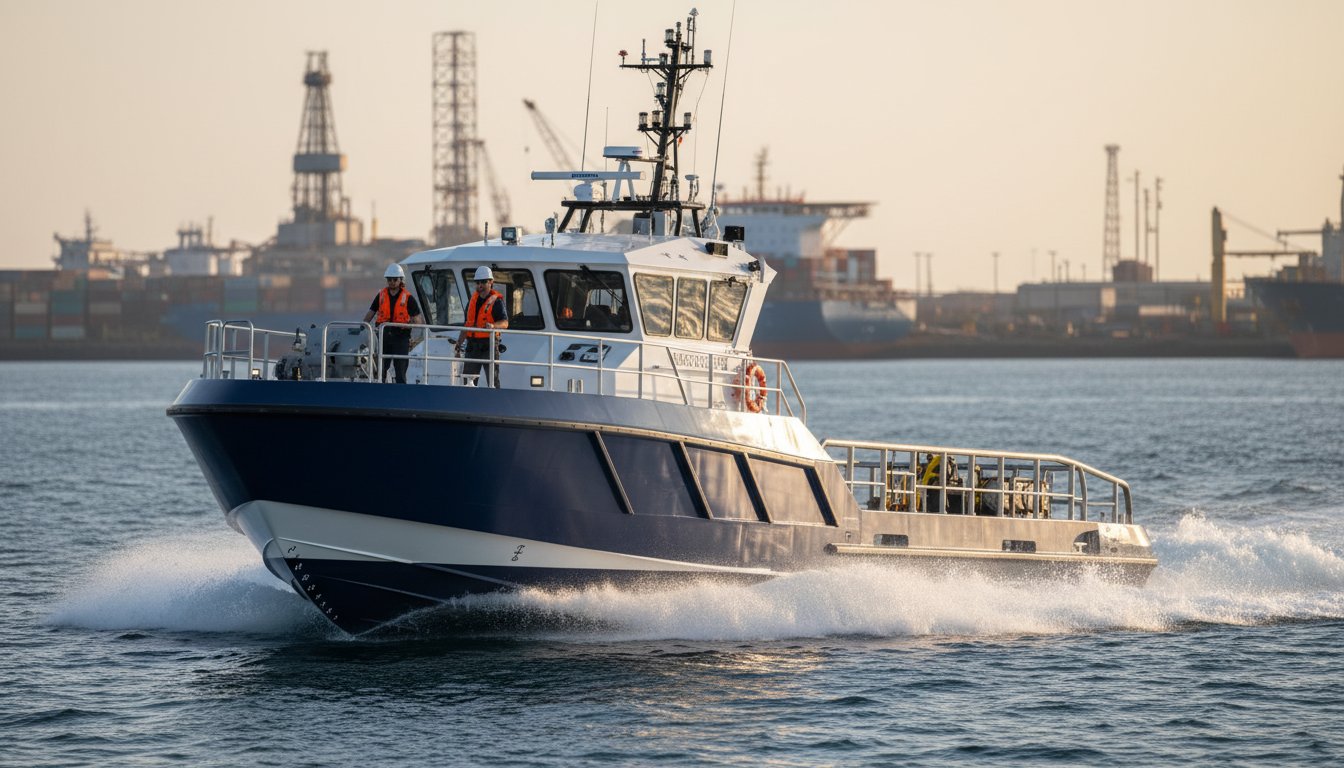
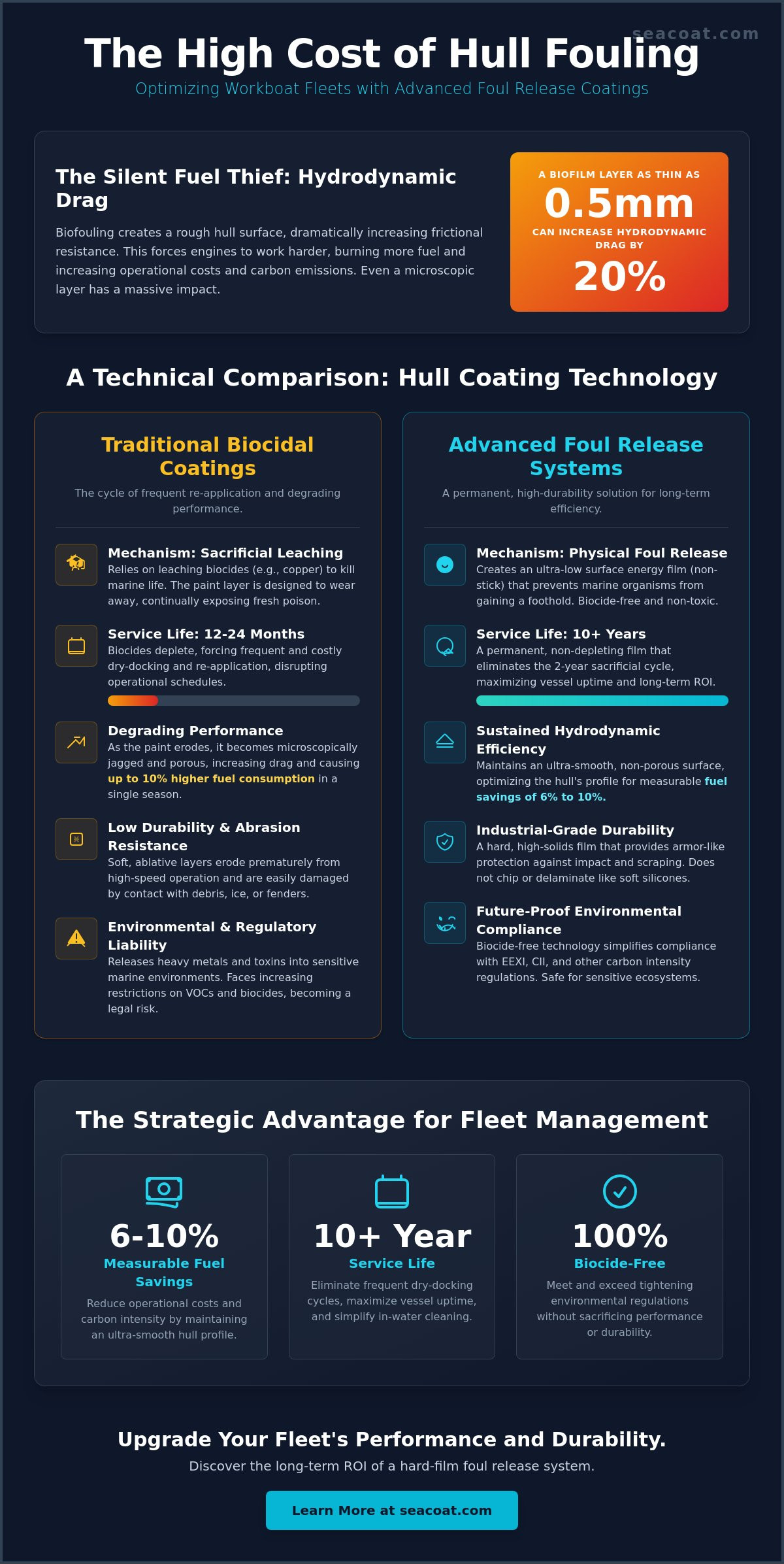
Did you know that a biofilm layer as thin as 0.5 millimeters can increase hydrodynamic drag by up to 20%, forcing your engines to work harder and consume more fuel? For commercial operators, the persistent challenge of hull fouling is a primary driver of operational costs and frequent, expensive dry-docking intervals. You’ve likely experienced the limitations of traditional biocidal paints or the fragility of soft silicone coatings that peel under the high-frequency demands of a working harbor. Identifying the best coating for workboats is no longer just about preventing growth; it’s about optimizing the vessel’s long-term hydrodynamic profile.
This guide details how advanced siloxane foul release systems offer a more permanent, strategic solution for fleet management. You’ll discover how these biocide-free technologies achieve a 10-year service life and facilitate measurable fuel savings of 6% to 10% by maintaining ultra-low surface roughness. We’ll analyze the transition from toxic anti-foulants to high-durability systems that simplify in-water cleaning and ensure your fleet remains ahead of tightening environmental regulations.
Key Takeaways
- Understand why traditional ablative antifouling fails in high-frequency commercial operations and why hard-film foul release is the superior alternative for long-term hull integrity.
- Compare the technical mechanisms of biocidal leaching versus physical foul release to transition from 2-year sacrificial cycles to a 10-year permanent film life.
- Discover how selecting the best coating for workboats optimizes hydrodynamic efficiency, significantly reducing fuel consumption and facilitating compliance with EEXI and CII carbon intensity requirements.
- Evaluate the economic impact of reduced maintenance intervals and the strategic advantage of utilizing non-toxic, biocide-free technology in sensitive marine environments.
- Gain expert insights into the precise surface preparation and primer selection required to ensure maximum adhesion and durability for modern workboat fleets.
Defining the Workboat Standard: Why Traditional Bottom Paint Fails
Workboats function as the industrial backbone of maritime commerce, enduring duty cycles that often exceed 3,000 operating hours annually. Finding the best coating for workboats requires moving beyond the limitations of traditional ablative antifouling. These legacy systems are fundamentally mismatched with the high-velocity, high-abrasion environments of commercial tugs, ferries, and pilot boats. Because ablative paints are designed to slough off over time, constant motion causes the protective layers to erode prematurely. This leaves the substrate vulnerable and requires dry-docking intervals as frequent as every 12 to 24 months, which disrupts operational schedules and revenue streams.
The economic reality of “cheap” paint is often a trap for fleet managers. While the initial capital expenditure for standard biocidal paint is lower, the long-term penalties are severe. Operators face hidden costs in the form of increased skin friction and the labor-intensive removal of spent coatings. The Biofouling process begins within hours of submersion; if a coating lacks the surface energy to shed these organisms at low speeds, the resulting drag forces the engines to work harder. By 2026, the regulatory landscape will shift even further. New mandates regarding Volatile Organic Compounds (VOCs) and the phasing out of specific biocides mean that traditional heavy-metal paints are not just inefficient; they’re becoming a legal liability for commercial operators.
The Abrasion Challenge in Commercial Waters
Commercial vessels encounter physical hull stress that would easily destroy soft silicone foul-release coatings. In shallow harbors or during complex docking maneuvers, workboats frequently contact debris, ice, or fenders. A “workboat finish” must provide industrial-grade armor that resists impact and scraping. Unlike leisure coatings that prioritize a high-gloss aesthetic, the best coating for workboats utilizes high-solids chemistry to create a hard, durable film. This ensures the hull maintains its integrity even when subjected to the mechanical rigors of daily service, preventing the delamination common in inferior products.
Hydrodynamic Drag: The Silent Fuel Thief
Surface roughness is the primary driver of frictional resistance, and traditional paints degrade into a “leached layer” that is microscopically jagged. This degradation can increase fuel consumption by up to 10% over the course of a single season. As the coating becomes more porous, it traps water and microorganisms, creating a feedback loop of weight gain and drag. Hydrodynamic optimization is the strategic reduction of skin friction through the maintenance of a smooth, non-porous hull surface to maximize propulsion efficiency. By prioritizing a low-friction profile, operators can achieve measurable fuel savings and reduce the carbon intensity of their entire fleet.
Hard-Film Foul Release vs. Antifouling: A Technical Comparison
Understanding the fundamental difference between biocidal leaching and foul release technology is critical for vessel managers seeking the best coating for workboats. Traditional antifouling paints rely on a sacrificial mechanism where they leach copper or other biocides to kill marine organisms upon contact, a process that inherently depletes the coating over a 24-month cycle and necessitates frequent dry-docking. In contrast, hard-film foul release systems utilize ultra-low surface energy to prevent adhesion entirely. According to PNNL biofouling research, the operational drag caused by even minor slime layers can increase fuel consumption by up to 20 percent. By creating a surface where organisms cannot gain a foothold, foul release systems maintain hydrodynamic efficiency without releasing toxins into the water column.
Durability remains the primary metric for commercial ROI in the maritime sector. While sacrificial paints degrade through chemical depletion, a silane-siloxane hard-film system provides a 10-year permanent film life. This longevity applies across diverse substrates, including steel, aluminum, and fiberglass, making it a versatile choice for mixed fleets. Workboats operating in high-abrasion environments benefit from this mechanical strength, as the coating doesn’t chip or delaminate like traditional soft silicone options. It’s a strategic asset that transforms the hull from a maintenance liability into a performance-enhancing component.
The Science of Silane-Siloxane Chemistry
Silane-siloxane technology creates a non-porous, glass-like finish through covalent molecular bonding with the substrate. This chemical structure outperforms standard silicone by offering superior cross-linking density, which results in extreme mechanical durability and resistance to impact. These formulations are biocide-free and contain zero VOCs, ensuring compliance with tightening global port regulations and environmental standards. It’s a shift from chemical warfare against marine life toward sophisticated surface engineering that prioritizes long-term stability. Choosing this technology ensures your vessel meets the criteria for the best coating for workboats in environmentally sensitive regions.
Maintenance and In-Water Cleaning
Hard-film coatings change the maintenance paradigm from “strip and repaint” to a “clean and go” model. Because the surface is physically robust, divers can perform frequent grooming and in-water cleaning without damaging the integrity of the film or releasing heavy metals. This practice maintains a smooth profile and extends the interval between major dry-docking events, directly reducing off-hire time. For a deeper dive into these technologies and their operational impacts, consult the definitive guide to antifouling boat paint. Implementing these systems reduces total ownership costs while protecting the marine ecosystems where your fleet operates.
Operational ROI: Calculating Fuel Savings and Maintenance Intervals
Selecting the best coating for workboats requires a shift from viewing hull paint as an annual expense to treating it as a high-yield capital asset. For high-utilization vessels like tugs and ferries, the hydrodynamic efficiency of the hull surface directly dictates the bottom line. Traditional ablative paints rely on a rough, porous surface to leach biocides, which increases skin friction over time. In contrast, siloxane-based foul release systems create a macro-smooth surface that minimizes turbulent flow. Industry data confirms that a 1% reduction in hull roughness can lead to a 2% increase in efficiency, allowing operators to maintain service speeds at lower RPMs.
Fuel Consumption and Greenhouse Gas Mitigation
Biofouling creates a significant fuel penalty, often increasing drag by up to 40% even with moderate slime growth. By utilizing Sea-Speed technology, fleet managers can meet stringent Environmental Ship Efficiency Index (EEXI) and Carbon Intensity Indicator (CII) requirements without expensive mechanical retrofits. The biocide-free nature of these coatings contributes to corporate ESG goals by eliminating heavy metal leaching into sensitive harbors. When a vessel operates with a lower drag coefficient, it burns less fuel and emits fewer greenhouse gases. This efficiency is essential for commercial fleets facing carbon taxes and increasingly tight regulatory oversight.
Extending the Dry-Dock Cycle
The true financial advantage of a high-durability system emerges during a 10-year cost analysis. Traditional anti-fouling often necessitates haul-outs every 24 months for scraping and repainting. Transitioning to a foul release system can extend these intervals to 5 or even 10 years. This longevity drastically reduces labor costs, as there’s no need to sand off accumulated toxic layers or manage hazardous waste disposal. For a detailed breakdown of these metrics, operators should consult the definitive guide to boat hull paint to understand the specific ROI frameworks involved.
- Tugboat Performance: A harbor tug utilizing Sea-Speed reported a 12% reduction in fuel consumption over a three-year period compared to its previous ablative coating.
- Ferry Operations: High-speed passenger ferries have documented speed gains of 1.5 knots at the same power output, directly increasing daily route capacity.
- Maintenance Savings: Eliminating biocide replenishment cycles results in a 60% reduction in total coating lifecycle costs over a decade.
Investing in the best coating for workboats is a strategic decision that prioritizes long-term vessel availability and predictable operational costs over the false economy of low-cost, high-maintenance traditional paints. Because these systems don’t polish away, the surface remains smooth for the entire service life, ensuring that the efficiency gains realized on day one are still present in year ten.
Application Guidance for Commercial Workboat Hulls
Preparing Steel and Aluminum for Success
Aluminum hulls present unique electrochemical challenges that require specialized attention. Without a dedicated dielectric barrier, the risk of galvanic corrosion increases significantly in saltwater environments. For operators managing mixed fleets, selecting the best boat paint for aluminum boats is essential to preserve substrate integrity. Commercial steel hulls require an abrasive blast to SSPC-SP10 standards. This Near-White Blast Cleaning creates a 2.5 to 3.0 mil angular profile, which provides the necessary mechanical tooth for long term adhesion.
The Multi-Coat System Approach
Reliability in high stress maritime environments isn’t achieved with a single layer. A robust system utilizes an epoxy tie-coat like Seapoxy 73 to bridge the gap between the metallic substrate and the siloxane topcoat. This primer ensures that the foul release layer remains chemically bonded even under extreme hydrodynamic pressure at 25 knots. Application timing is critical. Overcoating windows are often restricted to a 4 to 24 hour period depending on ambient conditions. If this window is missed, the chemical cross-linking between layers won’t occur, leading to potential delamination.
- Humidity Control: Application must cease if relative humidity exceeds 85% to prevent moisture entrapment.
- Temperature Delta: The substrate temperature must remain at least 5 degrees above the dew point throughout the curing process.
- WFT Measurements: Applicators should use wet film thickness gauges every 10 square feet to ensure a consistent 10 to 12 mil dry film thickness.
- Surface Roughness: Modern siloxane systems can reduce surface roughness to less than 20 microns, which is a primary driver for the 5% to 8% fuel savings observed in commercial fleets.
The final stage of a professional installation involves the application of a clear siloxane topcoat. This layer isn’t just for aesthetics; it provides critical UV protection and enhances the hydrodynamic “slickness” of the hull. By maintaining a hard, non-biocidal film, the best coating for workboats allows for easy cleaning through simple water pressure rather than abrasive scrubbing. This methodical approach to application guarantees that the vessel remains in peak operational condition while meeting the strictest environmental regulations.
The Sea-Speed Advantage for Modern Workboat Fleets
Sea-Speed V 10 X Ultra represents the definitive standard for hard-film foul release technology, providing a strategic alternative to traditional ablative paints. Unlike conventional coatings that rely on the controlled release of toxins, this silane-siloxane system is entirely biocide-free and contains zero VOCs. It’s the best coating for workboats operating in sensitive marine environments where regulatory compliance is as critical as hydrodynamic efficiency. The material’s non-stick surface prevents organisms from forming a permanent bond, allowing for easy cleaning through simple water pressure or the vessel’s movement through the water.
Data from commercial and military deployments confirms a proven 10-year life cycle, which significantly mitigates the frequency of dry-docking intervals. This longevity isn’t just a maintenance benefit; it’s a fundamental shift in asset management. Whether a fleet is managed from Tomball, Texas, or Singapore, SeaCoat provides global support to ensure consistency across international operations. This worldwide reach allows shipyards to apply a uniform specification that meets the rigorous demands of heavy industrial use while maintaining a minimal environmental footprint.
Why Commercial Operators Choose Seacoat
Operators prioritize Seacoat because the technology is the result of decades of specialized silane-siloxane research. This isn’t a repurposed consumer product; it’s an industrial-grade solution designed for technical precision. The coating’s ultra-smooth finish reduces surface roughness to less than 10 microns, directly translating to measurable fuel savings and reduced carbon emissions. We offer direct procurement and bulk industrial supply options to streamline the logistics of large-scale fleet applications, ensuring that the best coating for workboats is available exactly when and where it’s needed for scheduled maintenance.
- Technical precision: Backed by decades of silane-siloxane research
- Environmental stewardship without sacrificing performance
- Direct procurement and bulk industrial supply options
Next Steps for Fleet Optimization
Optimizing a fleet requires more than just selecting a product; it demands a comprehensive technical strategy. The process begins with a detailed technical hull assessment to identify specific operational challenges, from varied salinity levels to high-abrasion environments. Our specialists work directly with naval architects and fleet managers to develop custom coating specifications that align with long-term ROI goals. By choosing a system that prioritizes both durability and ecology, you’re investing in the future of maritime transport.
Advancing Maritime Efficiency with Hard-Film Technology
The shift from traditional ablative paints to high-performance foul release systems represents a strategic evolution in maritime asset management. When selecting the best coating for workboats, operators must prioritize hydrodynamic efficiency and long-term structural durability. Traditional coatings often fail because they rely on leaching toxins that deplete over time; however, hard-film systems utilize advanced surface tension to prevent biofouling attachment from the start.
Sea-Speed V 10 X Ultra utilizes proprietary Silane-Siloxane technology to create a non-stick surface that eliminates the need for toxic chemicals. This biocide-free formulation contains zero VOCs, ensuring compliance with global environmental standards while maintaining hull integrity. With a 10-year proven service life, this technology significantly extends maintenance intervals and reduces dry-docking frequency. By minimizing hull roughness, fleets can realize measurable gains in fuel economy and operational speed. It’s time to move beyond the limitations of legacy bottom paints and invest in a solution that serves both your operational ROI and the marine ecosystem.
Optimize your workboat performance with Sea-Speed V 10 X Ultra
Your fleet deserves a coating that works as hard as your crew.
Frequently Asked Questions
What is the best coating for a workboat that operates in high-abrasion areas?
Sea-Speed V 10 X Ultra is the best coating for workboats in high-abrasion environments because of its hard-film siloxane structure. Unlike soft silicone coatings that tear easily, this system withstands contact with ice, river debris, and fender friction. Its high Shore D hardness rating provides physical durability that prevents mechanical damage while maintaining a low-friction surface for optimal performance.
How much fuel can a foul release coating actually save a commercial vessel?
Commercial vessels typically see fuel savings between 6% and 12% when transitioning from traditional ablative paint to a high-performance foul release system. This reduction results from the ultra-smooth surface profile which minimizes hydrodynamic drag. Data from hull performance monitoring shows that maintaining a clean, low-friction hull significantly lowers the power required to reach cruising speeds and reduces engine strain.
Is foul release paint more expensive than traditional antifouling?
Foul release technology requires a higher initial investment but provides a lower total cost of ownership over a ten-year lifecycle. While traditional biocidal paints require reapplication every 24 to 36 months, Sea-Speed is a permanent solution that eliminates recurring material and labor costs. Long-term savings are realized through reduced dry-dock frequency and consistent fuel efficiency gains throughout the life of the vessel.
Can Sea-Speed coatings be applied to aluminum hulls without causing corrosion?
Yes, Sea-Speed is an inert, non-metallic coating that’s completely safe for aluminum hulls because it contains no copper or heavy metals. Traditional antifouling paints often trigger galvanic corrosion when applied to aluminum, leading to structural pitting and hull degradation. Because this system is biocide-free, it acts as a protective barrier that prevents electrolytic reactions and preserves the integrity of the alloy.
How often does a workboat with a hard-film coating need in-water cleaning?
A workboat utilizing a hard-film coating generally requires in-water cleaning every 4 to 6 months depending on local nutrient levels and vessel activity. The advantage of the Sea-Speed system is that it’s scrubbed with specialized brushes without damaging the film or releasing toxins into the water. This maintenance schedule ensures the hull remains at peak hydrodynamic efficiency without the paint loss associated with ablative products.
Are non-toxic coatings compliant with 2026 IMO regulations?
Non-toxic, biocide-free coatings already exceed the requirements set by the IMO 2026 mandates regarding the ban on Cybutryne and other harmful additives. Sea-Speed contains zero VOCs and no poisonous leaching agents, making it a future-proof choice for global maritime compliance. This regulatory alignment protects fleet owners from potential fines and the necessity of premature hull stripping as environmental laws tighten globally.
What is the expected lifespan of Sea-Speed V 10 X Ultra on a tugboat?
The expected service life of Sea-Speed V 10 X Ultra on a tugboat is 10 years or more with proper routine maintenance. This longevity is achieved through a glass-like siloxane matrix that doesn’t deplete or wash away over time. Tug operators benefit from a permanent surface that maintains its foul-release properties for multiple dry-dock cycles, far outlasting the 3-year limit of standard commercial coatings.
Can foul release coatings be applied over existing bottom paint?
No, foul release coatings can’t be applied directly over existing antifouling paint and require the hull to be blasted to an SSPC-SP10 Near-White metal finish. Proper adhesion depends on a clean, profiled substrate to ensure the coating bonds correctly for its decade-long lifespan. Skipping this critical surface preparation step leads to delamination, as the underlying old paint will eventually fail and detach from the hull.