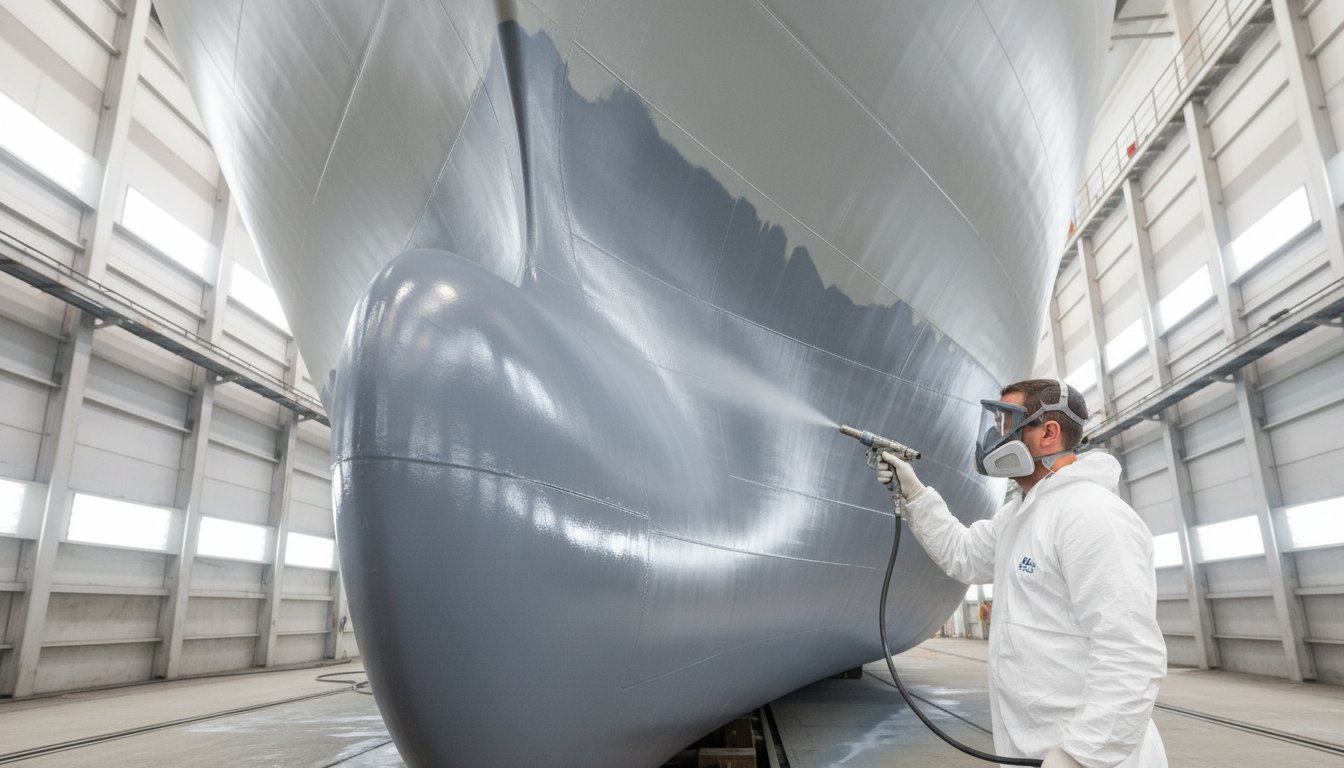
Could a microscopic deviation in surface texture be costing your fleet thousands of metric tons in excess fuel annually? According to the International Maritime Organization (IMO), even moderate hull fouling can increase fuel consumption by as much as 40 percent due to frictional drag. You likely recognize that the traditional cycle of applying ablative paints is no longer a viable strategy, especially when the precision of the hull coating application process directly dictates your vessel’s hydrodynamic efficiency. Between the escalating costs of frequent dry-docking and tightening global regulations on toxic biocides, the industry is reaching a tipping point where legacy methods fail to deliver the necessary ROI.
This article provides the technical framework to master high-performance, biocide-free foul release systems. You’ll learn how to achieve the hydrodynamic optimization required to reduce drag and secure a maintenance interval that extends up to 10 years. We’ll detail the specific environmental parameters, surface preparation standards, and siloxane application techniques that transform a vessel’s hull into a strategic asset for long-term operational efficiency and environmental compliance.
Key Takeaways
- Learn how to transform routine maintenance into a hydrodynamic performance upgrade by mitigating frictional drag through technical application precision.
- Understand the critical importance of the anchor pattern in facilitating the chemical adhesion of advanced, biocide-free Silane-Siloxane coatings.
- Master the specialized hull coating application process, from establishing a robust chemical bond with primers to maintaining precise dry film thickness for maximum efficiency.
- Identify the environmental thresholds and humidity levels required to optimize the cross-linking and polymerization of high-performance film layers.
- Discover how transitioning from aggressive scrubbing to gentle cleaning protocols can preserve surface integrity and extend the vessel’s operational life cycle to ten years.
Why Precision in the Hull Coating Application Process Matters
The maritime industry is shifting its perspective on hull maintenance. Traditionally, applying a coating was a defensive measure against corrosion. Today, the hull coating application process is recognized as a sophisticated hydrodynamic upgrade that dictates a vessel’s long-term energy profile. A high-quality application transforms the hull from a simple physical barrier into a high-performance surface engineered to reduce frictional drag. This resistance accounts for the majority of a ship’s energy expenditure; therefore, any deviation in application quality directly undermines operational efficiency.
Improper application techniques often result in uneven film thickness or “orange peel” textures. These imperfections provide a foothold for premature biofouling, as microorganisms easily colonize irregular surfaces. While traditional Anti-fouling paint relied on sacrificial ablative layers that wore away to reveal fresh biocides, modern fleets are transitioning toward permanent hard-film foul release systems. These advanced siloxane-based technologies don’t rely on chemical leaching. Instead, they create a surface so smooth that organisms cannot maintain adhesion at cruising speeds, provided the initial application remains flawless.
The Impact of Surface Roughness on Vessel ROI
Average Hull Roughness (AHR) is a critical metric for naval architects and fleet managers. It measures the micro-level deviations on the hull’s surface that disrupt laminar flow. A smooth, professional application can reduce annual fuel costs by 10% to 15% compared to a poorly maintained or aged coating system. The economic stakes are high. Every 10-micron increase in average hull roughness correlates to a 1% increase in fuel consumption due to the resulting skin friction. By maintaining a low AHR through a controlled hull coating application process, operators secure a measurable return on investment through reduced bunker consumption and extended dry-dock intervals.
Regulatory Compliance and Non-Toxic Standards in 2026
The regulatory environment is tightening. Upcoming 2026 standards from the IMO and local maritime authorities prioritize biocide-free technology to protect sensitive marine ecosystems. Transitioning to zero-VOC (Volatile Organic Compound) coatings isn’t just an environmental choice; it’s a strategic necessity for global port access. These sustainable systems eliminate the discharge of heavy metals and toxins into the water column. You can learn more about these industry shifts in our guide to Environmental Marine Coatings. Adopting these non-toxic standards ensures that vessels remain compliant with future international laws while optimizing their hydrodynamic signature.
Phase 1: Achieving the Optimal Surface Profile
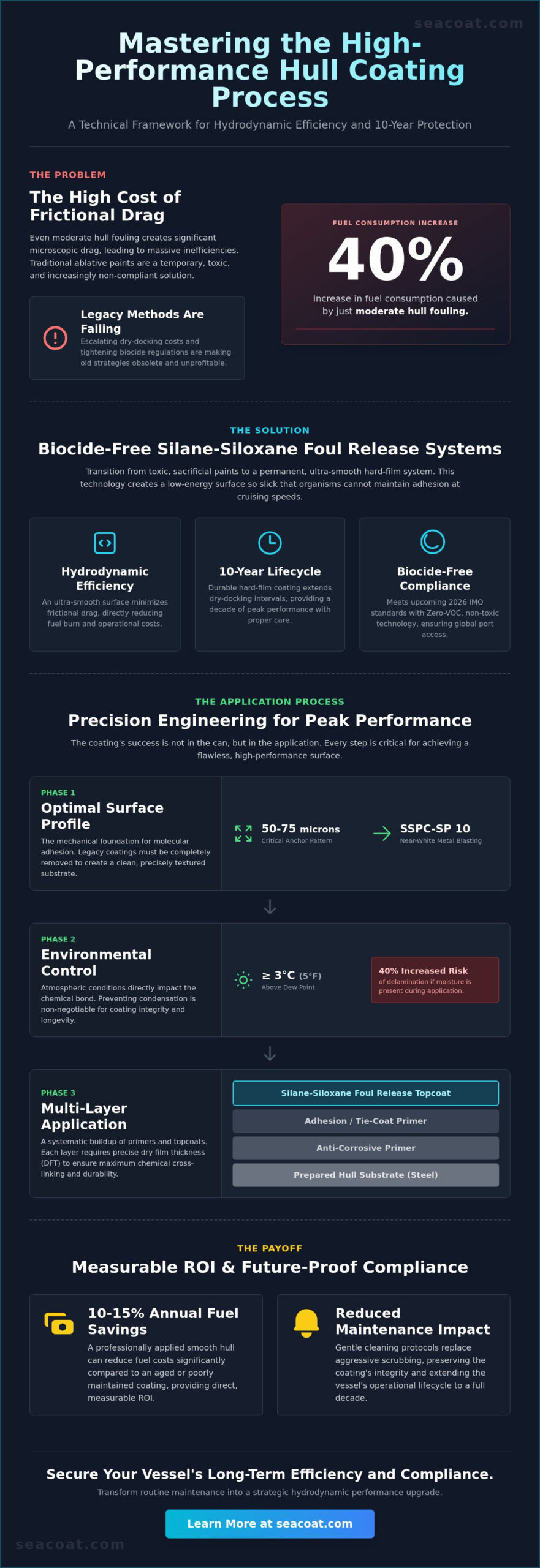
The integrity of the hull coating application process begins with the microscopic geometry of the substrate. For high-performance silane-siloxane systems, achieving a precise anchor pattern isn’t optional; it’s the mechanical foundation for molecular adhesion. Without the correct surface profile, typically measured between 50 and 75 microns (2 to 3 mils), even the most advanced foul-release technology will fail prematurely. This phase requires the complete removal of legacy biocidal paints and the aggressive treatment of osmotic blistering, which can compromise the structural laminate of GRP hulls if left unaddressed.
Environmental variables dictate the success of this preparation. Technicians must maintain the substrate temperature at least 3°C (5°F) above the dew point to prevent the formation of invisible moisture films. This precision ensures that the subsequent coating layers bond to the material rather than trapped humidity. It’s a technical standard that separates professional maritime applications from standard maintenance tasks. When these metrics aren’t met, the risk of delamination increases by over 40% within the first two years of service.
Abrasive Blasting vs. Chemical Stripping
Grit blasting to an SSPC-SP 10 Near-White Metal finish is the standard for steel assets, providing the necessary roughness for long-term durability. However, fiberglass and aluminum require a more nuanced approach. Using aggressive media on aluminum can cause work-hardening or warping, so specialized non-metallic abrasives are necessary. When working with sensitive alloys, consult our guide on the best boat paint for aluminum boats to understand how to preserve structural integrity while maximizing protection.
Decontamination and Salt Removal
Substrate purity is the final hurdle before coating. Soluble salts, specifically chlorides, are notorious for inducing osmotic pressure that pulls moisture through the coating, leading to delamination. We utilize the Bresle patch test to quantify salt levels, ensuring they remain below 50 mg/m² for critical applications. A final solvent wipe using high-purity cleaners removes any remaining oils or fingerprints, leaving a pristine surface ready for the primer. This methodical approach to surface preparation reduces long-term maintenance overhead by preventing early film failure.
Phase 2: The Multi-Stage Application Protocol
- Step 1: Primer Application. Technicians apply Seapoxy 73 to create a robust moisture barrier and establish a high-strength chemical bond with the prepared substrate.
- Step 2: Base Coat Layering. This stage establishes the required Dry Film Thickness (DFT). Proper layering ensures the coating system possesses the structural integrity to withstand high-speed laminar flow.
- Step 3: Intermediate Tie-Coat. For siloxane-based foul release systems, an intermediate tie-coat acts as a molecular bridge. It ensures the specialized topcoat adheres permanently to the epoxy primer.
- Step 4: Topcoat Application. The application of Sea-Speed V 10 X Ultra creates a surface with ultra-low surface energy. This prevents biofouling attachment through physical rather than chemical means.
- Step 5: Curing and Quality Control. Final inspections utilize ultrasonic gauges to verify DFT across the entire hull. Technicians conduct visual audits to ensure the surface is free of orange peel or dry spray.
Primer Systems: Seapoxy 73 and Beyond
High-build epoxy primers like Seapoxy 73 serve as the primary defense against corrosion. Technical success depends on strict adherence to mixing ratios, typically 4:1 by volume, and specific induction times. These induction periods, often lasting 20 to 30 minutes depending on ambient temperature, allow the chemical reaction to stabilize before the product hits the hull. If environmental humidity exceeds 85%, technicians must monitor for amine blush. This waxy byproduct can compromise the interlaminar adhesion of the next layer. We mitigate this through precise climate control or specialized solvent washes to ensure the hull coating application process remains uncompromised.
Application Methods: Airless Spray vs. Roller
Achieving a glass-like finish requires airless spray technology. For Sea-Speed V 10 X Ultra, we specify a spray pressure between 2,800 and 3,200 PSI using a 0.019-inch or 0.021-inch orifice tip. This configuration ensures optimal atomization, which is the only way to achieve the near-zero surface roughness required for maximum fuel efficiency. While rollers are acceptable for small-scale touch-ups on recreational vessels under 15 meters, they don’t produce the same hydrodynamic profile. For commercial operators, the spray method is the only viable choice to ensure a ten-year performance cycle and a significant reduction in hull drag.
Managing Environmental Variables and Curing
The success of the hull coating application process depends on the invisible chemistry of polymerization. In Silane-Siloxane systems, this transition from liquid to a high-performance solid matrix isn’t just a drying phase; it’s a molecular cross-linking event. This chemical reaction creates a 3D network that provides the coating its signature durability and low surface energy. Because these coatings are often moisture-cured, atmospheric humidity acts as a catalyst. If humidity levels drop below 30%, the cross-linking process slows significantly, potentially leading to a soft film that lacks mechanical strength. Conversely, excessive humidity during the initial flash-off can cause surface entrapment, compromising the long-term integrity of the foul-release system.
Precision timing defines the overcoat window. Applicators must adhere to minimum and maximum intervals to ensure chemical fusion between layers. If the maximum window is exceeded, the primary coat becomes too inert for the subsequent layer to bite into the surface, which often results in inter-coat delamination during high-speed vessel operations. Technicians verify the results using digital elcometers to measure Dry Film Thickness (DFT) across the entire hull. This post-application inspection ensures the coating meets the specified 10-year performance profile by confirming the protective barrier is thick enough to resist abrasion but thin enough to maintain hydrodynamic efficiency.
The Dangers of Improper Curing Environments
Exposing a fresh coating to moisture or rain before it reaches a “tack-free” state can lead to blooming or amine blush, which ruins the low-friction surface. Maritime environments vary wildly, and application strategies must adapt. In Singapore, where relative humidity often exceeds 85%, technicians must monitor dew points closely to prevent condensation on the substrate. In the temperate North Sea, the challenge shifts to maintaining heat, as temperatures below 10°C can effectively halt the polymerization of many standard coatings. Sea-Speed coatings require a specific ambient temperature range between 50°F and 95°F to ensure proper curing and film consolidation.
Film Thickness Consistency
In the world of foul release, more material doesn’t equate to better protection. Excessive thickness leads to sagging, runs, and a textured “orange peel” finish that disrupts laminar flow. A surface roughness increase of just 20 microns can translate to a 1% to 2% increase in fuel consumption due to added drag. Maintaining a uniform DFT is essential for achieving the hydrodynamic optimization promised by modern siloxane technology. You can learn more about how film properties impact long-term vessel performance in The Definitive Guide to Boat Hull Paint. Precision in the hull coating application process ensures the vessel remains slick, clean, and efficient for its entire service life.
Ready to optimize your fleet’s efficiency with scientifically proven coatings? Contact SeaCoat today for a technical consultation on your next dry-dock project.
Maximizing the 10-Year Lifecycle Post-Application
The completion of the professional hull coating application process marks the beginning of a decade-long performance window. Unlike traditional ablative paints that require aggressive scrubbing to reveal fresh biocides, hard-film siloxane systems like Sea-Speed V 10 X Ultra demand a shift toward gentle, non-destructive maintenance. This transition preserves the surface’s ultra-smooth finish, ensuring the hydrodynamic gains achieved during application remain intact for years. Because the coating creates a permanent, non-porous barrier, the maintenance philosophy moves from “removal of growth and paint” to “preservation of surface integrity.”
In-Water Maintenance Protocols
Vessel operators must replace traditional metal scrapers with soft-tufted brushes or specialized high-pressure water jets. Since the coating is non-stick and biocide-free, marine organisms can’t chemically bond to the substrate. Slime and light biofouling are easily displaced without releasing toxic heavy metals into the water column. In tropical regions where water temperatures exceed 25°C, a cleaning interval of 30 to 45 days is standard for active vessels. In temperate waters, this frequency often extends to 60 or 90 days. This proactive regimen maintains a low surface roughness, which typically stays below 100 microns over the coating’s entire service life.
- Soft Brushes: Use polypropylene or nylon bristles to gently wipe away biofilm.
- Pressure Washing: Cavitation tools or low-pressure water jets are effective for larger surface areas.
- No Scrapers: Avoid any metal tools that could mechanicaly abrade the hard-film surface.
The Economic Advantage of a Durable Hull
The primary driver for adopting a 10-year hard-film system is the total elimination of the biennial haul-out cycle. Traditional coatings often require intensive repainting every 24 to 36 months; however, a single hull coating application process with Sea-Speed V 10 X Ultra provides a decade of continuous service. This longevity directly supports EEXI (Energy Efficiency Existing Ship Index) and CII (Carbon Intensity Indicator) compliance by maintaining a consistent hull drag coefficient. Fuel savings often range from 6% to 12% compared to degraded or fouled ablative surfaces. By removing the need for frequent dry-docking and toxic paint removal, the total cost of ownership drops, providing a strategic asset for fleet managers focused on decarbonization.
Choosing a biocide-free path leaves a measurable impact on marine health. It prevents the discharge of copper and zinc derivatives, ensuring the vessel’s environmental legacy is one of stewardship rather than contamination. The Sea-Speed V 10 X Ultra value proposition is clear: it’s a permanent hydrodynamic solution that turns the hull into a high-performance asset for the long term.
Securing Long-Term Vessel Efficiency Through Technical Precision
Achieving peak hydrodynamic efficiency requires more than just a high-quality product; it demands a rigorous hull coating application process that prioritizes technical precision at every stage. By establishing an optimal surface profile and strictly adhering to multi-stage application protocols, vessel owners can eliminate the drag associated with traditional anti-fouling systems. This scientific approach transforms the hull into a high-performance asset rather than a maintenance burden.
Sea-Speed V 10 X Ultra delivers a 10-year life cycle performance by utilizing zero VOC and biocide-free technology. This isn’t just an environmental choice; it’s a strategic operational decision that results in proven fuel savings of up to 12%. When you control environmental variables and curing times with expert oversight, you secure a durable, hard-film finish that outlasts conventional coatings by years. Reliability and long-term ROI are built directly into the chemistry of the application.
Optimize your fleet’s performance with Sea-Speed V 10 X Ultra. Your commitment to technical excellence today ensures a more profitable and sustainable voyage for the next decade.
Frequently Asked Questions
How long does the hull coating application process typically take in dry-dock?
The hull coating application process typically requires a dry-dock window of 7 to 10 days for a standard commercial vessel. This timeline accounts for mechanical surface preparation to an SSPC-SP10 “Near-White” standard, followed by the specific curing intervals required between the primer and the Sea-Speed V 10 X Ultra topcoat. Efficiency is maximized through precise scheduling, ensuring the vessel returns to service without unnecessary operational downtime or extended labor costs.
Can I apply a foul release coating over existing antifouling paint?
You cannot apply a high-performance foul release coating directly over existing ablative or biocidal antifouling paint. To ensure the 10 year lifecycle and hydrodynamic benefits of Sea-Speed, the substrate must be blasted to remove all spent coatings and oxidation. Applying over old paint compromises the chemical bond and risks delamination, which negates the fuel savings and low-drag properties inherent to our siloxane technology.
What is the ideal temperature and humidity for applying Sea-Speed V 10 X Ultra?
Optimal application occurs when ambient temperatures remain between 50°F and 90°F, with relative humidity levels below 85 percent. It’s critical that the steel substrate temperature is at least 5 degrees above the dew point to prevent moisture condensation. These specific environmental parameters ensure the cross-linking of the siloxane resin occurs correctly, resulting in a non-toxic, hard film surface with zero VOC emissions and superior durability.
Do I need specialized equipment for airless spray application?
Professional application requires high-pressure airless spray equipment with a minimum pump ratio of 45 to 1 or 60 to 1. This ensures the high-solids, 100 percent volume solids coating achieves the necessary atomization for a smooth, hydrodynamic finish. Using a 0.019 to 0.023 inch tip size allows for a uniform distribution of the material, which is essential for reaching the targeted 10 to 12 mil thickness across the entire hull.
What is the difference between Wet Film Thickness (WFT) and Dry Film Thickness (DFT)?
Wet Film Thickness is the measurement of the coating immediately after application, while Dry Film Thickness is the final measurement after the resin has cured. For Sea-Speed V 10 X Ultra, which is a 100 percent solids coating, the WFT and DFT are nearly identical because there’s no volume loss during the curing process. This stability allows for precise control over the hull coating application process to achieve specific drag-reduction targets and long-term asset protection.
How soon can a vessel be launched after the final topcoat is applied?
A vessel can typically be launched 12 to 24 hours after the final topcoat application, provided the ambient temperature remains above 60°F. This rapid return to service is a key advantage of our siloxane technology, as it minimizes expensive dry-dock fees. While the coating is firm enough for immersion, the full chemical cure continues underwater, allowing the vessel to begin its operational schedule immediately without risking film integrity or performance.
Is a professional applicator required for commercial vessels?
We require certified professional applicators for all commercial vessel projects to guarantee the 10 year performance standards and environmental compliance. Professional teams possess the technical expertise to manage complex geometries and environmental variables that affect film formation. This oversight ensures that the investment in a non-toxic, biocide-free system translates into measurable fuel efficiency and a significant reduction in hull maintenance costs over the vessel’s lifecycle.
What are the most common causes of hull coating failure?
The most frequent causes of coating failure include inadequate surface preparation and applying materials outside of specified humidity limits. Over 70 percent of premature delamination cases stem from salt contamination or residual blast media left on the substrate before the primer is applied. Rigorous adherence to technical data sheets and the use of calibrated thickness gauges are necessary to prevent these issues and ensure the coating provides its intended hydrodynamic optimization.