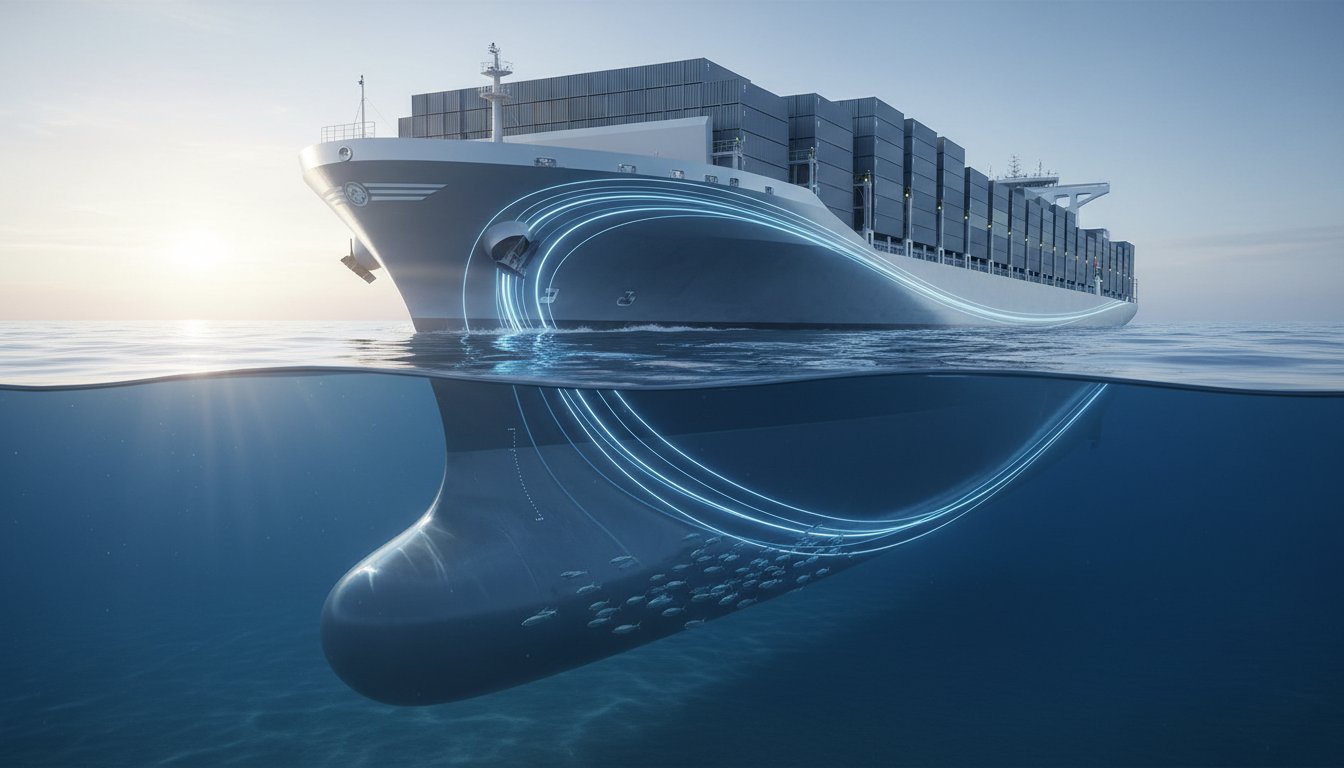
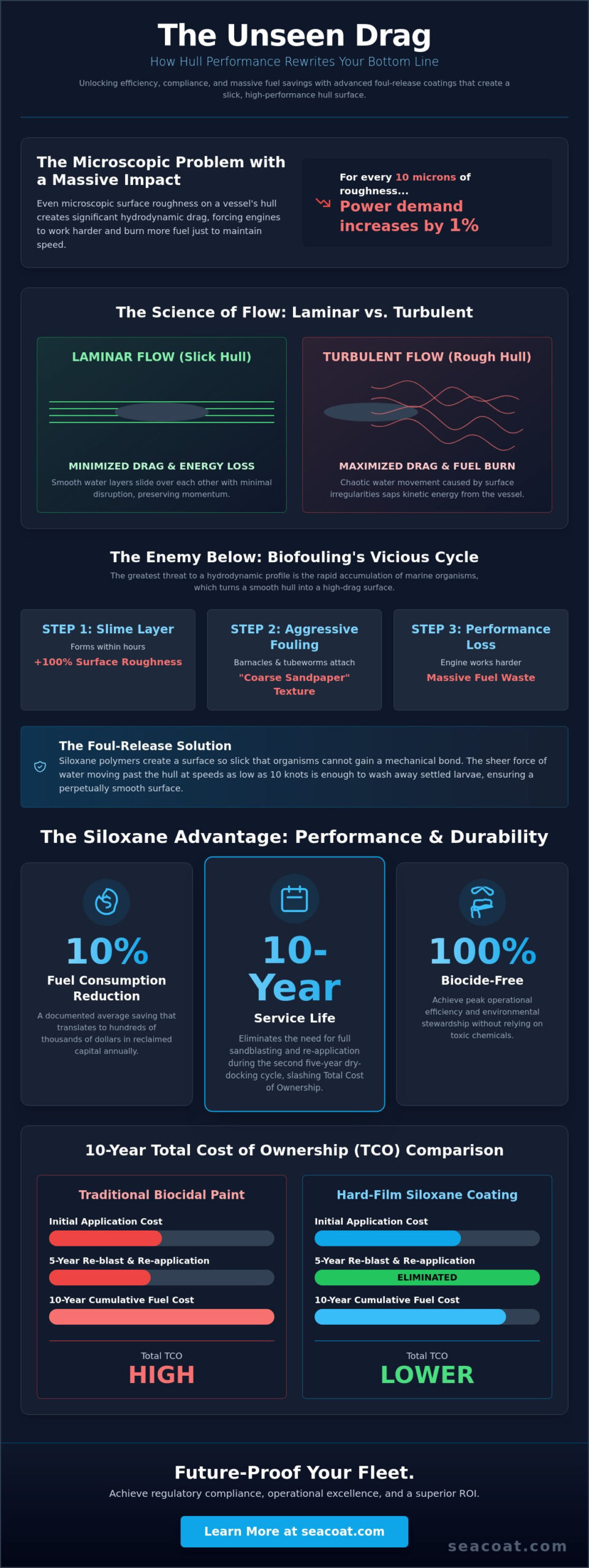
Did you know that for every 10 microns of additional surface roughness on a vessel’s hull, power requirements can increase by as much as 1 percent? This microscopic friction accounts for a significant portion of the maritime industry’s annual fuel expenditure and carbon footprint. You’re likely feeling the pressure of bunker fuel costs reaching decade highs and the tightening grip of IMO 2023 regulations. Understanding the benefits of a slick hull surface is no longer just a maintenance concern; it’s a critical strategy for maintaining operational margins while meeting Carbon Intensity Indicator (CII) targets.
By utilizing advanced siloxane based foul release technologies, you can achieve a documented 10 percent reduction in fuel consumption and a 10 year service life that eliminates the need for frequent, toxic re-coating. This article explores the hydrodynamic science behind advanced coatings and how these biocide free solutions optimize vessel performance. You’ll learn how reducing drag translates into higher top speeds, improved maneuverability, and a sustainable path to regulatory compliance.
Key Takeaways
- Understand how surface roughness impacts the boundary layer to mitigate hydrodynamic resistance and optimize overall ship propulsion.
- Quantify the operational benefits of a slick hull surface through data-backed evidence showing how drag reduction translates into significant annual fuel savings and increased speed.
- Compare the durability of Hard-Film Silane-Siloxane technology against traditional soft coatings to identify the most resilient solution for long-term commercial vessel management.
- Navigate the transition to IMO 2026 compliance by utilizing high-performance surfaces to maintain favorable Carbon Intensity Indicator (CII) ratings and avoid slow steaming.
- Discover the strategic ROI of implementing a biocide-free, 10-year life cycle coating system that balances peak operational efficiency with environmental stewardship.
The Hydrodynamics of Slickness: How Surface Texture Impacts Drag
The efficiency of a maritime vessel is dictated by the physics of the interface between the hull and the water. Surface roughness creates a direct, measurable correlation to hydrodynamic resistance, where even microscopic deviations from a smooth profile disrupt the fluid flow. Traditional marine coatings often possess inherent “peaks and valleys” that trigger turbulent flow within the boundary layer. This layer, the thin volume of water immediately adjacent to the hull, determines the overall effectiveness of ship propulsion and fuel conversion. One of the primary benefits of a slick hull surface is its ability to maintain laminar flow, which occurs when water layers slide over each other with minimal disruption. A smoother surface keeps water attached to the hull longer, preventing the premature transition to turbulence that saps kinetic energy.
Understanding Skin Friction and Frictional Resistance
Total hull resistance is a composite of wave-making resistance and frictional resistance. Frictional resistance is the primary energy drain for vessels at cruising speed. While wave-making resistance is largely a function of hull design and speed, frictional drag is a variable controlled by surface condition. For large tankers and slow-moving bulk carriers, frictional drag accounts for up to 90% of total resistance. This makes the texture of the submerged surface the most critical factor in operational overhead. By optimizing the hull with a high-performance coating, operators can mitigate the energy lost to skin friction and improve the vessel’s carbon intensity indicator (CII) rating.
- Laminar Flow: Smooth, parallel movement of water particles that minimizes energy loss.
- Turbulent Flow: Chaotic water movement caused by surface irregularities, leading to high drag.
- Boundary Layer: The region of fluid flow where viscosity effects are significant; a slicker hull keeps this layer thin and stable.
The Impact of Biofouling on Surface Smoothness
The accumulation of marine organisms, known as Biofouling, serves as the greatest threat to a vessel’s hydrodynamic profile. Even a microscopic slime layer, which can form within hours of a ship entering the water, increases surface roughness by over 100%. This initial biological film creates a foundation for more aggressive calcium-based fouling, such as barnacles and tubeworms. As these organisms attach, they transform a smooth hull into a texture resembling coarse sandpaper, which forces the engine to work harder to maintain the same speed.
Modern foul-release technology addresses this by utilizing a “slickness” mechanism rather than chemical toxicity. These coatings use low-surface-energy materials, such as siloxane-based polymers, to prevent organisms from gaining a mechanical bond to the substrate. Because the surface is so slick, the sheer force of water moving past the hull at speeds as low as 10 knots is often enough to wash away any settled larvae. This ensures the benefits of a slick hull surface are maintained throughout the docking cycle, providing a strategic asset for long-term fleet management and environmental stewardship.
Economic Advantages: Fuel Savings, Speed, and ROI
The financial logic of hull optimization rests on the physics of drag. A 10% reduction in hydrodynamic drag translates directly into a 6% to 10% fuel saving for most commercial vessels. Over an annual operating cycle, these percentages represent hundreds of thousands of dollars in reclaimed capital. One of the primary benefits of a slick hull surface is the ability to achieve higher knots at the same RPM. Alternatively, operators can maintain cruising speed while throttling back, which reduces thermal load on the engine. This mitigation of engine strain extends the service life of liners, pistons, and turbochargers.
Calculating the Total Cost of Ownership (TCO) over a 10-year period reveals the true value of high-performance coatings. While the upfront cost of a siloxane-based system exceeds that of traditional biocidal paint, the long-term profile is superior. It’s common for these systems to eliminate the need for full sandblasting and re-application during the second five-year dry-docking cycle. This durability transforms the coating from a recurring maintenance expense into a strategic operational asset.
Fuel Consumption and Carbon Footprint Reduction
Transitioning from traditional ablative paints to advanced foul release systems creates a measurable drop in fuel burn. Data from the International Maritime Organization (IMO) suggests that hull fouling accounts for up to 60% of a vessel’s total resistance. By maintaining a low-energy surface that prevents biofouling attachment, ships emit significantly less CO2, NOx, and SOx. A typical ROI for a premium slick coating application occurs within 18 to 24 months. This timeframe is often shorter for vessels operating in high-fouling tropical waters or those with high utilization rates.
Propeller Efficiency and Hull Interaction
Surface smoothness on the aft section of the hull optimizes the wake field entering the propeller disk. A rough hull creates turbulent, uneven water flow, which forces the propeller to work harder and increases the risk of cavitation. Slickness in this critical zone reduces vibration and improves steering response in tight maritime corridors. Enhanced flow consistency means the propulsion system operates at peak efficiency. For those seeking to optimize their fleet’s hydrodynamic profile, exploring advanced foul release technology provides a clear path to long-term operational excellence.
Hard-Film vs. Soft Silicone: Choosing the Right Slick Surface
Achieving the benefits of a slick hull surface requires a balance between hydrodynamic efficiency and physical toughness. Historically, ship owners had to choose between the high-speed efficiency of soft silicone and the durability of traditional epoxy. This compromise is no longer necessary. Modern maritime operations demand coatings that withstand mechanical impact while maintaining a low-energy surface that sheds biofouling effortlessly. It’s a matter of shifting from temporary maintenance to long-term asset management.
The Weakness of Soft Silicone Coatings
Soft silicone foul-release systems are notorious for their fragility. While they offer excellent initial slickness, they suffer from frequent tearing and delamination during high-speed operations or when navigating through debris. These coatings often require vessels to maintain speeds above 15 knots to effectively self-clean through hydrodynamic shear. If a vessel sits idle, the soft surface becomes a magnet for barnacles that cut into the film. Repairing these surfaces is technically difficult; silicone contamination is a major risk in shipyards, as airborne silicone particles can prevent subsequent paint layers from adhering to any nearby vessel.
Advantages of Silane-Siloxane Hard-Film Systems
Silane-Siloxane technology represents a shift toward permanent, high-performance assets. These systems combine the low-friction properties of silicone with the impact resistance of a hard epoxy. Siloxane bonds at a molecular level through a cross-linking process that creates a permanent, non-leaching barrier, ensuring the coating remains integral to the substrate. This molecular integration ensures the coating doesn’t peel or flake under pressure, even in the most demanding environments.
- Mechanical Resilience: Hard-film surfaces resist damage from fenders, ice, and floating debris that would shred soft alternatives.
- In-Water Cleaning Compatibility: Because the surface is hard, divers can use mechanical brushes for routine maintenance without risking the integrity of the coating. This allows for aggressive cleaning that soft coatings cannot survive.
- Extended Longevity: Silane-Siloxane systems typically offer a ten-year life cycle with superior UV resistance and color retention compared to traditional biocidal paints.
- Zero Leaching: These coatings are biocide-free and contain zero VOCs, meeting the strictest environmental regulations without sacrificing performance.
Choosing a hard-film surface optimizes the benefits of a slick hull surface by reducing long-term maintenance costs. It’s a strategic decision that prioritizes operational uptime. By eliminating the need for frequent dry-docking and recoating, operators secure a higher return on investment while protecting the marine ecosystem from toxic runoff. This technology doesn’t just cover a hull; it transforms it into a high-efficiency tool for modern commerce.
Regulatory Compliance: EEXI, CII, and the Green Transition
The maritime industry faces an era of unprecedented scrutiny from international governing bodies. The International Maritime Organization (IMO) implemented the Carbon Intensity Indicator (CII) in 2023, forcing vessel operators to document and improve their operational efficiency every year. One of the primary benefits of a slick hull surface is its immediate impact on these ratings. Since hull friction accounts for nearly 90% of total resistance on large tankers and bulk carriers, surface optimization is a critical lever for regulatory adherence. It’s no longer just about fuel costs; it’s about the right to operate in a decarbonizing market.
Navigating EEXI and CII Requirements
The Energy Efficiency Existing Ship Index (EEXI) requires a one-time technical certification, but the CII is an ongoing operational metric. Vessels that receive a “D” or “E” rating for three consecutive years must submit a mandatory corrective action plan. Low-friction coatings serve as a “Category A” technical upgrade because they provide a permanent reduction in drag without requiring mechanical modifications. This performance gain prevents vessels from being “de-rated” or forced into aggressive slow-steaming protocols. When a ship can’t maintain its design speed due to friction, its commercial value drops. Maintaining a slick surface ensures the vessel remains attractive to charterers who now prioritize high-efficiency assets to avoid carbon penalties and inflated port fees.
The End of Toxic Antifouling
The global shift away from biocidal coatings is no longer a distant projection. Following the 2008 ban on tributyltin (TBT), regulatory focus has turned toward copper oxides and other heavy metal derivatives that accumulate in harbor sediments. Foul release technology represents the only truly sustainable “zero-leach” solution. These systems use advanced siloxane chemistry to create a surface so smooth that organisms cannot find a secure attachment point. This physical barrier replaces the need for chemical toxicity.
By adopting these non-toxic solutions, fleet managers protect marine biodiversity while future-proofing their operations against upcoming regional bans. You can learn more about the environmental marine coatings shift happening in 2026 to stay ahead of these legislative changes. Environmental stewardship has transitioned from a corporate social responsibility line item to a core brand asset. Major cargo owners are increasingly auditing the environmental footprint of their supply chains, making a clean hull a prerequisite for premium contracts.
Optimize your fleet for CII compliance with SeaCoat technology.
Implementing a High-Performance Slick Surface with Sea-Speed
Moving away from the sacrificial cycle of ablative bottom paint represents a fundamental shift in modern vessel management. Sea-Speed V 10 X Ultra provides a permanent solution that replaces toxic leaching with hydrodynamic efficiency. This silane-siloxane technology creates a hard-film surface that doesn’t wear away or require frequent reapplication. It’s engineered to last 10 years. This longevity is achieved through a single-application process that prioritizes surface profile over chemical depletion. The core benefits of a slick hull surface include a drastic reduction in hull roughness, which translates directly to fuel savings of 6% to 12% in documented commercial trials.
Sea-Speed maintains the lowest V.O.C. levels in the maritime industry. The coating contains zero biocides and zero heavy metals, making it safe for application in sensitive environments. This isn’t just about regulatory compliance; it’s about future-proofing operations against tightening environmental standards. By choosing a non-toxic foul release system, operators eliminate the risk of heavy metal accumulation in harbor sediments. It’s a strategic asset that aligns operational goals with ecological stewardship.
Why Sea-Speed V 10 X Ultra Leads the Market
Sea-Speed V 10 X Ultra utilizes a proprietary silane-siloxane matrix that forms a non-porous, glass-like barrier. This chemistry prevents marine organisms from establishing a permanent bond. In military and commercial applications, vessels have shown sustained top speeds and reduced cavitation after 60 months of service without re-coating. For luxury yachts and racing hulls, the “Clear” version allows for high-performance foul release without altering the aesthetic of custom finishes. The benefits of a slick hull surface are maximized when the coating maintains its structural integrity over a decade of service.
Long-Term Maintenance and Support
Maintenance doesn’t require expensive haul-outs for repainting every two years. Instead, it relies on simplified in-water cleaning protocols. Because the film is hard and non-ablative, divers can use soft brushes or specialized equipment to wipe away slime without releasing toxins into the water column. SeaCoat provides global technical support to ensure fleet-wide consistency during the application process. To understand the long-term financial impact of these systems, consult The Definitive Guide to Boat Hull Paint for detailed ROI calculations. Optimize your fleet’s performance and reduce your environmental footprint with SeaCoat technology.
Optimizing Fleet Efficiency Through Surface Science
The transition toward high-performance marine coatings isn’t a luxury; it’s a strategic necessity for modern fleet management. By leveraging proprietary Silane-Siloxane technology, operators can achieve a 10-year life cycle that far outlasts traditional biocidal paints. This durability doesn’t come at the cost of the environment. Our coatings maintain zero VOC emissions while providing the necessary drag reduction to meet stringent EEXI and CII regulatory standards. The benefits of a slick hull surface are most evident in the bottom line, where documented performance data shows fuel savings of up to 12% across military and commercial fleets worldwide.
Choosing a hard-film surface over soft silicone ensures that your vessel remains protected against physical abrasion while maintaining peak hydrodynamic efficiency. It’s a permanent solution for an industry moving toward a carbon-neutral future. Contact our technical team for a custom performance analysis of your vessel and discover how Sea-Speed can transform your operational ROI. We’re ready to help you navigate the complexities of the green transition with confidence.
Frequently Asked Questions
How much faster can a boat go with a slick hull surface?
A vessel can typically achieve a speed increase of 5% to 10% when utilizing a slick hull surface compared to a standard fouled or rough surface. This improvement stems from the reduction of hull skin friction, which accounts for up to 80% of total resistance on some hull forms. By minimizing the viscous drag, the engine’s power translates more efficiently into forward motion.
Does a slick hull surface really reduce fuel consumption for slow vessels?
Yes, slow-steaming vessels often realize fuel savings between 6% and 12% by optimizing the hydrodynamic profile of the hull. One of the primary benefits of a slick hull surface is that it maintains a smooth profile even at low velocities where traditional ablative paints might create turbulence. This reduction in drag ensures that the vessel operates at peak efficiency regardless of its transit speed.
What is the difference between a slick foul release coating and traditional antifouling?
Traditional antifouling paints rely on the leaching of biocides like copper to kill marine organisms; whereas, slick foul release coatings use a non-stick physical surface. These advanced siloxane-based technologies prevent organisms from adhering strongly to the substrate. While traditional paints deplete over 2 to 3 years, foul release systems remain intact and effective through physical properties rather than chemical depletion.
How long does a slick hard-film coating like Sea-Speed last compared to paint?
A hard-film coating like Sea-Speed is engineered for a service life of 10 years or longer, significantly outperforming the 24 to 36-month cycle of standard bottom paints. This longevity is achieved through a robust, non-depleting chemical structure that doesn’t wear away or require frequent reapplication. You’ll reduce dry-docking frequency and long-term material costs by investing in a permanent surface rather than a sacrificial layer.
Can a slick hull surface help my vessel meet EEXI or CII regulations?
Implementing a slick hull surface is a recognized strategy to improve a vessel’s Carbon Intensity Indicator (CII) rating and ensure EEXI compliance. By reducing total hull resistance, the vessel requires less power to maintain speed, directly lowering CO2 emissions per nautical mile. Data from IMO studies suggests that hull optimization can contribute up to a 10% reduction in a fleet’s overall carbon footprint.
Is a slick hull surface more difficult to maintain than a rough one?
Maintaining a slick surface is actually simpler because the hard, non-porous film prevents deep penetration of biofouling. Most slime and light growth wash away during transit once the vessel reaches speeds of 10 knots or higher. If manual cleaning is required, it’s done using soft brushes or water pressure, which won’t damage the coating or release toxins into the water column.
Are slick hull coatings toxic to marine life?
No, advanced slick coatings like Sea-Speed are biocide-free and contain zero Volatile Organic Compounds (VOCs). They don’t leach heavy metals or harmful chemicals into the marine ecosystem, making them safe for use in sensitive environmental zones. This non-toxic approach represents a core benefits of a slick hull surface, aligning operational performance with strict global environmental standards like those set by the EPA.
Can I apply a slick foul release coating over my existing bottom paint?
You can’t apply a high-performance foul release coating directly over existing ablative or leaching paints because the bond will fail. The substrate must be prepared by removing old layers to ensure the new coating adheres to a stable surface. This process typically involves abrasive blasting to a near-white metal or clean fiberglass standard. This guarantees the 10-year durability and hydrodynamic performance the technology provides.